The Teachers of Quality Academy (TQA) at the Brody School of Medicine at East Carolina University and ECU Health officially welcomed its 9.0 cohort at its first learning session on Sept. 18.
For the newest group of multidisciplinary health care professionals in the program, the first lesson is perhaps the most important: system-wide quality improvement starts small before it can grow into something big.
“One of the hallmarks of this learning experience is that you have your small team and then it gets a little bit bigger over time,” said Dr. Jennifer Sutter, TQA physician director. “One of our speakers today talked about how the big system is only as good as the little systems. So, we have to achieve quality first at a microsystem level before it can make a big system much better. That theme is really the ideal way to kick-off what these participants will learn over the next year.”
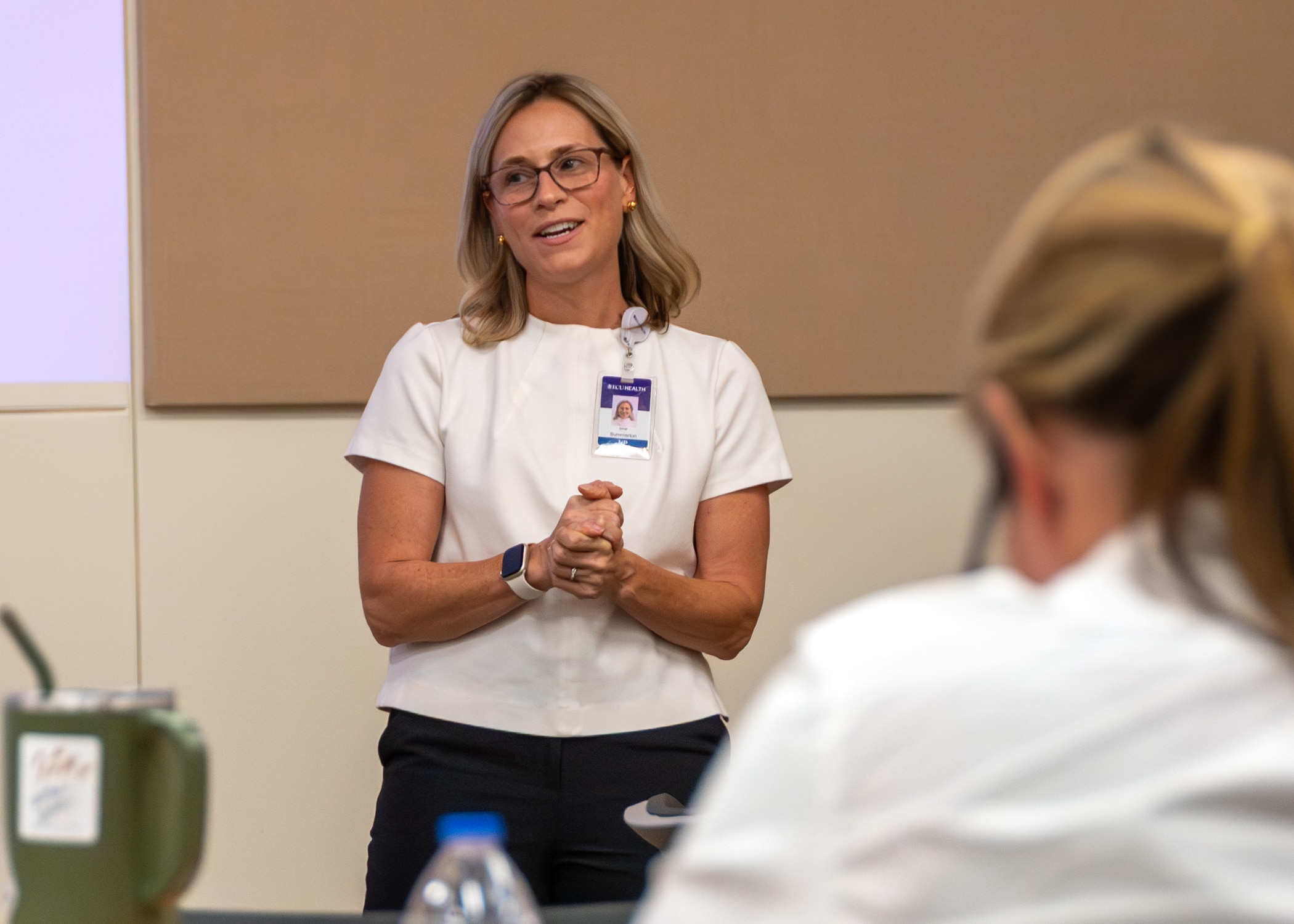
Through the TQA 9.0 program, health care leaders will learn how to fundamentally change care delivery through a curriculum focused on building knowledge and skills in Health Systems Science which comprehensively explores how health care is delivered. Participants engage in advanced learning in quality improvement, patient safety and team leadership, develop improvement projects to apply these skills across the health system, teach others in their environment about these concepts, and evaluate the outcomes of improvement interventions. Leading by example, TQA participants promote a culture of quality and safety across the enterprise.
Dr. Andre Mancheno is a second-year resident in ECU Health’s Rural Family Medicine Residency program. His TQA project group includes two fellow residents in the Rural Family Medicine Residency program, all of whom are currently learning and serving in Duplin County. For Dr. Mancheno and his colleagues, the program provides them an opportunity to explore opportunities to improve on real-world scenarios they experience.
“We’re interested in doing something to improve our clinic,” Dr. Mancheno said. “Since our clinic is rural, there are limited resources, limited staffing. There are a lot of challenges to overcome, and this program can help us find solutions. The skills we apply to improving quality are also applicable to all things in health care.”
With 37 learners in TQA 9.0, participants spent their first learning session gaining invaluable knowledge about quality improvement, the role it plays in high-quality care and the impact it has on ECU Health’s mission to improve the health and well-being of eastern North Carolina. The newest cohort includes health care professionals from clinical, administrative, leadership and educational backgrounds, all of whom were selected from a highly competitive pool of applicants. And, for the first time ever, pastoral care team members are part of the program, underscoring how quality goes far beyond purely clinical experts.
The lessons also have the potential to extend directly into communities across eastern North Carolina. Dr. Kristina Simeonsson, associate professor in Pediatrics and Public Health and Hannah Dail-Barnett, research associate, help lead the Healthier Lives at School and Beyond initiative created by the Brody School of Medicine and ECU Health.
The program originally launched in 2018 to deliver interdisciplinary services virtually to rural school children, staff and faculty during the school day.
In response to COVID-19, the program continued to address health care needs for children and expanded access while students were learning remotely.
Since the fall of 2020, the program has used an ECU Transit bus to visit schools in Duplin, Jones and Sampson counties to provide high-quality health appointments. The retrofitted motorcoach has been used to provide screenings for hundreds of students.
Like Dr. Mancheno and his fellow rural residents, Dr. Simeonsson and Dail-Barnett appreciate the opportunity to apply quality lessons directly to the patients and students they serve.
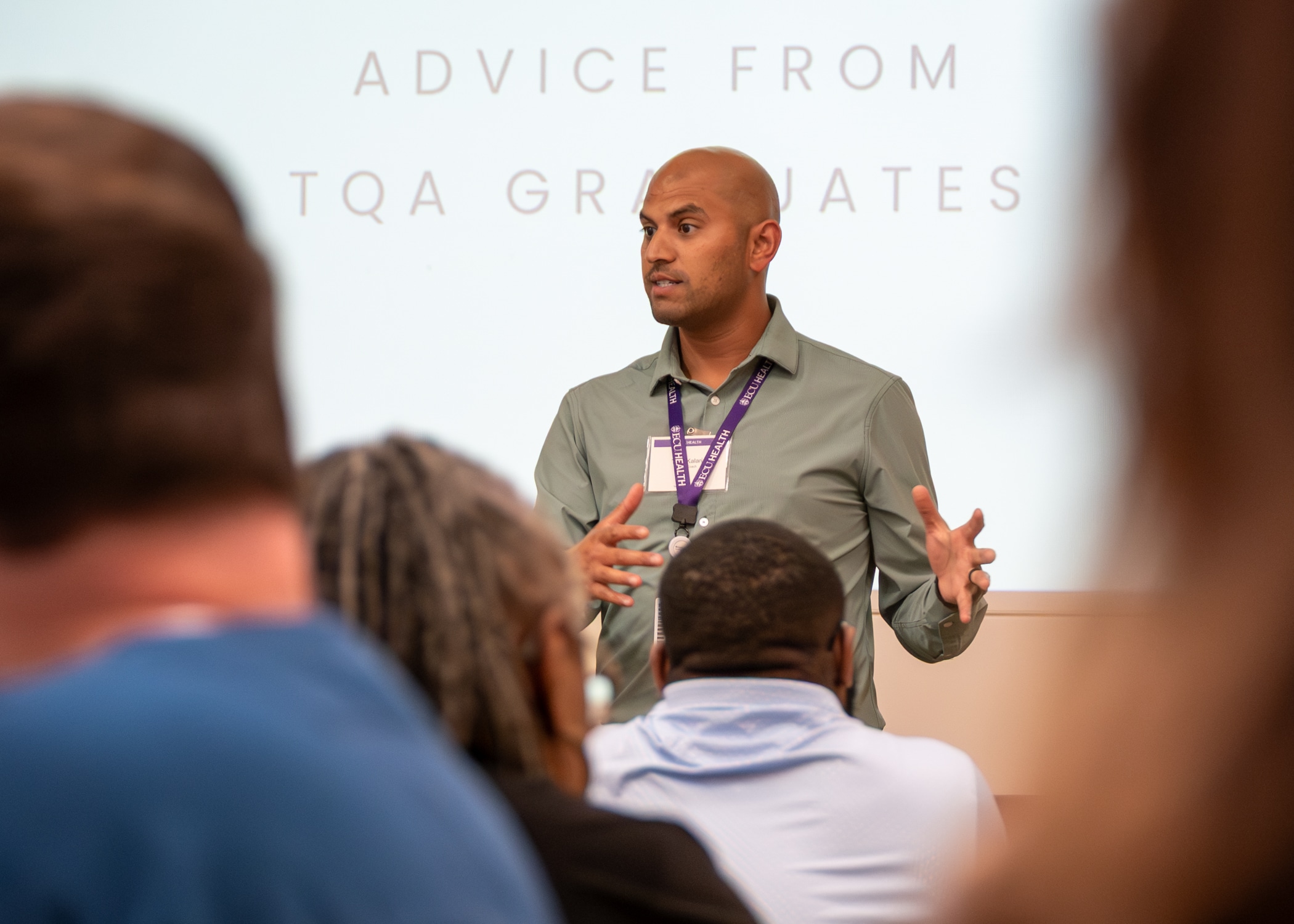
“As a program evaluator for Healthier Lives at School and Beyond, we’re always considering how to achieve continuous quality improvement in our program,” said Dail-Barnett. “How can we improve our reach in these communities, help improve access to health care services and increase efficiency and timeliness of services to these students? We’re hoping to use TQA as a catalyst for further quality improvement to continue to expand our services and help reach these hard-to-reach populations.”
Dail-Barnett described the entire TQA group as having “lofty goals” and “really big dreams.” According to Dr. Simeonsson, therein lies the challenge of the day’s most important lesson.
“That’s going to be the challenge – keeping it small to begin with,” Dr. Simeonsson said. “We’re all coming in here with ideas and a lot of passion and our instructors are reminding us to tap the brakes. The best thing from today was the reminder that we’re here to learn the process. Let’s learn the process and then continue to build as we go forward. And we know that can have a big impact because there are so many alumni that come back and tell us how their projects are going three years later.”