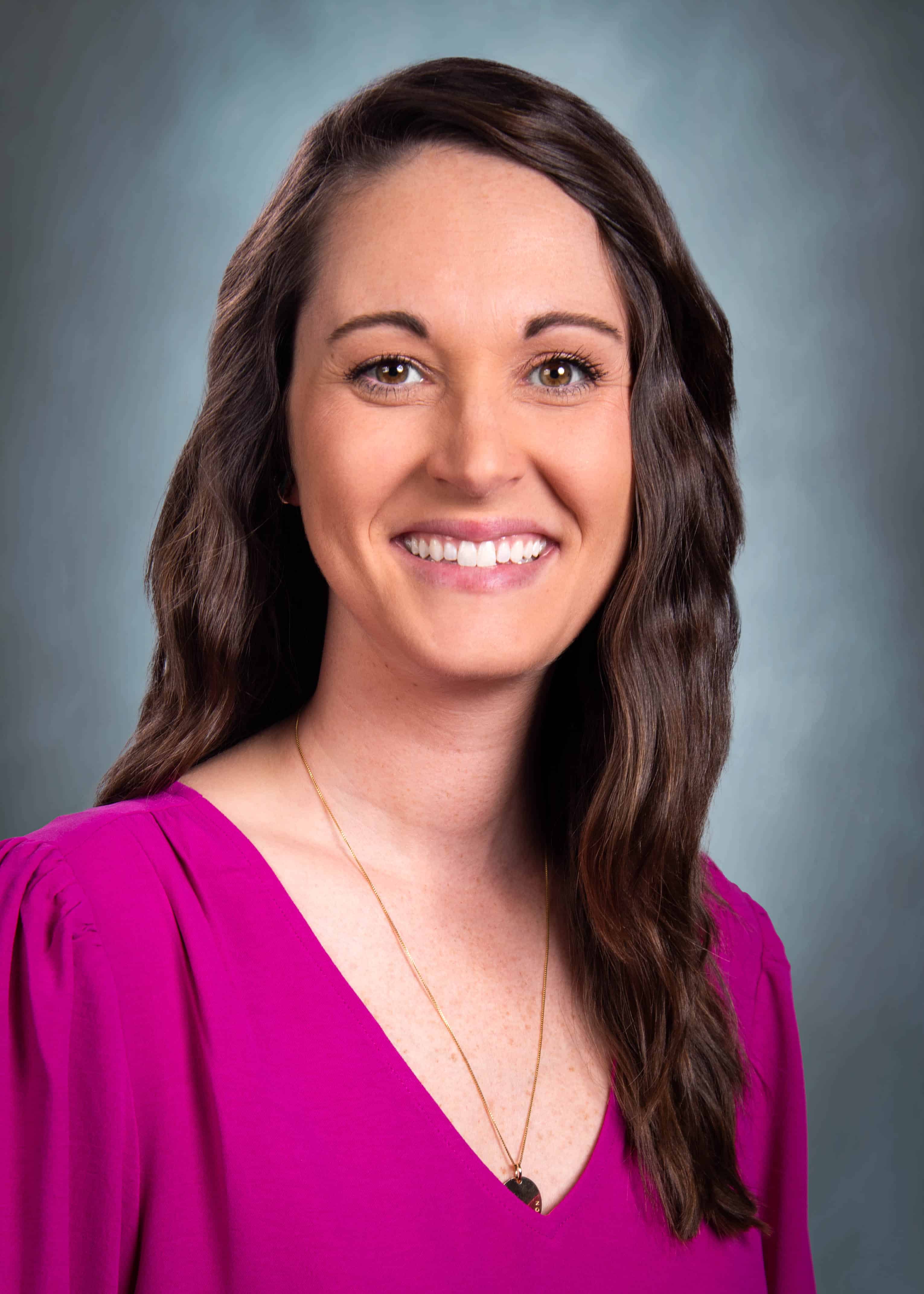
Bailey Hattem Edwards
Bailey Hattem Edwards is a respiratory care manager and program lead for ECU Health’s Pediatric Asthma Program, which operates through ECU Health’s Center for Child and Family Wellness. For 30 years, the program has served families of children until the age of 18 who have or may have asthma through education in schools, clinics and over telehealth. Recent data shows the program managed 1,469 cases and made 2,196 unique patient encounters in fiscal year 2026.
Q: What is ECU Health’s Pediatric Asthma Program?
A: ECU Health’s Pediatric Asthma Program serves children from birth to age 18 who have asthma or may have asthma. It began at an elementary school and primary care office in Pitt County 30 years ago with the goal to bring education and resources into the community so families could better understand asthma, manage triggers and avoid unnecessary emergency department visits or hospitalizations.
Today, the team provides in-depth education for children admitted with asthma, helps families understand what caused an exacerbation and works with them on prevention. The program partners and supports asthma-focused care in primary care settings and case manages students in schools, helping families avoid missed work and school whenever possible.
Q: What drew you to care for pediatric asthma patients?
A: I always wanted to work in pediatrics because I was drawn to the resilience of children. My experience as an asthmatic helped me connect with families, and my passion for service continued to grow as I worked bedside in the PICU (Pediatric Intensive Care Unit) and NICU (Neonatal Intensive Care Unit). Seeing children with asthma become critically ill showed me the importance of education, prevention and access to resources. I’ve seen the program grow over the past eight years and open even more opportunities to expand its impact across eastern North Carolina.
Q: Why is fall such a challenging season for asthma patients?
A: September begins a perfect storm of triggers in North Carolina. Children are returning to school, where they may be exposed to older ventilation systems, older buildings, recent renovations or other new environmental factors that can trigger their asthma. Weather shifts, humidity, storms, mold spores and ragweed season all add to the challenge. It is also the start of heavier virus activity, including flu season, and children are back in close contact with classmates.
Q: How do viruses or other illnesses affect asthma patients?
A: Virus-related flares are especially common among school-aged children, but adults with asthma can experience them too. Common examples include the common cold, rhino/enterovirus, RSV or flu, but the dominant illnesses can vary year by year. We encourage families to work with their primary care providers on appropriate prevention strategies, including flu shots for children with asthma.
Q: Is asthma a constant condition, or can it be seasonal?
A: Asthma can be intermittent or persistent, and each child’s asthma action plan should be tailored to their needs. Some children may only struggle during the first few months of school, while others can experience an asthma flare throughout the entire year. Our team approaches care season by season, reassessing what a patient needs as conditions change. Even if a child only needs medication during certain times of the year, they should have a rescue inhaler, asthma action plan and medication authorization form available at school year-round.
Q: Does asthma look different from child to child?
A: Asthma can vary widely, even among siblings or twins. One child may have mild persistent asthma, another may have severe persistent asthma and another may not have asthma at all. Because of that, the program emphasizes individualized care rather than a one-size-fits-all approach.
Q: How does the Pediatric Asthma Program address unique challenges in eastern North Carolina?
A: Rural geography creates barriers, especially transportation and access to care. Some families struggle with the cost of inhalers, even when they have insurance. The Pediatric Asthma program helps by using an indigent medication fund supported by a Children’s Miracle Network grant to cover medications temporarily, while the program’s social worker helps connect families with sustainable resources such as North Carolina MedAssist, manufacturer coupons or patient assistance programs.
When transportation is a barrier, the team looks for ways to bring care closer to the child, including direct visits to their schools, pediatrician’s offices or county health departments. Our work is highly collaborative and varies from county to county, which means we need outreach, networking and knowledge of local resources.
Learn more about ECU Health’s Pediatric Asthma Program by visiting the program’s website.