On March 28, the class of 2028 at ECU’s Brody School of Medicine gathered in a university ballroom surrounded by family, friends and physician leaders at the school to be “coated” and proceed to clinical rotations at ECU Health Medical Center.
It had been just eight days since the class of 2026 opened their sealed invitations to residency on Match Day but nearly three years since the last white coat ceremony. This year marks the first time the medical school has held the ceremony before the start of students’ third year, a momentous curricular transition from the preclinical to the clinical years of school, and it recognizes the accomplishment of completing the foundational science curriculum.
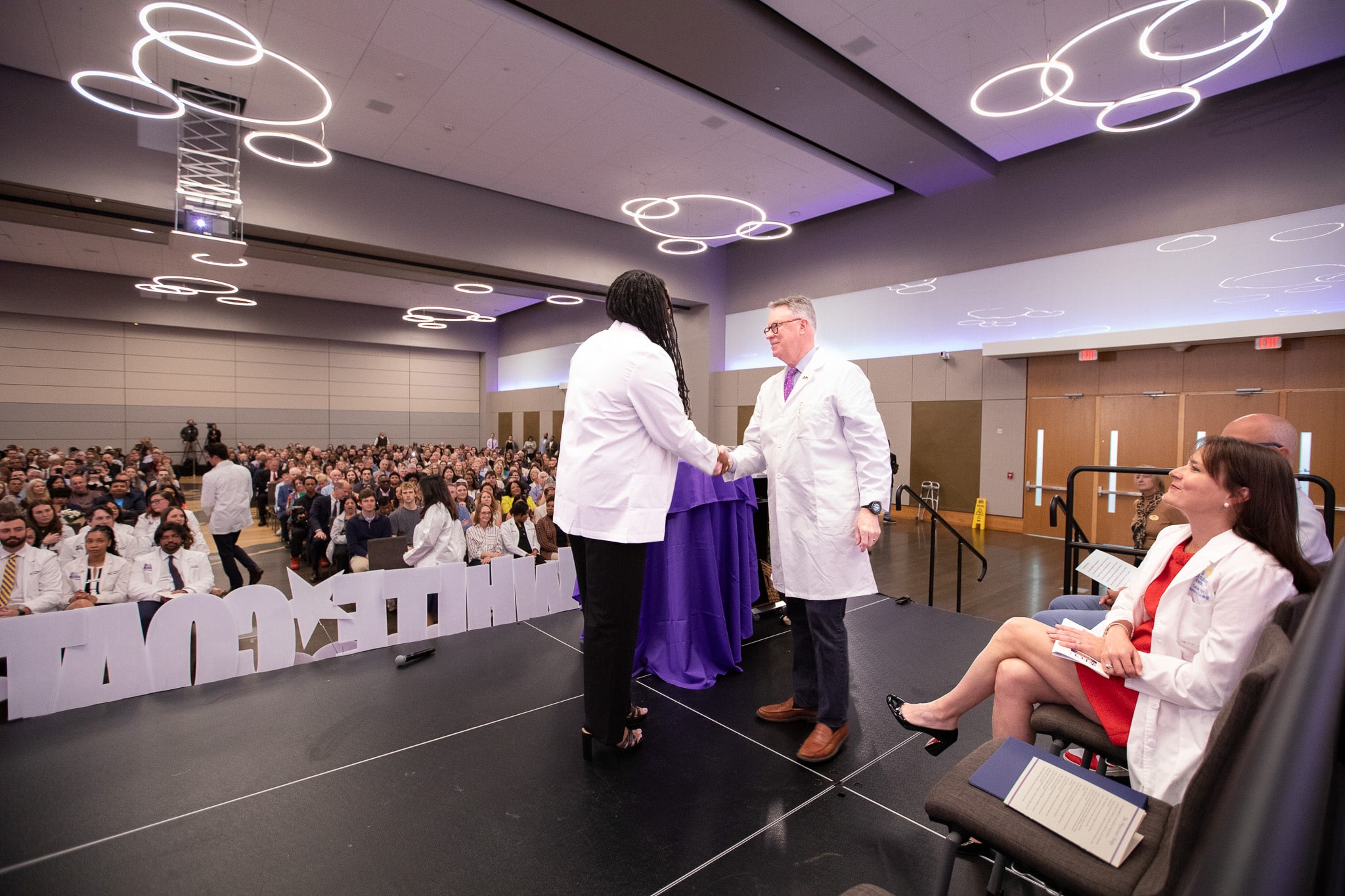
“In one week, the class of 2028 begins their clinical journey in the hospital and in clinics, and we celebrate the start of that journey today,” said Dr. Jason Higginson, executive dean of the school.
During the ceremony, students processed to the stage to be coated by a faculty member. They recited the physicians pledge for the first time. They also received words of wisdom from seasoned physicians that included Higginson and Dr. Christina Bowen, a family medicine doctor and Chief Well-being Officer at ECU Health.
A 2003 graduate of the Brody School, Bowen urged the class to consider the white coat a tangible symbol of the responsibility each future physician will have to patients.
“It represents trust,” she said. “Patients will trust you with their stories, with their fears, with some of the most vulnerable moments of their lives. They will not remember most of what you will say; however, they will remember how you made them feel.”
Bowen gave the class three points of wisdom to carry with them as they continue their medical school journeys. She told them to stay connected to their “why,” the moment they knew they wanted to care for others through medicine.
“That moment will anchor you when everything else feels uncertain,” she said.
The second point she emphasized was that how one shows up is just as important as what one knows.
On March 28, the class of 2028 at ECU’s Brody School of Medicine gathered in a university ballroom surrounded by family, friends and physician leaders at the school to be “coated” and proceed to clinical rotations at ECU Health Medical Center.
It had been just eight days since the class of 2026 opened their sealed invitations to residency on Match Day but nearly three years since the last white coat ceremony. This year marks the first time the medical school has held the ceremony before the start of students’ third year, a momentous curricular transition from the preclinical to the clinical years of school, and it recognizes the accomplishment of completing the foundational science curriculum.
“In one week, the class of 2028 begins their clinical journey in the hospital and in clinics, and we celebrate the start of that journey today,” said Dr. Jason Higginson, executive dean of the school.
During the ceremony, students processed to the stage to be coated by a faculty member. They recited the physicians pledge for the first time. They also received words of wisdom from seasoned physicians that included Higginson and Dr. Christina Bowen, a family medicine doctor and Chief Well-being Officer at ECU Health.
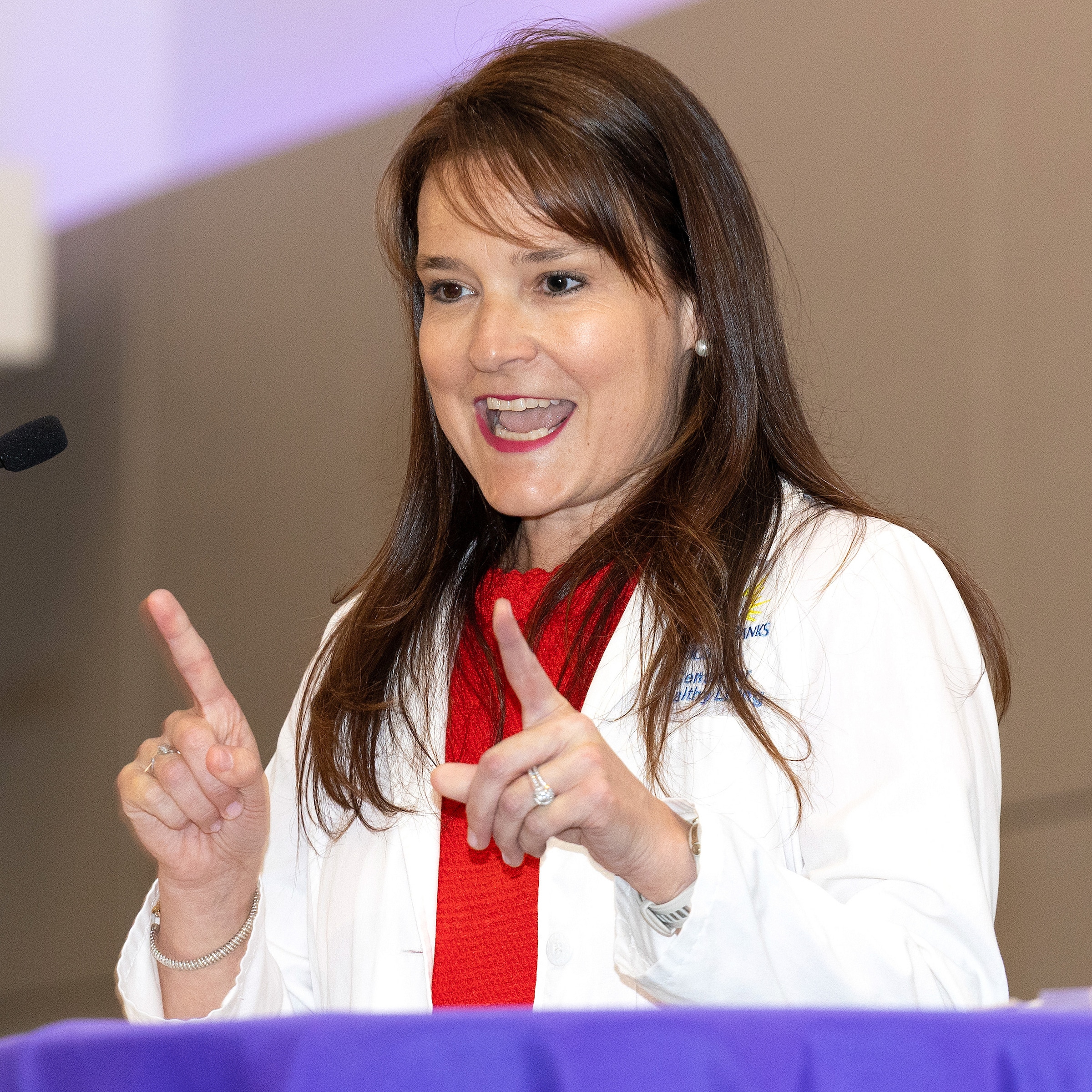
A 2003 graduate of the Brody School, Bowen urged the class to consider the white coat a tangible symbol of the responsibility each future physician will have to patients.
“It represents trust,” she said. “Patients will trust you with their stories, with their fears, with some of the most vulnerable moments of their lives. They will not remember most of what you will say; however, they will remember how you made them feel.”
Bowen gave the class three points of wisdom to carry with them as they continue their medical school journeys. She told them to stay connected to their “why,” the moment they knew they wanted to care for others through medicine.
“That moment will anchor you when everything else feels uncertain,” she said.
The second point she emphasized was that how one shows up is just as important as what one knows.
“Medicine will teach you how to diagnose, to treat, to intervene,” Bowen pointed out. “But healing happens in a relationship. In eye contact. In presence. In listening without rushing.”
The final point she shared was for the students to take care of themselves as intentionally as they care for others.
“The culture of medicine will sometimes ask you to push yourself past your limits and to give more than you have,” she said. “But sustainable excellence comes from alignment. From tending to your own well-being physically, emotionally and spiritually. This is not a luxury. It is essential to the kind of position and human you are meant to be.”
In closing, Bowen told the Class of 2028 that they were stepping not into a profession — but a calling.
“A calling to bring both science and humanity together in the care of others,” she said. “The most powerful thing you can bring to medicine is your authentic self. Wear this coat with humility. Wear it with courage. And wear it with a deep understanding that the work you are stepping into matters, not just because of what you will do, but because of who will be.”
The white coat ceremony marks the first time a student puts on the garment historically associated with the profession, but at this phase, they wear a short white coat that extends just past the waist. The full-length white coat is later.
“Students beginning their studies in medical school see their education and role as future physicians as aspiring to be worthy of the long white coat,” wrote Dr. Mark Hochberg in a history published in the American Medical Association’s Journal of Ethics.
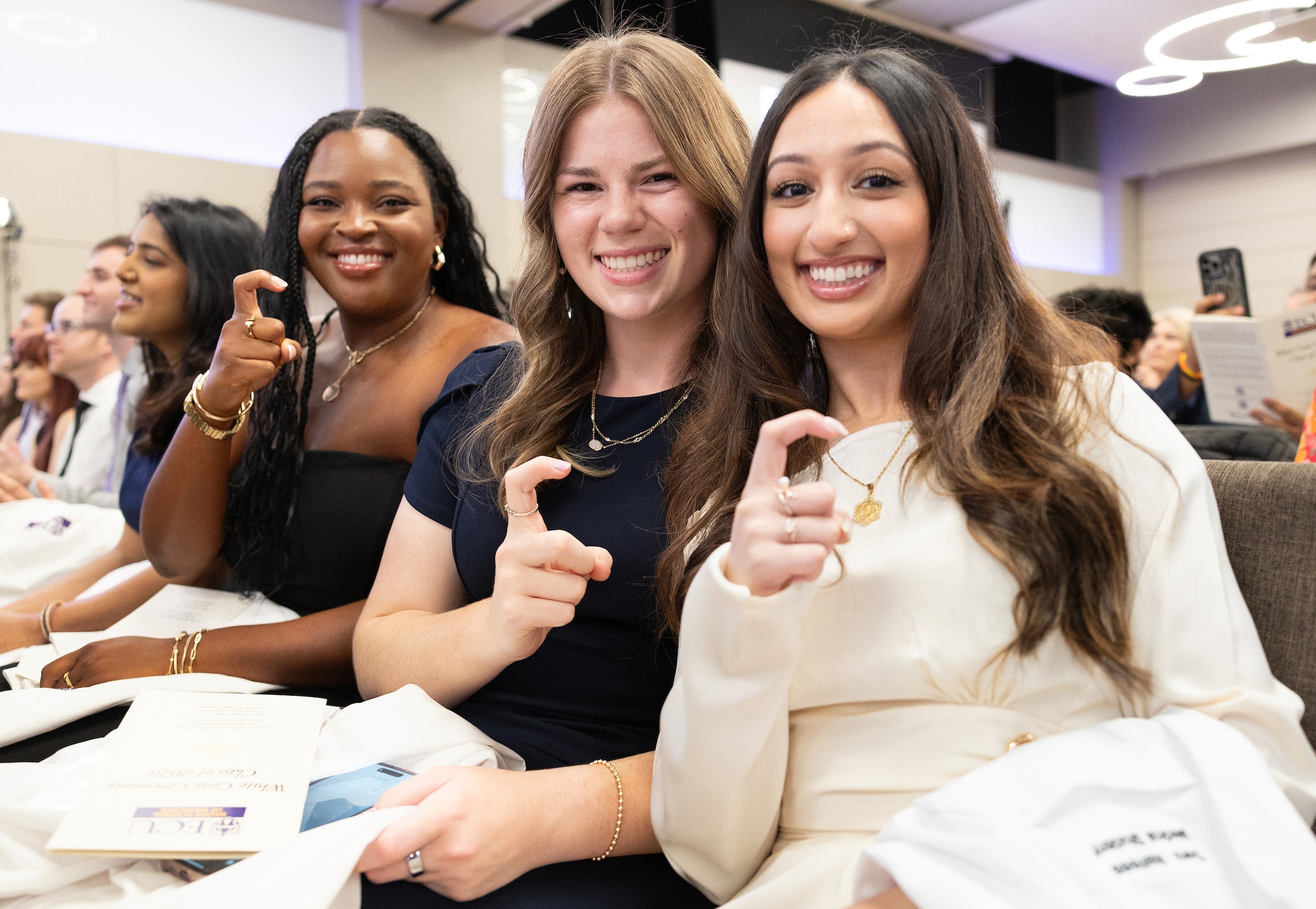
“It’s a symbol of how far we’ve come,” said a rising third-year student, Ji In Han. “After a year and a half of hard learning and, you know, failing a couple times, and learning how to get back up, I think this is really significant.”
Han and fellow student Naimi Pothiwala, a 2022 graduate of ECU, were outside the ballroom after the ceremony along with U.S. Army Capt. David McGriff, associate professor of military science at ECU.
Both Han and Pothiwala singled out the Brody School of Medicine’s strong mission-driven focus to produce doctors for the state of North Carolina, especially its rural and underserved communities that comprise much of the east.
“I was very familiar as an undergraduate major here in public health with the region and its health disparities,” Pothiwala said. “I knew Brody was directly impacting the region — I wanted to contribute, too.”
“Oh, yeah, it absolutely mattered to me to come here,” said Han, “because I grew up without health insurance, so my whole purpose of entering medicine was to serve other underserved patients.”
The Brody School of Medicine offers students more direct patient care over the course of clinical rotations than many other schools and has developed a reputation among graduate medical education programs for students who are ready to treat patients on Day 1, Higginson said.
Today, more than 90% of medical schools in the nation hold a white coat ceremony. The first such event, held in 1994, was sponsored by the Arnold P. Gold Foundation, which also started the Gold Humanism Honor Society, a national honor society dedicated to honoring those students who exemplify humanism in medicine. This year’s ceremony was assisted by Gold Humanism Honor Society members from the classes of 2026 and 2027: Katy Flax, Morgan Maner, Madison Kendrick and Michael Kovasala.
U.S. News & World Report listed the Brody School of Medicine a Tier 1 institution in its 2025 Best Medical Schools rankings. This year, more than half of the school’s rising graduates matched into primary care specialties — and more than 40% are staying in North Carolina for that training.
This white coat ceremony also featured a public introduction of the medical school’s four new learning communities. The communities will offer a system of support for students throughout their careers. The procession of students to the stage Saturday, instead of strictly alphabetical, was arranged by community.
The learning communities include the Bertie Buccaneers, led by House Dean Dr. Mary Lenfestey; the Roanoke Raiders, led by House Dean Dr. Don Norris; the Pamlico Privateers, led by House Dean Dr. Jill Sutton and the Cape Fear Corsairs, led by House Dean Dr. Juliana Jaramillo.
The names of the communities were “thoughtfully chosen to reflect the culture of eastern North Carolina, East Carolina University and the Brody School of Medicine,” said Kema Gadson, an associate dean at the school.
“The houses will be more than communities. They are lifelong affiliations grounded in mentorship, service to eastern North Carolina and the foundation of physicians committed to improving the health care of others.”
Brody graduates enjoy on average 33% less student debt load at the time of graduation — a fact that frees them to choose front-line primary care, though other specialties and sub-specialties may be more remunerative.
The school’s top financial award was created to do just that. The Brody Scholars program provides full tuition, fees and enrichment opportunities for four years of medical education to students selected. This year, cousins Hyman Brody and David Brody pledged an additional $10 million to the program, a gift that prompted the university’s Board of Trustees to vote to name the university’s new seven-story, $265 million facility the Brody Center for Medical Education.
One such Brody Scholar participating in Saturday’s ceremony was Rebecca Cloninger.
“It is hard for people to understand what we go through as students if they’re not a student, but for family and friends to see us on this day, yes, this is a little bit ceremonial, but it really does mean we’re stepping into a new part of our lives,” Cloninger said.