Clear communication is key when it comes to positive patient experiences and outcomes, and no one knows that better than the Language Access Services team at ECU Health.
“One of the most rewarding aspects of my career as a medical interpreter is that it gives me the opportunity to directly impact the well-being of patients,” said Macaria Aguirre, certified health care interpreter III (Spanish). “Medical interpreters are essential advocates for patients because we play a key role in fostering trust and building strong relationships between patients and health care professionals.”
Betzabe Rodriguez, health care interpreter III (Spanish), says their role goes beyond interpreting word-for-word.
“Interpreting requires conveying meaning, while respecting tone, intent, and cultural context,” she said. “We must interpret faithfully, without adding, omitting or substituting, and adapt to how language really works — it’s not static. Beyond language, we connect values, culture and purpose so providers and patients can truly understand one another.”
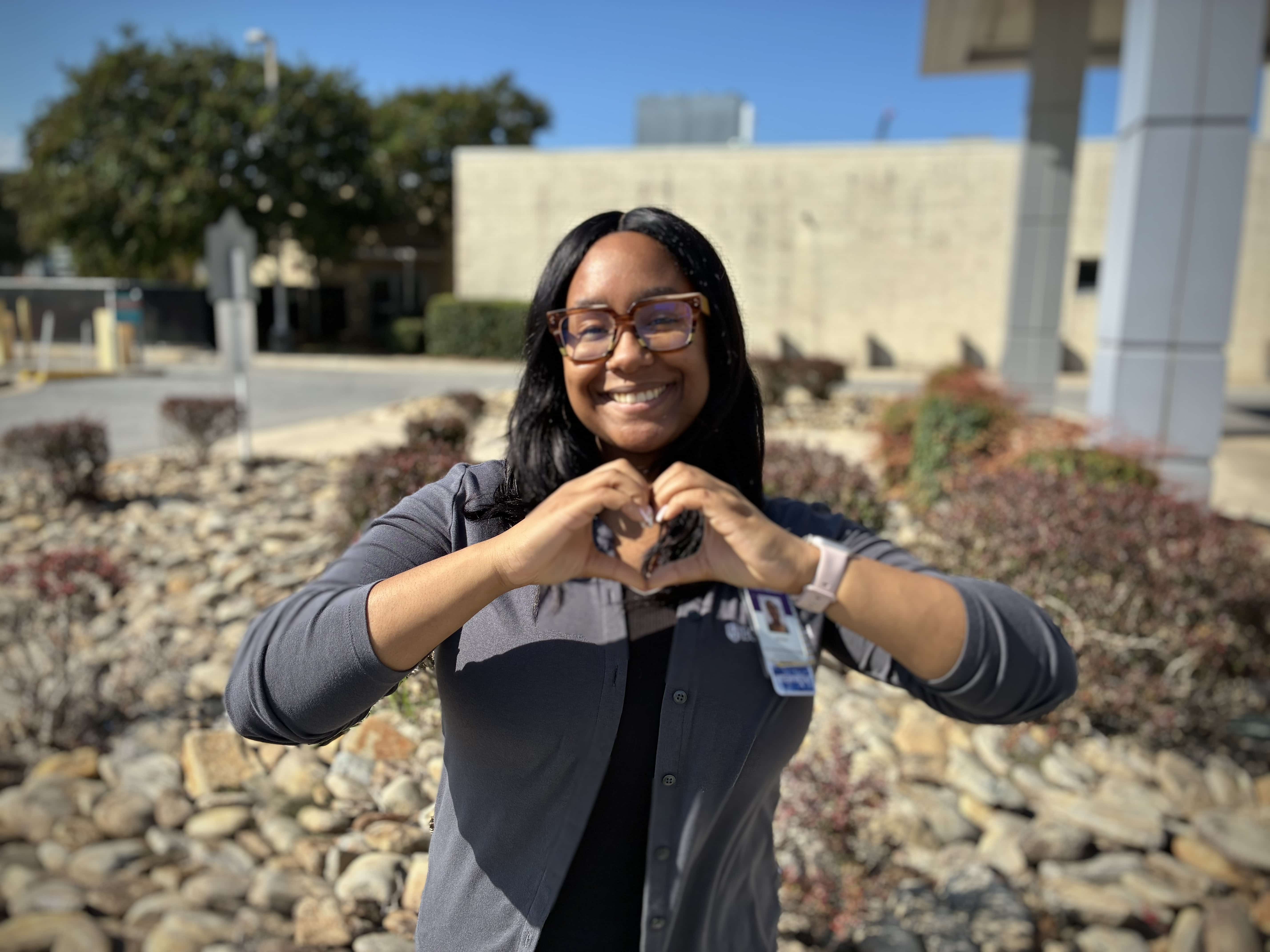
Language Access Services team members assist during a wide range of medical events, from explaining diagnoses and prescriptions to supporting families during births, surgeries and emergencies. Their presence helps patients feel safe, valued and understood.
ECU Health’s first ASL resident, Jordan Satchell, takes pride in her ability to advocate for patients who use sign language to communicate. She says she’s here to help ensure nothing gets lost in translation, literally.
“When patients or staff are misunderstood, it can lead to serious errors or delays in care,” said Satchell. “I can step in immediately, adapt to fast-changing situations, and make sure both patients and providers understand one another fully. That kind of access and clarity is not just convenient, it’s essential,” she said.
Supporting patients during uncertain times, team members often form close connections with those they assist. Satchell recalled one patient transferred to ECU Health after being diagnosed with cancer while on vacation. The patient had spent a week at a previous facility communicating only through writing.
“The moment I entered her room, she lit up and said, ‘I’m so happy to see you!’” Satchell said. “We had never met, but we built a strong connection during her month here. Before she returned to her home state, she told me how much she had seen my confidence and skills grow. That feedback meant so much to me. I’ll always remember her.”
Satchell says working with patients through the ASL interpreter residency program also provides the opportunity to strengthen her skill.
“No two people sign or use ASL in the same way. There’s always something new to learn,” she said.
ECU Health currently has a total of 24 Spanish interpreters and two ASL interpreters to meet the needs across the system. Other languages are available through a virtual service, connecting patients and providers to interpreters for more than 200 languages. A translator is also available virtually for written word.
Demand for Language Access Services continues to grow. Patients requiring interpreters throughout the system increased from 9,000 in 2022 to more than 12,000 this past year. That figure multiplies when accounting for accompanying family members and caregivers who also need language support.
Rodriguez said she hopes the program continues to expand to meet the needs of the region.
“I hope we keep building a system where language and cultural barriers no longer stand in the way of health, safety or dignity,” said Rodriguez.
As ECU Health celebrates its Language Access Services team this week, be sure to thank them for the vital role they play in delivering positive patient experiences and outcomes.
At ECU Health Medical Center, Spanish interpreters are available in person 24/7. The team can be reached at 252-874-4470, option 3 for ASL; option 4 for Spanish. You can also contact the team at [email protected].