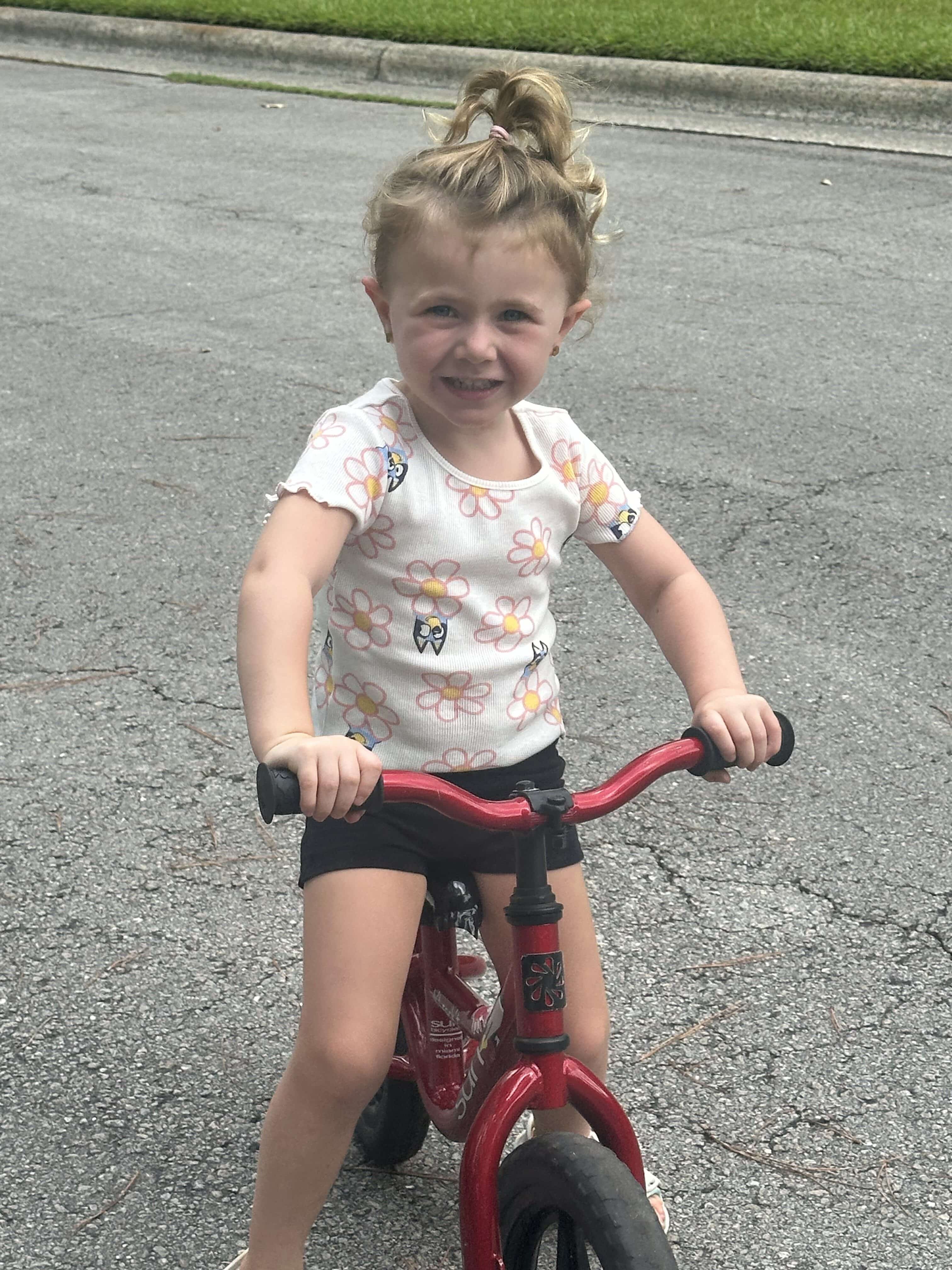
“I had a perfectly normal pregnancy and delivery,” Rebekkah Rostek said of her daughter Gemma’s birth. “Then the week of her first birthday, she had her first seizure.”
That terrifying moment sent the Rosteks to their local hospital in New Bern, but they were quickly transferred to ECU Health Maynard Children’s Hospital when Gemma’s seizures didn’t stop.
“She had what’s called clustering seizures, and she had maybe 50 of them in the time between going to the hospital in New Bern and arriving at Children’s,” Rebekkah recalled. “She was taken to the PICU, and they thought she had an infection.”
The doctors tested Gemma for a multitude of illnesses, but nothing quite added up. Her symptoms resolved, they sent her home in time to celebrate her first birthday and she did well – for a while.
Uncovering the cause
Six months later, Gemma again experienced clustering seizures. Back at Children’s Hospital, the Rosteks met Dr. Ahmed Ibrahim a pediatric neurologist.
“He suggested genetic testing based on Gemma’s symptoms, and that’s when we discovered she had a rare genetic epilepsy disorder called PCDH19.”
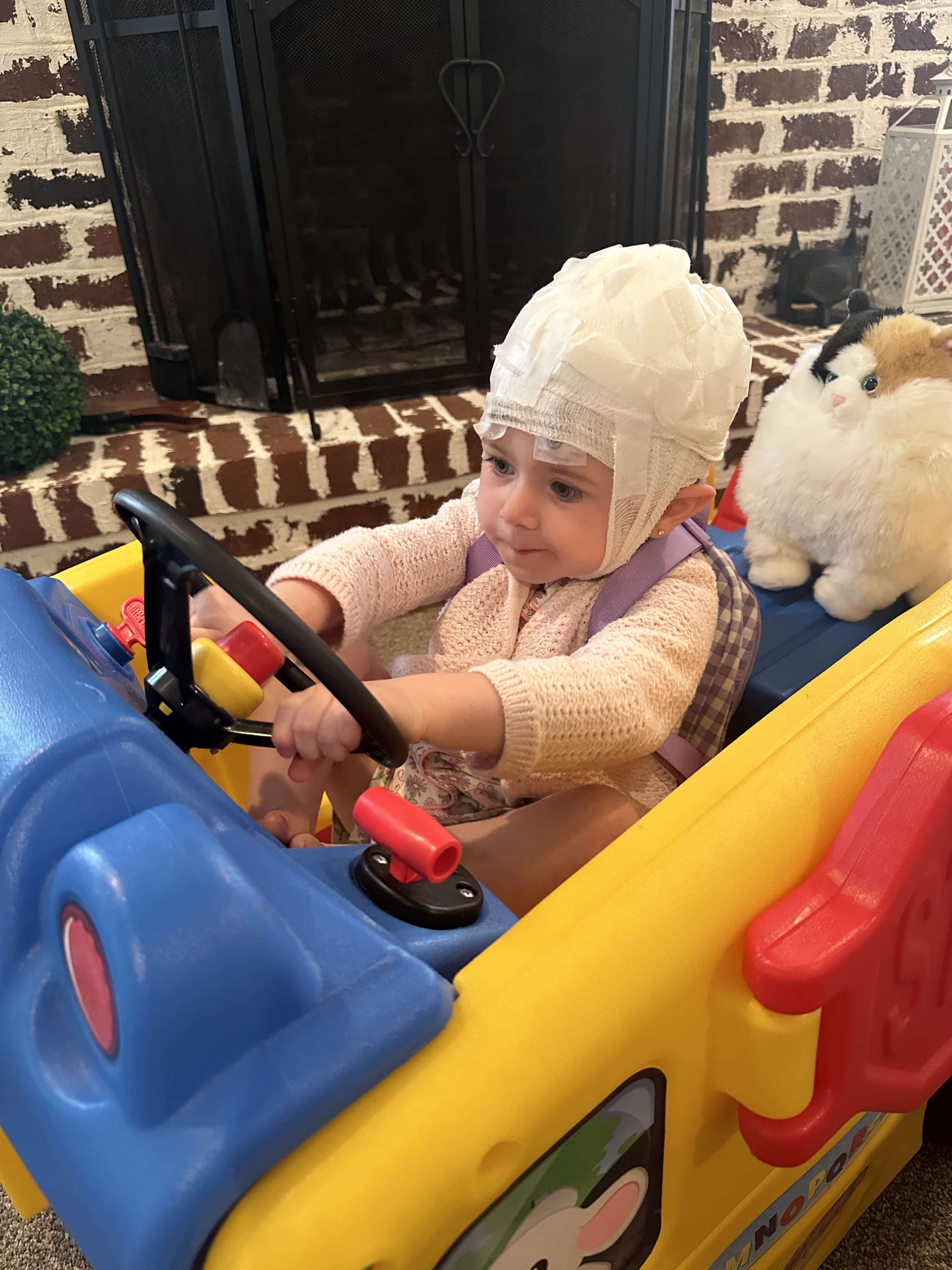
The PCDH19 gene makes a protein involved in cell-to-cell signaling, and mutations can cause clustering seizures, developmental challenges and neurological complications. While the diagnosis was frightening, Rebekkah said it also gave her and her husband information they needed.
“Dr. Ibrahim’s recommendation changed the course of our daughter’s care forever,” Rebekkah said.
“It allowed us to better understand Gemma’s condition and how to advocate for the specialized care she needs. Dr. Ibrahim’s knowledge, attentiveness and compassion have meant more to our family than words can fully express. I’ve never met a doctor of his caliber.”
With a diagnosis in hand, Rebekkah said they are now empowered to help Gemma when seizures happen.
“We know what to look for and we feel prepared. We have emergency medications we can administer at home, but if Gemma starts clustering, we seek medical treatment at the hospital,” Rebekkah said.
“Since her first seizure, we’ve been to Children’s six or eight times.”
Support every step of the way
“The second we walk through the doors of Maynard Children’s Hospital, there is relief in knowing Gemma is surrounded by people who genuinely care about her well-being and understand the seriousness of her condition,” Rebekkah said. “We know she is safe. We know she is being listened to. We know she is receiving exceptional care.”
That care comes from a variety of teams, from the Emergency Department and general pediatrics to the PICU, dietary services and Child Life specialists.
“We’ve had so many doctors, like Dr. John Biondi, and nurses, like Corbin [Martin] in the PICU, who have been phenomenal,” she said.
Rebekkah said that Maynard’s reminds families they aren’t carrying their burdens alone.
“Anything we’ve needed, down to help with insurance documents and access to the Ronald McDonald House, they’ve relieved the pressure. We want families walking through a similar circumstance to know there is hope. Rare diagnoses can feel isolating, but there is support from those who dedicate their lives to helping children like Gemma.”
She also praised support organizations, such as PCDH19 Alliance, which provides information, funds research and assists individuals with PCDH19 and their families. Having access to that information, and to positive stories from other families like hers, has been a lifeline.
Good days ahead
As for Gemma – she is an energetic almost-four-year-old with a zest for life.
“She loves her older brother, Emmett. She can ride a bike with no training wheels and she loves to swim. She’s a good friend at school and loves her two Golden Retrievers and her cat. She’s so funny and cute as a button.”
Gemma just finished a dance recital, she is taking gymnastics and in November, the family plans a visit to Disney.
The good days are good, and the bad days are bad, but there are more good days than bad ones,”
Rebekkah said. “It’s unpredictable and we don’t take things for granted because we don’t know what the seizures will do.”
“
Maybe it’s because of the epilepsy, but Gemma is fearless,” Rebekkah added. “At this point, I just tell her to shoot for the stars and we won’t hold her back. Epilepsy has been a significant part of her journey, but it does not define who she is.”
Share your story with us at go.ecuhealth.org/gratitude. Stories like these show the lasting impact of Maynard Children’s Hospital.