Children and seniors are at particularly high risk of heat-related injury if they are left in a hot car, even for a short time. ECU Health’s Center for Child and Family Wellness Eastern Carolina Injury Prevention Program, the N.C. Governor’s Highway Safety Program, Martin-Pitt Partnership for Children and Safe Kids Pitt County gathered to demonstrate that parked vehicles and hot weather can be a deadly combination for people stuck inside.
“Children heat up three to five times faster than adults and cannot cool themselves down as quickly,” said Ellen Walston, injury prevention program coordinator and Safe Kids Pitt County coordinator at ECU Health. “Seniors’ body temperature also regulates slower. Cracking your windows or leaving them down does not help, despite popular opinion. That is why it’s so important that you never, ever leave a child or a senior in a vehicle unattended, even for a minute.”
Walston said that 50 North Carolina children have died in hot cars from 1998-2025. At the demonstration, pairs of children’s shoes were displayed on a table to illustrate that total.
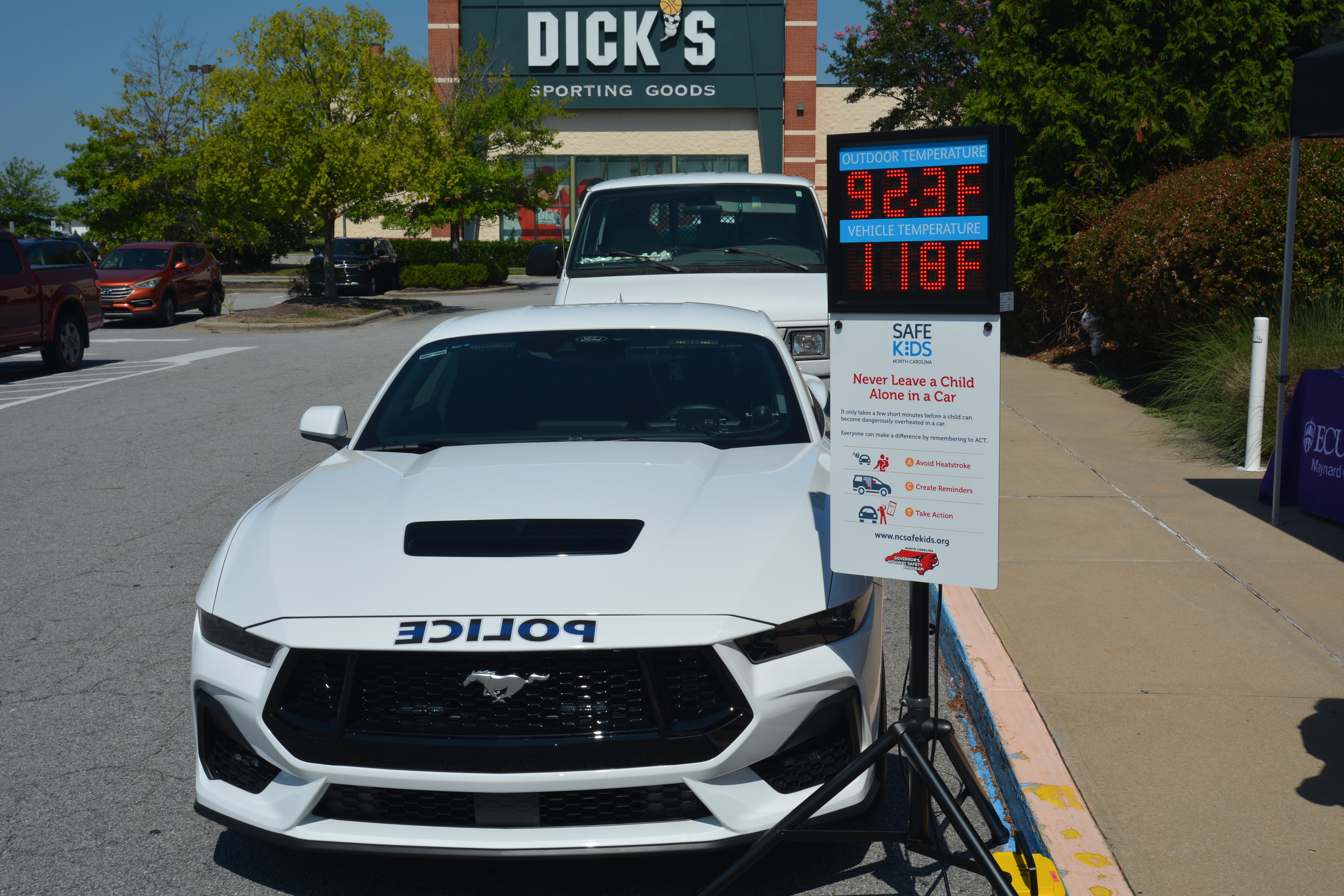
Also on display was a police vehicle with a temperature gauge depicting the temperature inside and outside of the vehicle. On an unseasonably cool summer day in the mid-80s, even as the temperature outside dipped and rose the air inside the car continued a steady climb to eclipse 130 degrees. Walston said that on a hot day, temperatures inside a parked vehicle rise 20 degrees in a span of ten minutes and continue to rise.
Walston said nationwide more than 50 percent of child deaths in hot cars happen because kids are forgotten in vehicles. Leaving an item like a backpack, cellphone or something else you will remember can serve as a good reminder to check your backseat.
About 17 percent of deaths occur when children are intentionally left behind, Walston said. The remaining deaths come from children gaining access to, but being unable to escape from, a hot vehicle.
“No amount of time, whether it is a trip inside the store or the bank or whatever it may be, is a safe amount of time to leave a child unattended,” Walston said. “When you are at home, lock your vehicle so kids cannot play inside. Small steps can make a big difference when it comes to keeping our children safe.”