As the father of a pediatric patient sat with his head in his hands in the adult emergency department trauma bay, staff chaplain Anthony Westbrook took a seat beside him.
Medical teams were treating the child for serious burns sustained in an accident at home. Westbrook remained with her father, offering a calm presence and listening ear during an overwhelming moment.
“He was devastated by what had happened and by what his child was going through,” Westbrook said. “He poured out his feelings, and I listened, gently placing my hand on his shoulder as he cried.”
Westbrook remained with the family throughout the child’s treatment. At the father’s request, he led a prayer with members of the care team gathered around the child’s bedside. Thirty minutes later, he accompanied the father and patient as they were transferred to a room in the children’s emergency department.
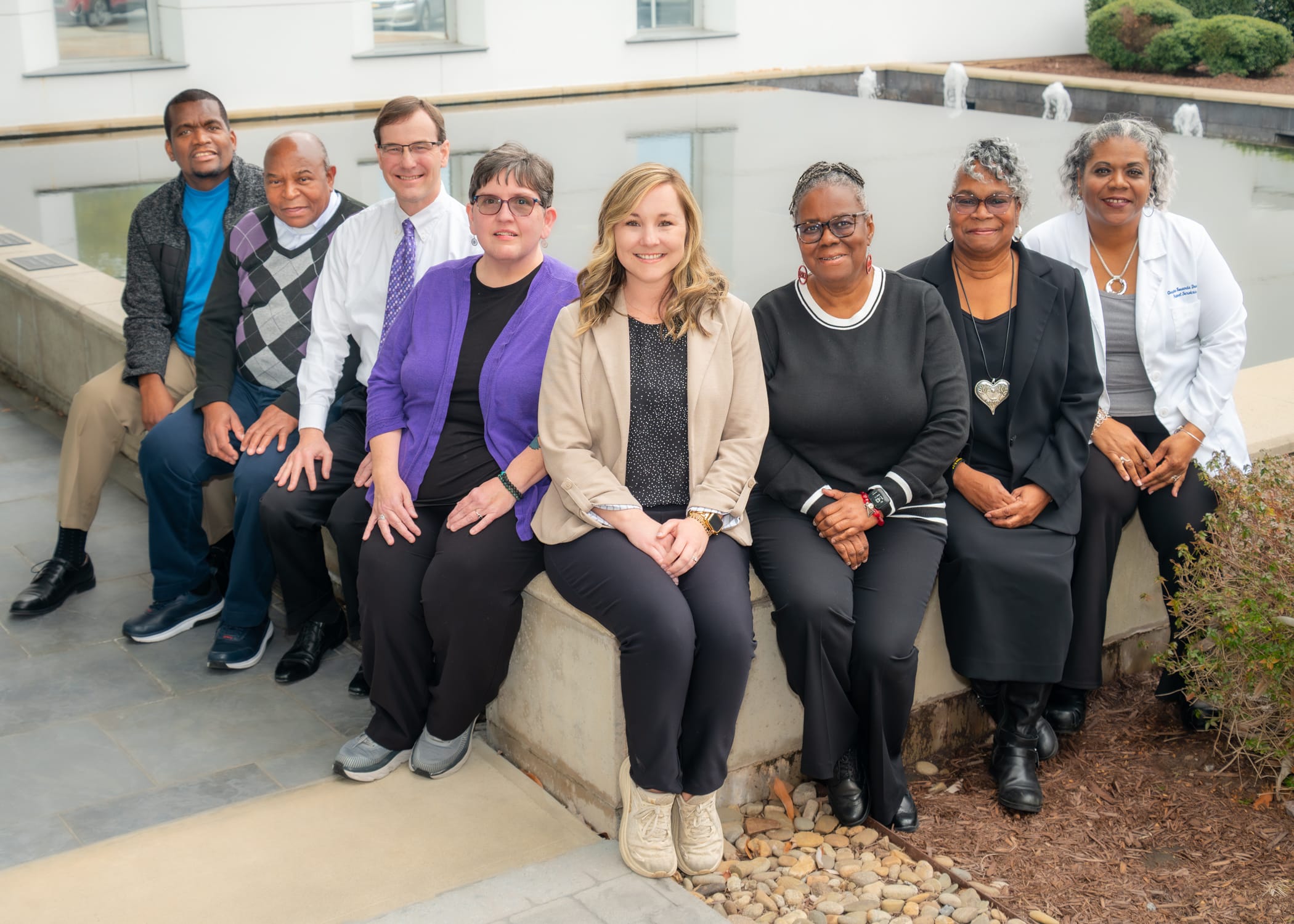
For Westbrook and his colleagues on ECU Health’s Clinical Chaplaincy & Spiritual Care team, these moments represent the heart of their work.
Formerly known as Pastoral Care, the department adopted a new name to better reflect its role as part of the clinical care team.
“Our chaplains provide professional spiritual and emotional care to patients, families and team members, regardless of their faith background or beliefs,” said Ashleigh Ware, manager of Pastoral Programs. “The new name helps communicate that we are an integral part of whole-person care.”
The department includes 12 team members, made up of full-time and part-time chaplains as well as chaplain residents. Together, they provide support throughout the ECU Health Medical Center, helping people navigate illness, grief, difficult decisions, celebrations, healing and hope.
“Our work is about meeting people where they are and walking alongside them,” Ware added.
“Ultimately, we want every patient, family member and team member to know they don’t have to carry it alone.”
While many people associate chaplaincy with a particular faith tradition, the department’s approach is inclusive.
“Clinical chaplains respect the spiritual diversity of the patients, families and team members we serve,” Westbrook said. “Whether they are Christian, Jewish, Muslim, Buddhist, Hindu, Humanist, Agnostic or Atheist, our role is to be present, to listen and to support.”
Sometimes support includes prayer or spiritual rituals.
During another family’s time of need, Westbrook helped fulfill a final wish for the parents of a gravely ill infant in the NICU. Surrounded by loved ones and members of the care team, the family gathered bedside for a baptism ceremony. Afterward, Westbrook presented the parents and the infant’s siblings with the seashell used to hold the baptism water.
“Our emotional, mental, physical and spiritual well-being are often deeply connected,” Westbrook said.
“Chaplaincy creates space for the spiritual, emotional and existential questions that can arise alongside a person’s medical experience.”
That support also extends to team members.
The department offers opportunities such as Tea for the Soul, Blessing of the Hands and Purposeful Pause Pop-Up events that allow team members to step away, reflect and reconnect with the purpose behind their work. Team members can also reach out directly to a chaplain following a difficult patient experience, a personal loss, a stressful event or anytime they need to talk.
“We want people to know they don’t have to wait until something becomes a crisis to reach out,” Ware said. “If you think a chaplain might be helpful, that’s enough reason to call.”
Within ECU Health’s community hospitals, Spiritual Care volunteers provide supportive rounding for patients. When a situation requires the attention of a clinical chaplain, the team is available to provide support through telehealth.
Patients, families and team members at ECU Health Medical Center can connect with a unit chaplain or contact Clinical Chaplaincy & Spiritual Care at 252-847-4790 or [email protected].