When an emergency unfolds in eastern North Carolina, citizens can rest assured help is on the way thanks to the Eastern Healthcare Preparedness Coalition (EHPC) at ECU Health and the many community groups that support it.
The preparedness coalition serves as the region’s State Medical Assistance Team, or SMAT, comprised of multidisciplinary medical and nonmedical volunteers. SMAT has operated in eastern North Carolina for decades and serves the area from its Regional Operations Center at ECU Health Medical Center in Greenville.
One of SMAT’s most vital capabilities is its 50-bed field medical station, which can be set up in the event of hurricanes, natural disasters or mass casualty events. The field medical station allows providers to deliver on-scene treatment during emergencies, allowing for earlier intervention and reducing the need to transport patients longer distances. In special circumstances, the group can turn large sites like gymnasiums or arenas into alternate care sites for patient treatment.
These capabilities are particularly important in the vast rural parts of the state, where ECU Health serves 1.4 million people in a 29-county region. Unlike urban and suburban parts of the state where multiple hospitals operate within the same county, many residents rely on SMAT’s ability to bring care to them rather than displace residents across multiple counties.
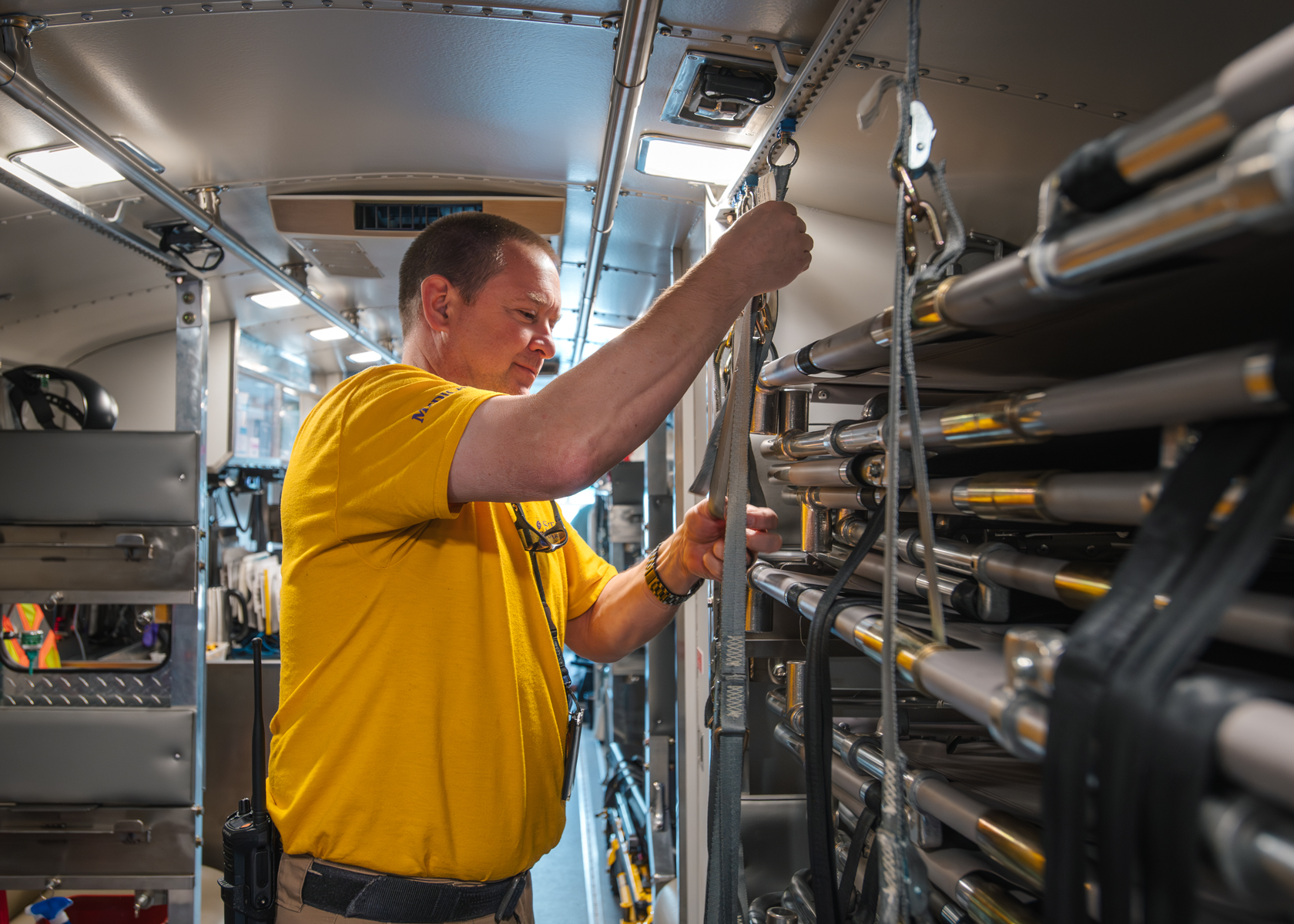
Should medical transport be necessary, the unit also boasts one of 11 medical ambulance buses in the state, capable of carrying 20 stretchers or 30 patients in seats and is equipped with basic life support capabilities. The bus’s capabilities were leveraged in March when SMAT was called to assist Pitt County Emergency Management with medical transport capabilities during a gas leak at a Greenville solar panel manufacturing plant. Staff were forced to evacuate the building while first responders from Pitt and Martin counties investigated. Some employees showed signs of general illness and required treatment on the scene. A handful of patients were transported to ECU Health Medical Center for further evaluation.
According to Chris Starbuck, director of emergency management for ECU Health, doctors were already triaging patients when the ambulance arrived and transport was seamless. Starbuck said SMAT’s ability is strengthened by longstanding relationships among SMAT members, ECU Health clinicians and local emergency responders.
“I’ve been in this role for years. I’ve seen people come and go, but for the most part we have a lot of retention and a lot of longstanding relationships,” Starbuck said. “You have everybody’s cell phone number, you’ve already met, you’ve already developed plans, you’ve conducted exercises, people know each other. If something happens, you’re a call away. That interconnectedness is a huge benefit to our region.”
Jim McArthur, deputy director of Pitt County Emergency Management, has been in Greenville since 2016. In all that time, from his roles as a firefighter and paramedic to now, he said SMAT has offered friendly faces and a deep well of institutional knowledge that bolsters emergency response. Many team members have roots in local responder organizations, too, which means longstanding relationships continue to flourish even in the most trying circumstances.
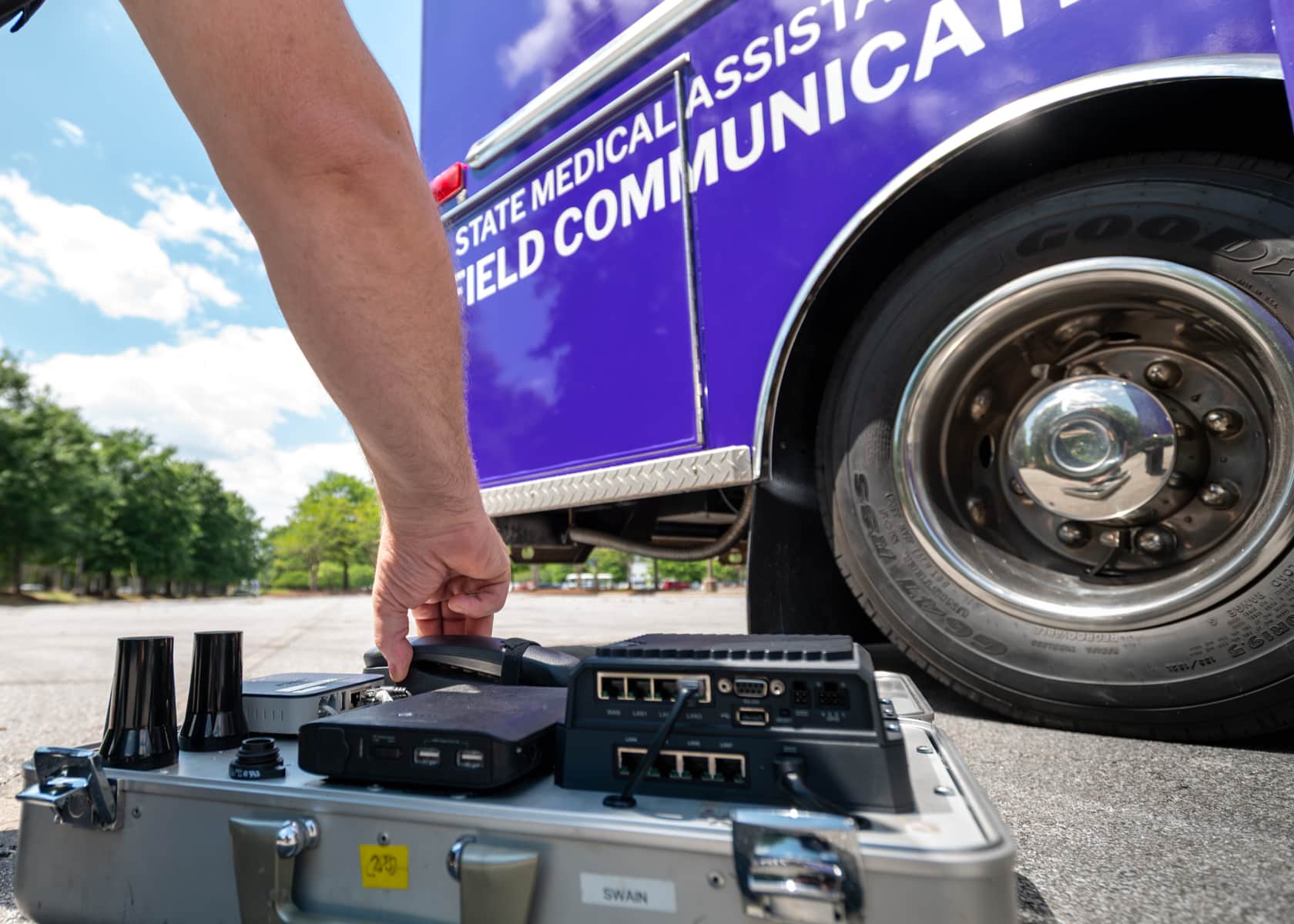
“SMAT’s communications capabilities and their knowledge of the team, their knowledge of emergency communications and the emergency response system are assets to our community,” McArthur said. “All of the folks there are local and have experience either in the hospital here or in the field – in fire and EMS or both. All those people that function within that disaster services area know the folks here that they’re going into the street with, so we can get things done quickly and well. They do an excellent job of maintaining their equipment and making sure it’s ready for service.”
Even though many SMAT assets are not needed every day, McArthur said their presence provides reassurance – not just for responders, but for the community.
“Our community should be comforted in knowing we have very specialized emergency response resources of all kinds that can respond to problems,” McArthur said.
“SMAT is so much more than a couple of people that respond to a car accident. These are folks who go out into the region to make sure that health care facilities, doctors, offices, nursing homes and whatever other critical pieces of daily life can continue to provide what they need,” McArthur continued. “The fastest road to recovery is to get people back to whatever their normal daily life is. The whole mission of the SMAT crew is to do that. Knowing SMAT has all that equipment in their warehouse and knowing that they can leverage those resources to help get the local response on track and get us where we need to be, is really comforting.”