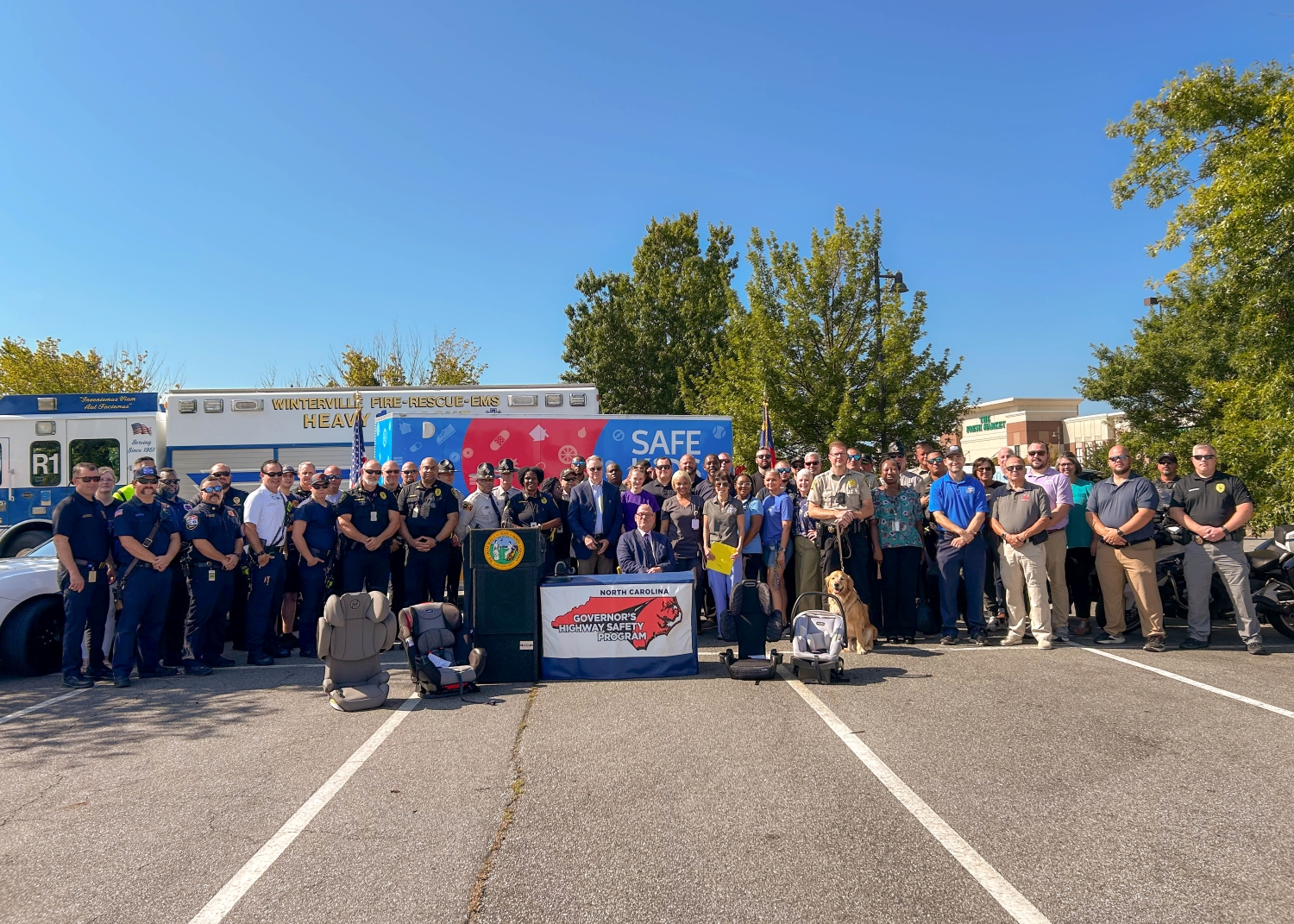
ECU Health joined state and local partners on Monday for a free car seat check event aimed at helping families keep children safe on the road.
The event brought certified Child Passenger Safety Technicians, Safe Kids Pitt County, Safe Kids North Carolina, the Governor’s Highway Safety Program, local law enforcement and fire/rescue agencies together in Greenville to provide free car seat inspections, education and safety resources for parents and caregivers.
Safety experts said properly used child safety seats can reduce the risk of death by as much as 71 percent, but many families are unknowingly placing children at risk because their car seats are not installed or used correctly.
“Unfortunately, we know that a large percentage of child safety seats have some type of installation or usage error,” said Ellen Walston, Safe Kids Pitt County coordinator and an injury prevention coordinator at ECU Health.
“Sometimes it’s a simple adjustment, but other times it can be a major issue that could impact a child’s safety during a crash. Our goal is to make sure every child leaves safer than when they arrived.”
The annual event serves as the official kickoff of National Child Passenger Safety Week, observed Sept. 21-27. Throughout the week, communities across the nation will host car seat inspections and educational outreach efforts designed to increase awareness about child passenger safety and proper vehicle restraint use.
Mark Ezzell, director of the North Carolina Governor’s Highway Safety Program, said child passenger safety remains a critical issue across the state.
“Last year in North Carolina, 231 children under the age of 14 were killed in motor vehicle crashes,” Ezzell said. “A significant portion of those children were either not properly restrained or were not restrained at all. Events like this help educate parents and caregivers and can make a real difference in preventing serious injuries and fatalities.”
Certified technicians at the event checked car seat installations, demonstrated proper restraint techniques and answered questions about selecting the right seat based on a child’s height, weight and age. Families without an appropriate seat also had access to replacement seats.
“Car seats don’t last forever,” Walston said. “Most seats expire after about six years, and factors like heat, storage conditions and everyday wear can affect their performance. We also discourage people from purchasing used seats from online marketplaces or yard sales because you don’t know the seat’s history.”
Allan Buchanan, director of Safe Kids North Carolina, encouraged parents and caregivers to take advantage of free car seat inspection services available year-round throughout the state.
“A lot of parents think they’ve installed their car seat correctly, but there can be small mistakes that make a big difference in a crash,” Buchanan said. “Why risk it? We have permanent checking stations across North Carolina where certified technicians can help ensure children are riding as safely as possible.”
The most common mistakes include loose fitting straps, incorrect seat angles and LATCH (Lower Anchors and Tethers for Children) errors.
Safety experts also emphasized that choosing the right type of restraint is just as important as proper installation. Children should remain rear-facing as long as possible, transition to forward-facing seats with harnesses when appropriate and use booster seats until a vehicle seat belt fits them correctly.
For Walston and her team, the mission goes beyond a single event. The Eastern Carolina Injury Prevention Program at ECU Health has served families for more than 30 years and has checked more than 100,000 child safety seats since its inception. The program has also distributed more than 20,000 car seats to families in need.
“We’re proud of the work we’ve done over the years, but there’s still more to do,” Walston said. “Every ride matters, and every child deserves to be protected. If we can help one family avoid a tragedy, it’s worth it.”
Parents and caregivers interested in finding a permanent child passenger safety checking station can visit buckleupnc.org/locations or contact their local fire department or injury prevention program for more information.