ECU Health brought together a community of patients, families, providers and advocates on Sept. 18, for the 2026 Tate Holbrook Annual Sickle Cell Disease Update, an educational conference hosted by the ECU Health Comprehensive Sickle Cell Program and the Brody School of Medicine at East Carolina University.
Named in honor of Dr. Tate Holbrook, the pediatric hematologist who founded East Carolina University’s Comprehensive Sickle Cell Disease Program in 1979, the annual event provides an opportunity for the sickle cell community to learn about new treatments, discuss challenges facing patients and families, and strengthen partnerships between health care providers and those living with the disease.
“This conference is an opportunity to bring patients, families, providers and community partners together to learn from one another and continue advancing care for people with sickle cell disease,” said Charmaine Bond, social work practitioner with the ECU Health Comprehensive Sickle Cell Program.
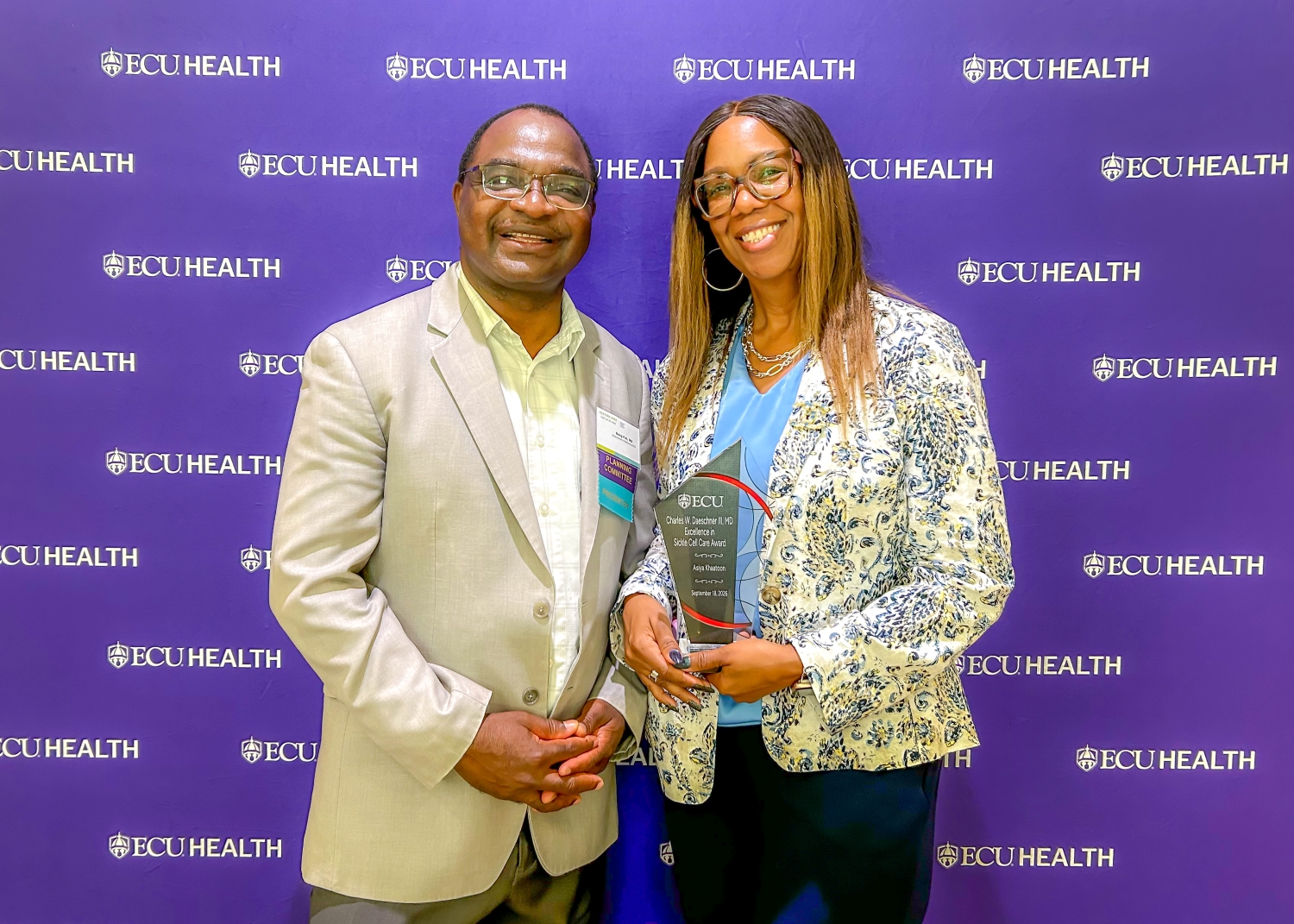
“We hope participants leave feeling energized, supported and empowered to continue playing an active role in the sickle cell community.”
Sickle cell disease is an inherited blood disorder that affects how red blood cells carry oxygen throughout the body. The condition can lead to episodes of severe pain, organ damage and other serious complications. While often associated with the African American community, experts say the disease can affect people of any background.
“Sickle cell disease is highly variable, meaning every patient experiences it differently,” said Dr. Julie Kanter, president of the National Alliance of Sickle Cell Centers and a featured speaker at the conference. “What’s most important is that patients receive individualized care from providers who understand the condition and recognize that each person’s experience is unique.”
Dr. Kanter said recent advancements in treatment continue to bring hope to patients and families. “There are exciting new therapies being developed for sickle cell disease,” Dr. Kanter said. “While gene therapy has received significant attention, it is only one of several promising treatment options that are expanding opportunities for patients and improving quality of life.”
For ECU Health, the annual conference reflects decades of commitment to improving care for people living with sickle cell disease across eastern North Carolina.
“ECU Health has been involved in sickle cell care and research since the beginning of our program in 1979,” said Dr. Beng Fuh, director of the ECU Health Comprehensive Sickle Cell Program and pediatric hematology and oncology, and professor at the Brody School of Medicine. “We provide comprehensive care that begins with newborn screening and continues through childhood and adulthood, supported by a multidisciplinary team that includes physicians, nurses, social workers, psychologists and other specialists.”
Dr. Fuh emphasized that treating sickle cell disease requires support from the entire community.
“It takes a village,” he said. “That village includes families, teachers, neighbors, health care providers, social workers and policymakers. Everyone has a role to play in supporting individuals with sickle cell disease and helping them achieve their full potential.”
Among those in attendance was Thor Forte, a young man living with sickle cell disease. Despite the challenges the condition has presented throughout his life, Forte said the experience has helped him appreciate the people around him and the importance of perseverance.
Forte and his family attended the conference to share their experience with the disease and connect with others who understand the journey of living with sickle cell disease.
“You have to work through the hard times,” Forte said. “It can be difficult, but you have to keep pushing forward.”
The conference featured sessions on healthy aging with sickle cell disease, mental health and trauma-informed care, emerging therapies and updates on sickle cell care in eastern North Carolina.
Organizers hope the event continues to grow in the years ahead while serving as a source of education, encouragement and connection for the region’s sickle cell community.
For patients and families navigating a sickle cell diagnosis, Dr. Fuh offered a simple message: seek care, ask questions and know that support is available.
“Knowledge is power,” he said. “We want every patient and family to know they are not alone and that there is a team here ready to help them every step of the way.”