On Jan. 28, 2026, ECU Health and East Carolina University hosted the 10th Annual ECU Health Quality Improvement Symposium in person and virtually. A total of 198 people registered for the event, with 171 attendees participating, including 21 who joined virtually.
Dr. Jennifer Sutter, chief of division of pediatric endocrinology and physician director of the Quality Improvement Symposium, welcomed attendees. Dr. Michael Waldrum, dean of the Brody School of Medicine at East Carolina University and chief executive officer of ECU Health, kicked off the day with opening remarks.
Quality improvement across the system
The symposium showcased quality improvement initiatives across ECU Health and East Carolina University’s Health Sciences Campus, with a focus on patient safety, population health and interprofessional practice.
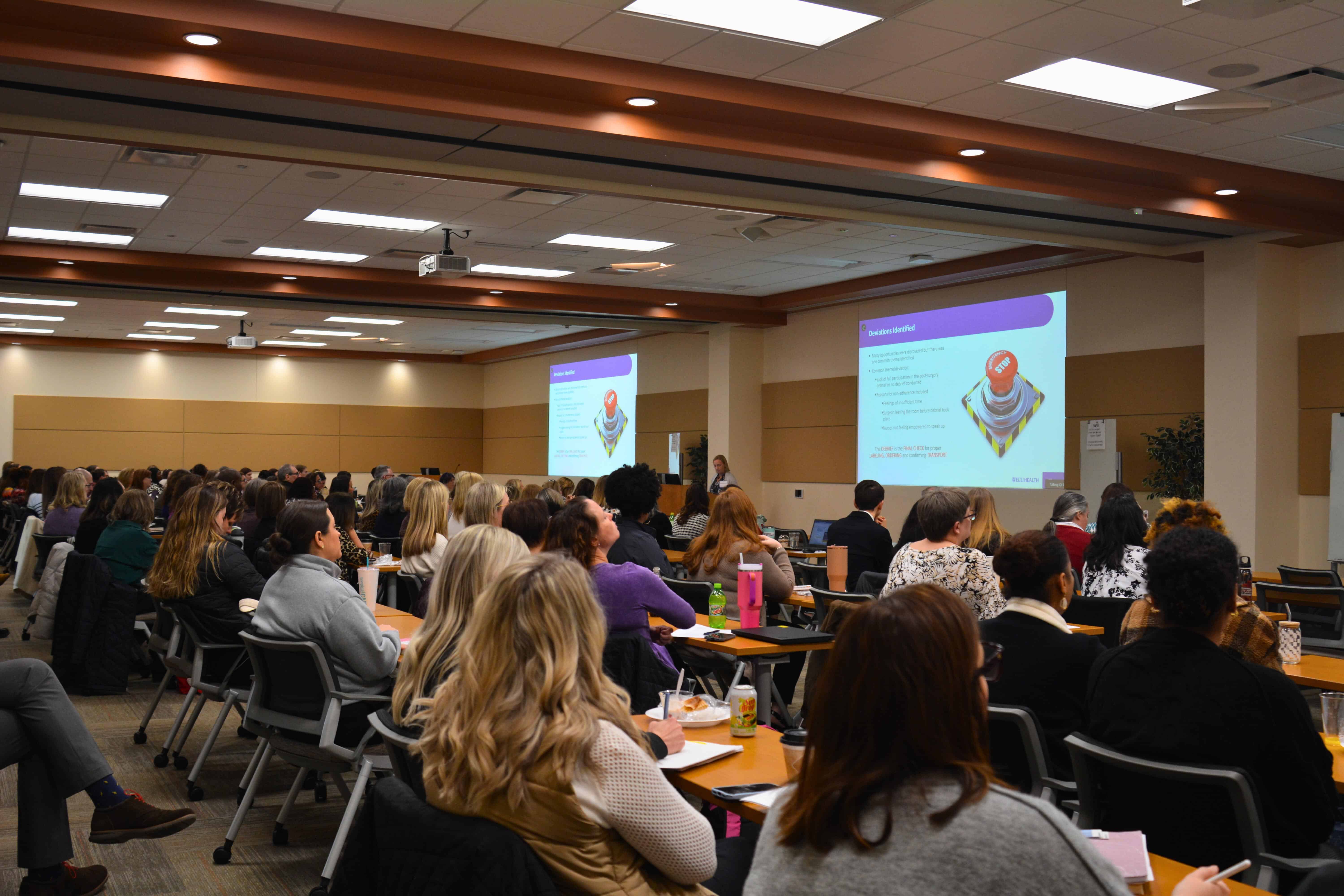
The event provides academic and community physicians, health professionals, health care teams, residents, fellows and students an opportunity to present work in systems improvement and practice redesign to peers and health system leaders.
A culture of collaboration
A recurring theme throughout the presentations was collaboration. Many projects emphasized the importance of multidisciplinary teamwork and cross-departmental partnerships, with several project champions recognized for their leadership.
“We have great people delivering great care,” said Dr. Herbert Garrison, event podium moderator and professor of emergency medicine emeritus at the Brody School of Medicine, East Carolina University. “We truly have a culture of excellence.”
Waldrum echoed that sentiment, noting collaboration as a defining characteristic of the work presented. “Culture of excellence is what I kept thinking about,” he said. “I stopped counting how many times collaboration was mentioned. These projects sit at the intersection of quality improvement, experience and cost. Thank you for building the culture of ECU Health.”
In closing remarks, Waldrum thanked presenters for their dedication. “Thank you for inspiring me to continue sharing the message of the dedicated people doing this important work,” he said.
Dr. Jason Higginson, executive dean of the Brody School of Medicine and chief health officer of ECU Health, also thanked participants at the conclusion of the symposium.
“Quality improvement is an ongoing process that continues to evolve over time,” Higginson said.
“You can see the level of engagement and the meaningful impact being made. Anyone who receives care at ECU Health will benefit from that work. Thank you to everyone who presented and participated.”
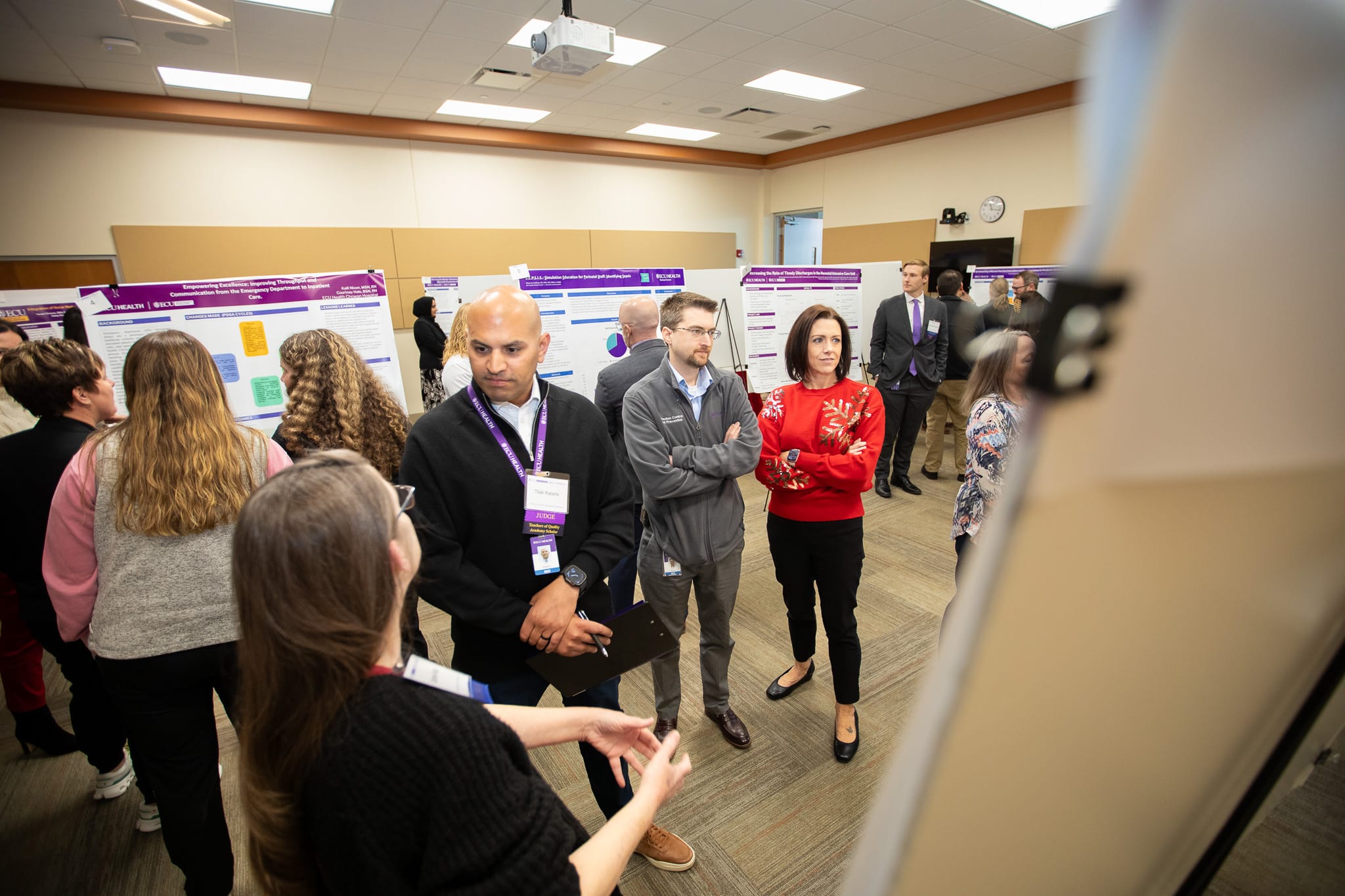
Awards for the top podium and poster presentations were announced following the showcase.
Podium presentation
Outstanding Podium Presentation: Kayla Ausbon – “NICU CLABSI Reduction through Multidisciplinary Collaboration and Innovation”
Honorable Mention Podium Presentation: Lori Goodwin, Paula Linville and Gail Scheller – “Closing the Gap: Improving Hypertension Control in Eastern North Carolina”
Quick shot podium presentation
First Place Quick Shot Podium Presentation: Saba Ijaz (3rd year Medical Student, TQA Project, Drs. Jessica Eubanks and Jessica Gancar) – “Improving Neurodevelopmental Evaluations in the Neonatal Intensive Care Unit”
Second Place Quick Shot Podium Presentation: Laurie Etheridge – “Bye-Bye Opioids: Revolutionizing Pediatric Post-Surgery Care”
Third Place Quick Shot Podium Presentation: Valentine Okafor (4th year medical student, LINC Scholar) – “Improving Influenza Vaccination Rates in Pediatric Cystic Fibrosis Patients: A Quality Improvement Initiative at ECU Pediatric Specialty Clinic”
Poster presentation
First Place Poster Presentation: Katherine Taylor (TQA Project, Drs. Katie Taylor and Jessica Scheller) – “Increasing Kangaroo Care in the Neonatal Intensive Care Unit for Very Preterm Neonates”
Second Place Poster Presentation: Michael McFayden (3rd Year Medical Student, LINC Scholar) – “Increasing Timely Discharges in the NICU”
Third Place Poster Presentation: Ranee Pender – “Reducing Patient Falls Through Standardized Toileting and Call Bell Protocols on a Medical Surgical Unit”