As a former East Carolina University football player, Javon Brumsey knows all about hard work. Now a teacher for South Central High School, where he recently won the Beginning Teacher of the Year award, Brumsey always considered himself to be in good shape.
“I just turned 38, and I’ve always been a fit guy,” he said. “But last summer I noticed I got out a breath walking up and down hills and I had a different feeling in my chest and throat.”
That feeling went away – for a while. It resurfaced after a steak dinner, and Brumsey decided it was time to do something.
A serious threat revealed
“I asked my wife to stop at Walmart on the way home from the restaurant, and I took my blood pressure there,” he said. “It was high, so we bought a cuff and I checked my blood pressure twice a day. It was high every day.”
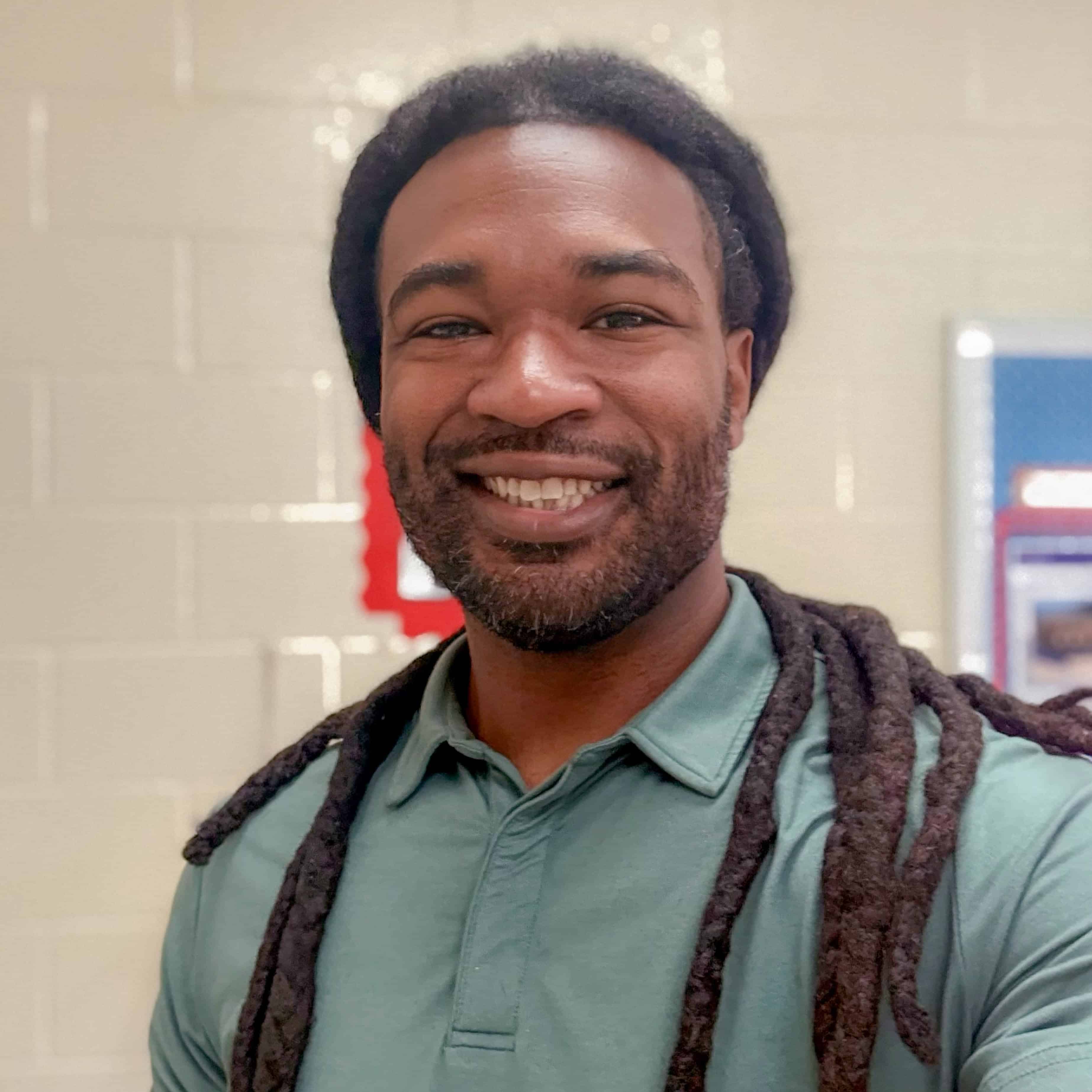
Worried, Brumsey made an appointment with his physician, but initial tests didn’t show anything was wrong aside from the high blood pressure readings. He was put on medications with instructions to reach out if his other symptoms returned.
“My blood pressure went down, but I kept having the strange feeling in my chest and feeling short of breath,” he said. “They checked me for reflux and they tried asthma medication, but that didn’t help. They were confused.”
Then, Brumsey’s cardiologist decided to try a CT scan using dye, and that’s when they found the blockage.
Located in his left anterior descending artery, the blockage was the kind that causes a heart attack sometimes known as the “widow maker,” so called because that artery supplies half of the blood to the heart.
“They called me back to the doctor’s office the same day, so I knew it was serious,” Brumsey said. “They tried to see if they could treat the blockage with a stent, but the artery was 95% blocked.”
Brumsey was admitted to the hospital immediately and scheduled for bypass surgery with Dr. Michael Bates the next day.
A renewed commitment to health
Brumsey recovered in the hospital for two weeks after surgery, followed by a second, shorter hospital stay to treat an infection. Once he was home for good, he immediately made an appointment with ECU Health’s Cardiovascular and Pulmonary Rehabilitation program.
“While I was in the hospital, I lost 15 pounds. I was feeling weak from being in bed, so I was excited to get my strength back,” he said.
From day one, the rehabilitation team made Brumsey feel like he was in good hands.
“The therapists knew I was strong and a big guy, but they wanted to be sure everything went well so they started me out light and gradually increased the challenge,” he said. “They were patient and supportive, checking my vitals every day before I worked out and again before I left. I trusted the process, and they looked out for me.”
In addition to exercise, Brumsey took a class on nutrition, including how to read food labels and prepare food, and he learned how to monitor his own vital signs at home. The class was helpful, and the connection he made with his fellow classmates encouraged him.
“I was the youngest one there, but everyone was supportive. Being with people who had also gone through this experience was a big deal,” he said. “It gave me motivation and that, along with my trust in God through this process, kept me motivated.”
Now, Brumsey continues to do what he can to prevent something like this from happening again.
“I had no family history of this. It was out of the blue,” he shared. “I have a treadmill at home and a weight bench, and I plan to continue exercising and eating better. I’ve been married for 10 years in July, and we have three kids. I want to stay on top of things.”
Brumsey also said he’s appreciative of the care he received at ECU Health, and he encourages anyone experiencing similar symptoms to see their doctor.
“Everyone did such a great job,” Brumsey said. “For anyone going through what I did, I recommend ECU Health to take care of them. I trust them.”