Tom Stanley, manager in Marketing and Communications, discovered the importance of advance care planning (ACP) one afternoon at swim practice.
“My parents were in town to visit the grandkids and dad’s heart suddenly stopped,” Tom shared. “It just so happened there were two physicians right there and they got CPR going immediately.”
Tom’s father, Bill, was transported to ECU Health Medical Center, where he was admitted for testing. During a stress test, his heart stopped for a second time.
“The doctors brought him back and declared him an official heart patient,” Tom said. “He ended up staying in the hospital for several weeks after needing a bypass surgery and a pacemaker.”
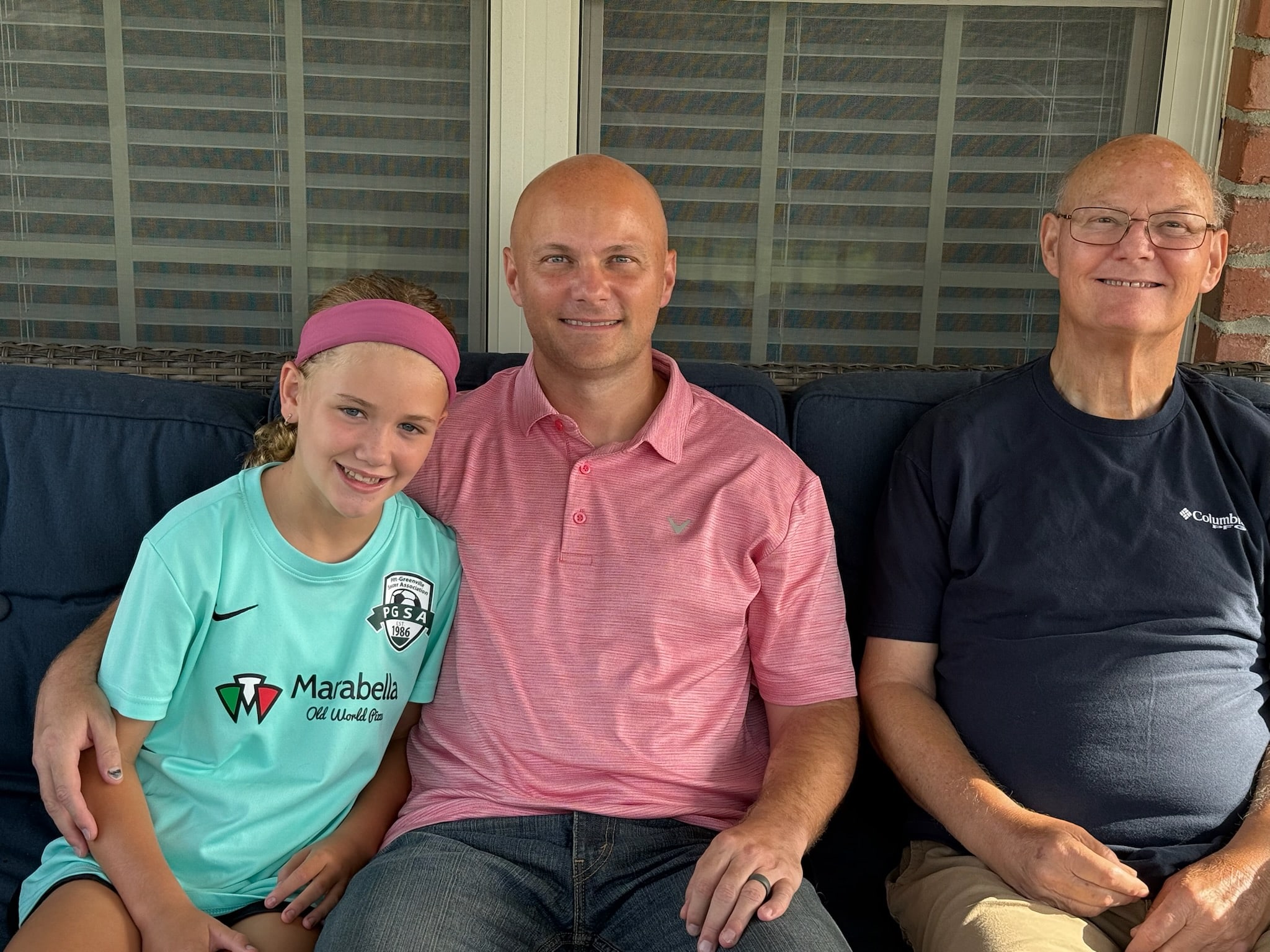
During this unexpected event, Tom discovered that his dad had already completed his advanced directives, a step that removed a great deal of worry for Tom and his family because his dad was able to communicate his preferences for care.
Advance care planning, which gives adults the opportunity to plan and record their health care choices in situations where they are unable to communicate what they want, can be a tricky topic to discuss, said Ellie Ward, advance care planning coordinator. As a patient-centered health care system, ECU Health supports informed and shared decision making for our patients and their families.
Two primary advance directive documents Ellie recommended that all adults complete are the
HCPOA and a living will, because the conversations surrounding a person’s wishes are key.
“There is so much nuance around understanding someone’s care preferences,” Ellie said. “Being able to ask clarifying questions is key. For example, if someone says, ‘I don’t want to be a burden to my family,’ do they mean a financial burden? An emotional burden? That’s why these conversations are the cornerstone to good advance care planning.”
“Dad had a stroke 10 years ago, and he put together his health care power of attorney and living will at that time,” Tom explained. “Having everything in place – and knowing what he wanted – allowed us to focus on what the doctors were saying, what he was saying and spending time together ahead of a serious surgery rather than completing these in the midst of all that was going on.”
“It’s not often that family members all agree on a course of treatment if there’s been no prior discussion,” Ellie said. “That can create friction in an already stressful situation. This paperwork, and the conversations around each person’s preferences, gives you and your family peace of mind. You are preparing others to represent your wishes, and it allows you to be the captain of your own ship.”
Witnessing his father’s situation helped Tom realize the importance of having these conversations and completing these documents before the unexpected.
“This turned on the lightbulb for me,” he said. “I realized that it’s necessary because, not only do you make your wishes known, but you also provide comfort and reduce stress for your family, so they don’t have to do this later without you.”
Tom contacted Ellie about how to complete his own HCPOA and living will documents, a task that ended up being seamless and easy after he accessed the ECU Health Advance Care Planning website. The site offers information and step-by-step instructions in the downloadable toolkit. The process is free, does not require an attorney, and can be uploaded to one’s electronic health record. Ellie also noted that people can reach out to her team for information.
“I want people to know that they can request assistance or support, and our team will step up to help them,” Ellie said. “They can also come to any of the free community educational events across our 29 county service area to learn more.”
However, many people don’t recognize the value of the ACP process, or they don’t understand the difference between an HCPOA and a legal power of attorney, or a living will and a last will and testament.
“People think they don’t need to pay attention to advance care planning because they already have a will, or they don’t have a lot of property. But there’s a difference because an HCPOA and living will address health care needs and a POA and last will and testament handle property and money,” Ellie explained.
Specifically, an HCPOA identifies the person or people a patient wants to step in and represent their medical decisions to the health care team. Ellie was sure to clarify that the designated individuals represent the patient’s wishes, not making decisions for the patient.
A living will is a declaration of one’s desire for a natural death and is only in play if two physicians agree the patient is actively dying. The living will determines what care the patient does and does not want to receive at the end of life.
Providing education about ACP earlier in patients’ health care journeys is key, Ellie said, because it empowers our patients, promotes shared decision making and supports patient-centered care, which are essential to ensuring ECU Health’s mission.
“We want to host these conversations early on to make sure we’re aligning the care we provide to the goals of each person,” she said. “This is not just for acute incidents or the chronically ill – it’s for everyone.”
Tom’s father is in cardiac rehabilitation and doing well now, and Tom’s own HCPOA and living will paperwork is complete and on file. That, and the conversations he had with his family, have prepared them to honor his wishes for care.
“You never know what might happen,” he said. “We didn’t expect my dad’s heart to stop, or for him to be in the hospital, but knowing his wishes for medical care was so valuable. Now I’m an advocate for ACP.”