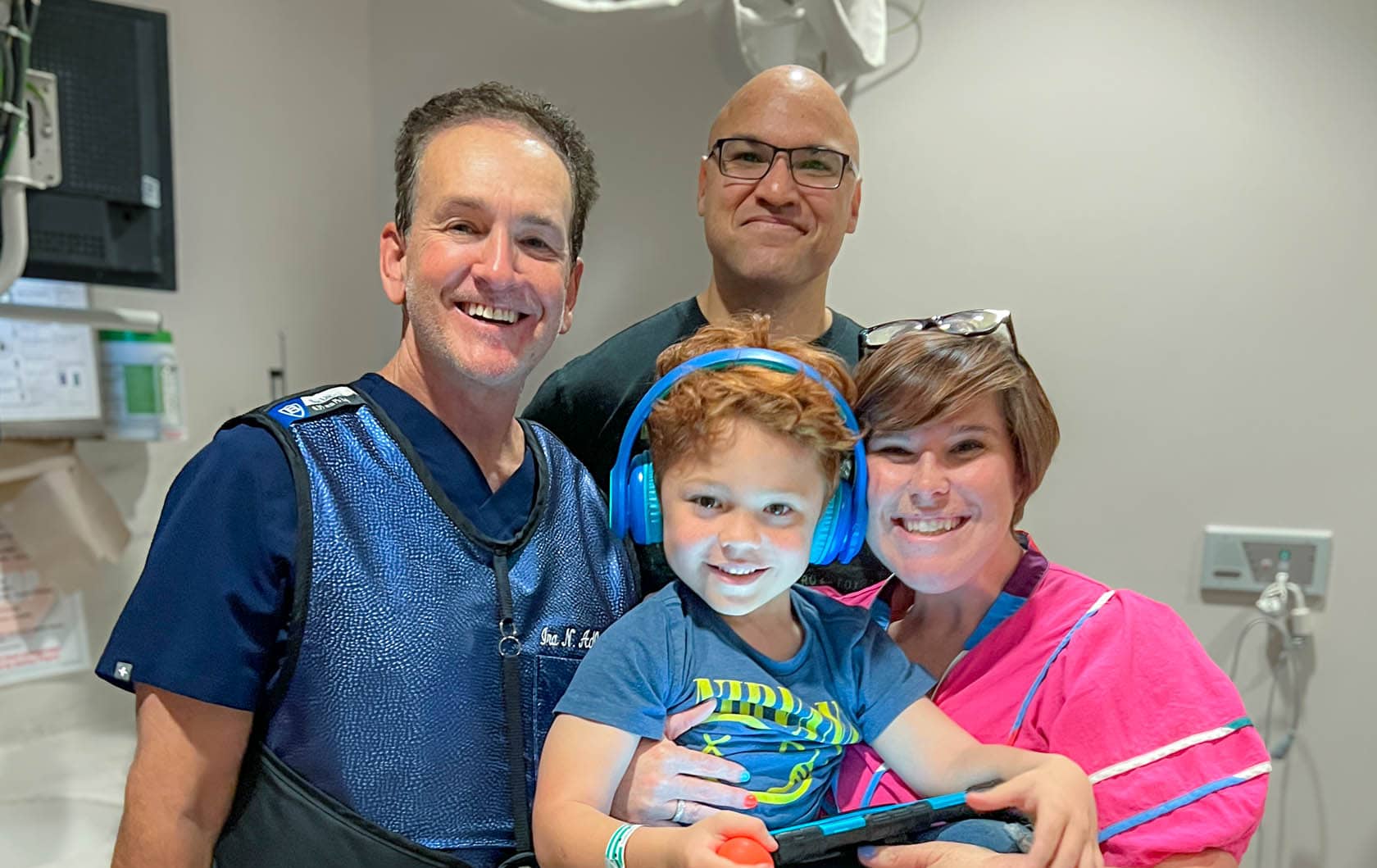
After challenging experiences finding care options for their son with autism, an Onslow County family now rests assured they can count on team members at the James and Connie Maynard Children’s Hospital to be professional, compassionate and accommodating.
In March, Dax Boling, 5, needed to undergo a barium swallow to assess gastrointestinal symptoms. The test requires patients to drink a thick liquid containing barium, which illuminates the outline of their upper digestive tract in x-ray tests. It was not the first time according to his mom, Jayme Boling, a social worker, and dad, Justin Boling, a U.S. Marine stationed at Camp Lejeune, and those past experiences at previous hospitals across three states had caused Dax significant anxiety.
“The stress and the fallout afterward is just catastrophic for him,” Jayme said. “It takes like a day or two to regroup. It’s hard enough for anyone to go to the doctor, to take them to drink the barium swallow and to be touched and prodded and poked. It’s not fun for him to be held down crying.
“We’ve been to many doctors and we are usually met with frustration,” she continued. “People will try to speed through the appointment because it’s uncomfortable for Dax.”
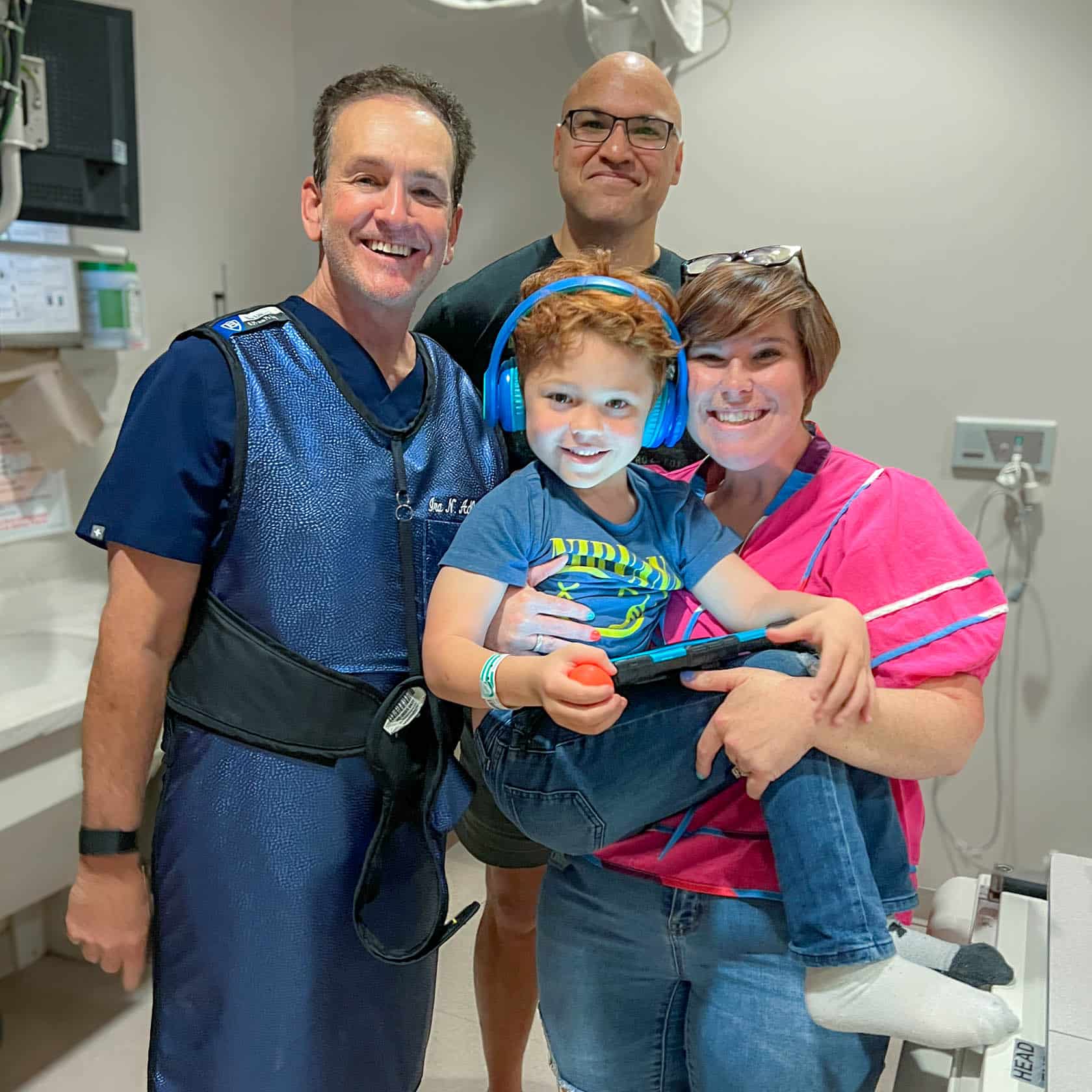
“If he’s not comfortable then we’re not going to get the findings that we need to make sure that we’re improving his quality of life and to make sure that he’s getting the right medications or other treatment he might need,” Justin added. “That comfort is paramount to being able to help him. It’s important to have people who care and can make him comfortable, because not everyone can.”
A friend recommended Maynard Children’s Hospital to the Bolings. When Justin brought Dax to Greenville for his appointment, the youth asked if he had to get an x-ray. His parents told him that was the case, and Dax was afraid to the point of a panic attack in the parking lot. Justin, who had to experience the pain of watching his son undergo stressful treatments, was nervous too. That changed when they entered the hospital.
From the lobby, to the waiting room to the exam room, team members showed the family ECU Health’s values of professional, compassionate patient care. Dax was given the freedom to move around which helped him stay calm. Rather than being constrained by his treatments, Dax was shown support and given room to be a kid even in a medical environment.
“It was an entirely different experience at Maynard,” Jayme said. “Everyone was very kind to him. He was very nice, very comfortable.”
The barium swallow was as painless as possible, and the Bolings got the results they needed to monitor Dax’s condition. Jayme said the family plans to visit Maynard Children’s Hospital for any future procedures Dax might need, too.
“This was probably one of the most positive experiences I’ve had getting my son’s care,” Justin said. “I feel like everyone cared about him and everyone was very welcoming. Everyone was very understanding of our family. That means a lot as the parents of a neurodivergent child.
“At the end of the day, we are finally on the right path to getting Dax the appropriate care he needs.”
Share your story with us at go.ecuhealth.org/gratitude. Stories like these show the lasting impact of the Maynard Children’s Hospital.
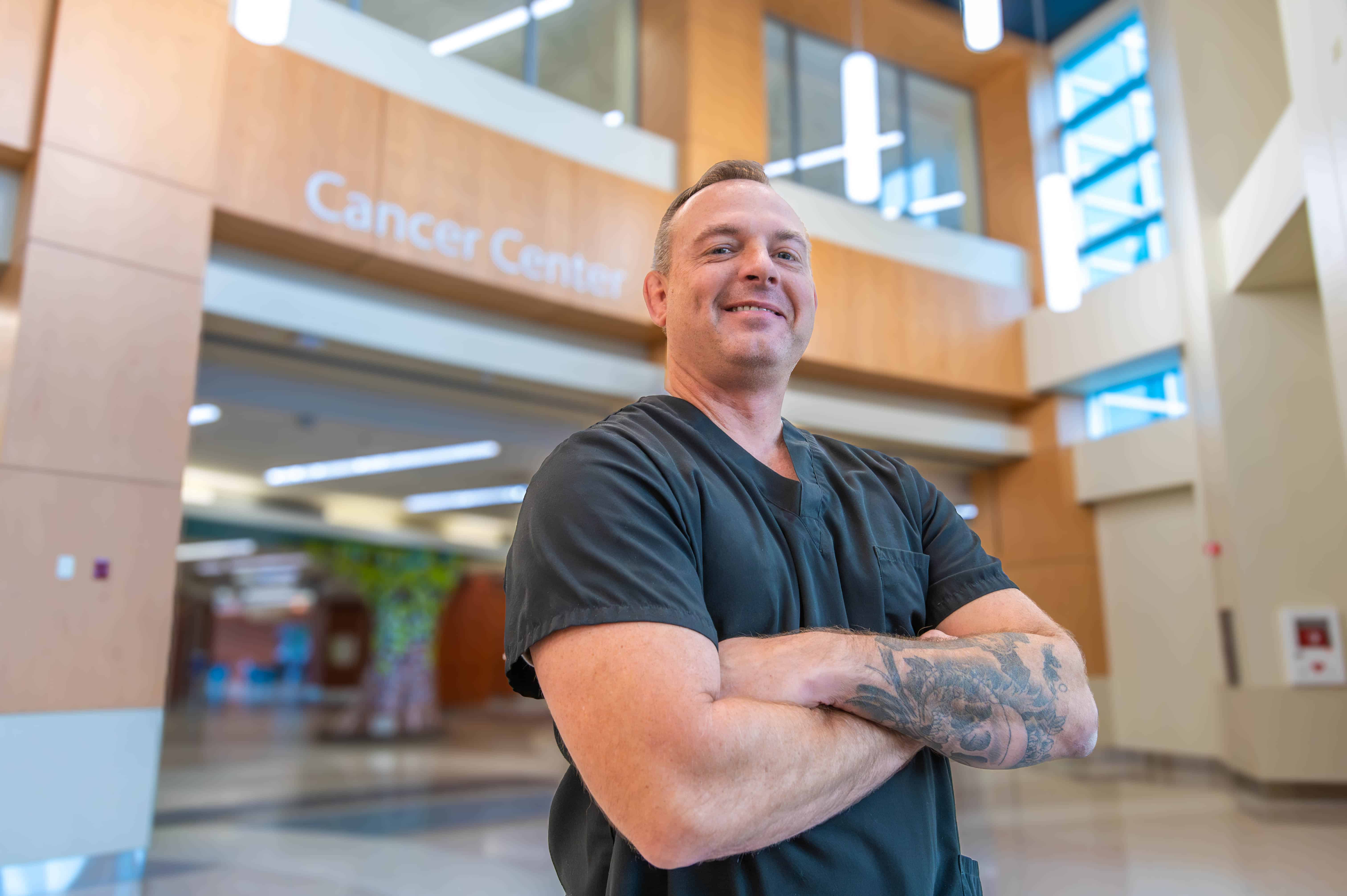
To be a health care provider is to answer a calling. For some, the journey to health care is a straight line; for others, the road is winding. This series features stories from ECU Health team members who took the winding road, but found the destination to be worth the effort.
Tim Barnes, the clinical manager for radiation oncology, has spent 17 years with ECU Health, but a career in health care wasn’t his original plan.
“I grew up wanting to work in law enforcement,” Barnes said. “My four-year degree is in criminal justice and in 1996, I started my career at the Wilson Police Department. I worked there until 2006 and served in various roles from patrol officer to the SWAT team to homicide.”
Somewhere along the way, however, Tim felt called to do something different.
“Medicine and law enforcement are both fields you have to feel led to do,” he said. “As a child and through high school and college, I had a strong desire to be in law enforcement. But somewhere along the line, and maybe it was because I was getting older or was married and had a family, there was a point I felt a calling to the medical field.”
Having a close friend diagnosed with head and neck cancer planted the seed for working in health care.
“When my friend passed away, that directed my focus on cancer care specifically. So, I started researching different jobs and opportunities where I could transition from law enforcement into the medical field,” Barnes said.
That’s how Barnes ended up in radiation therapy.
“I drove over to Pitt Community College and looked into their Radiation Therapy Technology program and met the program director at the time, Elaine Spencer,” she said. “She explained the process of going back to school and I just followed her advice – which is how I ended up here.”
Barnes joined ECU Health in 2009 as a radiation therapist, when radiation oncology was a part of the Brody School of Medicine.
“I worked there until the radiation oncology department moved into the new cancer tower, and I’ve been there ever since,” he said.
Barnes said that although law enforcement and medicine don’t seem connected, there’s a lot he applies from his experience as a police officer to his current role.
“It’s obviously a very different job, but my attention to detail, my focus on safety and the importance of working as a team – I learned those skills from my time with the police,” he said. “It’s very high risk in law enforcement, and you learn to depend on each other and function as a team. That carries over into the medical field and how departments and teams coordinate to take care of patients.”
That collaboration and support is very important to Barnes.
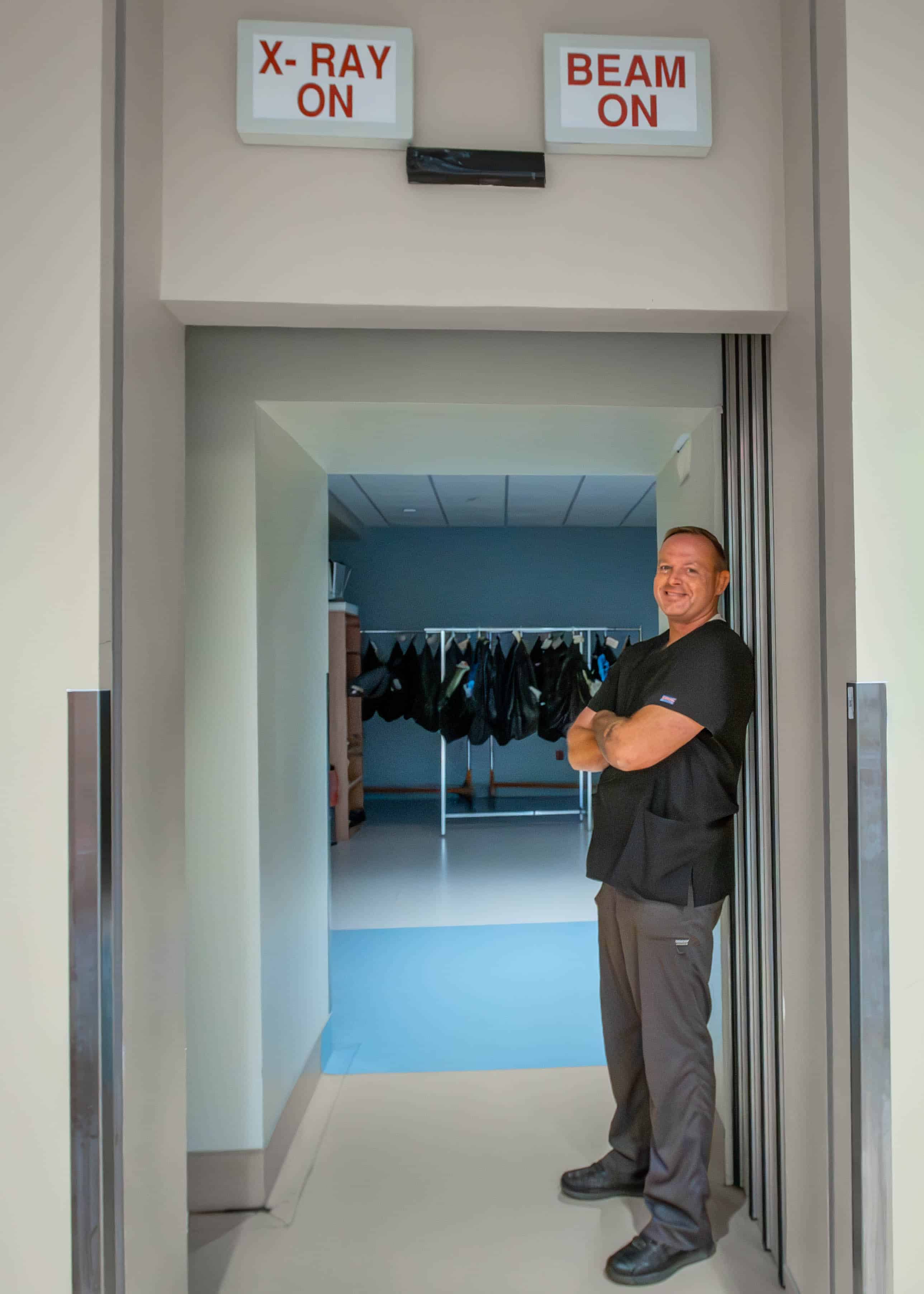
“I have always felt like I belong here,” he said. “We have an awesome team. To do what we do, you must feel led here, and the people on my team are here because they care. It’s not just a job; our people are doing more than just a technical service. They believe in what we do and really want to care for our patients.”
That’s only one reason why Barnes said he would gladly advise anyone to pursue a career in health care.
“There are so many options and opportunities, so you can go out and research to see what fits your lifestyle and interests,” he said. “I chose radiation therapy, but that’s just one specialized area. There are those who treat patients directly, but there are other options, too. Nothing works if you don’t have leadership and administrative support. Nothing stays clean without the environmental support staff. If someone isn’t sure what’s right for them, I’d highly suggest they look into health care.”
Barnes said a lot of people are surprised when they hear he was a police officer, but for him, the transition to health care makes sense.
“People hear I worked in homicide and say that’s such a big jump to treating patients,” he said. “It is definitely different, but I’m still doing a job where I serve and help people, and really, that’s what matters at the end of the day.”

When Ricky Blount, a supply chain professional, joined what was then Pitt County Memorial Hospital, now ECU Health Medical Center, he was fresh out of high school.
“I graduated from D.H. Conley High School in 1979 and started working here not long after,” Ricky said. “I was supposed to join the military, but my mother had open heart surgery, and she needed someone to be home with her while she recuperated. I started work at the hospital thinking I’d just be here a year.”
That year turned into 45, and during that time he’s mostly worked in one department: radiology.
“I started in patient transport, but after six months I moved to vascular interventional radiology (VIR). I learned on the job and enjoyed it. From there, I became a technical assistant in VIR,” Ricky said.
Recently, he made a change to working in Supply Chain, but he still supports the radiology department.
“VIR wanted someone who was familiar with radiology to do the supplies for the whole department, and my manager wanted to give me more challenging things to do.” To learn the skills related to his new role, Ricky said his team sent him to Maryland for a week of training. “I learned how to do different reports, inventory and manager supplies in the Pyxis machines,” he explained.
Over the years, Ricky said the hospital has changed a great deal.
“It’s much larger, and radiology has grown bigger and bigger. I’ve seen a lot of growth and people come and go,” he said. “Paychecks have grown a lot too. I started at $2.65 an hour, but that was pretty good pay in 1979.”
Through it all, Ricky said he’s worked with great people. “I have a good relationship with the physicians, and they trust my judgement,” he said. “Radiology has also been very supportive. I’ve had great managers and co-workers. They’re family-oriented and work with you when things come up.”
As for his future plans, Ricky said that he hopes to retire soon. “I turned 65 on June 12, but it’s a little scary to think about not working,” he said. “My wife will have projects around the house for me to do and I might find some part time work. I’ll also do some volunteer work at my church.”
Ricky said he has no regrets about staying with ECU Health beyond that first year. “It’s a great place to work. I like helping people and I enjoy what I’m doing. If I had it to do over again, I wouldn’t change anything.”