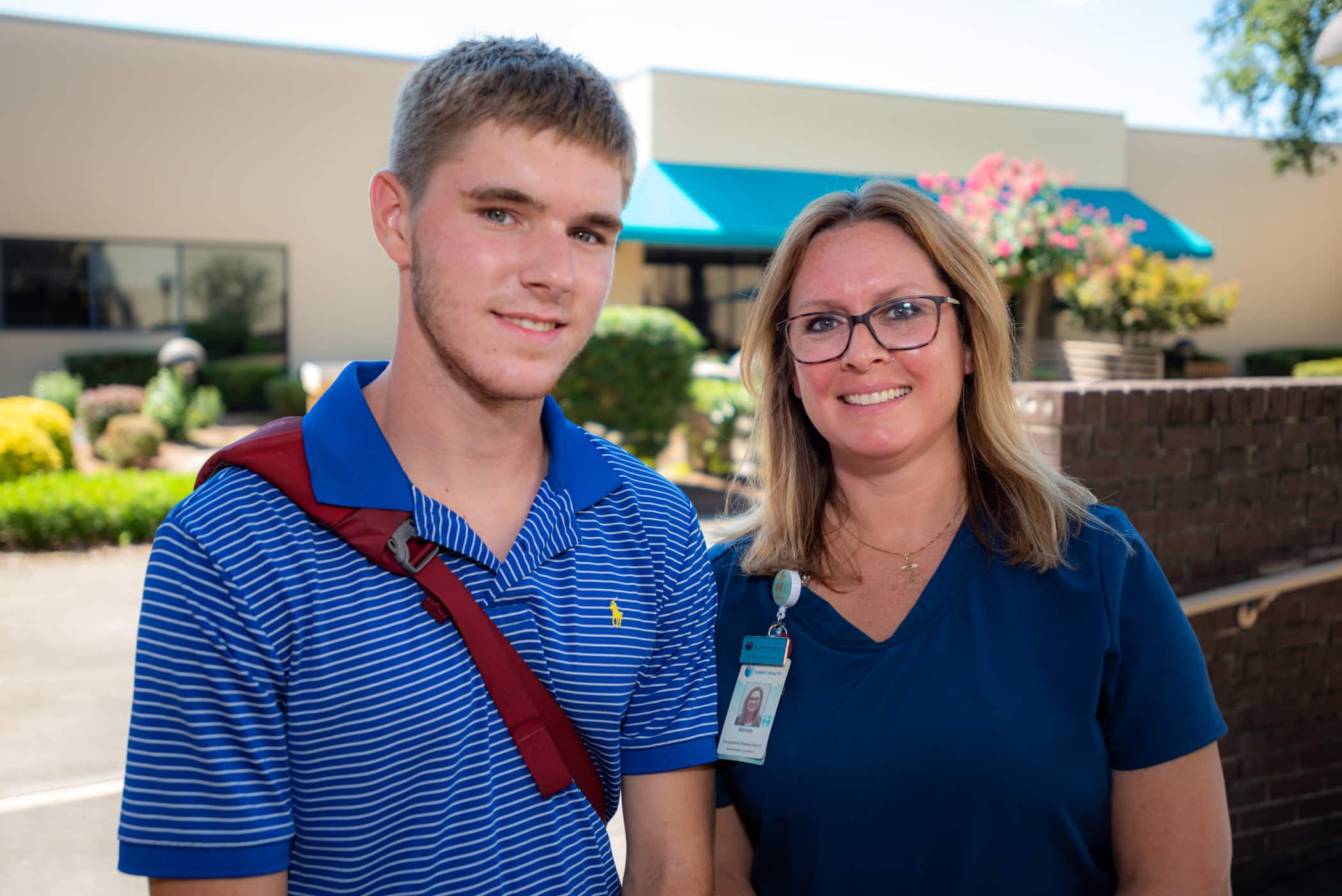
At ECU Health, team members go above and beyond to form trusting relationships with patients and their families to better serve eastern North Carolina.
Over the last 14 years, Occupational Therapy Assistant Winnie Miller worked one on one nearly every week with Taylor Anthony, who is now preparing for his freshman year at the University of North Carolina Wilmington. Taylor is autistic and began receiving treatment from an occupational therapist when he was 3 years old.
First steps
Kim Anthony, Taylor’s mother, recalled the early days of her son working with an occupational therapist.
“He was my first child and had special needs,” Kim said. “I remember walking in and just being terrified – you don’t know what your future looks like, or his future, or will college even be an option.”
After about a year of working with a couple of other occupational therapists within the health system, Miller stepped in and began her treatment sessions with Taylor.
Miller said their work together started with the base steps – figuring out hand dominance, holding pencils, learning to write, forming letters and coloring within lines.
Kim said as Taylor reached school age, she’d be frustrated when hearing about things that people believed Taylor could not do. But she knew she could turn to Miller and her expertise to come up with a plan to help Taylor reach his goals.
“I would email her and be like, ‘I’m struggling with this’ and she would be like, ‘OK we’ll figure it out,’” Kim said. “She would have checklists for him and just everything. It was amazing. She was the biggest support system I had.”
Hitting their stride
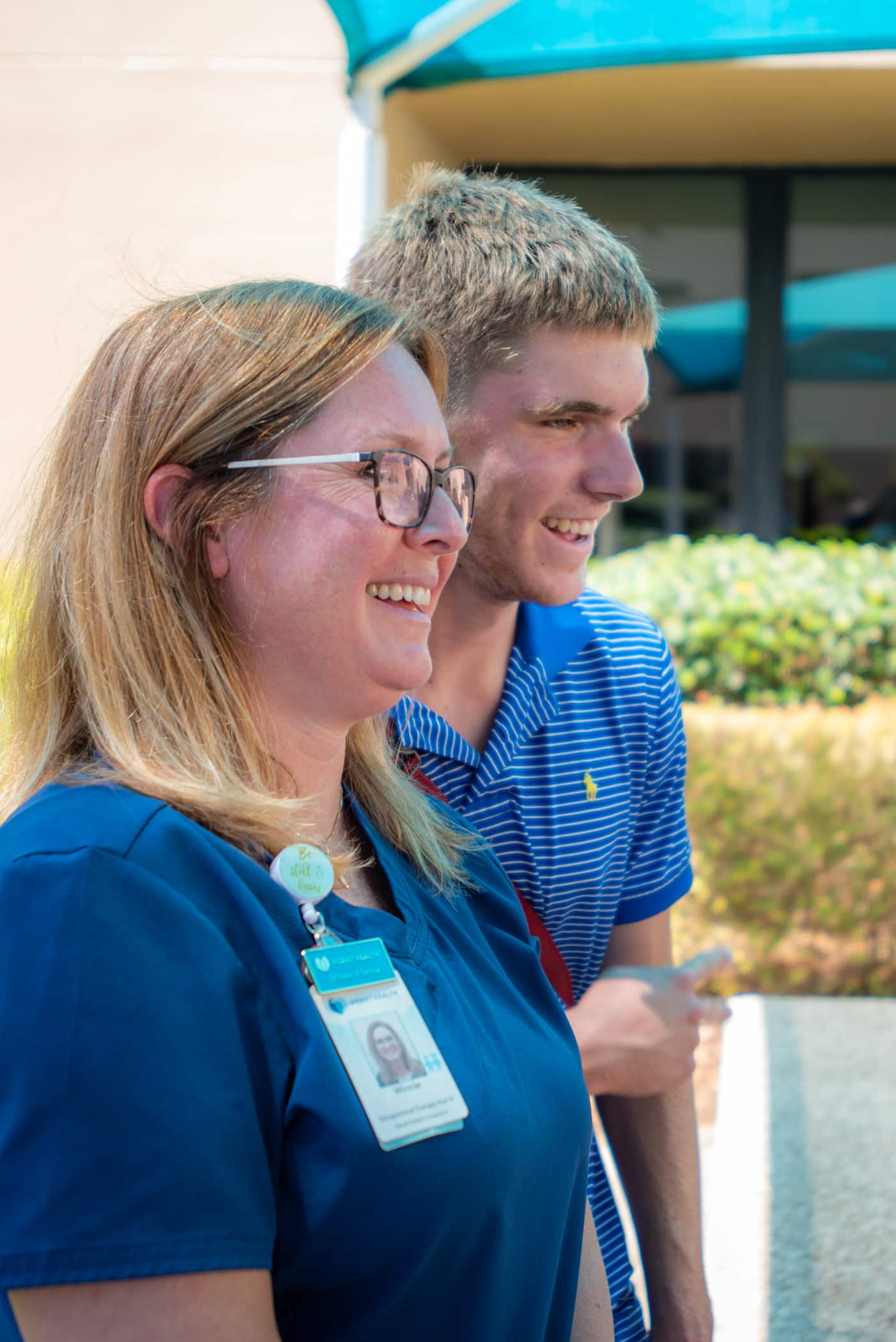
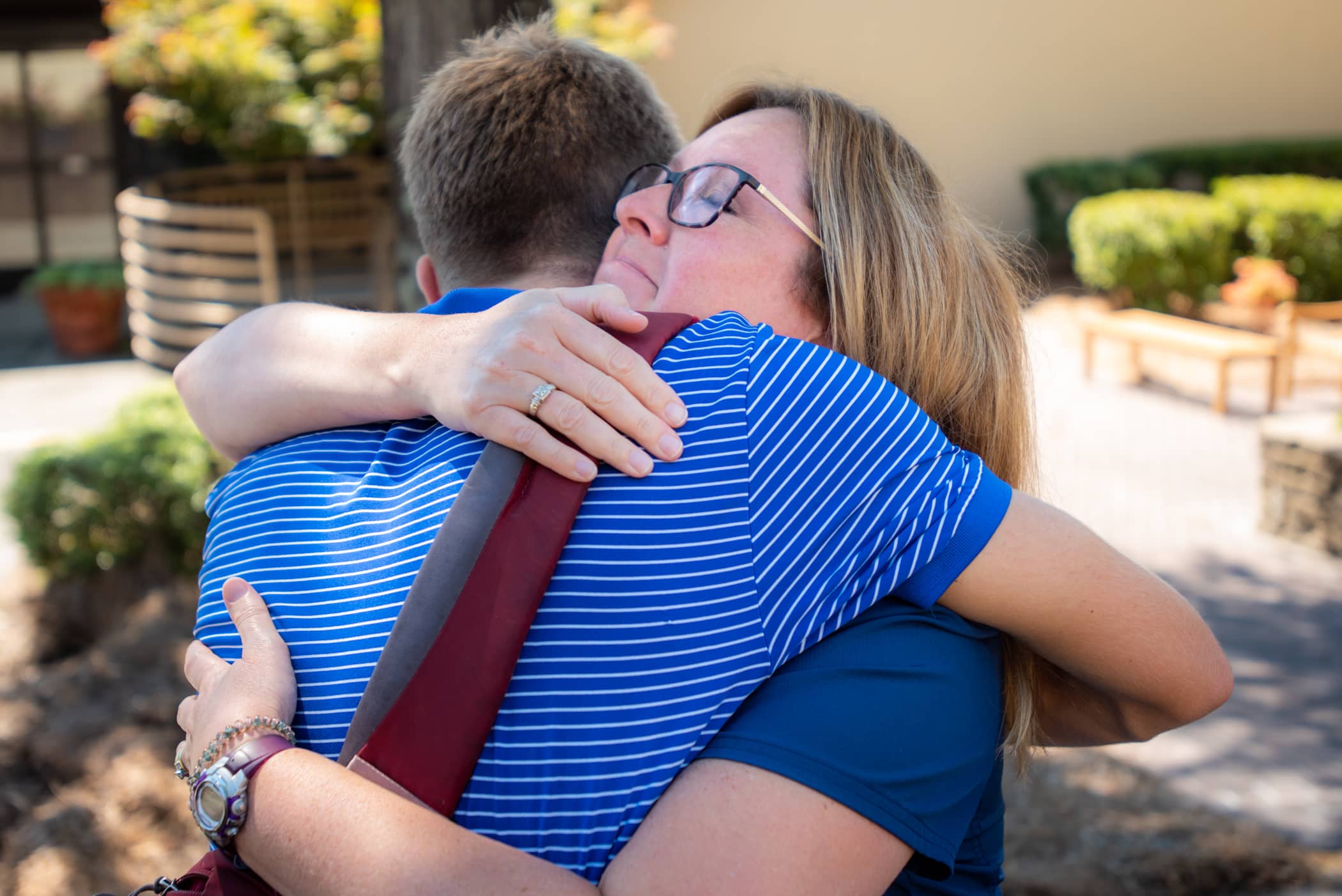
As Taylor got a bit older they worked on how to tie shoes and other fine motor skills. Then it was on to processing your environment and communicating clearly, social aspects of life, how to drive, and other elements of college life and living independently.
Miller compared her role as an occupational therapist to being a coach, with the patient’s supportive family as the team.
“The coach can give suggestions and a play-by-play plan of what you need to work on, but we’re just a little snippet,” Miller said. “I’m only with him an hour a week. They, as a team, have to work on those skills 24/7. I knew they were doing their work at home and there was always going to be follow through.”
Taylor’s father Stephen Anthony, director of service line development for Women’s and Children at ECU Health, said Miller’s out-of-the-box thinking greatly benefited Taylor’s growth into the young man he is today.
Miller broke down the learning process, kept his steps very goal-oriented and stayed in frequent contact with the Anthony family along the way.
“She made it manageable; she made it like they were just going to visit with each other. It wasn’t like a clinical visit, it was just, ‘Hey let’s go in my office and look at some stuff,’” Stephen said. “Maybe they do some stuff on the computer, maybe they use the kitchen to make some eggs or something like that, safety skills with the oven. Stuff that nobody would ever even think of.”
Off and running
These visits also included working with Helen Houston, an occupational therapy driver rehabilitation specialist, who addressed Taylor’s fitness to drive, to ensure he could approach driving safely.
Stephen said Taylor took one test as he was approaching driving age that showed his reactions and reflexes were borderline to be a driver. Before he took a driving test, he was put through the same tests, which showed about 75 percent improvement thanks to his hard work. Now, Stephen said Taylor is just as good a driver as anyone and probably safer than most his age because of the work he’s done.
Taylor said he was thankful for his time with Miller and he’s excited to take all he’s learned to Wilmington.
“It has meant a lot,” Taylor said. “I’ve definitely learned many things. It also took a lot to learn from a different perspective. My family means a lot. They’ve done everything for me to be sure I’ll be the most prepared human being. They’ll know I’ve learned enough to make good decisions and they’ll be supportive of me no matter what.”
As Taylor prepares for his first year of college, one where he’ll also compete as a member of the UNC Wilmington Cross Country team, his family knows he is prepared for different aspects of college life, thanks in part to his work with Miller.
Miller said she loved working with Taylor and can’t wait to visit with him when he returns from school and hear about his college experience.
“He was always an hour a week that I looked forward to,” Miller said. “He always had a new question for me or something new that kept me on my toes and I didn’t know what was going to be the question of the day, what we were going to have to explore and figure out. I really enjoyed that challenge. I’ve loved every minute.”
Resources
Learn more about Therapy & Rehabilitation services at ECU Health.
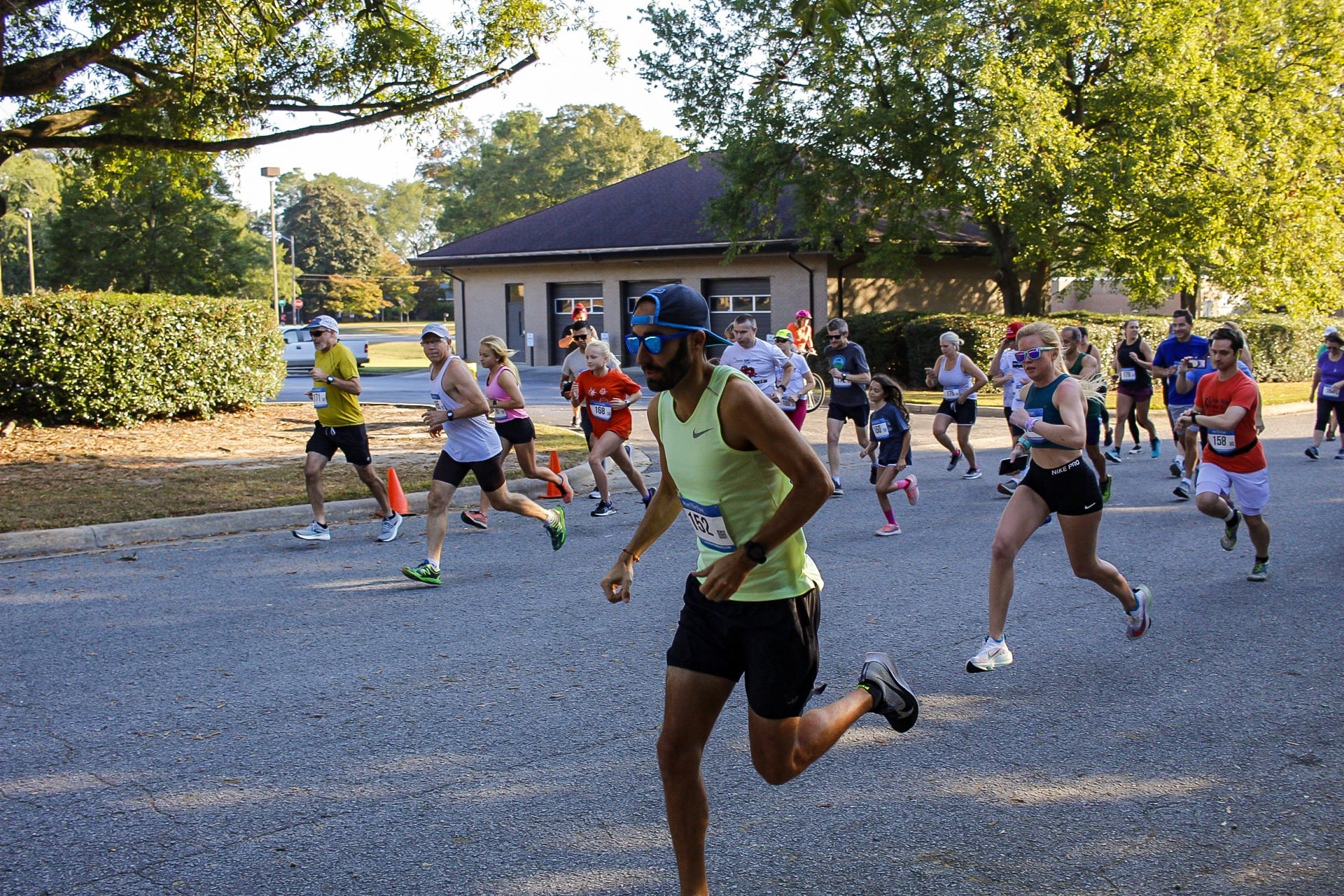
Vidant Health hosted the Run, Walk & Roll to Independence Road Race on Saturday, Oct. 16 to get community members active and raise funds for Vidant’s Therapy and Rehabilitation Services.
Fifty-three runners came out for the event in Greenville and some participated virtually. The road race offered three distances for attendees, including a 100-yard dash for children, a 1-mile fun run and 5K race.
Clint Faulk, medical director for the Vidant Rehabilitation Center, said this is an important event to celebrate the Therapy and Rehabilitation services for the health system.
“Rehabilitation services really helps people get home again and get back into the community,” Faulk said. “Patients come in for different diagnoses and they go through therapies with us, three hours of therapy a day. It really is about getting people back home to their families and getting them into their community.”
The event was making its return after two years away; first a hurricane washed out the event in 2019 and the COVID-19 pandemic halted last year’s plans. Kasey Shue is a recreational therapist at Vidant and served as the chairperson for the event. She said she was thankful and excited to be back for this special event.
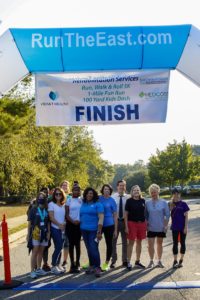 Shue knows firsthand the importance of the rehabilitation services Vidant offers. About five years ago, before becoming a Vidant team member, she was a patient going through rehabilitation for six weeks while recovering from a neurological condition called Guillain-Barré Syndrome.
“That actually inspired me to go back to school to become a recreational therapist,” Shue said. “I’m just one of the many members of the team that Vidant has on hand to help people live the most functional and active lifestyle they can, regardless of any medical condition, circumstance or disability that they may have.”
She said she was proud to serve as the chairperson for the road race and help organize the event along with Therapy and Rehabilitation Services colleagues.
“It’s just a personal passion of mine and this sort of event that supports rehab and encourages people to get out and continue to be active – even if they do live with some type of limitation or disability – I’m all for supporting that,” Shue said.
Proceeds from the road race benefited Vidant’s Therapy and Rehabilitation Services and in turn help community members in the program.
Visit the Vidant Rehabilitation Center Facebook page for more information and updates.