For people diagnosed with amyotrophic lateral sclerosis (ALS), the journey can be overwhelming. The progressive neurological disease, also known as Lou Gehrig’s disease, affects the nerve cells that control voluntary muscle movement, gradually impacting mobility, speech, swallowing and breathing. While there is currently no cure, patients in eastern North Carolina have had access to comprehensive, compassionate care close to home through the Jim “Catfish” Hunter ALS Clinic at ECU Health Medical Center for 18 years.
Established in 2008, the multidisciplinary clinic is the only ALS clinic in eastern North Carolina and serves patients from across the region. The clinic was founded with support from Helen Hunter, wife of eastern North Carolina baseball legend Jim “Catfish” Hunter, a Hertford native whose own experience with ALS inspired efforts to improve access to care for local patients and families.
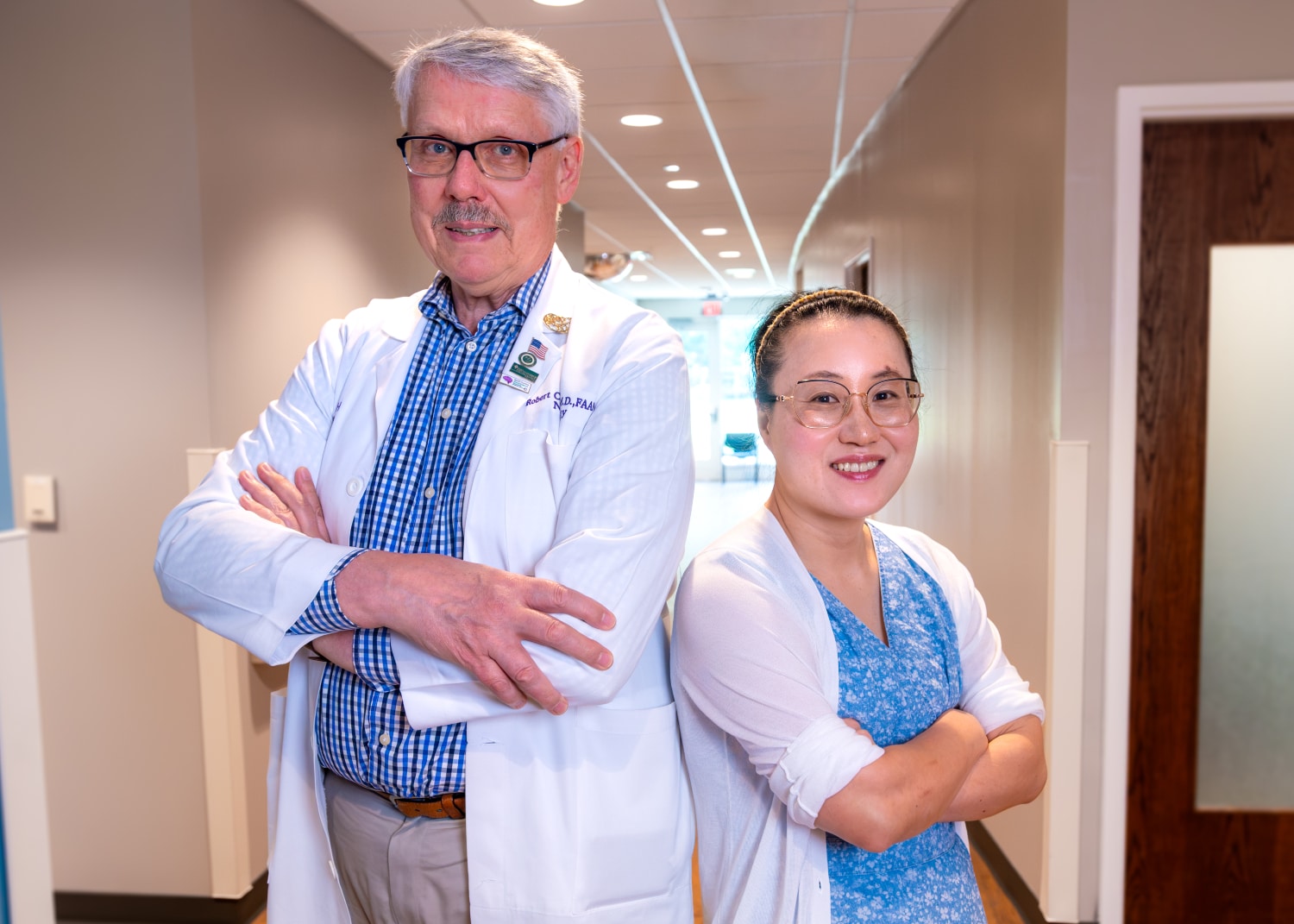
“For patients living with ALS, traveling becomes very difficult as the disease progresses,” said Dr. Robert Frere, neurologist and medical director of the clinic. “Having a multidisciplinary clinic here in eastern North Carolina allows patients to receive specialized care closer to home and reduces the burden of traveling several hours for appointments.”
Bringing specialists together under one roof
The clinic brings together a team of specialists including physicians, nurses, physical therapists, occupational therapists, speech therapists, respiratory therapists, nutritionists, social workers and ALS United North Carolina. By seeing multiple providers during a single visit, patients can receive coordinated care tailored to their changing needs.
“One of the most important concepts in ALS care is the multidisciplinary clinic model,” Dr. Frere said. “Rather than asking patients to travel to multiple appointments at different locations, we bring the team together in one place to provide comprehensive care.”
ALS affects everyone differently. While the average life expectancy following diagnosis is typically three to five years, some patients live significantly longer. Symptoms often begin with weakness in the arms or legs, though some people first experience changes in speech or swallowing.
Although researchers continue to study the disease, the exact cause of ALS remains unknown. According to Dr. Frere, approximately 10% of cases are linked to inherited genetic mutations, while the remaining 90% of sporadic cases occur without exact know cause.
Helping patients live with ALS
For Blanks Walker, ALS clinic manager and program manager for outpatient rehabilitation services at ECU Health, the work is deeply personal. Walker’s mother passed away from ALS in 1999, giving him firsthand understanding of the challenges families face. In addition to overseeing the clinic, Walker is an occupational therapist who regularly helps ALS patients continue to live joyful, fulfilling lives.
“Our goal is to help people learn how to live with ALS, not die with it,” Walker said. “We focus on quality of life and helping patients continue doing the things that matter most to them, whether that’s spending time with grandchildren, attending community events or remaining as independent as possible.”
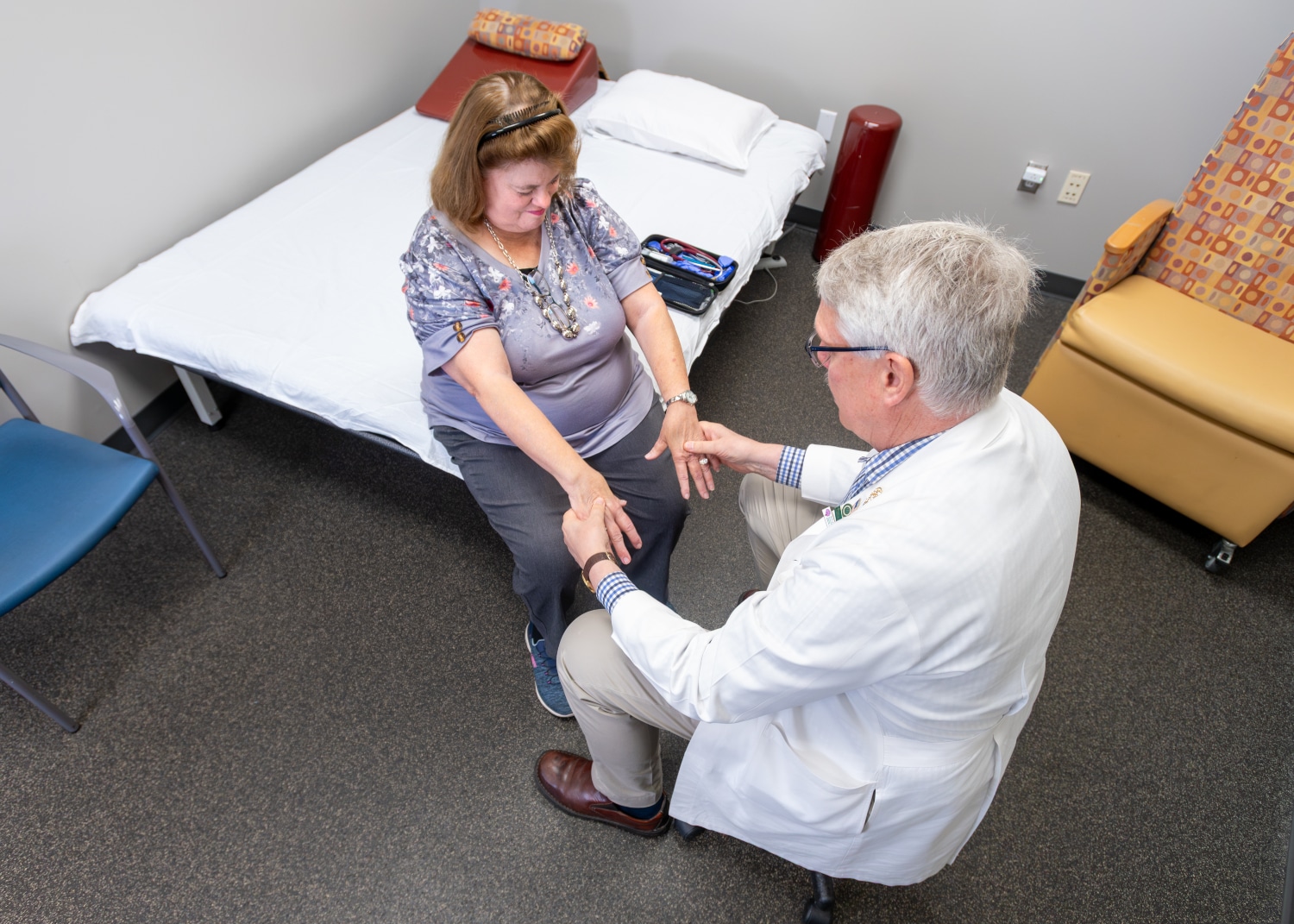
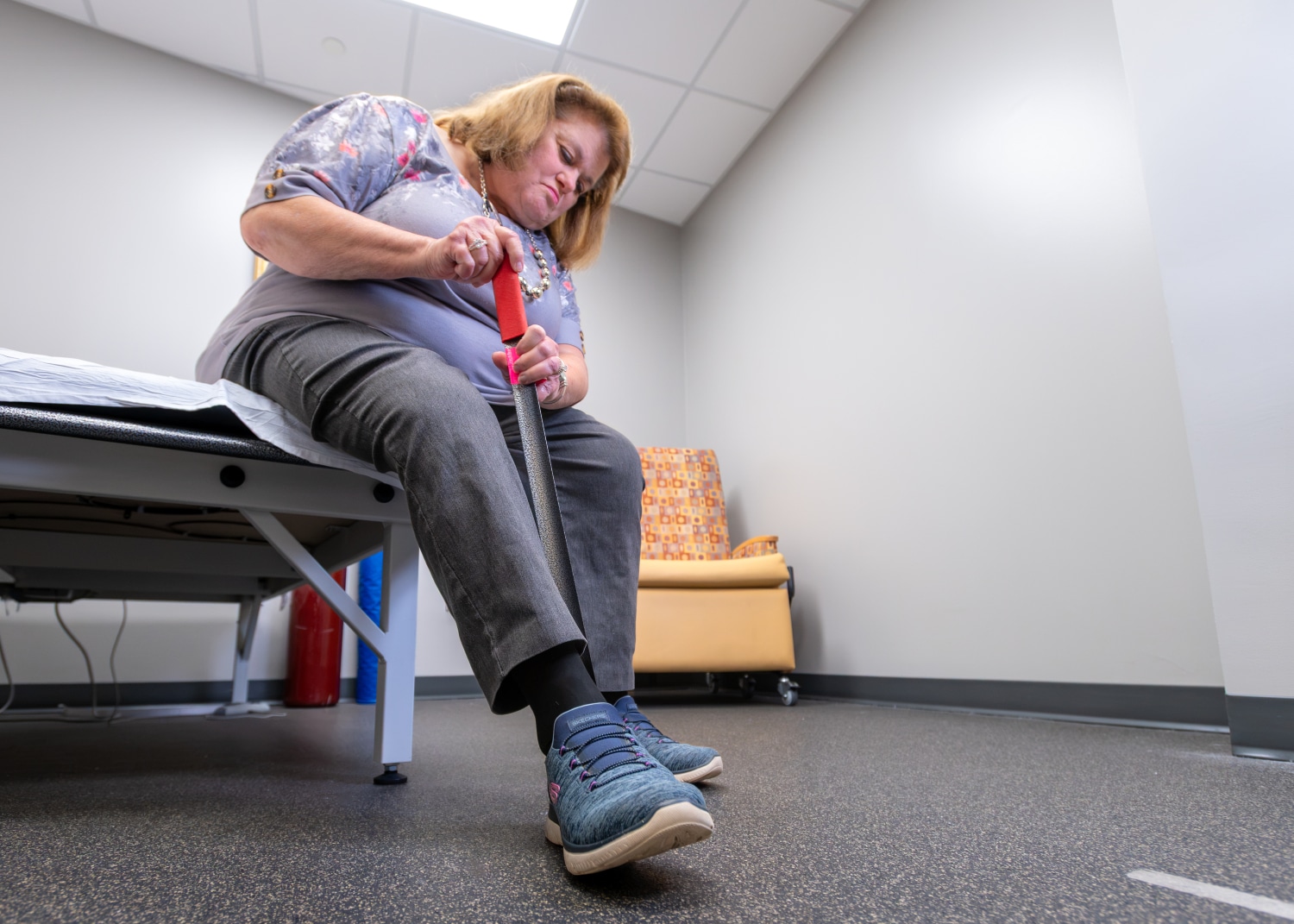
Occupational therapists like Walker help patients adapt everyday activities and conserve energy by recommending home modifications and equipment such as shower benches, grab bars and mobility devices. Their work focuses on helping patients maintain independence and safely navigate daily life as the disease progresses.
Preserving communication and independence
For many patients, communication becomes one of the most significant challenges as ALS progresses. Through a partnership with the ECU Speech-Language and Hearing Clinic, patients have access to specialized evaluations and communication tools designed to help them stay connected with family, friends and caregivers.
Rhiannon Phillips, a speech-language pathologist and clinical assistant professor at East Carolina University, works with ALS patients whose speech has begun to deteriorate. She evaluates each patient’s communication needs and helps identify the most effective solution, whether that’s a speech-generating device, a smartphone application or an advanced eye-gaze system that allows patients to control a device using only their eye movements.
“Every patient is different,” Phillips said. “We look at how they communicate with family members, whether they still work, what activities are important to them and what they want to be able to do. Then we help match them with technology that best supports those goals.”
Voice banking, which allows patients to record their speech early in the disease process, has transformed ALS care. The recordings can later be used to give patients a personalized synthetic voice.
“If we can identify patients early enough, they can bank their voice,” Walker said. “When they’re using a communication device later, it’s their own voice speaking the words back rather than a computerized voice. It’s amazing to see how far technology has come.”
While the technology itself is impressive, Phillips said the true impact comes from helping patients regain a sense of independence. Shortly after helping set up a communication device for a patient with ALS, the patient’s wife sent a text message to Phillips saying she had heard music playing from another room. Her husband had figured out how to navigate the device on his own, find YouTube and begin playing music independently.
“For most people, being able to turn on music is a simple everyday task,” Phillips said. “But for someone who has lost the ability to speak or move independently, being able to do something like that on their own can be incredibly meaningful to them and to their support system. Seeing patients regain those moments of independence is one of the most rewarding parts of this work.”
Phillips said helping patients maintain their ability to communicate, express their needs and stay connected to loved ones remains at the heart of what she does.
“If you can provide someone with a positive moment during a very difficult time, that’s rewarding,” she said. “Even something as simple as giving someone a way to express how they’re feeling can make a tremendous difference.”
Meeting patients where they are
The clinic has continued to expand services to meet patients where they are. In late 2025, the team launched a multidisciplinary telemedicine clinic to support patients who have difficulty traveling due to disease progression. Patients can join the appointments virtually from home.
“Many patients eventually reach a point where travel becomes extremely challenging,” said Dr. Minji Kim, neurologist, ECU Health. “The telemedicine clinic allows patients to continue receiving care from multiple specialists, including speech therapy, nutrition and occupational therapy, from their homes. It helps ensure they can stay connected to the care and support they need.”
Support beyond medical care
Beyond medical care, many patients benefit from support provided by ALS United North Carolina, a nonprofit organization that partners closely with the clinic. The organization offers equipment loans, financial assistance, support groups and education for patients and caregivers.
“Our goal is to make sure no one goes through the ALS journey alone,” said Hillary Moore, care services coordinator with ALS United North Carolina. “We work closely with patients and families to connect them with resources that can make a meaningful difference in their daily lives.”
That support can include everything from providing power wheelchairs and communication devices to helping families navigate financial challenges and caregiving responsibilities.
Respiratory care is another critical component of ALS management. Respiratory therapists monitor patients’ lung function throughout the disease and help identify when supportive devices such as non-invasive ventilation or cough-assist equipment may be needed.
“The goal is to help patients maintain their breathing and clear secretions effectively so we can reduce complications and hospitalizations,” said respiratory therapist LaCaria Starkie.
A lasting impact
Today, the clinic follows approximately 60 patients and welcomes new referrals from across the region. Care teams meet monthly to provide coordinated evaluations and ongoing support.
For Walker, the clinic’s success comes down to the people behind it.
“I’m grateful for our team and their commitment to helping patients and families,” he said. “Everyone here is focused on providing support, improving quality of life and walking alongside people through one of the most difficult journeys they will ever face.”
To learn more about the Jim “Catfish” Hunter ALS Clinic at ECU Health Medical Center or to schedule an appointment, call 252-847-1779.