Antimicrobial resistance (AMR) is a significant and global threat, in which antibiotics, antifungals and antivirals no longer work effectively to combat their respective infectious vectors. This is something that happens over time due in part to the misuse and overuse of antimicrobials, and it’s estimated that AMR could cause or contribute to 39 million deaths between 2025 and 2050.
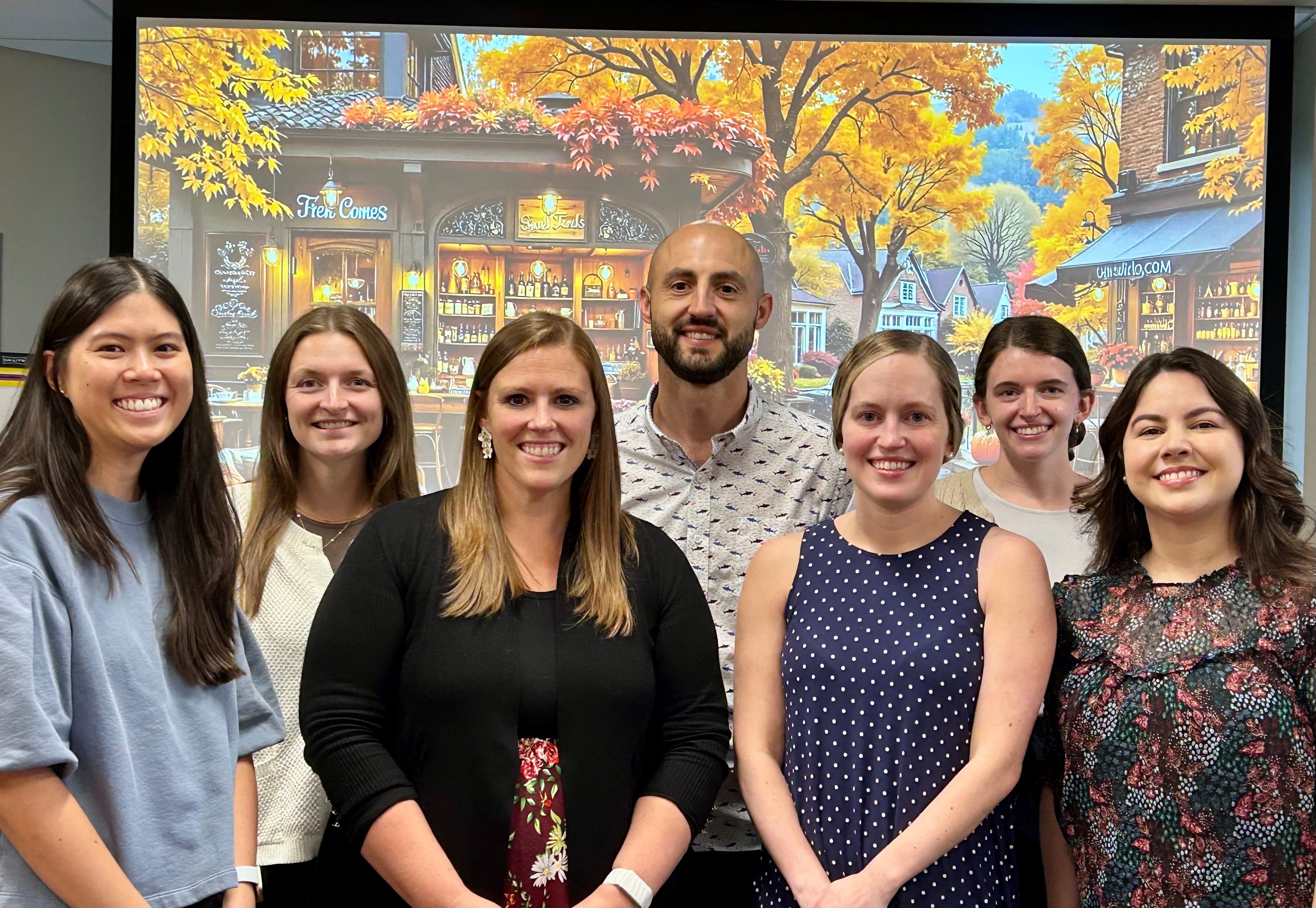
ECU Health’s Antimicrobial Stewardship Program (ASP), co-led by a group of infectious diseases (ID) physicians and pharmacists, addresses this threat by encouraging the appropriate use of antimicrobials, optimizing patient care, minimizing adverse patient effects, preserving the utility of antimicrobials and minimizing the development of AMR.
This is done through daily patient-specific antimicrobial use recommendations, including drug choice, drug dose, route of drug administration and duration of therapy.
The ASP also conducts a rigorous review and development of antimicrobial restrictions, guidelines, policies and protocols, including ECU Health’s facility-specific treatment guidelines and an educational health system quarterly ASP newsletter. They track, analyze and report antimicrobial use and ASP outcome data quarterly (including data benchmarking ECU Health to other health systems), develop quality improvement/research projects to further investigate pertinent system/clinical questions and spend significant time educating future generations of pharmacists and providers. They also offer an American Society of Health-System Pharmacy (ASHP) accredited, postgraduate year two (PGY2) Infectious Diseases Specialty Pharmacy Residency training program annually.
“ASPs are great for patients, optimal for public health and beneficial in reducing hospital costs and lengths of stay,” said Nicole Nicolsen, the manager of infectious diseases pharmacy and the ASP.
While ASPs are now required for all hospitals, ECU Health’s program is unique in that it has been in place for 30 years, well before most hospitals nationwide incorporated antimicrobial stewardship. Its innovative service of the ECU Health community hospitals through remote/tele-stewardship sets the program apart and increases care in rural communities.
“Our program is empowered by the Medical Executive Committee (MEC) to make changes to antimicrobials” Nicolsen said. “Leadership support is not always as evident or official in other health systems, and this support shows ECU Health’s executive commitment to optimal antimicrobial use.”
Two recent ASP projects include a Board Quality Leadership Award (BQLA) submission, which evaluates interventions required for patients started on restricted antimicrobials and assesses ECU Health’s compliance with the current antimicrobial restriction criteria, and a QI Symposium project, which evaluated ECU Health’s response time to rapid technology used for blood cultures and confirmed appropriate drug recommendations for these results.
The program also has ongoing quality and research projects, including current enrollment in Teachers of Quality Academy (TQA) 9.0 collaborating with emergency medicine (EM) colleagues on optimal antimicrobial choice in the setting of a possible penicillin allergy.
Other project topics include development of an ECU Health clinical guideline for EM use of dalbavancin to spare hospital admission for skin and soft tissue infections and looking at drug choice/dosing strategies that may impact clinical outcomes in the grey areas of infectious diseases. The team continues to ensure compliance with the Joint Commission standard related to ASPs, reviews medication safety events related to antimicrobials, identifies and implements cost saving initiatives and maintains site visits to all ECU Health community hospitals to develop relationships and improve the understanding of the value of ASPs.
The ASP’s efforts to anticipate and address the ongoing concerns regarding antimicrobial resistance are something Nicole said would not be possible without great team members who publish papers in major medical journals and participate in ECU Health, regional and national conferences and committees.
“Excellence in antimicrobial stewardship isn’t accidental; it’s built by an exceptional team,” said Nicolsen. “What sets this team apart is not just how much they have accomplished, but how they do it with expertise, collaboration and unwavering commitment to always go above and beyond. Their work optimizes patient outcomes today, preserves antimicrobial utility for tomorrow and firmly positions our system at the forefront of infectious diseases pharmacy and ASPs.”

 April Quidley, the manager of pharmacy education and research and the Pharmacy Resident program director at ECU Health, was recently appointed to a three-year term on the Fundamental Critical Care Support (FCCS): Bedside Care Task Force by the Society of Critical Care Medicine (SCCM) – an exciting achievement that reflects Quidley’s expertise in critical care medicine.
A New Bern native, Quidley has been with ECU Health since 2012. During that time, she established herself as a valuable resource for pharmacy services, especially in the critical care space. She has also enjoyed working with students.
“I spend a lot of time with pharmacy students and resident training,” she said. “We do a lot of recruiting for pharmacy resident positions, and we get a lot of interest from across the country because of the cool things we’re doing and our preceptors. We have a good cohort of professionals we’ve hired from our training program.”
Training the next generation of pharmacists
The Bedside Care Task Force merges Quidley’s pharmacy and education expertise with that of 20 other professionals, including other pharmacists, nurses and physicians, to create a new, international course focusing on bedside care in the critical care setting. Quidley said it’s forward thinking to include multiple disciplines to create this coursework.
“The goal is to train those who may not have experience in critical care on how to provide initial assessments and care, so they feel confident about that process. We want to do this in a standardized way to provide a worldwide process,” Quidley explained.
“My role, and that of the other pharmacists on this team, is to ensure pharmacists who provide bedside care know what they need to do to provide timely drug delivery, timely drug recommendations and adhere to best practices for patient care,” she added.
This is important because it allows providers in a variety of settings to enhance their critical care skills.
“Think back 10, 15 or 20 years ago,” Quidley said. “If you were working on the floor of a smaller hospital, your team might have to call for a consult for critical care cases. There are so many diagnoses, like sepsis, that require an early and accurate response. With this education, a team can provide the critical care patients need in the time they need it.”
The appointment stipulates that the task force determines the audience for this coursework, what other courses already exist in the critical care space and the financial investment required. The group will meet virtually and in person throughout the three-year period, including at SCCM conferences and meetings.
“The plan is to create a framework for this course by the end of the three years,” Quidley said.
The coursework will be a hybrid format of virtual, knowledge-based coursework and in-person, skill-based assessments, with the hope that ECU Health serves as one of the on-site locations.
A personal contribution to the discipline
Quidley’s involvement with the SCCM, both as a member and a Fellow of Critical Care Medicine, played a role in her name making it on the list of task force members.
“To be a Fellow, you have to publish and be active in critical care scholarship as well as work at the bedside,” she shared.
The SCCM website further designates Fellows as “practitioners, researchers, administrators and educators in the field of critical care,” and it recognizes outstanding contributions to the field. The distinction requires an application to be considered, and it globally honors Fellows as leaders in critical care.
“We already do a lot for critical care support here,” Quidley added. “Kristie Hertel has done a lot here at ECU Health in the critical care space. Working with the SCCM and this task force helps us develop curriculum that makes a broader impact.”
Quidley said she is thankful to work in an environment that supports her work with the SCCM and this task force specifically.
“I’ve been with ECU Health for 13 years, and I appreciate the organization’s support of our engagement in things beyond the institution. It’s not just for me personally, but for the organization as a whole. Being with ECU Health has been so rewarding.”
Windsor, N.C. – Wallace Nelson, RPh, has been awarded the Bowl of Hygeia Award given by the North Carolina Association of Pharmacists (NCAP). Established in 1958, the Bowl of Hygeia Award is sponsored by the American Pharmacists Association Foundation and the National Alliance of State Pharmacy Associations. The award recognizes one pharmacist from each state annually for their exceptional record of community leadership. NCAP Executive Director Penny Shelton praised Wallace, noting that he has “walked the talk his entire career finding ways to serve and give back at extraordinarily high levels.”
Nelson has been employed by ECU Health Bertie Hospital and ECU Health Chowan Hospital for over 40 years, with 37 years in management. His professional career started in retail pharmacy before joining ECU Health where he continues to serve both hospital locations.
“I am very humbled to have been selected to receive the Bowl of Hygeia from NCAP and NASPA. I view giving back to our community and state as opportunities to serve others and strive to make things better for all, something that I treasure being a part of,” Nelson said.
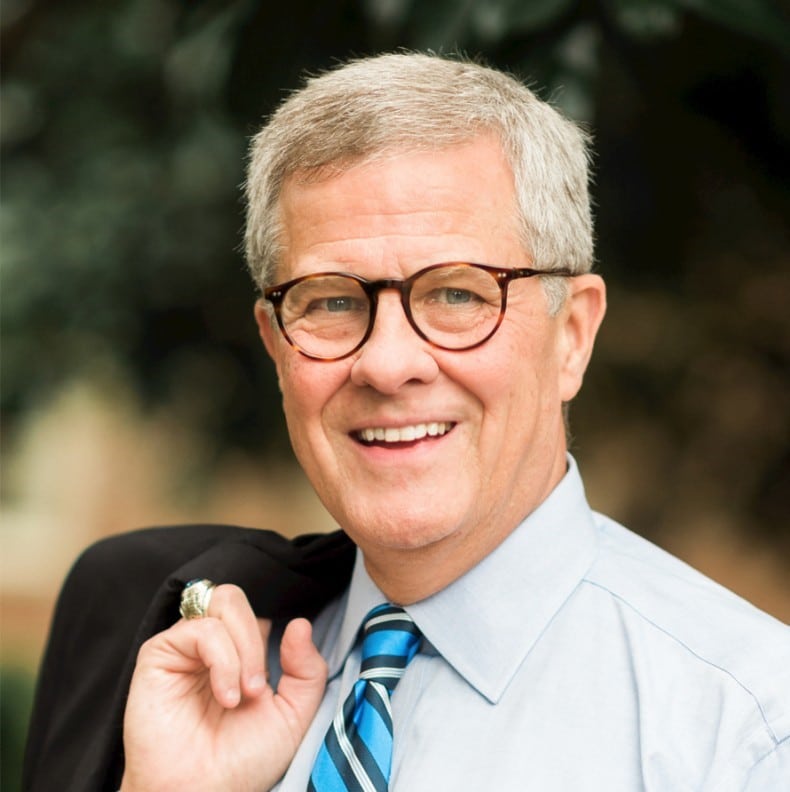
ECU Health Pharmacy manager, Shelli Simmons, PharmD, stated, “ECU Health Bertie and Chowan Hospitals are thankful for Wallace’s dedication to our healthcare system. He is very deserving of this prestigious award, and it recognizes his commitment not only to our patients, but also our communities. I am very honored to work alongside with Wallace.”
A Perquimans County native and graduate of the College of the Albemarle and The University of North Carolina at Chapel Hill. On a local level, Nelson served on the Perquimans County Board of Education for four terms and then the voters of Perquimans County elected him to serve as a County Commissioner, a position he holds today. He is also actively involved in the North Carolina Association of County Commissioners where he will be installed as President Elect in August 2024 and President in 2025. Past appointments by a number of North Carolina Governors include the College of Albemarle Board of Trustees, North Carolina Marine Industrial Authority, several Governor’s Councils, Institutes and Legislative Study Commissions. Fifteen years ago, the pharmacists of North Carolina elected him to serve on the North Carolina Board of Pharmacy, a position he holds today.
Previously, Nelson received the Order of the Long Leaf Pine by Governor Beverly Perdue, which is North Carolina’s highest honor for those who have made significant contributions to their state and local communities. During his service on the Board of Education he received the Raleigh Dingman Award, the highest honor given to a school board member, presented annually by the North Carolina School Boards Association.
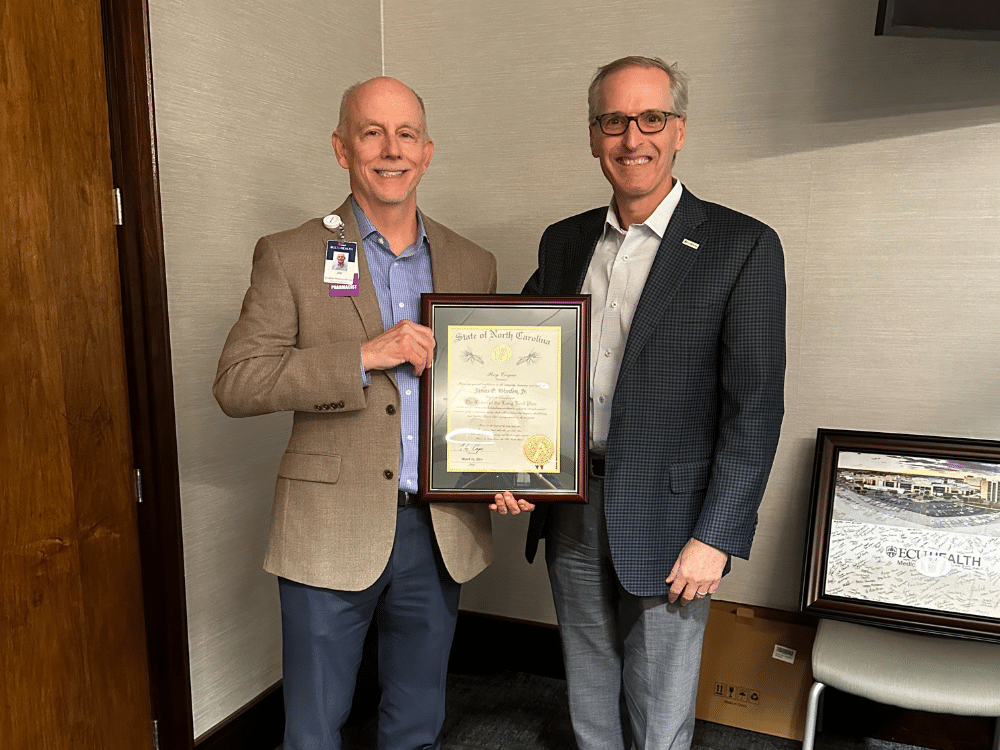
“Jim will be very humble and tell you he was in the right place at the right time,” Dr. April Quidley, pharmacy supervisor, critical care/emergency medicine and PGY1 Pharmacy Residency Program director, said about Dr. Jim Worden’s impact on ECU Health and in his community.
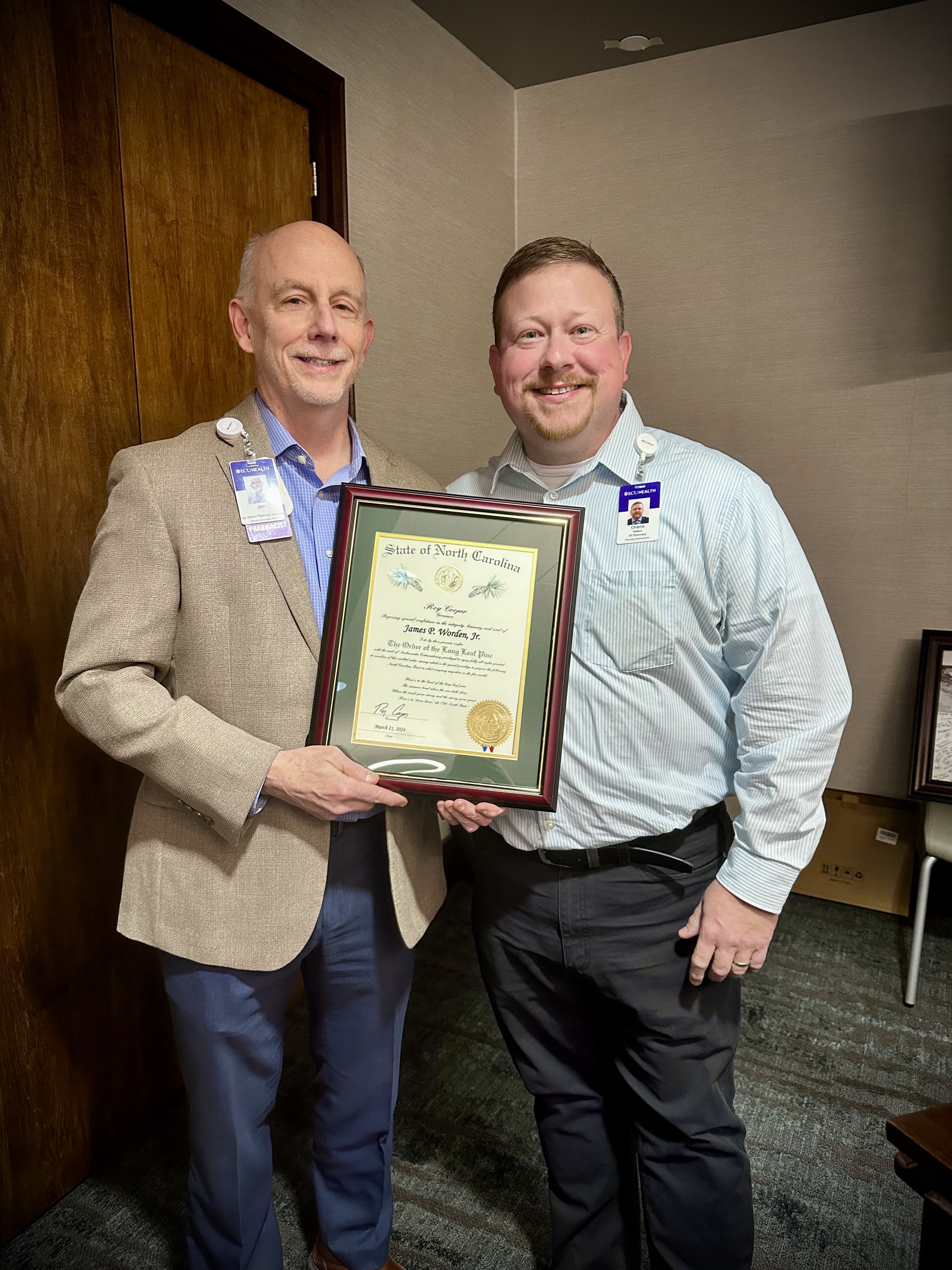
Dr. Worden retired on March 22 after working for ECU Health for 41 years. During his retirement reception, however, he was surprised to learn he’d also won the Order of the Long Leaf Pine award, the highest honor North Carolina’s Governor can bestow on a person for their contributions to the state.
Dr. Worden, a Tennessee native, moved to Greenville, North Carolina for his first job out of his pharmacy residency to work as a clinical coordinator. “I’ve been here [at ECU Health] since August of 1983,” Dr. Worden said. During that time, he held a few different roles, including assistant director of clinical services, the director of pharmacy and most recently, the systems service line administrator for pharmacy.
During that time, Dr. Worden was instrumental in setting up ECU Health’s pharmacy services by “working closely with physicians in a direct, bedside patient care role” and by founding the Drug Information Center, which, according to Dr. Worden’s award nomination documents, “served as a resource for all health disciplines in eastern North Carolina in the time that evidence-based medical practice expanded.”
“When we think about pharmacy services at ECU Health, Jim is the guy who gets all the credit,” Dr. Quidley said. “He worked hard to form those interdisciplinary relationships with physicians and to advocate for patients. He is the founding director of our residency program, the Pharmacy Practice Residency, which is one of the oldest in the country at 30 years old.”
He went on to develop additional pharmacy residency training programs for critical care, emergency medicine and infectious diseases. “He’s been on the cutting edge of everything we do in pharmacy,” Dr. Quidley said. “He’s done exceptional things for the department.”
As a result of his dedication, ECU Health’s services represent a leading practice in pharmacy care, especially for a rural region, and he’s helped expand services to improve the medical and pharmacy care across all of eastern North Carolina.
On March 22, a retirement reception was held to celebrate Dr. Worden’s more than four decades of service. Little did he know, however, that there was an ulterior motive to the event. “We surprised him with the Long Leaf Pine award at the event,” Dr. Quidley said. “Dr. Mike Waldrum, Dr. Herb Garrison – also a recipient of the award – and Brian Floyd were there to present the award to Jim, and it was a great surprise.”
The Order of the Long Leaf Pine award is among the most prestigious awards conferred by the Governor of North Carolina, and it is awarded to persons for exemplary service to the state and their communities, going above and beyond the call of duty and making a significant impact on and strengthened North Carolina. Nominations can be made for retiring individuals who have 30 or more years of service in North Carolina, and nominations must include documents that attest to the person’s work and service, supported further by letters of recommendation.
Dr. Worden said he knew of the award, but he didn’t think he was the sort of person to win it. “It’s an impressive, austere award, but I didn’t think I’d done anything in my life that was at the level to win it. I was humbled to be considered for something that noble.”
Dr. Quidley and those who wrote supporting letters of recommendation think differently. Dr. Worden has made a significant impact not only at ECU Health, but also in his community. He is on the Board of Directors for the Community Crossroads Center, which is the only emergency homeless shelter in Greenville and Pitt County. He joined the board three years ago after a fellow church member let him know a position was opening.
“I felt like my conscience told me I should apply, that God was calling me to help, so I applied, and they voted me in,” Dr. Worden said.
In the past year, he worked with ECU Brody School of Medicine to restore medical services for residents of the shelter. For his dedication to the board and the shelter, the board elected Dr. Worden to be president next year. He is also actively engaged in Greenville’s First Presbyterian Church, where he has in the past served as the Chair of the Missions Ministry, Chair of the Worship Ministry, a member of the Stewardship committee and twice as an elder on the Session, the church’s governing body.
“I’m very committed to my church,” Dr. Worden said. He plans to continue that service now that he’s retired. “I’m going to enjoy time away from work, but I won’t be sitting around. I will of course be the president of the shelter’s board, and we will have activities that will keep me busy. I will continue to work in my church, and I hope to play some tennis and pickleball.”
Dr. Worden also plans to travel with his wife of 34 years, Tammy, who is also a pharmacist at ECU Health and who helped Dr. Quidley nominate Dr. Worden for the Long Leaf Pine award. “When you’ve been married to someone that long, it is an accomplishment – you need that person and they need you,” he said.
As Dr. Quidley predicted, Dr. Worden remained humble about his contributions to ECU Health and beyond.
“This is not about me,” Dr. Worden said of winning the award. “I’ve started some good things, and I’ve been fortunate to have the resources, teamwork and leadership to do these things, but it really does take a village. I will take credit for some of it, but a leader can only do so much by themselves.”