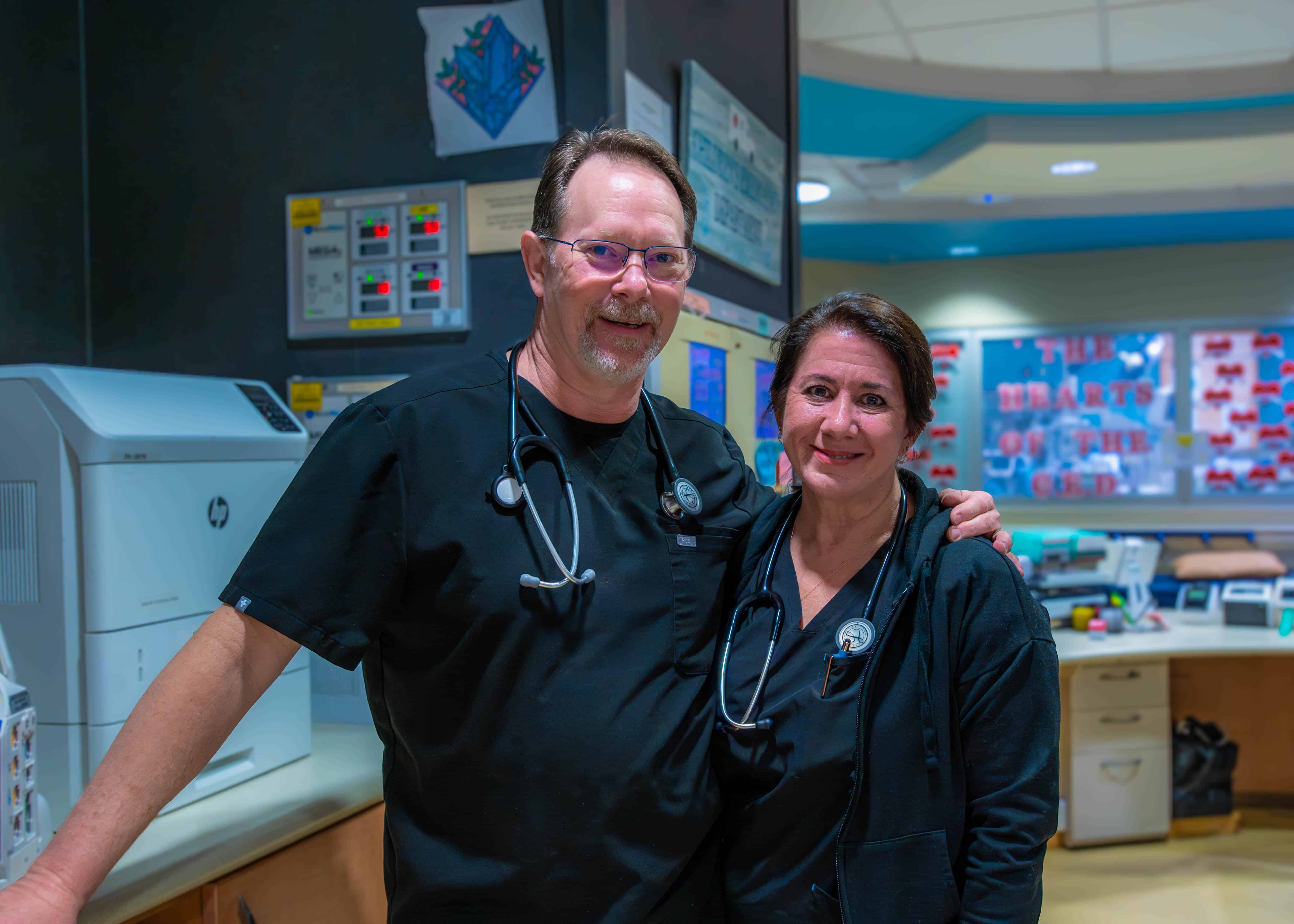
Chris Mintz, an RN with ECU Health’s Enterprise Resource Team (ERT), has always felt drawn to community health rather than inpatient bedside care.
“I’ve worked in a pediatric clinic, same-day surgery, home health and hospice care, and inpatient and outpatient case management,” Chris said. “I was a supervisor and manager in case management and hospice care, and then director of nursing for mental health and substance abuse treatment.”
When the priorities for integrated health care shifted, she needed a new path.
“I decided I wasn’t too old to learn something new, so I joined the Beaufort Hospital emergency department (ED) to work at the bedside,” she said. “The rest is history.”
That serendipitous job change led Chris to meet Randy Mintz, her now husband and fellow nurse.
“Much of the work in the ED is community health,” Chris said. “The ED is full of people without access to care. It is all some people have, and we take care of them the best way we can.”
Meant to be
Randy was working night shift in the ED when he received a call.

“The manager asked me if I could precept someone new to the ED who needed extra help,” he recalled. “Funny enough, I really didn’t want to do it.”
“Originally, I was assigned to another seasoned nurse as a preceptor,” Chris added. “But she didn’t feel like she wanted to do it at the time, so they asked Randy for a favor. Now we thank that nurse all the time for putting us together.”
Randy took the time Chris needed to help her learn the ropes.
“It meant a lot to me. I was nervous and wanted to be sure I had the skills I needed to take care of our patients,” Chris said.
From there, Chris and Randy said they discovered they shared a higher level of compatibility.
“We laughed at the same jokes, and she got my dark sense of humor,” Randy said.
But even better, they found they made each other better nurses.
“I had worked in the ED for a while and was a little hardened. She was like a marshmallow. She oriented me on how to interact with people and to look at things differently. As much as I taught her about the ED, she taught me how to be better with people,” Randy said.
“I am 100% positive that had she not come to the ED, and if that other nurse had agreed to be her preceptor, all the good things that have come my way would not have happened. It’s all her doing.”
“The only way I have been able to work at this level is because of him,” Chris said.
Love takes flight
“Four years went by like a flash, and we got engaged. But I was hesitant about getting remarried,” Chris shared. “One day, I saw there was a hot air balloon festival in Statesville, and I said to Randy, ‘You want to get married in a hot air balloon?’ He said, ‘absolutely!’ and that’s what we did.”
Randy and Chris married at sunrise on Oct. 19, 2025.
“We found a company that marries people all over the world, with real officiants. We had a small, very personalized ceremony right there in the balloon. Then we got to enjoy the rest of the festival and our wedding funnel cake,” Chris said.
Now they get to work together on the same team.
“After my interim assistant nurse manager role in the ED at Beaufort, I heard about the Enterprise Resource Team, and it was an easy transition,” Randy said. Chris joined shortly thereafter.
The Enterprise Resource Team meets staffing needs at ECU Health Medical Center and ECU Health Community Hospitals based on census and staffing.


“The Resource Management team assesses needs based on feedback from the medical center and our community hospitals, where they find out about staffing deficits and prioritize who needs what. That’s not an easy job,” Chris said.
“You can choose the region and specific department or specialty you want to serve,” Randy added. “Then you get a text at 5 a.m. or 5 p.m. to tell you where you need to go.”
Randy and Chris said it is nice to be able to work in the area they chose, but at different locations where they are needed.
“Our goal is to lighten the load for the staff where we are assigned and to take great care of their patients,” Chris said.
It’s an added bonus to work together.
“There are some days we might be able to grab a coffee together or only say hello as we’re walking by, but we always know the other one is there,” Randy said. “Other days, we’re working side by side, and those days are the best. You have a person you know and trust, and you know their strengths, and they know yours. It makes it nice.”

ECU Health Medical Center recently conducted a comprehensive, campus-wide lockdown exercise focused on preparedness for an active threat scenario. The exercise brought together a broad group of hospital leaders, clinical teams, support services and safety partners, demonstrating a strong, unified commitment to protecting patients, visitors, and team members.
The exercise provided an important opportunity to evaluate existing emergency protocols, communication pathways and leadership coordination across the organization. Multiple strengths were identified, including effective leadership presence, clear command structure, and strong collaboration between departments. Participants also highlighted valuable opportunities for improvement that will help further enhance readiness and response capabilities in real-world situations.
“Conducting drills based on real-life scenarios is a key component of preparedness,” said Dr. David Trisler, trauma and surgical critical care. “As the region’s Level I Trauma Center, it is incumbent upon us at ECU Health Medical Center to be prepared for various emergency scenarios. It was encouraging to see the level of participation from stakeholders across the entire breadth of hospital service lines, including both clinical and non-clinical personnel.”
Building on the lessons learned, ECU Health Medical Center will continue to expand on preparedness efforts through additional unit-based drills and functional exercises that help promote a culture of safety. These targeted and scenario-driven activities will continue to strengthen coordination, reinforce best practices, and ensure that teams across the campus remain confident, capable, and ready to respond to any emergency.
“Exercises like this helps our team identify strengths and opportunities for improvement,” said Murry Stroud, Emergency Management manager for ECU Health Medical Center. “Our goal is to maintain a safe environment for patients, visitors, and team members by continuously refining our emergency response strategies.”

More than 70 emergency services nurses and physicians from across the ECU Health system came together Oct. 8, for the inaugural Emergency Services Nursing Summit at Eastern AHEC. The daylong event offered a mix of professional development, peer connection and heartfelt recognition for the vital work of emergency department teams.
The summit began with welcoming remarks from Dustin Bass, vice president of emergency services at ECU Health, and Dr. Leigh Patterson, chief of services for emergency medicine at ECU Health Medical Center and chair of emergency medicine at Brody School of Medicine at East Carolina University, setting the tone for a day focused on professional growth and celebrating the contributions of ED nurses.
One of the first sessions addressed imposter syndrome, led by Rachael Smith from the Emergency Nurses Association (ENA), offering insights into overcoming self-doubt in high-pressure environments.
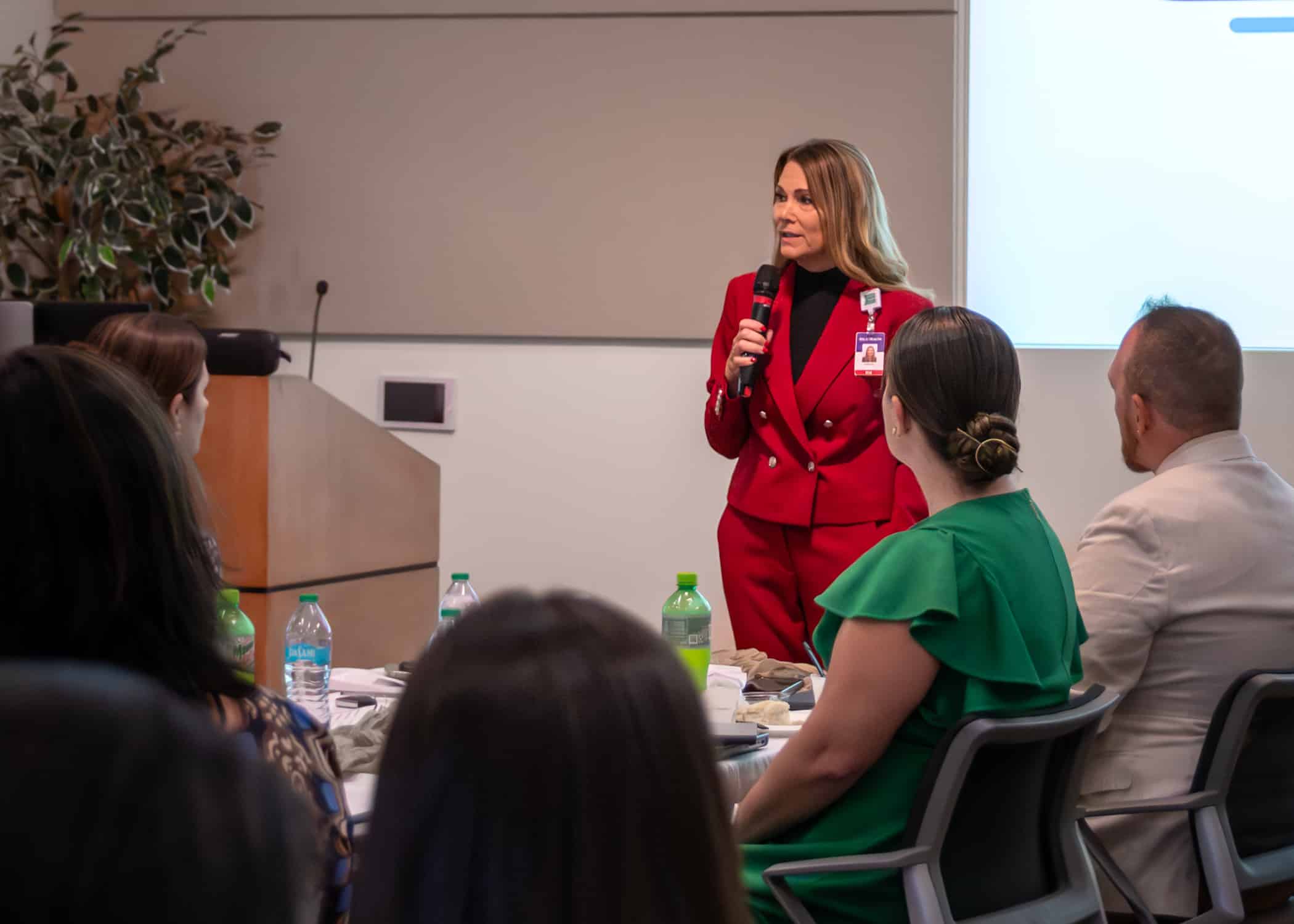
Dr. Trish Baise, chief nursing executive at ECU Health followed with a presentation on The State of Nursing at ECU Health, highlighting current initiatives, challenges and the future direction of nursing within the organization.
The afternoon featured a series of practical and forward-thinking sessions. Theresa Wilson from Stryker shared strategies for pressure injury prevention, helping nurses strengthen patient safety practices. Lori Puthoff from Mednition introduced attendees to AI for Nursing, exploring how artificial intelligence is streamlining workflows in emergency care.
Later, Paige Tyson led an interactive workshop titled, “True Colors”, which helped participants better understand personality styles and how they influence communication and teamwork.
Throughout the day, attendees had opportunities to network, share experiences and build connections across hospitals and disciplines.
“We have EDs in every hospital across the system, but they are all different,” Bass said. “Bringing us together creates opportunities to collaborate, share resources and learn from each other.”
Bass said he hopes the summit helped nurses build relationships with peers and physicians, meet leaders and potential mentors and feel inspired to explore new career paths.
“I also hope they leave with a sense of gratitude for what we’re able to do for patients, feel uplifted and have a renewed sense of purpose,” he added.
The summit not only recognized the dedication of ECU Health’s emergency services teams but also reinforced the organization’s commitment to innovation, collaboration and excellence in patient care.

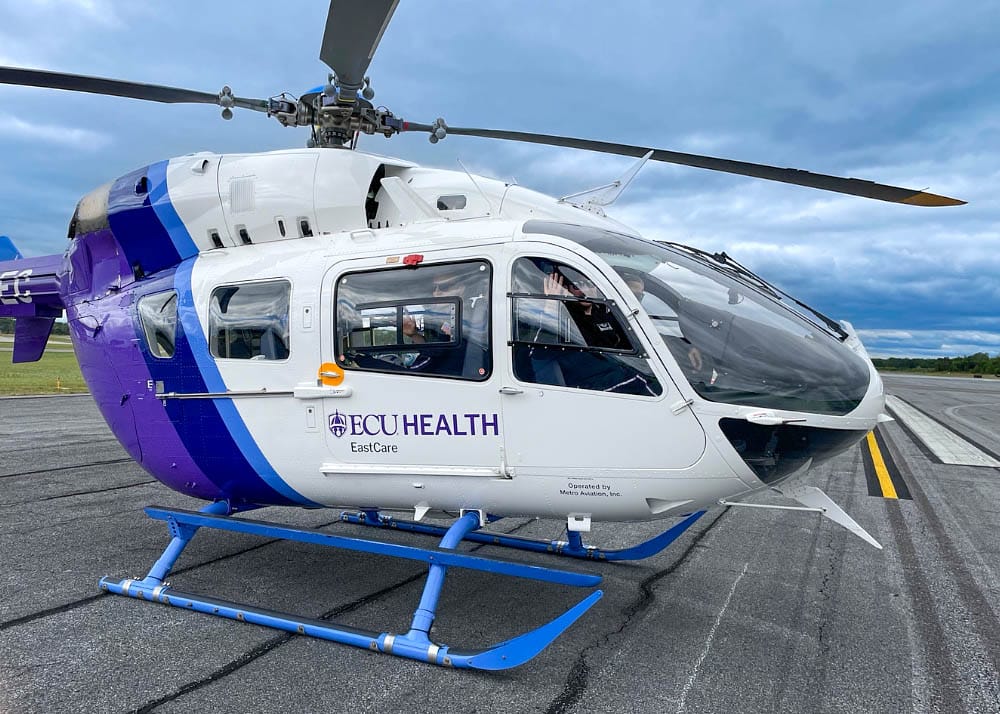
On April 12, ECU Health teams joined forces with Pitt-Greenville Airport and other local agencies, including fire/rescue teams, emergency management and police, for an emergency exercise, simulating a mass-casualty aircraft accident.
This full-scale exercise included volunteers acting as patients and involved various ECU Health departments to demonstrate preparedness for critical situations.
Chris Starbuck, system director of Emergency Management at ECU Health, emphasized the importance of these exercises.
“Participating in the airport exercise is a vital part of our preparedness strategy. It allows us to test our emergency response plans, strengthen communication with our community partners and ensure we’re ready to provide the highest level of care when seconds count. These collaborations are key to saving lives during large-scale incidents,” Starbuck said.
Leaders and team members from the Emergency Department, Trauma, hospital supervisors, Children’s, police, marketing and communications, decedent care and Eastern Healthcare Preparedness Coalition collaborated in a table-top exercise, discussing each person’s role in the event.
The ECU Health EastCare team was also present with a helicopter and ECU Health Medical Center’s ambulance bus stopped by to showcase its readiness to transport patients in a real emergency scenario.
Throughout the drill, ECU Health teams reviewed the notification process, patient movement strategies and interactions with Greenville Fire/Rescue, Pitt County Emergency Management, police and others.
The goal of this exercise was to identify opportunities to improve processes and give organizations in Pitt County time to work together, ensuring readiness to adapt and respond quickly and efficiently in real emergencies.
This drill was a valuable learning experience for all involved, enhancing preparedness and confidence in handling critical situations.
Resources
ECU Health Emergency & Trauma
Maynard Children’s Hospital
ECU Health EastCare
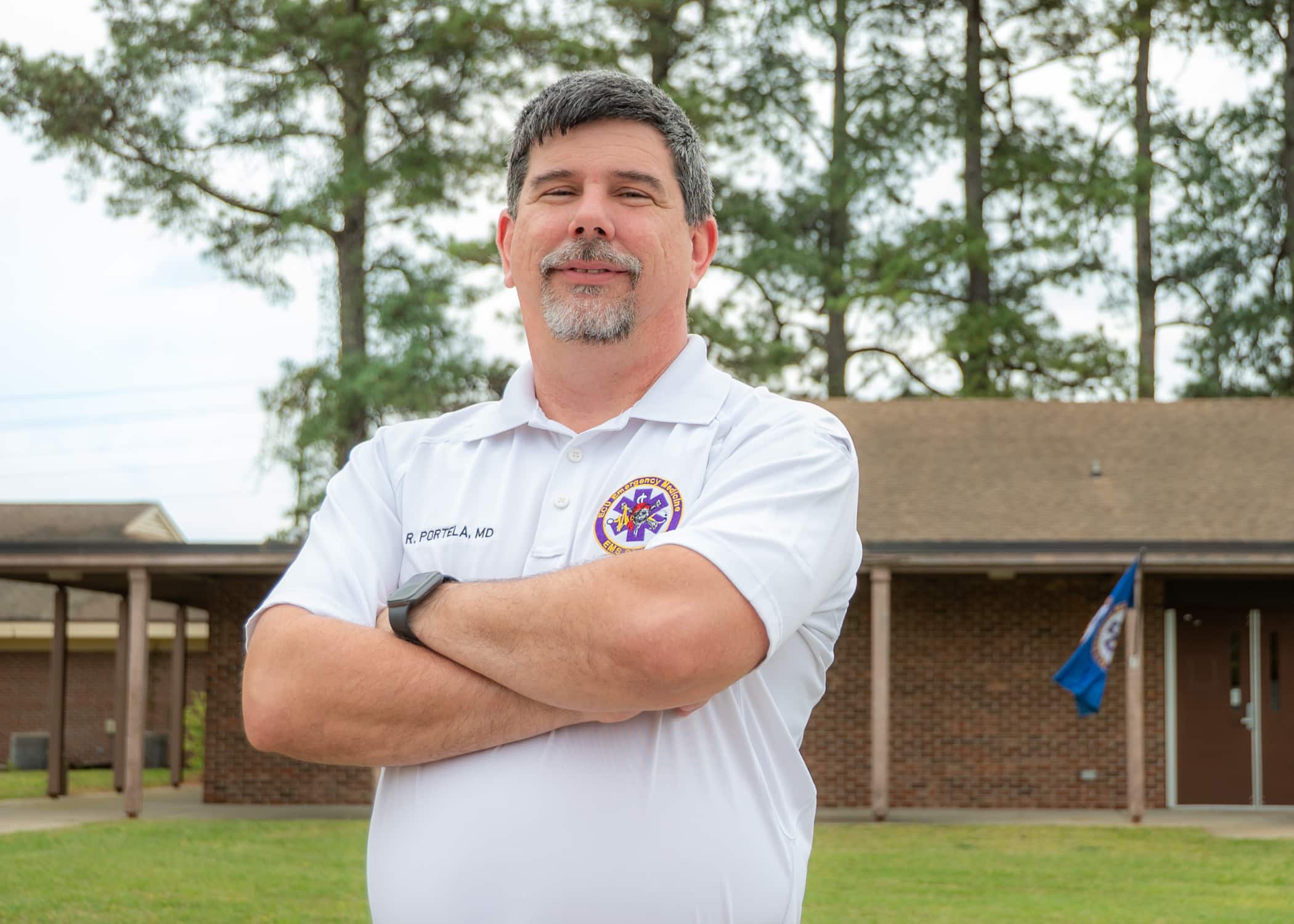
To be a health care provider is to answer a calling. For some, the journey to health care is a straight line; for others, the road is winding. This series features stories from ECU Health team members who took the winding road, but found the destination to be worth the effort.
Dr. Roberto Portela, the chief of the Emergency Medical Services (EMS) division of the department of emergency medicine at ECU Health Medical Center and associate professor at East Carolina University in the department of emergency medicine, grew up in Puerto Rico. Originally, he aspired to be a veterinarian. “As a kid, you think about what you’d like to do, and taking care of animal sounded like a good fit for me,” he said. “I love animals.” But when he joined the military in 1994 and received training as a combat medic, he discovered he loved acute care. “Trauma care – those first minutes or hour of patient care – attracted me.”
Dr. Portela said his work in the military was instrumental in not only finding his path to emergency medicine, but also in how he carries himself as a physician. “The military teaches respect, and as a physician, you need to be respectful to your patients and colleagues,” he shared. “Everybody has a mission and a role, and you don’t always know what’s going on in your patient’s world, so just be respectful.”
After his military service, Dr. Portela attended the University of Puerto Rico to receive his MD and specialized in emergency medicine at the University of Puerto Rico Hospital in Carolina. He ended up staying there for nine years teaching residents how to be emergency medicine physicians. “Then in 2013, I moved to the United States and started as a faculty member at ECU,” he said. “The main thing that brought me here was the desire to expand on my specialty in EMS. In Puerto Rico, I worked in my home program as an attending, I worked with the state EMS system as their online medical control, I helped as a medical director and served as a volunteer in our rescue squad in Puerto Rico. Thank God, ECU gave me that opportunity. I came here, and the doors opened for me.”
Those open doors led to the chance to serve as the EMS medical director for Pitt County, the chief of the EMS Division of the Department of Emergency Medicine, the program director for the EMS Fellowship, a member of the state EMS disciplinary committee and the president for the NC Chapter of the National Association of EMS Physicians. “It was incredible for me; because of my being here and the people in leadership who supported me, I’ve had these opportunities,” he said.
Dr. Portela also spoke about his team and the difference they make every day. “I think all emergency medicine physicians are cut from the same cloth, because they could have picked any specialty, but they chose one that provides care 24/7, 365 days a year,” he said. “The dedication they display every day is amazing – they are resilient.”
There’s also a big difference between his work with ECU Health and his work in Puerto Rico – namely, his access to resources and in-house, high-quality care. “I used to work in a small hospital where I had to transfer patients all the time to get better care; what ECU Health can offer as a system of care with a level one trauma center with multiple specialties – there’s not a lot we can’t do here,” he said.
To those considering a career in health care, Dr. Portela said don’t hesitate. “Ignore the static or what you might hear. At the end of the day, you must remember why we do health care – because somebody needs help. It’s that simple.” He also emphasized that there are many roles and opportunities for those considering a health care career. “From our care partners to all our nurses, to our physicians and tech, orderlies and lab technicians, everybody has a role and it’s a system. There are multiple jobs out there and so many opportunities to make a difference – if you’re thinking about it, just jump in.”
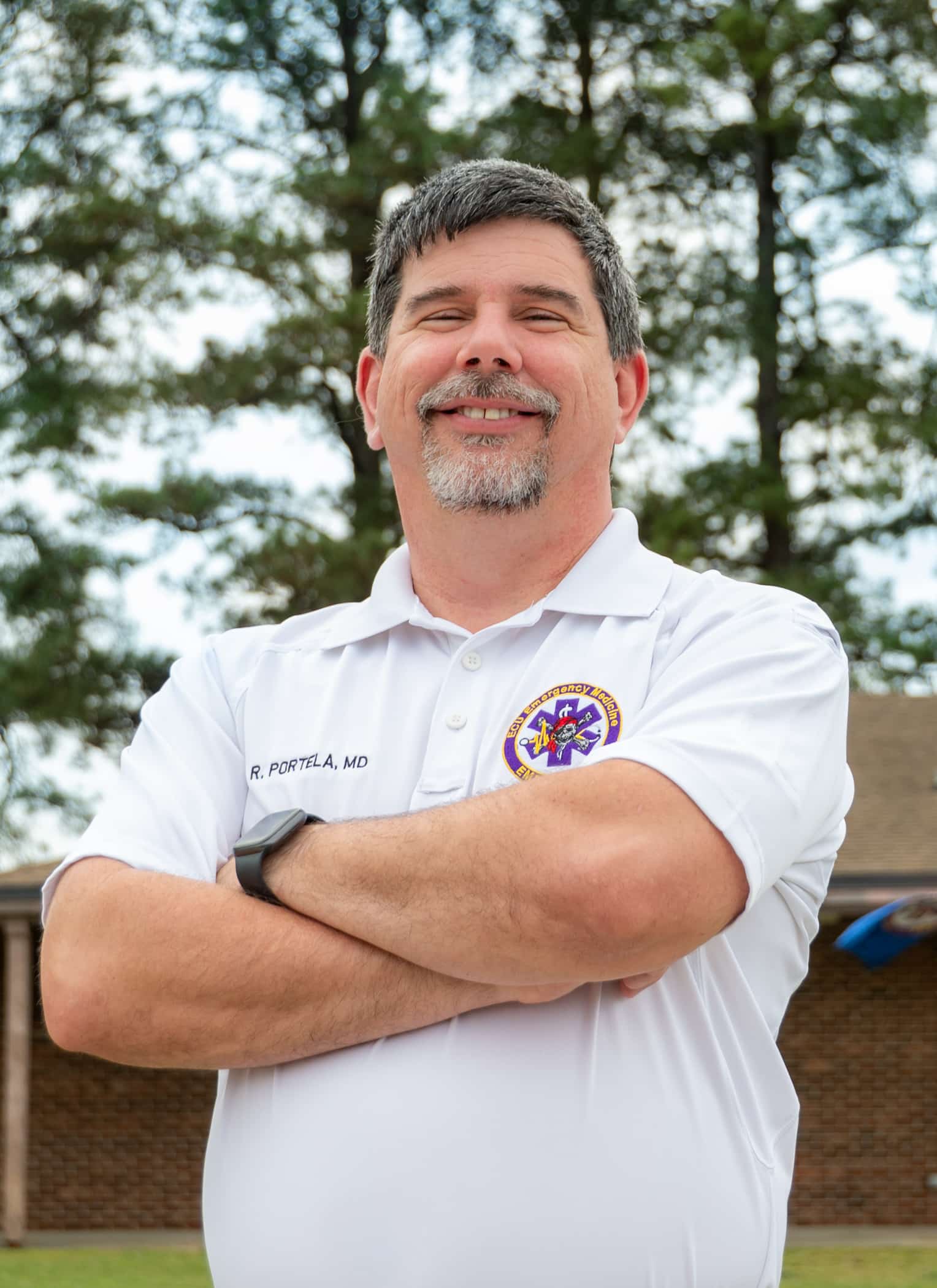

ECU Health hosts third ED conference session to improve community crisis response and emergency care
ECU Health and the Pitt County Department of Social Services (DSS) hosted session three of the community-based Emergency Department conference, yielding more collaboration and progress toward improving access and preventing unnecessary ED visits across eastern North Carolina.
The third and final session, hosted Feb. 4, brought back together a multidisciplinary group of community partners to discuss multi-system collaborations and crisis response focused on five key priorities as identified from the previous two working sessions. The priorities are aligned with the North Carolina Department of Health Human Services goal of increasing access to crisis services across the state.
The five key priorities include:

- Increasing access to care across eastern North Carolina
- Building community-based crisis services capacity
- Workforce/system training and community education: grow workforce knowledge and kills
- Strengthen the eastern North Carlina crisis system
- Accountability and outcomes
“We’ve made tremendous progress in our goal of enhancing collaboration to reduce the significant over utilization of the emergency department where patients will often end up stuck with no timely plans for discharge, said Jacob Parrish, vice president of capacity and throughput for ECU Health. “I am thankful to the health faith and community-based organizations that spent three days alongside us, identifying important care needs in our region and designing solutions that will benefit us all. Moreover, I am tremendously grateful for our partnership with Sharon Rochelle, Director Pitt County DSS, who has provided the essential perspective of the DSS role and support in this process.”
Crisis response is a key function of emergency departments in general, but especially so for the emergency department at ECU Heath Medical Center which is home to the only Level I Adult and Pediatric Trauma Centers in eastern North Carolina. Still, crisis response happens beyond the walls of the hospital, which emphasizes the importance of community collaboration to ensure the hospital can best serve the community in the event of a crisis.
The third session, similar to the first two, was well-attended and included community partners from across eastern North Carolina including Juvenile Justice, Trillium Health Services, Public School leaders, NC DHHS, payors, faith leaders, DSS agencies and other eastern North Carolina hospitals and key stakeholders. The key stakeholders refined the recommendations and tactics to achieve the priorities listed above, including assigning specific responsibilities to drive forward the five priority areas. Regular progress checkpoints and collaborative meetings will continue to ensure alignment with state and community goals, reinforcing a sustainable crisis response system for eastern North Carolina.
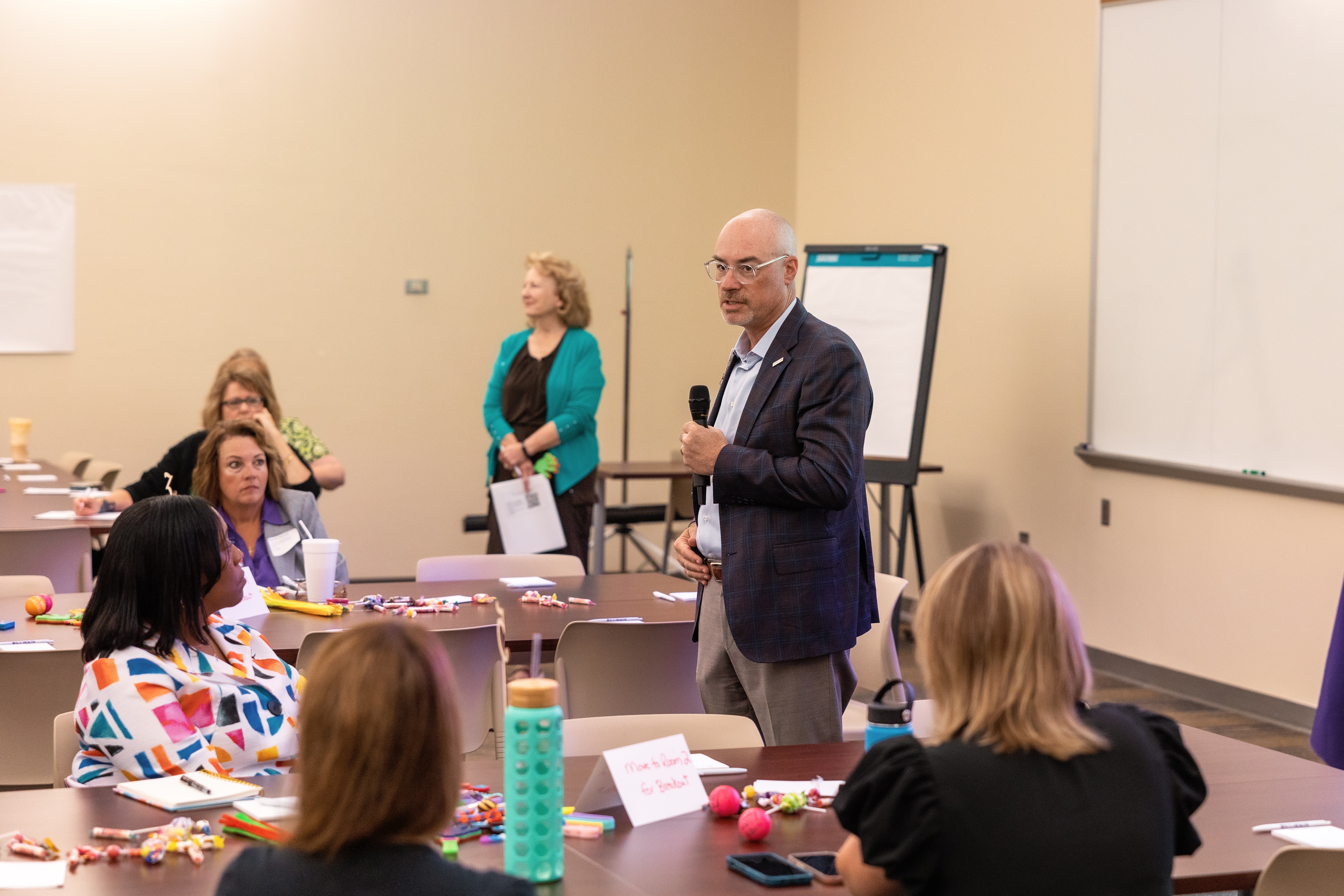
Seven key priorities served as the central discussion point as community-based health partners joined ECU Health and Pitt County Department of Social Services (DSS) in October for the second session of a conference series designed to support the emergency department and improve access to non-emergent care across eastern North Carolina.
The seven key priorities, identified during the first conference session in early October, represent the unique viewpoints from stakeholders across the community and all of whom share a common goal: reduce unnecessary utilization of the emergency department in Greenville.
The seven priorities include:
- Placement/disposition – getting patients placed in the appropriate care settings outside the emergency department such as skilled nursing facilities, in-home care, adult care homes, foster homes, etc.
- Navigating the system – defining roles and responsibilities of each agency
- Collaboration – improve collaboration among systems and across agencies
- Crisis system – more clearly defining how the system operates and clarifying any confusion that may exist
- Community options and wraparound support – ensure a robust support system in the health care setting and in the community to ensure people get the help they need
- Access to services – provide clarity on where patients need to go to access care
- Regulatory – reduce barriers and create efficiencies in key operational areas like timely discharge and clinical assessments
“This was a moment for us as a health care community to not only clearly define the challenges facing the patients we serve, but to also explore how we can implement solutions that improve the emergency care realities here in eastern North Carolina,” said Jacob Parrish, vice president of capacity and throughput at ECU Health, who served as one of the conference organizers. “The challenges facing emergency departments both locally and nationally cannot be solved solely by the hospitals themselves. These conversations help us take our words and put them into collaborative action.”
Health care and community partners in attendance at the conference included ECU Health, DSS Directors from across eastern North Carolina, Juvenile Justice, Trillium Health Services, Public School leaders, NC DHHS, payors, faith leaders, and other eastern North Carolina hospitals and key stakeholders. The conversation focused on both adult and pediatric/adolescent patient populations who present at the emergency department but could be better served in a different setting.
The importance of education and outreach served as a common theme throughout the discussion. Organizations talked not only about the importance of providing critical information directly to patients, but also emphasized the importance of educating themselves on the role that other organizations and agencies play in the care continuum.
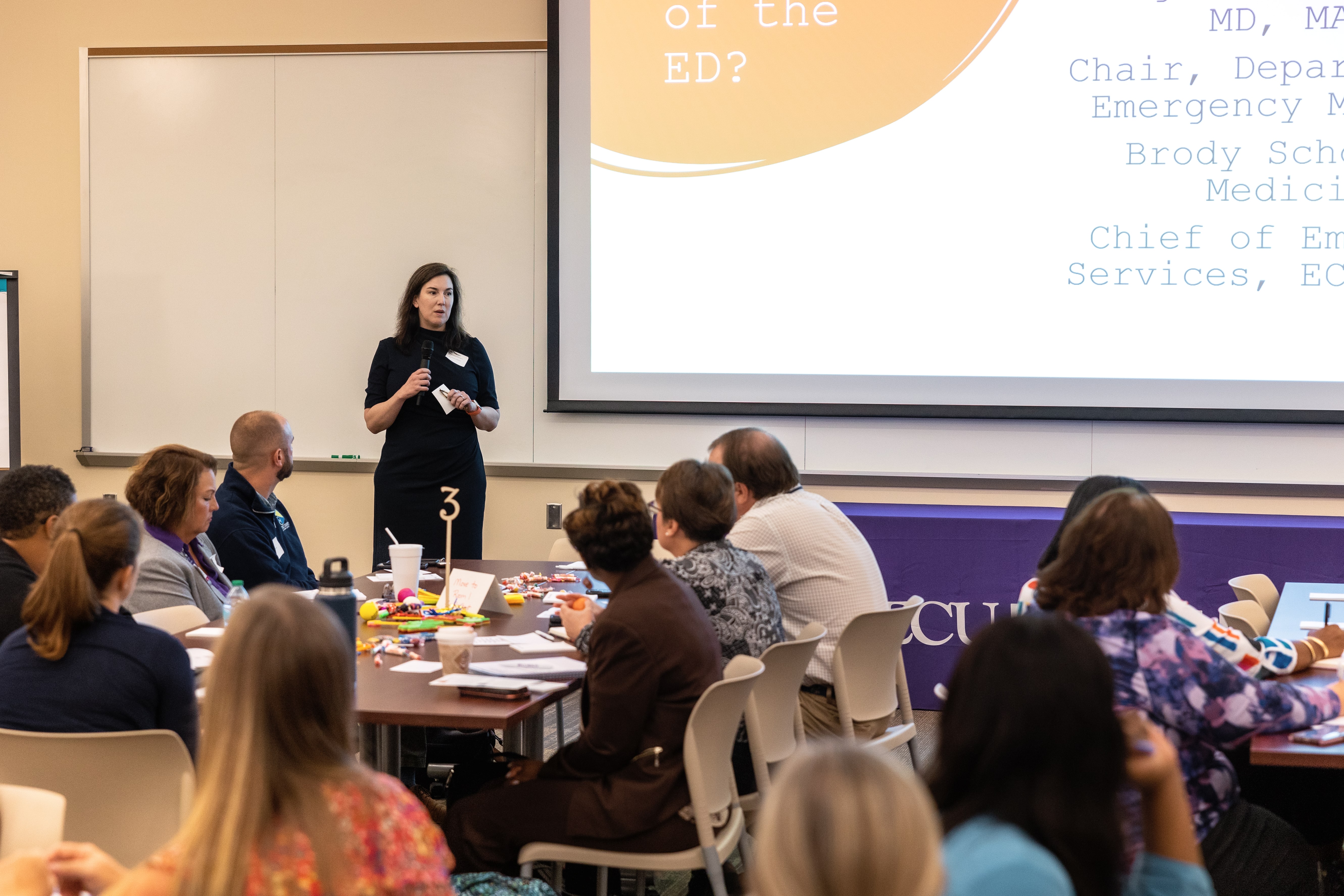
ECU Health highlighted the growing demand for emergency department services and the urgent need to streamline care in the community for non-emergent cases. The discussions underscored how patients with non-critical issues are often funneled to emergency departments due to limited access to routine and primary care resources and crisis services, creating unnecessary strain on EDs. ECU Health Medical Center, for example, remaining full nearly half the year due to high patient volumes, which often exceed its 974-bed capacity. This backlog directly impacts how long some patients may wait in the ED.
“Our commitment to improving emergency care access and efficiency for our patients is unwavering,” said Dr. Leigh Patterson, chief of services for emergency medicine at ECU Health Medical Center. “The collaboration we’re seeing across health care and alongside our community partners demonstrates a shared dedication to creating lasting solutions that serve the unique needs of eastern North Carolina.
By addressing the root causes that lead to emergency department overutilization, we’re working to not only improve the experience for our patients but also strengthening health care in our region.”
ECU Health and Pitt County DSS will host a third session of the conference to further discuss action items and strategies to support more collaboration in the community.
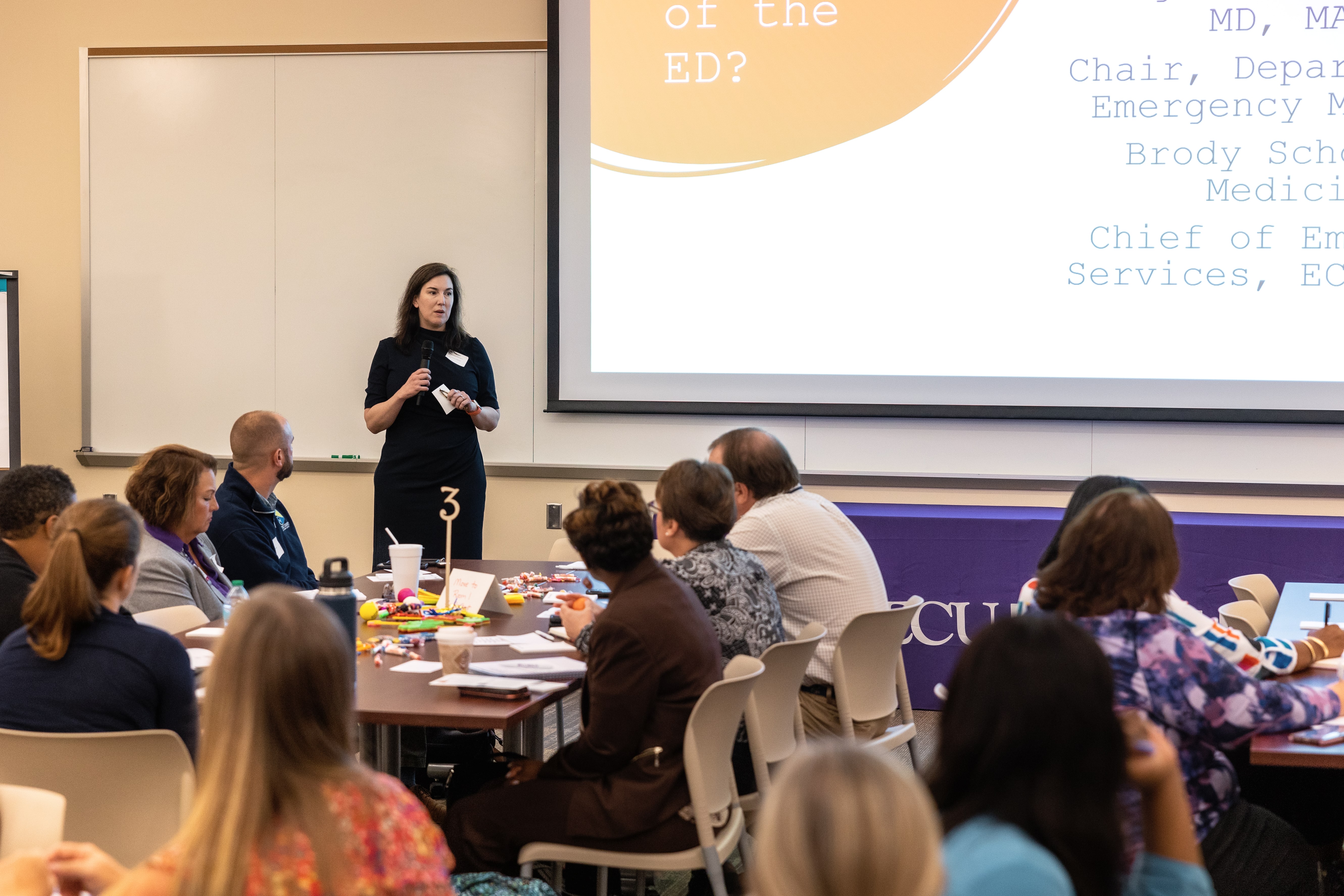
It was a packed house at ECU Health’s Monroe Conference Center on Oct. 1, as ECU Health and Pitt County Department of Social Services (DSS) welcomed dozens of community-based health partners for a conference designed to help tackle a complex challenge: reducing unnecessary emergency department utilization to ensure enhanced access for those needing emergency care.
It is no secret that overcrowding in emergency departments is a challenge facing hospitals across the country. ECU Health Medical Center, the only Level I Trauma Center in ECU Health’s 29 county service area, is no exception. The medical center serves a largely underserved rural region where access to care is difficult for many. That includes primary care, behavioral health care and other services best rendered in outpatient settings. Combined with a disproportionate number of uninsured community members, this lack of access to care means patients often times end up at hospital emergency departments.
Dr. Leigh Patterson, chief of services for emergency medicine at ECU Health Medical Center and chair of emergency medicine at the Brody School of Medicine at East Carolina University, said ECU Health’s nine hospitals will see nearly 250,000 visits to the emergency department this year, with more than half of those occurring at the medical center. She said conversations with key community health leaders, like the one hosted by ECU Health and Pitt County DSS, can help ensure community members are aware of, and have access to, non-emergent health care resources outside the emergency department setting.
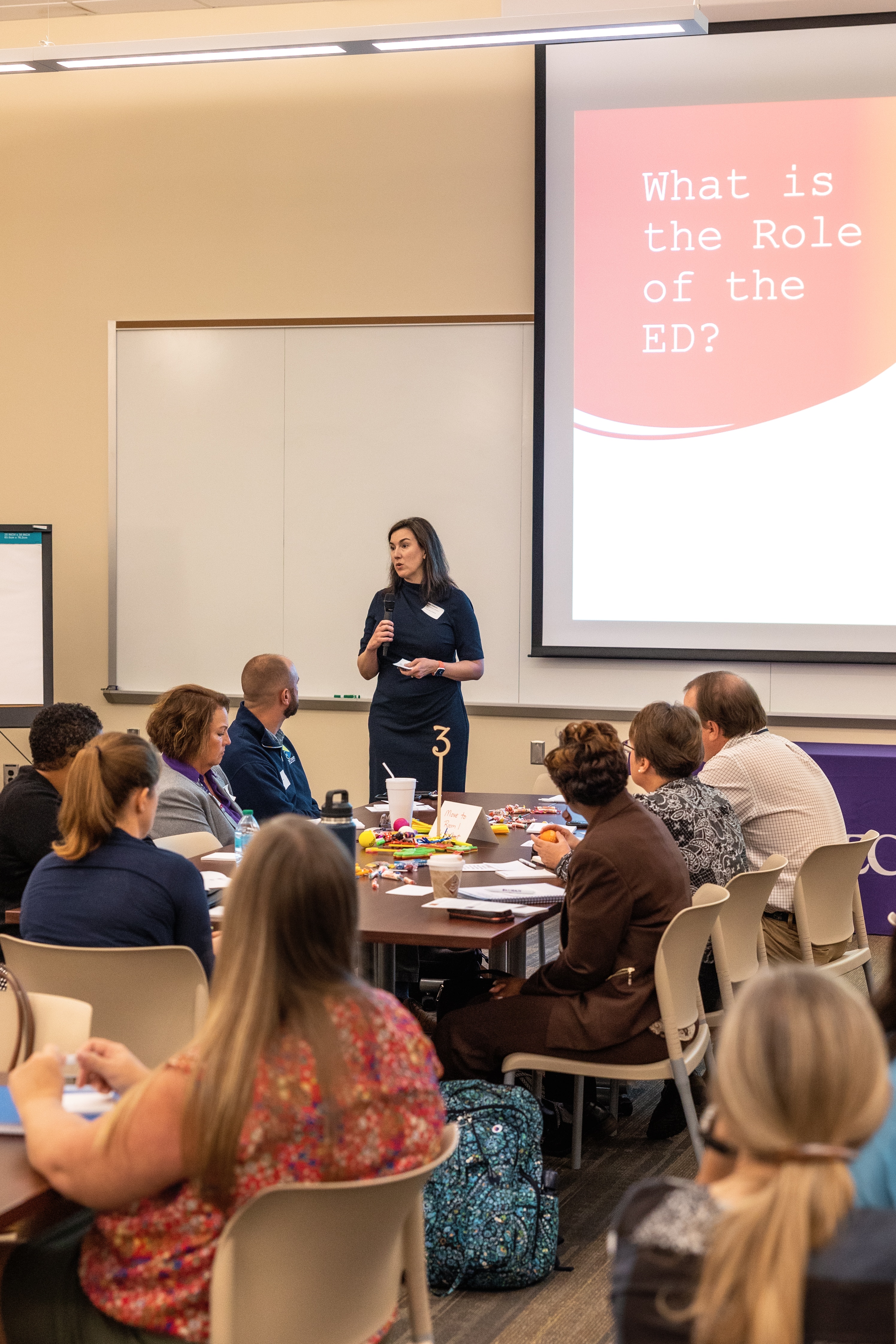
“When I look at what happens inside the emergency department, I see the opportunity for us to help fill the care gaps that exist outside of it,” Dr. Patterson told the group, noting that she sees about 225 adult patients per day in the medical center ED, about 40% of whom could be more appropriately served in an outpatient setting. “When it comes to addressing this problem, it will take all of us as a health care community to make meaningful change. That’s why I’m heartened that so many of you have joined us today to work together toward solutions that make an impact in our community.”
The conference represented true regional community collaboration. Health care partners present at the conference included ECU Health, DSS Directors from across eastern North Carolina, Juvenile Justice, Trillium Health Services, Public School leaders, NC DHHS, payors and other eastern North Carolina hospitals and key stakeholders.
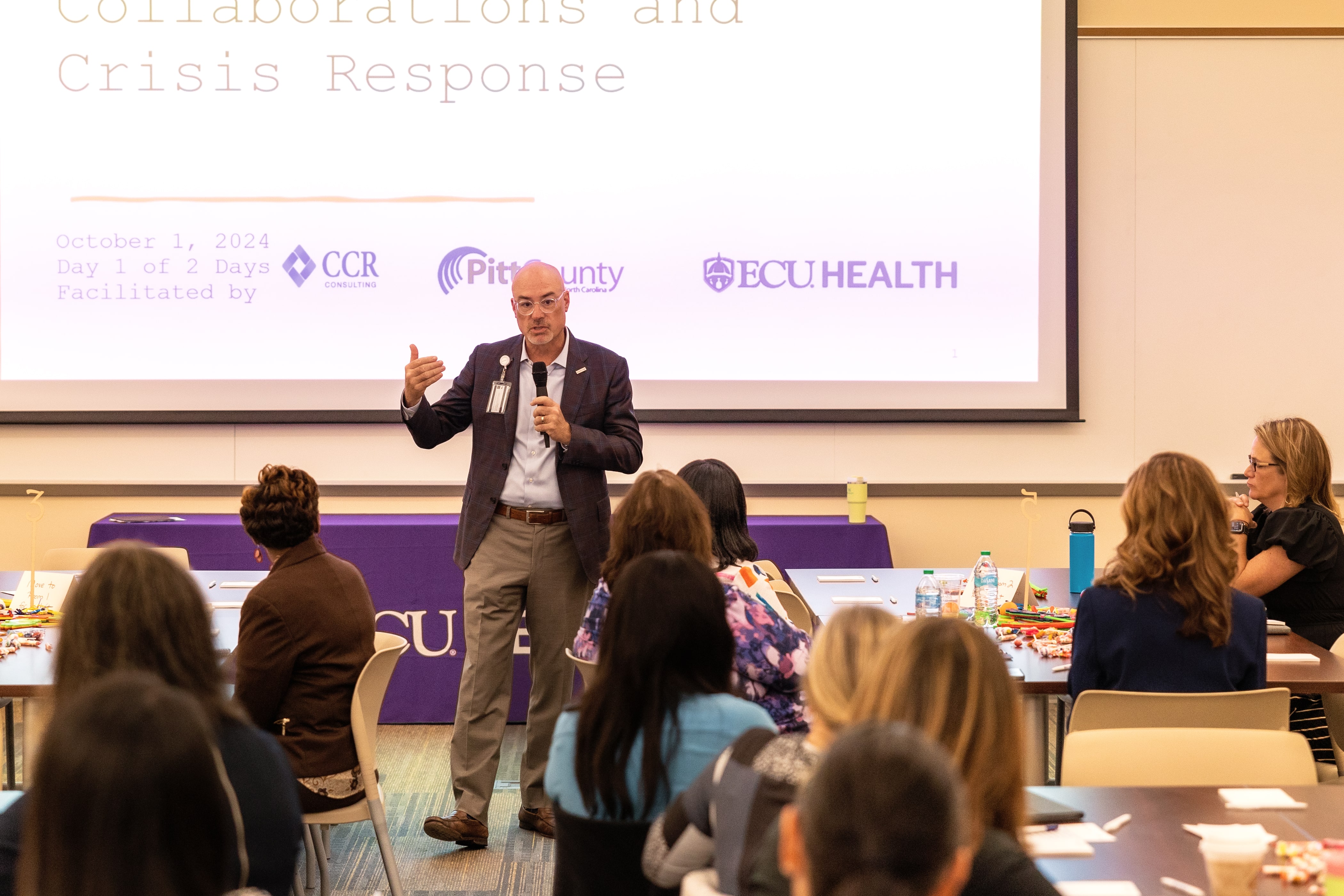
“The ECU Health/Pitt County DSS ED conference was an excellent example of cross system collaboration,” said conference co-sponsor Sharon Rochelle, director, Pitt County DSS. “This was a day to build mutually beneficial partnerships that have common goals to better serve the children and adults of the community.”
The conversation focused on both adult and pediatric/adolescent patient populations and heavily examined the challenges that behavioral health patients face accessing care. Despite the new inpatient behavioral health hospital slated to open in Greenville in 2025, those in attendance agreed that the issue needed immediate attention which involves creating increased interconnectedness among those providing care both in the community and in the hospital setting.
“We are grateful for all agencies involved in this important and challenging work,” said Jacob Parrish, vice president of capacity and throughput at ECU Health. “We know that the complex challenges we face cannot be solved at emergency departments alone. We are fortunate to have so many committed partners who share our vision for continuous improvement through strong relationships and close collaboration. Together, we can ensure the highest quality of care for communities across the East.”
The recent meeting was the first day of the two-day conference, largely centered around examining the issues through open and honest conversations. Those in attendance will reconvene later in the month for the second meeting to develop an action plan with concrete steps and strategies for improving access to care and reducing unnecessary ED utilization in eastern North Carolina.
“This is a complex set of issues, but I am confident we have the right people in our community committed to finding the solutions,” said Brian Floyd, ECU Health chief operating officer. “While these challenges are not exclusive to our health system or region, I know that together we can help support our emergency departments and improve the experience for those needing access to high-quality emergency care which is rendered at our hospitals every single day.”
Resources

As part of its mission, ECU Health prides itself on readiness to respond to any emergency scenario that could impact the health and well-being of the people we serve. Preparedness is imperative for a health system, especially when facing potentially unpredictable emergencies.
ECU Health Medical Center recently hosted a training exercise centered around a Chempack container from the Strategic National Stockpile, part of the Administration for Strategic Preparedness and Response. The containers contain antidotes to treat the symptoms of a nerve agent exposure in response to a possible chemical incident.
“While we hope never to encounter such extreme situations, like a chemical incident, being ready to respond is essential to protect our patients and communities,” said Chris Starbuck, manager of the Eastern Healthcare Preparedness Coalition at ECU Health Medical Center. “Training for scenarios ensures that the ECU Health team is equipped to act swiftly and effectively.”
Team members from across ECU Health, including pharmacists, pharmacy team members, EastCare providers, hospital police and Emergency Management personnel, partnered with Pitt County EMS to learn more about the nationwide Chempack program. The training, led by Monica Ricks, PharmD, with NC Public Health Preparedness and Response, included an overview of possible scenarios where Chempacks may be needed and their vital role in responding to chemical emergencies.
“The Chempack program began in 1983, and luckily we have never had to deploy one,” said Starbuck. “However, a large scale chemical incident like what happened in Japan in the mid-1990s would have very negative consequences to the patients and to our health care system. I’m thankful that as a health system, we continue to prioritize preparedness through ongoing education and training. In the coming months we will conduct a table top exercise with more partners that will lead up to a regional full scale exercise.”
Learn more about how ECU Health and the Eastern Healthcare Preparedness Coalition proactively plan to help care for our region: www.easternHPC.com

ECU Health emergency medicine residents took time away from their regular Wednesday morning classroom sessions and dove into an Emergency Medicine Wilderness Day exercise at Wildwood Park in Greenville.
On May 29, about 20 emergency medicine residents spent their morning in small groups, walking around the park and encountering “patients” with different ailments. From poisoning to animal attacks and drowning scenarios to firework accidents, the experience helped residents prepare for real-world scenarios and eventual board exams. Residents received real-time instruction and feedback from the Brody School of Medicine at East Carolina University faculty as they worked through their training.
The patients for this exercise were standardized patients from Brody’s Office of Clinical Skills Assessment and Education. Standardized patients are trained to mimic real patients so that students can learn. Their role is to help prepare future health care professionals for a variety of patient interfaces.
Dr. Sarah Thead is a second-year emergency medicine resident at ECU Health and said she’s attended the training the last two years and has benefited from the experience.
“It’s a great educational experience every time we do this,” Dr. Thead said. “It’s scenario-based and our faculty try to set up the scenarios similar to how they’ll be set up on our oral board exams, so it’s a fun experience but also really important from an educational perspective as well.”
She said the scenarios change from year to year which helps her and her co-residents as they try to work together and think quickly to help patients experiencing a medical emergency.
Dr. Jennifer M. Bennett, an emergency medicine physician at ECU Health, clinical assistant professor of emergency medicine and medical director of the Simulation Center at Brody, said this kind of exercise is important for a number of reasons.
“It’s a great opportunity to demonstrate how we can all work together, even outside of the emergency department. It’s important to work on these skills in a different environment,” Dr. Bennett said. “It’s also a good opportunity to have some team bonding for the residents. Just getting them out for a day and letting them do something a little bit different, getting them out in the sun, that’s a positive as well.”
Dr. Bennett said having Wildwood Park available to run this exercise has helped this program thrive over the last three years.
Along with Dr. Bennett, Dr. Jennifer Parker-Cote, assistant professor of emergency medicine at Brody, helped to create the simulation and organize the event.
In Dr. Parker-Cote’s simulation, residents had to assess a camper who had ingested a toxic mushroom in the woods. Residents assessed the standardized patient, asked about the patient’s medical history and made recommendations on next steps for care.
“These scenarios allow residents to apply the knowledge they’ve gained through their residency and apply it to real world situations and permits them to improvise in wilderness medicine, which you have to do a lot of times,” Dr. Parker-Cote said. “It’s important to put them through these simulations and have them think critically while working together and trying to move quickly to help our standardized patients.”
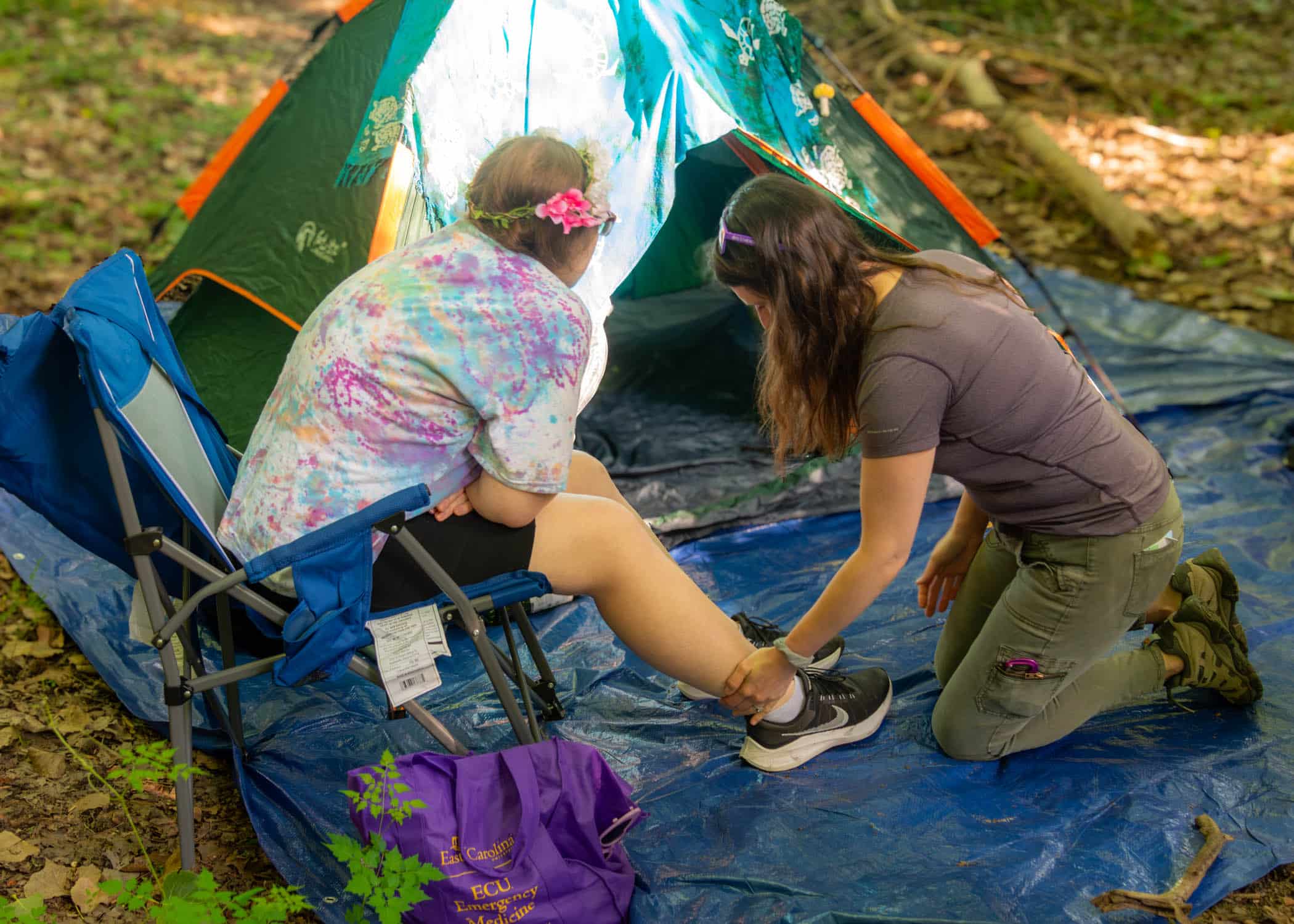
The training is another example of the valued partnership between ECU Health and Brody. Residents at an academic health system like ECU Health have support and resources for continued education from faculty and the Interprofessional Clinical Simulation Program at Brody, enriching their clinical training experience. Residents participate in trainings like this to prepare for real situations with real patients both behind the walls of the hospital and out in the community.