
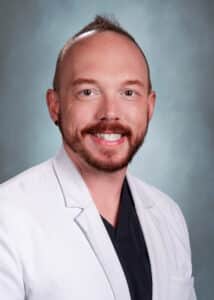
 Dustin Bass, DNP, MHA, RN, CEN, NEA-BC, vice president of ECU Health Emergency Services, has officially begun his term as the 2026 president of the Emergency Nurses Association (ENA). He steps into the role with a clear mission to strengthen the sense of community, belonging, and professional support among the association’s more than 40,000 members worldwide. With more than 15 years of clinical and leadership experience, his election marks another milestone in a career defined by service and commitment to the nurses who care for patients at their most vulnerable moments.
Bass’s passion for emergency care began early in life. As a teenager volunteering in a hospital, he witnessed a nurse leap onto a stretcher to perform CPR – an experience that cemented his desire to pursue nursing. A first-generation college graduate, he earned his nursing diploma in 2011 and later completed his doctorate in health care leadership, systems and policy at Yale University in 2023. His career has since spanned bedside care, system-level leadership, authorship and national advocacy.
As ENA president, Bass plans to focus on strengthening relationships across the emergency nursing profession. “Emergency nurses give so much of themselves, and they deserve an association that gives back just as powerfully,” Bass said. “2026 will be a year of belonging, community and hope—one that reflects the undeniable strength and spirit of emergency nursing.”
Bass has been active in ENA since 2010, serving on committees and councils, leading the Nevada ENA Council, and joining the ENA Board of Directors in 2021. His presidency begins alongside a diverse and accomplished 2026 ENA Board of Directors, including both returning leaders and newly elected members. He is the author of The Leadership Dashboard and Leadership Affirmations: A Coloring Book and Journal, and he frequently presents on leadership at ENA conferences and on national media platforms. His achievements have been widely recognized, including being named to the inaugural ENA 20 Under 40 list in 2021, selection for the American Organization for Nursing Leadership’s Young Professional Voices class of 2023, and recognition in North Carolina as a Great 100 Nurse.
His leadership philosophy – “helping people help others” – has guided his work to support nurses at the bedside and beyond. Colleagues describe Bass as someone who can navigate the complexities of a large academic health system while still rolling up his sleeves to support frontline teams.
“I try to inspire and uplift our team to be the best they can be, so they can be the best for our patients,” he said. “I like to get my hands dirty and get the job done. It’s a large, academic medical system, but it still has a family feel to it. That’s not something you see in larger institutions. I appreciate that and can be myself.”
As he steps into the ENA presidency, Bass brings that same dedication to the national stage to champion the emergency nurses who keep communities safe every day.

Dana Byrum, vice president of Patient Care Services at ECU Health Bertie and Chowan hospitals, and Christina Miller, vice president of Nursing Strategic Operations, were both recently awarded the American Organization for Nursing Leadership (AONL) Nurse Executive Fellowship, a prestigious and selective year-long program for nurses who are new to an executive or senior leadership role. This is the first time any ECU Health team member has represented the system as an AONL Fellow, let alone two, and they join a group of only 25 leaders from across the country.
Dana Byrum
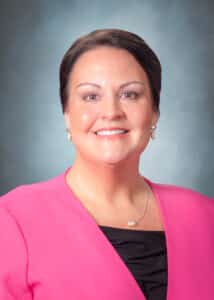
Byrum has been with ECU Health for 29 years, and she began her career working in medical records and then as a nursing assistant before going to school to become a nurse.
“There was a nursing leader, Vicky Blanchard, from the MedSurg unit who would come talk to me in medical records,” Byrum said. “She was so kind and engaging, and she suggested I get certified as a nursing assistant to see if I might like nursing. I did, and when I graduated with my RN, she hired me. She was really the first who invested in me.”
That investment has paid off. With her newer role as vice president, Byrum said the AONL Fellowship presented a great opportunity to gain experience and develop critical executive competencies such as executive presence and communications, innovation and change leadership and governance relations.
“Participation in the AONL Nurse Executive Fellowship will provide me with the chance to learn from innovative practices across the country while sharing the exceptional work happening here at ECU Health,” Byrum said. “Our vision is to become the national model for rural health, and this program helps us understand what that looks like by building connections, exchanging ideas and translating insights into improved clinical outcomes. It’s not just about learning – it’s about collaboration, creating lifelong relationships and showcasing ECU Health’s leadership in rural health innovation.”
Christina Miller
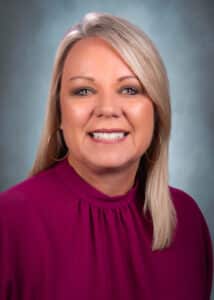
Miller graduated from nursing school in 1998, and the Duplin County native has worked as a nurse and leader in acute hospital settings in eastern North Carolina for the past 25 years. She was recruited to ECU Health to continue to serve her local community.
Miller has since served in a leadership capacity at ECU Health Duplin Hospital, was promoted to vice president of Patient Care Services, and she now serves as the vice president of Nursing Strategic Operations for ECU Health. The AONL Nurse Executive Fellowship is a great opportunity for continued leadership growth and development, and to continue to support the mission and vision of ECU Health, Miller said.
“It offers a huge connection with nurse leaders across the country,” she said. “We connect well with local and regional leaders, but this gives us a chance to spread our wings and see what strategies are being deployed in other places.”
The year-long fellowship offers education in strategic planning, innovation and change leadership and governance, as well as information about national-level policy where nurse leaders learn how to advocate and lead big process changes.
In addition to in-person fellowship retreats, which will happen in Chicago and Washington, D.C., fellows will attend the AONL Annual Conference in the spring, participate in one-on-one coaching with a mentor and establish a supportive network of peers.
“You leave [the fellowship] with 25 colleagues you have collaborated with, and this peer group moves forward together,” Miller said. “You grow a new skill set and learn from leaders across the nation.”
Christina said this fellowship is key in developing her abilities as a nurse leader – something ECU Health has supported her in and will inform the work she does with the system.
“We lead the nursing voice in eastern North Carolina,” she said. “Trish Baise, ECU Health chief nursing executive,] empowers us to advocate for nursing for the region, state and nationally. The more we learn, network and support our organization, the more we are able to attract and retain talent.”

Greenville, NC – ECU Health is proud to announce it has been named a 2025 Human Experience (HX) Guardian of Excellence Award® winner in consumer experience by Press Ganey, the global leader in health care experience solutions and services. This award is part of Press Ganey’s annual ranking of the top hospitals and health systems in the country, according to performance in consumer experience.
“This recognition from Press Ganey is a powerful affirmation of our commitment to listening to our patients and constantly improving based on their insights,” said Dr. Julie Kennedy Oehlert, chief experience officer at ECU Health. “Being honored for excellence in consumer experience reflects the strength of the ECU Health brand in eastern North Carolina and affirms the trust our communities place in us. I am so proud of the compassion and dedication of our team members who deliver high-quality care to those who call eastern North Carolina home.”
The Press Ganey Human Experience Awards honor health care organizations that consistently lead in patient experience, employee and physician engagement, clinical quality and safety. As a winner of the Press Ganey HX Guardian of Excellence Award® ECU Health is in the top one percent of health care providers in consumer experience in the last year.
“As a mission-driven rural health care system, ECU Health is uniquely positioned to deliver compassionate, high-quality care to communities that often face barriers to access,” said Brian Floyd, chief operating officer at ECU Health. “This recognition from Press Ganey reflects the extraordinary commitment of our team members who work tirelessly to create meaningful patient experiences while advancing health equity across eastern North Carolina. It is a powerful testament to our work to improve the health and well-being of eastern North Carolina.”
Press Ganey reviews third-party ratings on platforms like Google, Healthgrades, WebMD, Sharecare and Vitals, and reviews the health care organization’s responsiveness to patient reviews addressing concerns. The 2025 awards are based on performance from Jan. 1, 2025, through May 31, 2025.
“ECU Health is showing what it truly means to deliver compassionate, person-centered care,” said Patrick T. Ryan, Chairman and CEO of Press Ganey. “Their deep commitment to both patients and caregivers is creating a culture where empathy drives action—and where people feel seen, heard, and supported. It’s a privilege to stand beside them on this journey.”

Ebrahim Rezk “Abe” Al Quhshi could be anywhere right now. Born in Yemen and raised for a time in Sudan, he moved to New York City as a youngster before eventually finding his way to Greenville. He’s a 2020 graduate of South Central High School in Winterville, and in May, expects to graduate from ECU with a business degree in management information systems (MIS).
His next move might be the most surprising yet. He may stay put.
This summer, Al Quhshi was a part of a pioneering school-to-office pipeline that connected 19 students to high-growth employers across eastern North Carolina through the federal work-study program. It introduced students to a rich spectrum of career opportunities in our region. It also helped them apply their classroom learning in real-world settings, building confidence along with the competencies needed to become workforce-ready professionals.

Developed by Dr. Melanie Fiona Jackson, director of Innovative Workforce Partnerships inside ECU’s Office of Research, Economic Development and Engagement, in close collaboration with Student Employment and Financial Aid, the initiative is the latest way the university is co-developing talent with industry partners such as ECU Health, the region’s largest health system and employer.
“When we talk about strengthening the regional economy, this is what it looks like in action,” she said. “Students like Abe are proof-of-concept.”
The students were assigned roles around the health system, including talent acquisition, workforce development and finance. Al Quhshi was placed in an entry-level human resources role, but after a few days, he gently pointed out that, as an MIS major in the College of Business, the work didn’t strongly draw on his education.
“He said, ‘I don’t think this is going to connect to anything I’m studying,’ so, after two days, he got moved,” says Tavis Richardson, a recruitment outreach program manager with ECU Health. “I love that we can do this! This is what we’re after at ECU Health, to create pipelines to the university, to expose these students to the opportunities at ECU Health so they’re not leaving eastern North Carolina.”
Al Quhshi slid over to a customer-facing position in the revenue cycle department and loved it immediately. He was so hard-working and curious, prepared and charming that when the 13-week program sunset, the health system moved to hire him.
“Once you understand how a big organization works, it can shape your future career,” he says. “It’s helped me have an idea where I want to be and what type of work I want.”
‘That Light Flickering and That Energy’
The full-time opening was adjusted so that his workweek could make room for classes and school obligations. Today, he hustles to work first thing in the morning, often leaves for classes, then returns.
“I don’t have any more time for friends and, like, stuff,” he laughs, “but when I get paid I forget about all that.”
“His department really wanted to make him part of the team,” Richardson said, and “it was easier for us to bring him on board as a team member because of the program.”
Hiring qualified, educated professionals is an expensive proposition. According to the Society for Human Resource Management (SHRM), employers in the U.S. will spend about $5,500 on average for a single non-executive hire this year.

Students in a federal work‑study program (FWS) such as Al Quhshi are often offered jobs at higher rates than their non-FWS peers. These jobs are partly paid by federal or state funds, so employers have lower net cost to invest in these trial relationships. And in the end, employers become familiar, often fond of these junior associates.
Sabrina Sims is the health system’s vice president of revenue cycle. When asked about Al Quhshi and the perception of work-study students as well-educated but untried next to coworkers with years of experience, she waved it away.
Sure, she looks for experience, but do “they still have that light flickering and that energy that a college student’s going to have coming out, trying to get into the professional world to see if they can apply their studies? Because I want that.”
In Al Quhshi’s case, his immediate supervisor, Tasha Sears, says competence and reliability were never in doubt.
“From the front end to the back end, his work ethic is excellent,” she says. “I didn’t have to treat him any differently from my other employees.”
Developing the Future Workforce
Al Quhshi did the job over the summer while continuing to work as a staffer at the university’s fitness center swimming pool. He said he loved dealing directly with patients about their bills and attributed his “people skills” to his experiences in that most high-stakes of customer relations roles — restaurant server.
Through his work-study program he met Michael Whitfield, a revenue cycle analyst with the health system. Whitfield is an ECU alumnus with the same business degree and concentration Al Quhshi is finishing.
“My major, management information systems, is rare. You don’t find a lot of people even in the MIS major, but you have a whole MIS team here, and that was super exciting to meet them,” Al Quhshi says.
Whitfield, whom he sometimes calls “Sir Michael,” is a mentor. According to the graduating senior, it’s Whitfield’s role to share documentation and reports with management and key stakeholders, identify trends and innovate ways to improve processes — exactly what Al Quhshi hopes to do one day.
“Every time I see him coming, I’m like, ‘Hey, can I have a lunch with you?’ I look up to him,” he says.
“Abe’s success is his own, but his story is also one about how a university transforms a community,” Jackson says.
In the spring, Al Quhshi will receive his diploma and begin his career — or has his career already begun? Until this summer, he had thought he would have to move away. Perhaps not. He could continue to invest his talents in ECU Health.
He’s made all the right moves so far.
“I feel fortunate being an ECU student,” Al Quhshi says. “I have received all the help I need. I have met great people, great professors. And, yeah, it has been a whole experience for me.”
Learn more about workforce innovation and engagement.

Greenville, NC — ECU Health Medical Center is proud to announce its designation as a Gold Level Center of Excellence in Life Support by the Extracorporeal Life Support Organization (ELSO). This honor recognizes health care centers that demonstrate an exceptional commitment to evidence-based practices, quality measures, staff training and outstanding patient care in extracorporeal membrane oxygenation (ECMO).
“We are honored to receive this recognition from ELSO, a testament to the skill and commitment of our ECMO and critical care teams,” said Heidi Carrow, ECMO Coordinator at ECU Health. “Our teams work tirelessly to deliver the highest standard of care, and this achievement reflects that dedication. Looking ahead, ECU Health Medical Center has established a dedicated adult ECMO team, enabling specialists to focus exclusively on this advanced therapy and further enhance the quality of care we provide.”
ECU Health provides ECMO therapy for infants, children and adults experiencing acute failure of the cardio-respiratory system. ECMO is one of the most advanced forms of life support available to patients and allows time for the patient’s lungs or heart to heal over a period of time by using a heart-lung machine to oxygenate the blood outside the body. Since launching its ECMO program in 2015, ECU Health has treated more than 50 to 60 patients annually across neonatal, pediatric and adult populations.
This marks ECU Health’s first Gold Level recognition, following previous Silver Level awards in 2016 and 2023. The Gold Level designation reflects the continued advancement and excellence of ECU Health’s ECMO program and critical care teams. The award is valid for a three-year period from Jan. 1, 2026, through Dec. 31, 2028.
“Achieving Gold Level recognition from ELSO is a testament to the skill and dedication of our teams at ECU Health,” said Jay Briley, president, ECU Health Medical Center. “This award underscores our commitment to advancing critical care and ensuring patients across eastern North Carolina have access to the most advanced life support therapies available close to home. We are proud of the progress our ECMO program has made and remain focused on continuing to elevate the quality of care for every patient we serve.”

Greenville, NC — ECU Health continued its mission of improving the health and well-being of eastern North Carolina in 2025 by advancing rural health through clinical innovation, expanding access to care, academic excellence, establishing and growing workforce development pipelines and a steadfast commitment to quality. The year was marked by transformative programs, strategic partnerships and national recognition that reflect ECU Health’s dedication to improving health outcomes for the region’s rural communities.
“As we reflect on the past year, the milestones we’ve achieved are a testament to the dedication of our team members and the collaborative spirit that drives our mission forward,” said Dr. Michael Waldrum, ECU Health CEO and dean of the Brody School of Medicine at East Carolina University.
“From introducing new clinical programs to expanding academic pathways and strengthening community partnerships, our team’s work in 2025 continues to position ECU Health as a national model for rural health care. At a time when rural health care continues to face significant uncertainty, ECU Health remains deeply committed to building sustainable models of care that meet the evolving needs of eastern North Carolina and strengthen the health of our communities for years to come.”
A few key highlights from 2025 include the launch of pediatric robotic surgery and telecardiology in Edenton, the region’s first Intensive Cardiac Rehabilitation program and the expansion of the Pediatric Asthma Program into rural schools. ECU Health also opened the IMPACT Clinic for perinatal substance use care, reinforcing its commitment to compassionate, specialized care. The health system earned national recognition for quality, including five-star CMS ratings for Duplin and Bertie hospitals, top cardiac surgery rankings for the East Carolina Heart Institute and continued honors from the Get With The Guidelines® program.
More 2025 highlights include:
- The MOTHeRS Project received national recognition for advancing maternal mental health care.
- The Health Sciences Academy expanded to four new locations, marking 20 years of academic excellence and workforce development.
- ECU Health welcomed its first class of neurology residents and celebrated 154 new Graduate Medical Education professionals entering the system.
- Fourteen graduates from the Brody School of Medicine matched to ECU Health Medical Center in March, highlighting the two organizations’ commitment to educating and training the next generation of rural physicians.
- ECU Health celebrated 40 years of EastCare transport.
- ECU Health nurses were honored for excellence, with a record 25 nurses named among the Great 100 Nurses of North Carolina.
- ECU Health celebrated 40 years of ECU Health Edgecombe Hospital.
To explore more milestones and highlights from 2025, visit ECUHealth.org/Year-in-Review.

 April Quidley, the manager of pharmacy education and research and the Pharmacy Resident program director at ECU Health, was recently appointed to a three-year term on the Fundamental Critical Care Support (FCCS): Bedside Care Task Force by the Society of Critical Care Medicine (SCCM) – an exciting achievement that reflects Quidley’s expertise in critical care medicine.
A New Bern native, Quidley has been with ECU Health since 2012. During that time, she established herself as a valuable resource for pharmacy services, especially in the critical care space. She has also enjoyed working with students.
“I spend a lot of time with pharmacy students and resident training,” she said. “We do a lot of recruiting for pharmacy resident positions, and we get a lot of interest from across the country because of the cool things we’re doing and our preceptors. We have a good cohort of professionals we’ve hired from our training program.”
Training the next generation of pharmacists
The Bedside Care Task Force merges Quidley’s pharmacy and education expertise with that of 20 other professionals, including other pharmacists, nurses and physicians, to create a new, international course focusing on bedside care in the critical care setting. Quidley said it’s forward thinking to include multiple disciplines to create this coursework.
“The goal is to train those who may not have experience in critical care on how to provide initial assessments and care, so they feel confident about that process. We want to do this in a standardized way to provide a worldwide process,” Quidley explained.
“My role, and that of the other pharmacists on this team, is to ensure pharmacists who provide bedside care know what they need to do to provide timely drug delivery, timely drug recommendations and adhere to best practices for patient care,” she added.
This is important because it allows providers in a variety of settings to enhance their critical care skills.
“Think back 10, 15 or 20 years ago,” Quidley said. “If you were working on the floor of a smaller hospital, your team might have to call for a consult for critical care cases. There are so many diagnoses, like sepsis, that require an early and accurate response. With this education, a team can provide the critical care patients need in the time they need it.”
The appointment stipulates that the task force determines the audience for this coursework, what other courses already exist in the critical care space and the financial investment required. The group will meet virtually and in person throughout the three-year period, including at SCCM conferences and meetings.
“The plan is to create a framework for this course by the end of the three years,” Quidley said.
The coursework will be a hybrid format of virtual, knowledge-based coursework and in-person, skill-based assessments, with the hope that ECU Health serves as one of the on-site locations.
A personal contribution to the discipline
Quidley’s involvement with the SCCM, both as a member and a Fellow of Critical Care Medicine, played a role in her name making it on the list of task force members.
“To be a Fellow, you have to publish and be active in critical care scholarship as well as work at the bedside,” she shared.
The SCCM website further designates Fellows as “practitioners, researchers, administrators and educators in the field of critical care,” and it recognizes outstanding contributions to the field. The distinction requires an application to be considered, and it globally honors Fellows as leaders in critical care.
“We already do a lot for critical care support here,” Quidley added. “Kristie Hertel has done a lot here at ECU Health in the critical care space. Working with the SCCM and this task force helps us develop curriculum that makes a broader impact.”
Quidley said she is thankful to work in an environment that supports her work with the SCCM and this task force specifically.
“I’ve been with ECU Health for 13 years, and I appreciate the organization’s support of our engagement in things beyond the institution. It’s not just for me personally, but for the organization as a whole. Being with ECU Health has been so rewarding.”

Windsor, NC – ECU Health Bertie Hospital earned a 2025 Performance Leadership Award for excellence in outcomes and patient perspective. Compiled by The Chartis Center for Rural Health, the Performance Leadership Awards program recognizes top quartile performance among rural hospitals in Quality, Outcomes, and/or Patient Perspective.
“This recognition reflects the dedication and compassion of our entire team at ECU Health Bertie Hospital,” said Brian Harvill, president of ECU Health Bertie Hospital. “Delivering high-quality care and ensuring positive patient experiences are at the heart of everything we do. We are proud to serve our community and honored to be recognized among the top-performing rural hospitals in the nation.”
ECU Health Bertie Hospital is a six-bed critical access facility committed to providing high-quality care close to home. The hospital offers a broad range of inpatient and outpatient services, including radiology, rehabilitation, and laboratory diagnostics. It also features a specialty clinic delivering advanced care in areas such as pain and wound management, podiatry, nephrology, ENT, and more.
This dedication to excellence has earned ECU Health Bertie Hospital national recognition. In addition to receiving The Chartis 2025 Performance Leadership Award, the hospital achieved an overall five-star quality rating from the Centers for Medicare & Medicaid Services (CMS) and was named one of the nation’s Top 20 Critical Access Hospitals for patient satisfaction.
The Performance Leadership Awards program is based on the results of the Chartis Rural Hospital Performance INDEX®, a comprehensive and objective framework for assessing how rural hospitals are performing. INDEX benchmarks are relied upon by rural hospitals, health systems with rural footprints, hospital associations, and state offices of rural health to measure performance across multiple areas impacting hospital operations and finance.
“The areas of quality, outcomes, and patient perspective are cornerstones of healthcare delivery across rural America, and this year’s Performance Leadership Award recipients are establishing a standard of excellence for their rural peers to follow,” said Michael Topchik, executive director, Chartis Center for Rural Health. “We are delighted to shine a spotlight on such strong performance and honor the achievement of these hospitals on National Rural Health Day.”

Greenville, N.C. – ECU Health has earned 2025 College of Healthcare Information Management Executives (CHIME) Digital Health Most Wired recognition for Level 8 achievement in the acute category and Level 9 achievement in the ambulatory category. The Digital Health Most Wired program conducts an annual survey designed to identify and recognize health care organizations that exemplify best practices through their adoption, implementation and use of information technology.
“ECU Health is honored to be recognized once again by CHIME’s Digital Health Most Wired program for our continued progress in digital transformation,” said Donette Herring, chief information officer, ECU Health. “This achievement is a testament to our team’s commitment to innovation and excellence. As we navigate an increasingly complex health care landscape, our strategic focus on data-driven care and using advancements in artificial intelligence to enhance our services empowers us to enhance patient outcomes and support our clinical teams.”
Among the more than 50,000 facilities surveyed, ECU Health distinguished itself by ranking above peers in key focus areas including clinical quality and safety, analytics and data management, cybersecurity, population health, infrastructure, patient engagement and innovation. The survey evaluates the adoption maturity, outcomes and value of technology integration across healthcare organizations at all stages of digital maturity – from early phase digitization to advanced transformation.
As health care organizations continue to face complex challenges in rising cybersecurity threats, evolving care models, workforce shortages and budget constraints, the need to accelerate digital transformation has never been more urgent. Over the next several decades, emerging technologies will revolutionize care delivery in fundamental ways. Innovations powered by interoperable data, artificial intelligence, and secure digital infrastructure are poised to redefine the digital health landscape. Navigating this evolution will require sustained commitment and a clear, strategic roadmap.
The Digital Health Most Wired survey serves as a comprehensive evaluation and digital maturity report card for health care organizations across the globe. As success in digital transformation increasingly influences the quality and accessibility of care, this recognition program reflects the progress of leading health care providers as they reshape the future of health care. This achievement extends beyond information technology to every area of the enterprise, symbolizing a collective commitment to advancing health and care through strategic digital initiatives.
This past year, ECU Health made significant strides in analytics, Artificial Intelligence (AI), and digital health all with the goal of transforming care delivery and operational excellence. The organization’s AI strategy has accelerated adoption and literacy across the organization, enhancing efficiency and everyday productivity. Physicians and nurses are embracing AI as it seamlessly augments workflows—saving time, improving quality, and elevating the patient experience. Leveraging advanced analytics and the power of AI, clinical and operational leaders are gaining real-time insights that drive immediate action and improve outcomes.
ECU Health has also expanded telehealth services across more specialties through new enterprise platforms, extending access to care for rural communities and advancing our mission to improve health and well-being of eastern North Carolina. These achievements underscore ECU Health’s position as a leader in digital transformation and innovation in health care.
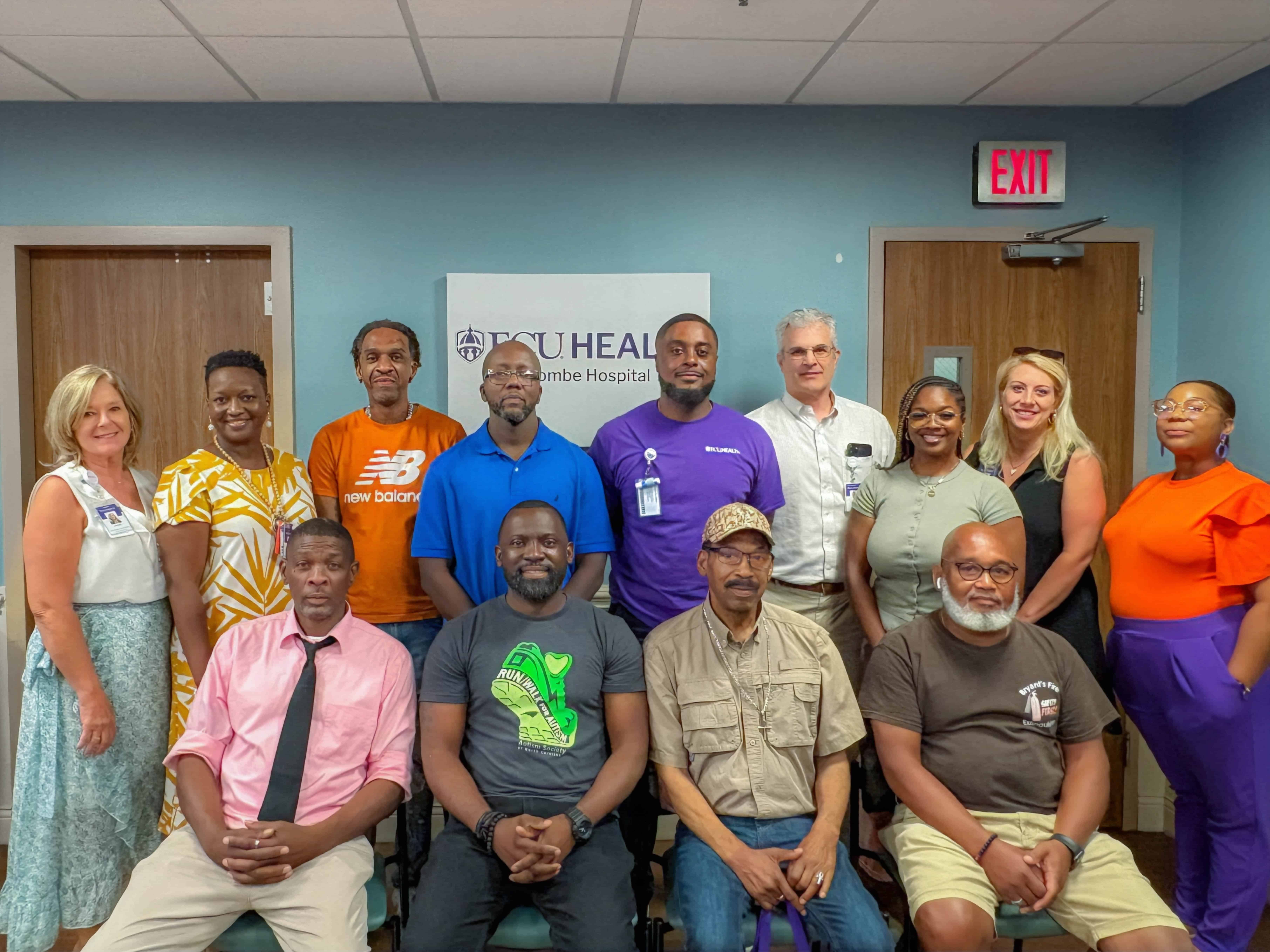
The idea for Barbers for Life began in 2016, when ECU Health Edgecombe received a grant to expand prostate cancer awareness among African American men by offering educational materials in local barber shops.
Michele Cherry, the director of the Grants Office, helped establish the Edgecombe County Barbershop Partnership in 2017. A presentation from Dr. Caroline Ames, a urologist with ECU Health, revealed African American men in Edgecombe County were not receiving prostate cancer screenings and thus being diagnosed with late-stage prostate cancer, resulting in high mortality; this presentation served as the inspiration for the program. The partnership was also modeled on the evidence-based, research-tested Prostate Health Awareness Project, as noted by the National Cancer Institute.
“Michele and her team focused on reaching men in an environment that was comfortable to them,” said Amy Dixon, manager of marketing and volunteer services at ECU Health Edgecombe Hospital. “The barbers at their local barbershops were the best option to get the men to really listen and ask questions.”
The response to the program was impressive.
Seven local barbershops and 11 barbers were involved in the program. In the program’s first quarter of being implemented, barbers educated 193 men on prostate cancer awareness and 44 of those men were screened, with one individual diagnosed with prostate cancer.
The participating barbers expressed an interest in learning more about other men’s health topics, as well as providing information about the Affordable Care Act.
Despite the program’s success, COVID-19 kept people away from public places and the program dissolved. However, said Amy. “It was always the goal to revive the program as we acknowledge the impact the Edgecombe County Barbershop Partnership had on our community.”
Reviving the program
Charmaine Reeder, Community Health Engagement coordinator, said they are working with Kelly Spivey, the coordinator of Community Health Improvement, among others, to “breathe life back into this program, and it’s been a collaboration of both Edgecombe hospital and [ECU Health] Medical Center.”
“I suggested we connect to men through barbershops, and they told me they used to have this program before COVID,” Kelly said. “I met with Michele and she shared her information and ideas. That helped us determine who wanted to be involved again as well as find new connections.”
The program’s goal is to have barbers initiate conversations about healthy lifestyle choices and wellness screenings for prostate cancer, testicular cancer, hypertension, diabetes, mental health and other health concerns. Kelly provides each barbershop with a resource guidebook with information and handouts about mental health, food, housing, substance abuse and health screenings, which men can then look through and select privately.
The team has also designed smocks that say “Barbers for Life,” which Kelly said initiates a conversation.
“People will see those smocks and wonder what Barbers for Life is,” she said. “They’ll start asking questions.”
Charmaine said this program helps Community Health target an audience that doesn’t normally seek out health care.
“Reaching out to men is a tough thing,” Charmaine said. “A lot of men say, ‘just give that information to my wife,’ or they’d rather not know. That’s why events like the Men’s Health Fair, the car show and Barbershop Real Talk are so important. They help us bring awareness and create opportunities to connect with men in spaces where they feel comfortable. Programs like Barbers for Life allow us to build trust and bridge a gap between health care and the community.”
Kelly said the team was eager to expand services into Pitt County, and so far, these new partnerships are successful.
“Recently, we relocated our prostate cancer screenings to the local Walmart and connected with the barbershops there,” Kelly shared. “We had a lot more traffic, at least 20 people who stopped by, and seven who were screened.”
The team also hosted a Lunch and Learn for barbers on Nov. 10, to provide information and tools, and they also plan to host wellness events, like mental health conversations, at the barbershops.
Dwight Flowers, the owner of Kingdom Kutz in Tarboro, North Carolina, was a part of the program when it first launched in 2017. He is thankful this program exists.
“There is nothing worse than being lost and you feel like no one is looking out for you,” he said. “This program says to our community that someone cares.”
Eric Barnes, the owner of Young Vision Barber Lounge in Greenville, is proud to join in on this program.
“This is an important initiative that focuses on men’s health,” Eric said. “A barbershop has always been more than just a place for a haircut; it’s a space where conversations happen, connections are built and trust is formed. By creating awareness and providing resources around these critical issues, the program not only supports the well-being of our customers, but also strengthens the health of our entire community.”
Kelly said that in the future, they would love to expand these services across the system.
“Right now we work with four barbershops in Tarboro and 10 in Greenville,” Kelly said. “We are working to keep things focused to have a big impact. It’s exponential – we help these barbers to have these conversations, and they see so many people in a day. Each man they help then takes that information back to his family and community.”
To learn more about the Barbers for Life program or the men’s health initiative, contact [email protected].