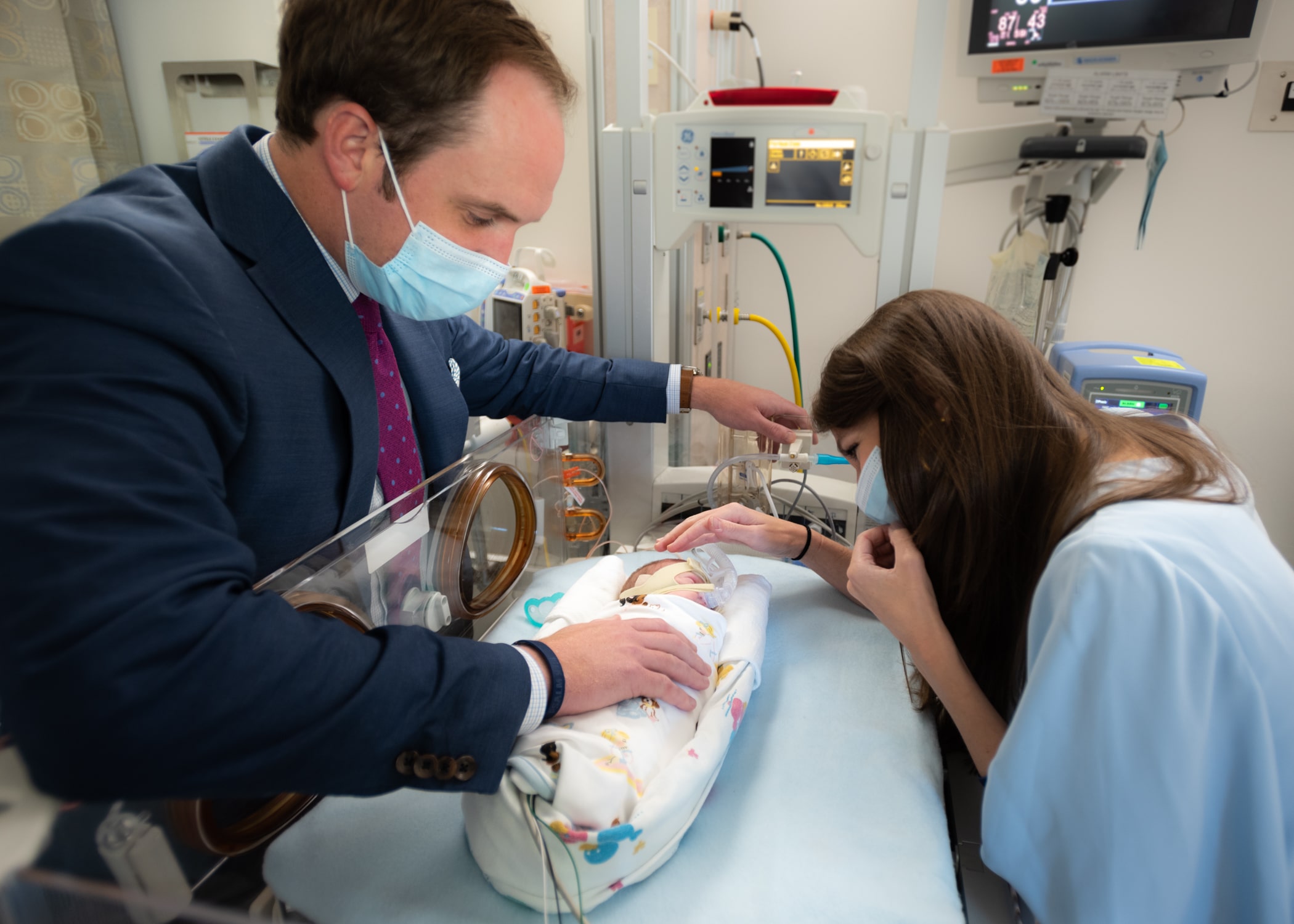
On July 23, 2021, Cleere Reaves, 26 and a half weeks pregnant with her and her husband Will’s first child, headed to a regularly scheduled OB-GYN appointment with Dr. Kori Whitley for a glucose screening.
Cleere also had an ultrasound added to her visit, though it wasn’t totally necessary based on her scheduling.
“Praise God that was added,” Cleere said.
The ultrasound showed that something was wrong in the womb and it was time to move Cleere immediately over to Maynard Children’s Hospital at Vidant Medical Center. Dr. Whitley told Cleere and Will that they might be 90 hours from delivery, but their son would likely need to be delivered even earlier than that.
Will, a lawyer, began his nearly hour and a half drive from court in Onslow County while Cleere was admitted to the hospital for more ultrasounds and tests.
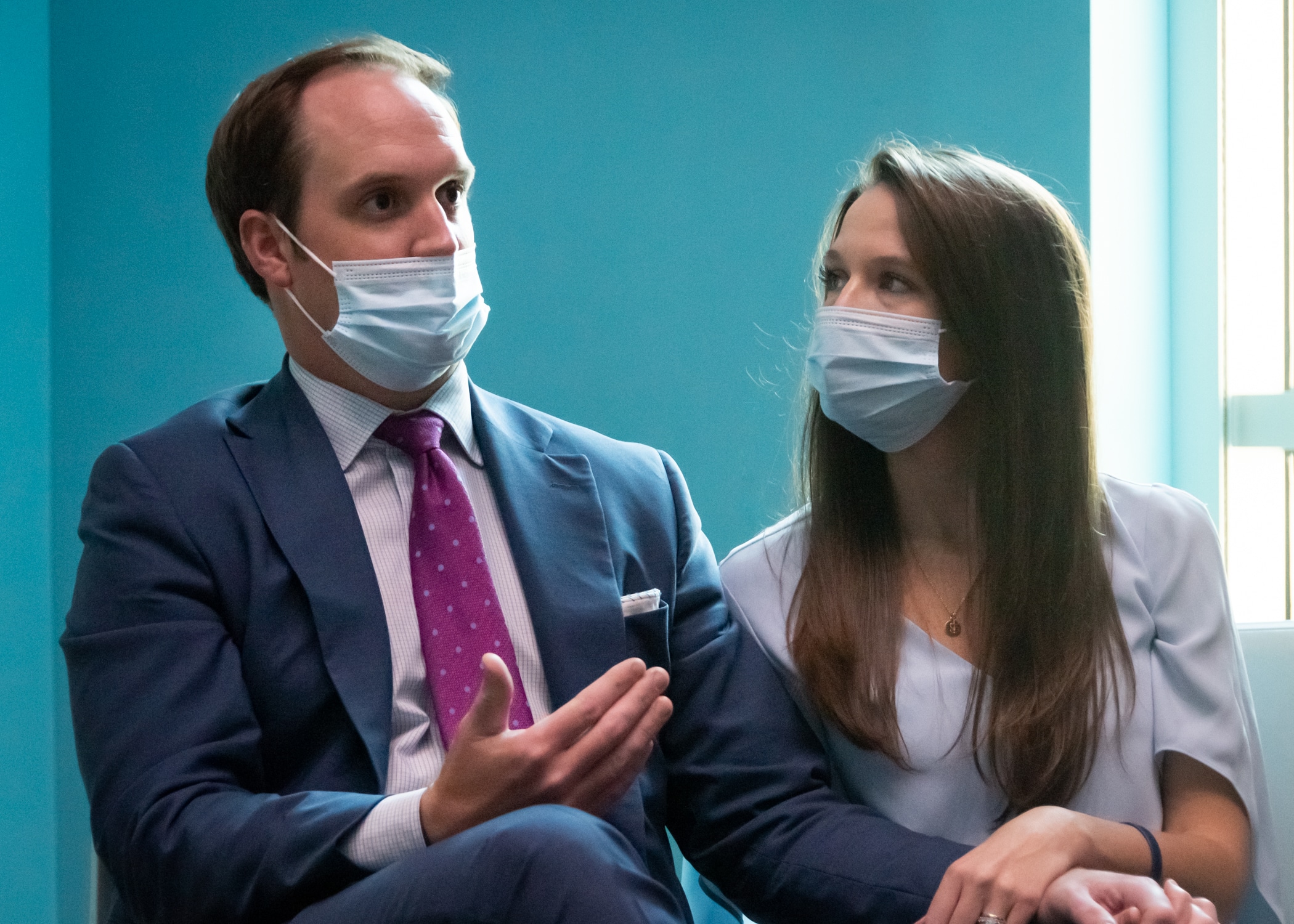
“Basically they figured out that they didn’t think it was safe for the baby to be in the womb anymore,” Will said. “And then the question was, well how long can he be in there?”
Sledge Strong
Photo courtesy of Reaves family
The time frame changed quickly as the team at Maynard Children’s Hospital reviewed the situation. Among several other factors, the ultrasound revealed that there was fluid around Sledge’s liver and near his brain, prompting doctors to be extremely concerned about a serious condition called hydrops, which can be life-threatening for premature babies.
Cleere was taken back about 2 p.m. that same day, July 23, to deliver her baby boy. As William Sledge Reaves was born, doctors could tell right away there was no sign of hydrops – the first big win in the life of a young fighter.
“It was really incredible because I can definitely tell you, there were angels in that room that helped him,” Cleere said. “I have no doubt that the Lord was very much present in that room and fighting for him.”
Sledge, with an appropriately tough name, weighed just 1 pound, 12 ounces at birth and was intubated right away to help him breathe. Intubating a child so small was another early win.
Sledge has been in the Neonatal Intensive Care Unit (NICU) at the Maynard Children’s Hospital since his birth and continues to get stronger and face the ups and downs of his young life.
Life in the NICU
Cleere and Will said they often hear the term “NICU rollercoaster ride” as they navigate this time with their newborn son. There are plenty of wins and challenging times, but Will and Cleere both said the support of team members in the NICU keep them on track.
“The providers are really helpful with that,” Will said. “If Sledge does have a tough day with one thing, they’ll say look at all these other great things that happened today. It’s hard but it’s a great reminder.”
“You’re kind of trying to coach your mind to say ‘Hey, this is part of the ride and sometimes what feels like a back step is not. His body is learning, all his systems are growing, he’s maturing and this is part of it,'” Cleere said. “It’s really just having such a sense of trust that they’re good at what they do, this is not their first rodeo, so Will can be the dad and I can be the mom – because that’s what Sledge needs and he can feel that from us I think.”
Trusting the care team is an invaluable part of life in the NICU, Will and Cleere agreed. They said it’s not natural to have a baby and leave the hospital to go home with their child staying behind.
The camaraderie with the care team and welcoming team members at every turn who care for physical and emotional needs make it easier to sleep at night and come back into the Maynard Children’s Hospital each day to spend time with their baby boy and focus on being parents.
“I think it starts when you walk into the Children’s Hospital,” Will said. “Whether it’s Jackie, Barbra, Lee or anyone out there at the front desk who are just inviting and welcoming and asking how Sledge is doing. It starts there and then continues to when you get back and see Mr. Lawrence, Natasha or MJ and they’re asking how he’s doing, how you’re doing and making sure you have everything you need.
“Then, his primary care nurses, nurse practitioners, doctors – there are too many to name, there’s so many of them – they just make you feel like ‘Hey, we’re all here, we’re all in this together.’ That’s amazing when you consider the fact that every single one of them has been working 12-hour shifts. Whether you walk in at 7 a.m. or 7 p.m., you’re getting the same positive attitude.”
Moving Forward
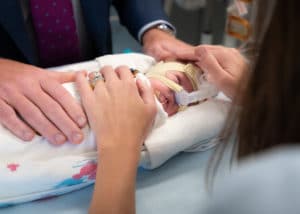 Cleere and Will said Sledge still has a long road ahead of him and they are proud of their son for all he has overcome to this point. Cleere has a mantra that she heard early on in their experience and keeps close to her heart through their time in the NICU.
“As a mom, you just pray that he rests and grows and I think about that all the time,” Cleere said. “He’s going to have his bumps, we’ve had them and we’ll still have some. Then we’ll have it where we coast a little bit. But as he rests and as he grows, he’ll be able to handle and fight whatever comes his way and he’ll move right along.”
Sledge has come off of his ventilator but still receives some respiratory support. His feedings are growing and so is he as he was up to 4 pounds, 6 ounces at nine weeks.
The Reaves family looks forward to everyone being home together, but until then Sledge will continue to live up to his tough name and fight with parents and a care team by his side.

A fall is any unintentional coming to rest on the floor or ground and anyone can be at risk, especially older people. The negative health impacts of falls increase dramatically at or above the age of 80, when a substantial number of fractures and spinal cord injuries can occur.
Statewide, statistics show the unfortunate impact of falls on North Carolina residents. Sarah Taylor, marketing manager for Vidant Health Home & Hospice and co-chair of The Eastern NC Falls Coalition, said many members of our community may not realize how serious falls can be.
Falls are the second leading cause of unintentional injury death for North Carolinians of all ages, and in every year from 1999 to 2019 it was the number one cause of injury death for individuals 65 and older. According to the National Institute on Aging, ever year 30 percent of people over the age of 65 will sustain a fall, of which 10 percent will result in serious injury.
However, there is good news. Falls are preventable and there are several proactive steps community members can take to avoid falls and their impact.
“There are several classes of medications that can cause an increased risk of falls, and though they can have an effect on patients of all ages, they can especially impact seniors age 65 and older,” Conrad Kirby, adult nurse practitioner with Vidant Internal Medicine said.
It is important to talk to your provider about the medications you take and what side effects could impact your balance and awareness.
As risks of falls increase with age, there are recommended ways to avoid them. Make sure your home is as safe as possible and create an environment that is conducive for your daily household activities. Some of the recommended steps to creating a safer home include the following:
- Have adequate lighting at night (nightlight in bathrooms)
- Have handrails/grab bars in bathrooms
- Clear pathways
- Maintain proper footwear
- Remove loose rugs
- Account for proper toilet seat height
“Pets are part of the family, but in terms of falls, pets can also be a danger to the safety of humans,” said Taylor. “It is crucial to keep them from getting entangled in your legs and causing a fall.”
According to the Center for Disease Control, it is estimated that more than 86,000 fall injuries are caused by pets. There are certain tasks you can perform that can protect both pets and the people who love them:
- Before hauling in groceries put your pet in a different room to eliminate trips and falls
- Leave a light on at night so pets can be seen when walking to the bathroom
- Teach the pet to sit when someone knocks or rings the doorbell.
- Purchase a reflective collar for the pet
- Discourage pets from lingering in the kitchen during meal preparation
- Teach the pet to stay at the top or bottom of the steps until everyone is off the stair case
“Keeping up with vision checks with your eye doctor is one of most important ways of staying ahead of potential falling risks,” Kirby said. “Also, regular physical activity, proper diet and avoidance of excessive alcohol use can help you stay safe and reduce your risk for injury.”
Glen Newman, a physical therapist for Vidant Health added, “Preventative measures like exercise can help strengthen the body. Certain exercises which help build strength and balance can help you avoid falls.”
It is recommended to do some strengthening exercises as least twice a week to maintain independence and coordination.
For more information about resources regarding falls prevention visit https://ncfallsprevention.org/ and to learn more about exercise and wellness services, visit https://www.ecuhealth.org/services/wellness-prevention/
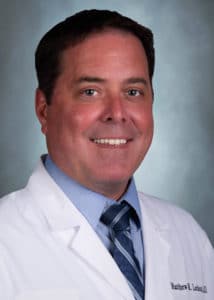
Dr. Matthew Ledoux
As a pediatrician serving eastern North Carolina, as well as a father to school-aged children, I truly appreciate the important role that in-person education has on the health and well-being of students. Schools are where children make lasting friendships, learn important social skills and receive a high-quality education that prepares them for life.
As we learned from the last school year, the only way we can keep our students in the classroom is to keep COVID-19 out of schools. That responsibility ultimately lies with parents and adults. With the Delta variant continuing to spread, even among children, we must do all we can to protect students by getting vaccinated, wearing a mask and practicing the common-sense safety measures that protect us all.
The Delta variant, which infects and presents serious symptoms in children at much higher rates than the original strain, is predominant in our community. In fact, it accounts for almost 100 percent of new COVID-19 cases detected through Vidant and ECU’s joint lab.
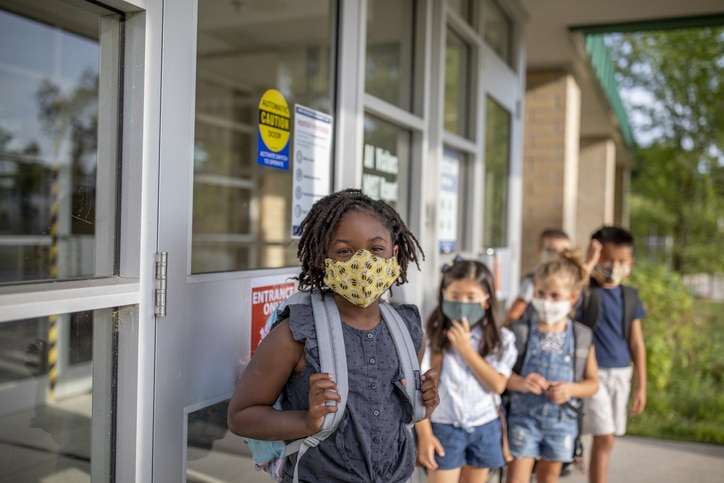
To protect our children and keep them in the classroom, it is crucial for everyone to wear a mask, especially if indoors and close together. Wearing a mask not only protects yourself, but also those around you. When all children are wearing masks in schools, only the person who tests positive for COVID-19 needs to go home and quarantine. If they are not wearing masks, the entire classroom, including the teacher, must be out to quarantine. Simply put, masks help keep kids in the learning environment.
In addition to masks, there are other measures we can take as parents to keep our kids safe. If your child is sick, keep them home. Do a quick symptom screener every morning to make sure they do not have a fever or any symptoms of COVID-19. Make sure your children routinely wash their hands and know how to properly wear masks.
If your child is eligible for the vaccine, get them vaccinated. If you are eligible, get vaccinated. Vaccines for school-aged children are nothing new, and the COVID-19 vaccine should be part of that routine if your child is eligible. Let’s do all we can to protect our community, keep our students in the classroom and give our children the best chance to succeed in their education.
For information on vaccines, please visit VidantHealth.com/vaccinate.
With hurricane season in full swing, staying prepared for a potential natural disaster is as important as ever.
Chris Starbuck, the emergency response coordinator for Eastern Health Care Preparedness Coalition (EHCPC), said having a plan in place with family and friends can make all the difference in an emergency situation.
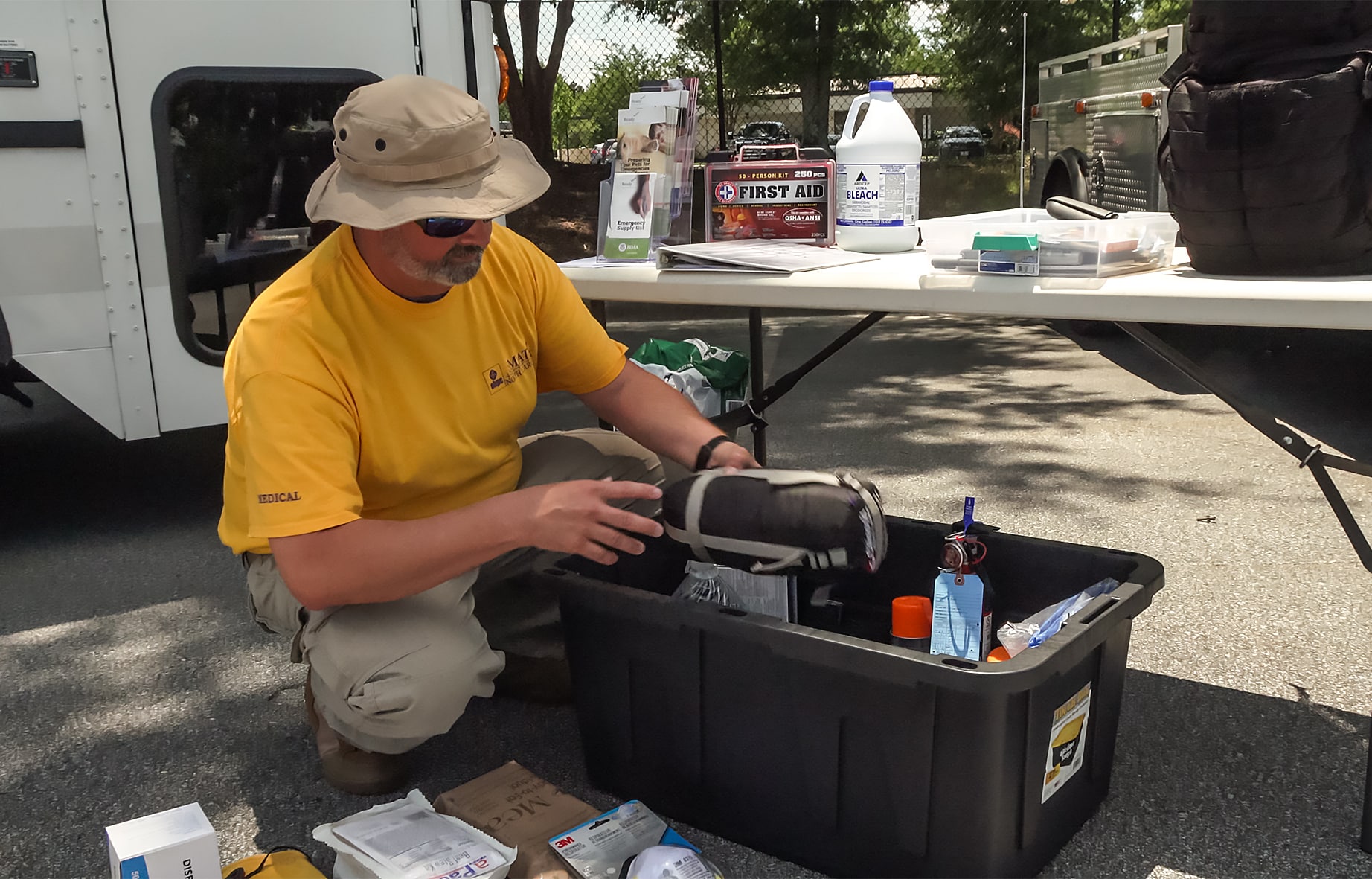
“One key point that we want to get across is be prepared. Starting a hurricane kit is the first step in doing so,” Starbuck said. “Make sure that you have all your important documents gathered if you have to evacuate.”
He also points out the importance of planning for more than a day or two: “What if you have to shelter in place for three to seven days because there’s so much flooding?” Starbuck said.
Ready.gov is a federal government website with helpful information about how to properly prepare for a hurricane. Creating a plan that meets the specific needs of your household and building an emergency kit that contains at least 72 hours’ worth of supplies can help you stay adequately prepared for a natural disaster like a hurricane.
One more item for your hurricane prep checklist – help others plan, too.
“Work with your neighbors, your community and your churches,” Starbuck said. “If we can prepare them then we can make a more resilient community overall.”
What is EHCPC?
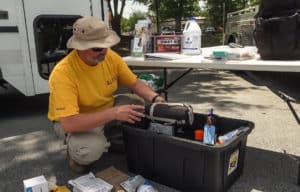 From trucks that double as mobile hospitals to coordinating evacuations or the deployment of medical supplies, EHCPC remains on standby for when emergencies strike or networks go down. It is one of eight such coalitions across the state and is responsible for the largest geographic region statewide, covering one-third of North Carolina.
“We also provide support to Vidant Health and the regional health care facilities,” said Matt McMahon, a disaster and communication specialist. “If a hospital loses communication, whether it be phone, radio or internet, we can come in and support.”
While the team is proudly Vidant-based, their work is ultimately about being there for eastern North Carolina no matter who needs support or how. The team’s wide range of combined experience, expertise and equipment places them in the role of collaborative lynchpin, pulling resources and teams together to respond in a wide range of disaster scenarios or medical emergencies. This includes working behind the scenes to prepare until the event happens and managing training and the logistics needed for any level of response.
“Relationships and collaboration are key for our deployments to be successful,” said Starbuck. “When activated, we specialize in integrating with the services and teams already in place to help with the response in whatever way is needed.”
Ready to respond
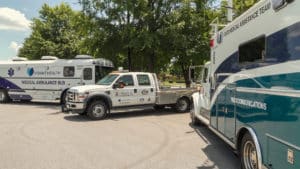 Two vehicles critical to the team’s operation are the medical emergency bus and a field communication support truck.
The medical emergency bus can be used to transport many patients in need of assistance at the same time. Twenty stretcher-bound patients can be supported in the ambulance bus at once, and with stretchers removed, there are seats for 25 patients with enough room for five crew members to attend to the patients during the transport.
The field communication support truck provides phone, radio and internet to the mobile emergency bus. Additionally, the truck has filled in during communication outages throughout the Vidant system. Following Hurricane Florence in 2018, Vidant Duplin Hospital was without internet and phone service. The team and the truck were quickly deployed to the area and kept communication running in a time of need.
“We have all the needed tools on here to communicate back regionally, and also with the state Emergency Operation Center,” McMahon said. “Additionally, we can communicate back to Vidant no matter where we are in the eastern part of the state.”
Resources
Hurricanes can form quickly. Take the time now, before a hurricane impacts our region, to educate yourself on how to prepare and respond. Below are helpful links for federal and state websites:
Greenville, NC – Sept. 3, 2021 – Moderately or severely immunocompromised community members can now schedule a third dose COVID-19 vaccine appointment through Vidant Health by calling 252-847-8000 or by visiting VidantHealth.com/Vaccinate. A third dose may prevent serious and possibly life-threatening COVID-19 in immunocompromised people who may not have responded to their initial vaccine series.
Vidant Health is closely following Centers for Disease Control (CDC) guidance to provide third doses to eligible community members. Appointments can be scheduled at Vidant Health clinics and oncology practices throughout the region for immunocompromised, eligible community members who meet the below criteria:
- You’ve had an organ or stem cell transplant
- You’re receiving chemotherapy, other treatment for cancer or tumors, taking biologic agents (Humira, Enbrel, Remicade, etc.), taking high doses of prednisone, or taking similar drugs. Many of these drugs are used for treatment of cancer, Crohn’s disease, rheumatoid arthritis, or psoriasis.
- You have a disease that weakens your immune system (like HIV or a primary immune system disease)
- Your doctor told you that you’re immunosuppressed
The third dose is recommended for immunocompromised individuals at least 28 days after their second dose of the Pfizer or Moderna vaccine and is not recommended for those who received Johnson & Johnson’s Janssen COVID-19 vaccine.
Vidant Health is following CDC guidance and is not currently offering additional doses or booster shots for any other population at this time. Please continue checking back to VidantHealth.com/Vaccinate for the latest information on Vidant’s vaccine efforts.
Local data
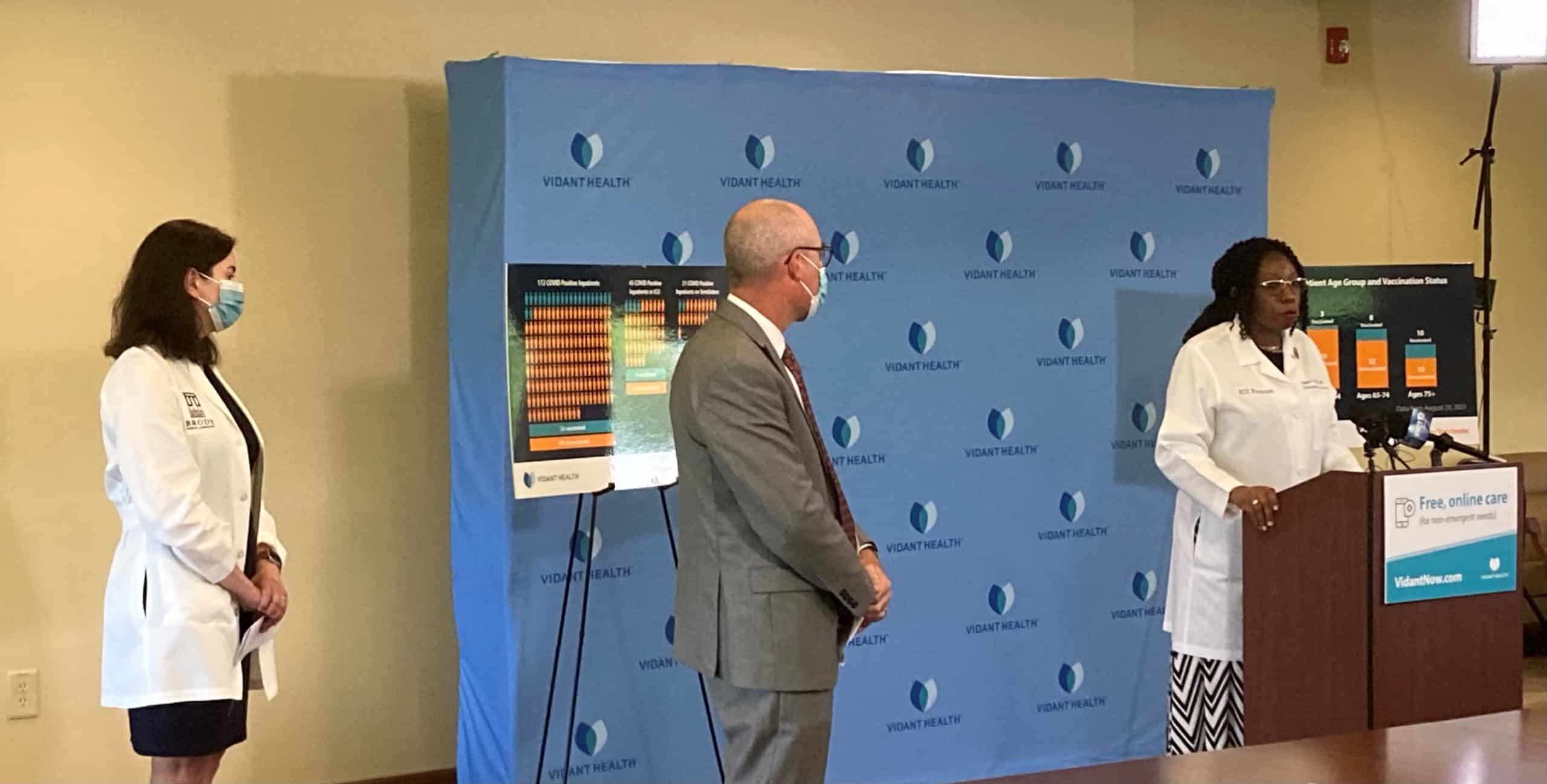
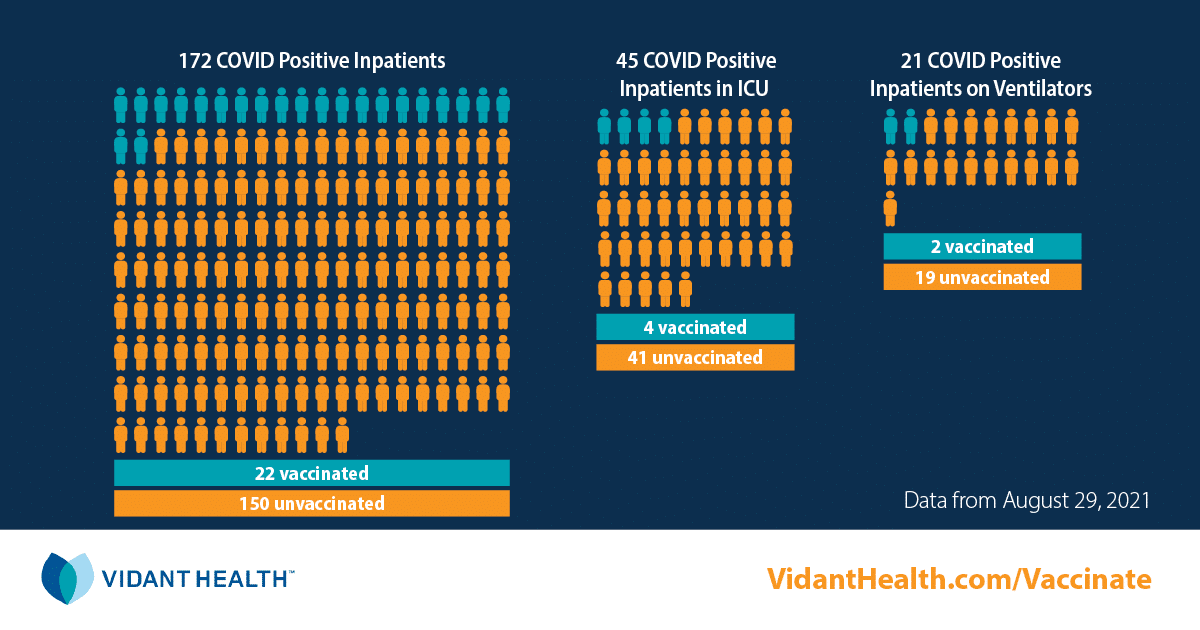
We continue to see a similarly troubling trend in our region, with COVID-positive hospitalizations in the Vidant Health system rising from 43 on July 17 to 169 on Aug. 30.
Dr. Leigh Patterson, an emergency medicine physician at ECU Health Medical Center (VMC) and ECU’s Brody School of Medicine, spoke to the media on Aug. 30 to address the recent spike in COVID-19 cases.
“We are currently seeing record numbers of patients presenting to the emergency department seeking care,” Dr. Patterson said. “We are seeing record numbers of children, more children than we have seen at any point in the pandemic up until now.”
Dr. Ogugua Obi, a critical care physician at VMC and Brody School of Medicine, said the burden of care on hospital team members is immense in the current state of COVID-19 but hospital staff continues to show up and care for a region.
“We have an excellent team of physicians and nurses – our teams are excellent, they’re first-class,” Dr. Obi said. “They’re doing all that they can to take care of our critically ill patients, but we are exhausted. We are seeing more death and suffering in our ICUs than we have ever seen before.”
The data continues to show that the vaccines are effective at lessening the severity and impact of this virus.
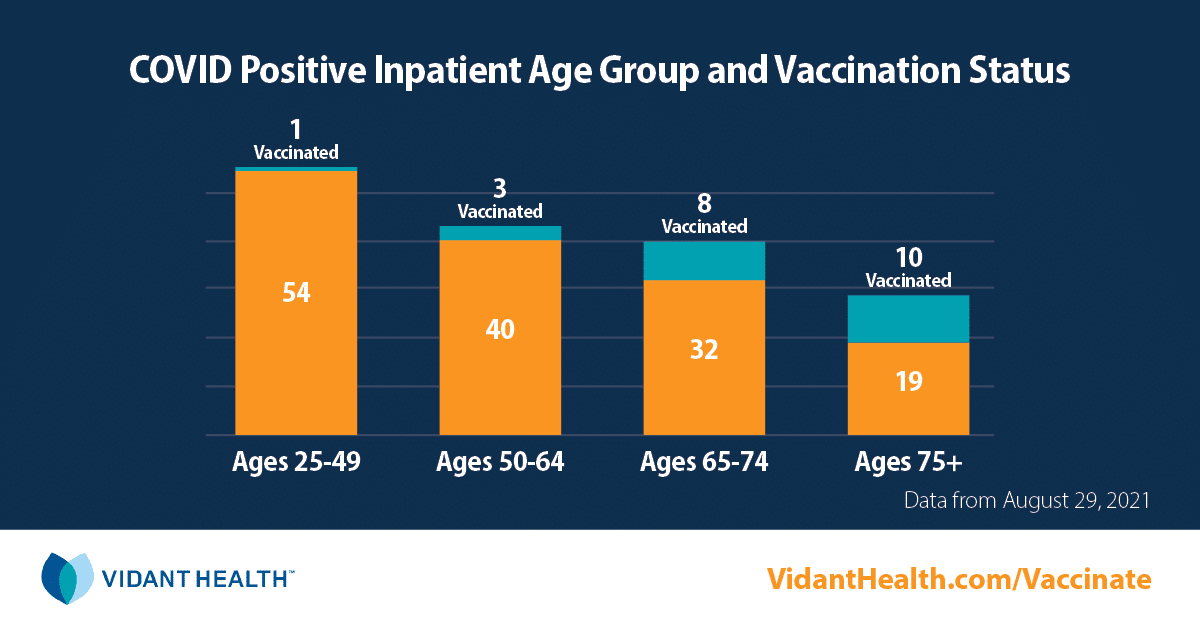
On Aug. 29, 87 percent of those hospitalized in a Vidant hospital were not vaccinated. Of those in the Vidant system on Aug. 29, 45 COVID-positive patients were in the ICU with 21 on ventilators. Only two of those patients on ventilators were fully vaccinated. Vidant has had no patients hospitalized due to reactions from the vaccine. The vaccine is available to everyone age 12 and older and appointments can be found at VidantHealth.com/Vaccinate.
According to the North Carolina Department of Health and Human Safety, as of Aug. 30, 65 percent of North Carolinians 18 or older have received at least one dose of a COVID-19 vaccine and 60 percent are fully vaccinated.
Get vaccinated today
Dr. Obi asked that everyone do their part to help slow this pandemic and take a COVID-19 vaccine if you are able.
“We know the vaccines are safe, we know the vaccines are effective and the vaccines are very readily available here in eastern North Carolina,” Dr. Obi said. “Please take the vaccine. Take the vaccine to protect yourself, take the vaccine to protect your family, take the vaccine to protect your loved ones, take the vaccine to protect our staff, take the vaccine to protect our nurses, take the vaccine to protect our physicians. Help us take care of all of eastern North Carolina.”
Dr. Matthew Ledoux, a pediatrician at VMC and Brody School of Medicine, reiterated messages that have been important to slowing the spread of COVID-19 since the very beginning of community spread:
- Wear a mask when in public
- Get tested for COVID-19
- Get your COVID-19 vaccine
Watch a recap of Monday’s press conference:
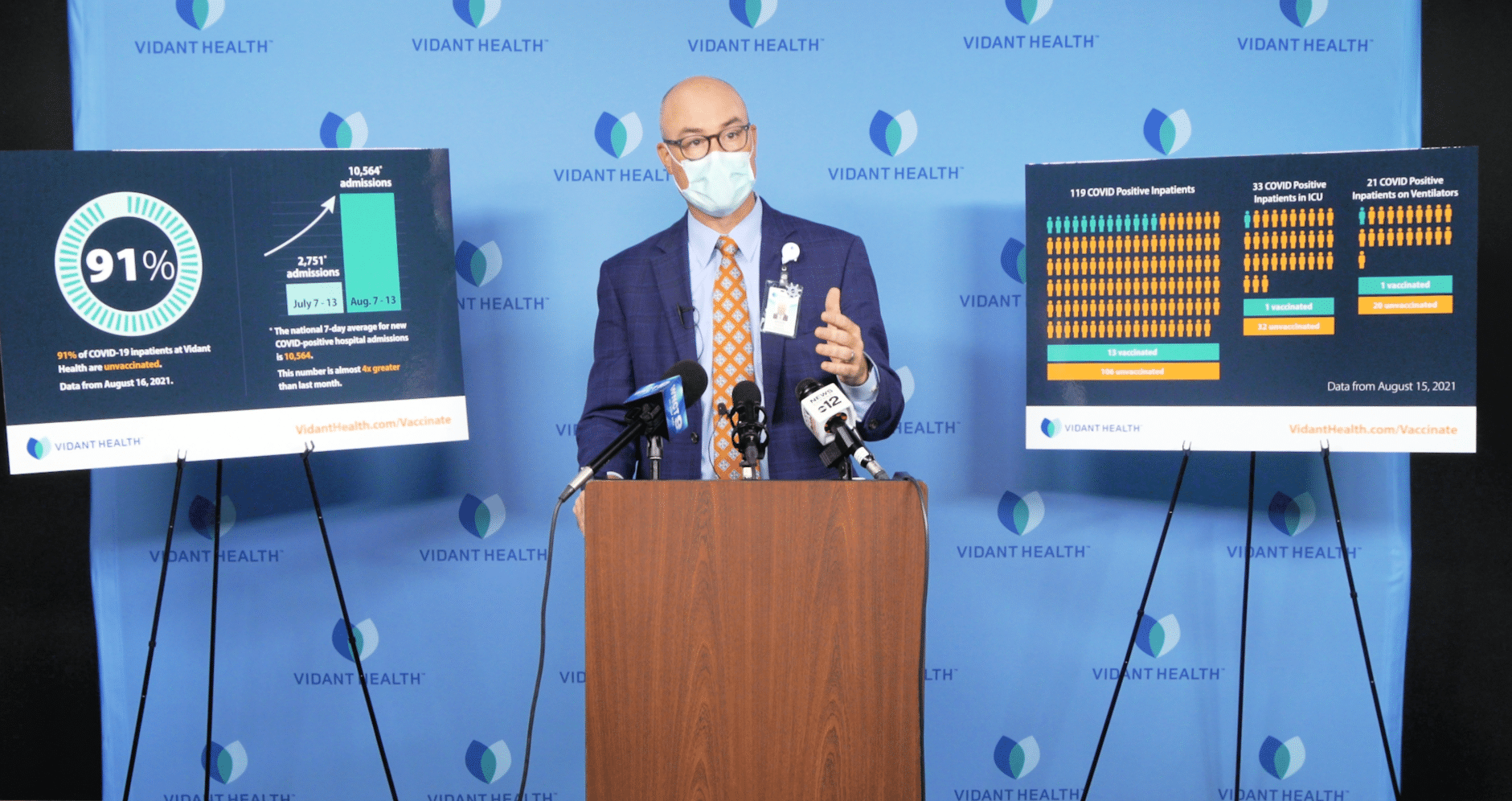
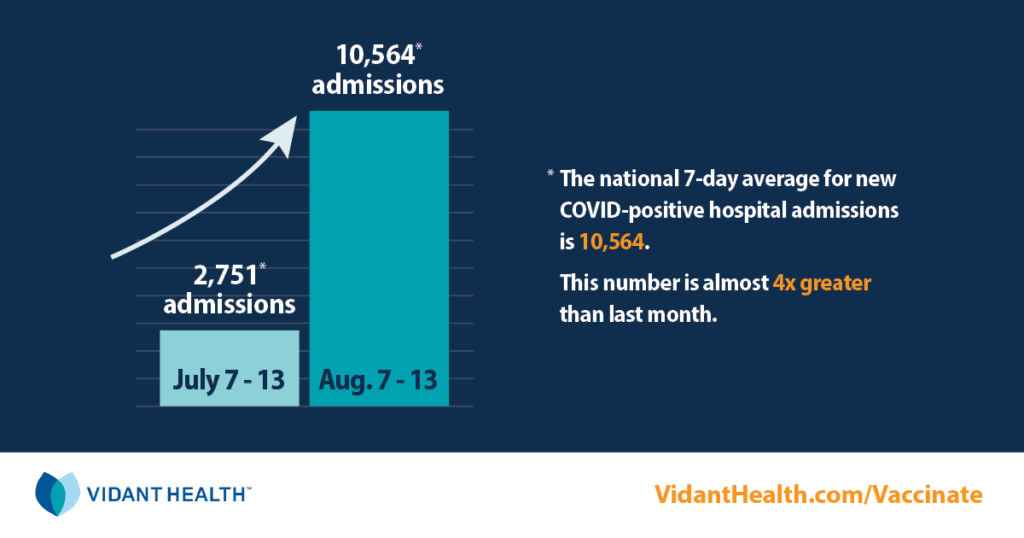
As of Aug. 18, there were 2,930 COVID-positive hospitalizations in North Carolina. This is up from 623 just one month ago—a 370 percent increase. In addition, Aug. 17 had the highest COVID-related ED visits across the state since the pandemic started in early 2020.
Local data
We continue to see a similarly-troubling trend in our region, with hospitalizations in the Vidant Health system rising from 34 on July 17 to more than 123 on Aug. 17. The 29 counties Vidant serves are currently the highest in the state for the seven-day moving average for COVID-19 hospitalizations.
“We were in a pretty good place,” Vidant Chief Medical Officer Dr. Niti Armistead said. “The transmission had slowed down, more and more people were getting vaccinated and protected, hospitalization days started to really come down, number of cases started to come down and many of us thought we were just in the last leg of this marathon. What changed was the vaccination rates just hit a wall.”
The data continues to show that the vaccines are effective at lessening the severity and impact of this virus.
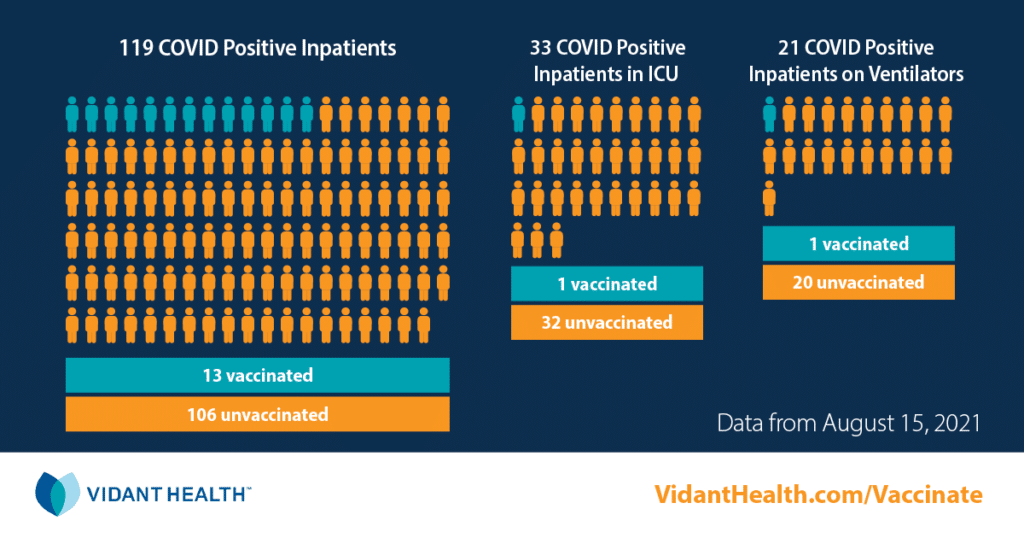
On Aug. 16, 91 percent of those hospitalized in a Vidant hospital were not vaccinated. Of those in the Vidant system on Aug. 15, 36 COVID-positive patients were in the ICU with 22 on ventilators. Only one of those patients was fully vaccinated. Vidant has had no patients hospitalized due to reactions from the vaccine. The vaccine is available to everyone age 12 and older and appointments can be found at VidantHealth.com/Vaccinate.
According to the North Carolina Department of Health and Human Safety, as of Aug. 20, 64 percent of North Carolinians 18 or older have received at least one dose of a COVID-19 vaccine and 59 percent are fully vaccinated. For eastern North Carolina, those numbers drop to 56 percent with at least one dose and 51 percent fully vaccinated.
Get vaccinated today
Chief of Adult Medical Services at ECU Health Medical Center (VMC) Dr. Paul Bolin said the demographics of those coming to the hospital with COVID-19 are skewing younger than at any other time during the pandemic. Bolin, who also serves as the chair of the department of medicine at Brody School of Medicine, compared getting the vaccine to wearing a seatbelt in a car and said your chances of surviving COVID with the vaccine are 25 fold better than without.
“I think the most important thing to understand is this,” Dr. Bolin said. “There have been a very small number of complications from the vaccine. That is a one-time event that occurs after the vaccination. Your risk of dying from COVID if you’re not vaccinated continues day after day after day after day until this pandemic is over.”
VMC President and Vidant COO Brian Floyd hosted a press conference recently to discuss the importance of receiving the COVID-19 vaccine, especially as we experience another surge in cases and hospitalizations.
“Take care of your loved ones, take care of your community and help us take care of this team that’s been here for the public for the last year and a half looking out for their interests,” Floyd said. “It’s a personal choice we make on a mask or vaccine or whatever, but it is a public impact. You are making that choice on behalf of more than you – you’re making it on behalf of people.”
Floyd reiterated messages that have been important to slowing the spread of COVID-19 since the very beginning of community spread:
- Wear a mask when in public
- Get tested for COVID-19
- Get your COVID-19 vaccine
Learn more about Vidant’s COVID-19 efforts in recent interviews with Public Radio East and WNCT.
Vidant Health’s mission to improve the health and well-being of eastern North Carolina stretches beyond the walls of our hospitals and clinics here in the East.
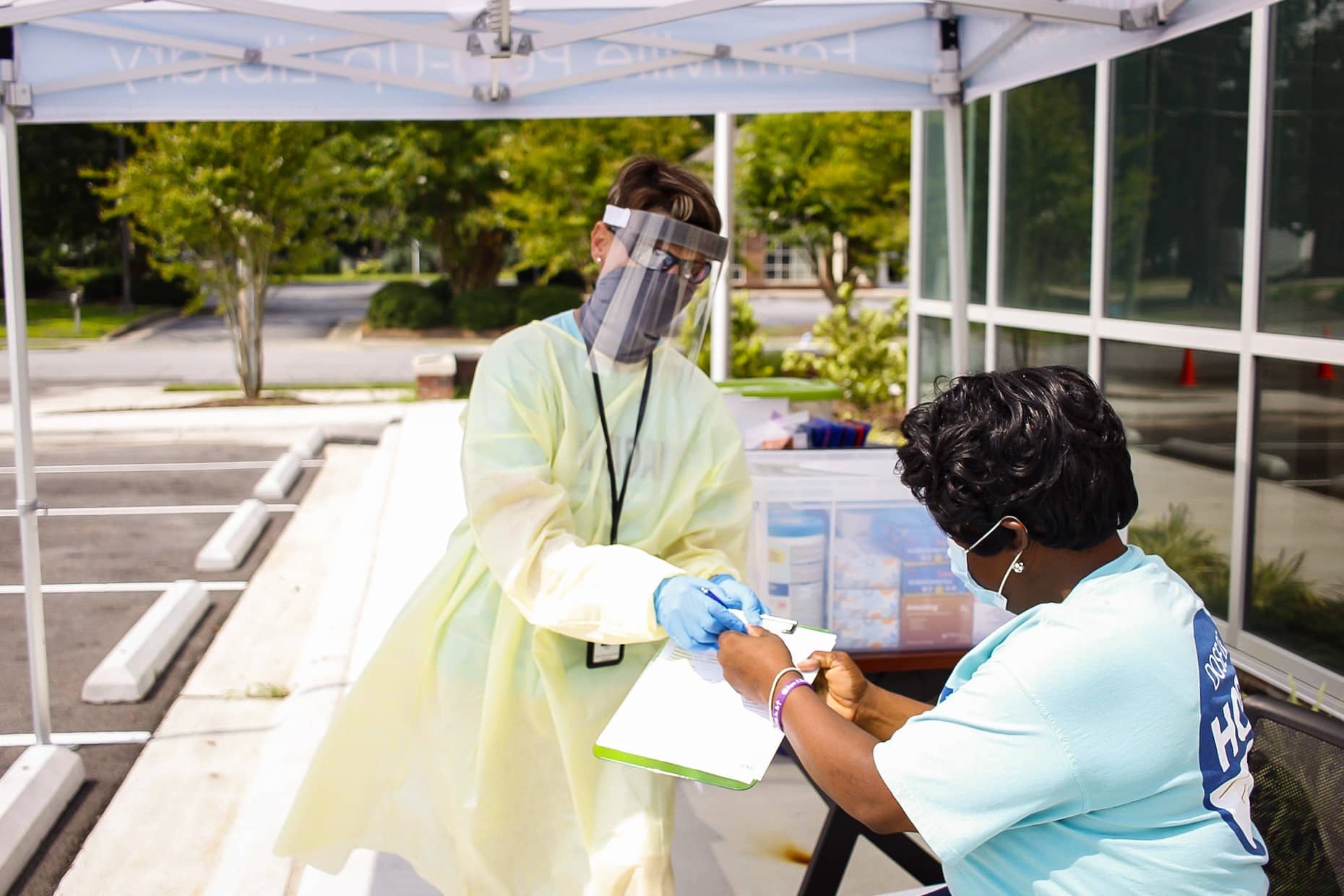
With recent Community Health events across the 29 counties we serve, Vidant is delivering health care in unique ways. Recently, Vidant partnered with local leaders and community groups to host these events in Grantsboro in Pamlico County and Farmville in Pitt County.
Community members had the opportunity to get health screenings, receive health coaching, learn about providers and health care options near them, and even receive a COVID-19 vaccine.
Cheryl Willoughby, project coordinator for Systems & Procedures at Vidant, plays a key role in organizing these events. She said it is crucial to bring health care to the people of eastern North Carolina because of Vidant’s unique rural positioning.
“Access to health care is a huge issue for a lot of the people that we serve,” Willoughby said. “So when we do these community events, that barrier is easily broken when we meet people where they are. That’s the exciting piece for me.”
Pamlico County Health Event
 Vidant hosted a Pamlico County Community Health event on July 27 at Pamlico County Community College with great support from many local leaders and organizations. Pamlico County government, the Pamlico County Health Department and Pamlico County Community College all played a vital role in making the event possible.
Vidant Beaufort Hospital, a campus of Vidant Medical Center, team members came out to the event to administer health screenings to community members, including body mass index measurements, blood pressure readings and blood sugar checks. Team members were also on hand to educate the community on colorectal cancer, diabetes and stroke.
Jennifer Lewis, community health improvement coordinator for Vidant Beaufort, said screenings and wellness checks events like these are crucial to making sure community members are staying on top of their health. She said that people will often go through everyday life feeling completely healthy while chronic illnesses like hypertension and diabetes go unchecked.
“We want to help identify some of those risk factors and maybe here we can share something with an individual that will get their attention,” Lewis said. “Hopefully we can get them in to see a physician and maybe make some changes in their diet, in their physical activity and if they need to get medication, that too.”
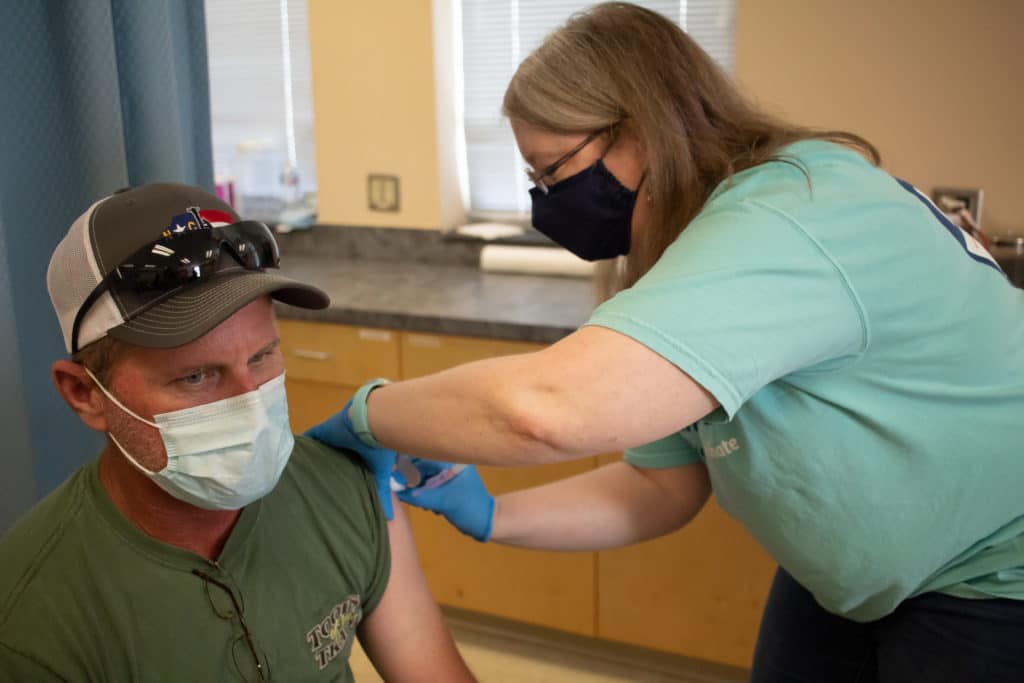
Dr. John Callahan from Vidant Family Medicine – Aurora was on hand to discuss any concerns with community members and to discuss COVID-19 vaccines with those interested. About 20 COVID-19 first doses were distributed to community members at the event.
The EastCare team also showed support for the Pamlico County event by showcasing a helicopter on the main road leading to the event and the Eastern Carolina Health Care Preparedness Coalition had a medical emergency bus and mobile field hospital out on display for the event as well.
Farmville Community Health Event
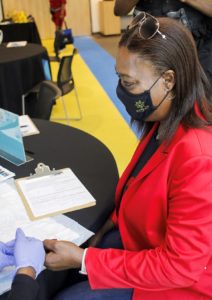 The following weekend, Vidant team members and community groups showed up again to bring health care directly to the communities we serve at the Farmville Public Library. Many of the same screenings and opportunities available at the Pamlico County event were brought to Farmville as well.
KaSheta Jackson, nurse executive fellow at Vidant, said the community partnerships Vidant has built and are working to strengthen are key to creating trust with the whole community. She said having those trusting relationships with community groups trickles down to individuals within communities and ultimately leads to better health for everyone.
“We are making sure that we are connecting with the community,” Jackson said. “We are here with CAREE, which is a community group. They’re doing our vaccines with the Pitt County Health Department. The local library, they’ve offered up the space. Cheryl (Willoughby) worked with a lot of local agencies here so that they would support it. We work with a lot of communities here because we don’t want to just come in, we want to be a part of how we improve health care in these comminutes.”
Along with health screenings and awareness campaigns at the event, behavioral health team members were on hand to provide support and share information. Vidant’s Talent Acquisition team also joined each of the events to make connections with community members seeking employment with the health system.
Jackson said the Community Health events are important to bringing health care to people and hopes that positive responses and results continue to come out of these opportunities.
“We are following the model of doing health care on the outside to make health care better on the inside,” Jackson said. “We’re working to address the social determinants of health, offering employment, trying to take care of the need for vaccines, taking health care into communities versus having people come to us – we’re taking services to those that need them.”
Where will we be next?
Vidant’s next Community Health event will be on Aug. 21 in Bethel at the Field of Dreams – additional information can be found on the Events page of VidantHealth.com.

With easing COVID-19 restrictions, we are on the move again, especially children and teens in sports. With that comes the potential for injury and Vidant Orthopedics and Sports Medicine is here to help.
Vidant Orthopedic surgeon Dr. Robert Palmer appeared on WITN to discuss common sports injuries and how to prevent them.
He said the most common sports-related injuries he sees are broken wrists and clavicle fractures. The most important things you can do for yourself or your child to prevent sports injuries is to maintain a typical healthy lifestyle and get plenty of Vitamin D.
Dr. Palmer said a unique risk this year is young people returning to sports after a year away.
“I’ve seen quite a number of children in my clinic who have gone back, and just participating in a field day event at school and they’ve actually gotten stress-related fractures from what we would consider everyday events,” Dr. Palmer said. “That is probably just because their bodies aren’t used to the load from sports. I think taking it slow and easing back into things and making sure they have a good healthy diet is a good start to prevent injuries.”
He also discussed the importance of the implementation of rules to limit overuse injuries. An example of this is rules set by youth baseball organizations in conjunction with Major League Baseball to keep children safe. Dr. Palmer encouraged coaches and parents to educate themselves on these rules and stay on top of them to keep children healthy.
While many sports-related injuries in children just require typical treatment like rest and ice, some are more serious. It can be challenging to know when it’s time to consult a physician but Dr. Palmer gave some tips on what to look for.
“When we see a patient, if they have limited range of motion, inability to weight bear, swelling about a joint, reduced motion about that joint,” Dr. Palmer said, “certainly if there’s a bone sticking out of the skin or there’s bleeding, those are more urgent things that we should address and potentially may need surgery. Other sports-related injuries are ACL tears or ligament tears and shoulder instability that we think about.”
Visit the Orthopedics and Sports Medicine section of VidantHealth.com to learn more about services Vidant offers.

Greenville, NC – Aug. 12, 2021 – As Vidant Health continues to respond to the evolving COVID-19 pandemic across North Carolina, we are taking steps to ensure the safety of all. Vidant remains vigilant with its screening process for all visitors, entry requirements and visitor restrictions by department.
In response to increased community spread and the heightened risk of hospitalization posed by the Delta variant, all Vidant Health hospitals are adjusting visitation policy in the Emergency Department. To ensure the safety of patients, families and team members, effective 7 a.m. Friday, Aug. 13, visitors will not be allowed in the ED lobby or waiting areas at hospitals across Vidant’s system. ED patients can have one healthy adult visitor screened and masked at all times once the patient has been placed into a room, as long as the patient is not COVID positive.
It remains vitally important that community members continue to practice safety measures such as washing hands, wearing a mask and avoiding large gatherings.
Learn more about visitation at VidantHealth.com/VisitingVidant.