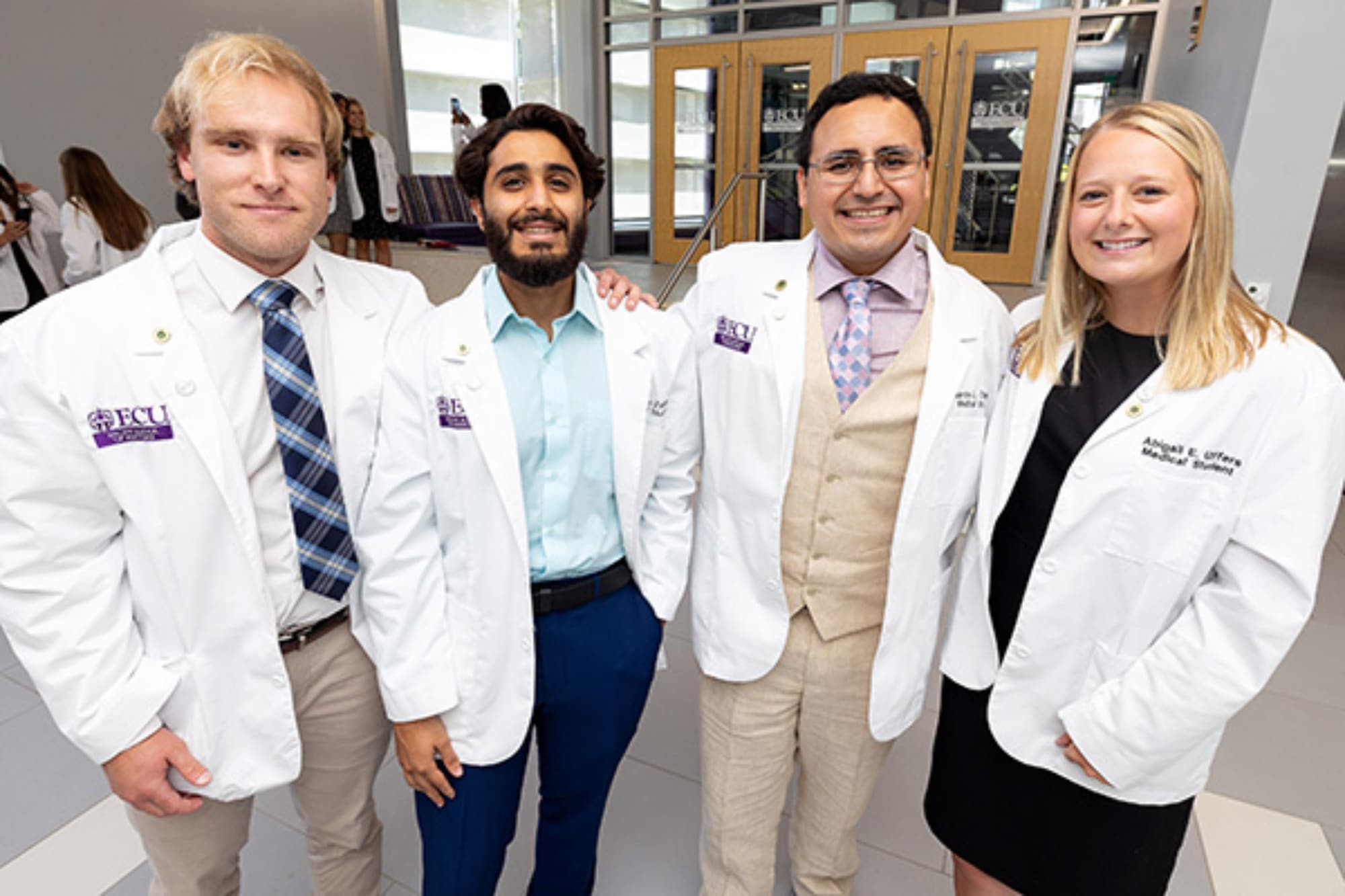
Lifelong dreams came one step closer to reality for the newest class of students in the Brody School of Medicine at East Carolina University as they were officially welcomed during the school’s annual White Coat Ceremony on Friday.
The 90 members of the Class of 2027 — all North Carolina residents — were helped into their white coats during the traditional celebration at the Health Sciences Student Center and regaled with messages and well wishes from Brody faculty and leadership.
Kristel McLawhorn, transplant nephrologist and 2005 Brody alumna, gave the keynote address, urging the Class of 2027 to stop, listen and absorb the knowledge and experiences they gain in the coming years.
“You have earned this opportunity,” McLawhorn said. “My charge to you is this: Be prepared for anything: to be challenged, to be afraid, to be humbled, to serve and to change. Know where your support is and know what is mission-critical in the big picture. Have the grace and wisdom to know when you don’t know, and the drive to do something about it.”
McLawhorn told the students that during her intern year at Brown University after she graduated from Brody, she got an early-morning phone call that her father was gravely ill. Knowing what she did about medicine, she jumped in her car and drove 700 miles south, knowing the odds were stacked against her father. But with her medical knowledge, she held out hope.
“My dad survived that event,” she shared, “and is actually sitting here with us today. Can you stand up?”
The crowd cheered and applauded as McLawhorn’s father, John Jernigan, stood and waved from the first row.
“I was clinically sound before; I left ECU with a strong base of medical knowledge, and I was working hard to hone and craft my skill at Brown,” she said. “But his illness taught me a great deal about life and even more about doctoring that no institution can teach you,” including empathy, ability to listen, sharpened knowledge and agile teamwork.
“My dad taught me that every day is a good day, and some days are better days,” McLawhorn said. “Today is one of the better days. It’s a marker in your life and education, a point at which you are living the consequences of your previous choices. You’ve worked hard for the opportunity.”
The Class of 2027, the largest class in Brody history, hails from 36 North Carolina counties and 26 undergraduate institutions; 61% of the class is female, 16% are first-generation college students, and 21% are from minority groups — Black, Native American and Hispanic or Latino — that the Association of American Medical Colleges considers “underrepresented in medicine.” Four are veterans, and four were collegiate student athletes. The class speaks a total of 23 languages.
Jason Higginson, executive dean of Brody, formally welcomed the class and voiced confidence in the students’ future contributions to medicine.
“Today we welcome you to the study and art of medicine, a profession symbolized by the white coat,” he said. “We know you will do great things.”
Onolunosen Abhulimen
Onolunosen Abhulimen — her family and friends call her Ono — doesn’t have time to wait for things to happen.
The Brinkley-Lane and early assurance student, the daughter of Nigerian immigrants, graduated from high school in Winston-Salem with an associate’s degree under her belt — the first in her school to do so. Since she pioneered the path, other family members have followed in her wake, including her two younger brothers, who are also Brody Early Assurance students — one a sophomore and the other a junior. Her youngest brother will start fourth grade in the fall of 2023.
Abhulimen played basketball on her school team and a travel team. She did the same with track, where she ran the short distances. That wasn’t enough, though. She picked up the shot put and then the discus, which she fell in love with and would have broken the school record had the COVID-19 pandemic not shut sports down.
She excelled in the classroom as well. Having to navigate traditional high school classes, driving to the community college, and juggling sports and clubs taught her life lessons that would set her up for success in college: discipline, organization and commitment.
“It was hard for me to seek help, to ask for advice. There were some barriers that had to overcome,” Abhulimen said. “I definitely had to learn time management.”
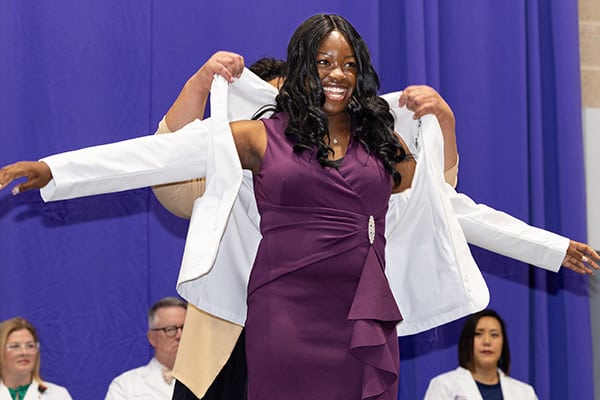
During high school she knew she wanted to pursue some kind of medical career. She attended a medical student symposium at Wake Forest University and heard a presenter talk about health care disparities, which was a new concept for her. Investigation and research solidified her plans — she wanted to be a doctor, enough so that during her undergrad years at ECU she founded a Students for Equitable Health Outcomes organization.
“I want a leadership role, to use my experience in helping those in rural communities get better health outcomes,” Abhulimen said.
Because she graduated high school with a pocketful of college credits, she was able to graduate from ECU summa cum laude in December 2022 with a degree in biology with honors in five semesters. She’ll start her first year of medical school at 21— most of her peers who will be a few years older — and after a semester’s break that she used to get her head in the game.
“I wanted to make sure I was really prepared and I was familiar with people that I could seek help and advice from. Brody is a very welcoming environment where it’s easy to ask for help or advice from other students,” Abhulimen said.
When she donned the white coat for the first time it was with pride and a sense of accomplishment. And her family beamed from the audience — her parents, all three brothers and a slew of aunts, uncles and cousins.
“It’s a representation of everything I’ve had to do to get to this point, even before high school. All the sacrifices that I made, being able to really study for those hard classes, some of the all-nighters I had to pull — I’m finally here,” Abhulimen said. “It’s like a breath of fresh air. I’m starting a new journey.”
Jose Robles Arvizu
Learning to navigate opportunity has given one first-year medical student a layered perspective from which to change the lives of his future patients.
Jose Robles Arvizu was born in Rio Verde San Luis Potosi, Mexico, and moved to Hendersonville when he was 2 years old. Over the years, he observed the challenges facing those around him and started formulating plans to make improvements in his community.
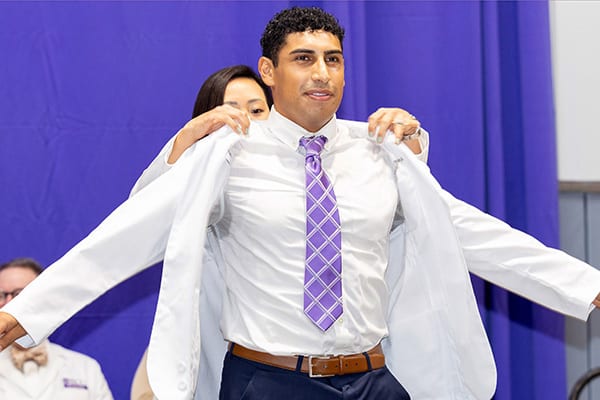
“Growing up, I saw how people in my marginalized communities, particularly farm workers and migrant farm workers, were often spectators in their health needs as a result of their lifestyle and barriers to accessing health care,” Robles Arvizu said. “I knew there had to be something I could do to bridge this gap and empower these communities to become stake holders in their health and make it a priority. This fueled my desire to become a physician with the goal of returning to western North Carolina to make a positive impact in the communities in the place I call home.”
He later attended UNC–Chapel Hill as a first-generation undergraduate, then went to Wake Forest to get his master’s in biomedical sciences, research track.
“One of the things that I am most excited about is being part of the incoming Brody class is becoming a member of a larger family that has a common goal of improving the health of communities across North Carolina,” he said. “Even within the last few days getting to know more people, it is more evident that we all have a ton in common, and I’m excited to embark on this journey with the rest of my classmates.”
Robles Arvizu has come to view education as a lifelong opportunity that can benefit those around him, making health care — and education — more accessible.
“Being a first-generation college and medical student brings both challenges and opportunities,” he said. “I would aim to use my experience as a first-generation student to advocate for others in similar situations. Understanding the unique challenges faced by first-generation students, I could contribute to making the education system more inclusive and accessible.”
Because of his motivation and perseverance, Robles Arvizu was named a Gates Millennium Scholar. The program, funded by the Bill and Melinda Gates Foundation, provides a full scholarship to any undergraduate institution to students from underrepresented groups. The scholarship also covers master’s and doctoral studies in the disciplines of computer science, education, engineering, library science, mathematics public health, and the sciences, where these groups are severely underrepresented.
“Being named a recipient of the Gates Millennium Scholarship one of the largest blessings that allowed me to peruse my dream of becoming a physician without the immense financial barrier that many first-gen students encounter,” he said.
As he begins medical school, Robles Arvizu plans to use his life experiences to be empathetic to his future patients’ barriers and circumstances.
“Having faced my own challenges and adversities, I would use these experiences to relate to my patients and their struggles,” he said. “This empathy would help me provide better care and make a positive impact on my patients’ lives.”
Grant Irons
The Class of 2027 includes a student whose family has already built a legacy in eastern North Carolina health care.
Grant Irons is the great-grandson of regional health care pioneers Fred and Malene Irons and the grandson of Tom Irons, professor emeritus of pediatrics at Brody, medical director of Access East and the N.C. Agromedicine Institute, and interim medical director of physician assistant studies.
Grant Irons was born and raised in Greenville and attended UNC–Chapel Hill, where he earned a degree in biology with minors in chemistry and health and society.
“It is truly humbling to carry on my family’s legacy here in eastern North Carolina,” he said. “I was lucky enough to spend time with my great-grandparents, Drs. Fred and Malene Irons. As I’ve grown up, I continue to learn more about their work and the impact they had on health infrastructure in eastern North Carolina. Their legacy demonstrates the impact of servant leadership. My late grandmother and grandfather, better known as Carol Irons and Dr. Tom Irons, continued this tradition of selfless service. I would not be the man I am today without their guidance as I aim to hold myself to their standard; a life lived with compassion, and humility.”
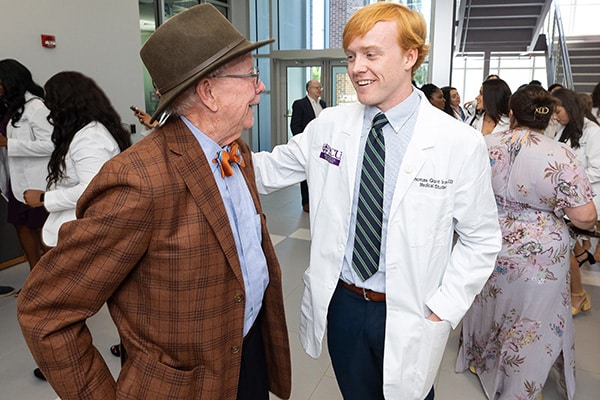
Tom Irons said he could not be prouder of his grandson’s desire to serve as a physician.
“I’m Grant’s only living grandparent, but I like to believe that today the other three are wearing smiles as big as mine,” he said. “His parents and I could not be more grateful that he has been given this opportunity, or prouder that he has chosen to come to Brody and eastern North Carolina.”
He added that he encourages his grandson and Grant’s classmates to follow their hearts.
“There is nothing easy about this journey you have undertaken, but if you put your heart into it, the rewards will be immeasurable,” he said. “Keep your head down these first two years, lean on each other, ask for help when you need it and never forget that there is no life more noble than a life of service.”
Grant is eager to live out a legacy and mirror his grandfather’s ideals and impact in medicine — but he is also ready to make his own name through the medical school that represents a life goal.
“The opportunity to be a student at Brody means the world to me; it has been a dream of mine for some time,” he said.
Grant Irons sees the bigger picture of eastern North Carolina’s health care landscape and also plans to make a difference through policy.
“Regardless of my career path, I have long been interested in health policy,” he said. “Initially, I was exposed to the importance of institutions through my family. Since I was old enough to understand, I have been fortunate enough to learn about care disparities and their impact on health outcomes.”
As a student at UNC-Chapel Hill, Irons explored the relationship between power, policy and differential health outcomes. He helped lead a chapter of PIH-Engage, a global health organization dedicated to building sustainable health infrastructure. That experience has led him to lead on a variety of fronts.
“As a physician I want to be more than a care provider; I hope to be a leader in my community,” he said. “While significant progress has and continues to be made, care expansion efforts are far from over. There are far too many people still in need.”
Lachlan Younce
Something about home — both places and people — helps to decide our futures for us.
Lachlan Younce is about as eastern North Carolina as a guy could get. His father’s family is from Belhaven and his mother’s is from Vanceboro. He played football and lacrosse at J.H. Rose high school in Greenville. He was a sailing counselor at a YMCA camp in Arapahoe, on the Neuse River, which will become important to his story.
At the camp he made friends with another counselor, a young man who ran a lot and worked out. Younce asked his friend why he was so fanatical. The answer — he was getting ready for the U.S. Naval Academy. Younce isn’t from a military family and had no idea what that meant but got very interested.
Younce applied for an appointment to the Academy and received one from the late Representative Walter B. Jones, who Younce recalls fondly. His initial attempt to get into Annapolis didn’t work out, so after graduation he headed west to Raleigh where he was part of the ROTC program at N.C. State, which he said was a blessing because he learned about military culture, which was completely foreign.
The next year his fortune changed and the Navy accepted him as a Midshipman.
Like many young men entering the academy, Younce wanted to be a pilot. He had his mind on studying political science; instead he took his first physics class, majored in chemistry and applied to the medical corps track.
He graduated in May 2023 as an ensign, and the Navy told him he could apply to any medical school in the country. He applied to three, but there was only one he really wanted to receive an acceptance letter from.
“I had the best interview experience here at Brody, I just felt like I was at home. This community raised me, built me and I think that learning medicine here is going to be extremely rewarding,” Younce said.
He’s not completely sure about what specialization he might pursue after graduation, but Brody’s mission of educating the next generations of primary care physicians impresses him.
“I think it’s great that a school so oriented towards primary care can train a physician to go into the military and provide care that service members need,” Younce said.
The winding route that brought him home means more than just place. Health care is a thread that is beginning to be woven into the fabric of his family. His mother is a registered nurse with ECU Health and a proud Pirate Nurse. His sister, Fallon Younce, has a year and a half until she graduates from the College of Nursing as a Pirate nurse herself.
“We’re going to be able to overlap these two years, and one thing I’ve learned is that nurses know what’s going on, so I’m going to use nurses’ knowledge to be successful,” Younce said.
After graduation, he’ll owe the Navy a number of years as an active-duty Navy doctor, which he is excited for, but is ultimately unsure about a career in uniform. Regardless of when is his time in uniform ends, he’s sure he’ll return to eastern North Carolina to use his Brody training to improve access to health care in underserved areas.
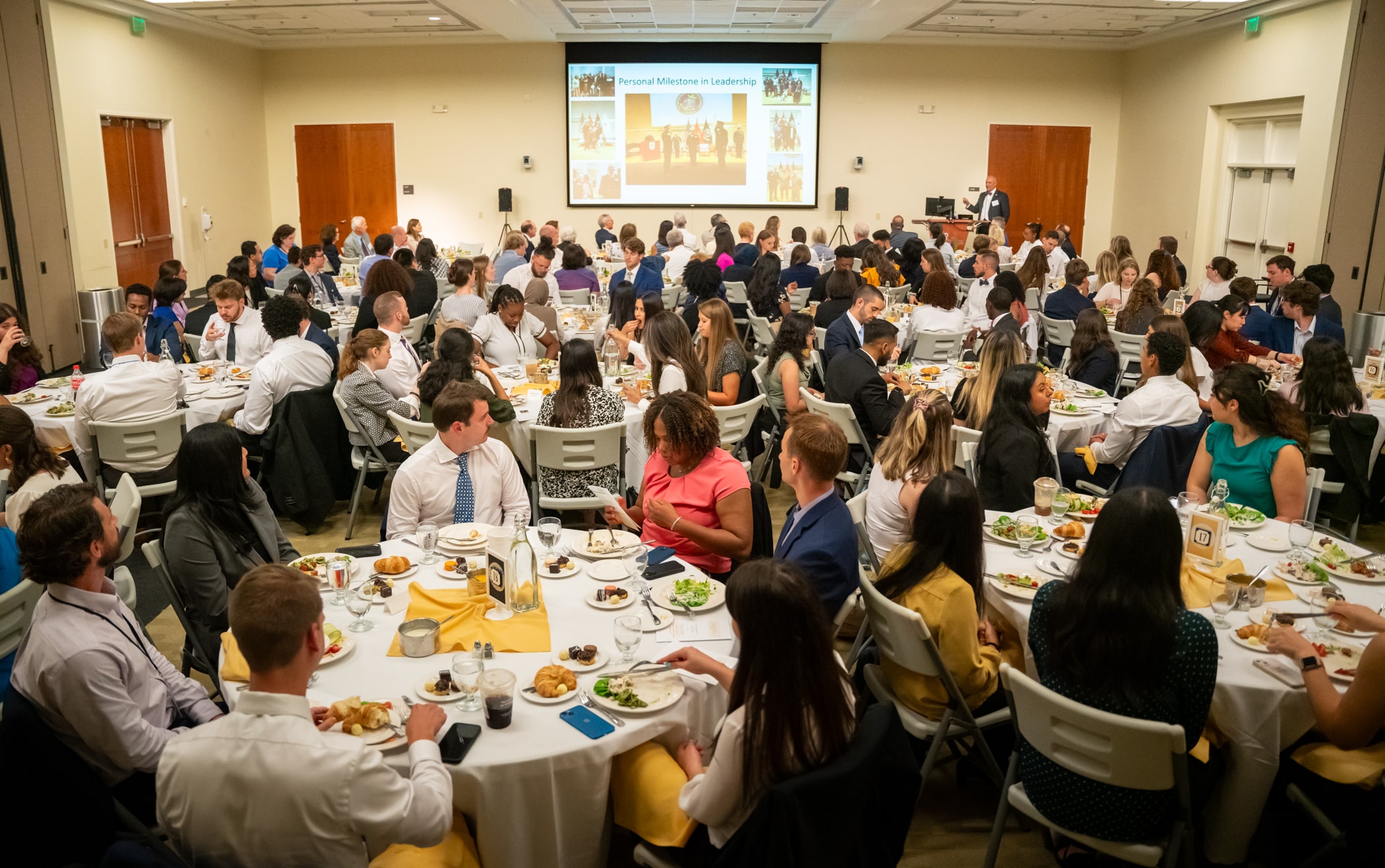
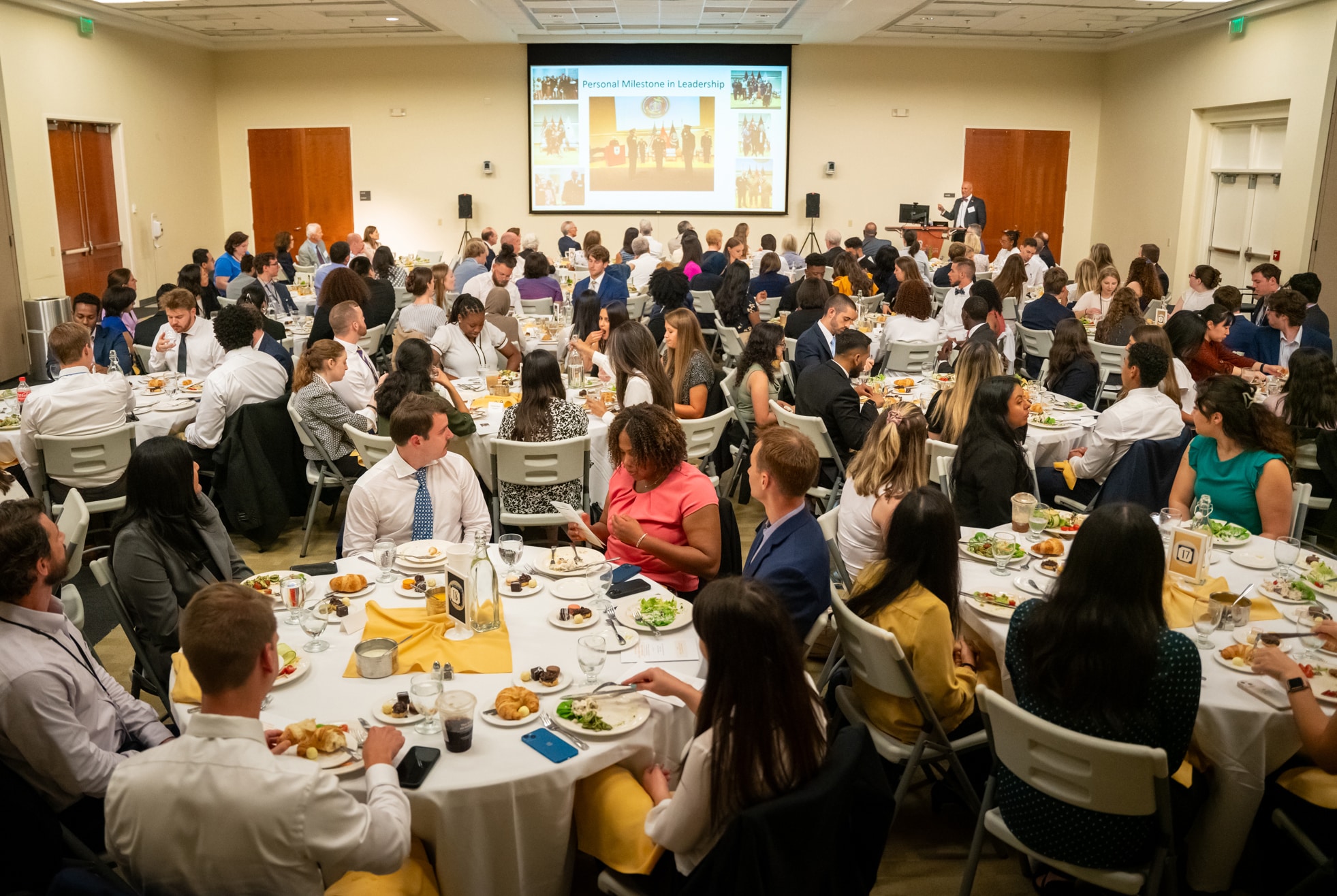
Family, service, and leadership were key themes of Dr. Jason Higginson’s presentation to nearly 100 first year ECU Brody School of Medicine students at the 15th Annual José G. Albernaz Golden Apple Distinguished Lecture Thursday, July 27 at the East Carolina Heart Institute at ECU.
Funded by the Albernaz family in partnership with the ECU Health Foundation, this lecture was established in 2006 with the goal of providing support for physicians to share their expertise with the medical education community. In a presentation titled “Learning to Lead: Lessons from My Military Life and Beyond,” Dr. Higginson, executive dean of Brody and chief health officer at ECU Health, outlined how his experience in the U.S. Navy, alongside the lessons he learned from his family, mentors and patients, has shaped his journey as a leader and medical doctor.
“Leadership is about finding what you do best and using that to help the people around you,” Dr. Higginson said. “You cannot achieve anything in life without the people around you. A good leader finds a way to use their knowledge and skills to solve problems for others.”
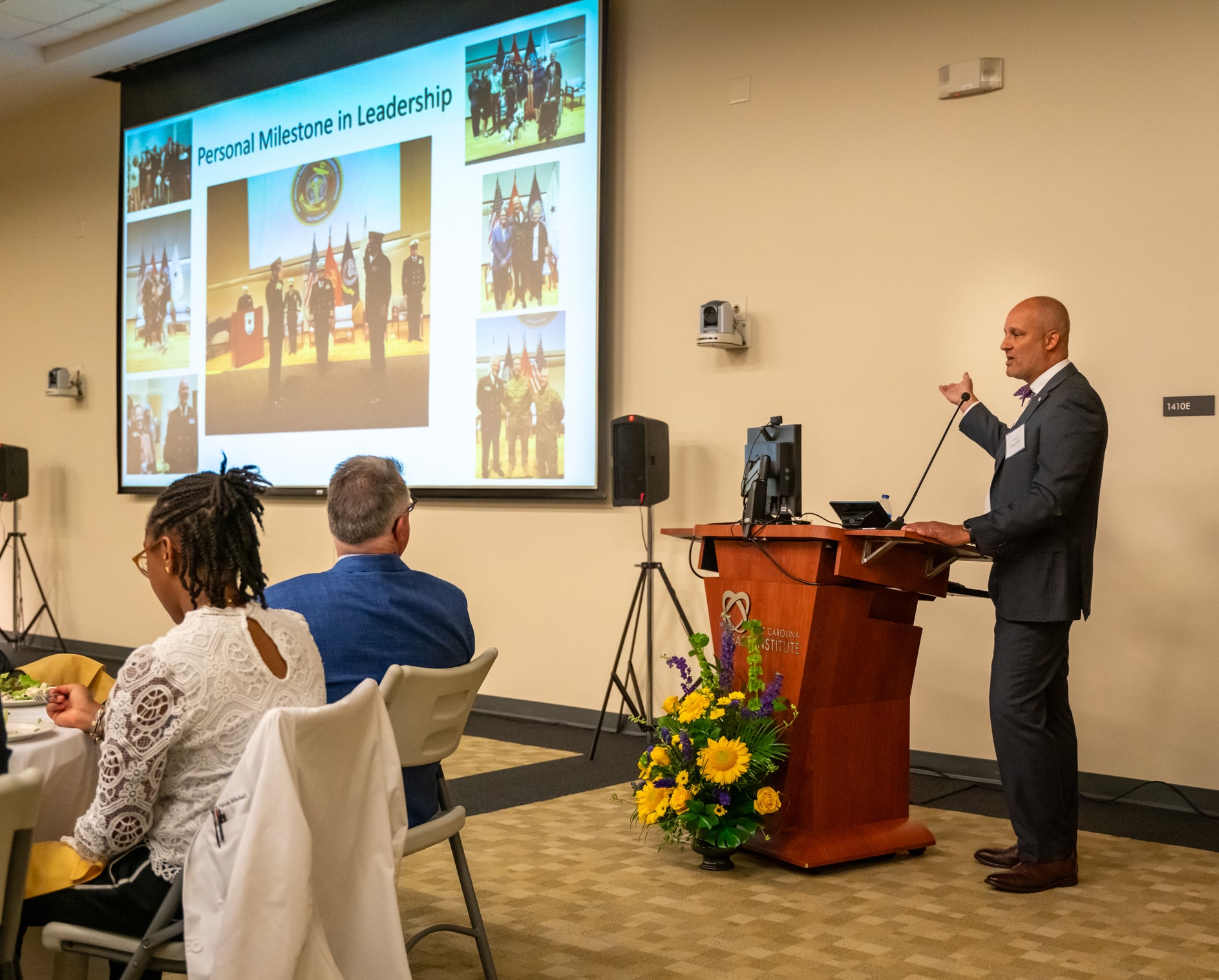
Dr. Higginson has been at Brody since 2012, following 13 years of active duty in the U.S. Navy, where he now continues to serve in the U.S. Navy Reserve holding the rank of captain. His previous roles include chair of Brody’s Department of Pediatrics, Pediatrician-in-Chief of Maynard Children’s Hospital, chief of neonatology and medical director for the Neonatal Intensive Care Unit and Newborn Medicine.
“Being a medical doctor is not about self, it’s about a calling to serve a higher need,” ECU Health CEO and Brody Dean Dr. Michael Waldrum said in his introduction at the lecture, “Dr. Higginson is a shining example of that. He is a highly engaged and highly purposeful leader who is helping us build something special at ECU Health. We’re excited that you, our students, have an opportunity to learn from him today.”
Despite his prestigious rank in both the military and the clinical field, Dr. Higginson said the lessons learned early on taught him the skills he needed to successfully lead others. He recalled joining the Navy shortly after getting his medical degree and being told to master the skills of a broom as he swept floors during his first week. That experience taught him that everything, even the simplest tasks, matters in the organization.
Those lessons, Dr. Higginson said, will serve Brody’s newest cohort of students as they embark on their own personal journeys through medical school.
“All of you are going to stand up and take the oath to be a doctor,” Dr. Higginson said. “As you are reading the words for the first time in front of those you love, I encourage you to pause and reflect on the words and what they mean to you. If you take that oath seriously, you will succeed.”
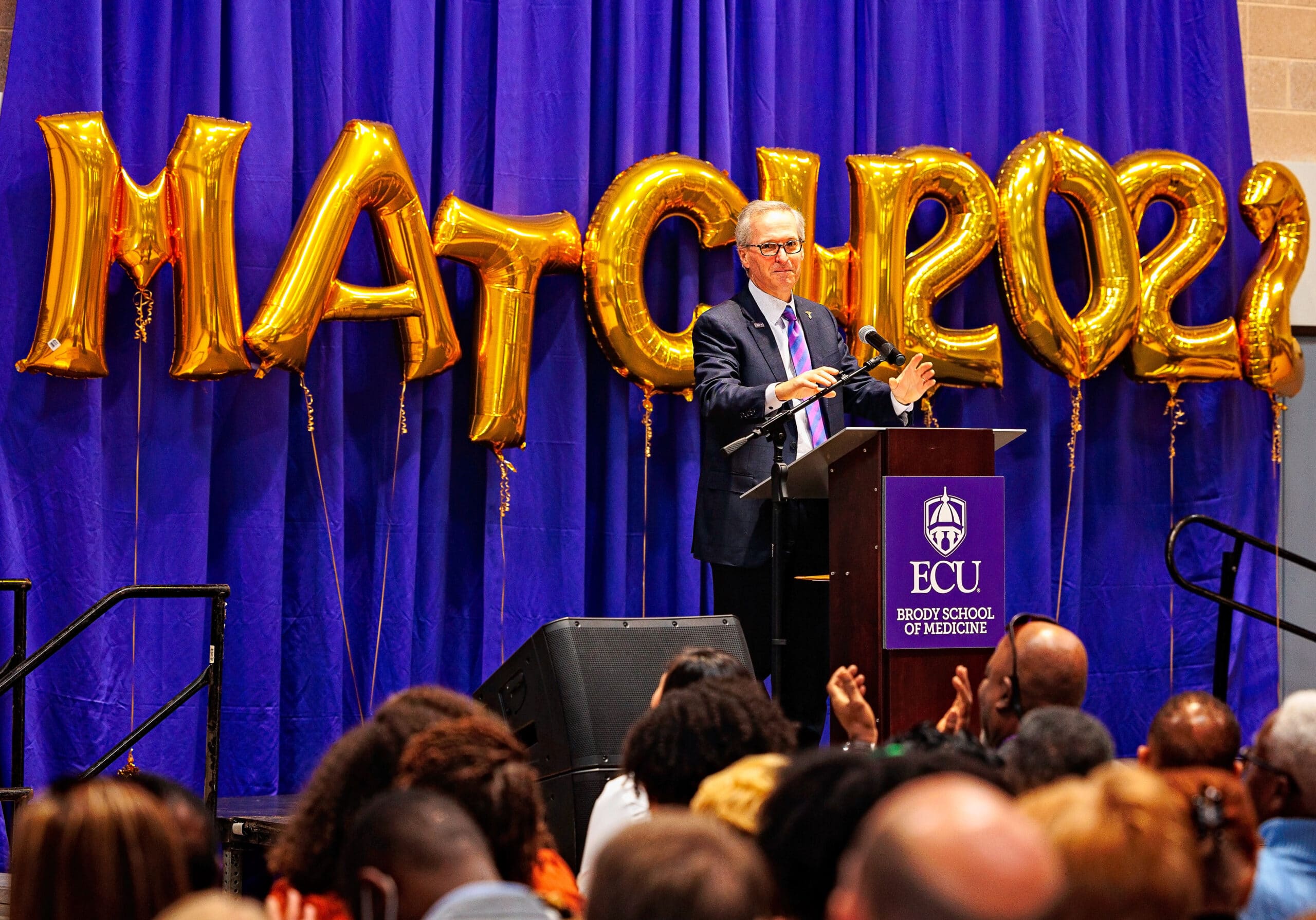
ECU Health Chief Executive Officer and Brody School of Medicine at East Carolina University Dean Dr. Michael Waldrum recently joined the Raise the Line Podcast to discuss rural health care, his personal journey in medicine and how ECU Health and Brody are advancing the shared mission of improving the health and well-being of eastern North Carolina. Hosted by Osmosis from Elsevier, Raise the Line is a podcast about strengthening global health care systems through education, training and optimizing the workforce to support health care workers.
A passion for rural communities
During his time on the podcast, Dr. Waldrum talked about his background in medicine, from his decision to pursue a medical degree, to his clinical career as an intensivist in critical care medicine, and his robust experience in health system leadership roles. He credits his time growing up in Minnesota near the Mayo Clinic for his rural health care passion.
“As a young person being surrounded by physicians and other health care professionals in a rural community, it was just transformative for me. It was unbelievable,” said Dr. Waldrum. “I lived on Mayo Wood Road. I knew a number of the Mayo family, and to see what that organization did in this rural northern community in Minnesota was incredible. So, it just was something as a young person that I became very interested in because I could make a living taking care of people, which was just an unbelievable opportunity that I still have so much respect for and love for.”
Health care delivery through education
Dr. Waldrum said delivering health care in rural areas is a challenge ECU Health is uniquely positioned to solve, thanks in large part to the Brody School of Medicine, which is a leader in training primary care providers for the state. By training the next generation of providers, many of whom go on to practice in rural communities, the educational component is as important as the health care delivery component.
“I like complex problems,” Dr. Waldrum said. “I like working on these systemic complex issues and so that’s what led me to come to eastern North Carolina. We cover a geographic area the size of Maryland. People aren’t really familiar with the coastal plains of North Carolina, but it’s a huge geography and our organization serves this large geography and is really the safety net anchor institution across this region. Part of that is the academic component, which is the Brody School of Medicine, a great organization whose mission was created to primarily educate primary care physicians to take care of North Carolinians, to improve the health and well-being of this region, and to offer medical education to diverse populations.”
The Brody class of 2023 is a snapshot of Brody’s mission to serve North Carolina by increasing the number of primary care physicians who serve the state. Fifty-two% of the 2023 Brody class matched into primary care residencies — including obstetrics and gynecology — and 44% matched to residency programs in North Carolina. What’s more, Brody’s most recent class features the most medical students who will begin their residency at ECU Health Medical Center in July, which is no coincidence, according to Dr. Waldrum.
“As for ECU Health and Brody School of Medicine, we are creating the model for rural health care by creating a trusted premier education and health care organization that’s a regional-based delivery system and education system,” said Dr. Waldrum. “We have a great team of professionals doing that — multidisciplinary teams. Anybody that wants to join us — that wants to be creating a future for a great region that’s beautiful in eastern North Carolina — if you can get behind that mission, we welcome you because we are in the process of transforming health care for rural America to become that model.”
Looking for more?
Find and listen to the Raise the Line Podcast, Episode 398 – Creating a Model for Healthcare in Rural America wherever you get your podcasts.
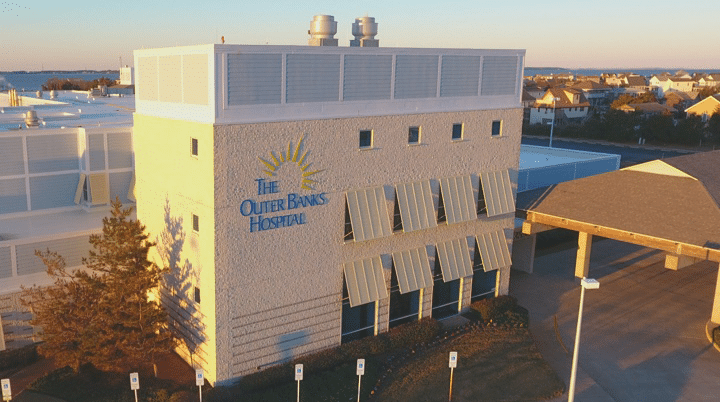
NAGS HEAD, N.C. — The Centers for Medicare & Medicaid Services recently announced that The Outer Banks Hospital received a 5-star rating in both the Physician Communication and the Nurse Communication categories.
The Hospital Consumer Assessment of Healthcare Providers and Systems (HCAHPS) utilizes these star ratings to summarize the patient experience, which is one aspect of hospital quality. The ratings are based on surveys that patients take after receiving care.
“The 5-star rating is the highest rating and it underscores the focus that Outer Banks Health places on the patient experience,” noted Kimberly Hardman, director of experience. “We know that listening to the patient and addressing concerns with compassion and high-quality treatment leads to better outcomes.”
“Our physicians and nurses are among the best of the best with only five North Carolina facilities achieving the 5-star rating in both categories,” said Ronnie Sloan, FACHE, president of Outer Banks Health. “It isn’t just about our commitment to delivering quality care. It’s about delivering quality care with compassion and our nurses and providers deliver it every single day.”
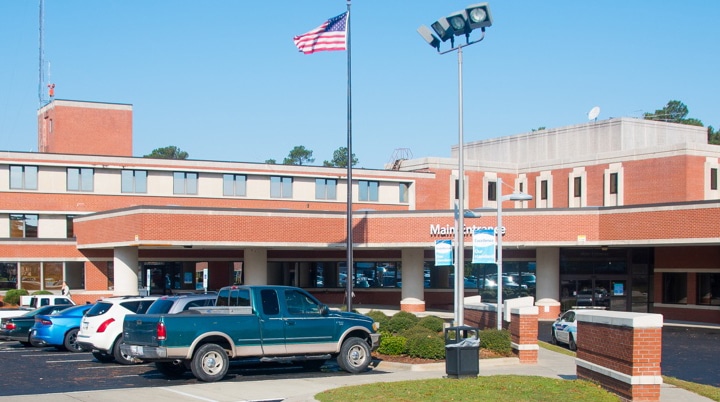
Kenansville, N.C. — The Centers for Medicare & Medicaid Services (CMS) recently announced that ECU Health Duplin Hospital received a 5-star rating in the Physician Communication category.
CMS uses the Hospital Consumer Assessment of Healthcare Providers and Systems (HCAHPS) Survey to determine and publicly report star ratings for 10 measures regarding patient experience — communication with doctors is one of the measures. The HCAHPS survey is administered to a random sample of patients after their hospital stay and consists of 29 questions. The physician communication star rating is determined using three questions that focus on how well patients feel their doctors listened carefully, explained things and treated them with courtesy and respect.
“Our community is fortunate to be served by such a knowledgeable and caring group of providers,” said Dr. Chad Kornegay, chief of the medical staff, ECU Health Duplin. “I’m proud of our team and the fact that we were one of seven North Carolina hospitals recognized for physician communication and one of 357 hospitals recognized nationwide.”
“The providers here at ECU Health Duplin Hospital are some of the best in the country and they have truly earned this five-star rating,” said Jeff Dial, president of ECU Health Duplin. “Our team has set a high standard of performance for themselves and it is no surprise that we are seeing these results. They provide high-quality, respectful and compassionate care to every patient, every day.”
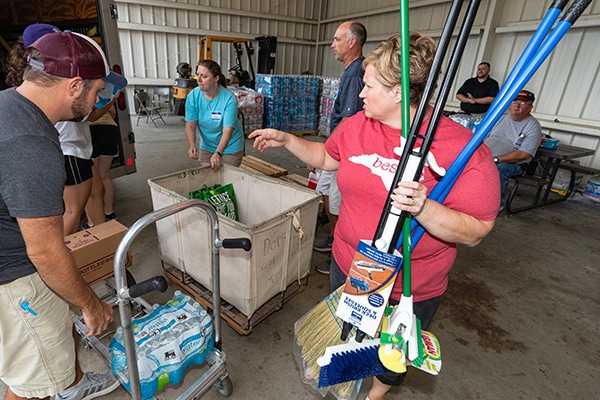
A 2008 alumnus of the Brody School of Medicine at East Carolina University and current ECU Health physician detailed his experiences as a doctor in rural and underserved eastern North Carolina during a July 12 webinar.
ECU Health Duplin Hospitalist Director Jon Kornegay presented “Perspectives on Underserved Care: Being a Physician in Duplin County” through the ECU Global Health and Underserved Populations Program. He also serves as ECU Health Duplin vice chief of staff and Duplin County EMS medical director.
A native of Duplin County and part of a family of physicians, Kornegay has served Duplin County since 2012, creating the hospitalist group that has increased local patient volume and kept Duplin County residents closer to home for quality care. He was named one of ECU’s 2022 “40 Under Forty” honorees.
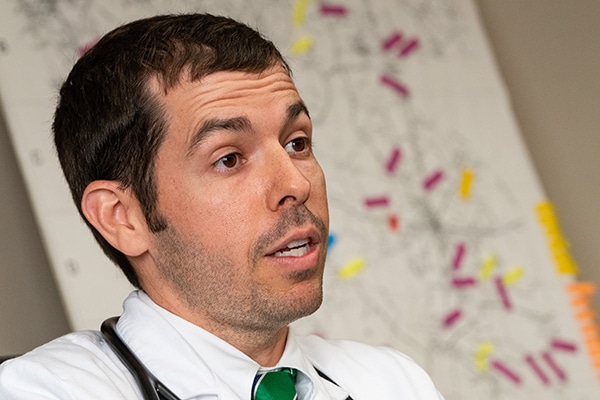
Kornegay began the talk by saying he reminds medical students and residents that practicing medicine in an underserved area is a unique experience that can enhance their views of medicine.
“It’s a good thing, at some point in your career, to spend a little bit of time in community hospitals,” he said.
Kornegay guided the audience through details of the challenges of health care delivery in a rural county, the expertise of his colleagues that blend to provide a more complete level of care to patients and how ECU Health Duplin, in Kenansville, has grown over the years. He also detailed how the Brody School of Medicine has influenced the approach to care.
Duplin County is nearly two hours from Greenville, with a population of around 50,000, making it a target area for Brody’s mission to serve rural eastern North Carolina and underserved communities.
“Brody had several mission statements when it was developed,” Kornegay said, “and one of the main mission statements was to train providers for eastern North Carolina. Primary caregivers are a really big issue, and we hope we’re addressing that somewhat.”
Kornegay said the health care landscape and its indicators — including that many providers are near or at retirement age — mean recruitment to rural communities needs to increase. Other challenges include patient insurance coverage and the geographical access to complex care facilities.
Kornegay praised ECU Health Duplin’s strong ties to the Brody School of Medicine, including current students and residents as well as seasoned physicians.
“We take kind of a plethora of Brody learners,” he said. “We have third- and fourth-year residents that come to do community rotations with us. This past year, we’ve also started taking ECU rural family medicine residents. All of our attendings have interactions with Brody learners and are kind of staying connected.”
Kornegay’s brothers, who also practice in eastern North Carolina, went to medical school or completed residencies through Brody. Chad Kornegay helped start the medical group in Duplin County in 2010.
“My dad’s been a family practitioner in the area for over 50 years,” Kornegay said, adding that his father retired a few years ago.
The family ties also help build a sense of kinship among the professionals that has resulted in a steady increase in patients served and a reputation for quality care.
In 2011, Kornegay said, there were 5,800 patient encounters through ECU Health Duplin; over the past three years, that number has stayed around 15,500.
“So we’ve almost tripled the service there in about 12 years,” Kornegay said. “We’ve grown the service quite a bit. As a pretty strong group clinically, we’ve had a lot more of a comfort level taking patients than they previously had had here.”
Kornegay shared firsthand accounts of what it was like to be a rural physician in a large, rural county. He told stories about bad car accidents, deliveries of premature babies,
and other emergencies that are made more challenging by remote locations. He also shared his experiences serving during several hurricanes that rendered many areas of Duplin County as islands.
Hurricane Matthew in 2016 presented Kornegay with an opportunity to adopt new skills for future storms.
“I grew up in Duplin County, so I’m used to kind of being around tropical storms and hurricanes,” he said. “But we had never seen anything like this in my lifetime, the amount of water that we got with Hurricane Matthew. And so that presents some challenges, some unique challenges, for us in the health care delivery at the county.”
That experience helped prepare Kornegay and other providers for unforeseen circumstances — and for continuing to live and work the mission of Brody and ECU Health to serve rural eastern North Carolina through challenges from geographical access to natural disasters.
“We really as a county had not recovered from Matthew before Florence came,” he said of the 2018 storm. “We had kind of rehearsed a little bit with Matthew, but one of the things we learned during Florence is you can try to prepare for everything, but you can’t. So you’ve got to be ready to modify and change your game plan when data changes and things change a little bit. When you get that curveball, you may have to pivot a little bit.”
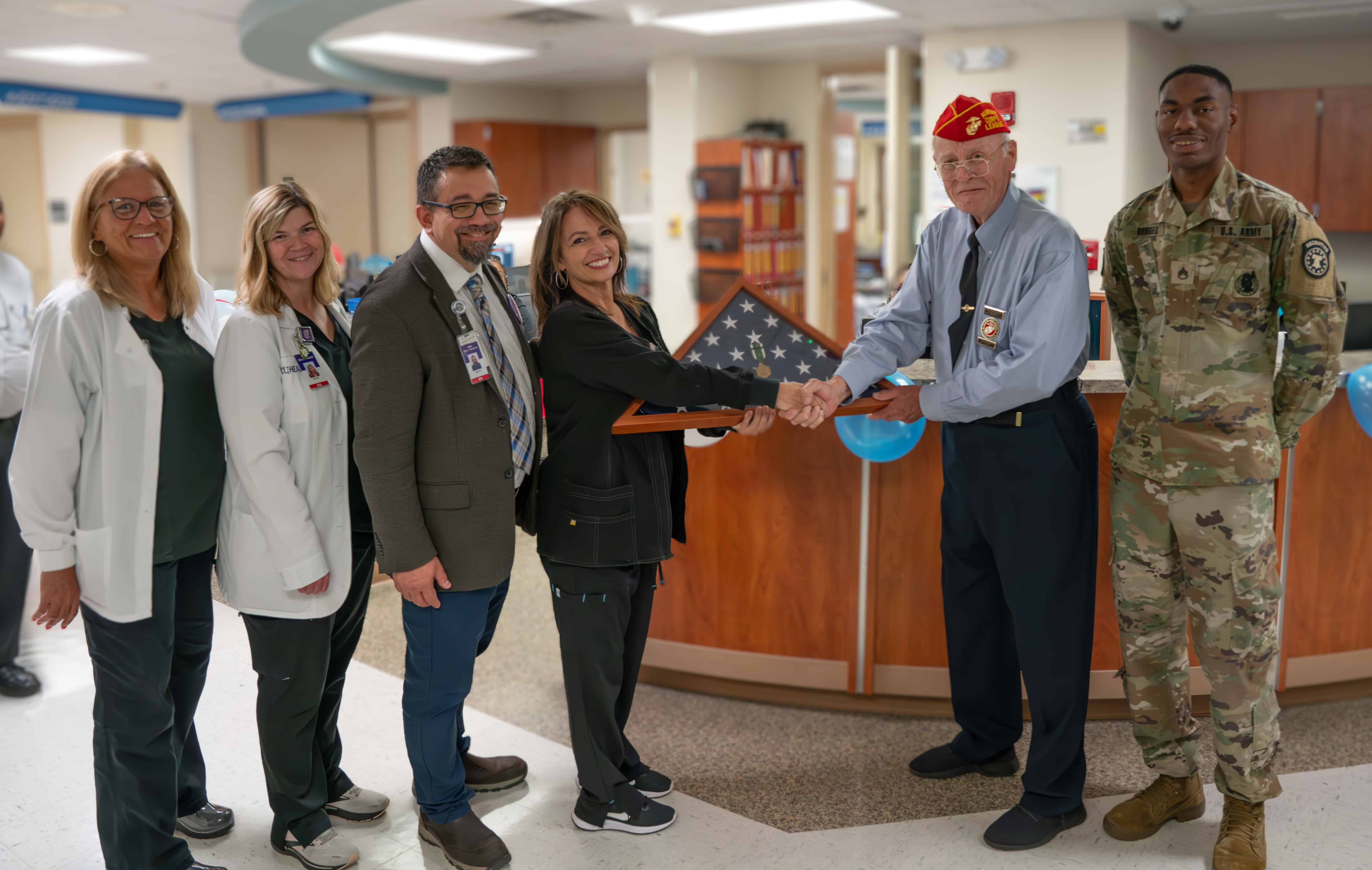
On a February morning, Vietnam veteran Lee Pascasio sat in his brother-in-law’s room on 2 East at ECU Health Medical Center. As Melissa Warren, a nurse on the unit, checked on Willis Johnston Stancill she noticed his blood pressure was spiking, and the team sprung into action.
Pascasio said he watched in silence as the team went to work saving Stancill’s life. He said he’d seen that kind of teamwork before in his time as a Marine. The experience moved Pascasio to gift his Navy Commendation Medal, earned during his service in Vietnam, to Melissa Warren and the rest of the 2 East team. Now, it hangs in the hall of the unit on top of the stars of the American Flag for all to see.
“This is such a great team,” Warren said. “It’s such a well-oiled machine, it’s like we’re dancing almost when something crazy like that happens. It’s not like you have to ask somebody to do something. We just kind of do it, that’s the team. If something happens, the troops are coming in.”
A Medal Earned
Pascasio recalled his time in Vietnam vividly. During his second tour in Vietnam, Pascasio said at 25 years old he was an old man compared to the rest of the First Battalion, Ninth Marine Unit, where he served as sergeant, specializing in explosives.
On June 30, 1969, Pascasio said he was at Vandegrift Combat Base with the Ninth Marine Unit and another platoon in Vietnam. That day, rockets and mortars began to hit the battalion without warning. A lieutenant was killed in the attack, leaving Pascasio in charge. Pascasio sent a sergeant to get a corpsman while he administered first aid to the wounded. When the medevac eventually arrived, Pascasio helped load the dead and wounded Marines so they could receive further care.
Two years later, Pascasio was presented with the Navy Commendation Medal at Camp Lejeune.
Appreciating a Care Team
In the days following his brother-in-law’s incident on 2 East, Pascasio shared his appreciation in the form of tacos, donuts, coffee, cheesecake, Cracker Jacks and other snacks.
“He’s just so appreciative,” Warren said. “I can’t give like a superhero story or anything about that night. It was what we do. It’s nice to have him, or anybody, recognize what we do. It’s a demanding job with your emotions, high energy, physically, everything. So it is nice for somebody to care that much when we’re just doing our job.”
For Pascasio, the treats weren’t enough to show his appreciation.
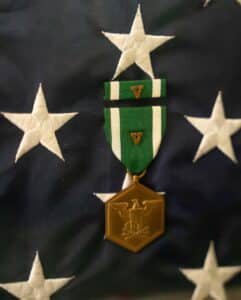 “I said, ‘You know what? I want to do something nice for these people.’ They just saved my brother’s life. He got the best care in the world right here at 2 East,” Pascasio said. “I thought about Melissa and her team of crackerjacks on 2 East and I said, ‘This medal isn’t going to buy her a cup of coffee, but it’s straight from the heart.'”
“It was about their teamwork to save a life and the concern that we should all have. The nurses and teachers who have been through COVID are overlooked.”
Stancill passed away in May, but Pascasio said he still lives in his heart and in the heart of his wife, Emily Pascasio. He continues to be grateful for the care Stancill received, which Warren and her colleagues continue to find meaningful.
“This is for the whole unit,” Warren said. “I mean, you see the support of all the staff out there. They’re amazing. We are like family. When I come to work, when I walk in, we’re hugging each other. None of us could do this alone.”
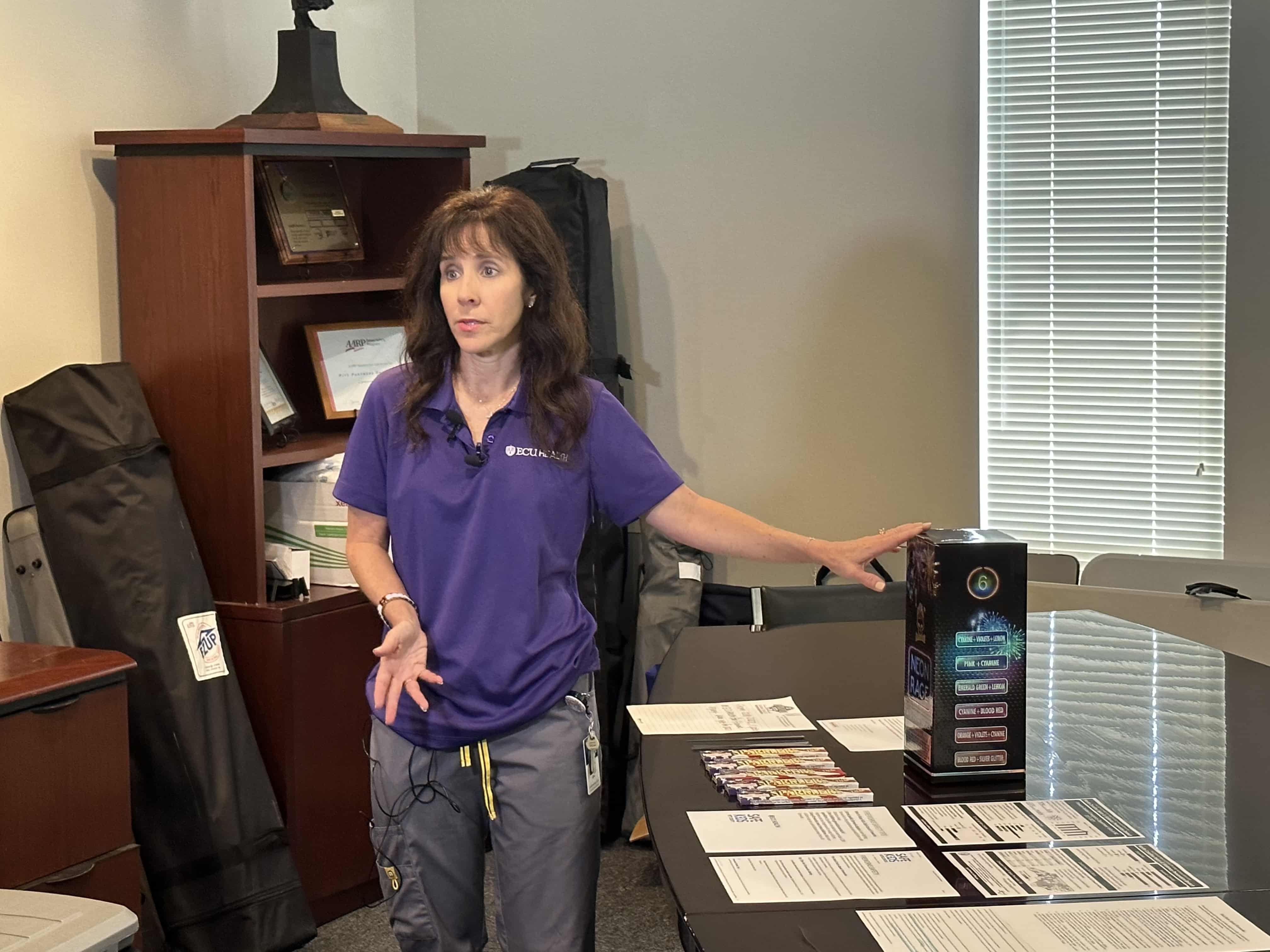
Independence Day is celebrated across the country with cookouts, family gatherings, fireworks and more. While fireworks are a fun way to celebrate, they can be dangerous if not handled by professionals and can cause serious harm including devastating burns and other injuries.
More than 3,000 children under the age of 15 are sent to the emergency room each year in the United States because of fireworks, according to Safe Kids. During July 4 celebrations, it is important to remain mindful of safety and injury prevention while enjoying festivities, particularly those involving fireworks.
Ellen Walston, Injury Prevention Program coordinator at ECU Health Medical Center, said firework injuries are far too common, including those that can be sustained from sparklers.
“We have an extended holiday weekend, but we want to send the important message to let the professionals handle the firework displays,” Walston said. “Some children really enjoy using sparklers but we just ask that you use extra caution because the tips of those sparklers can exceed 1,200 degrees and cause a third degree burn.”
She said supervision of children is key when using sparklers and to make sure they are fully distinguished after use by pouring water over the sparkler, as they can still run around 450 degrees after they are finished burning. Walston said glowsticks are a safe alternative option.
From 2018-22, Walston said there were 11 admissions to ECU Health Medical Center for firework-related injuries. Typically, she said, the injuries are to hands and fingers and the most common age group is 20-29.
“Any time that you are in a situation where there are fireworks involved, we ask that you provide very close supervision to any children, don’t let them near the fireworks,” Walston said. “We want everyone to have fun with their families but it’s so important to do so safely and that starts with supervision.”
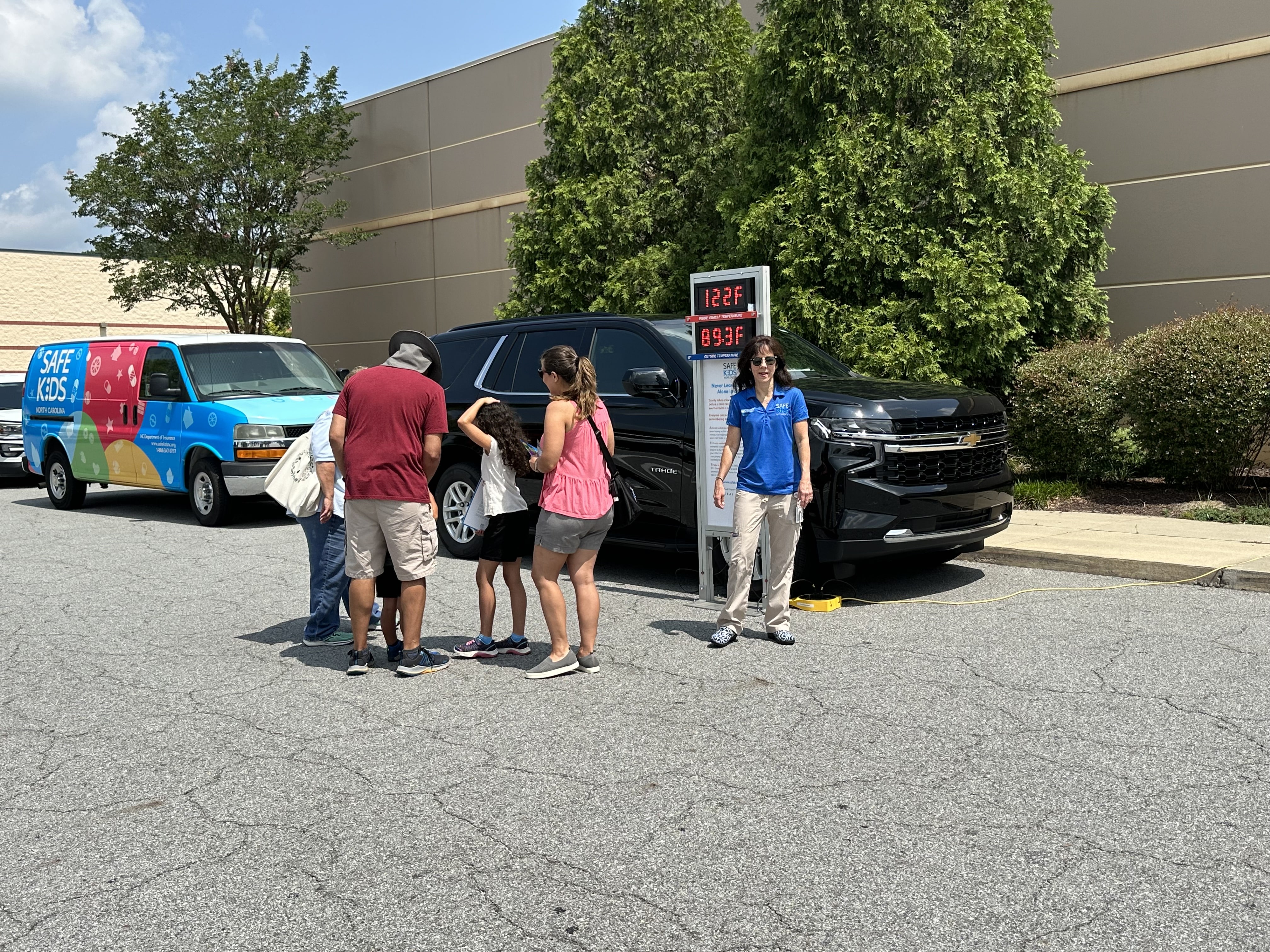
Leaving a child, senior or pet behind in a car can pose serious danger, even if it’s just for a few minutes.
That was the message of the hot car safety event hosted by Ellen Walston, Injury Prevention Program coordinator at ECU Health Medical Center, along with the Martin-Pitt Partnership for Children, Pitt County Sheriff’s Office, Safe Kids North Carolina and Greenville Fire Rescue.
Walston said it’s dangerous for anyone to be left alone in a vehicle because of how quickly they can heat up, especially for children.
On June 29, Walston and community partners shared the information in the parking lot of Kohl’s in Greenville. During a somewhat overcast afternoon with temperatures around 90 degrees, it took about 15 minutes for the display car on hand to reach 123 degrees inside.
“Our campaign is never leave your child alone, not even for one minute,” Walston said. “That means when you think you can just run in and do a quick errand in the store or any situation, we don’t ever want a child to be left alone in a car, not even for a minute. That also includes our senior adults and pets.”
Walston said leaving the windows cracked for a child, pet or senior with the engine off is not enough ventilation to be safe, and even leaving them in the car with the air conditioning on can pose dangers.
During the event, Walston and team demonstrated how the heat inside vehicles can literally cook s’mores by roasting them on the dashboard. She said there have already been eight deaths in the United States this year from children being left alone in cars. While there have not been any in North Carolina this year, the state had four of the 33 national deaths last year.
“One death is too many, that’s why we’re out here today educating the community,” Walston said. “The car we have out here today actually has a feature that has a reminder to check the backseat when you turn off the engine. It’s important to put something tangible in your backseat that you need to get out when you leave the car – your pocketbook, your cell phone, a briefcase, your lunch bag – just to remind you to always check the backseat.”
Walston said that while many parents think this could never happen to them, it can be as easy as breaking your routine to make a parent forget a child is still in the car. More than 50 percent of child deaths from hot cars are from children that have been forgotten in vehicles, and only 17 percent have been intentionally left.
Walston earns North Carolina Coordinator of the Year
Allan Buchanan, Safe Kids North Carolina director, was on hand during the event to recognize Walston as Safe Kids North Carolina Coordinator of the Year.
Buchanan said Walston is a great role model for other Safe Kids Coordinators and is a great leader for the program across the state.
“She does a wonderful job here in Pitt County, getting the message out on injury prevention,” Buchanan said. “In North Carolina, we actually have 46 coalitions across the state. Ellen does a fabulous job here in Pitt County for injury prevention program across a number of different risk areas. She’s just a vital access to the community and creating risk reduction in this area. We’re very fortunate to have Ellen as a coordinator.”
Last year, Safe Kids Pitt County was recognized as the North Carolina Coalition of the Year. Walston said she’s just happy to share the recognition with her many community partners across Pitt County and eastern North Carolina.
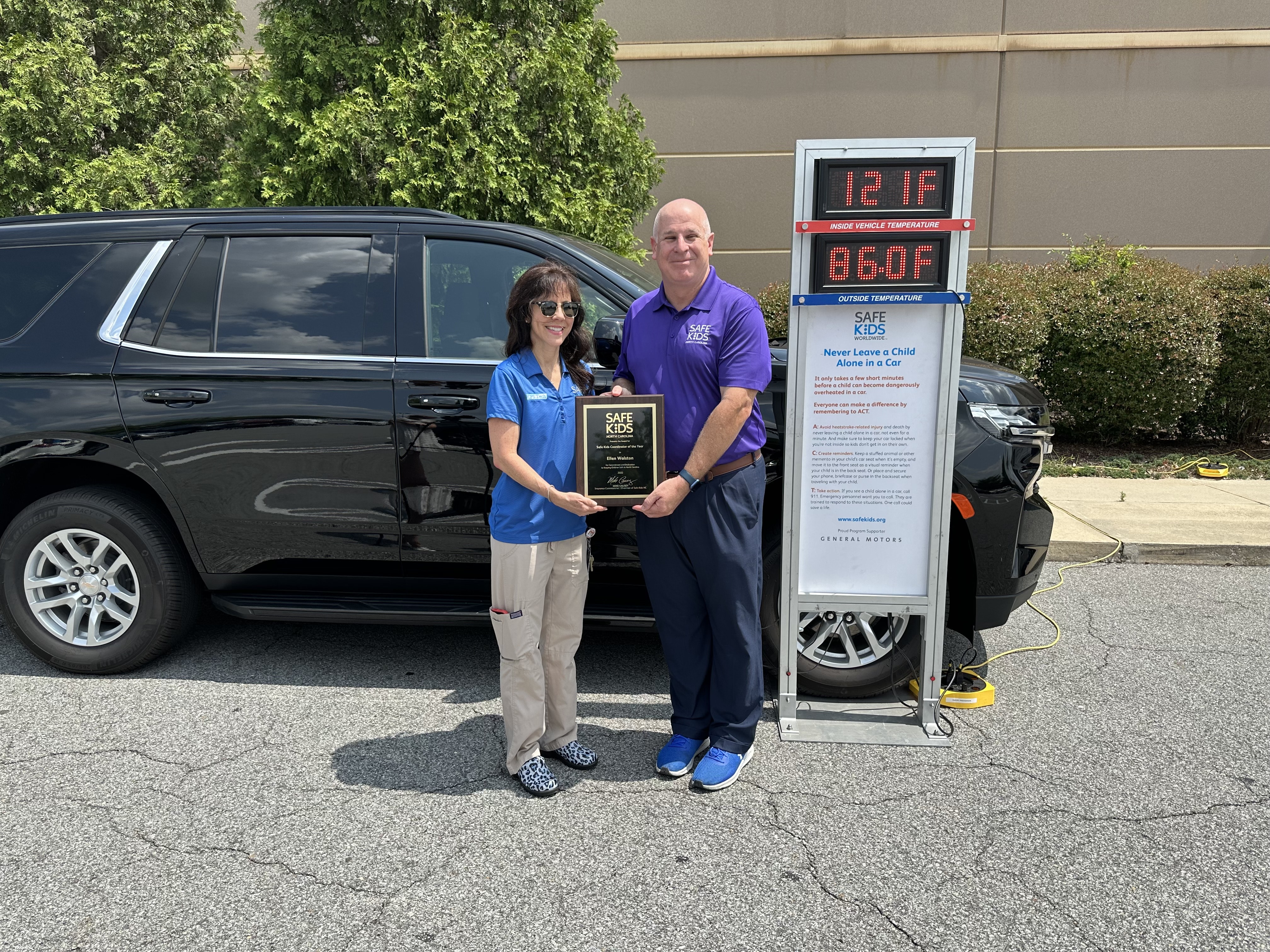
She said the nomination was anonymous but she believes the events her team hosts, the collaboration with community partners and the work that Safe Kids Pitt County does with other Safe Kids coalitions across the state helped earn the award.
“I do think when they see these type of events and the work that we do in Pitt County and beyond that, they pay attention and we really try to partner with other Safe Kids coalitions,” Walston said. “So I’m all about sharing resources and working together, that’s how you make it happen. We’re really fortunate to have such great partners.”
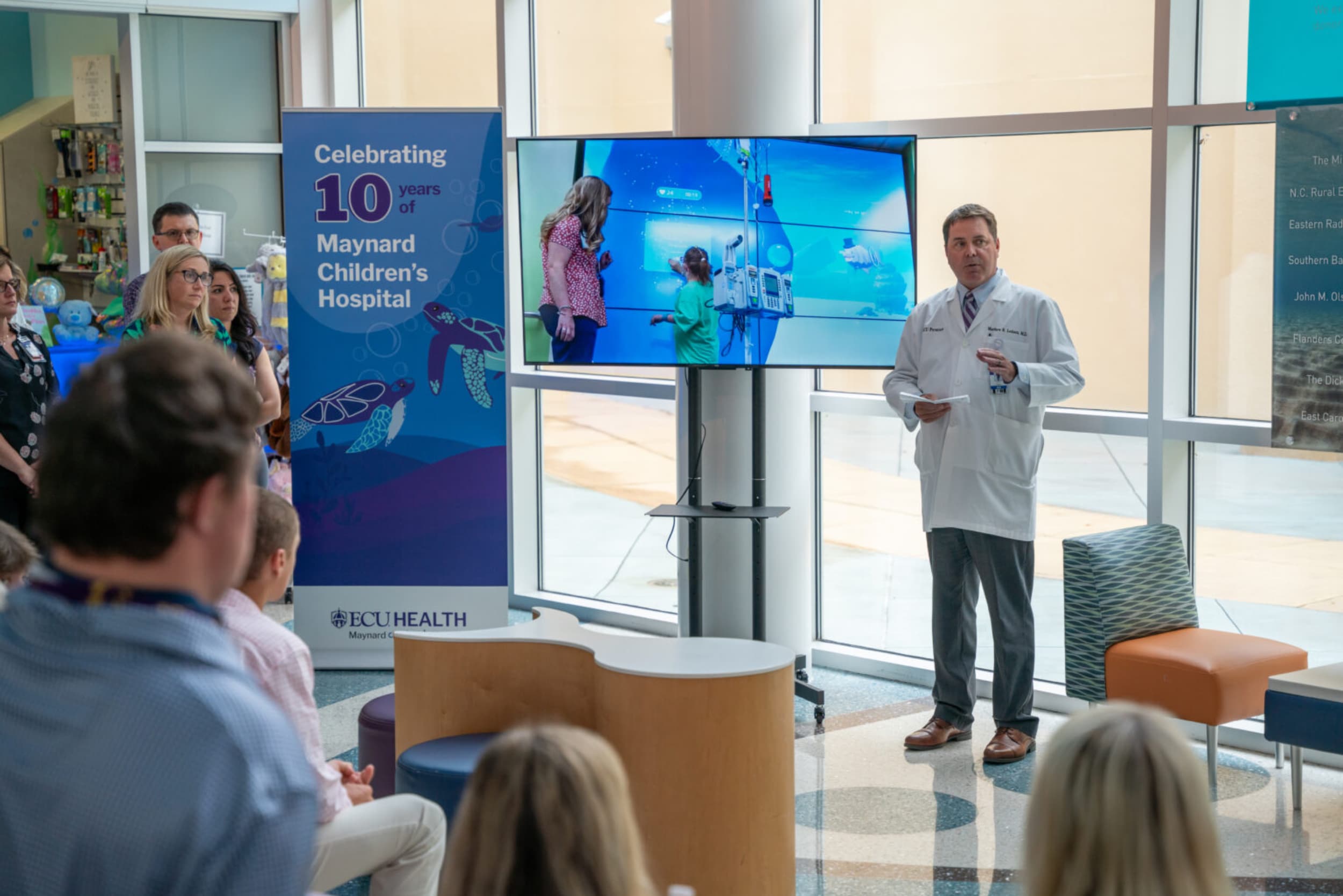
The Maynard Children’s Hospital at ECU Health Medical Center is celebrating its 10th year of offering high-quality, compassionate care in a soothing environment for patients and families in eastern North Carolina.
Dr. Matthew Ledoux, pediatrician in chief at Maynard Children’s Hospital, said the children’s hospital has immensely benefited the youngest patients in the East and made for more seamless care.
“The children’s hospital itself has given us the opportunity to grow services – we started an ECMO program, we’ve started and developed a dedicated Children’s Transport Team that flies all over the region and picks up kids and brings them back here,” Dr. Ledoux said. “The fact that we have all the subspecialty care, we have all the surgical care and generalized pediatric care here makes all the difference. It’s really a shining light in the East.”
Over the past 10 years, countless improvements have been made that have positively impacted the lives of many children and their families in eastern North Carolina. Other key expansions included the Pediatric Day Medical Unit, Pediatric Radiology Unit, and Pediatric Pharmacy among several other additions.
 Kim Crickmore, PhD, RN, senior vice president for Women’s and Children’s Hospital and Community Health Programs, said the Maynard Children’s Hospital is an integral part of health care in eastern North Carolina today. Over the last 10 years, the children’s hospital has delivered more than 37,000 babies, with more 61,000 inpatient admissions, 216,000 emergency cases, 223,000 outpatient cases and an additional 700,000 pediatric outpatient visits through the ECU pediatric outpatient center.
“When we consider the impact to the region over the last 10 years, it’s really unbelievable,” Crickmore said. “It means so much to us here at the hospital that we’ve been able to provide care, primarily under one roof and unite all the services and to be the destination in eastern North Carolina for children who are sick or injured and need the specialty care we provide.”
Crickmore and Dr. Ledoux both said one of the services they are most proud of is the Children’s Transport team. The team consists of intensive-care trained nurses and respiratory therapists skilled in providing the specialty care many children need from the onset of transport to arrival at Maynard Children’s Hospital. Crickmore said it has been an intentional focus to build the program over the last five years and the program has seen many successes.
The Space
The amenities offered in the under-the-sea-themed Maynard Children’s Hospital are designed with patients and families in mind. Soothing young patients in a health care setting is no small task, but the children’s hospital is uniquely equipped to handle the challenge.
Dr. Ledoux said the community has stepped up time and again to provide resources and make donations that make a real difference for patients and families.
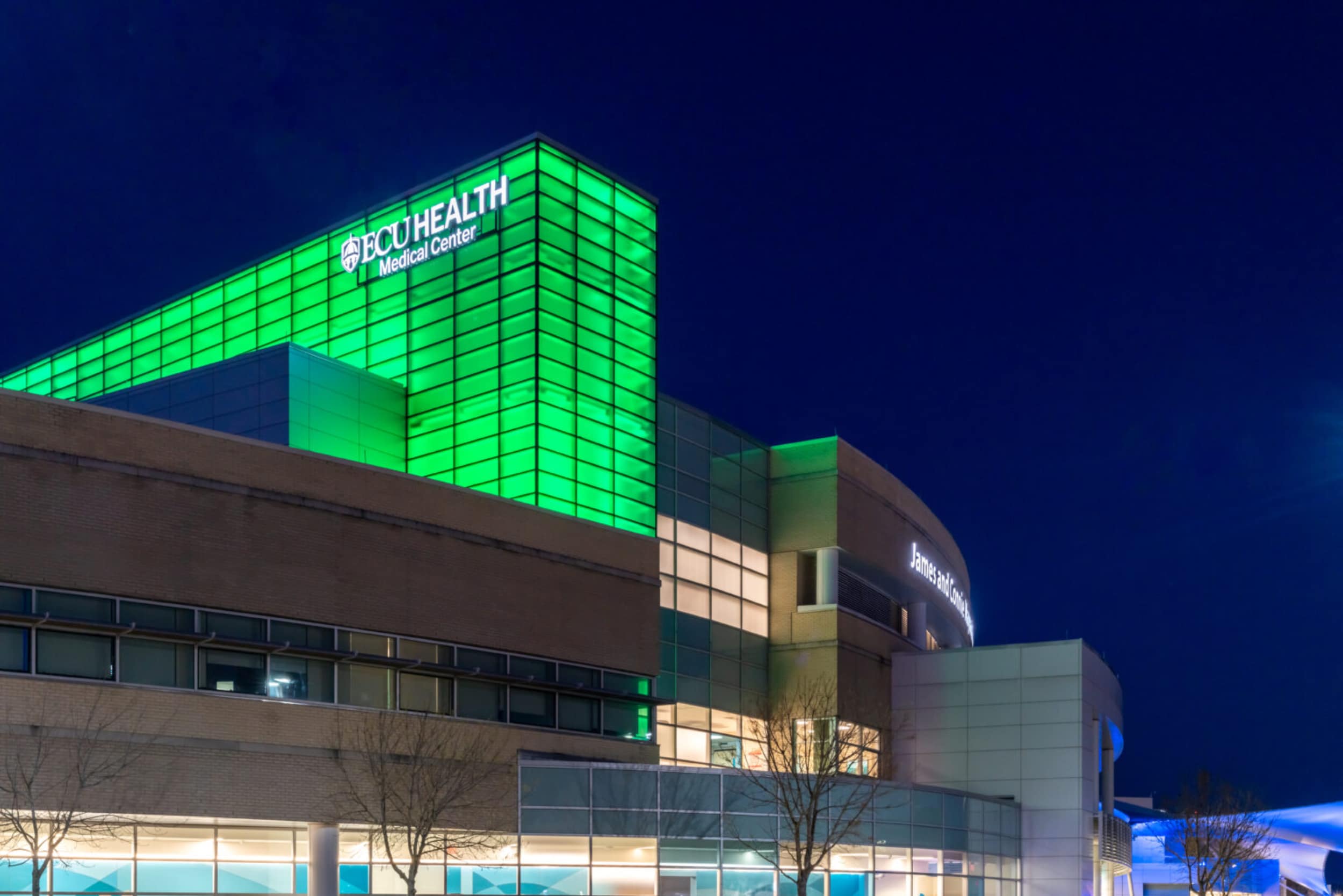
When thinking about his favorite area of the Maynard Children’s Hospital, Dr. Ledoux came back to the light tower, which can be seen when driving past the hospital. He said it’s a reminder of why he, and every children’s hospital team member, shows up to work every morning – to take care of the youngest patients in eastern North Carolina. He said he’s often asked what the colors on the light tower mean when people drive by at night.
“The reason is, we’re generally celebrating a child, we’re celebrating the end of a treatment, they’ve finished chemotherapy, or maybe they’ve been in the NICU for two or three months and they’re getting to go home,” Dr. Ledoux said. “We really try to make sure that the families and children get to pick the color and the time, but any time you see the color change anything different from our usual light blue, we’re celebrating a child and a family so it’s pretty exciting.”
Into the Future
Crickmore and Dr. Ledoux both said the next 10 years are something they’re looking forward to with the Maynard Children’s Hospital. They hope to continue expanding services and looking more to the region to bring specialty care closer to home for patients and families.
Dr. Ledoux said he and other physicians in the system have enjoyed their time spent in the region and the ability to help patients and bring key services closer to home for patients makes it special.
“I think the biggest thing is the distance that people have to travel,” Dr. Ledoux said. “We know that it’s a very underserved population and there’s a lot of poverty. People have challenges paying for gas or even having a car. The closer we can be to them to provide those services, the better.”
Another upcoming project that will impact pediatric patients in the East is the behavioral health hospital, slated to open in Greenville in 2025. ECU Health is partnering with Acadia Healthcare to build the state-of-the-art facility that will feature 24 inpatient beds specifically for children and adolescents with mental health needs. These beds will be the first of their kind in ECU Health’s 29-county service area and the only child and adolescent beds within 75 miles of Greenville, North Carolina.
Join us in celebrating the Maynard Children’s Hospital and all of its team members for the last 10 years of service to eastern North Carolina.