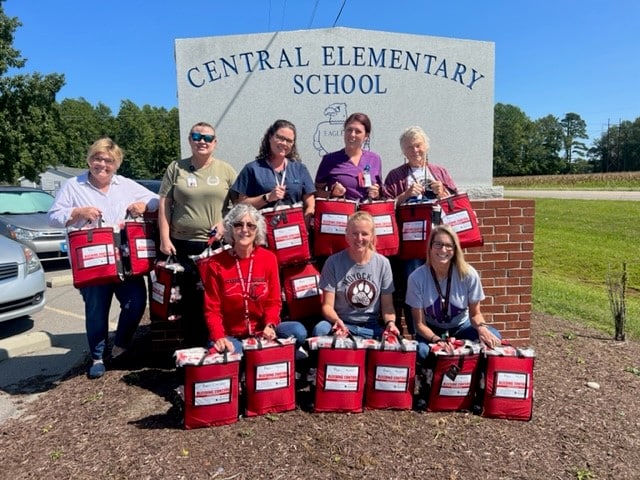
Greenville, N.C. – ECU Health donated Stop the Bleed Kits to public schools in Tyrrell, Currituck, Northampton and Halifax counties as part of its goal to distribute these life-saving resources to public schools across eastern North Carolina. These kits provide resources such as tourniquets, trauma dressing, compressed gauze, gloves and training for school staff in the case of a bleeding emergency before professional help arrives.
“ECU Health is excited to continue expanding our distribution of Stop the Bleed Kits in the counties we serve in eastern North Carolina,” said Erika Greene, pediatric trauma program manager for Maynard Children’s Hospital at ECU Health Medical Center. “Time is of the essence for traumatic injuries, and early intervention can save lives. In rural areas like eastern North Carolina where the distance between schools and hospitals may be greater, these kits enable school staff to treat children early, improving chances of better outcomes.”
Stop the Bleed Kits are funded by Children’s Miracle Network with training provided by Maynard Children’s Hospital. ECU Health has donated more than 64 Stop the Bleed Kits to schools this year, with a total of 354 kits in 12 counties since the program started in eastern North Carolina. School nurses in each county help train staff to use the kits, which ensures more children can be treated with supplies that do not expire.
“We are thankful for the generous gift of Stop the Bleed Kits provided by Maynard Children’s Hospital for every school in Currituck County,” said Jennifer Solley, school nurse, Currituck County Schools. “An emergency in the school setting can occur at any moment. Stop the Bleed training and equipment in each school will equip the staff with the knowledge and tools needed to respond to any bleeding emergency. With these kits, we are prepared and able to reduce or eliminate the loss of life due to an emergent bleeding situation whether it be a single playground injury or a mass injury situation.”
Preventable blood loss is one of the most common contributing factors in trauma-related deaths. Approximately 40 percent of trauma-related deaths worldwide can be attributed to bleeding or its consequence. If bleeding is managed early, the chances of recovery and survival are much greater. The items in the kits help control the loss of blood, leading to positive outcomes for those who sustain injuries.
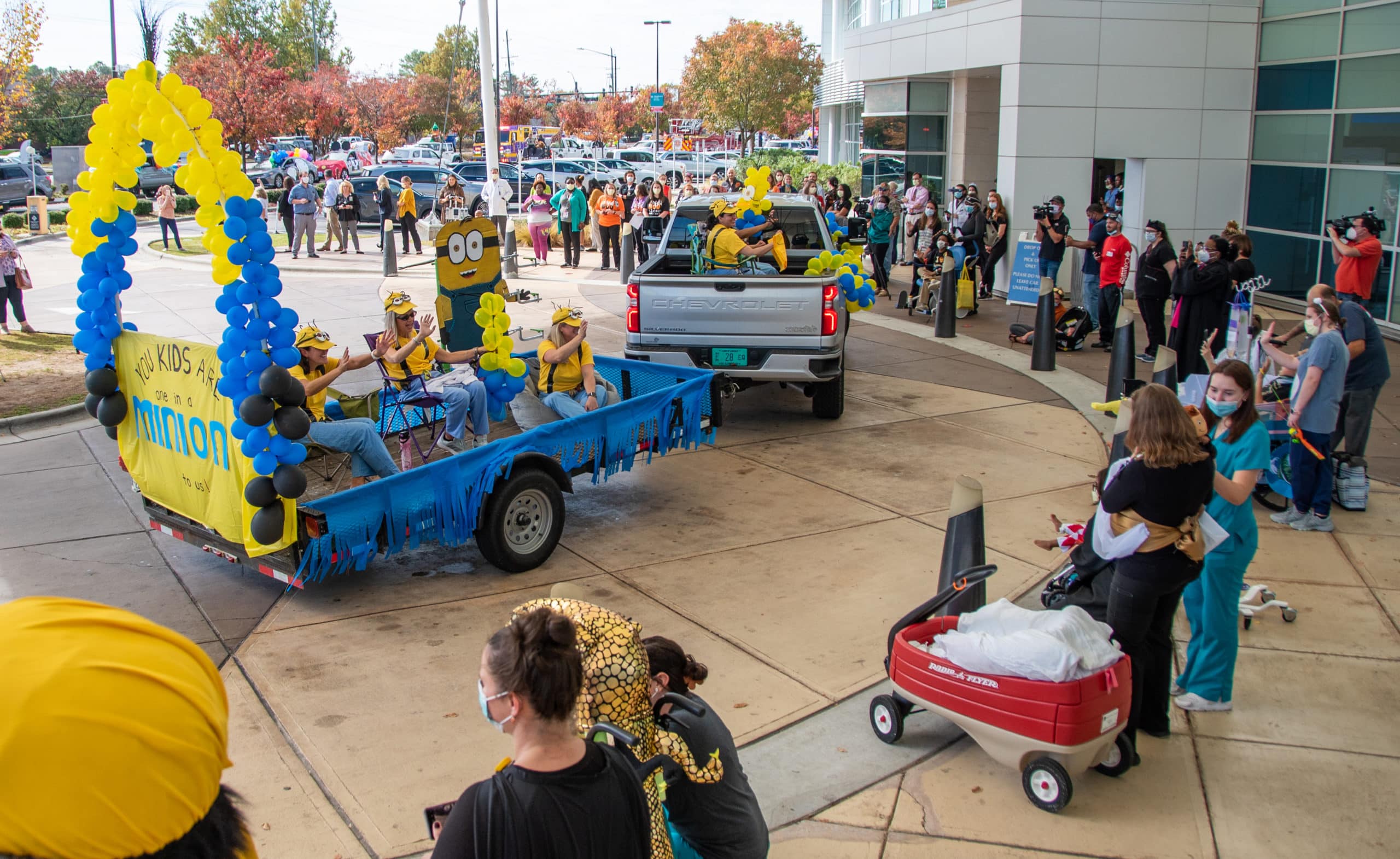
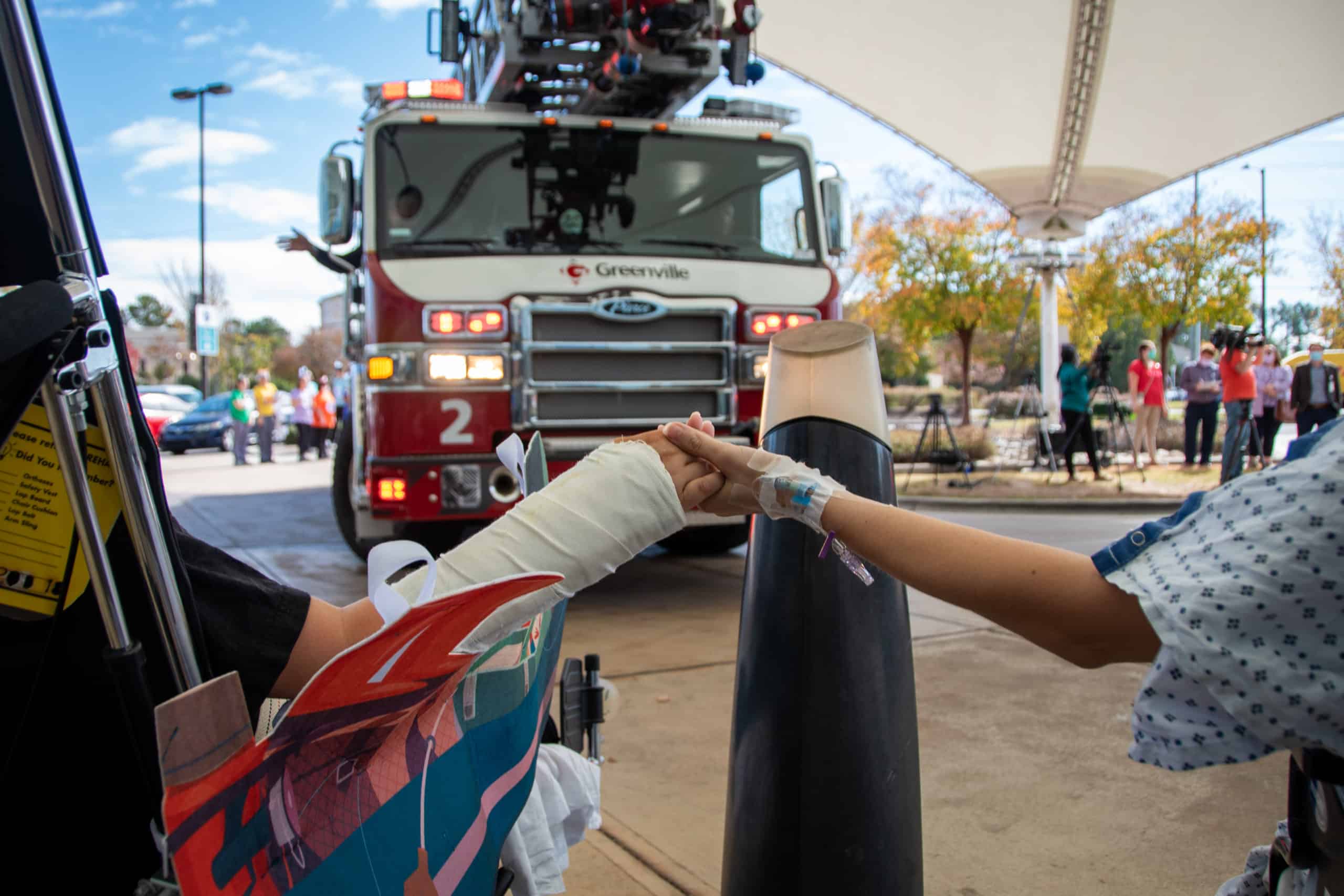
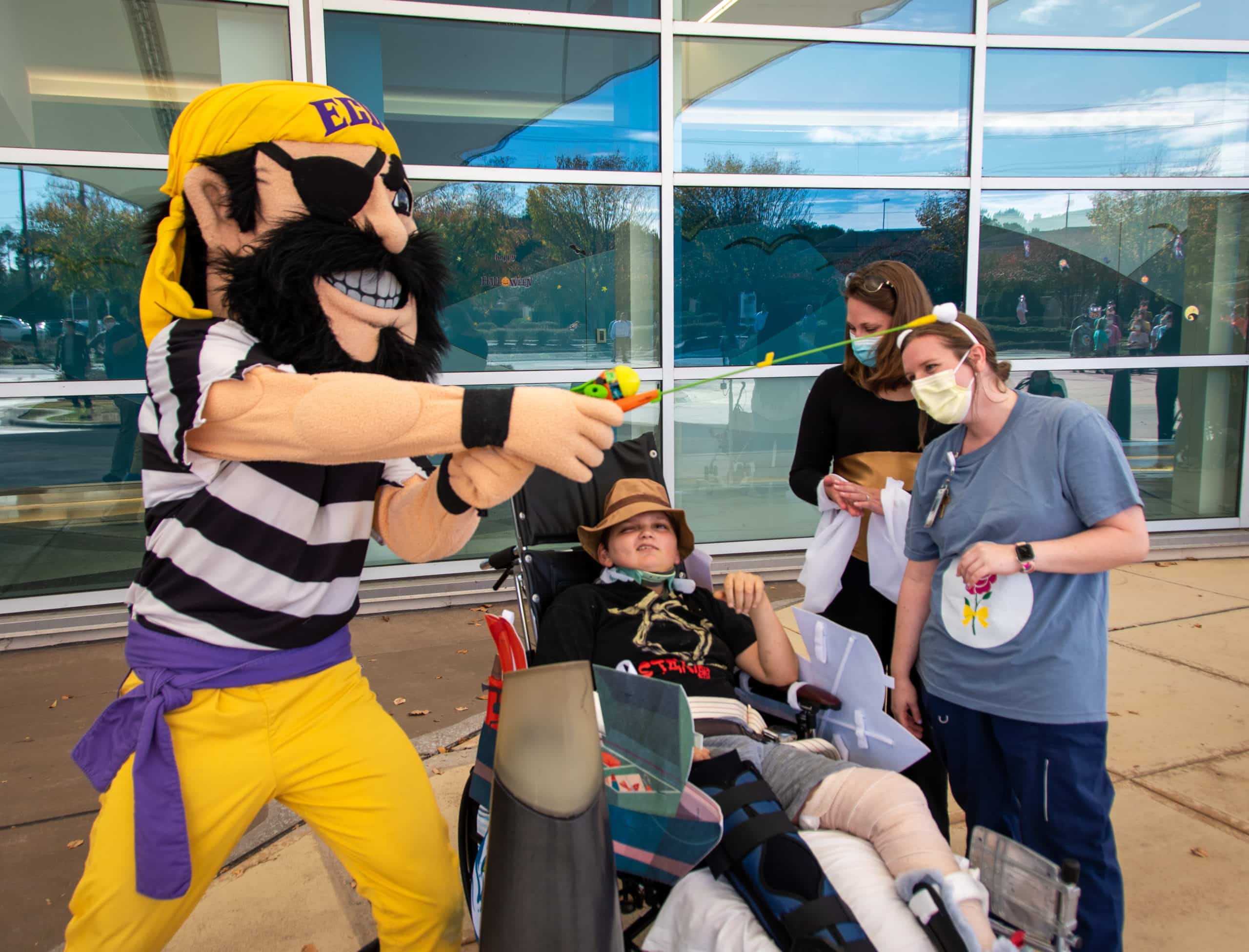
Pediatric patients at the James and Connie Maynard Children’s Hospital at ECU Health Medical Center got a little taste of Halloween as they had the chance to dress up and see ECU Health team members and community groups participate in a parade.
During the parade, floats with team members dress up as everything from Disney’s Up characters to safari themes poured by while patients and families had an opportunity to step outside of their rooms and enjoy some fresh air on a warm afternoon.
Quionna Lofton, the mother of pediatric patient Emoni Salvant, said it was a great experience for her and her daughter.
“It makes me feel really good,” Lofton said. “I didn’t think she would get to experience Halloween today because we are here. This is very nice and well thought out, it was just very lovely.”
Emoni said her favorite float was the Trolls characters and her mother agreed, since she got to see her daughter’s smile light up as it came by.
Various community partners came out to bring a little joy to the youngest patients at ECU Health Medical Center. The Greenville Fire Department brought two trucks to the parade while the Pitt County Sherriff’s Office showed off a safari-themed float. The Down East Wood Ducks baseball team mascot, DEWD, gave patients a big wave from the back of a Jeep while ECU’s mascot, PeeDee the Pirate, interacted with patients and families.
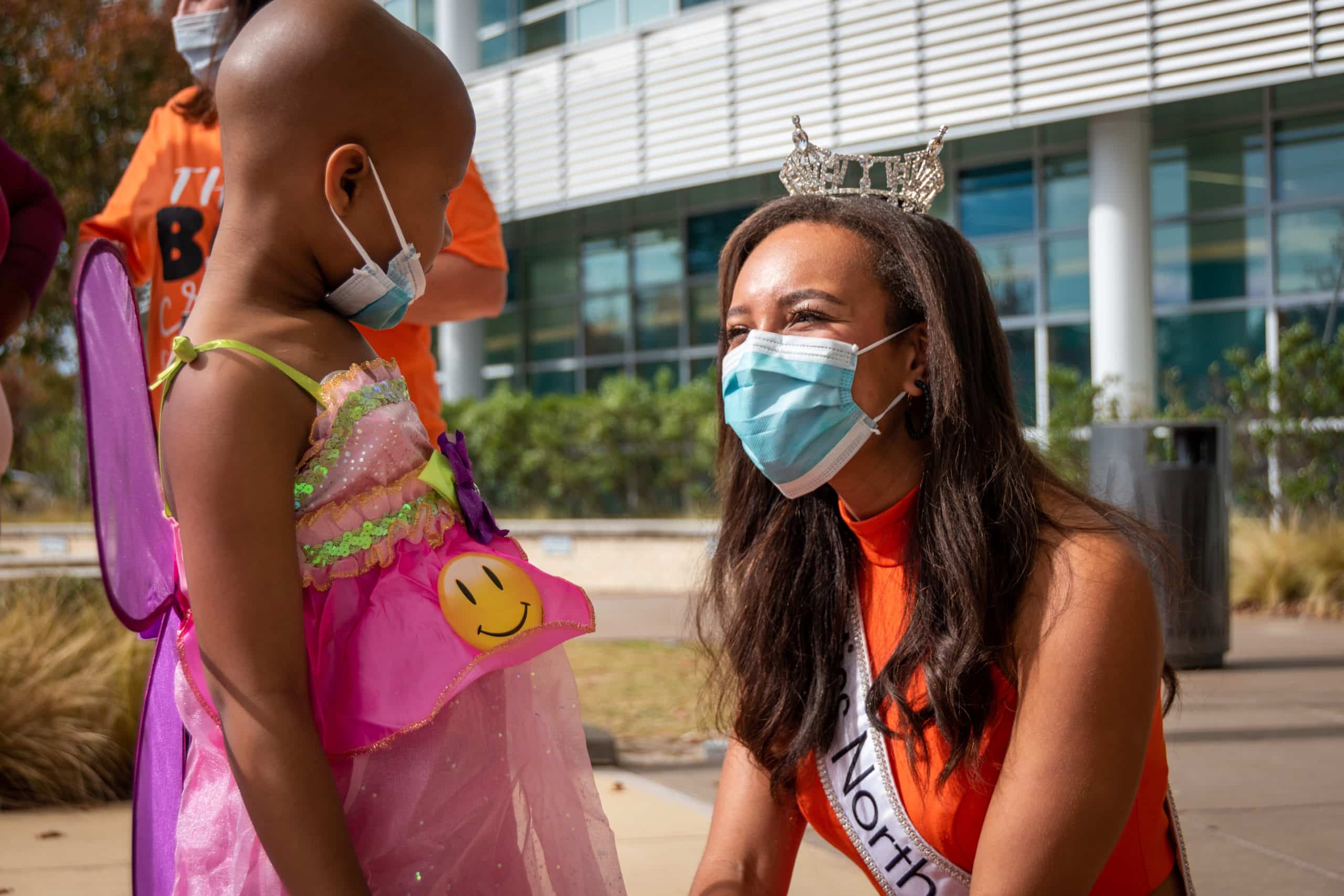
Karolyn Martin, Miss North Carolina 2022, was on hand for the parade as well. She said it was a great experience, and a personally meaningful cause for her.
“My younger sister actually has Crohn’s Disease,” Martin said. “When she was diagnosed, she was in a hospital for about eight months of her year in 8th grade. I know how important it is for families to have people come that care about their children and also to celebrate the people that are making sure children are safe and healthy – that’s so important and why I was so excited to be here.”
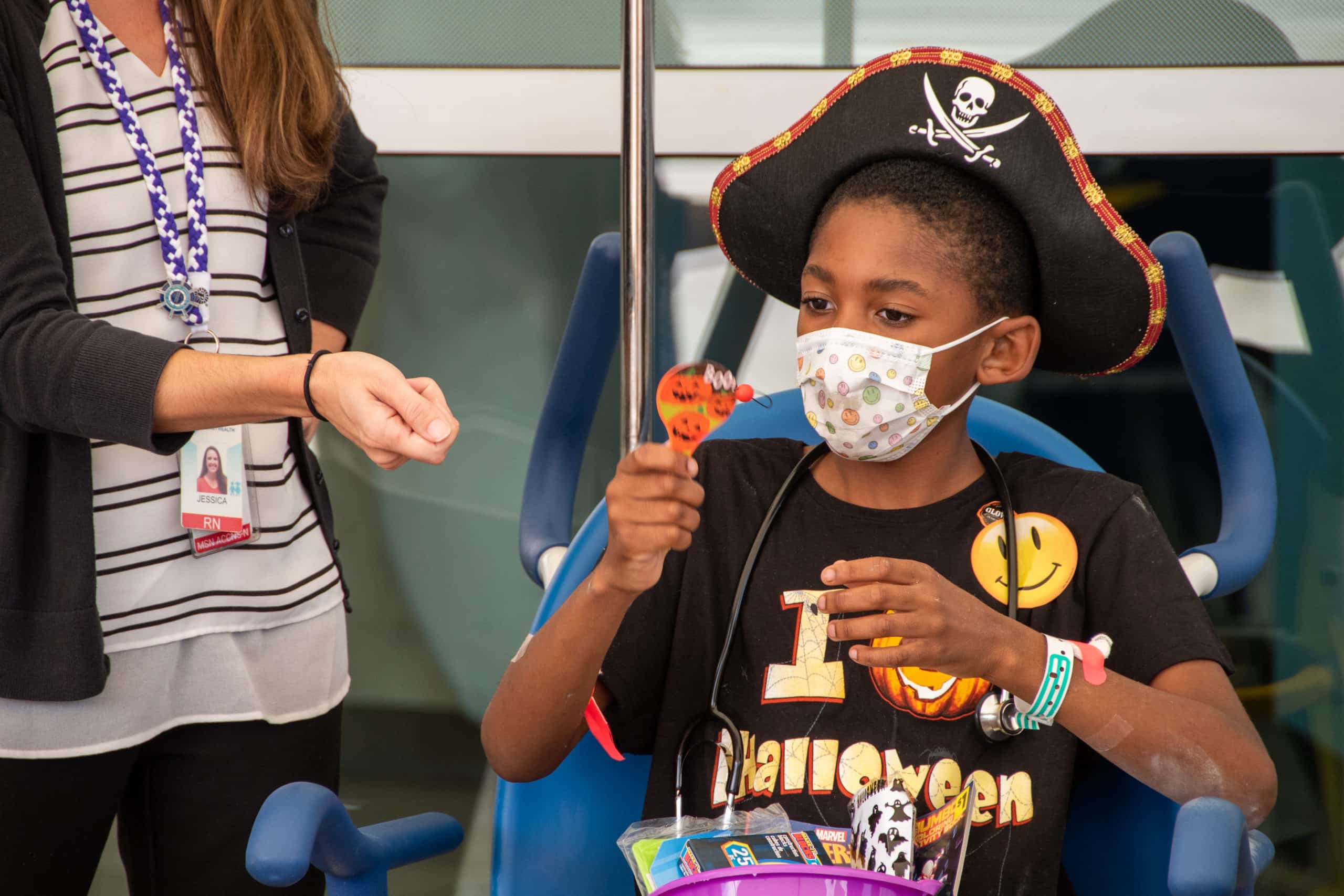
Patients had the opportunity to select a costume from those available in the Maynard Children’s Hospital and got to select a party favor, including books and other fun activities.
Chloe Williams, a Child Life intern who helped organize the event, said it was special to see the smiles on the faces of patients and families after the time spent planning.
“I think it’s great. I think it provides a sense of normalization to the hospital experience, because a lot of the time they don’t get to have a Halloween if they’re here,” Williams said. “Just to provide something that they can enjoy and the parents can enjoy, too, is a really special thing.”
Williams said it’s also something team members look forward to each year. Whether they are dressing up and riding along on a float or out in the sea of children, it’s a welcomed opportunity to see patients in their natural setting – enjoying time as a kid.















With an audience of more than 90 Brody School of Medicine at East Carolina University first-year medical students, leaders from ECU Health and Brody discussed the power of storytelling and narrative medicine during the 14th Annual Jose G. Albernaz Golden Apple Distinguished Lecture.
Narrative medicine is an increasingly popular technique that utilizes storytelling for health care providers to understand their patients as people and help process their own emotions around their work. At ECU Health, where compassionate care for patients and for the care team are foundations of how the organization meets its mission, the benefits of narrative medicine can make a difference in the clinical setting.
For first-year Brody students, the lecture provided an opportunity to learn about the value of narrative medicine so that they can apply it to their own education and future careers.
Dr. Christina Bowen, chief well-being officer of ECU Health, was once a first-year Brody student herself. In her opening remarks, she challenged students to take up narrative medicine early in their journey to becoming providers.
“The profession of medicine brings cases that will touch your hearts with much joy and sorrow. Write those stories down,” Dr. Bowen said. “These stories will be with you the rest of your medical career. Embracing the power and importance of these stories will support your emotional well-being and your growth into an excellent physician.”
Dr. Sharona Johnson, the nursing Advanced Clinical Practice administrator at ECU Health, served as the keynote speaker for the event. She said storytelling is key to understanding our humanity and helps leave a legacy for all people.
Dr. Johnson, who is a published author, is an advocate for narrative medicine – both to understand patients and as a well-being tool to get her own feelings down on paper.
“We’re learning that stories are important because we’re telling our stories,” Dr. Johnson said. “Physicians and health care professionals are writing books. We’re finding that our life has to have meaning. You can’t go through your life without thinking about, ‘Why am I here, what is the purpose, why is this patient sitting in front of me?’ It has to have meaning.”
Dr. Jason Higginson, chief health officer of ECU Health, said he received a written note from the first patient he gave a full clinical exam to in medical school. He said he can still picture himself in the exam room and remembers the patient frequently because of the heartfelt note the patient shared. He reflected that he wished he’d known more about narrative medicine as a young doctor so he could have captured more experiences like this from early in his career.
The relationship between ECU Health and Brody is important for many reasons. The opportunity for experienced providers to share valuable lessons with medical students in a clinical setting is one of the special benefits. Dr. Michael Waldrum, CEO of ECU Health and dean of the Brody School of Medicine, said the teaching offered at Brody and ECU Health stretches beyond the walls of the classroom.
“This was a really important lesson today for students and a great reminder for anyone already in health care,” Dr. Waldrum said. “Narrative medicine and storytelling help in many aspects. Brody School of Medicine concentrates on producing physicians that actually understand humanity. I’m really proud of that.”
Dr. Waldrum said that understanding humanity and human interaction is what led him to being a pre-med English major as an undergraduate.
Learning the humanities, he said, helped lay a foundation for him as a person and care provider. The lessons learned as an English major were reinforced in his first clinical rotation during his third year of medical school when a mentor told him to learn something from each patient, whether it is a personal or medical fact. He said that stuck with him and taking it into action paid off.
“That’s the story of humanity and history, understanding and respecting differences,” Dr. Waldrum said. “Stories are about history and looking backwards, but it’s also about creating an optimistic and positive future. That’s what we’re doing here: creating a new health system, evolving our school of medicine, always changing and making sure that we meet our communities needs and that we educate the best humans on the planet.”
The Albernaz Golden Apple Distinguished Lecture series is a great example of how ECU Health and the Brody School of Medicine collaborate to bring excellence in the clinical and academic setting for the betterment of eastern North Carolina.


Dr. Sy Atezaz Saeed
Contrary to popular belief, psychiatric disorders such as depression and post-traumatic stress disorder are just as common as other chronic conditions. About 11 percent of the U.S. population has been diagnosed with Diabetes, while in comparison 26 percent of the population has a diagnosable mental disorder per year.
Unlike other chronic conditions, there are few resources to treat mental illnesses in North Carolina, which is exemplified by the lack of behavioral health providers. Alarmingly, 42 out of 100 counties in the state have no psychiatrist or active behavioral health provider, leaving more than half of adults with mental illness without treatment options.
How did we get here?
In 2001, the state of North Carolina began to privatize mental health services by transitioning them from public area authorities to private provider groups. This transition meant private agencies would become solely responsible for caring for people with behavioral and mental health disorders as well as substance use disorders. For those without access to a local behavioral health professional or without the ability to pay for care, their only option is often the hospital emergency department (ED). In fact, one out of every eight ED visits is related to mental illness or substance use disorders. This puts more strain on EDs, which were not designed for this type of specialized care.
Working together
As a community, we need to work together to change the way behavioral health care is delivered in North Carolina. Solving the mental health crisis requires collaboration and partnership across a broad spectrum of services. One way ECU Health is doing this is through a joint venture partnership with Acadia Healthcare, a national leader in providing behavioral health services. Recently, we announced plans to build a state-of-the-art behavioral health hospital that is slated to open in spring 2025, pending regulatory approval.
In addition to serving adult patients, the new hospital will provide much-needed access to the behavioral health needs of children and adolescents, providing the only child and adolescent psychiatric beds within 75 miles of Greenville. Together, both ECU Health and Acadia will invest more than $60 million in expanding behavioral health resources.
Working in tandem with other partner organizations as a network providing a wide variety of treatment options can create a much greater impact than we’re able to on our own.
Everyone deserves access to high-quality health care, and ECU Health is committed to doing its part to offer vital behavioral health treatment to eastern North Carolina. While this partnership provides promise for those who are seeking behavioral health care, my hope is that we continue to find ways to partner in our communities and across the state to ensure our residents have access to the care they need to live healthy, fulfilling lives.
Sy Atezaz Saeed, MD, MS, FACPsych is Executive Director of the Behavioral Health Service Line for ECU Health, and Professor and Chair Emeritus of the Department of Psychiatry and Behavioral Medicine in the Brody School of Medicine at East Carolina University. He also serves as the Founding Director of the Center for Telepsychiatry at ECU and as the Founding Director of North Carolina Statewide Telepsychiatry Program (NC-STeP). Dr. Saeed has published more than 100 peer reviewed publications. In 2019, he was awarded the prestigious Gov. Oliver Max Gardner Award, the highest UNC award and selected by the UNC Board of Governors, which recognizes UNC system faculty who have “made the greatest contribution to the welfare of the human race.” To learn more, visit ENCBehavioralHealth.org.
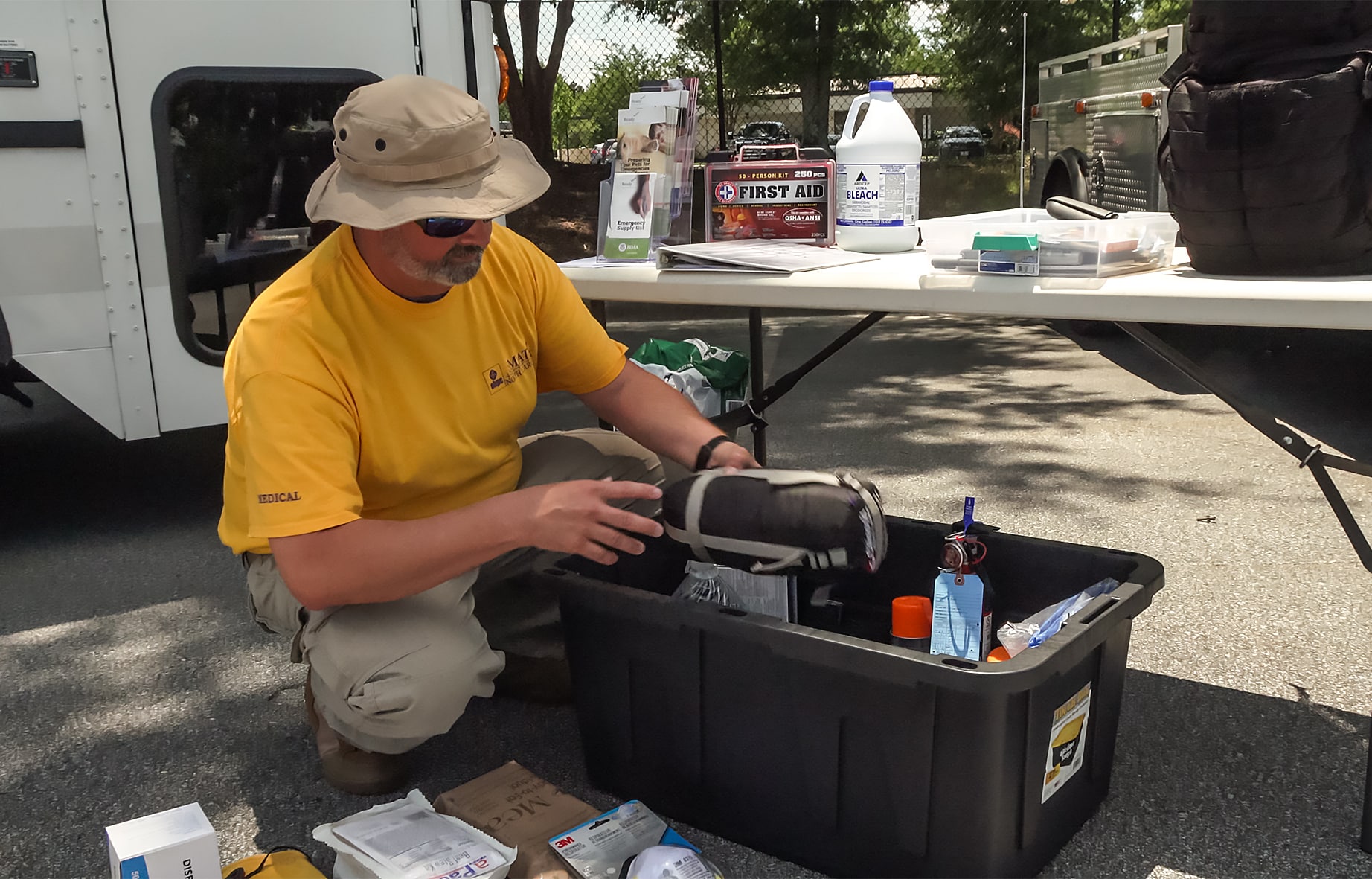
For the Eastern Carolina Healthcare Preparedness Coalition (EHCPC), being ready is part of the job.
“What we have here is our field communications support truck,” said Matt McMahon, disaster services specialist with EHCPC. “This is essentially the heartbeat of our mobile field hospital.”
From trucks that double as mobile hospitals to coordinating evacuations or the deployment of medical supplies, the coalition remains on standby for when emergencies strike or networks go down.
“So, if a hospital loses communication, whether it be phone, radio or internet, we can come and support them,” McMahon said.
The coalition provides a critical line of support, whenever and wherever it’s needed most. As they prepare for hurricane season, they want you to do the same.
“We want people to be prepared, and starting a hurricane kit is the first step in doing so,” said Chris Starbuck, health care preparedness coordinator for EHCPC.
A basic kit includes important items, like water, food and other supplies to last several days. Ready.gov is a federal government website with helpful information about how to properly prepare for a hurricane. Creating a plan that meets the specific needs of your household and building an emergency kit that contains at least 72 hours’ worth of supplies can help you stay adequately prepared for a natural disaster like a hurricane.
“Put all your important documents together – marriage certificates, birth certificates, wills,” Starbuck said.
Another item for your hurricane prep checklist – help others plan, too.
“Work with your neighbors, your communities, churches, because if we can prepare them, we can make a more resilient community overall,” Starbuck said.
Resources
Hurricanes can form quickly. Take the time now, before a hurricane impacts our region, to educate yourself on how to prepare and respond. Below are helpful links for federal and state websites:
- Ready.gov – Hurricane Information
- Ready.gov – Make a Plan
- Ready.gov – Build a Kit
- ReadyNC.org
- ReadyNC.org – Emergency Alerts
- ReadyNC.org – Evacuation Routes
- ReadyNC.org – Know Your Zone
Watch more ECU Health News videos

Dr. Michael Waldrum
When the new ECU Health brand was announced earlier this year, it was launched with a singular vision: to solve complex health care challenges preventing eastern North Carolina from realizing its immense potential. We know that a strong and vibrant health care system is necessary to grow and sustain healthy communities. Our region, which is home to 1.4 million hard-working people, faces disproportionate rates of chronic conditions – conditions that, when not managed early, result in high medical bills and financial hardship, particularly for those without insurance.
I am proud of the work we’ve done here in the East to create a premier academic health care system and none of this is possible without the incredible work by our health care professionals. They are living the ECU Health mission each and every day by purposefully delivering health care in our communities and training the next generation of health care professionals.
While we have much to be grateful for, it is also necessary to recognize the current state of health care across the nation, within all of North Carolina and here at home. Health systems and hospitals are facing financial challenges largely driven by the pandemic, labor shortages, inflation and market disruptions. Despite careful planning and the tireless efforts of our team members, ECU Health is facing the same unprecedented challenges as other health systems. Some of our current challenges stem from unexpected and extremely high labor costs in addition to the rising cost of supplies like medicine and equipment, which are significantly higher than they were just one year ago.
In rural regions like ours, navigating these realities is even more difficult. We already face a high burden of disease, a large geographical area where local providers and teams provide a literal lifeline to quality care and a large number of community members who don’t have access to adequate health insurance.
While we are making great progress in charting the future of health care in the East, the reality is our rural communities need immediate support from our elected officials on two fronts:
Medicaid Expansion: for years, ECU Health has consistently and vocally advocated for expanding Medicaid to support rural communities in North Carolina. Expanding Medicaid would increase access to high quality care for more than 500,000 North Carolina residents and provide coverage to treat chronic conditions, prevent illness and disease progression and support healthy, productive lives. It is the right thing to do for all of North Carolina and especially in rural communities where access to care is always a challenge.
Healthcare Access Stabilization Plan: health care across the state is also relying on state lawmakers to support this federal program that would provide North Carolina hospitals with up to $1.8 billion in funding. At no cost to the state, North Carolina can apply for this level of funding as a result of moving to Medicaid managed care. This program can help stabilize the financial well-being of rural hospitals as they continue to recover from the chaos of a worldwide pandemic.
As someone who has dedicated their career to health care, I know that in order to meet eastern North Carolina’s full potential, we must embrace the fact that a healthier community is a more economically vibrant community. It is imperative that we do not lose this opportunity to implement programs that will have life-changing impacts on so many North Carolinians. That is why it is vital that the General Assembly pass Medicaid expansion and move forward with HASP funding. Together, these efforts will help close the insurance gap, provide care for our most vulnerable community members, lower medical bills, bring much-needed dollars to the state and allow health systems and hospitals to continue to provide high-quality care to those who depend on it.
Michael Waldrum, MD, Chief Executive Officer, ECU Health

Greenville, N.C. – ECU Health hospitals have received several American Heart Association/American Stroke Association Get With The Guidelines® achievement awards for their work in treating stroke, diabetes, cardiac arrest, heart attack, and heart failure.
These awards recognize the hospital’s commitment to ensuring patients receive the most appropriate treatment according to nationally recognized, research-based guidelines based on the latest scientific evidence.
“ECU Health’s recognition by the American Heart Association/American Stroke Association through the Get With The Guidelines® awards further demonstrates our commitment to providing high quality care across the region,” said Teresa Anderson, PhD, RN, NE-BC, senior vice president of quality at ECU Health. “Meeting our mission to improve the health and well-being of eastern North Carolina is about creating solutions for chronic conditions that affect so many in our communities, from children, to adults, to the elderly. I am proud of the care teams recognized for their work in delivering excellent care.”
ECU Health hospitals receiving recognition include:
Hospital
Program
Awards
Stroke
Gold Plus
Target Type 2 Diabetes Honor Roll
Stroke
Gold Plus
Target Stroke Elite Plus Honor Roll
Target Stroke Advanced Therapy Honor Roll
Target Type 2 Diabetes Honor Roll
Stroke
Gold Plus
Target Stroke Elite Honor Roll
Target Type 2 Diabetes Honor Roll
“We are incredibly pleased to recognize ECU Health for its commitment to caring for patients with stroke,” said Steven Messe, M.D., chairperson of the Stroke System of Care Advisory Group. “Participation in Get With The Guidelines® is associated with improved patient outcomes, fewer readmissions and lower mortality rates- a win for health care systems, families and communities.”
Stroke, diabetes and cardiovascular disease, which includes heart failure, heart attack and cardiac arrest, are among the leading causes of death in the nation. Cardiovascular disease claims more lives each year than all forms of cancer combined and is a major cause of disability.
The American Heart Association considers diabetes one of the eight major controllable risk factors for cardiovascular disease (CVD). In fact, people living with Type 2 diabetes are two times more likely to develop and die from cardiovascular disease, such as heart attacks, strokes and heart failure than people who don’t have diabetes.
According to the American Heart Association/American Stroke Association, stroke is the No. 5 cause of death and a leading cause of adult disability in the United States. The severity and likelihood of having a stroke in North Carolina is significantly higher than the rest of the country as a whole.
“These awards are another proud moment for the ECU Health system as it earns the recognition from American Heart Association/American Stroke Association for providing a high level of stroke, diabetes and cardiac care,” said Dr. Niti Armistead, chief medical officer, ECU Health. “We are proud of our care teams for demonstrating best practices and delivering life-saving care for the patients we serve. These awards are a testament to team members across the region who embody ECU Health’s commitment to improve the health and well-being of eastern North Carolina.”
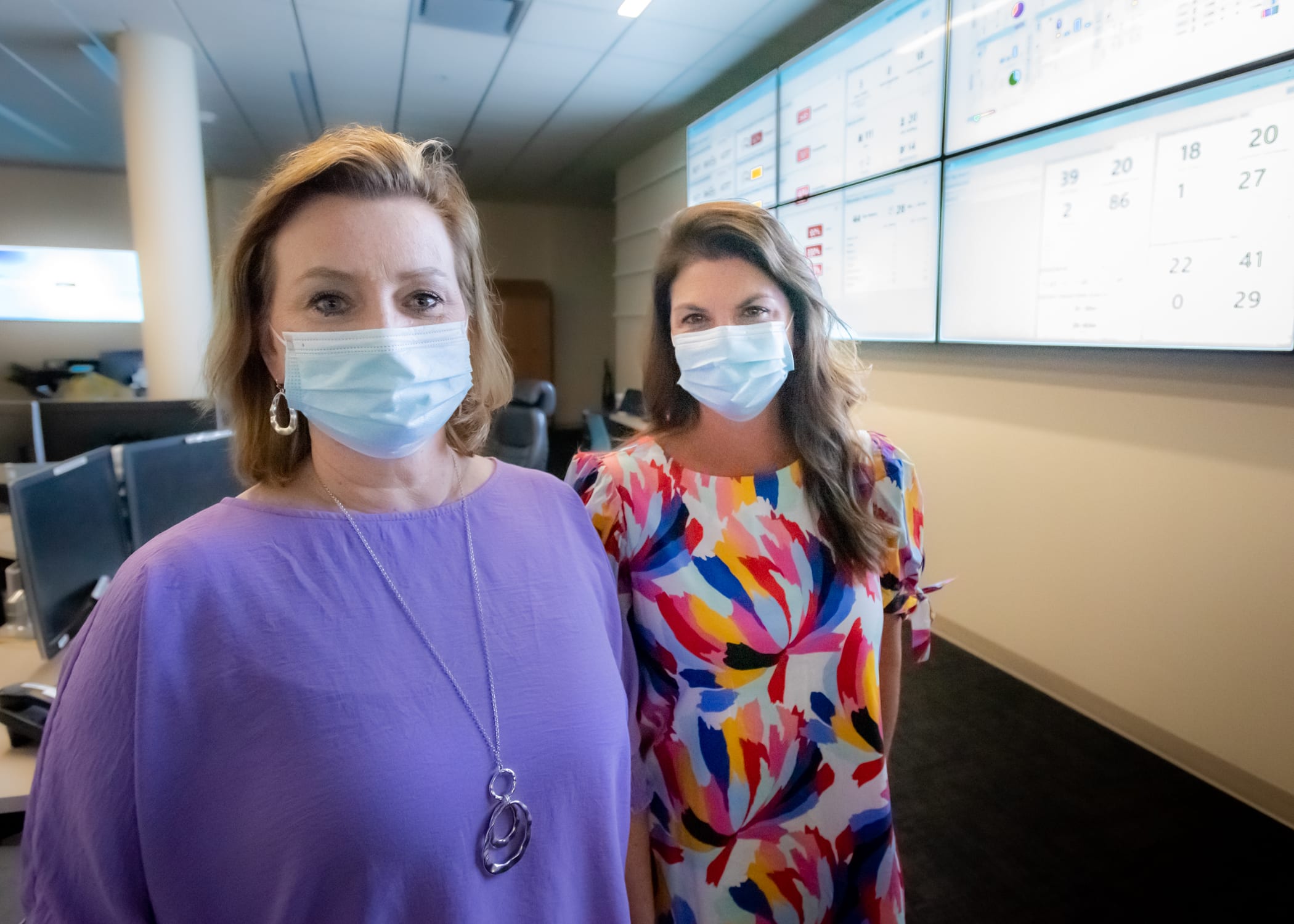
ECU Health is proud to announce that the North Carolina Healthcare Association (NCHA) awarded Melanie Porter, administrator of hospital operations, and DeAnna Edwards, manager of hospital operations, the Healthier Communities award for their work in the Statewide Patient Movement Coordination Team. This award recognizes collaborative work by NCHA member organizations to promote health and well-being by addressing an identified community need.
COVID-19 has put a strain on health care systems across the globe and here in North Carolina. Throughout the pandemic, hospitals and health systems have worked tirelessly to advance new approaches to promoting more equitable health outcomes for patients, families and communities. Among these innovations, the Statewide Patient Movement Coordination Team emerged.
The Statewide Patient Movement Coordination Team is a group of individuals at transfer centers across North Carolina who have worked tirelessly during the pandemic to ensure critical patients needing higher levels of care were transferred or those facilities given additional clinical support.
As part of this team, Melanie and DeAnna are both dedicated to living the ECU Health mission of improving the health and well-being of eastern North Carolina. Through their work, they ensure patients have quality care and are connected to the level of care and resources needed.
The Statewide Patient Movement Coordination Team assisted 35 facilities not formally connected with the 13 transfer centers across the state who had critical patients needing higher levels of care.
In total, this team reviewed 765 patient movement requests during the Delta and Omicron surges of COVID-19.
Please join us in recognizing Melanie and DeAnna for representing ECU Health and making a difference in the lives of those we serve.
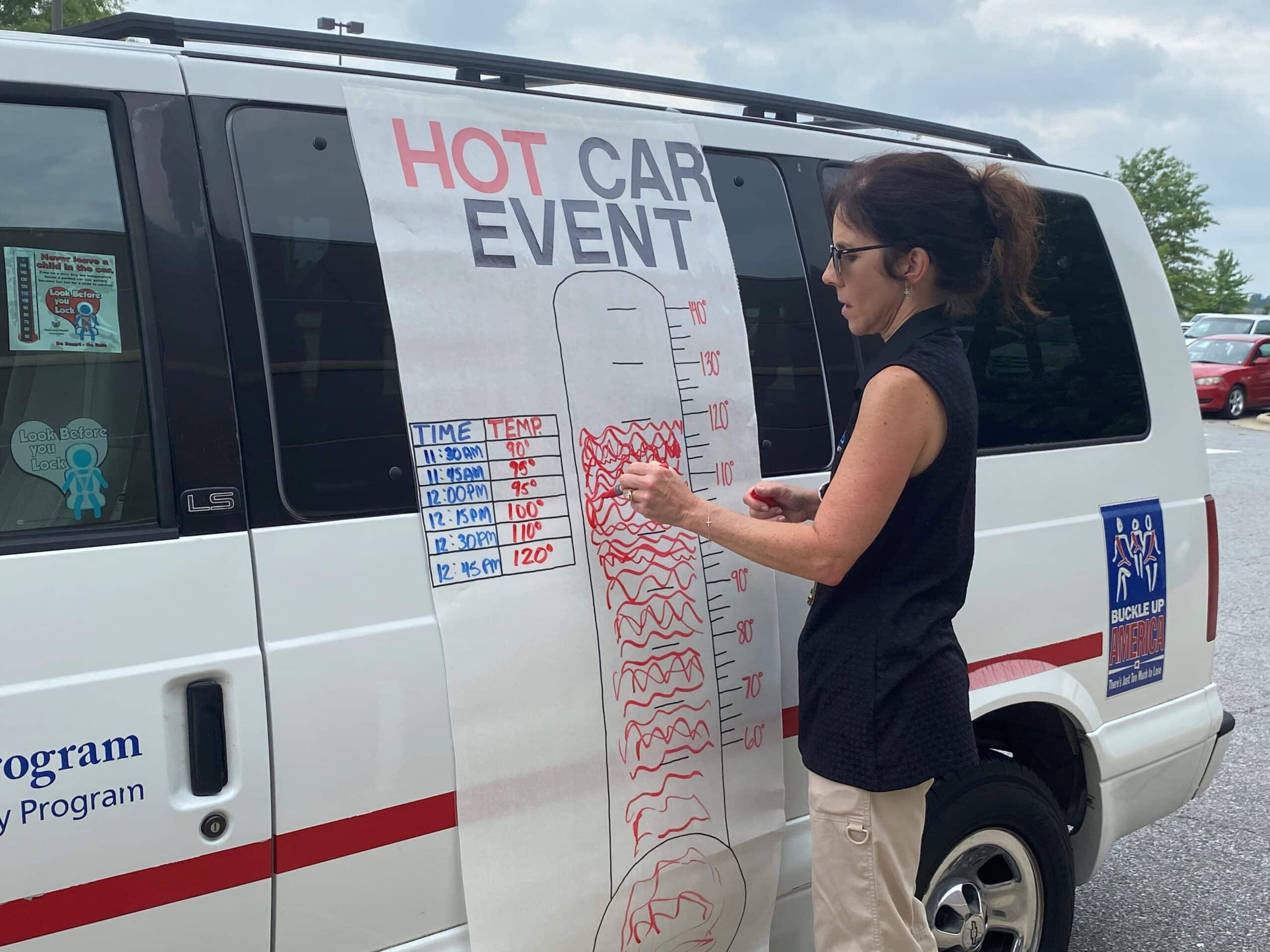
Leaving a child, senior or pet behind in a car can pose serious danger, even if it’s just for a few minutes.
That was the message of the hot car safety event hosted by Ellen Walston, Injury Prevention Program coordinator at ECU Health Medical Center, along with the Pitt County Health Department and the Martin-Pitt Partnership for Children.
Walston said it’s dangerous for anyone to be left alone in a vehicle because of how quickly they can heat up, but especially for children.
“Children’s bodies heat three to five times more quickly than adults,” Walston said. “They all have a smaller amount of body surface so they can’t cool themselves very quickly. A small child, like the families we’re serving today, they can’t verbalize when they’re thirsty if they’re under a certain age. You really have to be very careful. The message is never leave a child alone in a car, not even for a minute.”
The team had a demonstration with temperature gauges and s’mores roasting in a vehicle on an 80-degree day, one of the coolest days in recent weeks in eastern North Carolina. Despite the cooler than normal temperatures, the interior of the van rose to 90 degrees within 15 minutes, over 100 degrees after an hour, and approached 120 degrees in an hour and a half.
The s’mores demonstration showed how quickly things can literally cook inside of a car when left alone.
“As you see we have this temperature gauge here and just in the last 15 minutes, it’s already gone up 10 degrees,” Walston said. “This is a white car with light interior, and with a dark car and dark interior it can heat the car more quickly.”
Walston noted that there have already been 10 deaths across the country this year from children left alone in cars. In North Carolina, we have seen one this year and another in neighboring Virginia.
She said more than 50 percent of child deaths from hot cars are from children that have been forgotten in vehicles. She said children can be forgotten when routines are broken and leaving something like keys, your cellphone or a briefcase in the backseat next to the child is a safe way to ensure the child is not left alone.
According to Walston, about 17 percent of hot car fatalities are children that are intentionally left behind. She said no amount of time is safe for a child to be left alone, even with windows cracked.
“Many times folks think that, I’m just going into the store for a few minutes, but anything could happen inside, you could become distracted and forget the child,” Walston said. “There is a misnomer that if you crack a window and that will offer some less heat, but that really is a myth. It doesn’t affect the temperature of the car.”
As a rural health care organization, we know there are many challenges to fostering a healthy community. That doesn’t stop ECU Health team members from finding creative solutions to bring health care outside the walls of our hospitals and clinics in eastern North Carolina and into the communities we serve.
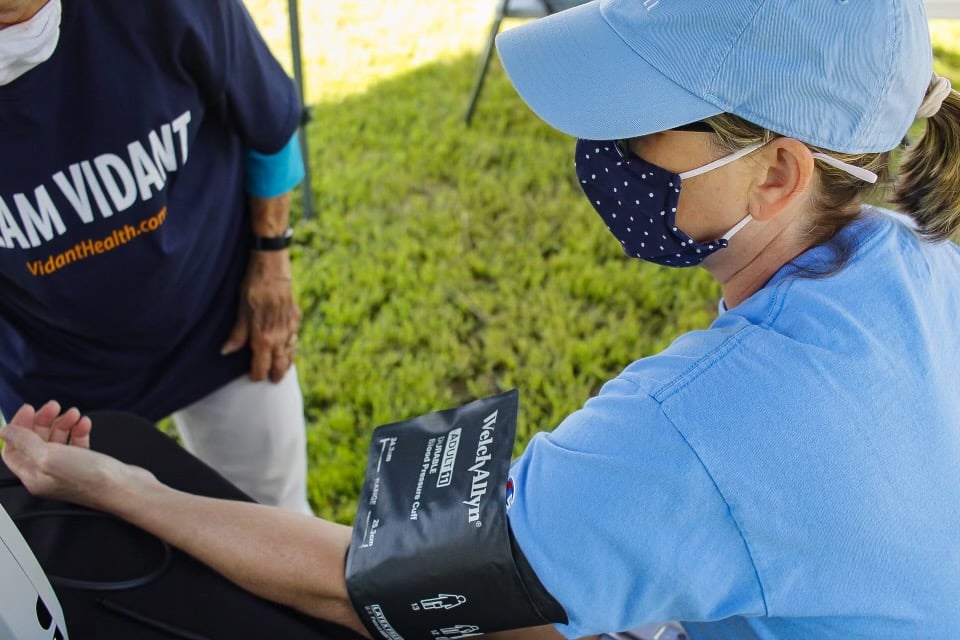
KaSheta Jackson, DNP, RN, vice president of Health Equity and Social Impact at ECU Health, and her team developed Community Pop-Ups: A Rural Approach, an innovative health care delivery model implemented as community-based pop-up clinics across eastern North Carolina to address social and economic health care barriers.
This program makes health care both more accessible and approachable by directly providing preventative services, improving health care equity, and offering resources within communities with the greatest need.
Jackson was recognized earlier this year by the American Nurses Association (ANA) and the American Nurses Foundation (the Foundation) as the recipient of the 2022 ANA Innovation Award. The ANA Innovation Awards highlight, recognize and celebrate exemplary nurse-led innovations that improve patient safety and health outcomes. The innovation award also generated a $25,000 grant, which will fund future community health events.
Jackson said nurses are on the leading edge of connecting their fellow community members to health care and should feel empowered to innovate in that space.
“Our innovation has empowered many nurses to think and behave differently with regards to changing health care delivery and where care is delivered,” Jackson said. “By aligning the community and the health care system, we are addressing social, economic, equity, and population health, allowing us to meet our mission of improving the health and well-being of eastern North Carolina.”
Through partnerships with community leaders and other ECU Health team members, these clinics have evolved from solely offering health care screenings to providing COVID-19 testing, vaccinations, mental health resources, access to fresh produce and employment opportunities.
In 2021 alone, Community Pop-Ups provided care to more than 400 community members, identified acute diseases, provided numerous jobs, gave away 500 produce boxes, and delivered 500 health passports in rural locations across eastern North Carolina.
“We are following the model of doing health care on the outside to make health care better on the inside,” Jackson said during a July 2021 community health event in Farmville. “We’re working to address the social determinants of health, offering employment, trying to take care of the need for vaccines, taking health care into communities versus having people come to us – we’re taking services to those that need them.”
As these pop-up events evolve and grow, Jackson hopes they will help create a healthier eastern North Carolina, strengthen ties between community organizations and improve relationships between community members and health care providers.
“I am so excited to see our innovation become reality,” Jackson said. “The advice I would give to any nurse who wants to take their innovations from just an idea to action: be inquisitive, be nosey, ask questions, listen and it will be easy to make it happen.”
This is just one example of how Jackson and her team break down barriers to bring health care to the communities we serve. ECU Health also hosts a myriad of community events including: a foot clinic with Joy Soup Kitchen and Access East, which gives free foot care supplies to diabetic patients who visit the event, over-the-counter medication giveaways and Kids Eat Free with Sodexo, which provides free lunches and afternoon snacks for kids and teens up to age 18.
For more information, visit the Pop-Up Community Health Events page on our website.