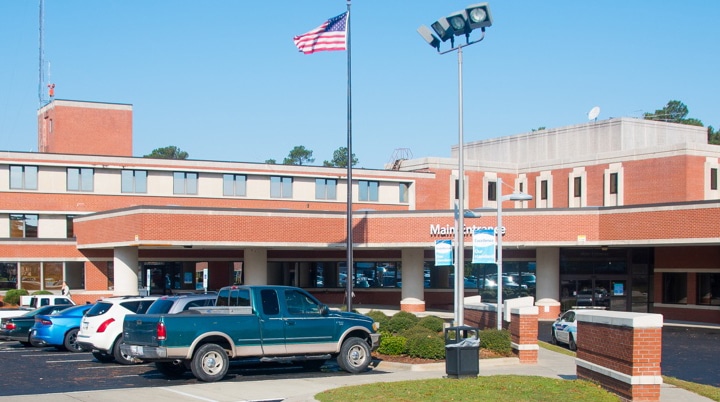
Kenansville, N.C. — The Centers for Medicare & Medicaid Services (CMS) recently announced that ECU Health Duplin Hospital received a 5-star rating in the Physician Communication category.
CMS uses the Hospital Consumer Assessment of Healthcare Providers and Systems (HCAHPS) Survey to determine and publicly report star ratings for 10 measures regarding patient experience — communication with doctors is one of the measures. The HCAHPS survey is administered to a random sample of patients after their hospital stay and consists of 29 questions. The physician communication star rating is determined using three questions that focus on how well patients feel their doctors listened carefully, explained things and treated them with courtesy and respect.
“Our community is fortunate to be served by such a knowledgeable and caring group of providers,” said Dr. Chad Kornegay, chief of the medical staff, ECU Health Duplin. “I’m proud of our team and the fact that we were one of seven North Carolina hospitals recognized for physician communication and one of 357 hospitals recognized nationwide.”
“The providers here at ECU Health Duplin Hospital are some of the best in the country and they have truly earned this five-star rating,” said Jeff Dial, president of ECU Health Duplin. “Our team has set a high standard of performance for themselves and it is no surprise that we are seeing these results. They provide high-quality, respectful and compassionate care to every patient, every day.”
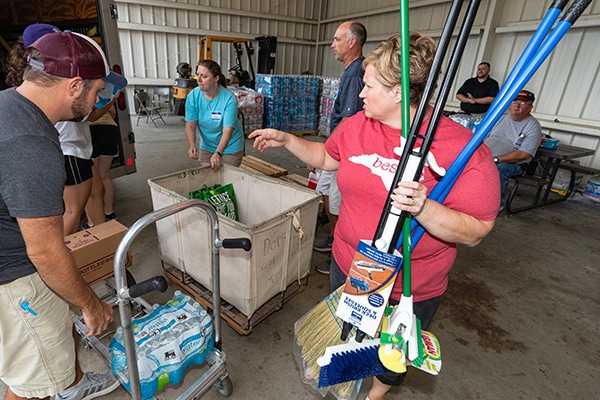
A 2008 alumnus of the Brody School of Medicine at East Carolina University and current ECU Health physician detailed his experiences as a doctor in rural and underserved eastern North Carolina during a July 12 webinar.
ECU Health Duplin Hospitalist Director Jon Kornegay presented “Perspectives on Underserved Care: Being a Physician in Duplin County” through the ECU Global Health and Underserved Populations Program. He also serves as ECU Health Duplin vice chief of staff and Duplin County EMS medical director.
A native of Duplin County and part of a family of physicians, Kornegay has served Duplin County since 2012, creating the hospitalist group that has increased local patient volume and kept Duplin County residents closer to home for quality care. He was named one of ECU’s 2022 “40 Under Forty” honorees.
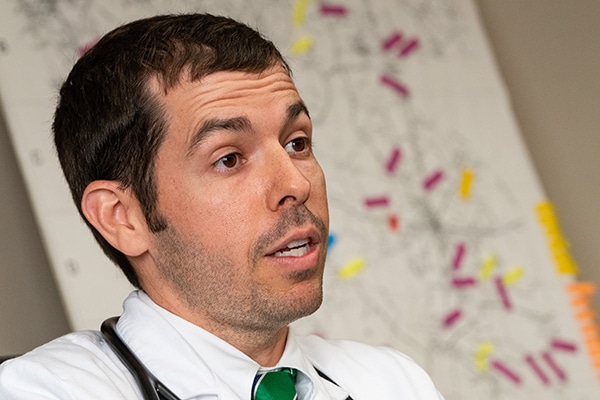
Kornegay began the talk by saying he reminds medical students and residents that practicing medicine in an underserved area is a unique experience that can enhance their views of medicine.
“It’s a good thing, at some point in your career, to spend a little bit of time in community hospitals,” he said.
Kornegay guided the audience through details of the challenges of health care delivery in a rural county, the expertise of his colleagues that blend to provide a more complete level of care to patients and how ECU Health Duplin, in Kenansville, has grown over the years. He also detailed how the Brody School of Medicine has influenced the approach to care.
Duplin County is nearly two hours from Greenville, with a population of around 50,000, making it a target area for Brody’s mission to serve rural eastern North Carolina and underserved communities.
“Brody had several mission statements when it was developed,” Kornegay said, “and one of the main mission statements was to train providers for eastern North Carolina. Primary caregivers are a really big issue, and we hope we’re addressing that somewhat.”
Kornegay said the health care landscape and its indicators — including that many providers are near or at retirement age — mean recruitment to rural communities needs to increase. Other challenges include patient insurance coverage and the geographical access to complex care facilities.
Kornegay praised ECU Health Duplin’s strong ties to the Brody School of Medicine, including current students and residents as well as seasoned physicians.
“We take kind of a plethora of Brody learners,” he said. “We have third- and fourth-year residents that come to do community rotations with us. This past year, we’ve also started taking ECU rural family medicine residents. All of our attendings have interactions with Brody learners and are kind of staying connected.”
Kornegay’s brothers, who also practice in eastern North Carolina, went to medical school or completed residencies through Brody. Chad Kornegay helped start the medical group in Duplin County in 2010.
“My dad’s been a family practitioner in the area for over 50 years,” Kornegay said, adding that his father retired a few years ago.
The family ties also help build a sense of kinship among the professionals that has resulted in a steady increase in patients served and a reputation for quality care.
In 2011, Kornegay said, there were 5,800 patient encounters through ECU Health Duplin; over the past three years, that number has stayed around 15,500.
“So we’ve almost tripled the service there in about 12 years,” Kornegay said. “We’ve grown the service quite a bit. As a pretty strong group clinically, we’ve had a lot more of a comfort level taking patients than they previously had had here.”
Kornegay shared firsthand accounts of what it was like to be a rural physician in a large, rural county. He told stories about bad car accidents, deliveries of premature babies,
and other emergencies that are made more challenging by remote locations. He also shared his experiences serving during several hurricanes that rendered many areas of Duplin County as islands.
Hurricane Matthew in 2016 presented Kornegay with an opportunity to adopt new skills for future storms.
“I grew up in Duplin County, so I’m used to kind of being around tropical storms and hurricanes,” he said. “But we had never seen anything like this in my lifetime, the amount of water that we got with Hurricane Matthew. And so that presents some challenges, some unique challenges, for us in the health care delivery at the county.”
That experience helped prepare Kornegay and other providers for unforeseen circumstances — and for continuing to live and work the mission of Brody and ECU Health to serve rural eastern North Carolina through challenges from geographical access to natural disasters.
“We really as a county had not recovered from Matthew before Florence came,” he said of the 2018 storm. “We had kind of rehearsed a little bit with Matthew, but one of the things we learned during Florence is you can try to prepare for everything, but you can’t. So you’ve got to be ready to modify and change your game plan when data changes and things change a little bit. When you get that curveball, you may have to pivot a little bit.”

In April 2023, VCU Health in Richmond announced an inaugural chief nursing officer position. The 13-hospital McLaren Health Care system in Michigan did the same June 1, as did the WVU Health System in June 2022.
Closer to home, ECU Health announced in November 2022 that Trish Baise would assume the role as the system’s first chief nurse executive.
What these newly established positions seem to show is a recognition by major health care systems of the importance of having business-savvy nurses in leadership positions to help bridge the realities of hospital administration with the life and death demands at the bedside.
A new dual program offered by the East Carolina University College of Nursing, in partnership with the ECU College of Business, aims to empower nurses with the tools to advance up the ranks in executive leadership and health system administration. Graduates of the program will receive a Master of Science in Nursing and a Masters of Business Administration (MSN-MBA).
Bimbola Akintade, dean of the College of Nursing and an MBA graduate, understands the benefit of having nurses empowered to lead in health care administration.
“As we navigate unprecedented nursing shortages, nurse leaders with health care economics and health care finance acumen are important to advocate for the profession and to partner with health care administrators to properly assess the nursing needs of health systems, and to make fiscally responsible decisions regarding staffing and other financial investments,” Akintade said.
“Bringing their clinical backgrounds and leadership knowledge to the table, they will improve communication of financial decisions that impact nursing practice and direct patient care between administrators and bedside nurses. In addition, this knowledge will help graduates of the dual MSN-MBA program contribute meaningfully to the nursing workforce development solutions that will positively impact the health and well-being of residents of our region and beyond.”
The program
Students in the online program will graduate with a Masters of Nursing Science in health system leadership and a Masters of Business Administration, a potent combination of qualifications that will help graduates tackle long-term challenges in health care administration. Twelve semester hours will count toward both degree programs.
The first semester of the program will have students focus on business, the second semester will veer back into nursing coursework, and the remaining year and a half of students’ time will be blended.
Thompson Forbes, ECU assistant professor of nursing and one of the program’s directors, said the goal of having students complete the two degrees in tandem is to give them knowledge and skills they can use to bridge the cultural gap between frontline nurses and hospital administration, not making nurses into accountants.
Communication, Forbes said, may be one of the biggest problems facing health care systems — the legion of credentialed health care professionals in scrubs and lab coats don’t often speak the same language as the administrators and analysts in suit coats and dresses.
“We need to have leaders who can understand health system organizational theory, nursing theory and nursing evidence-based practice, and then pair that with an understanding of finance, accounting and marketing. They will be better prepared to translate decisions that are made in the clinical environment to business environment and vice versa, so the systems can be more efficient,” Forbes said.
Linda Quick, assistant dean of ECU’s Thomas D. Arthur Graduate School of Business, is new to the partnership’s leadership, but her experience in business administration gives her a good sense of the balance between health care and business the program’s students will need to be effective after graduation.
“As businesspeople, we don’t want to make clinical decisions,” Quick said. “But at the end of the day I only have so many dollars. So where do I want to spend that money, how can I best use my investment?”
Quick said the fallout from the COVID-19 pandemic shined a spotlight on the stresses health systems already faced in managing nursing resources. Hospitals were forced to invest heavily in travel nurses, who command significantly more money than staff nurses. This imbalance stresses the hospital’s wallet and can foster mistrust between nursing staff members and the administrators of the health systems who are trying to keep the doors open.

“You have to think about your customer, and in the hospital your patient is, in essence, your customer. The nurses are the ones who have that frontline time and know the customers best. Their perspective is going to be important for leadership,” Quick said.
The dual MSN-MBA program isn’t the first in the nation, but the pool of schools that offer a similar paring is small. Quick thinks that having this program as an option for potential students is a win for the region.
“This might plant the seed for someone who down the line is either going into hospital administration or looking at having their own practice,” Quick said.
Potential students
Brian Floyd, president and chief operating officer of ECU Health Medical Center, the system that services much of eastern North Carolina, believes that anyone can succeed in health care system leadership, but nurses have a particular propensity to be effective leaders. They know how hospitals work from the ground up and experience how the parts of a hospital come together as a whole. Also, the trust that nurses inherently build with patients and coworkers is rooted in practical awareness of how leaders come to their decisions.
“Nurses tend to be empathetic, and this also helps gain trust and confidence as a leader,” Floyd said. “Nurses typically do not present a power gradient with physicians and are more likely to act in a supportive and collaborative relationship.”
Forbes hopes to entice potential students with an opportunity to learn how to fill the dual role of nurse leader and business administrator. Forbes and his team conducted an informal poll with potential students and of about 40 who were asked, 37 said they would be very interested in the coursework. One student was already motivated enough to work out the logistics of applying to both colleges — nursing and business — to carve out his own course of study that the dual degree program will resolve for future applicants.
“It’s a heavy course load — two courses a semester, every semester including both summer sessions. But you can finish it up in 2 1/2 years,” Forbes said.
While demanding, Quick said the completely online nature of the MBA portion of the partnership should offer prospective students the flexibility needed to balance work and home life. Faculty from both colleges have a framework in place to help students manage coursework, but the flexibility in the individual programs should meet students’ individual needs.
“We offer our MBA courses in the summer and in eight-week blocks during the regular semester. Students really have a lot of options from the MBA coursework side to figure out what fits in best with their schedule,” Quick added.
Support for health care systems
Forbes said nursing will always be the largest line item on any health care system’s budget because nurses are the most patient-centric, and patient-intensive, members of the workforce in hospital and most healthcare settings.
“Instead of just striking numbers from a budget, there needs to be someone who can interpret and say, ‘We can handle this much efficiency gain on the business side, but that savings is going to result in a reduced level of quality of care at the bedside,’” Forbes said.
When conversations between the health care workforce and administration on how to balance patient care with keeping the lights on don’t happen, Forbes said distrust naturally festers. Advanced practice nurses with business administration education can foster “an environment of understanding amongst everybody.”
Floyd agrees with Forbes’ assessment that nurses who understand business can help build consensus and confidence in an administration’s business decisions.
Having familiarity with frontline operations is critical in determining what is important in helping shape the strategy of organizations. At the same time, influence to lead others to adopt the strategy is enhanced when the workforce appreciates that the leader has experience in direct patient care and is empathetic to their work, Floyd said.
Modern health delivery systems aren’t humanitarian organizations, but rather must compete as other complex business operations do, he said. As a registered nurse, Floyd understands the importance of having nursing staff who can speak the language of business.
“The skills obtained in MBA programs include data interpretation, financial and operational management, and leadership and organizational management, and the curriculum has been refined over years of volatility. The modern healthcare leader can benefit from decades of learning from business industries and apply those practices in the healthcare environment as it continues to evolve,” Floyd said.

Ahoskie, N.C. – ECU Health Roanoke-Chowan Hospital has earned recertification as a primary stroke center by The Joint Commission and the American Heart Association/American Stroke Association, recognizing the hospital’s preparedness and expertise to care for stroke patients.
“I am proud of ECU Health Roanoke-Chowan’s team members and their commitment to provide high-quality stroke care to our patients and community,” said Brian Harvill, interim president of ECU Health Roanoke-Chowan, president of ECU Health Chowan Hospital and ECU Health Bertie Hospital. “Our hospital’s stroke recertification as a primary stroke center from The Joint Commission – and stroke readiness at each ECU Health hospital – represents ECU Health’s dedication to bringing a comprehensive stroke network to care for all patients across eastern North Carolina.”
Stroke is a leading cause of death in North Carolina and the leading cause of long-term disabilities. As a primary stroke center, ECU Health Roanoke-Chowan can treat and stabilize patients experiencing an acute stroke and care for more complex cases. Located in Ahoskie, North Carolina, ECU Health Roanoke-Chowan serves a rural community and is the closest emergency department for surrounding communities. As a resource for emergency care, ECU Health Roanoke-Chowan’s recertification ensures local community members have access to timely stroke care and extends the comprehensive stroke network capable of meeting the needs of all patients across eastern North Carolina.
The likelihood of having a stroke in North Carolina is significantly higher than the rest of the country as a whole. North Carolina is about 8 percent worse for stroke mortality than the national average, and in eastern North Carolina, that risk is even greater.
“Time is the most important factor when treating a stroke, so it is critical to provide stroke care close to home,” said Dr. Barry Bunn, regional emergency department medical director, ECU Health. “With eastern North Carolina’s high rates of stroke, ECU Health Roanoke-Chowan’s stroke recertification, combined with a network of stroke readiness at all ECU Health hospitals, reduces the time of treatment, the risk of mortality, permanent brain damage and other side effects including memory loss, difficulty speaking and potential paralysis.”
During the certification process, ECU Health Roanoke-Chowan was evaluated on performance measures in stroke care, including education for patients and families on stroke risk factors and recognizing symptoms of stroke. Other performance measures included staff education on stroke protocols and the appropriate prescription of medications to address stroke risk factors such as elevated cholesterol and blood pressure.

Roanoke Rapids, N.C. – The Joint Commission and the American Heart Association/American Stroke Association has recertified ECU Health North Hospital as a primary stroke center by recognizing the hospital’s preparedness and expertise to provide timely and high-quality care for stroke patients.
“I am grateful to our team members across all levels and services for their commitment and diligent work that allows ECU Health North to continue to be designated a primary stroke center,” said Jason Harrell, president of ECU Health North Hospital. “Providing high-quality stroke care close to home is central to our mission of improving the health and well-being of eastern North Carolina. We are proud to be part of the top-notch neurological services provided at ECU Health across the region, which includes a strong network of expert stroke care.”
Stroke is a leading cause of death in North Carolina and the leading cause of long-term disabilities. According to the North Carolina Department of Health and Human Services, both Halifax and Northampton counties have higher incidences of strokes compared to the North Carolina average. As a primary stroke center, ECU Health North can treat and stabilize patients experiencing an acute stroke and care for more complex cases. As part of stroke readiness by all hospitals in the ECU Health system, this certification is symbolic of a comprehensive stroke network capable of meeting the needs of all patients across eastern North Carolina.
The severity and likelihood of having a stroke in North Carolina is significantly higher than the rest of the country as a whole. North Carolina is about 8 percent worse for stroke mortality than the national average, and in eastern North Carolina, that risk is even greater.
“Immediate treatment of strokes can minimize the long-term effects of a stroke and even prevent death,” said Dr. Barry Bunn, regional emergency department medical director, ECU Health. “With our region’s high rates of stroke and mortality from stroke, ECU Health North’s stroke recertification demonstrates our proven results of reducing the time of treatment, risk of mortality, permanent brain damage and other disabilities.”
During the certification process, ECU Health North was evaluated on performance measures in stroke care, including education for patients and families on stroke risk factors and recognizing symptoms of stroke. Other performance measures included staff education on stroke protocols and the appropriate prescription of medications to address stroke risk factors such as elevated cholesterol and blood pressure.
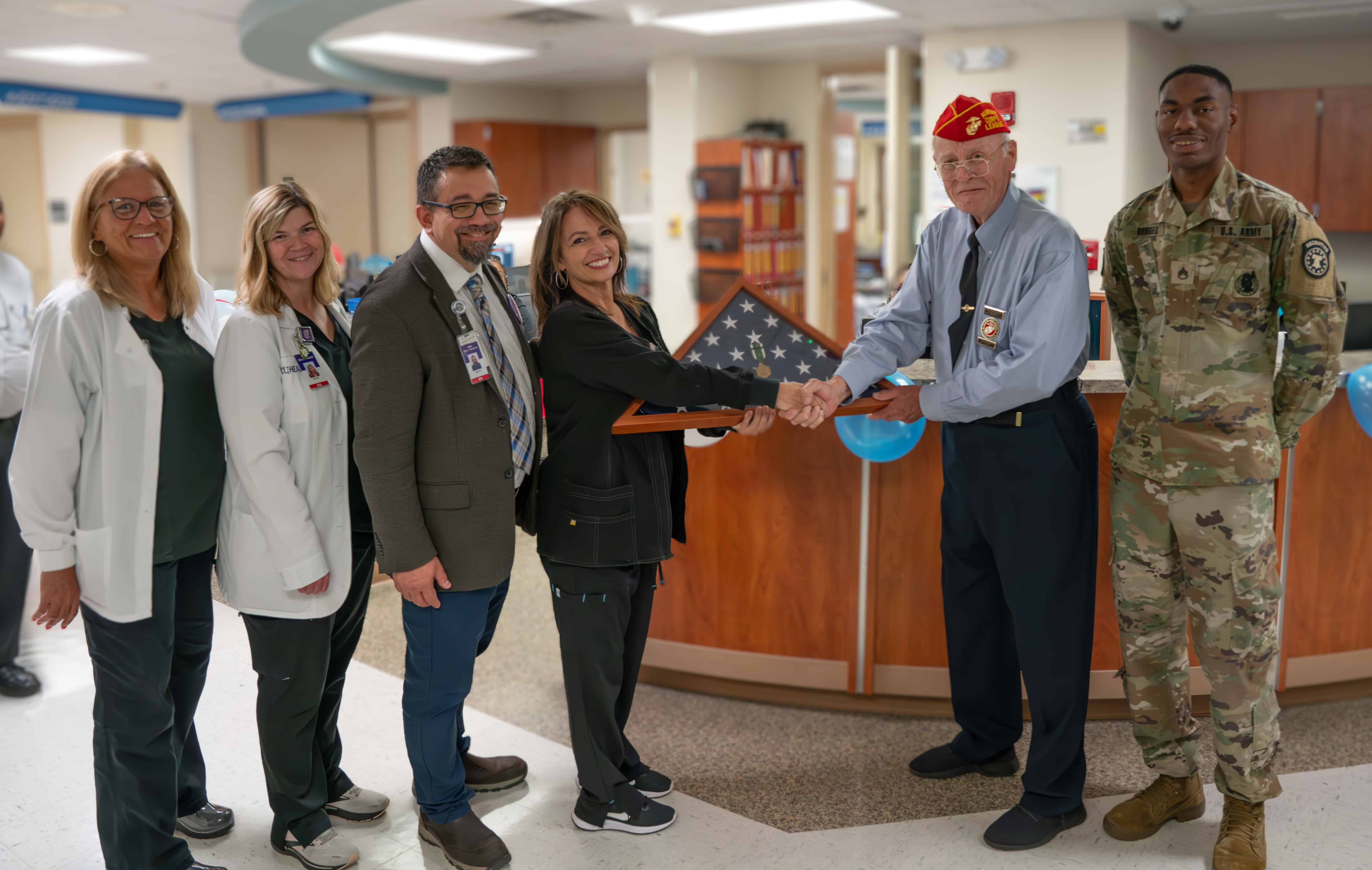
On a February morning, Vietnam veteran Lee Pascasio sat in his brother-in-law’s room on 2 East at ECU Health Medical Center. As Melissa Warren, a nurse on the unit, checked on Willis Johnston Stancill she noticed his blood pressure was spiking, and the team sprung into action.
Pascasio said he watched in silence as the team went to work saving Stancill’s life. He said he’d seen that kind of teamwork before in his time as a Marine. The experience moved Pascasio to gift his Navy Commendation Medal, earned during his service in Vietnam, to Melissa Warren and the rest of the 2 East team. Now, it hangs in the hall of the unit on top of the stars of the American Flag for all to see.
“This is such a great team,” Warren said. “It’s such a well-oiled machine, it’s like we’re dancing almost when something crazy like that happens. It’s not like you have to ask somebody to do something. We just kind of do it, that’s the team. If something happens, the troops are coming in.”
A Medal Earned
Pascasio recalled his time in Vietnam vividly. During his second tour in Vietnam, Pascasio said at 25 years old he was an old man compared to the rest of the First Battalion, Ninth Marine Unit, where he served as sergeant, specializing in explosives.
On June 30, 1969, Pascasio said he was at Vandegrift Combat Base with the Ninth Marine Unit and another platoon in Vietnam. That day, rockets and mortars began to hit the battalion without warning. A lieutenant was killed in the attack, leaving Pascasio in charge. Pascasio sent a sergeant to get a corpsman while he administered first aid to the wounded. When the medevac eventually arrived, Pascasio helped load the dead and wounded Marines so they could receive further care.
Two years later, Pascasio was presented with the Navy Commendation Medal at Camp Lejeune.
Appreciating a Care Team
In the days following his brother-in-law’s incident on 2 East, Pascasio shared his appreciation in the form of tacos, donuts, coffee, cheesecake, Cracker Jacks and other snacks.
“He’s just so appreciative,” Warren said. “I can’t give like a superhero story or anything about that night. It was what we do. It’s nice to have him, or anybody, recognize what we do. It’s a demanding job with your emotions, high energy, physically, everything. So it is nice for somebody to care that much when we’re just doing our job.”
For Pascasio, the treats weren’t enough to show his appreciation.
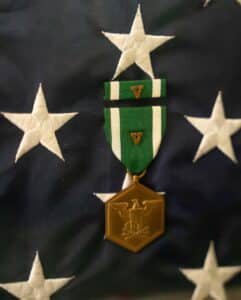 “I said, ‘You know what? I want to do something nice for these people.’ They just saved my brother’s life. He got the best care in the world right here at 2 East,” Pascasio said. “I thought about Melissa and her team of crackerjacks on 2 East and I said, ‘This medal isn’t going to buy her a cup of coffee, but it’s straight from the heart.'”
“It was about their teamwork to save a life and the concern that we should all have. The nurses and teachers who have been through COVID are overlooked.”
Stancill passed away in May, but Pascasio said he still lives in his heart and in the heart of his wife, Emily Pascasio. He continues to be grateful for the care Stancill received, which Warren and her colleagues continue to find meaningful.
“This is for the whole unit,” Warren said. “I mean, you see the support of all the staff out there. They’re amazing. We are like family. When I come to work, when I walk in, we’re hugging each other. None of us could do this alone.”
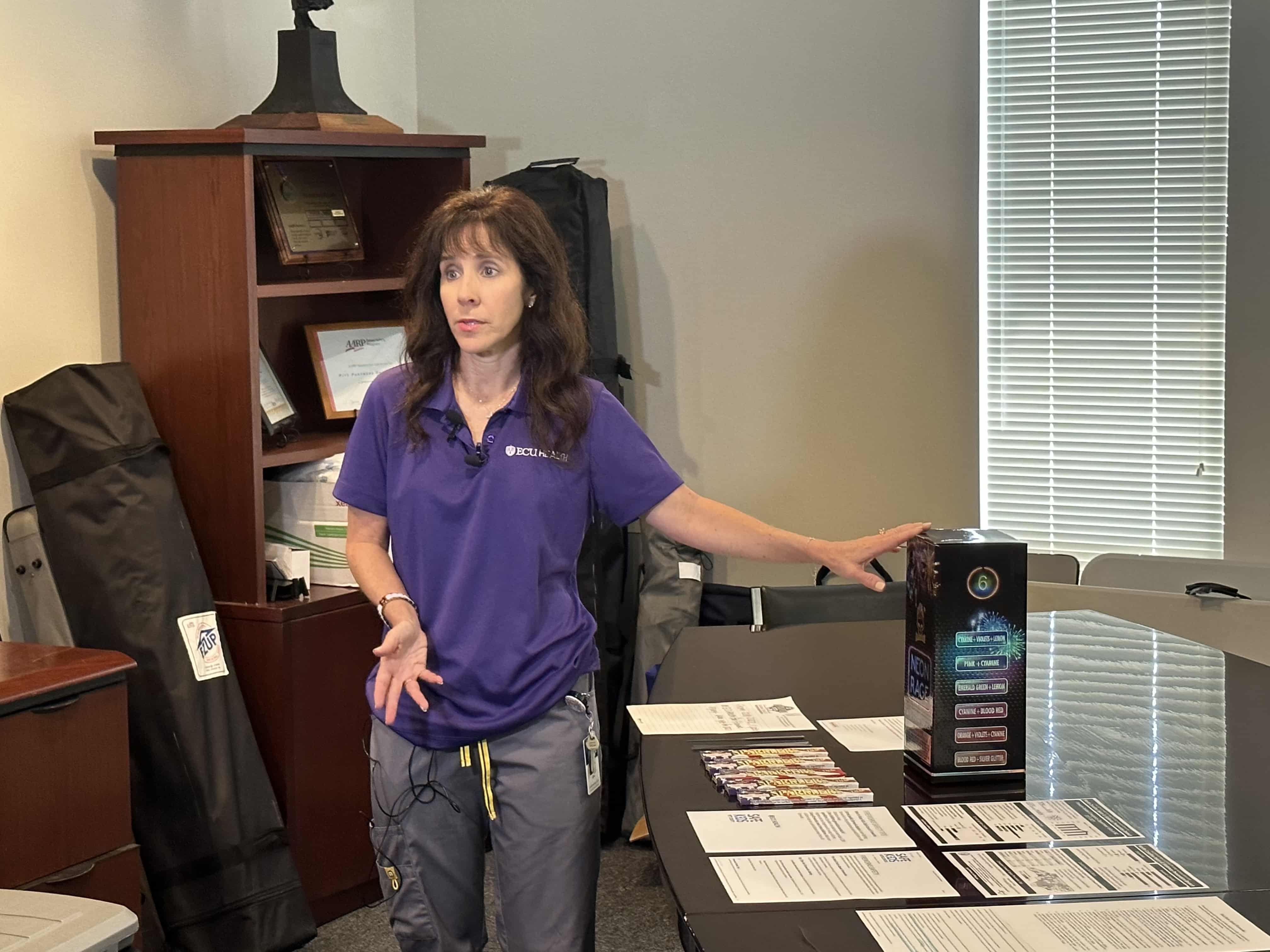
Independence Day is celebrated across the country with cookouts, family gatherings, fireworks and more. While fireworks are a fun way to celebrate, they can be dangerous if not handled by professionals and can cause serious harm including devastating burns and other injuries.
More than 3,000 children under the age of 15 are sent to the emergency room each year in the United States because of fireworks, according to Safe Kids. During July 4 celebrations, it is important to remain mindful of safety and injury prevention while enjoying festivities, particularly those involving fireworks.
Ellen Walston, Injury Prevention Program coordinator at ECU Health Medical Center, said firework injuries are far too common, including those that can be sustained from sparklers.
“We have an extended holiday weekend, but we want to send the important message to let the professionals handle the firework displays,” Walston said. “Some children really enjoy using sparklers but we just ask that you use extra caution because the tips of those sparklers can exceed 1,200 degrees and cause a third degree burn.”
She said supervision of children is key when using sparklers and to make sure they are fully distinguished after use by pouring water over the sparkler, as they can still run around 450 degrees after they are finished burning. Walston said glowsticks are a safe alternative option.
From 2018-22, Walston said there were 11 admissions to ECU Health Medical Center for firework-related injuries. Typically, she said, the injuries are to hands and fingers and the most common age group is 20-29.
“Any time that you are in a situation where there are fireworks involved, we ask that you provide very close supervision to any children, don’t let them near the fireworks,” Walston said. “We want everyone to have fun with their families but it’s so important to do so safely and that starts with supervision.”

Leaving a child, senior or pet behind in a car can pose serious danger, even if it’s just for a few minutes.
That was the message of the hot car safety event hosted by Ellen Walston, Injury Prevention Program coordinator at ECU Health Medical Center, along with the Martin-Pitt Partnership for Children, Pitt County Sheriff’s Office, Safe Kids North Carolina and Greenville Fire Rescue.
Walston said it’s dangerous for anyone to be left alone in a vehicle because of how quickly they can heat up, especially for children.
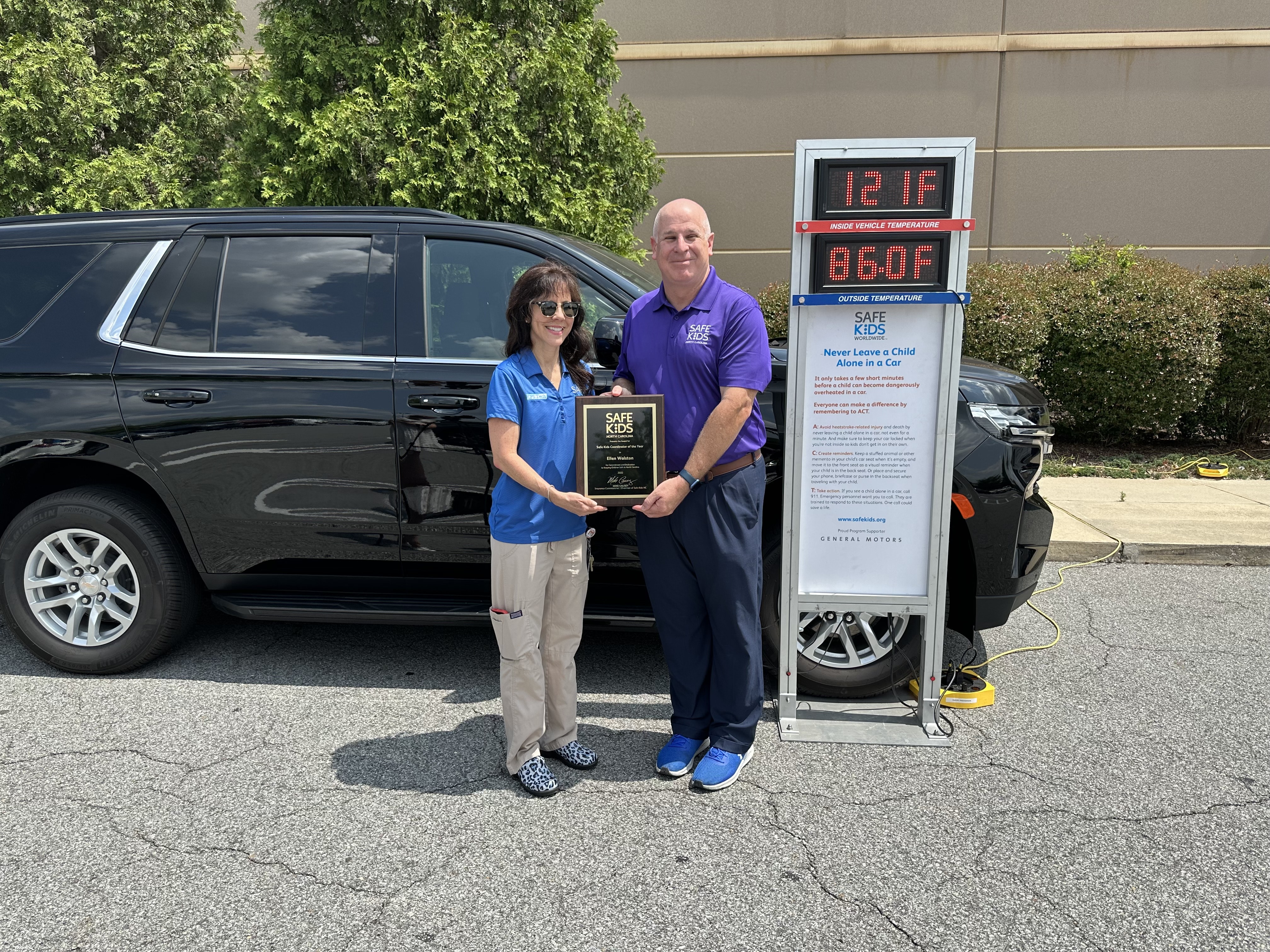
On June 29, Walston and community partners shared the information in the parking lot of Kohl’s in Greenville. During a somewhat overcast afternoon with temperatures around 90 degrees, it took about 15 minutes for the display car on hand to reach 123 degrees inside.
“Our campaign is never leave your child alone, not even for one minute,” Walston said. “That means when you think you can just run in and do a quick errand in the store or any situation, we don’t ever want a child to be left alone in a car, not even for a minute. That also includes our senior adults and pets.”
Walston said leaving the windows cracked for a child, pet or senior with the engine off is not enough ventilation to be safe, and even leaving them in the car with the air conditioning on can pose dangers.
During the event, Walston and team demonstrated how the heat inside vehicles can literally cook s’mores by roasting them on the dashboard. She said there have already been eight deaths in the United States this year from children being left alone in cars. While there have not been any in North Carolina this year, the state had four of the 33 national deaths last year.
“One death is too many, that’s why we’re out here today educating the community,” Walston said. “The car we have out here today actually has a feature that has a reminder to check the backseat when you turn off the engine. It’s important to put something tangible in your backseat that you need to get out when you leave the car – your pocketbook, your cell phone, a briefcase, your lunch bag – just to remind you to always check the backseat.”
Walston said that while many parents think this could never happen to them, it can be as easy as breaking your routine to make a parent forget a child is still in the car. More than 50 percent of child deaths from hot cars are from children that have been forgotten in vehicles, and only 17 percent have been intentionally left.
Walston earns North Carolina Coordinator of the Year
Allan Buchanan, Safe Kids North Carolina director, was on hand during the event to recognize Walston as Safe Kids North Carolina Coordinator of the Year.
Buchanan said Walston is a great role model for other Safe Kids Coordinators and is a great leader for the program across the state.
“She does a wonderful job here in Pitt County, getting the message out on injury prevention,” Buchanan said. “In North Carolina, we actually have 46 coalitions across the state. Ellen does a fabulous job here in Pitt County for injury prevention program across a number of different risk areas. She’s just a vital access to the community and creating risk reduction in this area. We’re very fortunate to have Ellen as a coordinator.”
Last year, Safe Kids Pitt County was recognized as the North Carolina Coalition of the Year. Walston said she’s just happy to share the recognition with her many community partners across Pitt County and eastern North Carolina.
She said the nomination was anonymous but she believes the events her team hosts, the collaboration with community partners and the work that Safe Kids Pitt County does with other Safe Kids coalitions across the state helped earn the award.
“I do think when they see these type of events and the work that we do in Pitt County and beyond that, they pay attention and we really try to partner with other Safe Kids coalitions,” Walston said. “So I’m all about sharing resources and working together, that’s how you make it happen. We’re really fortunate to have such great partners.”
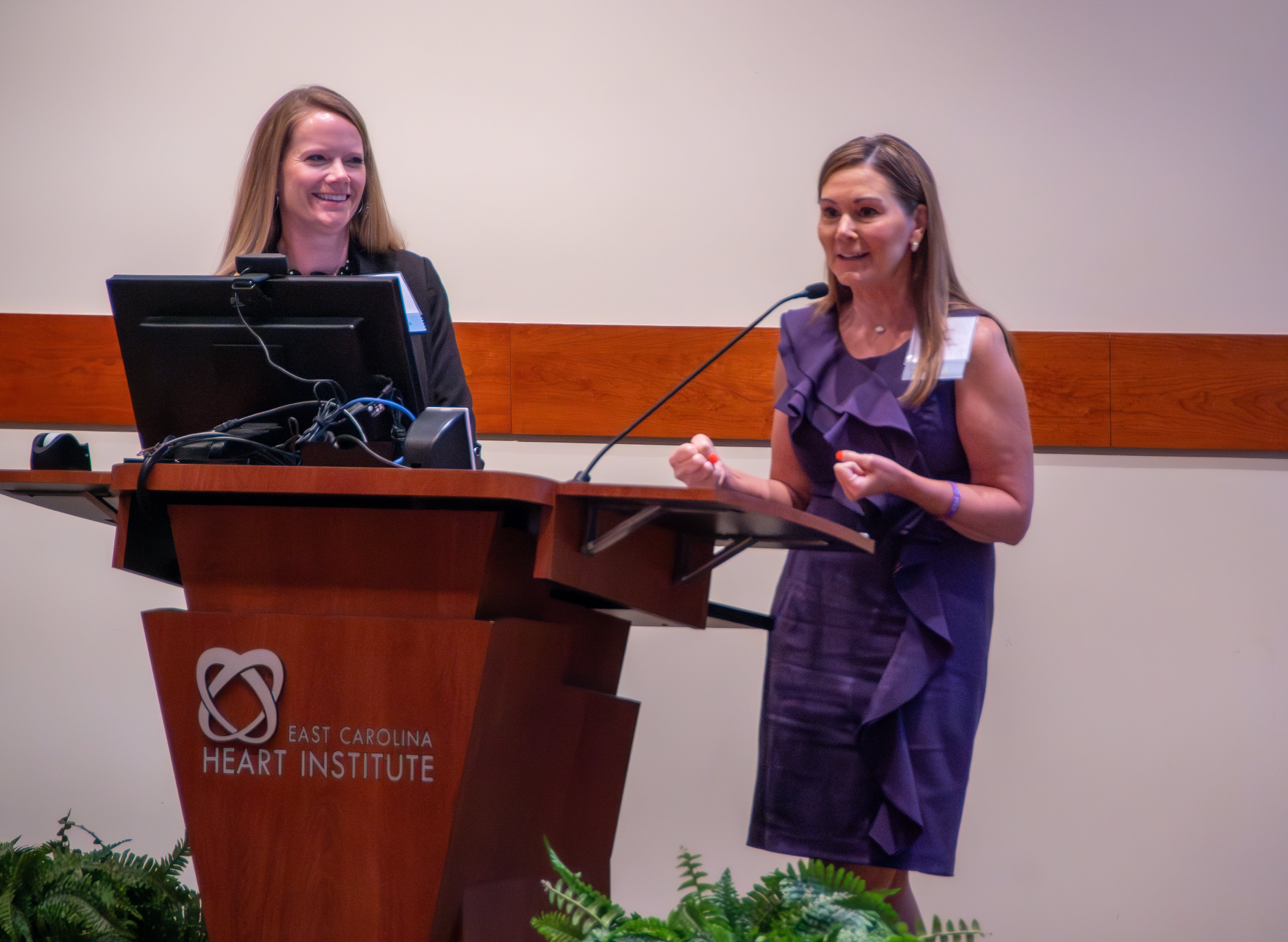
ECU Health nurses from every area of expertise across the health system gathered on June 20 at the East Carolina Heart Institute for the 10th annual ECU Health Nursing Summit where they shared best practices and innovations that will help chart the future of nursing in eastern North Carolina.
Titled “Connecting with: Minds, Hearts and Purpose,” nursing leaders at ECU Health designed the summit to acknowledge what nurses have experienced over the last three years, including what the COVID pandemic taught them as professional nurses, what they have lost and what it will take to move nursing forward together, according to Trish Baise, ECU Health chief nursing executive.
“With the ever-changing health care environment, it is important for ECU Health nurses to hear from state and national colleagues,” said Baise. “We are proud to welcome experts who are making a positive difference in the field by advocating and influencing policy, as well as nurturing innovations that address the workforce, the nurse practice environment and the health and wellness of nurses.”

In total, more than 178 nurses attended the summit, which was held face-to-face for the first time since 2019. Topics included policy advocacy, building positive environments, communicating across generations, self-care and wellness. The summit featured presenters from both ECU Health team members and experts from other areas, including North Carolina State Senator Gale Adcock and keynote speaker Katie Boston-Leary, director of nursing programs for the American Nurses Association.
“The Nursing Summit gave me ideas, things to research and refreshed my mind to help navigate this different health care world that we live in,” said Paula Bush, MIU manager at ECU Health Edgecombe Hospital.
The summit also served as an opportunity for ECU Health nurses across various levels of expertise and experience to connect directly with health system leadership, fostering a sense of community among health system nurses.
“Sharing best practices from both within and outside the health system helps spark a culture of innovation within nursing,” said Daphne Brewington, ECU Health system vice president of nursing excellence. “When we harness the expertise of our nurses, we can lead improvements and create environments where nurses thrive here at ECU Health.”
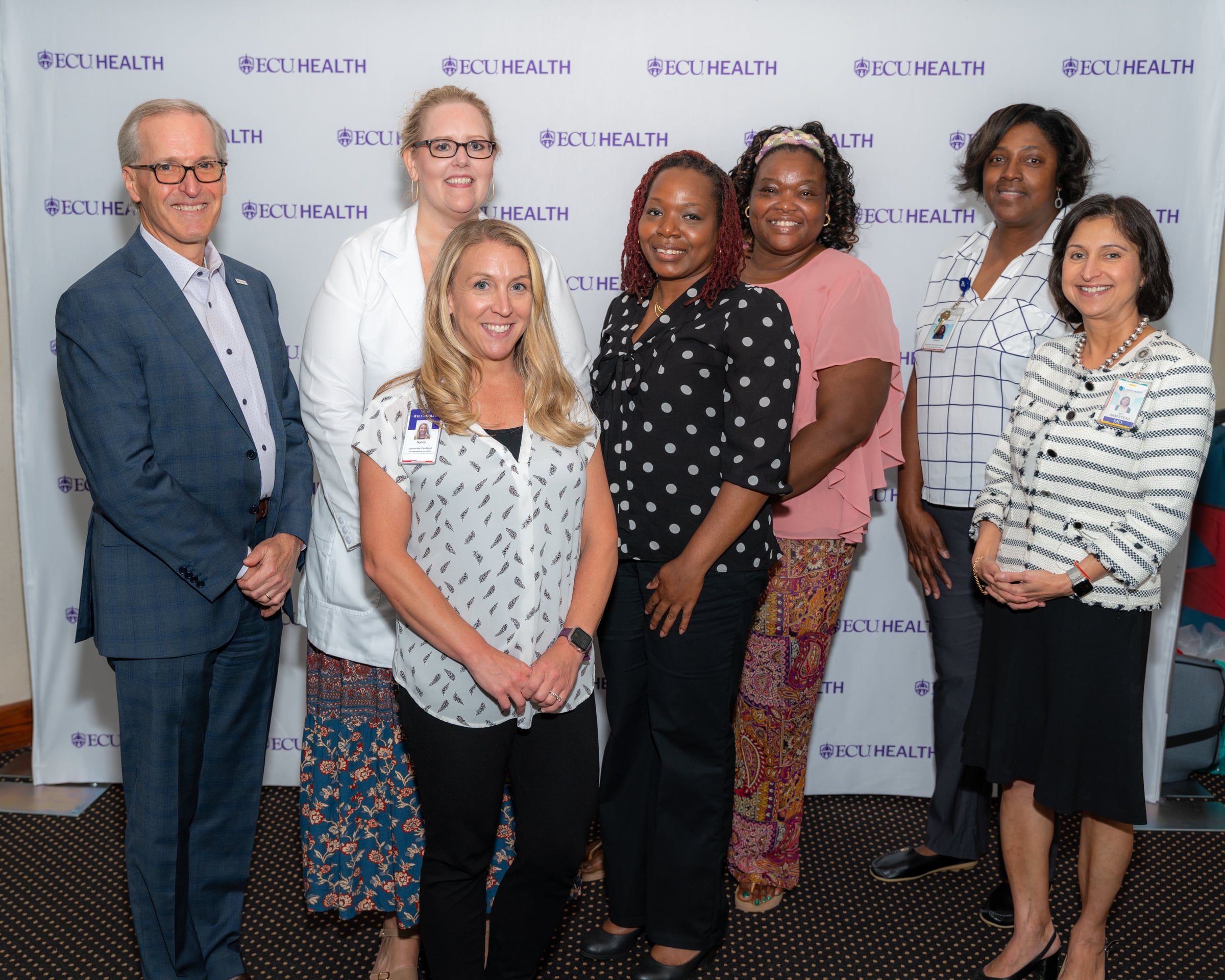
Greenville, N.C. – The 2023 ECU Health Board Quality Leadership Award winners were recognized by the ECU Health Board of Directors June 27. These winning teams are a representation of excellent work across the system that drives the quality goal of zero harm, creates exceptional experiences and improves patient outcomes. Numerous nominations were reviewed by the committee, and the winning team are as follows:
ECU Health Medical Center – Navigating Insurance Authorizations: Increasing Internal Authorization Requests to Decrease Turn-Around Times to Facilitate Skilled Nursing Home Placement – Case Management. The project leader was Nancy Keith, MS, MSW, LCSW, ACM-SW – Care Management.
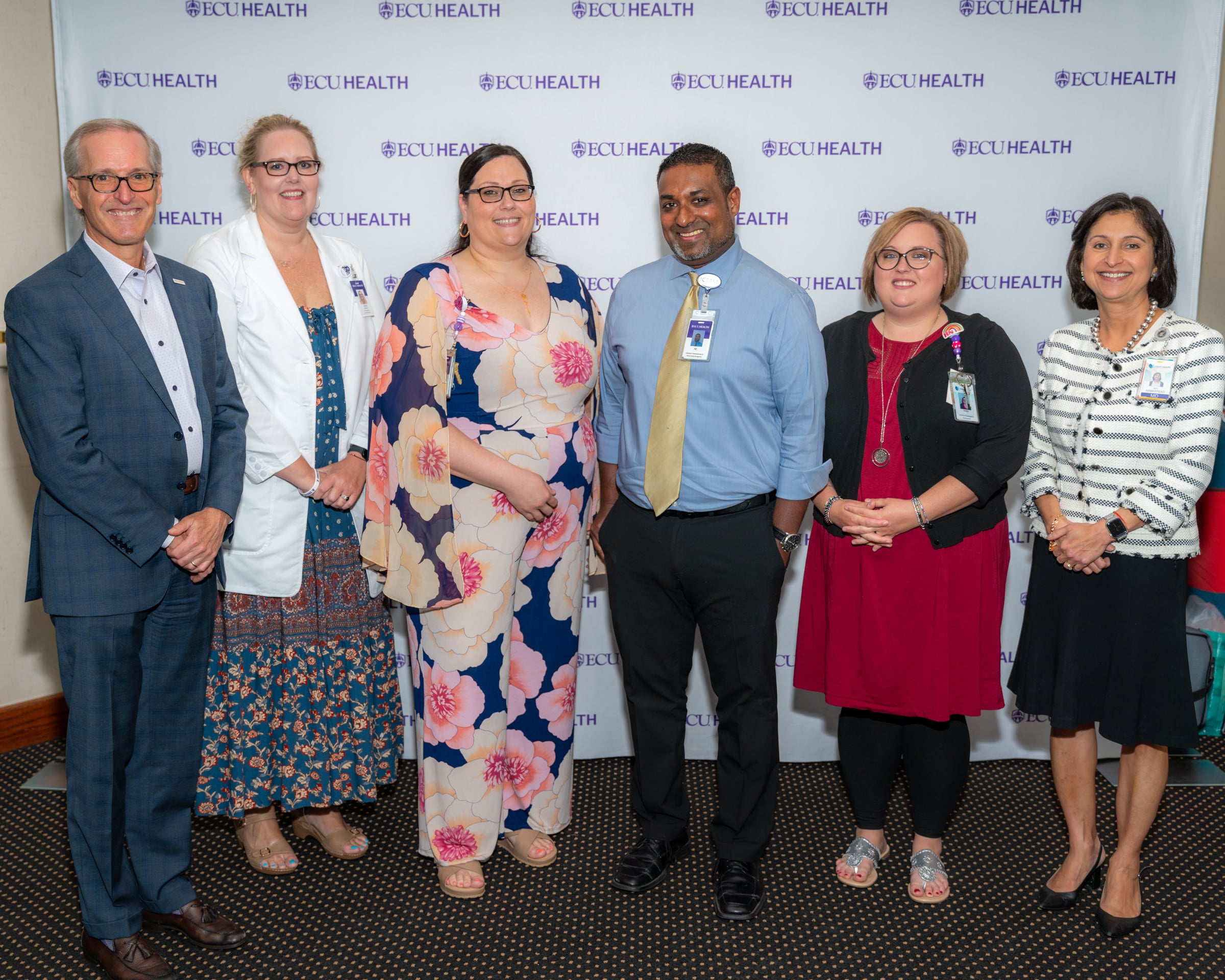
ECU Health North Hospital – Impact of Hospital-Wide Prevention and Reduction of Clostridium difficile (Cdiff), an ECU Health North’s Multidisciplinary Collaborative: An Evaluation on Reduction in Hospital Acquired Infection (HAI). The project leaders were Krista Turner, MSN, RN – Infection Preventionist III and Aparesh Balla, MPH – Infection Preventionist II.
To receive this honor, team members submitted projects that demonstrated at least two of the following requirements:
- Quantifiable improvement in an organizational quality priority with sustained excellence over time
- Demonstration of empathy and compassion in patient care
- Implementation of innovative solution to patient care problem
- Community outreach that addresses the social determinants of health in a meaningful way
“We are proud to recognize the winning teams for their hard work and dedication to caring for patients and families,” said Robert Greczyn, chair, ECU Health Board of Directors. “The Board Quality Leadership Awards represent the great consideration our team members take to make safety a top priority for our patients. These honorees have continued to innovate and improve the health and well-being of eastern North Carolina, and we are grateful for all that our team members do to deliver high-quality care.”