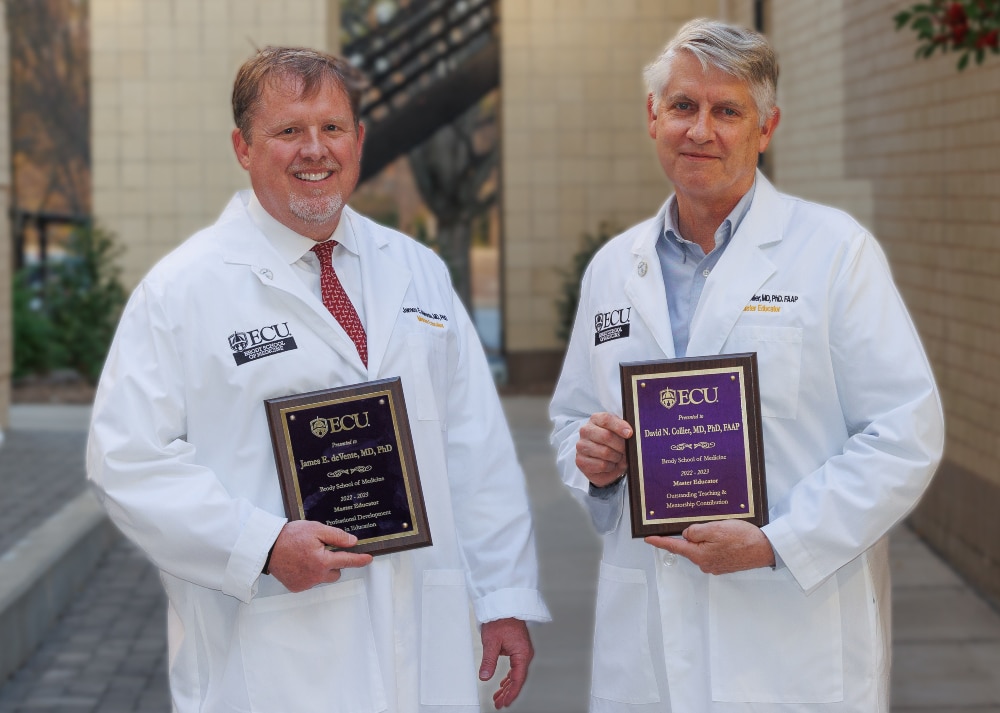
Three physicians – Drs. David Collier, James deVente and Ricky Watson – were recently named master educators by the Brody School of Medicine at East Carolina University. All three are Brody alumni.
The school’s master educator program recognizes excellence in leadership and administration, teaching contribution or mentorship, innovation and curriculum development, evaluation and research, professional development in education and educational contributions by community physicians.
The winners were announced during a Brody faculty meeting on Feb. 16, during which each winner received a white coat featuring a master educator designation, a plaque and master educator pin.
Faculty members and students may nominate faculty members to receive the award, and a committee of faculty members and students decides on the recipients.
Since the program began in 2002, close to 80 Brody faculty members have received the master educator recognition. The awards can be given in the areas of educational leadership and administration, outstanding teaching or mentorship contribution, educational innovation and curriculum development, educational evaluation and research, professional development in education and outstanding educational contribution by a community physician.
“The bestowing of the Master Educator Award allows us to honor faculty who have a sustained record of excellence in education and are who are recognized by their peers and learners as exemplifying leadership in education,” said Allison Flowers, director of Brody’s Office of Faculty Affairs and Leadership Development. “These master educators highlight how the Brody School of Medicine attracts and retains high-quality faculty who are driven by and demonstrate our mission.”
Dr. David Collier
Master Educator in Teaching and Mentorship
Dr. David Collier is a professor of pediatrics and health disparities and director of the Pediatric Healthy Weight Research and Treatment Center. He is associate director of the Integrative Health Sciences Facility Core in the NCSU Center for Human Health and the Environment.
Collier is a graduate of the Brody School of Medicine and completed his residency at Pitt County Memorial Hospital, now ECU Health Medical Center. His research interests include the prevention and treatment of childhood obesity.
Collier’s nominator highlighted his ability to share his knowledge in ways that benefit both his students and colleagues.
“David was a creative interprofessional educator before interprofessional education was a goal or mandate,” according to the nomination letter. “Dr. Collier is shown at his best — not in a classroom, not scripted — but in clinic teaching interprofessionally.”
Dr. James deVente
Master Educator in Education
Dr. James deVente is an associate professor in Brody’s Department of Obstetrics and Gynecology and is director of obstetrics at ECU Health Medical Center. At ECU since 2005, deVente graduated from the Brody School of Medicine in 2001 and completed a residency in obstetrics and gynecology in Greenville as well.
deVente has also served as the medical director for women’s services at ECU Health Medical Center since 2007 and is a trailblazer for innovation in the profession.
“In keeping with Jim’s passionate and tireless work as an educator, he has capitalized on his role to improve our entire health system through an ongoing series of faculty development opportunities,” according to the letter of nomination written for deVente. “Every obstetrical provider in our hospital system, across our portion of the state, has met with Jim for safety drills, new equipment training, fetal heart rate monitoring classes, and systemwide implementation of safety and quality initiatives – many of which he also helped to develop.”
Dr. Ricky Watson
Master Educator in Teaching and Mentorship
Dr. Ricky Watson is a clinical assistant professor and assistant residency director in the Department of Family Medicine. He is a Brody graduate and completed his residency at Pitt County Memorial Hospital, now ECU Health Medical Center. His areas of interest include women’s health, infectious diseases, travel and wilderness medicine and health care delivery systems.
Watson has earned a variety of teaching awards over the years including a Faculty Excellence Award for Excellence in Teaching and Compassion from family medicine residents. He has also received a teaching award from the American Academy of Family Physicians. He joined the ECU family medicine faculty in 2001.
“I know Ricky has delighted in helping other faculty, residents and students, new to our area, understand the needs of our patients,” reads his nominator’s letter. “He has been a steady source of education and inspiration for medical students and residents, fellows and junior faculty. He has been our go-to person for cultural competence and humility training for residents.”
Read more from ECU News Services

By ECU News Services and ECU Health News
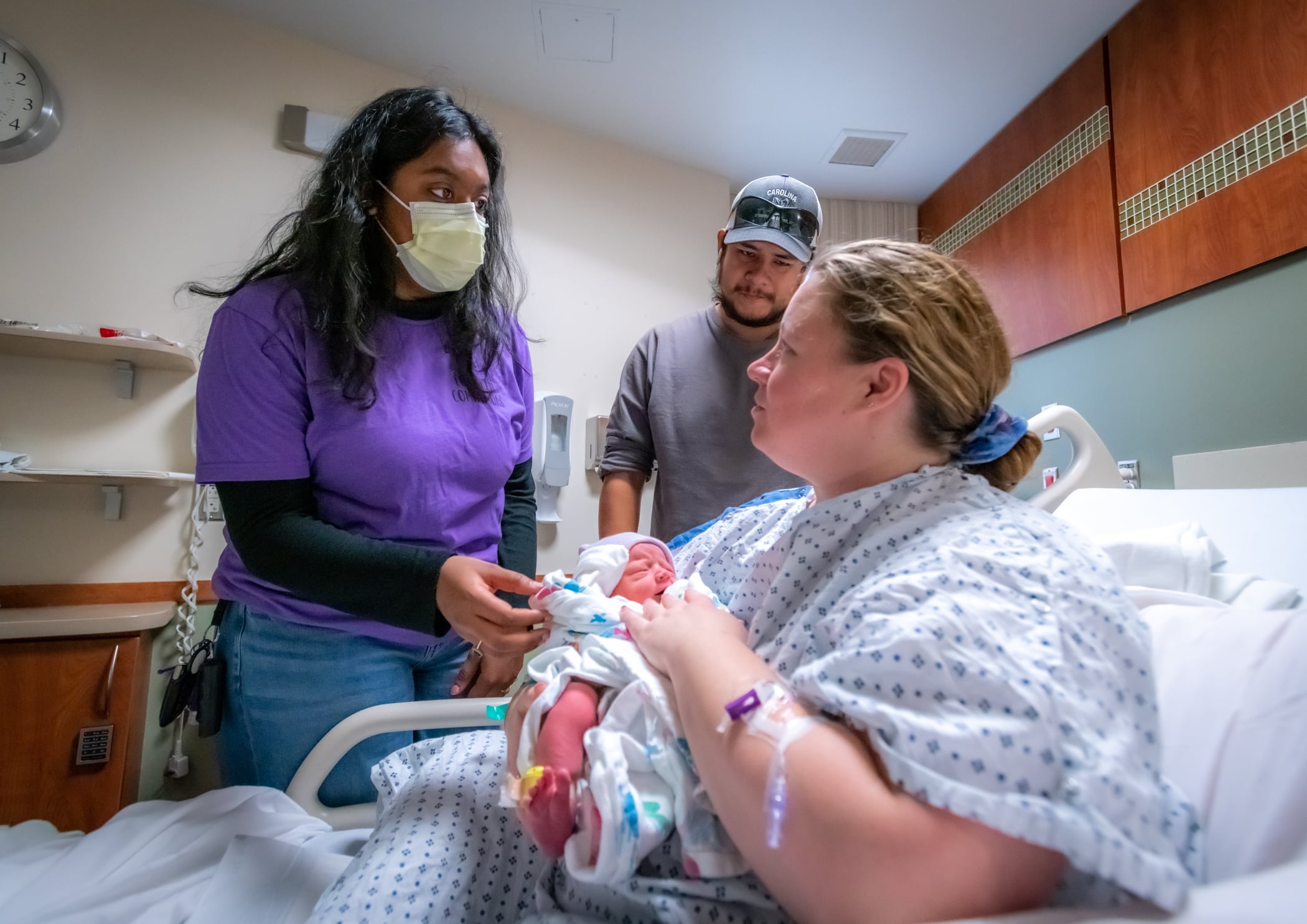
Getting through medical school can be tough – long hours, books and tests, and more books. However, in between classes and all-nighters, two students from the Brody School of Medicine have established a flourishing volunteer program to bring doula-like services to a region of North Carolina starved for birthing support.
The birthing companion program was started in October 2022 by Uma Gaddamanugu and Shantell McLaggan, both second-year Brody students and Schweitzer fellows. The Albert Schweitzer Fellowship supports graduate health professionals drawn from across the state who learn and work to address unmet health care needs in North Carolina.
Gaddamanugu’s and McLaggan’s fellowship project is focused on improving birth experiences of high-risk pregnant mothers in eastern North Carolina through the free birth support program to add an extra layer of support for women in the birthing process.
Patient populations in rural parts of eastern North Carolina simply need more help, Winston-Salem native Gaddamanugu said, from prenatal care through the laboring process, and certified doulas are an expensive out-of-pocket resource for which most North Carolinians must pay out of pocket because health insurance often doesn’t cover the cost.
“We are the only hospital with a high-risk labor and delivery unit for half the state. You think about how far some of these people have to travel, which makes it way harder for their support people to come with them,” Gaddamanugu said.
In February 2022, the North Carolina Institute of Medicine reported that the state’s maternal mortality rate was 27.6 per 100,000 births, which is slightly lower than the national average, but more than double the previous year’s rate of 12.1 per 100,000 births.
A 2021 study by the North Carolina Maternal Mortality Review Committee reported that 60 women died from pregnancy related causes from 2014-2016. Of those, nearly 60% were from minority racial categories and more than one in three were from rural areas. What’s more troubling – the study determined that 70% of maternal deaths could have been prevented by changing “patient, family, provider, facility, system and/or community factors.”
The program
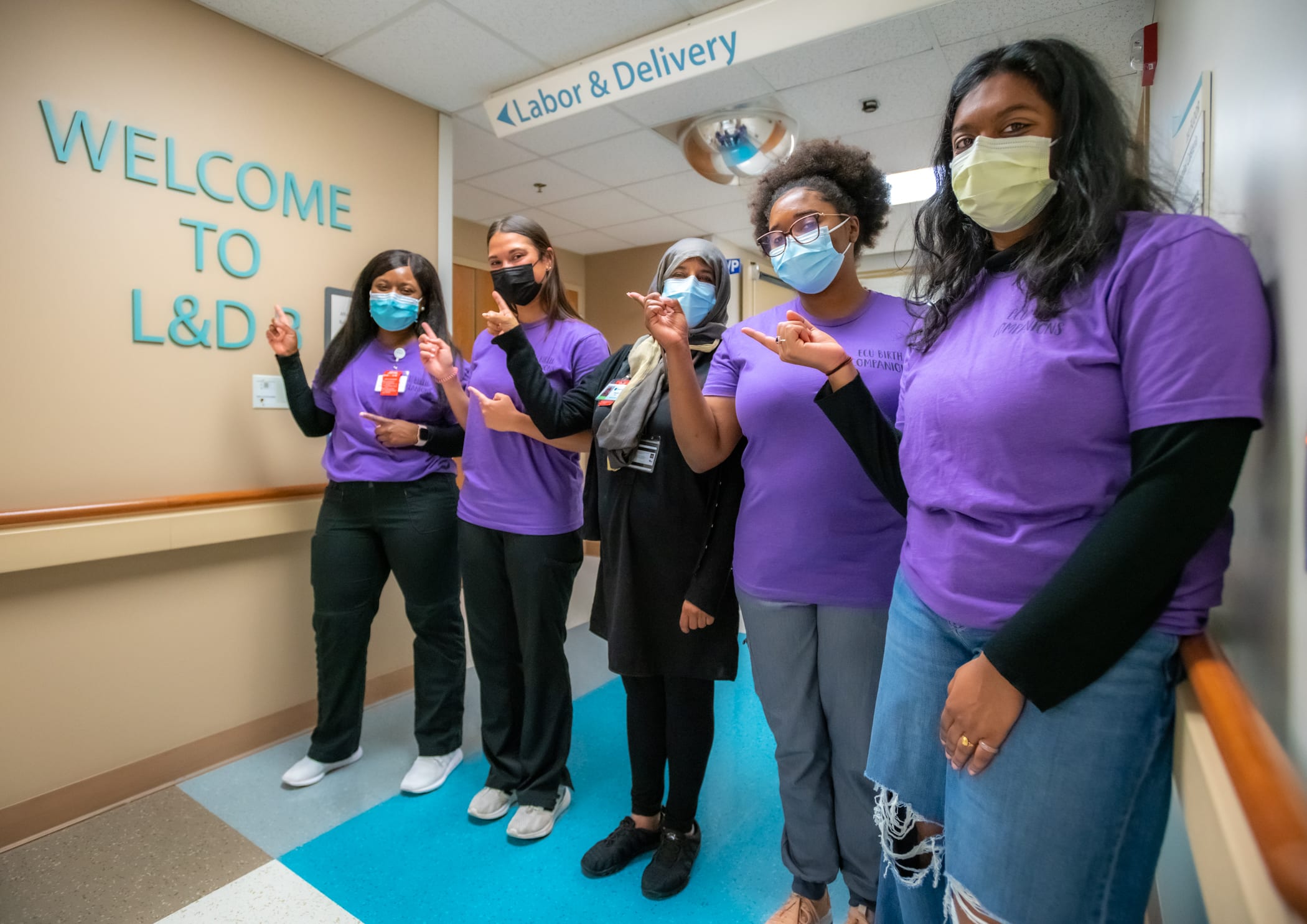
At first, the program had 18 volunteers, but since its inception in October 2022 the ranks of birthing support volunteers have doubled to 37. At the beginning of February, the volunteers had assisted with more than 70 births, which is “way past our goal that we had initially set,” Gaddamanugu said.
Volunteers from the program come from a wide range of backgrounds, though most are medical or nursing students. Some are undergraduate students from main campus who want to be part of a program that serves the community. For now, the program is staffed almost completely by ECU students, though Gaddamanugu and McLaggan will soon hand the program’s day-to-day management off to first-year medical students who aim to open the program up to the public.
“Our program is very much modeled off a program at UNC. They’ve been doing that for about 20 years,” Gaddamanugu said. “A Wake Forest medical student started a similar volunteer doula program two years ago through the Schwitzer Fellowship. It’s just neat to see that it was possible with the structure of the organization to bring that program here, because there’s a whole different need in eastern North Carolina.”
Gaddamanugu stressed that the volunteers in the program, who support the labor and delivery services at ECU Health, aren’t certified doulas but rather are there to help during the immediate labor process. For one delivery, that might be a non-clinical, non-medical role – a friendly face and a hand to hold – and in other cases it might be running through the hospital to find a phone charging cable so a mother can stay in contact with her other children at home.
Leslie Coggins, a charge nurse on the labor and delivery unit at ECU Health Medical Center in Greenville, said the volunteer program has been a great success, both for the mothers in the delivery process as well as for students on track to become the next generation of health care providers.
“We’ve always had a great relationship with our residents, but now we have almost a pipeline — doctors, potential doctors, nurses, someone interested in birth and supporting birth in its natural function,” Coggins said. “To share that experience with up-and-coming providers and nurses who will be taking our places someday is huge.”
While the volunteer program is currently staffed by students, the student organizers and Coggins as the nurse manager of the labor and delivery unit hope to soon include members of the public. Those interested in volunteering should contact the program by emailing [email protected].
Training medical professionals
The ECU version of a volunteer birth companion program is rooted in experiences both medical students had working as volunteers in hospitals in doula-like roles. Gaddamanugu volunteered during her time as an undergraduate at UNC; McLaggan, who is from Thomasville, spent several years after her undergraduate education working at the Cherokee Indian Hospital in western North Carolina and helped establish a volunteer doula program there.
Both students are interested in pursuing a career in obstetrics.
McLaggan’s mother told her from an early age that she was smart enough to be a doctor. After researching the requirements and being captivated by the science of medicine, she fell in love with the idea.
“I feel like I have the mental, emotional and the physical capacity to do something as strenuous as being a doctor,” McLaggan said. “Because I have those qualities, I feel like it’s my obligation to become a doctor and serve people to the maximum of my abilities.”
Medicine was also a calling for Gaddamanugu, who said that the challenge is humbling but she sees a future where she can make a difference by “maternal and child health disparities in our community” which fit the impact that she hopes to make in the world.
She said that the experiences at the bedside have colored the conversations that she has with her medical school peers about the experience of medicine from the patient’s perspective.
“We know birth is hard, but here is what it really can look like,” Gaddamanugu said. “The U.S. has an awful maternal mortality crisis, and we can hear those numbers all day long in school, but the numbers don’t mean anything until you see it in person, and you realize some of these patients are extremely sick.”
For Dr. Kerianne Crockett, ECU Health OB/GYN and Brody clinical assistant professor, the program has clear benefits for the patients she serves. She has heard from patients who appreciated having another source of support during their delivery.
“Delivering a baby is one of the most exhausting, exhilarating, sometimes scary experiences of a patient’s life,” Crockett said. “There is good evidence that patients with a continuous support person present throughout labor — whether that person is a family member, a spouse or a doula — have better birth outcomes, including lower rates of cesarean delivery. I am so proud that our bright, compassionate, empathetic medical students are now able to be that continuous support person for all kinds of patients, including those who otherwise would not have had anyone besides the medical team there for their delivery.”
Student involvement in health care delivery, and the unique perspectives students offer patients, is a hallmark of a large academic health system like ECU Health. As students learn from the clinical experience of providers at ECU Health, they are empowered to innovate and bring ideas to the table that lead to better patient experiences and brighter outcomes.
“As an academic health system, our medical students help to enrich the patient experience with their energy and ideas,” said Angela Still, senior administrator of women’s services at ECU Health Medical Center. “The birthing support volunteer initiative is a great example of how Brody students go beyond the walls of the classroom and make a direct impact on the patients we’re proud to serve.”
Serving eastern North Carolina
Sometimes the most important support that a birthing companion can provide comes from skills that can’t be taught in a formal doula class.
McLaggan remembers one time she volunteered with a woman who had a number of kids already — the most recent born by C-section. The medical staff recommended another C-section, which the woman was reluctant to agree to due to the complications she had with the previous birth. The challenge that McLaggan was able to help resolve wasn’t convincing the woman to have a C-section, but rather just communicating with her at all. The woman was Haitian and spoke Haitian Creole and little English.
“I happened to speak French, which is very similar to Haitian Creole, so she was able to communicate to me, where she was coming from and what her needs were,” McLaggan remembered. “I was able to bridge that gap and she ended up delivering naturally. I felt so honored and privileged to have been in the room.”
Another of the volunteers in the program has similar experiences with language gaps being a hindrance to quality health care. An undergraduate student recounted to Gaddamanugu how, growing up in eastern North Carolina, she was always saddled with translating for her mother and siblings during medical appointments — a task that shouldn’t really be shouldered by a young person. The student volunteer said, though tears, that she was so grateful to be able to translate for delivering mothers because she knew first-hand the constricting fear and anxiety of being language-locked in a stressful medical situation.
While the language capabilities that some students bring to the hospital bedside are important, Coggins said, patient populations in eastern North Carolina are getting sicker, which often requires the health care team members to devote their attention to the physiological status of the patient.
“We try to promote natural delivery as much as we can,” Coggins said, but sometimes the medical conditions of the mother and baby require doctors and nurses to focus on the immediate illness. “One-on-one support is essential with our patients. A lot of times our sick population are not from around here and don’t have the support system in place, so this is an added benefit so our nurses can focus on what is medically happening and where we need intervene.”
Gaddamaugu is awed at the privilege of being present at a birth.
“I’ve cried every single time; it’s one or two single tears, but they were C-section babies and you could sense the relief in the OR the moment the baby comes out safe and healthy,” Gaddamaugu said.
McLaggan has known that being in the room during the birthing process is what she has wanted to do since before kindergarten. She’s seen a handful of births as a volunteer and continues to be amazed by each one.
“Words don’t describe how amazing childbirth really is. I get so overwhelmed with emotion when I see 37 to 40 weeks of work and love going into this child that is coming into the world,” McLaggan said.
Resources
ECU Health hosted an open house on March 7 to introduce community members to the newly dedicated space for the Lifestyle Medicine Clinic located in the ECU Health Wellness Center in Greenville.
The Greenville location is one of 12 across eastern North Carolina, designed to help patients live a healthier life through improved nutrition and exercise.
Dr. David Michael, medical director for the Lifestyle Medicine Clinic, said the space is a dream come true for him and the patients he serves.
“I’ve always dreamed that my physician’s office or doctor’s office would look more like a fitness center than a hospital,” Dr. Michael said. “I thought if I could do that, I’d be onto something. So it’s just a blessing to have the lobby of our Lifestyle Medicine Clinic right in the fitness center itself. Exercise and physical activity are such important pillars to healthy living.”
There are six traditional pillars to healthy living that the clinic follows in its work with patients. Those pillars are:
- Healthy eating, including whole, plant-based foods
- Increased physical activity
- Develop strategies to manage stress
- Avoiding risky substances
- Improved sleep
- Form and maintain relationships
Brenda Leigh, director of Lifestyle Medicine at ECU Health, said the program is designed for each individual patient, and the patient’s wants and needs dictate how the program is developed.
“A lot of times people will start with one pillar and try to figure out what’s most important to them, and sometimes it might not even be what they think,” Leigh said. “They come in and say, ‘We want to lose weight.’ After the navigator talks with them for a bit, we realize all the stressors going on in their life. So we might say, ‘First, you really need to work with a social worker or a counselor and set some priorities and get some things ready in your life to then make the nutrition and exercise changes that might help your weight loss.’”
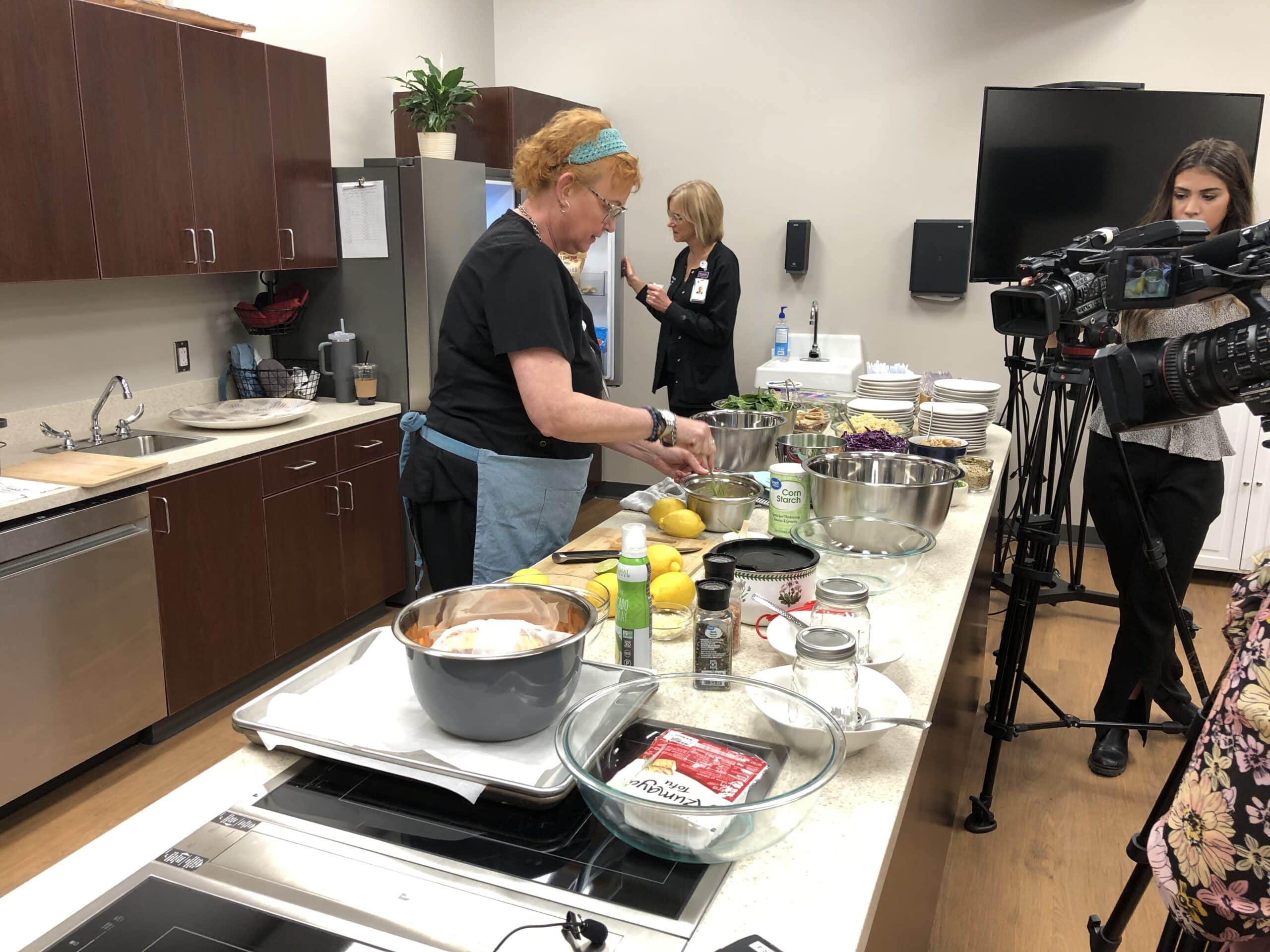
During Tuesday’s open house, the Lifestyle Medicine team also hosted a free “Lunch with a Doctor” and “Dinner with a Doctor” event. During these sessions, ECU Health providers cooked a healthy meal for participants, showed them how to prepare the meal and shared ways to get whole, plant-based foods into their diet.
Susie Houston, a nurse practitioner with ECU Health, prepared the meal for the “Lunch with a Doctor” event. She said educating attendees and showing them how to cook a tasty meal with the ingredients that typically get left behind in the grocery store is a priority during these events.
For lunch, the team put together a power bowl with tofu, vegetable toppings and a homemade dressing that attendees could choose from.
“When you think of the color of the rainbow with what we’re preparing today, you’re pretty much getting all the vitamins, minerals and then fiber that you need,” Houston said. “So if we use food as medicine, it’s this great idea that in the grocery store, if we could stick in the produce section or the perimeter in the store, that just makes a difference.”
The team plans to continue to host these free events in the future.
Leigh said she knows this program can change lives for patients as studies have shown healthy habits like diet and exercise can help slow, stop or even reverse chronic health conditions like diabetes and heart disease.
March is National Nutrition Month – start your journey to better health with the Lifestyle Medicine programs available across eastern North Carolina by calling 252-847-9908.
Resources
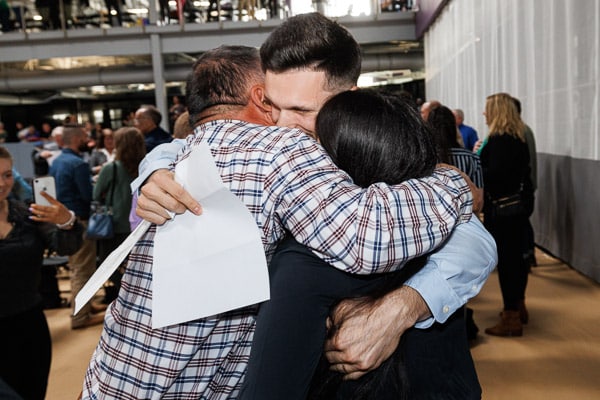
In a ceremony laced with excitement, anticipation and tradition, fourth-year medical students in the Brody School of Medicine at East Carolina University learned where they will spend the next three to seven years completing residency training.
The March 17 event marked a milestone for the Class of 2023, whose medical school journey included the historic events of learning through the COVID-19 pandemic and the integration of Brody and then-Vidant Health, which became ECU Health in 2022.
Match Day is arguably the pinnacle of medical school, when students discover their next destination surrounded by friends, family and Brody faculty and staff who have guided them over the years. Michael Waldrum, dean of the Brody School of Medicine and CEO of ECU Health, said that wherever the students are matched, they already have a reputation of being health care providers who put the individual patient at the center of their practice.
“Brody students come out of medical school knowing how to do hard work and take care of humans. It’s a very hands-on practical education. They learn how to take care of people which is what becoming a doctor is all about, and the experience they get here sets them apart,” Waldrum said.
The students were presented to the audience of family, friends and members of the Brody community with collages of photos along with music that each selected.
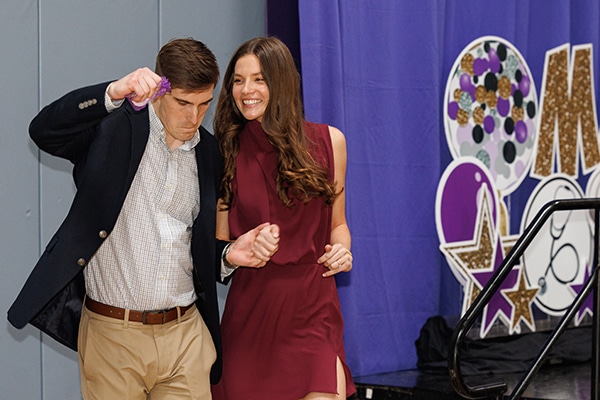
Kari Beasley, from Cary, wanted to use the song “Soulful Strut” from the movie “The Parent Trap” — but only if one of her mentors, Jason Higginson, agreed to learn the handshake from the movie and perform it on stage with her.
Beasley, who matched with Virginia Commonwealth University in Richmond to pursue an obstetrics and gynecology track, said that both Jason Higginson, the executive dean of Brody, and his wife Amanda Higginson, Brody’s interim associate dean for student affairs, were an important part of her medical school experience.
“Being the amazing dean that he is, he said, ‘Of course, absolutely, I’ll do the handshake with you.’ Today, we pulled it off,” Beasley said. “It made it more special that he and I got to do the handshake together because the Higginsons have been a great part of my experience here at Brody.”
While Higginson had seen the movie, he didn’t remember the handshake and dance until she showed him the clip.
“She asked me if I would do it with her and I said you’re really challenging an old man with no rhythm. We practiced it yesterday in my office and then I practiced it with my daughter all night last night,” Higginson said.
The relationships that he and fellow faculty members build with their students is unique because he didn’t have interactions with the administration when he was in medical school.
“This is probably one of the best days in the life of a medical school. This is the day where all of your dreams get realized,” Higginson said. “A lot of them are staying here, which is something we are proud of. Almost 50 percent of the class is staying in North Carolina and that’s fantastic. That’s our mission.”
The Class of 2023 is a snapshot of Brody’s mission to serve the state. The 77 members of the class represent more than 25 North Carolina counties, from Buncombe in the west to Pasquotank in the northeast.
With envelopes in hand that revealed their futures, the students took time to celebrate their accomplishments and reflect on what comes next.
‘What small change can I do?’
When there’s a problem, Merdi Lutete is busy seeking a solution.
Lutete, who was born and raised in Kinshasa, Democratic Republic of Congo, has the mindset of not standing by and expecting others to act — instead, she wants to know how she can help and how her skills and knowledge can lend to a long-term resolution.
“With a lot of issues we encounter, we see a problem and we say, ‘Well, someone else can do it,’” she said. “What’s helped me has been that mindset of, ‘Well, there’s a problem. What can I do about that? I’m probably not even going to get to the surface of the issue, but what small change can I do for this?’”
Lutete has used that formula throughout her life, including medical school. Lutete founded I Am First, an organization that partners first-generation medical students with mentors who can guide them through the medical school process.
“I think it will definitely contribute a lot,” she said. “I was able to apply it to school and I can put it to other areas too, and medicine as well.”
Lutete matched in adult neurology at Duke University Medical School in Durham. As she opened her Match Day envelope, she was surrounded by family and friends, some whose smiles shown through phone screens. Her hands shook as she revealed the folded paper printed with her next destination.
“I was nervous,” she said, laughing as those around her cheered, “but I feel good.”
Lutete studied neuroscience at ECU during her undergraduate years; she initially became interested in neurology in high school, when she took a psychology course and witnessed her father face a health challenge. His doctor was careful to include the family in medical conversations and make sure they understood the situation and options.
“That personal thing really touched me a lot,” she said. “I really wanted to do something like that with patients as well.”
Seeing her own family go through a health challenge and now having the perspective of a student doctor helped Lutete better understand the sacrifices her family and community have made to help her get where she is today. Her parents moved the family from Kinshasa to Raleigh in 2005 to pursue more opportunities. The Congolese community in Raleigh has also rallied behind Lutete and her success. Lutete worked with other students and Brody faculty and staff on an initiative to share information with the families of medical students so that they better understand the process their students will experience in the coming years. It was her way of acknowledging the village that it takes for students to succeed.
“It truly means a lot to them and a lot to me to see that,” she said of the support she’s received from those around her. “One thing about first generation that I really think is powerful is that you’re standing on the backs of many people’s sacrifices. You know that the successes you have you can’t attribute to yourself because you know every single person had a role in that. You’re literally standing on the backs of other people’s sacrifices.”
When Lutete thinks about community, she thinks about how Brody has prepared her for her next steps.
“Brody does a great job of teaching you how to care for the individual, how to care for the patient that you’re seeing in front of you,” she said. “I can give you a prescription for medication, but can you afford it? I can tell you to come back next week for an appointment, but can you afford to come back? Brody really teaches you how to think about the patient and how their story applies to the situation.”
Success found through love, teamwork
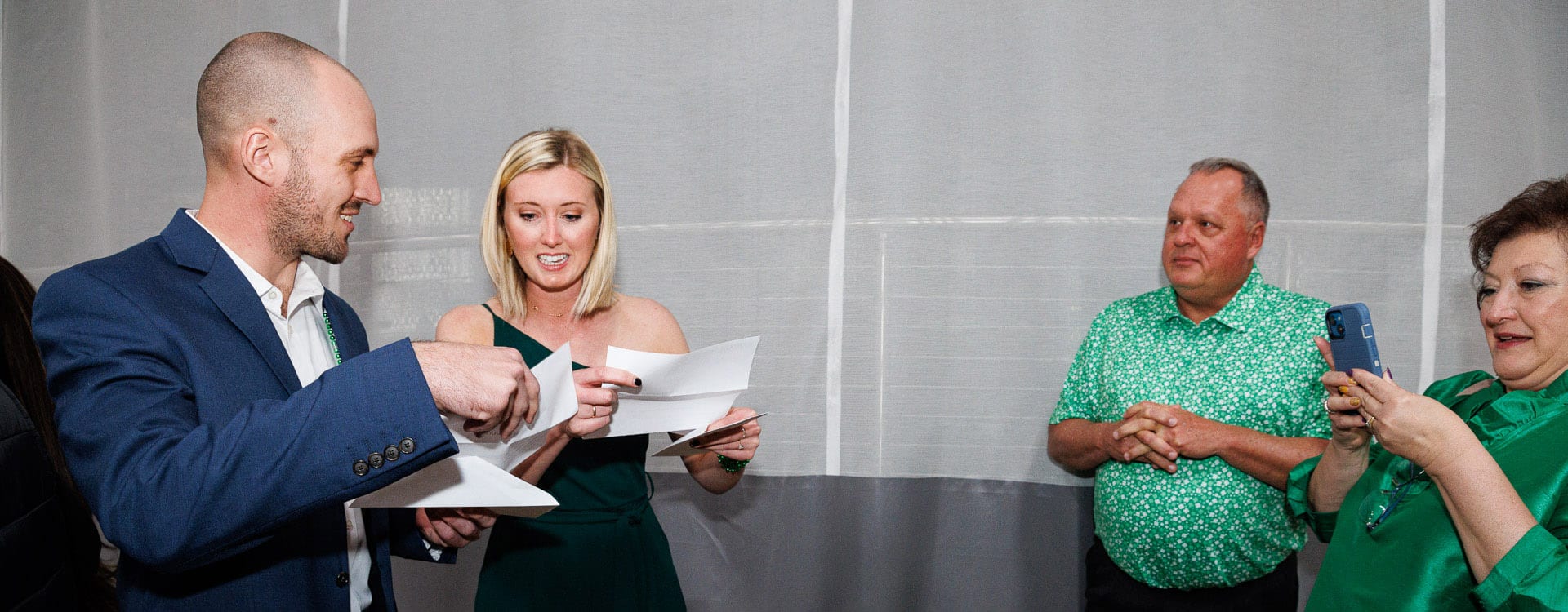
When you start off down an arduous path, it’s good to have a friend by your side. When that friend ends up being the person you fall in love with and plan to keep walking life’s paths hand in hand, all the better.
The first week of classes at the Brody School of Medicine in the fall of 2019, Bethany Laden and Caleb Oakley were out with mutual friends working through the awkwardness of meeting the classmates you’ll share the next four years with. He bought her a drink, she told him her favorite book was The Great Gatsby (from which he quoted the last line — smooth) and Bethany said, “we’ve been together ever since.”
Laden was raised in an Air Force family and lived in England and Guam, but mostly in Harrisburg, near Charlotte. She studied biology at NC State and initially intended to apply for a physician assistant program but applied to Brody after graduation. She spent a year as a medical assistant and two years of conducting urology research in Durham. Witnessing a baby being delivered set her mind to being an obstetrician and gynecologist.
“I really like working with my hands — being in the operating room and doing surgery. When I was on my women’s health rotation that’s where I found my passion — working with women, empowering them through their pregnancies and the rest of their lives,” Laden said.
Oakley is from Roxboro and knew he wanted to be a doctor since high school. A teacher showed the movie “Chernobyl Heart,” which chronicled missionaries who fixed the cardiac conditions faced by children who were affected by the Chernobyl disaster. Oakley’s family was particularly religious and did missionary work along the east coast and the film inspired him to be the same kind of doctor who helped people who needed the most help.
He worked as a medical scribe in high school, and then again during his undergraduate education at ECU, where he double majored in biology and chemistry. His first application to medical school didn’t work out, so Oakley taught as a substitute, trained to be a paramedic, worked on food trucks across eastern North Carolina and even prepped alligator meat at a seafood company in Morehead City.
Oakley’s intended career path lies at the other end of the birthing process from Laden. As a doubled-board certified doctor working in internal medicine and pediatrics, he’ll be able to treat patients across the continuum of birth to death.
“They tell you when you start medical school that you’ll find your niche. I had a really good experience out at ECU Health-Duplin which confirmed it for me,” Oakley said.
Early in their relationship they agreed that school would come first and “I’m not going to let you distract me,” Laden remembered. But before long, when she finished studying at 11 p.m., she would try to track him down in the Brody building.
Their relationship took some work, because relationships on their own are difficult Oakley said. Layering the physical, mental and emotional challenges of training to be a doctor on top of creating a new life with another person makes things even more challenging, but with great challenges come great rewards.
“I don’t say this all the time, but she’s my rock. If I feel I need to lean on somebody, I’m going to her,” Oakley said.
Laden agreed. Having someone in her corner, someone who understands the specific challenges of medical school, has been invaluable.
“There’s so much that we go through that people don’t understand,” Laden said. “Not just the logistics of how medical training works, but the terminology and the emotional work that you have to do.”
Match Day is incredibly stressful for any medical student — will you get the hospital you want? Will it be on the other side of the country? For a soon-to-be-married couple, the stressors compound — would they be assigned to hospitals close together or separated by circumstance?
Laden and Oakley interviewed at more than a dozen of the same hospitals to find a place that could support both of their training paths. When they opened their envelopes, surrounded by their families, the learned their residency would take place at ECU Health Medical Center in Greenville.
“Both of our families live in North Carolina, so we don’t have to worry about moving and we’ve already set up a good sense of community,” Oakley said. “It feels like home.”
The art of emergency medicine
Andrés Gil had graduated from Winthrop University in South Carolina when he came upon an opportunity to be a medical interpreter at a hospital near Charlotte.
The talented violinist was preparing to audition for orchestras and embark on a classical music career when another type of art caught his eye. During his experience as an interpreter, he witnessed a baby being born.
“I remember I was interpreting, the lights were down in the room, it was the early shift so the sun was a nice orange glow lighting up the whole room, and everything was going well,” Gil said. “All of sudden you just hear this cry. It was like art. Watching life come into the world was amazing.”
Gil, who was born and raised in Colombia, made his way to the Brody School of Medicine from there, after selecting the school based on its small class size and its community focus. After realizing he was on the path of his purpose, he began to immerse himself in service and making a difference in others’ lives.
“I never pictured myself as a student doctor in eastern North Carolina,” he said. “It was just never on my radar.”
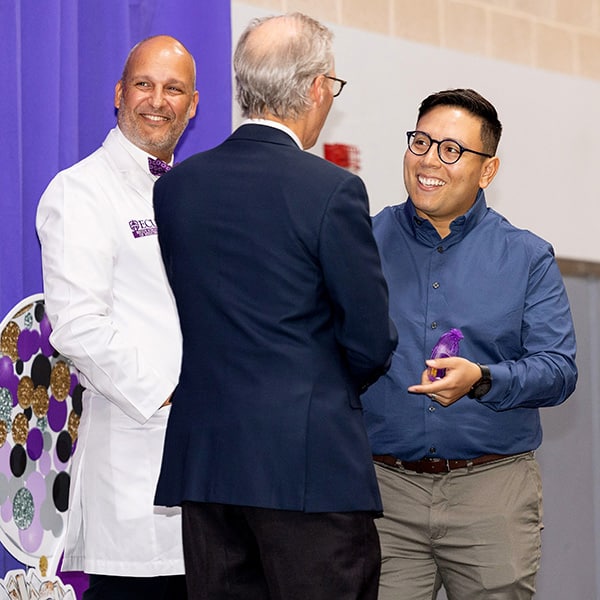
Gil has flourished, becoming close with his classmates and being inducted into the Gold Humanism Honor Society, a community of medical students, physicians, and other leaders who have been selected by their peers for their compassionate care. Gil was surprised to be named to the group but wants to continue on the path that earned him the recognition.
“The people I get to share that honor with are all beautiful human beings,” he said. “I like having that in my wheelhouse for others to know that this is an opportunity to highlight your career.”
Gil matched in emergency medicine at Carolinas Medical Center in Charlotte. When he opened his Match Day envelope, tears filled his eyes and he couldn’t speak. A tight circle of family members teared up as well, cheering when he was able to reveal his next stop.
“Charlotte?!” a colleague passing by exclaimed.
“Yes, yes!” Gil nodded, overcome by a fresh burst of tears.
Emergency medicine felt like the right fit for Gil, who has learned to temper his expectations as he went through medical school, hoping for the best but understanding that contingency plans are important to have in place. The specialty also drew him in because of his overwhelming passion for helping people and healing patients who seek him out for assistance.
“Anyone who comes through those doors is not at a great point in their life,” he said, “whether they have pain, addiction, substance abuse, a car accident or things aren’t great at home. These people humble themselves enough to come and seek our help. Knowing that I have an opportunity to somehow have an impact on their lives moves me to a degree that I really can’t describe.”
As Gil prepares to leave Greenville and head west for the next chapter in his story, he hopes that what he’s learned at Brody will help add vitality to his patients’ stories as well.
“An opportunity to give someone grace, to restore their dignity, is so important to me,” he said. “It makes all the scary things about emergency medicine go away. That moment gives you an impetus to work harder to restore this person, so when they leave, they can go back to their life and complete their narrative.”
Read more from ECU News Services.
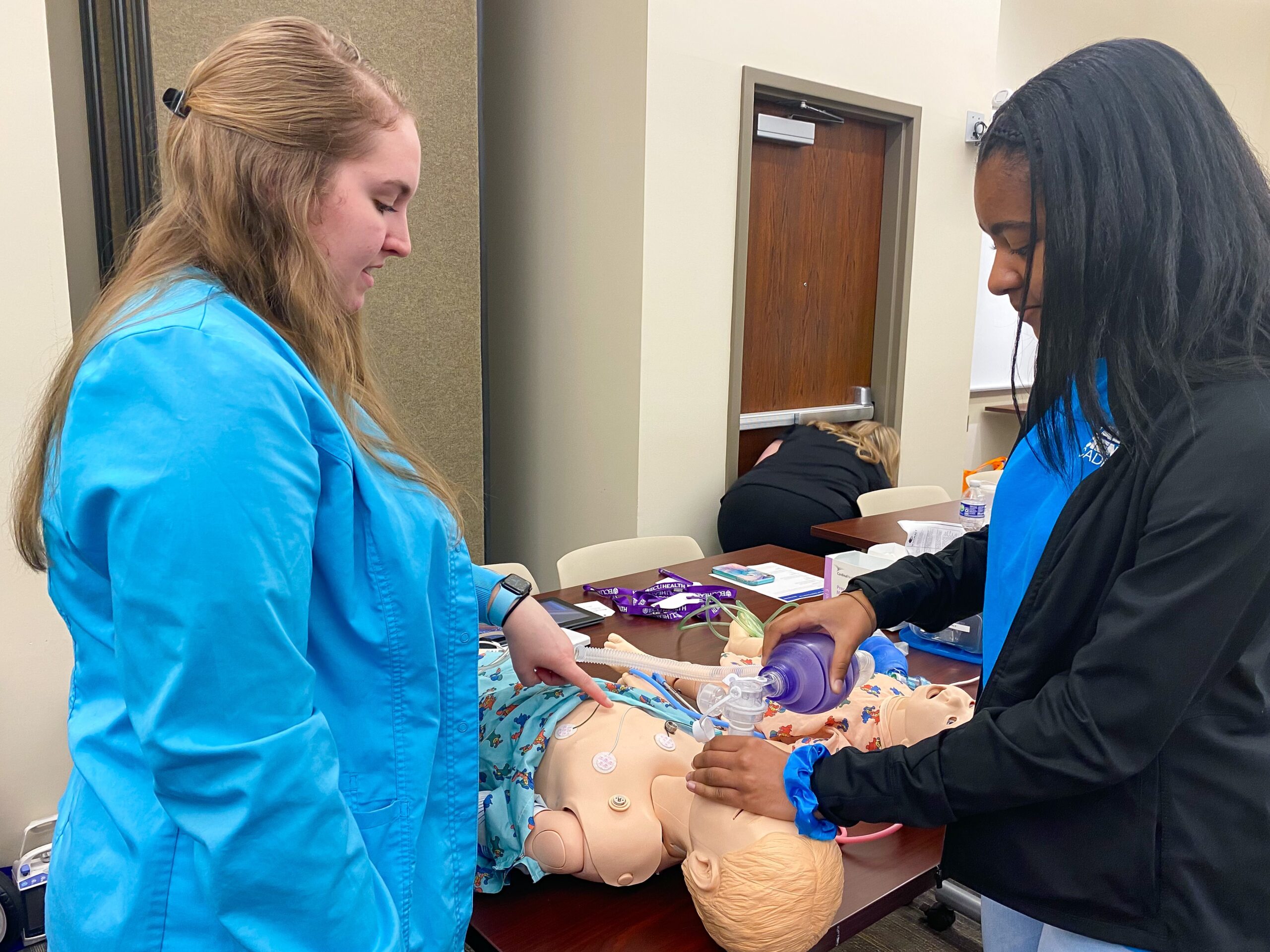
More than 100 ninth grade students from Pitt County Schools and Duplin County Schools attended ECU Health’s career fair for Health Sciences Academy students on March 2. Over 20 hospital departments and exhibitors from partners including Pitt Community College and Beaufort County Community College attended the event which included interactive and creative booths to educate students on different health care careers.
“Health Sciences Academy offers high school students the opportunity to explore different careers in health care and receive real experiences in the health care setting,” said Nancy Turner, program coordinator, Workforce Development, ECU Health. “Presenters in the career fair were able to tell students their career path, including where they went to school, how long degree programs take and degree/certification requirements for their careers.”
The Pitt County Health Sciences Academy is a partnership between ECU Health, Pitt County Schools, Pitt Community College, East Carolina University, the Brody School of Medicine, Colleges of Allied Health Sciences, Engineering and Nursing at East Carolina University, School of Dental Medicine at East Carolina University, the Eastern Area Health Education Center and the Greenville-Pitt County Chamber of Commerce.
The Health Sciences Academy originally launched at six high schools in Pitt County in 2000 and has expanded across schools in Pitt County and in Duplin County. Last year alone, 282 students completed the program and were awarded more than $3.9 million in scholarships to help on their health care career journeys. Those students completed 106,225 volunteer hours at ECU Health.
“Health Sciences Academy allows for ECU Health to develop our workforce locally with students who are passionate about health care and helping people,” said Turner. “One of the most exciting things about the career fair was seeing a former Health Sciences Academy student who volunteered at the hospital and graduated from the program. She completed nursing school at Pitt Community College and ECU. She is now a pediatric nurse at ECU Health and managed a booth at the career fair to tell students about her experience. It truly has come full circle.”
During high school, Health Sciences Academy students complete a minimum of six courses that expose them to potential health care careers and prepare students to pursue college-level health science programs upon graduation. They participate in job shadowing, mentoring, internships, medical research opportunities, career exploration and volunteering.
Students say they participate in the program because they have an interest in working in health care. The career fair taught some students about health care careers they had never heard of or considered. The ninth graders who attended the career fair will soon have the opportunity to volunteer and shadow in those fields.
“Many students here in Pitt County and in Duplin County attend community college and universities locally and end up staying and working at ECU Health,” said Turner. “We are really growing our own workforce. That’s why we created Health Sciences Academy.”
To learn more about Health Sciences Academy in Pitt County Schools, please click here; for Duplin County Schools, please click here.
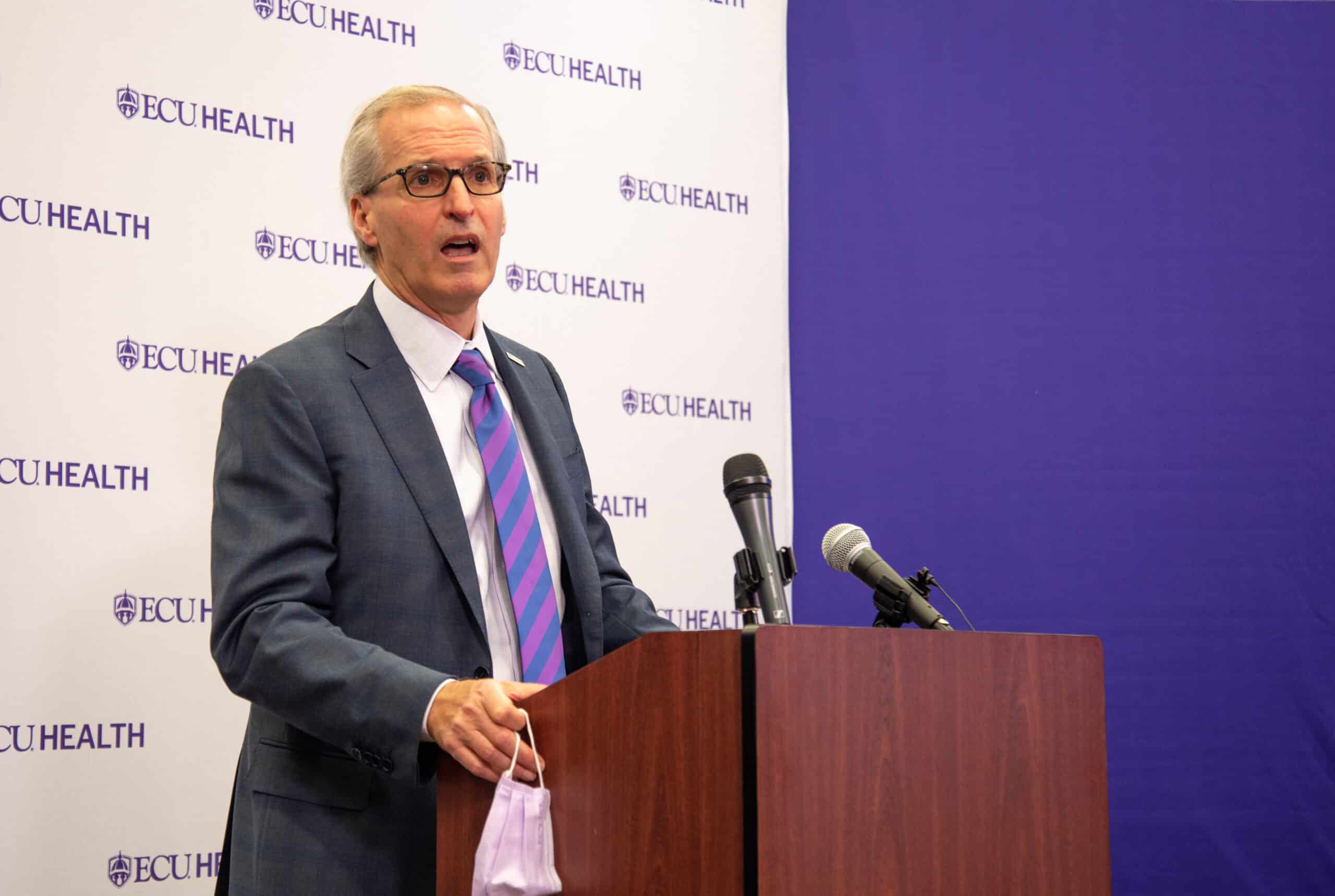
Greenville, N.C. – ECU Health CEO Dr. Michael Waldrum issued the following statement:
“This is an important moment for rural health care in North Carolina as our legislators have struck a deal to move Medicaid expansion and the Healthcare Access Stabilization Program (HASP) forward in the legislative process and one step closer to passage. Medicaid expansion will provide coverage to more than 100,000 people in the East and HASP is vitally important to stabilize health care delivery in rural North Carolina. On behalf of ECU Health and the communities we are proud to serve, I extend my deepest gratitude to our elected leaders for this important development and we look forward to it becoming a reality. While this won’t solve all of the challenges we face in rural health care, this is a critical and necessary step.”
Mental health in the United States has been an ever-escalating problem for many years that has now become markedly worse due to the COVID pandemic. Fear, anxiety and isolation stemming from the pandemic exacerbated depression, substance abuse and even the incidence of spousal abuse.
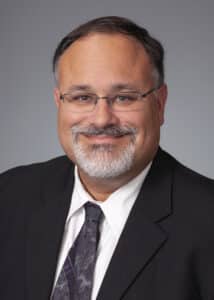
Dr. Michael Lang
In my role as chair of the Department of Psychiatry & Behavioral Health at the Brody School of Medicine and ECU Health, I have seen firsthand the impact a lack of mental health resources can levy on our most vulnerable citizens. Others in our community see and experience it as well, as evidenced by the large turnout and lively conversation at the Mental Health Town Hall hosted by the North Carolina Department of Health and Human Services in Greenville on Feb. 9. The themes and stories shared at the town hall were common, consistent and heartbreaking. I am grateful for the legislators and community members who came together to have an open, honest discussion and we all agree that urgent action is needed.
Emergency departments across the state are overrun with patients in psychiatric distress with few outlets available to provide them help. This has particularly been the case for patients with substance abuse disorders, our elderly and children. I personally have seen so many children in the emergency department that doctors had to treat other conditions in the waiting room. We owe our patients appropriate mental health services in a safe location with qualified professionals who are not only delivering excellent care but training the next generation of providers to take up the mantle of behavioral health care.
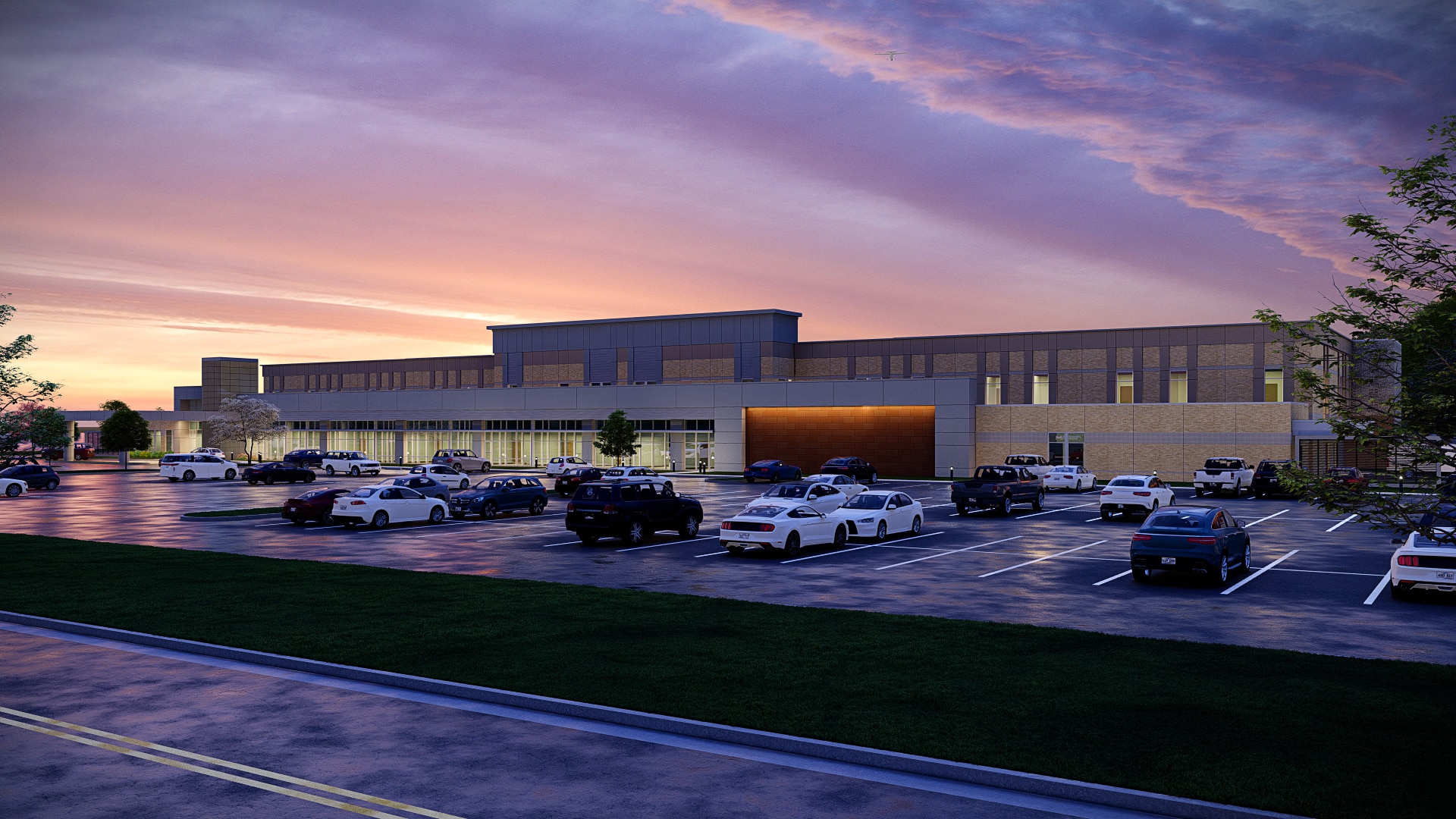
To that end, ECU Health’s partnership with Acadia Healthcare to build a new 144-bed freestanding mental health hospital here in eastern North Carolina is a step in the right direction. This facility, scheduled to open in 2025, will provide state-of-the-art care for not only the people of our region but also the entire state. The hospital will house distinct units that will be devoted to the care of specific populations of behavioral health patients. Included will be a geriatric unit, a substance abuse area, a space for those with significant co-morbid medical problems, the intellectually disabled and a 24-bed child/adolescent unit. Within its walls, every evidenced-based treatment available will be utilized to maximize our ability to rehabilitate, stabilize, and allow our patients successful community reentry.
Given the large number of disparate patients with varied diagnosis, the new behavioral health teaching hospital will serve as a training area for physicians, nurse practitioners, physician assistants, psychologists, occupational therapists, family therapists, substance abuse counselors and more. The hospital will be closely aligned with ECU Health Medical Center for access to the wide array of clinical and diagnostic resources our tertiary care center has to offer.
Our vision is for this facility to serve as a symbol of the commitment we at ECU Health and the Department of Psychiatry and Behavioral Medicine have to provide state of the art care for the people of eastern North Carolina. I am excited to form new partnerships and engage our community leaders to ensure that all citizens, whether they have schizophrenia or opiate use disorder, can live and prosper here in our wonderful region.
Michael Lang, MD, is chair of the Department of Psychiatry & Behavioral Health at the Brody School of Medicine and ECU Health.
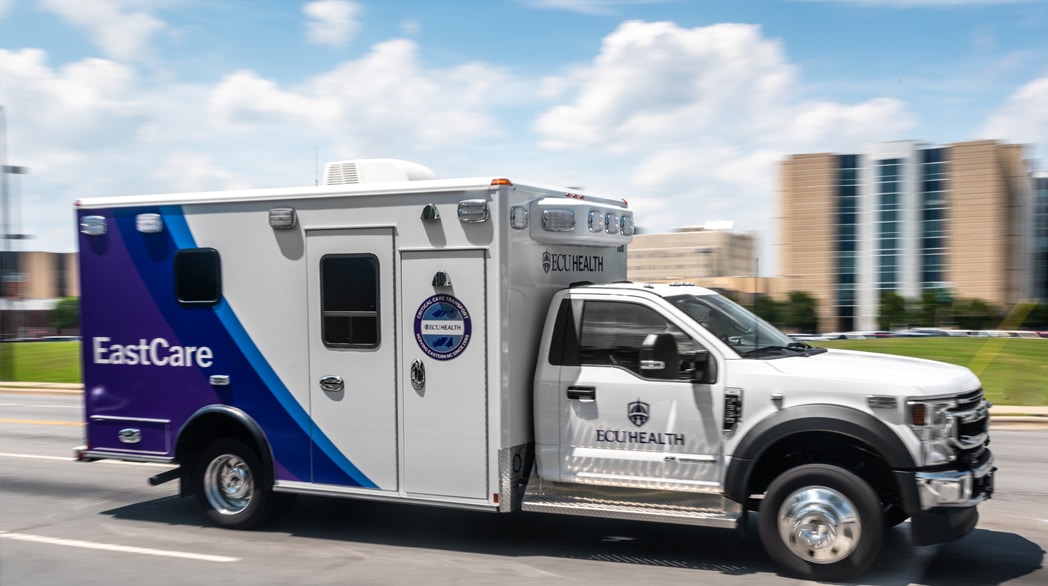
Washington, N.C. – ECU Health Beaufort Hospital, a campus of ECU Health Medical Center President Debra Hernandez, MHA, RN, FACHE, CENP, will assume the fulltime role as senior vice president, System Emergency Services effective Feb. 26.
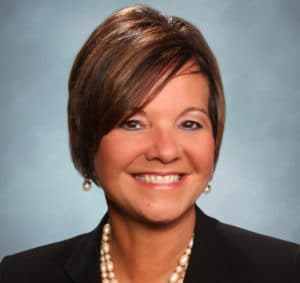
Debra Hernandez, MHA, RN, FACHE, CENP
Hernandez joined ECU Health in 2018 as the president of ECU Health Duplin Hospital. In 2020, she transitioned into a dual role as president of ECU Health Beaufort Hospital as well as system vice president of Emergency Services.
Hernandez’s transition into this role goes hand-in-hand with ECU Health’s investment in transforming its care delivery system with the goal of ensuring patients receive care at the right place and time across the region. Emergency Services are a critical component of health care delivery and impact capacity, access and clinical operations, particularly at a time when patient volumes in emergency departments are high. Hernandez, alongside physician leadership, will be responsible for clinical and operational excellence for system Emergency Services.
“I want to thank Debra for leading a transformational period at ECU Health Beaufort Hospital and for her willingness to tackle this new challenge,” said Brian Floyd, chief operating officer, ECU Health. “Debra’s expertise and experience in overseeing Emergency Services are particularly valuable in today’s health care environment where we are seeing increasingly high demands in emergency departments across the nation, state and here locally. I have full confidence in Debra’s ability to optimize our system-wide Emergency Services and improve clinical efficiencies for patients and team members.”
With Hernandez’s transition into her new role, Dennis Campbell, II DHA, BSN, RN, NEA-BC, CPHQ, will serve as interim president at ECU Health Beaufort. Campbell has been with the health system and in his current role as ECU Health Beaufort’s vice president of Patient Care Services for more than two years.
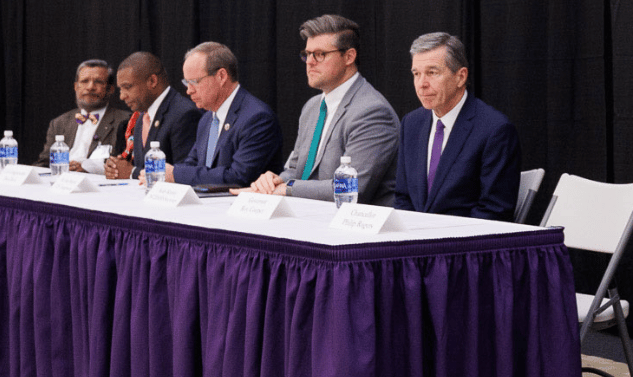
Children and adolescents with mental health care needs will benefit from a $3.2 million partnership between East Carolina University and the United Health Foundation.
The grant will expand the North Carolina Statewide Telepsychiatry Program (NC-STeP) within the ECU Center for Telepsychiatry and e-Behavioral Health. The investment is part of the United Health Foundation’s ongoing commitment to working with ECU to address mental health challenges in North Carolina — this time with youth.
In joining leaders to announce the three-year partnership, North Carolina Gov. Roy Cooper highlighted the critical needs surrounding children’s mental health in the state.
“Not only do we need to pay attention to our health, but our mental health as well and we’re recognizing that more than ever,” Cooper said. “That’s why I am so excited that the United Health Foundation, Dr. Sy Saeed and ECU have come together to try to get mental health treatment to young people in a more efficient and better way.”
Cooper said the NC-STeP partnership between ECU and the United Health Foundation helps advance toward his mission for the state for people to be able to live healthier lives with opportunities of purpose and abundance. Cooper said residents of rural North Carolina know how hard it is to get access to health care. Telemedicine will help bring experts to people wherever they are throughout North Carolina.
“I’m excited about this project. There are going to be people’s lives improved and people’s lives saved because of it,” Cooper said.
Through this expanded program, NC-STeP will provide access to mental health services for children in their established pediatric or primary care setting, removing the stigma sometimes associated with mental health care, said Saeed, director of the ECU Center for Telepsychiatry and founding executive director of NC-STeP. Through telemedicine, the program will offer expert consultation support for clinicians.
“In North Carolina, children experience significant challenges accessing the care needed to address their mental health. More than 70% of children in North Carolina with a mental health disorder do not receive treatment, and 92 out of 100 counties in the state are designated as mental health professional shortage areas,” Saeed said. “A growing body of literature suggests that the use of telepsychiatry to provide mental health care has the potential to mitigate the workforce shortage that directly affects access to care, especially in remote and underserved areas.”
NC-STeP was established in 2013 and has completed more than 56,000 psychiatry assessments in hospital emergency departments and has served more than 14,000 patients in its 23-community primary care settings. The expansion will provide mental health care services to underserved children and adolescents in six community-based pediatric and primary care clinics in rural and underserved parts of the state.
U.S. Reps. Greg Murphy and Don Davis, who helped guide NC-SteP in the General Assembly, have continued to support the initiative in Congress.
“It’s the people with boots on the ground, the people who are actually taking care of patients who deserve most of the praise,” Murphy said. “Sy has been a lifesaver for many individuals.”
Murphy thanked United Health Foundation for funding the initiative that will help address the unique challenges of patients in rural areas.
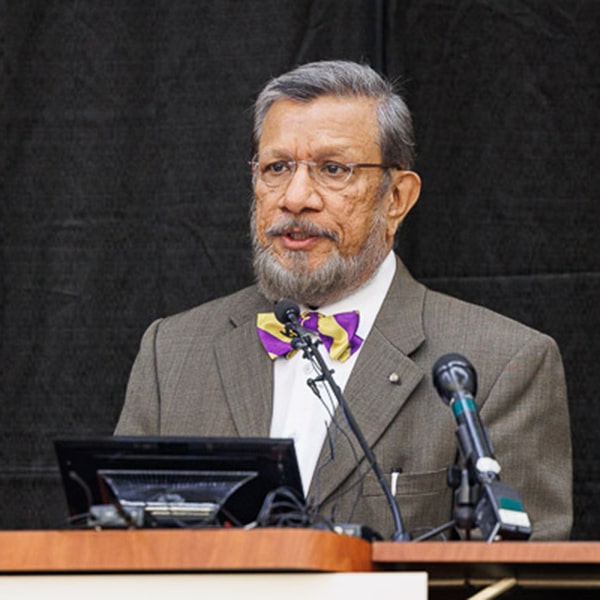
Davis emphasized the focus on children’s mental health as an important step in the effort to “provide every child a fighting chance to realize the American dream in eastern North Carolina. Dr. Sy has been a fearless voice in this effort,” Davis said.
“We’re honored and excited to partner with East Carolina University to address key health challenges our young people are facing,” said Anita Bachmann, CEO, UnitedHealthcare Community Plan of North Carolina, part of UnitedHealth Group. “By working together and creating an interconnected system of clinical and social services, we can continue to produce better health outcomes for North Carolinians.”
The United Health Foundation and ECU also partnered in 2020 through a $1.25 million grant to expand telepsychiatry services to address the mental health needs of expectant and new mothers. Through the Maternal Outreach Using Telehealth for Rural Sites (MOTHeRs) project, ECU developed and deployed a new obstetric care model for high-risk patients and addressed food insecurity among pregnant women.
North Carolina Health and Human Services Secretary Kody Kinsley touted the importance of access to health care — particularly mental health care services — in rural North Carolina.
“There is no health without mental health,” Kinsley said. “In particular, I think we know that mental health needs for children are more acute than ever.”
Kinsley said the investment announced today is a “win-win-win.” The project is being built on a program that has led statewide in expanded access to care.
“Truly it has been ECU driving access to telepsychiatry far before it was a fashionable thing,” Kinsley said.
Innovation is at the center of ECU’s initiatives fostering regional transformation in health care. ECU Chancellor Philip Rogers said the partnership with the university and the United Health Foundation allows many disciplines across campus to address the disparities in health care.
Rogers said the initiative would not be possible without the steadfast dedication and hard work of leaders at ECU, beginning with Saeed, who leads the team responsible for the operational aspects of the program.
“This transformative grant builds on our leadership in leveraging technology to provide care in the region and across the state,” Rogers said. “Our partnership with the United Health Foundation runs quite deep. This partnership has already made a significant impact as we prepare students to address the critical shortage of mental health professionals in our state.”
“Lucky” Xue, Robert D. Teer Distinguished Professor, Department of Management Information Systems, and students in the ECU College of Business are responsible for two components of the project — a virtual reality video game (AI) and a knowledge management system (KM). Xue said the project would have a profound impact on her research, teaching and community engagement.
“The objective of the AI-KM component is to strengthen the collaboration among mental health care professionals, family members and community partners across eastern North Carolina, and to optimize the utilization of existing mental health knowledge while uncovering innovative practices,” Xue said.
“The students from the Department of Management Information Systems in the College of Business will be given the unique opportunity to participate in the system development process. This will serve as a practical application of the knowledge they have gained through their coursework and an opportunity to make a positive impact on society. It’s an excellent chance for them to hone their skills and contribute to a meaningful cause.”
Regional disparities
In North Carolina, children experience significant challenges accessing the care needed to address their mental health. This partnership will help connect youth with mental health services in areas with provider shortages, said Dave Tayloe Jr. at Goldsboro Pediatrics.
“We have a significant shortage of mental health professionals, and often these key members of our health care workforce are not paid enough to cover their expenses when they provide mental health services for at-risk children. Most communities do not have even one child psychiatrist to help primary care providers care for the children who have the most serious mental health problems,” Tayloe said. “We have seen great benefit from providing mental health educational courses for primary care health professionals, having mental health professionals who work in the schools, the primary care practice, and the community, and having access to telepsychiatry services for the children most at risk for adverse mental health outcomes.”
The new grant program will take about six months to prepare. Saeed said that through NC-STeP, ECU is serving others as the university’s mission calls it to do.
“Mental health — including psychological, emotional and social well-being — is a vital part of our overall health. This is especially true for children when we consider that for many adults with mental disorders, symptoms were present, but often not recognized or addressed, in childhood or adolescence,” he said. “The good news is that we live in times when the care for mental disorders has never been more effective.”
Read more from ECU News Services.
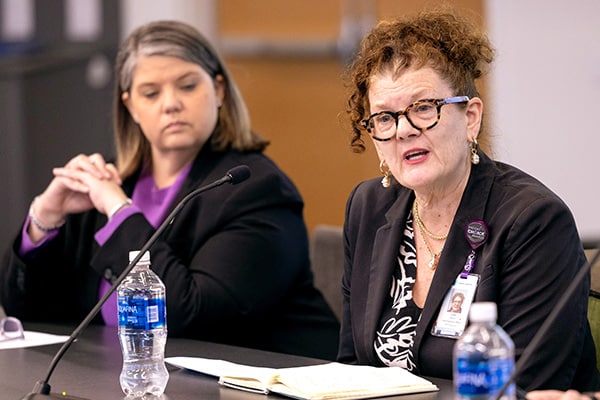
Student perseverance and community and industry partnerships were highlighted in special presentations at the East Carolina University Board of Trustees’ February meeting.
The board also welcomed Brandon Frye, vice chancellor for student affairs, who officially joined ECU this week.
On Thursday, four students spoke during the University Affairs Committee meeting about their struggles and how ECU programs helped them continue to move forward. The students and the programs are: George Cherry Jr., Students’ Treasure Chest; Nellyana Cordero-Cisnero, Pirate Promise; Adam Harrison, Pirate Academic Success Center; and Iyaira Williams, Purple Pantry. Chris Stansbury, associate vice chancellor and senior operating officer for student affairs, moderated the panel.
In introducing the students, Provost Robin Coger said earning a degree requires students to persevere even when faced with challenges. ECU provides a range of support for student success. “Ultimately they come out of ECU ready for successful careers, but there are a lot of steps in between,” she said.
Cherry, who is earning three degrees and plans to attend medical school, put 24,000 miles on his car driving to class last year from his Bertie County home, where he helps take care of his younger sister. He was able to get help from the Students’ Treasure Chest when his car needed repairs. He is working to give back to the university through service and his involvement in different organizations, including the Student Government Association.
Cordero-Cisnero is a first-generation student from Raleigh who attended community college before transferring to ECU for a degree in elementary education. She said an ECU alum introduced her to Pirate Promise, which gave her a path to a four-year degree. “It opened a new door for me,” she said.
Harrison said he commuted from his home in Williamston his first year, and the connections he made at the Pirate Academic Success Center helped him become a stronger student. He now is a mentor to other students at the center.
Williams, from Raleigh, has volunteered at the Purple Pantry since her freshman year. As an ambassador, she helped the organization win a collegiate hunger challenge and $10,000, and she continues to work with the pantry to combat food insecurity. A recent partnership with the SGA has yielded almost 90 meals donated from unused meal swipes. The SGA also provided funding to purchase a freezer for the pantry to provide frozen meals.
The panel encouraged trustees to continue hearing from students and provide opportunities for conversation. They also suggested continuing to bring awareness to the resources that ECU offers.
In another committee Thursday, the trustee’s Committee on Strategy and Innovation heard an industry workforce panel discuss how partnerships can lead to innovation and economic prosperity in eastern North Carolina and beyond. Participants included representatives from ECU Health, Fly Exclusive and MrBeast. Topics ranged from the importance of building and strengthening partnerships and pathways to identifying ECU student and graduate talent to recruit to their businesses.
Panelist Julie Oehlert, chief experience and brand officer at ECU Health, said both the university and the health system can benefit from working more closely to integrate student experiences into education in a wide variety of disciplines in health care and beyond.
“We share a community, we share learners that we both love deeply, in a variety of settings,” she said. “We share the responsibility of caring for eastern North Carolina; for educating eastern North Carolina and for advancing all the people that live in eastern North Carolina in their learning and in their health. That’s why we are ECU Health now; never before has the imperative for a strong partnership been more relevant or more necessary.”
The panelists and committee discussed ways to encourage partnerships based on innovation and thinking outside the box that will push students to create real-world solutions in situations that prepare them to enter the workforce with concrete foundational experience.
The committee also adopted a resolution on freedom of expression for faculty and students, which was unanimously approved by the full board on Friday. The resolution reaffirms the Board of Trustees’ commitment to academic freedom and freedom of expression in which faculty and students can “teach, learn, seek and speak the truth” in an environment where “academic freedom flourishes” and the campus community is given “the broadest possible latitude to speak, write, listen, challenge and learn except insofar as limitations to that freedom are necessary to the function of the university.”
Trustees also received an update on refreshing the university’s strategic plan. Committee co-chair Sharon Paynter presented a list of internal and external strengths, weaknesses, threats and opportunities that impact university initiatives and ways ECU leadership, faculty, staff and students continue to navigate them.
Read more from ECU News Services