A poet said if you write a sonnet for someone, you love them. But if you write 40 sonnets for that person, you love writing sonnets.
Students at the Brody School of Medicine at East Carolina University love their patients, putting it into poetry.
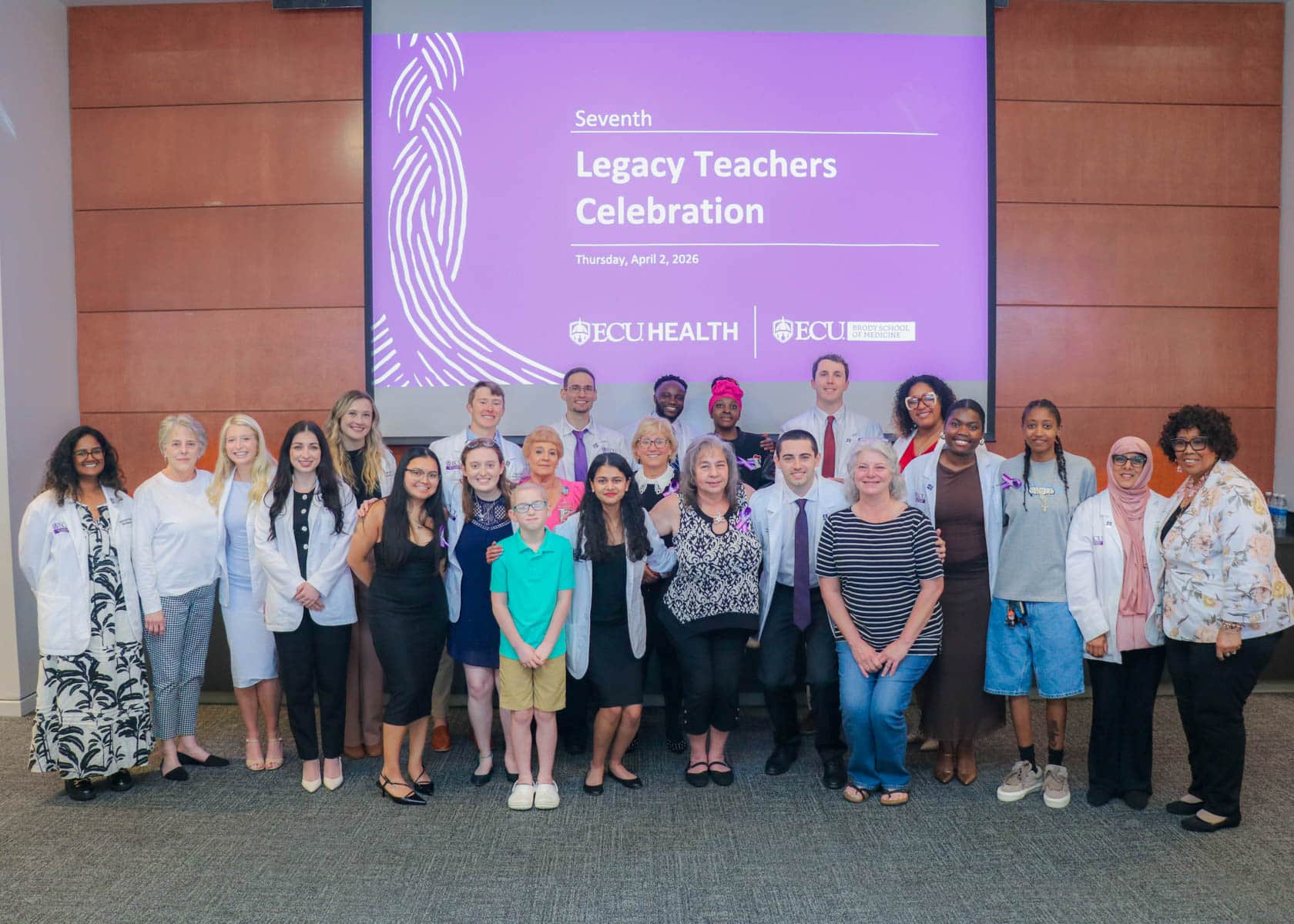
ECU Health and the Brody School of Medicine co-hosted the seventh annual Legacy Teachers event at the Murphy Center in Greenville, honoring patients who have shaped medical students’ understanding of care, empathy and presence.
The event featured remarks from Brody School of Medicine leaders Dr. Amanda Higginson, associate dean for student affairs, and Dr. Jason Higginson, executive dean and chief health officer at ECU Health, along with ECU Health leaders Dr. Christina Bowen, chief well-being officer; Dr. Julie Oehlert, chief experience officer; and Brian Floyd, chief operating officer.
Both Dr. Amanda Higginson and Floyd reflected on formative patient experiences from their own training.
“I remember the first patient I ever examined at the end of my second year of medical school,” Dr. Amanda Higginson said. “That experience stayed with me every time I stepped into a room, reminding me why I became a doctor.”
Fourteen students honored 16 patients, and their families, as Legacy Teachers. Students shared written reflections, with several choosing poetry to capture their experience. The focus set not on diagnoses, but on people.
Marriam Azam nominated Lomia Acklin and described an immediate connection.
“Lomia was going through many challenges, but her strength and resilience, and her passion for her family is inspiring,” said Azam. “We connected. Her strength gave me strength.”
Acklin said her experience with Azam was so different than other experiences she’s had in medical offices.
“She would listen to me and ask me what she could do better for me,” said Acklin. “Marriam created a personal space where I felt comfortable. She listens and we work together. I would leave a meeting with her feeling hopeful. Like my doctor was part of the family and was going to help me get through this.”
As these stories were shared, the students and patients stood together. However, some students stood alone, dedicating the honor in loving memory of a patient that passed.
“There is a sacred relationship between student and patient,” said Dr. Oehlert. “We can learn so much from these relationships. How to listen with empathy, be open and be present.”
In many cases, it’s about being a friend.
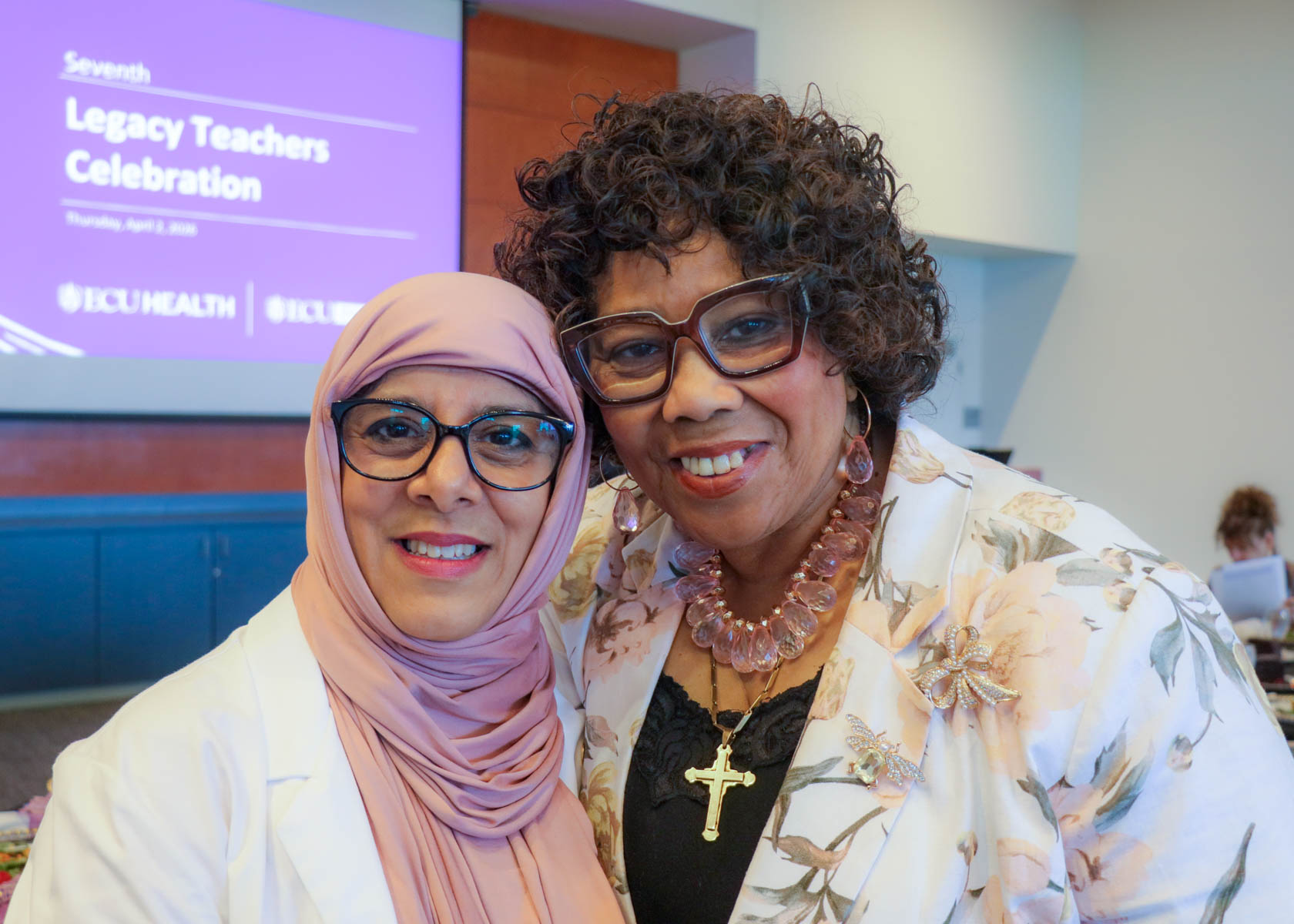
That lesson was especially evident for Vedika Modi, who met Benjamin Clark while rotating at James and Connie Maynard Children’s Hospital.
Benjamin and his parents, Amanda and Gary Clark, brought some fun and light to the Kids Immunosuppressed Specialty Unit (KISU) during the holidays with their family tradition of using mailboxes as an Advent calendar.
Modi connected quickly with Benjamin and his family. She’d wake up excited to get to work and see him.
“Gary and Amanda taught me how to show up as a family,” said Modi. “They were an example and inspiration for me not only as a doctor but as a person.”
“Vedika lifted the room up when she walked in,” said Amanda. “She was so eager and willing to learn, but what mattered was she talked to Ben like a person, on his level and connected with him on what he cared about.”
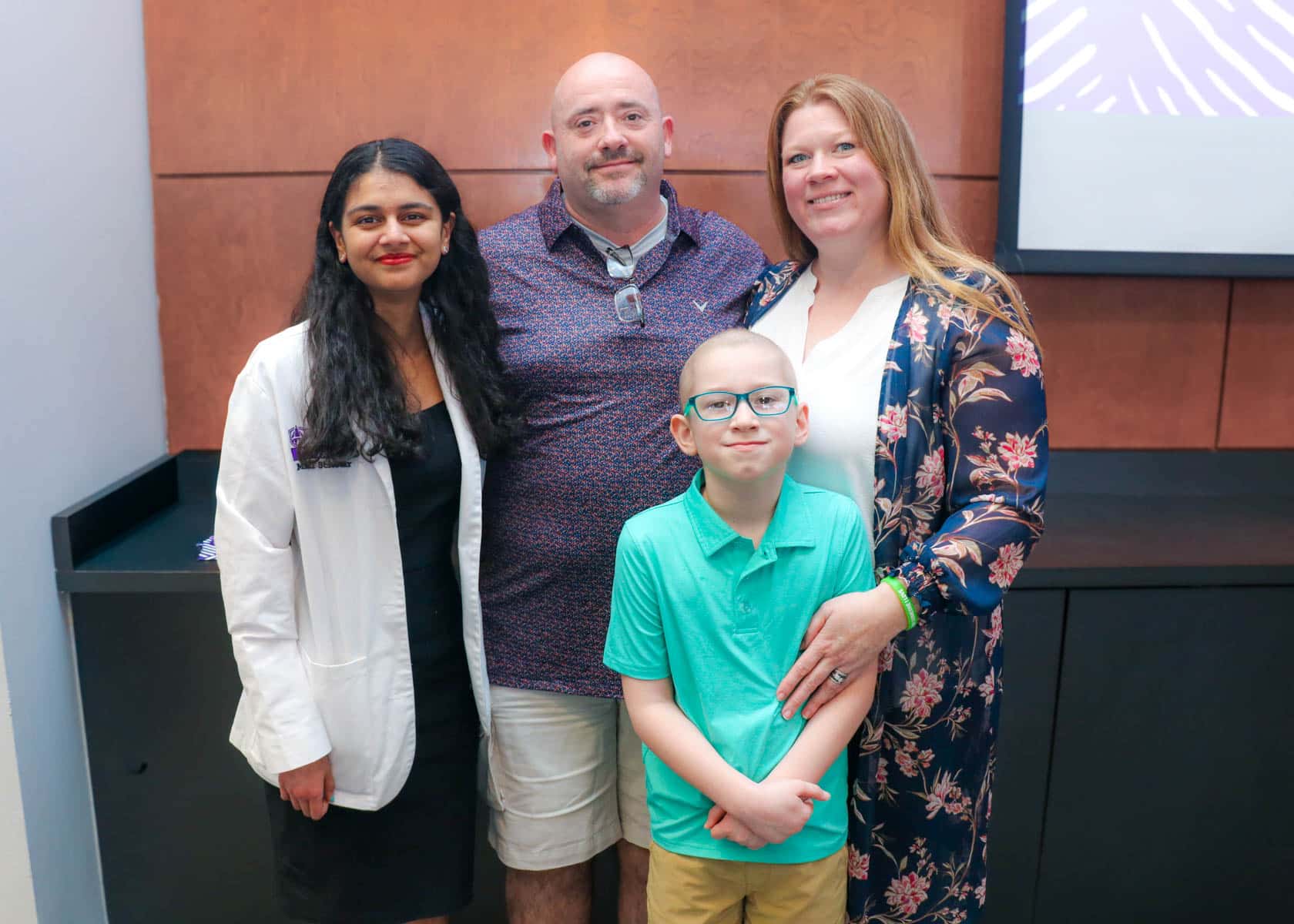
The Clark family had extra to celebrate as the day prior, Benjamin rang the bell at Maynard Children’s Hospital and is officially cancer free.
Michael Li, a Brody student and master of ceremonies, summed up the spirit of the program.
“One of the greatest gifts we receive as medical students is time with patients,” Li said. “The lessons we can’t learn in a textbook shape how we care for people and build trusting relationships.”
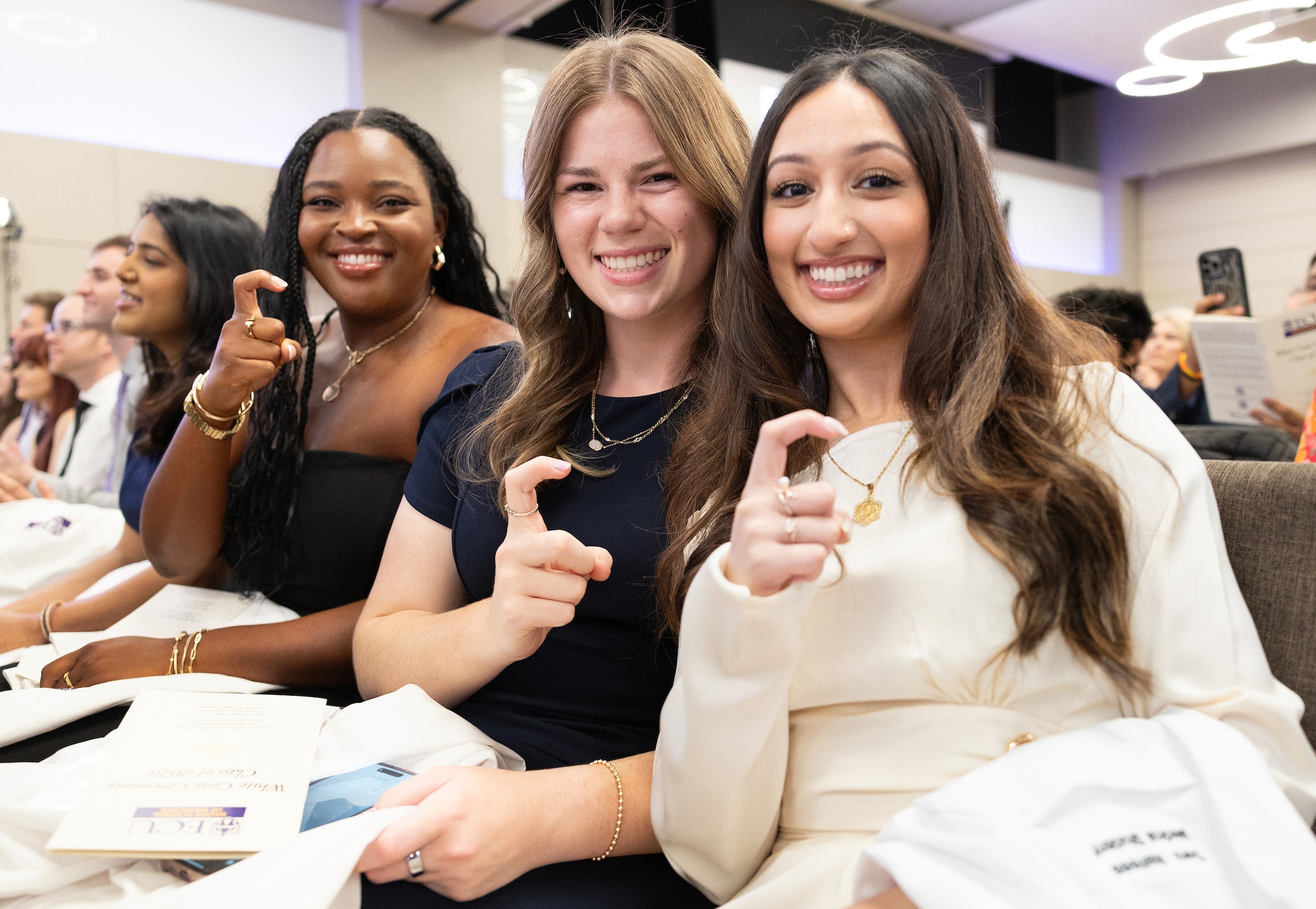
On March 28, the class of 2028 at ECU’s Brody School of Medicine gathered in a university ballroom surrounded by family, friends and physician leaders at the school to be “coated” and proceed to clinical rotations at ECU Health Medical Center.
It had been just eight days since the class of 2026 opened their sealed invitations to residency on Match Day but nearly three years since the last white coat ceremony. This year marks the first time the medical school has held the ceremony before the start of students’ third year, a momentous curricular transition from the preclinical to the clinical years of school, and it recognizes the accomplishment of completing the foundational science curriculum.
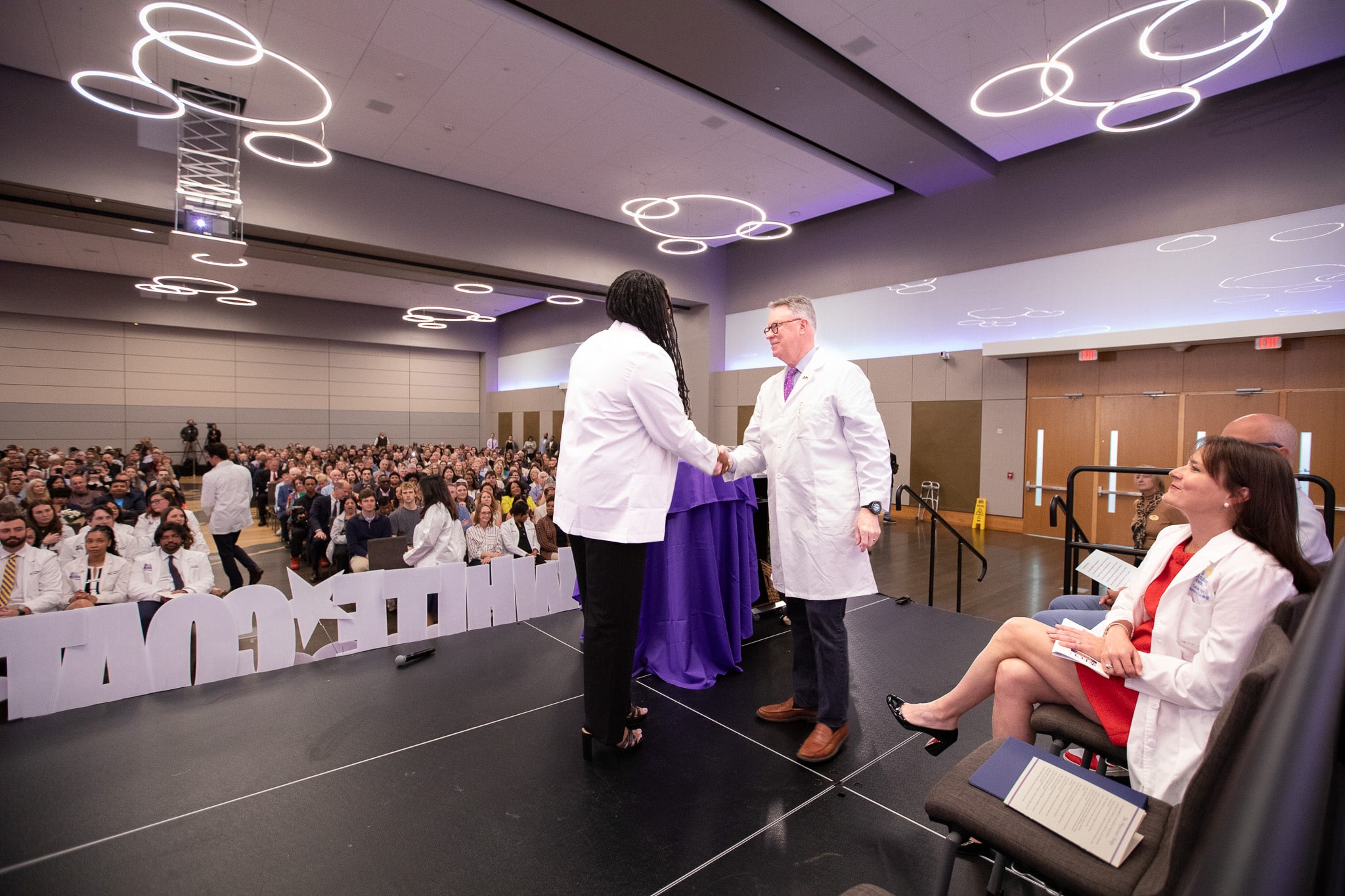
“In one week, the class of 2028 begins their clinical journey in the hospital and in clinics, and we celebrate the start of that journey today,” said Dr. Jason Higginson, executive dean of the school.
During the ceremony, students processed to the stage to be coated by a faculty member. They recited the physicians pledge for the first time. They also received words of wisdom from seasoned physicians that included Higginson and Dr. Christina Bowen, a family medicine doctor and Chief Well-being Officer at ECU Health.
A 2003 graduate of the Brody School, Bowen urged the class to consider the white coat a tangible symbol of the responsibility each future physician will have to patients.
“It represents trust,” she said. “Patients will trust you with their stories, with their fears, with some of the most vulnerable moments of their lives. They will not remember most of what you will say; however, they will remember how you made them feel.”
Bowen gave the class three points of wisdom to carry with them as they continue their medical school journeys. She told them to stay connected to their “why,” the moment they knew they wanted to care for others through medicine.
“That moment will anchor you when everything else feels uncertain,” she said.
The second point she emphasized was that how one shows up is just as important as what one knows.
On March 28, the class of 2028 at ECU’s Brody School of Medicine gathered in a university ballroom surrounded by family, friends and physician leaders at the school to be “coated” and proceed to clinical rotations at ECU Health Medical Center.
It had been just eight days since the class of 2026 opened their sealed invitations to residency on Match Day but nearly three years since the last white coat ceremony. This year marks the first time the medical school has held the ceremony before the start of students’ third year, a momentous curricular transition from the preclinical to the clinical years of school, and it recognizes the accomplishment of completing the foundational science curriculum.
“In one week, the class of 2028 begins their clinical journey in the hospital and in clinics, and we celebrate the start of that journey today,” said Dr. Jason Higginson, executive dean of the school.
During the ceremony, students processed to the stage to be coated by a faculty member. They recited the physicians pledge for the first time. They also received words of wisdom from seasoned physicians that included Higginson and Dr. Christina Bowen, a family medicine doctor and Chief Well-being Officer at ECU Health.
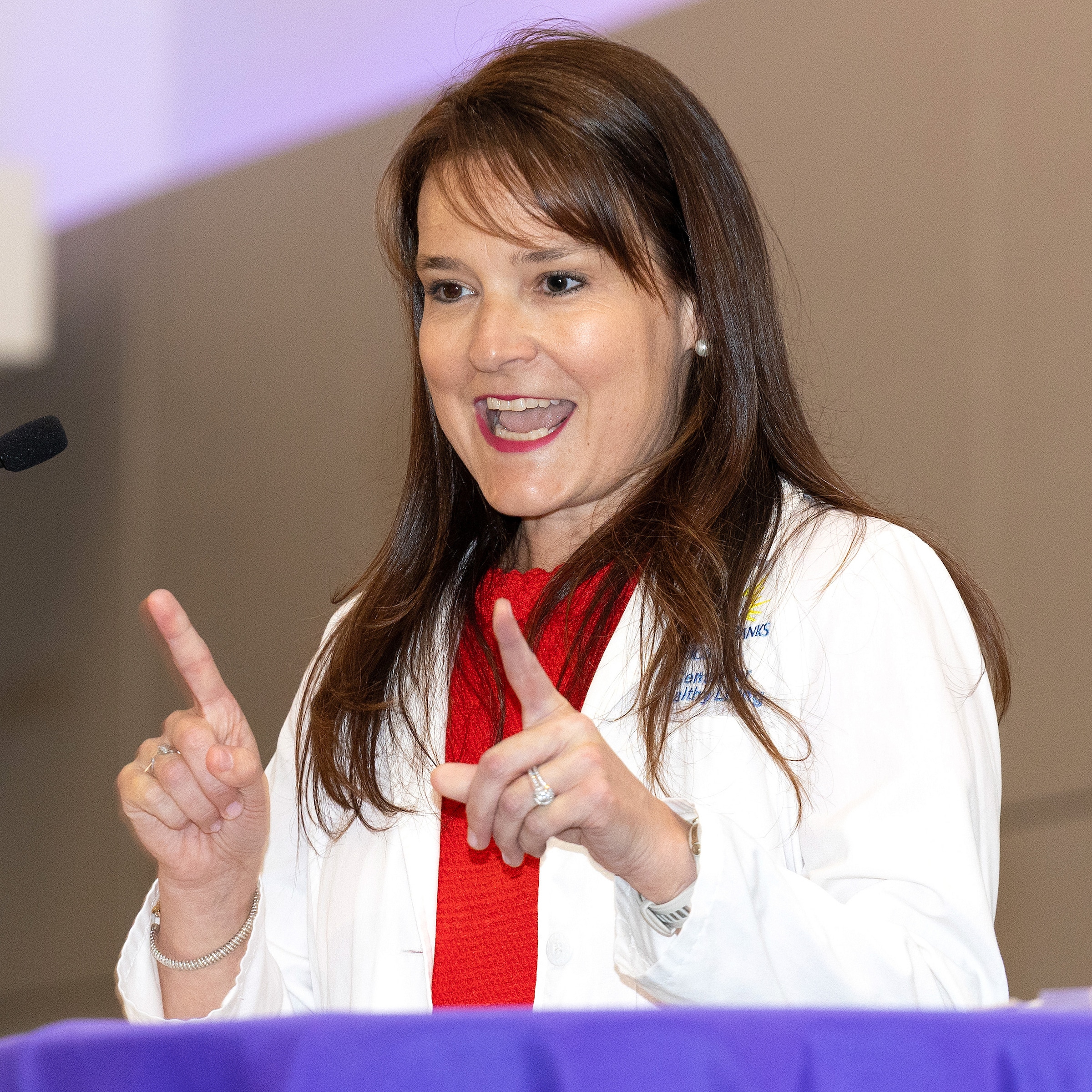
A 2003 graduate of the Brody School, Bowen urged the class to consider the white coat a tangible symbol of the responsibility each future physician will have to patients.
“It represents trust,” she said. “Patients will trust you with their stories, with their fears, with some of the most vulnerable moments of their lives. They will not remember most of what you will say; however, they will remember how you made them feel.”
Bowen gave the class three points of wisdom to carry with them as they continue their medical school journeys. She told them to stay connected to their “why,” the moment they knew they wanted to care for others through medicine.
“That moment will anchor you when everything else feels uncertain,” she said.
The second point she emphasized was that how one shows up is just as important as what one knows.
“Medicine will teach you how to diagnose, to treat, to intervene,” Bowen pointed out. “But healing happens in a relationship. In eye contact. In presence. In listening without rushing.”
The final point she shared was for the students to take care of themselves as intentionally as they care for others.
“The culture of medicine will sometimes ask you to push yourself past your limits and to give more than you have,” she said. “But sustainable excellence comes from alignment. From tending to your own well-being physically, emotionally and spiritually. This is not a luxury. It is essential to the kind of position and human you are meant to be.”
In closing, Bowen told the Class of 2028 that they were stepping not into a profession — but a calling.
“A calling to bring both science and humanity together in the care of others,” she said. “The most powerful thing you can bring to medicine is your authentic self. Wear this coat with humility. Wear it with courage. And wear it with a deep understanding that the work you are stepping into matters, not just because of what you will do, but because of who will be.”
The white coat ceremony marks the first time a student puts on the garment historically associated with the profession, but at this phase, they wear a short white coat that extends just past the waist. The full-length white coat is later.
“Students beginning their studies in medical school see their education and role as future physicians as aspiring to be worthy of the long white coat,” wrote Dr. Mark Hochberg in a history published in the American Medical Association’s Journal of Ethics.
“It’s a symbol of how far we’ve come,” said a rising third-year student, Ji In Han. “After a year and a half of hard learning and, you know, failing a couple times, and learning how to get back up, I think this is really significant.”
Han and fellow student Naimi Pothiwala, a 2022 graduate of ECU, were outside the ballroom after the ceremony along with U.S. Army Capt. David McGriff, associate professor of military science at ECU.
Both Han and Pothiwala singled out the Brody School of Medicine’s strong mission-driven focus to produce doctors for the state of North Carolina, especially its rural and underserved communities that comprise much of the east.
“I was very familiar as an undergraduate major here in public health with the region and its health disparities,” Pothiwala said. “I knew Brody was directly impacting the region — I wanted to contribute, too.”
“Oh, yeah, it absolutely mattered to me to come here,” said Han, “because I grew up without health insurance, so my whole purpose of entering medicine was to serve other underserved patients.”
The Brody School of Medicine offers students more direct patient care over the course of clinical rotations than many other schools and has developed a reputation among graduate medical education programs for students who are ready to treat patients on Day 1, Higginson said.
Today, more than 90% of medical schools in the nation hold a white coat ceremony. The first such event, held in 1994, was sponsored by the Arnold P. Gold Foundation, which also started the Gold Humanism Honor Society, a national honor society dedicated to honoring those students who exemplify humanism in medicine. This year’s ceremony was assisted by Gold Humanism Honor Society members from the classes of 2026 and 2027: Katy Flax, Morgan Maner, Madison Kendrick and Michael Kovasala.
U.S. News & World Report listed the Brody School of Medicine a Tier 1 institution in its 2025 Best Medical Schools rankings. This year, more than half of the school’s rising graduates matched into primary care specialties — and more than 40% are staying in North Carolina for that training.
This white coat ceremony also featured a public introduction of the medical school’s four new learning communities. The communities will offer a system of support for students throughout their careers. The procession of students to the stage Saturday, instead of strictly alphabetical, was arranged by community.
The learning communities include the Bertie Buccaneers, led by House Dean Dr. Mary Lenfestey; the Roanoke Raiders, led by House Dean Dr. Don Norris; the Pamlico Privateers, led by House Dean Dr. Jill Sutton and the Cape Fear Corsairs, led by House Dean Dr. Juliana Jaramillo.
The names of the communities were “thoughtfully chosen to reflect the culture of eastern North Carolina, East Carolina University and the Brody School of Medicine,” said Kema Gadson, an associate dean at the school.
“The houses will be more than communities. They are lifelong affiliations grounded in mentorship, service to eastern North Carolina and the foundation of physicians committed to improving the health care of others.”
Brody graduates enjoy on average 33% less student debt load at the time of graduation — a fact that frees them to choose front-line primary care, though other specialties and sub-specialties may be more remunerative.
The school’s top financial award was created to do just that. The Brody Scholars program provides full tuition, fees and enrichment opportunities for four years of medical education to students selected. This year, cousins Hyman Brody and David Brody pledged an additional $10 million to the program, a gift that prompted the university’s Board of Trustees to vote to name the university’s new seven-story, $265 million facility the Brody Center for Medical Education.
One such Brody Scholar participating in Saturday’s ceremony was Rebecca Cloninger.
“It is hard for people to understand what we go through as students if they’re not a student, but for family and friends to see us on this day, yes, this is a little bit ceremonial, but it really does mean we’re stepping into a new part of our lives,” Cloninger said.
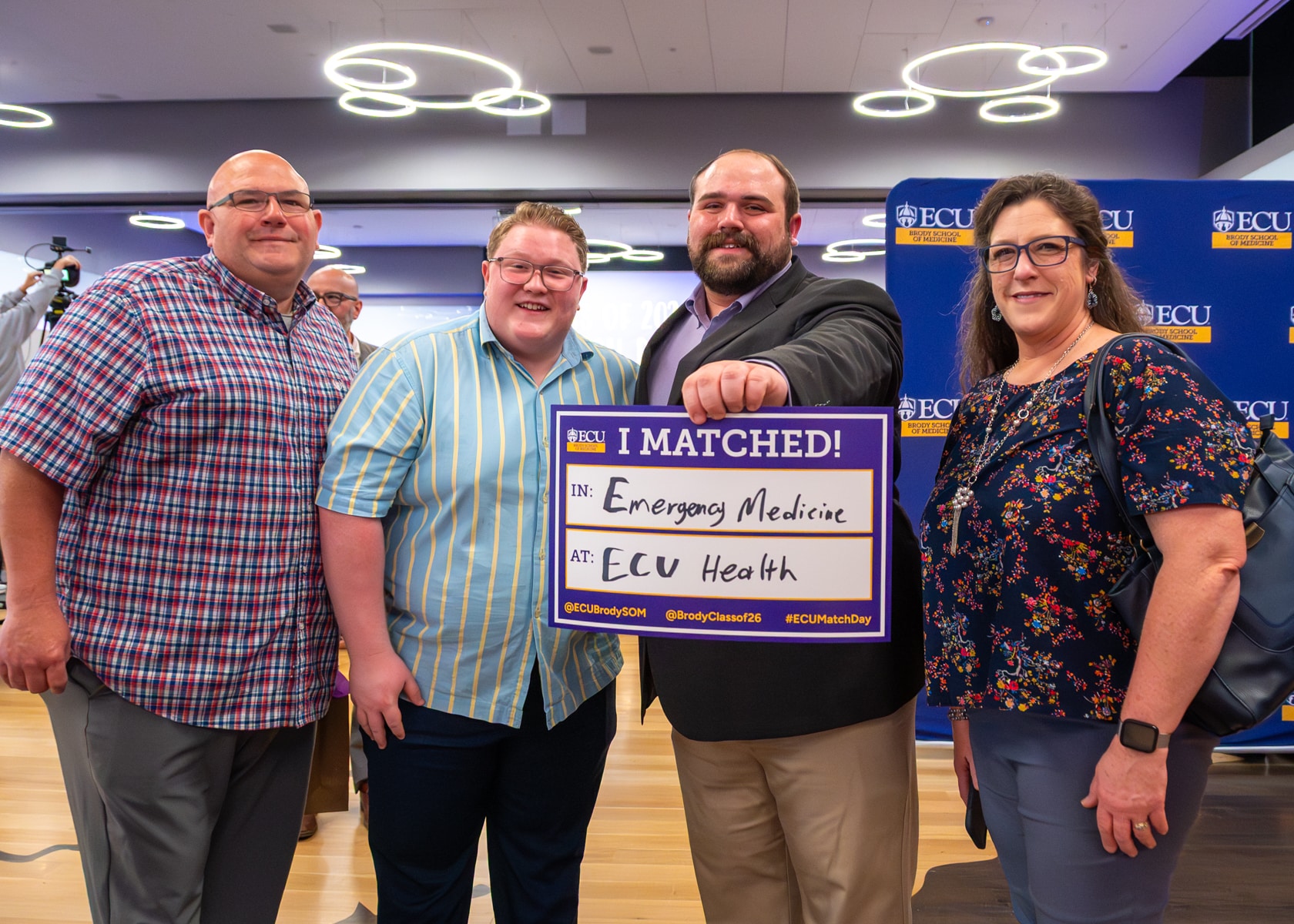
Fourth-year medical students from the Brody School of Medicine at East Carolina University learned where they will begin their career as medical residents during Match Day, March 20, and nine won’t have to look far to find their new home.
The Brody School of Medicine’s latest class continued the institution’s established track record of training future family medicine and primary care physicians. Of the 74-person class, 39 will enter a primary care residency. Nearly half matched at a North Carolina hospital and nine matched to ECU Health Medical Center.
“These students share a commitment to service that will change patients’ lives, and today we celebrate that commitment,” said Dr. Michael Waldrum, ECU Health CEO and dean of the Brody School of Medicine. “In their four years at the Brody School of Medicine they have learned how to heal, certainly, but also how to communicate and connect with people in the important landscape of rural health care. Their impact will be felt in communities across the nation, including right here in eastern North Carolina. I am exceptionally proud of them all and happy to welcome the nine continuing their journey here at ECU Health.”
Match Day was a full circle moment for Blaiz Rodman, a native of Kill Devil Hills who matched into physical medicine and rehabilitation at ECU Health. When Rodman was 16, he was in a car accident that broke a vertebra in his spine, which required fusion surgery to put titanium rods and screws in his back.
“That’s what made me really want to become a doctor and help people going through something traumatic like that in their life,” Rodman said. “It’s really why I chose rehabilitation as a specialty to go to.”
Rodman said he is healthy now and able to touch his toes, run, and play basketball. On Match Day he was excited to take his next step as an ECU Health resident.
“I love the people here. All of the people in the program are amazing,” Rodman said. “I get to stay close to my friends and my family so I’m really happy.”
Haris Shehzad also matched into physical medicine and rehabilitation at ECU Health. He agreed with Rodman that his experience working with current residents, faculty and team members have him excited to continue that relationship. As a first-generation college student, Shehzad said he wants to be a role model for others.
“I chose medicine because I really wanted to help my community,” Shehzad said. “I think that representation is very important because it provides people of different cultures a good image. Patients are more comfortable. I want to provide that comfort.”
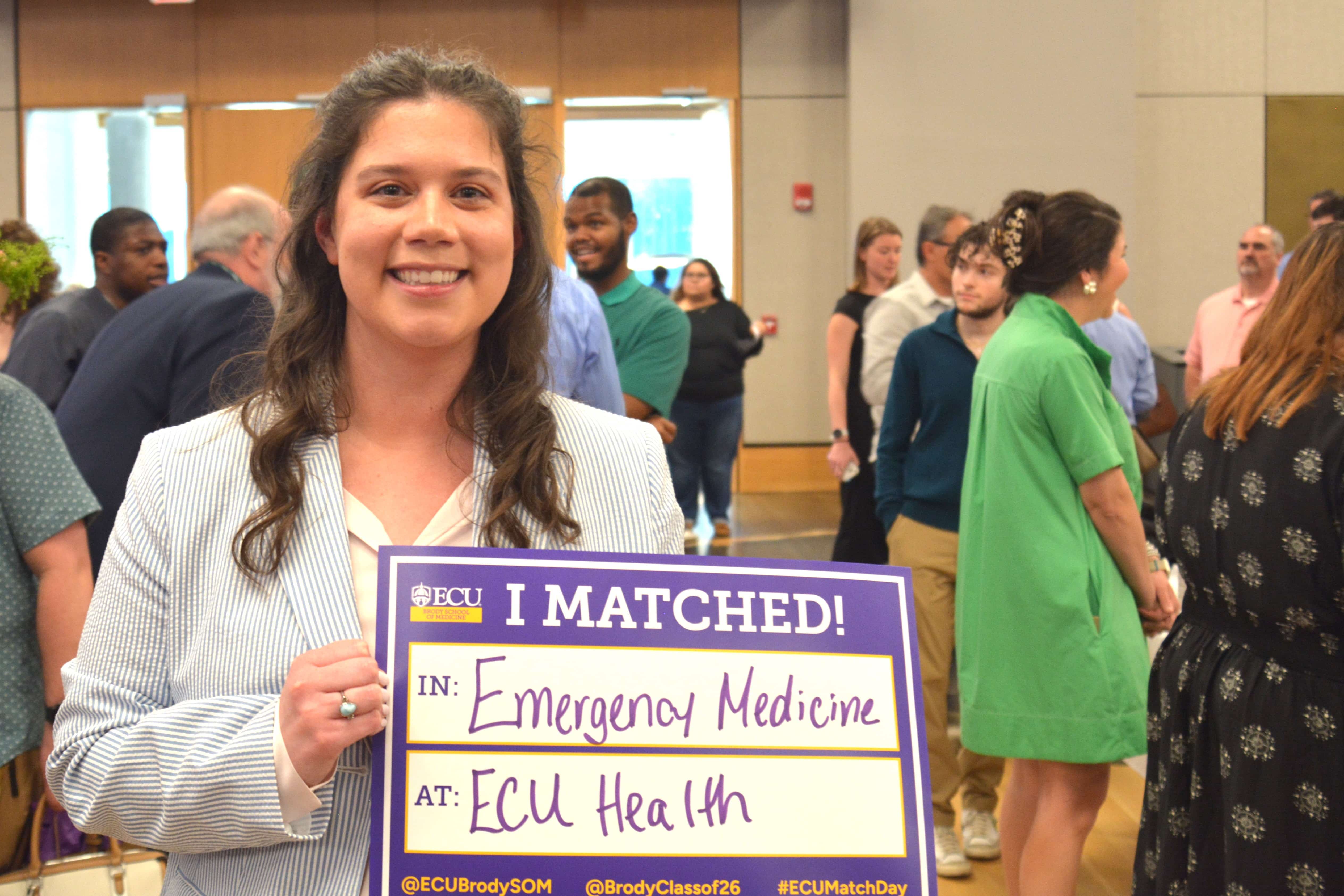
Match Day continued a streak for Emily Tate, who matched into emergency medicine at ECU Health. A “triple Pirate,” Tate earned her undergraduate, graduate and now medical education at ECU and the Brody School of Medicine. She spent years teaching at ECU before she followed her calling into patient care.
“I have always wanted to go into medicine and I’m just so happy to be here at the end of this step in my journey,” Tate said. “Medicine is a combination of all of the things I like – education, patient care, and research are all very important to me. I’m very happy to do those things here in the place that I have trained up to this point.
“I’ve really loved it here and always feel very supported. I’m glad to work with the people who have helped me get to this point. I’m ready to shoot for the stars and be the best emergency medicine physician I can be.”
A fellow triple Pirate, Cooper Butts, was accepted into the Brody School of Medicine’s Early Assurance Scholars program when he decided to come to ECU for an undergraduate degree. Early Assurance Scholars uphold high academic standards and participate in group and enrichment activities in exchange for a guaranteed seat in their medical school classes. He said the investment made in him as an 18-year-old inspired him to want to serve eastern North Carolina.
“I felt like I need to give back to the community since they put their investment in me,” Butts said. “I’ve enjoyed my training here, so I wanted to stay – not only for the great training and experiences that I know I can get here and have gotten here, but just for the people and the patient population as well.”
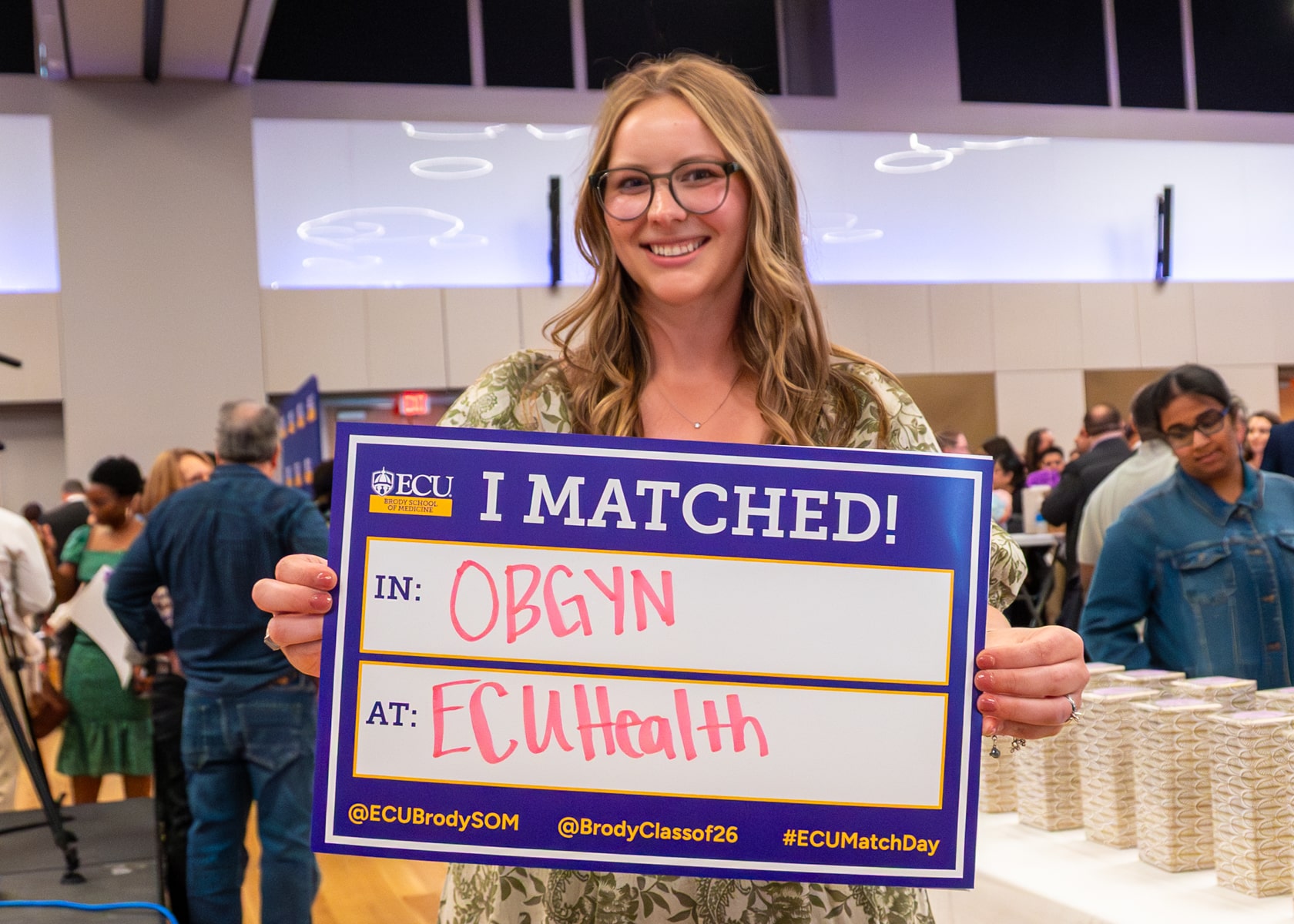
Emily Gerlach is an eastern North Carolina native who was overjoyed to match into the obstetrics and gynecology program at ECU Health for residency. She said serving the community she calls home is an opportunity she looks forward to for years to come.
“I think ECU Health has an emphasis on rural health care and it cares for everyone east of I-95, basically,” said Gerlach “ECU Health Medical Center is a tertiary care center, academic medical center and I think that’s an amazing place to train with what I want to do – working in rural eastern North Carolina in the future.”
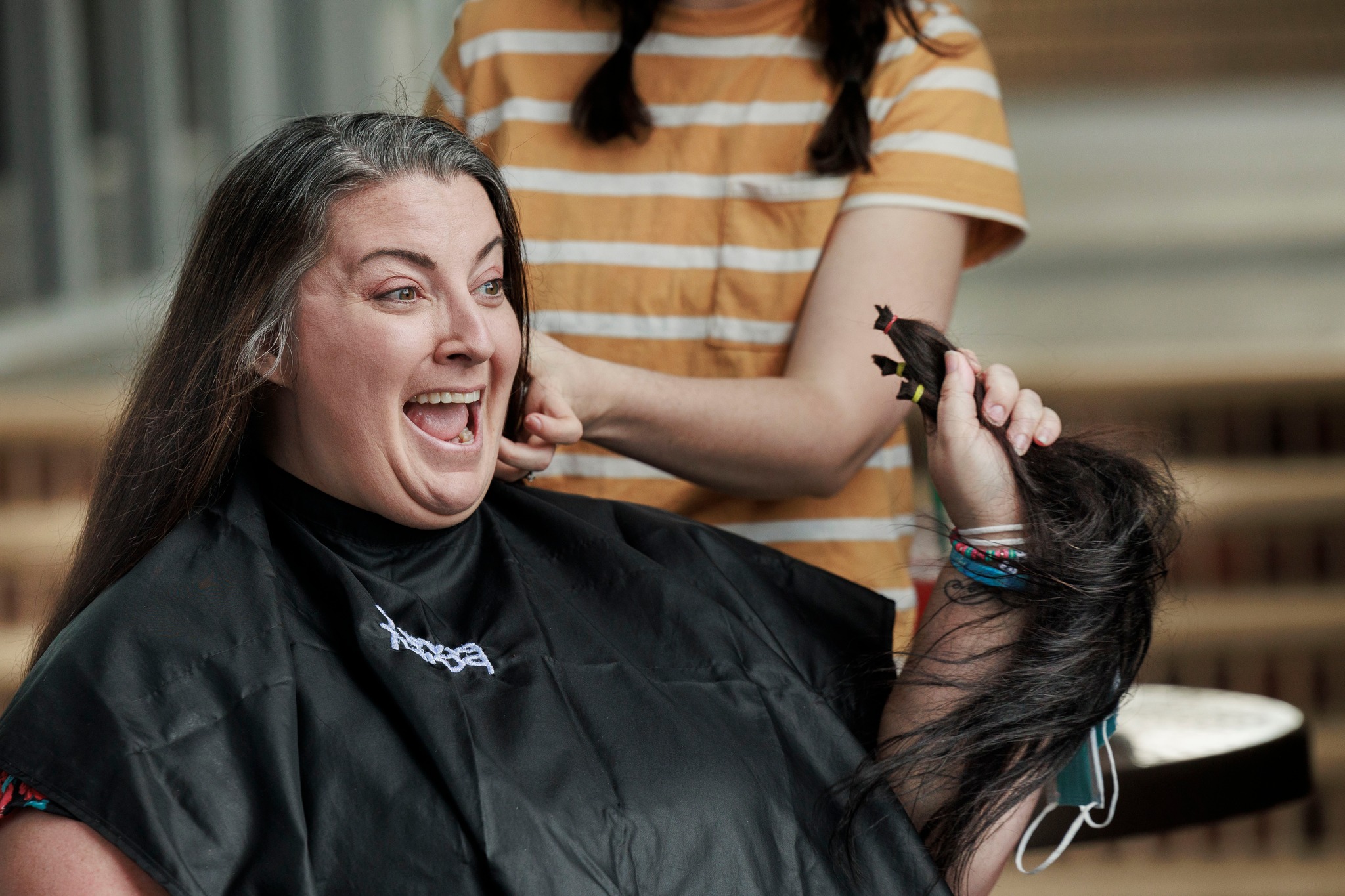
Pirates vs. Cancer, a student‑driven initiative dedicated to supporting children and families facing cancer, is set to host its annual spring fundraising event on April 10 at the ECU Health Sciences Campus. Led by medical, dental and allied health students, Pirates vs. Cancer brings together the entire health sciences community for a day of giving, celebration and solidarity with pediatric patients.
The spring event will feature hair donations, professional haircuts provided by a local barber, raffles, and a variety of family‑friendly activities. Students have also secured support from local businesses, including the donation of a bounce house and supplies for bracelet‑making and face painting so pediatric patients can join in the fun. The American Red Cross, National Bone Marrow Registry and Rylee’s Army will be in attendance, too.
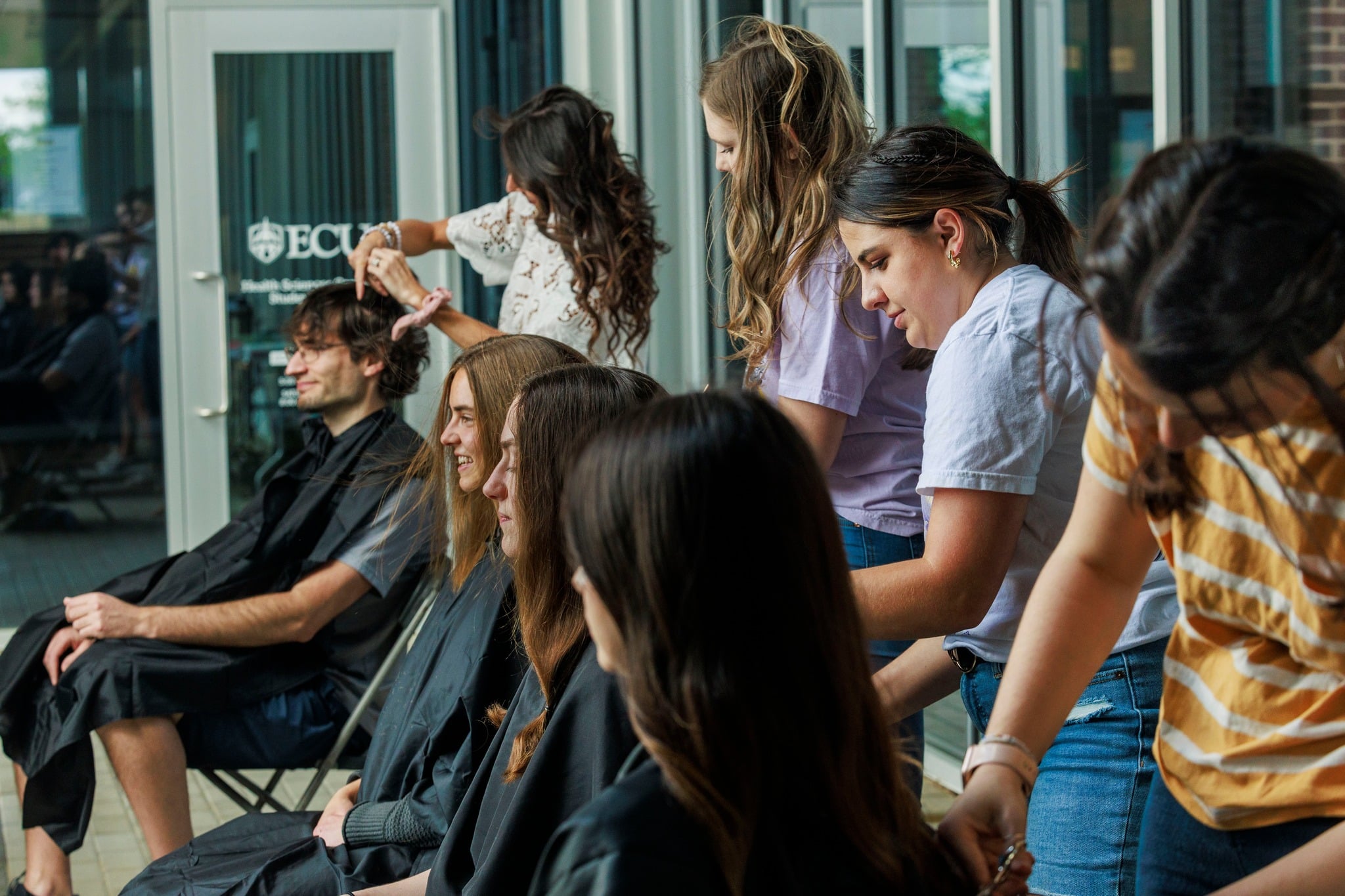
“We really want this to be a fun, uplifting day where students, families and the community can come together for a meaningful cause,” said Sebastian Williams, president of the Pirates vs. Cancer leadership team and a first-year medical student (M1). “Our goal is to raise funds, raise awareness and show our pediatric patients that they have an entire Pirate Nation behind them.”
For Williams, fundraising for pediatric cancer patients is a full circle moment. At age six, he was diagnosed with acute lymphoblastic leukemia and spent three years undergoing chemotherapy. Now, more than a decade later, he is studying to be an oncologist and helping kids whose circumstances are all too familiar.
“I understand what these kids are going through,” Williams said. “It’s a huge, life-changing event. You have to go through chemo treatment for months, for years, and you can’t do the same things that other kids do. I had to quit all my sports. I had to quit other activities because my body just couldn’t handle it, my immune system was basically not functional.
“Doing an event like Pirates vs. Cancer is a rewarding experience for me. I can give these kids what I wish I had. This is the whole reason I want to become a physician and continue this endeavor to help children with cancer.”
One hundred percent of the funds raised by Pirates vs. Cancer is donated to ECU Health Foundation to benefit programs at the James and Connie Maynard Children’s Hospital at ECU Health Medical Center. Some of those programs have included camps and other programs specifically designed to provide pediatric patients with childhood experiences.
Among the most tangible examples of the group’s efforts is on the Maynard Children’s Hospital’s second floor. In 2024, Pirates vs. Cancer funds were designated to renovate a playroom and fill it with toys, games, crafts and technology that help patients take their mind off procedures and just be kids.
“We were able to almost double the size of this playroom for these kids and add so many more interactive features,” said Elise Ironmonger, director of programs at the ECU Health Foundation. “It’s really a place of respite for them when they are facing treatment for months, weeks at a time.”
Pirates Vs. Cancer was founded by Brody School of Medicine students in 2017 and has raised over $176,000 in the past 10 years. Leadership and participants are composed of students, faculty and staff from the School of Medicine, School of Dental Medicine, College of Nursing, College of Allied Health Sciences and the Undergraduate campus. Together, they raise funds that directly impact their community.
“It’s wonderful to see where the money physically impacts the kids’ experience at the hospital,” Williams said.
Pirates vs. Cancer continues to grow as a signature philanthropic effort on the Health Sciences Campus, uniting future health professionals around a shared commitment to compassion, service and advocacy for children battling cancer.
Local businesses have been invited to sponsor the event, with a March 20 deadline for inclusion on event T‑shirts and promotional materials. While sponsorships for the spring event are closing soon, community members are welcome to donate at any time, and businesses will have additional opportunities to support the larger Pirates vs. Cancer fall event later this year.
To donate, please visit: https://give.ecuhealthfoundation.org/campaign/2026-pirates-vs-cancer/c758778
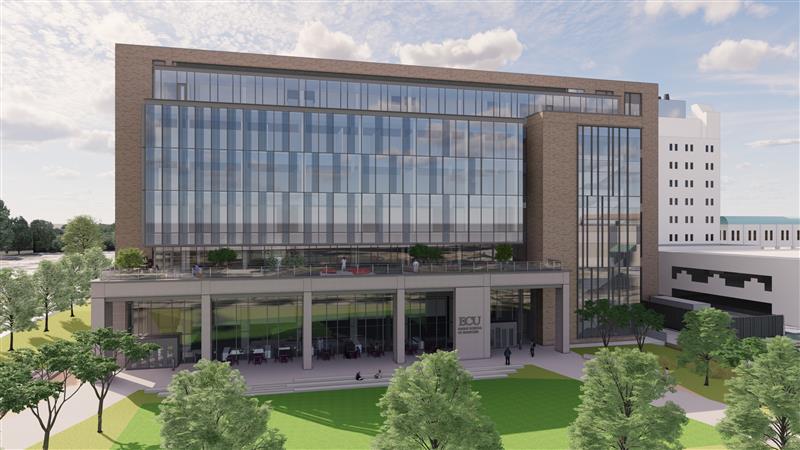
A transformational $10 million gift from David and Laura Brody of Raleigh, and Hyman and Stacy Brody of Greenville, will support and expand the Brody Scholars Program, East Carolina University and ECU Health Foundation announced today.
The university will honor the family and their steadfast ties to the institution and region with the naming of the new 195,000‑square‑foot Brody Center for Medical Education when it opens for the 2027-28 academic year. Approved by the ECU Board of Trustees on Feb. 13, the naming recognizes a decades‑long philanthropic relationship between the family and the university to strengthen ECU’s mission.
The gift directly strengthens the Brody Scholars Program and the Brody School of Medicine’s mission to train physicians to serve North Carolina, especially in rural and underserved communities.
“The Brody family has once again demonstrated its extraordinary commitment to the mission and success of East Carolina University,” Chancellor Philip Rogers said. “For nearly 50 years, our university has answered the call to train high quality physicians who will meet the health care needs of our rural communities. The state of North Carolina has put its trust in us to continue that success. I am profoundly appreciative of the Brody family’s unwavering generosity and steadfast commitment to enhancing the health and well-being of our region.”
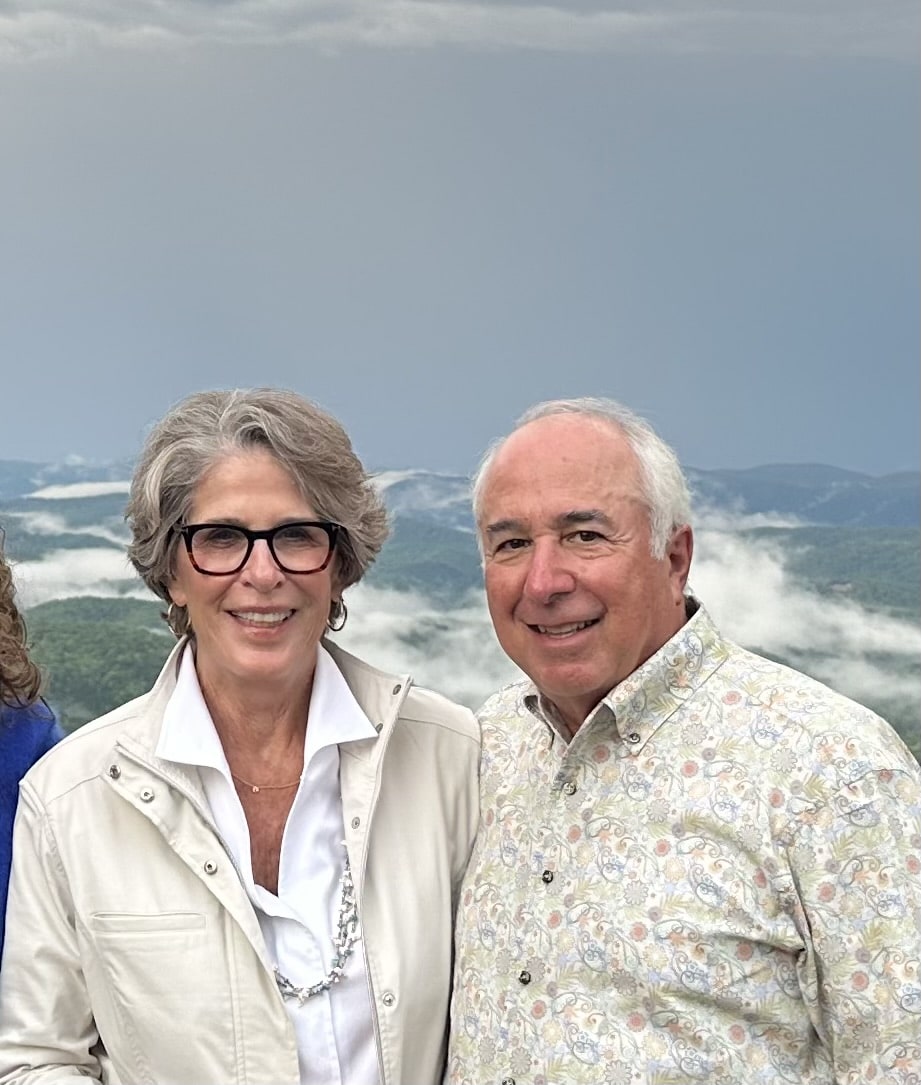
“This gift builds upon the significant funding put forward by the North Carolina General Assembly and the UNC System Board of Governors to advance the future of health care in our state,” cousins Hyman Brody and David Brody said, before thanking those elected and appointed leaders as well as Rogers, deans of the school Drs. Michael Waldrum and Jason Higginson, and others whose work has made the new building a reality.
Next year, the medical school marks 50 years since the first four-year medical school class arrived on campus. In 1999, the ECU Board of Trustees named the school, the Brody School of Medicine — the first time at the university a school had been named for a donor — in recognition of the family’s decades of significant contribution.
“Our family’s connection to East Carolina University dates to 1947 when (former Chancellor) Dr. Leo Jenkins’ friendship with my father, Morris, and my uncles, Sammy and Leo, planted seeds that grew into a shared belief in this university’s mission,” Hyman Brody said. “That relationship led to our family’s initial support of the School of Medicine — a commitment rooted not only in philanthropy but stewardship and partnership.”
Along with improving health outcomes in the region, the Brody family has funded arguably the premier medical school scholarship in North Carolina — the Brody Scholars program. It provides full tuition, fees and enrichment opportunities for four years of medical education. The Brody family’s latest contribution will expand the Brody Scholars Program. Today, there are 12 Brody Scholars at the Brody School of Medicine and 147 alumni of the Brody Scholars Program.
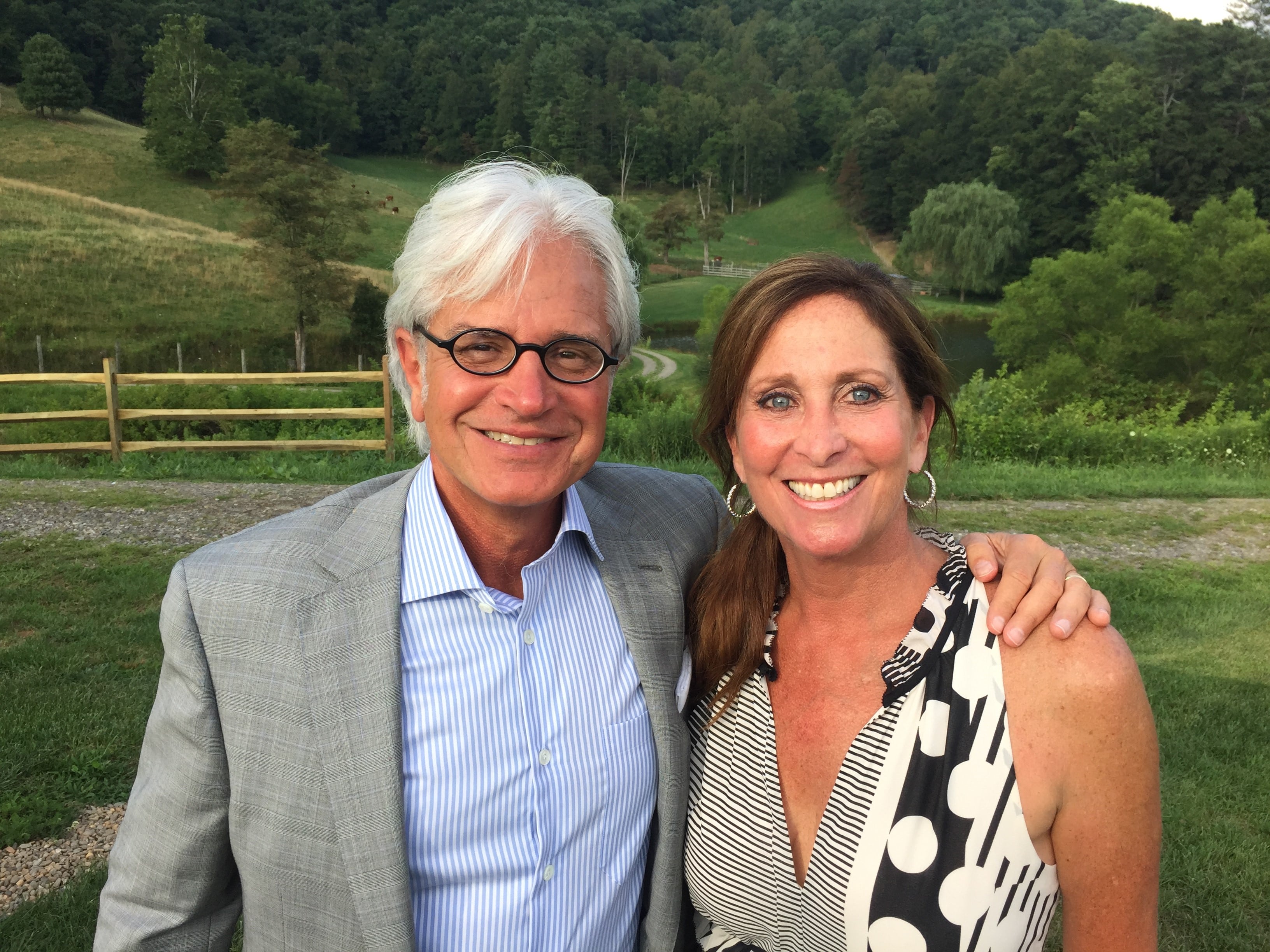
“This contribution to the Center for Medical Education is especially meaningful to Laura and me because it expands the Brody Scholars Program so more students can graduate medical school with little or no debt and focus on what matters most: caring for patients,” said David Brody. “Investing in those students is, to us, exactly what doing good looks like.”
The family’s gift will be added to an existing endowment dedicated solely to supporting the Brody Scholars Program, according to Dr. Scott Senatore, chief philanthropy officer with the ECU Health Foundation. The investment ensures long-term sustainability for the scholarship and signals the importance of philanthropy in advancing medical education, supporting community health and inspiring future generosity. The Brody family’s cumulative giving to ECU now totals more than $35 million.
The new Brody Center for Medical Education will serve as one of ECU’s most advanced instructional facilities, enabling the medical school to expand its class size to 120 students while offering state-of-the-art simulation spaces, learning studios, a new anatomy lab, student collaboration spaces and outdoor gathering areas. Construction of the new $265 million facility is funded by the state of North Carolina.
“The Brody School of Medicine was founded to meet the health care needs of our state, and this gift advances that mission in profound ways,” said Waldrum, who along with his academic role, is also CEO of ECU Health. “Brody Scholars become the kind of physicians every community needs — compassionate, skilled and committed to service. This investment ensures that more of those physicians will stay in North Carolina, where their impact is immeasurable. It is deeply gratifying to know that the Brody name will accompany this new state-of-the-art facility.”
The Brody School of Medicine is nationally recognized for graduating physicians who choose primary care specialties and practice in rural communities historically underserved by medicine. The new naming gift reinforces ECU as a leader in this mission and encourages additional philanthropic investment in the university’s medical education and health sciences enterprise.

Research at East Carolina University is shedding light on how patients with cardiac implantable electronic devices (CIEDs) recover physically in the months following surgery, and specifically, tracks a surprising early plateau in activity levels.
The findings were published this year in the Journal of Cardiopulmonary Rehabilitation and Prevention.
The study analyzed data from 294 patients and found that while activity increases steadily after implant surgery initially, it levels off after about two months and remains unchanged for the next four.
Clinical health psychology doctoral candidate Elizabeth Jordan, the study’s first author, says the project began as a deep curiosity about how patients in different places and with different resources and backgrounds regain mobility after receiving a life‑saving device.
“I became involved with this study as my master’s thesis, when I developed an interest in physical activity patterns in CIED patients, particularly the period immediately following implantation,” Jordan said. “These devices contain accelerometers, which give us a wealth of objective activity data. That opened the door for me to really explore my research interests.”
Working alongside Dr. Samuel Sears, a psychologist known nationally and internationally for his work with cardiac device patients, Jordan helped design a study that captured 180 days of physical activity for each patient. The findings revealed that patients showed the most dramatic increase in movement between the first and second month post‑implantation. After that, a profound and unsatisfactory plateau set in for a statistically significant number of the patients studied.
According to Sears, this plateau highlights a critical moment in recovery.
“Clinically, we’ve always known patients have to restrict movement in the first several weeks to protect the implanted leads,” Sears said. “What this study shows is that the habits formed during that period might persist long after restrictions are lifted. The two‑month point may be a key moment for re‑engaging patients and helping them rebuild an active lifestyle.”
ECU’s Research Sample — From the East, For the East
The research sample reflected the demographics of the university’s largely rural region. Two thirds of patients studied live in rural communities, and 52% identify as Black, two demographic populations often underrepresented in cardiac device research.
Jordan said that seeing those numbers was one of the most striking parts of her work.
“Understanding physical activity in these groups is critically important because they face higher burdens of chronic illness and more limited access to specialty care,” she said.
Maeve Sargeant, another doctoral student who supported the analyses for the research, said what deserves special attention is the real-world data.
“Device-based activity data gives us a good look into how patients are really functioning in their daily lives,” Sargeant said. “Analyzing these patterns alongside the realities of work, caregiving and other responsibilities helps contextualize what recovery actually looks like for these patients.”
Different Hometowns, Different Outcomes
One remaining methodological challenge is that while CIED technology offers rich data into patient movement, it does not distinguish the intensity or type of activity.
Still, the findings point to a therapeutic direction for clinical psychologists, Sears said.
“These devices are with patients 24/7,” he said. “With a study like this, we have the research backing we need to leverage new data collected to better tailor rehab programs, and do so with limited patient facetime. We can identify struggling patients and improve long‑term outcomes.”
Jordan hopes to build on this work as she continues her doctoral training.
“If I could continue with this line of research, I’d like to examine differences in activity outcomes across geographical areas,” she said. “Comparing long‑term engagement and health outcomes between clinics across the United States could tell us so much about how environment and location shapes recovery.”
Jordan, who earned her undergraduate degrees in psychology and human development and family studies from the University of North Carolina at Chapel Hill, plans to graduate with her doctorate in 2028. Her long‑term goal is to stay close to the populations highlighted in the study.
“In the future, I hope to continue providing psychological care to patients with chronic illness or those facing health disparities,” she said. “This research has only strengthened that commitment.”
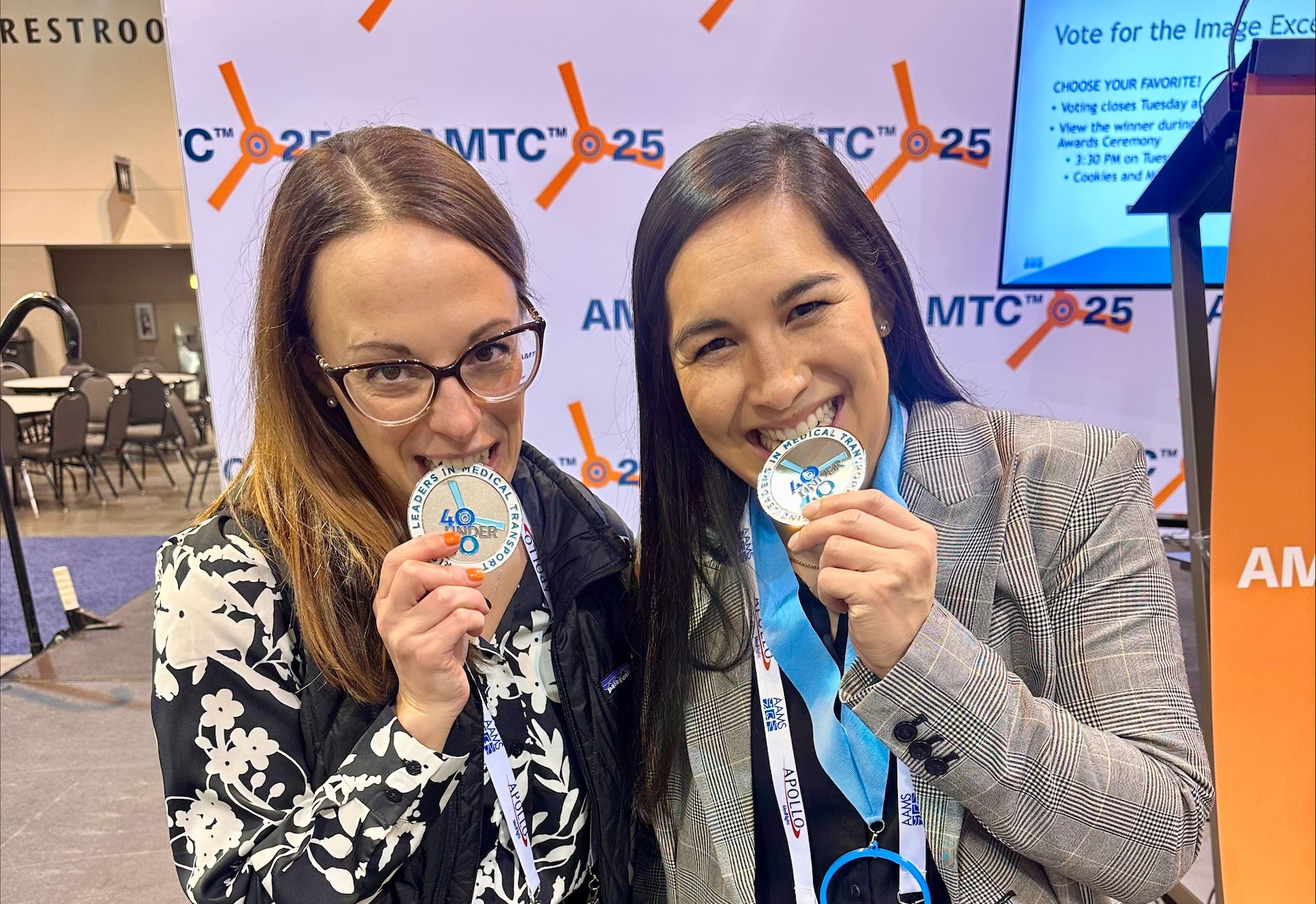
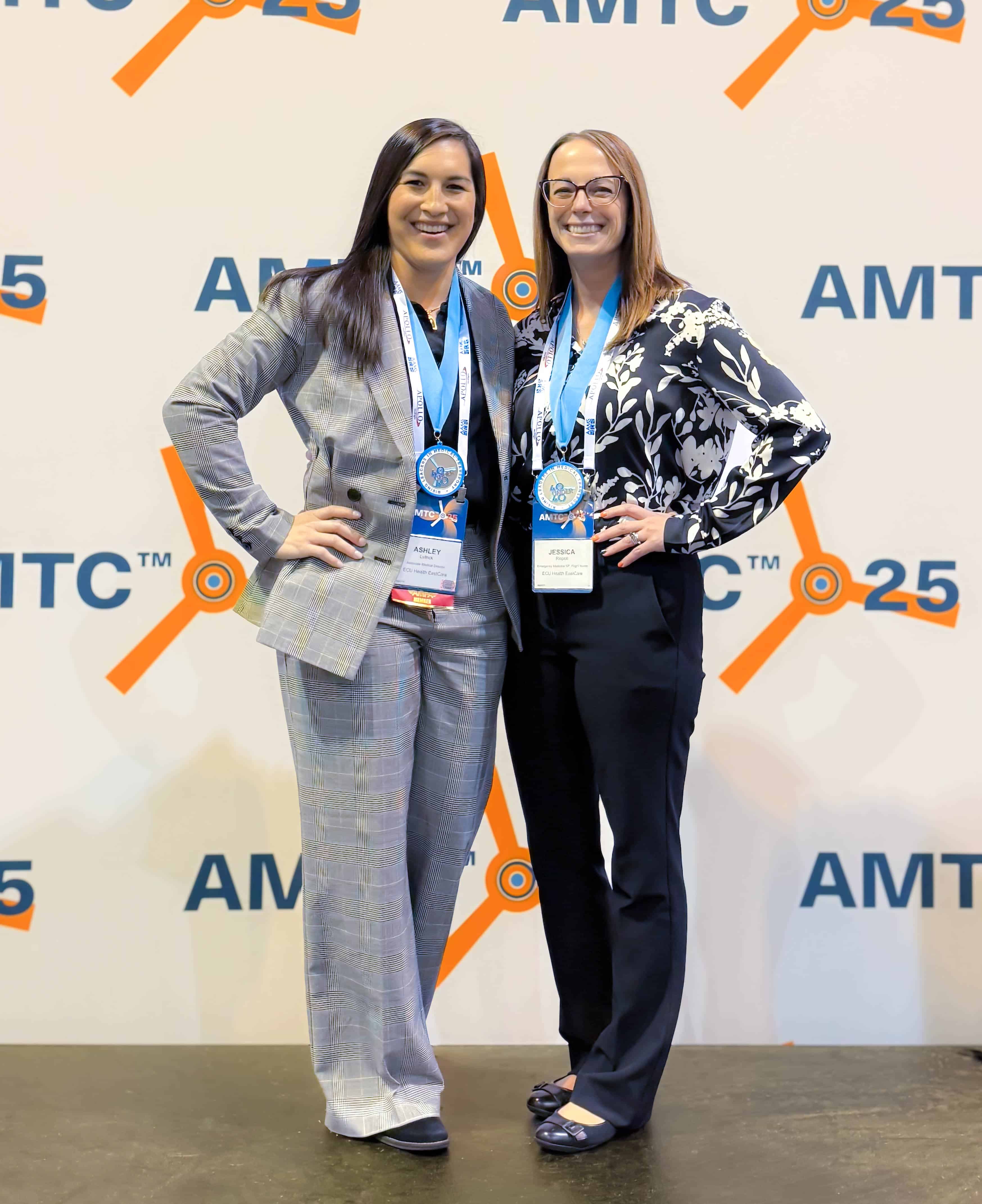
The Association of Air Medical Services (AAMS) recently announced their 2025 40 Under 40: Rising Leaders in Medical Transport award winners, and ECU Health’s Dr. Ashley Lutrick and Jessica Rispoli are on that list. The national award recognizes young professionals who make a meaningful impact across multiple disciplines of the medical transport industry and demonstrate leadership, innovation or contributions within their role or expertise.
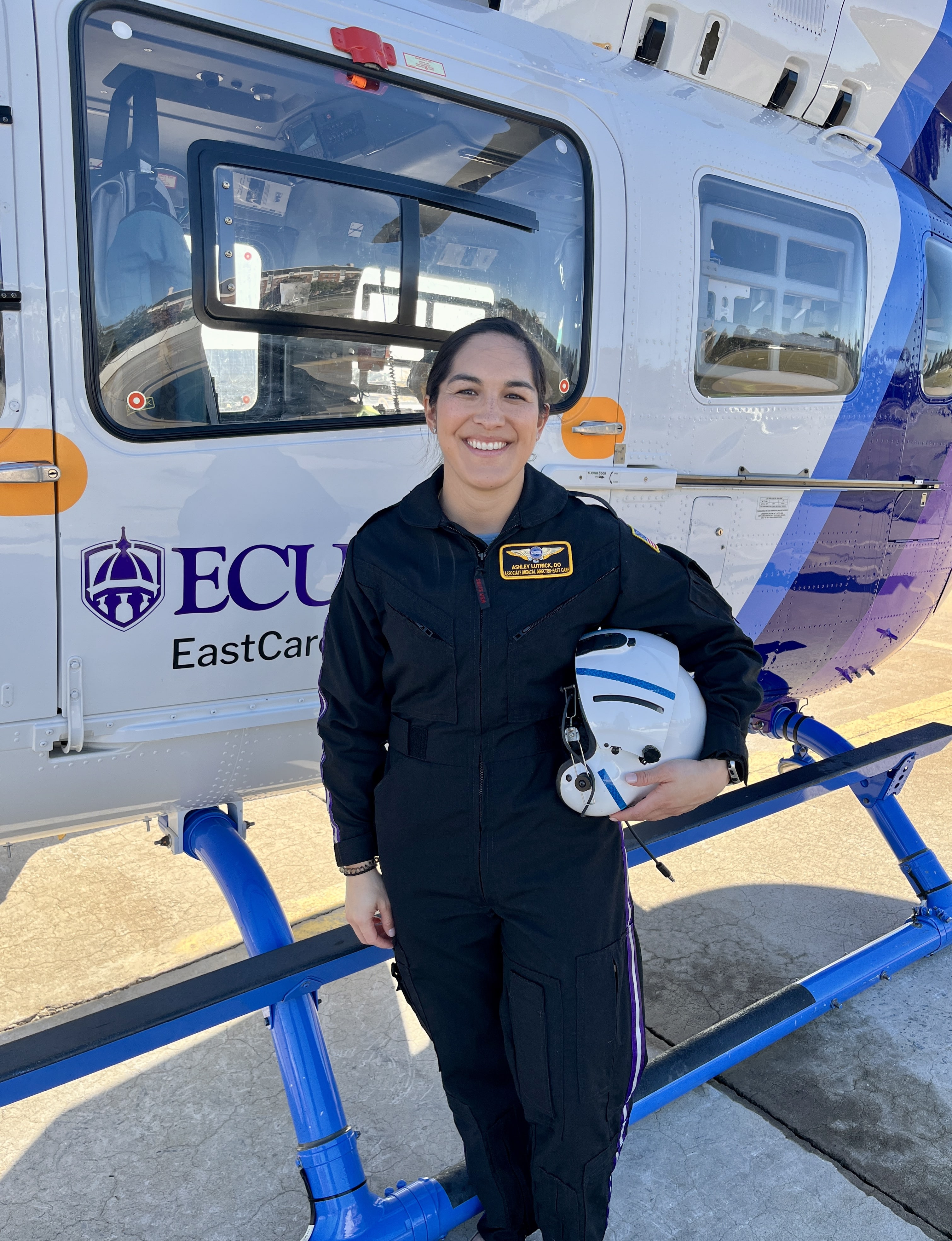
Dr. Ashley Lutrick
In addition to serving as EastCare’s associate medical director, Dr. Lutrick is also a clinical assistant professor of emergency medicine at the Brody School of Medicine at East Carolina University. She got interested in medicine after her father was diagnosed with cancer.
“My family were immigrants from Laos in the 70s,” she shared. “My father’s cancer was caused by Hepatitis B, which was transmitted at birth. The fact that he was diagnosed with something a vaccine could have prevented started my interest in medicine.”
Dr. Lutrick began her career in medicine with a focus on global health, but when COVID threw a wrench in those plans, she pivoted to emergency medical services.
“A lot of what I enjoyed about global medicine is also present in emergency medical services,” she said. “Specifically, transport was a big draw for me. A lot of our region is geographically challenged, and we focus on how we get patients the care they need in the most efficient way?”
This new interest led Dr. Lutrick to the EMS fellowship and ultimately to EastCare where she’s worked with air and ground interfacility transport for two and a half years.
“It’s been a fantastic fit and it’s crazy to think of how much has occurred in these two and a half years,” Dr. Lutrick said.
During that time, Dr. Lutrick said she has focused on quality assurance and improvement, policy and protocol development, clinical oversight and education. She led and advocated for the restructuring and implementation of EastCare’s quality assurance and improvement process, and she wrote EastCare’s first policy that was adopted system-wide on patient transfer of care, which focuses on improving communication and safety outcomes during transitions of care between teams and services.
This is the inaugural year for the 40 Under 40 award, and Dr. Lutrick said she was humbled to be among the first cohort of winners.
“Those nominations come from leaders or peers who recognize those who go above and beyond in leadership roles,” Lutrick said. “It’s easy to forget the impact you’re making and it’s good to be recognized.”
She also highlighted the value of an award like this for up-and-coming professionals in the field.
“Air medical transport is a young field and there are pioneers who have paved the way for us,” she said. “This award recognizes the younger generation who are trailblazing the next steps in air medical transport care.”
Dr. Lutrick was recently accepted as a Fellow of the Academy of Emergency Medicine Physicians (EMS), from the National Association of EMS Physicians (NAEMSP), for which she will be recognized this January.
“I do a lot of education, and I enjoy teaching, but I also like the variability with my roles,” she said. “Flying with EastCare is different from working with medical students, residents or fellows, all of which continue to challenge me.”
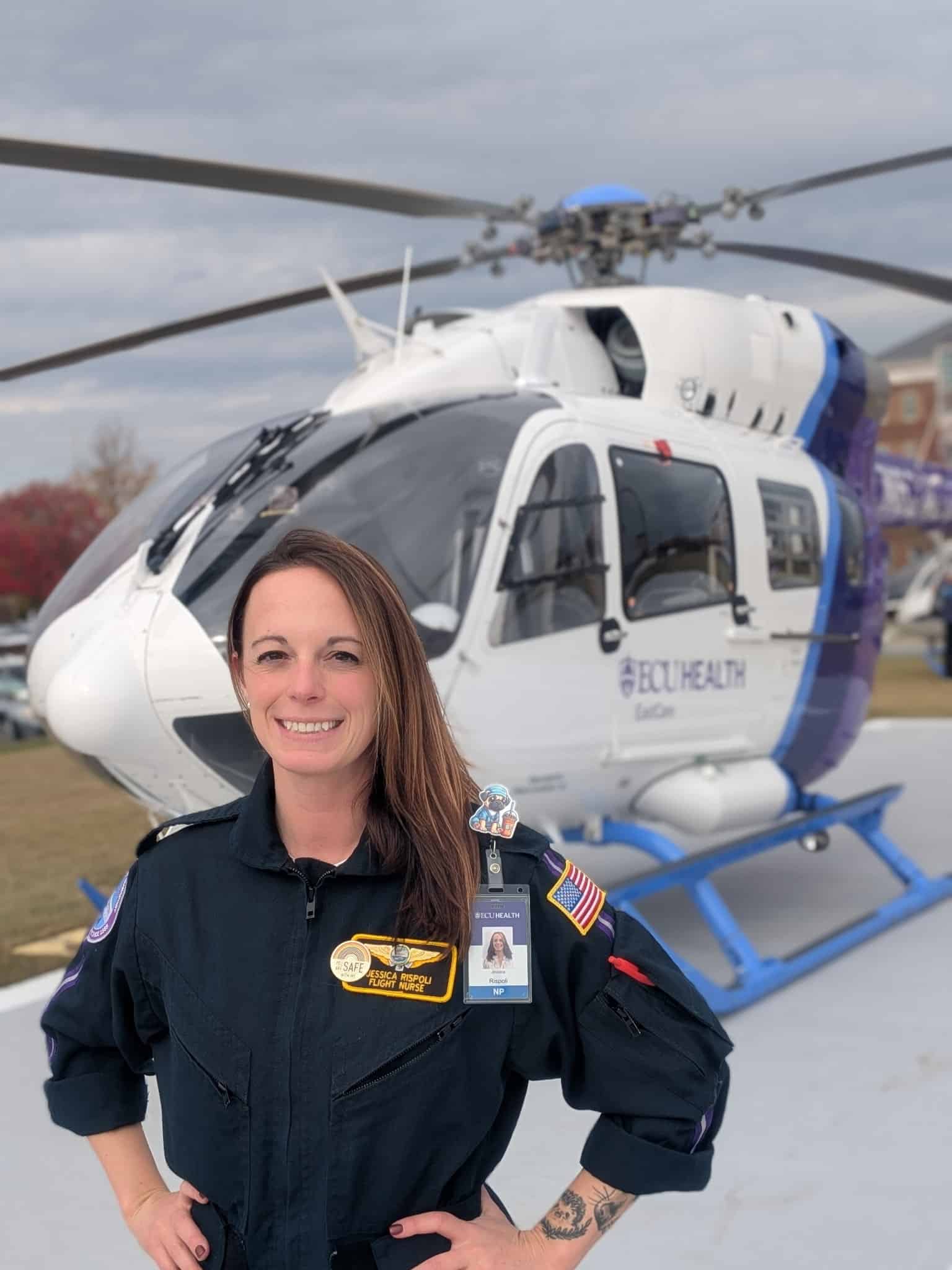
Jessica Rispoli
A Pennsylvania native, Jessica Rispoli is a nurse practitioner (NP) at ECU Health Bertie Hospital’s Emergency Department.
Working in critical care transport wasn’t originally in her plans. As a high school student, she considered physical therapy or athletic training because of her background in sports, but it was her school nurse who encouraged her to consider nursing. At first, however, nursing school didn’t seem like the right fit.
“Then in my junior and senior years of college, I had an internship with a Level I Trauma Center. I fell in love with the ED. When PennSTAR, the local air medical transport service, stopped by the hospital, I saw the aircraft and I was immediately hooked. That steered my education and training to critical care transport. Had I not met the PennSTAR flight crew, that spark might not have been ignited.”
After moving to North Carolina in 2016, she flew with EastCare full time for eight years before transitioning to the ED, but she still flies as needed with the EastCare team.
Jessica didn’t know she’d been nominated for the 40 Under 40 award until she received notification she’d won.
“I have a lot of emotions about it,” she said. “Mostly for all the people who have helped me build as a person and a nurse. It’s honestly humbling because the others who were selected are amazing.”
She said this award’s existence brings light to the industry.
“I don’t want this award to be just about me; I want it to be about our profession, the system and the awesome people I’ve worked with. People outside this field need to know the value of critical care and air medical transport. This award helps emphasize the impact of the services we provide.”
Jessica said she also enjoys serving the rural communities of eastern North Carolina.
“Our patients need advocates. One of the reasons I love flying with EastCare is we do what we can to stabilize patients from small communities and facilities and be their advocate. Sometimes it’s just about being there and holding their hand, to be with them and show you care.”
In the meantime, Jessica just wrapped up her Doctor of Nursing Practice (DNP) degree and plans to go back to school in 2026 for the Adult Gerontology Acute Care NP program at ECU.
“I have a lot of working years left and I’m excited to see where it goes,” she said. “I’ll present at conferences, educate those new to the industry, keep working in the ED and keep flying.”

The 29 learners who started their quality improvement journey a year ago as part of the Teachers of Quality Academy (TQA) 8.0 cohort officially wrapped up their participation in the program at a recognition ceremony Oct. 22. While the ceremony marked the end of the cohort’s formal learning sessions in the program, the multidisciplinary group of health care professionals is now poised to take their knowledge back to their workspaces with the goal of driving continuous quality improvement across ECU Health and the Brody School of Medicine at East Carolina University.
TQA is a professional development program for health care leaders designed to fundamentally change care delivery through a curriculum focused on building knowledge and skills in Health Systems Science which comprehensively explores how health care is delivered.
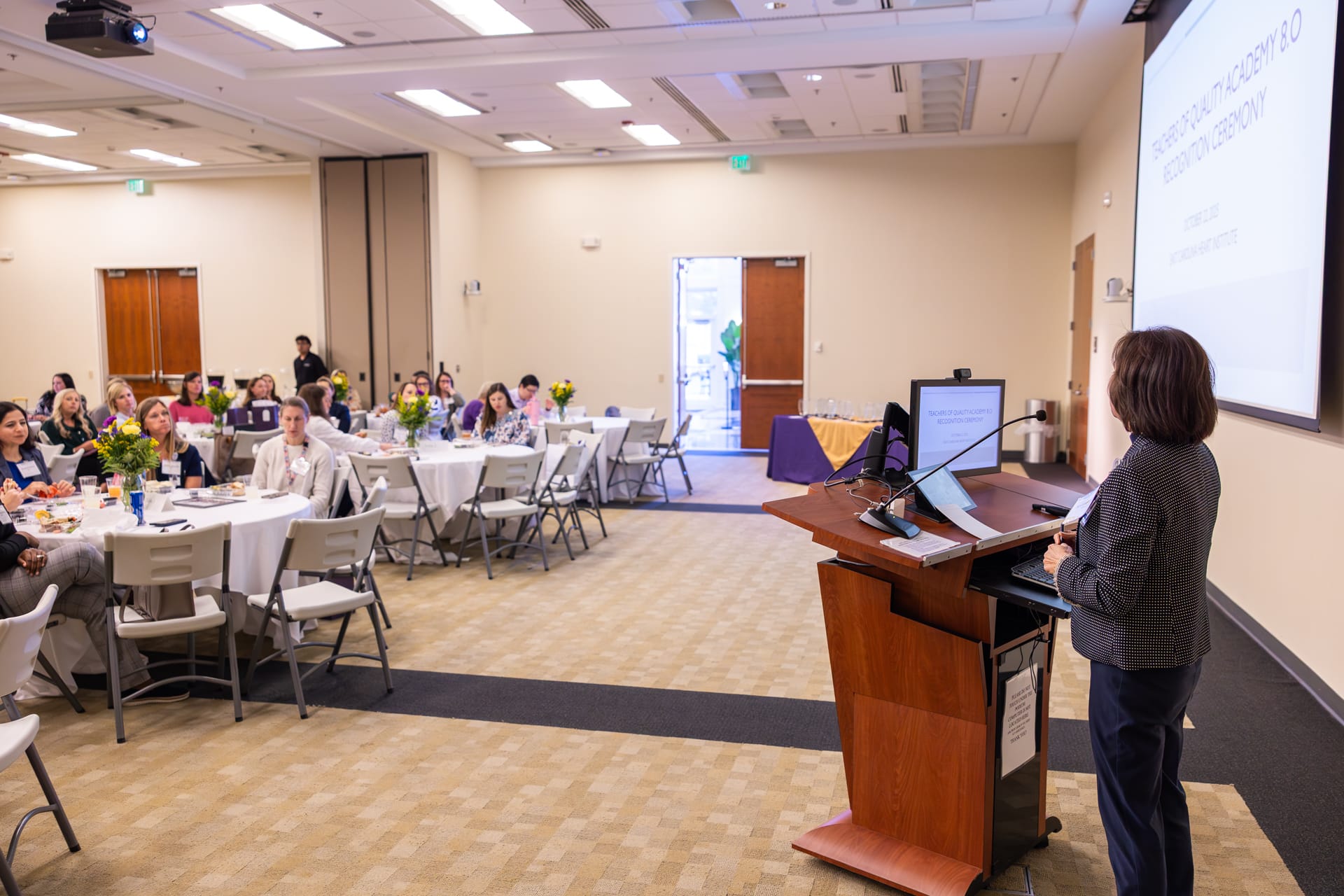
“We hope the biggest take away from this last year of learning is the importance of taking what they’ve learned back to their teams so they can apply their knowledge and skills to be catalysts for positive change in their local communities and local teams,” said Dr. Jennifer Sutter, TQA physician director. “This is a diverse group of professionals who represent many different parts of the health system so we’re confident they can have a broad impact on driving quality improvement for ECU Health and those we serve.”
The 8.0 cohort included health care professionals from clinical, administrative, leadership and educational backgrounds, all of whom were selected from a highly-competitive pool of applicants.
“The work that we do in health care is purposeful work, but nobody would define it as easy,” said Dr. Niti Armistead, chief medical officer and chief quality officer at ECU Health, during remarks at the recognition ceremony. “What I’ve found in my own quality journey is that quality improvement is the antidote to burnout by converting the burrs in the saddle into problems to be solved. Quality improvement is a way to re-establish your agency and feel like there are real things you can do to drive improvement and make a positive difference.”
Throughout the past year, participants engaged in advanced learning in quality improvement, patient safety and team leadership, develop improvement projects to apply these skills across the health system, teach others in their environment about these concepts and evaluate the outcomes of improvement interventions.
Lauren Chambers, pharmacy supervisor at ECU Health Medical Center, and Brynn Schiller, who started the program as an administrative fellow but now serves as a workforce development project manager, partnered together on a project aimed at improving hyperglycemia management for medical intensive care unit patients. Hyperglycemia, otherwise known as high blood sugar, can result in organ damage and other serious complications if not treated and managed quickly and effectively.
Chambers said that when the two were deciding which project to pursue, they wanted to be bold and pursue something meaningful and sustainable. For Chambers and Schiller, their hope is that others will take advantage of the opportunities provided through TQA to explore important topics in areas meaningful to them while making important connections along the way.
“You learn a lot about yourself and you get to connect with people you don’t normally connect with,” said Schiller. “I got to know Lauren who is clinical in pharmacy. My background is not clinical so it was really interesting to work together on a project where I didn’t know a lot but I learned a lot thanks to our work on the project together.”
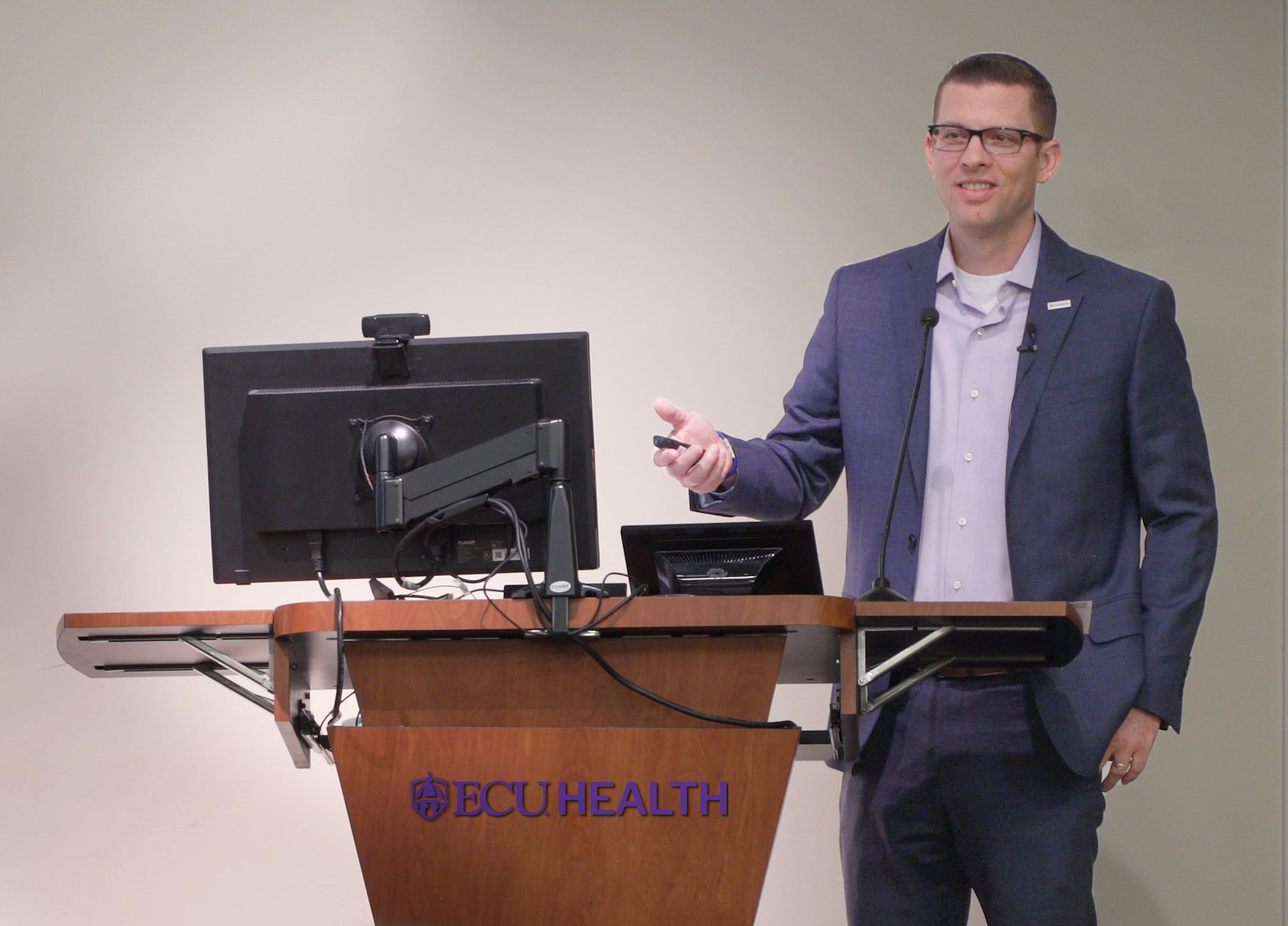
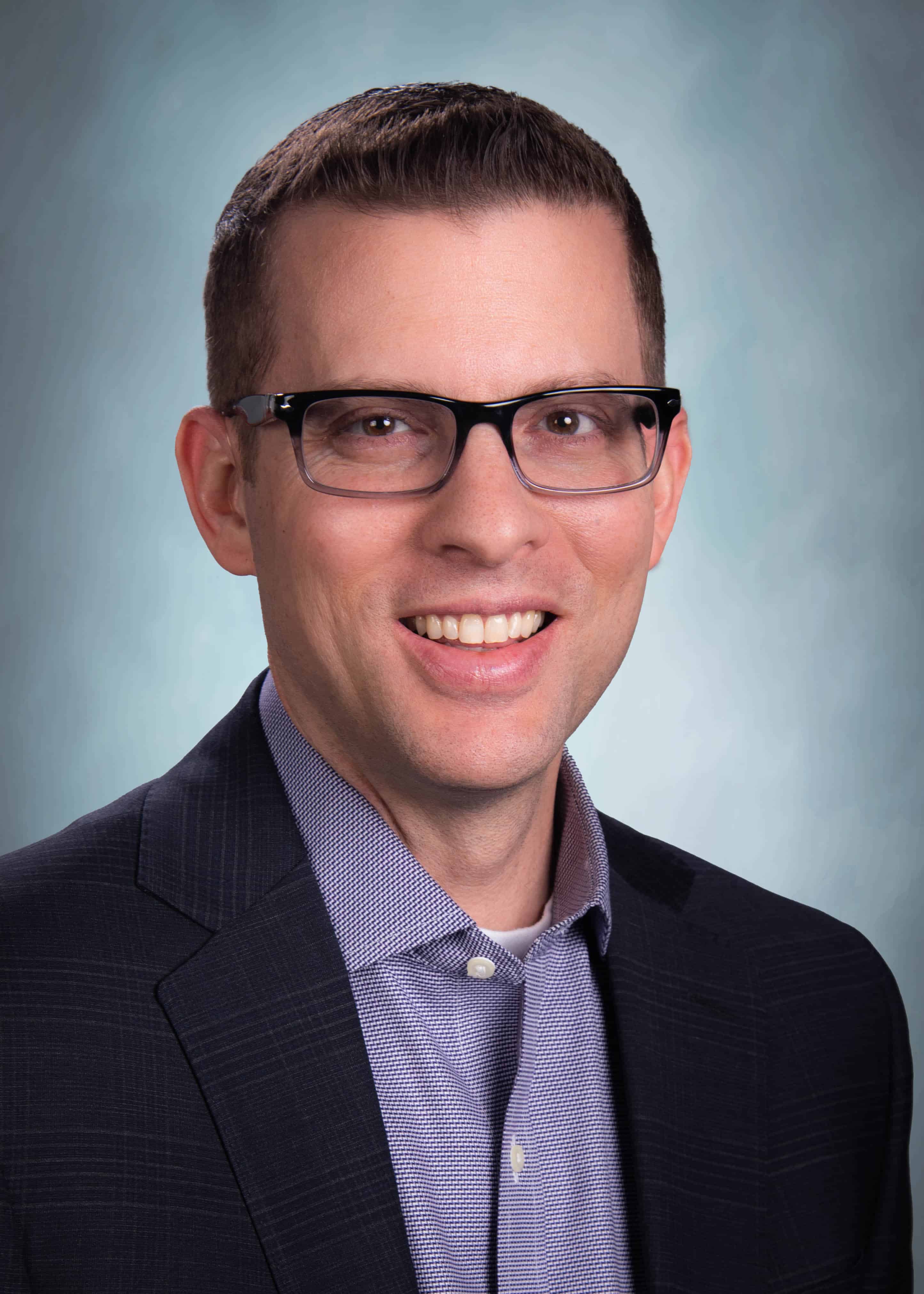
Greenville, NC — Andy Zukowski, chief financial officer of ECU Health, has been recognized by Becker’s Hospital Review as one of 38 Rural Hospital and Health System CFOs to Know in its newly released list. Zukowski, who has served as CFO since 2022, oversees financial operations for both ECU Health and the Brody School of Medicine at East Carolina University.
“It is an honor to be nationally recognized for the work the entire team does at ECU Health,” said Zukowski. “Our goal is to build the national model for high-quality rural academic health care, and being good stewards of our resources is a key component of that. I am proud to work alongside mission-driven individuals who dedicate their time, expertise and energy to meeting the mission of ECU Health by improving the health and well-being of eastern North Carolina.”
Rural hospitals are a lifeline for communities that too often face barriers to convenient, affordable and high-quality care. According to Becker’s, the CFOs featured on the list are the financial architects behind that mission. With expertise in planning and resource management, they strengthen the financial foundation of their hospitals while driving cost-effective, innovative and accessible care. Their leadership ensures that rural communities continue to benefit from up-to-date services and sustainable healthcare delivery.
“Andy brings a mission-focused approach to financial leadership that reflects ECU Health’s broader mission to serve and uplift our communities,” said Dr. Michael Waldrum, CEO of ECU Health and Dean of the Brody School of Medicine.
“As the largest health care provider, employer and medical educator in the region, Andy’s strategic insight helps ensure we remain a strong, sustainable force for health, education and opportunity in rural eastern North Carolina. We’re proud to have Andy helping lead the way.”
Becker’s Hospital Review accepted nominations and curated the list to highlight the outstanding accomplishments of rural hospital CFOs across the country. The full list, which includes individual profiles of each honoree, can be viewed on Becker’s website. Inclusion on the list is not exhaustive nor an endorsement, and individuals cannot pay for placement.
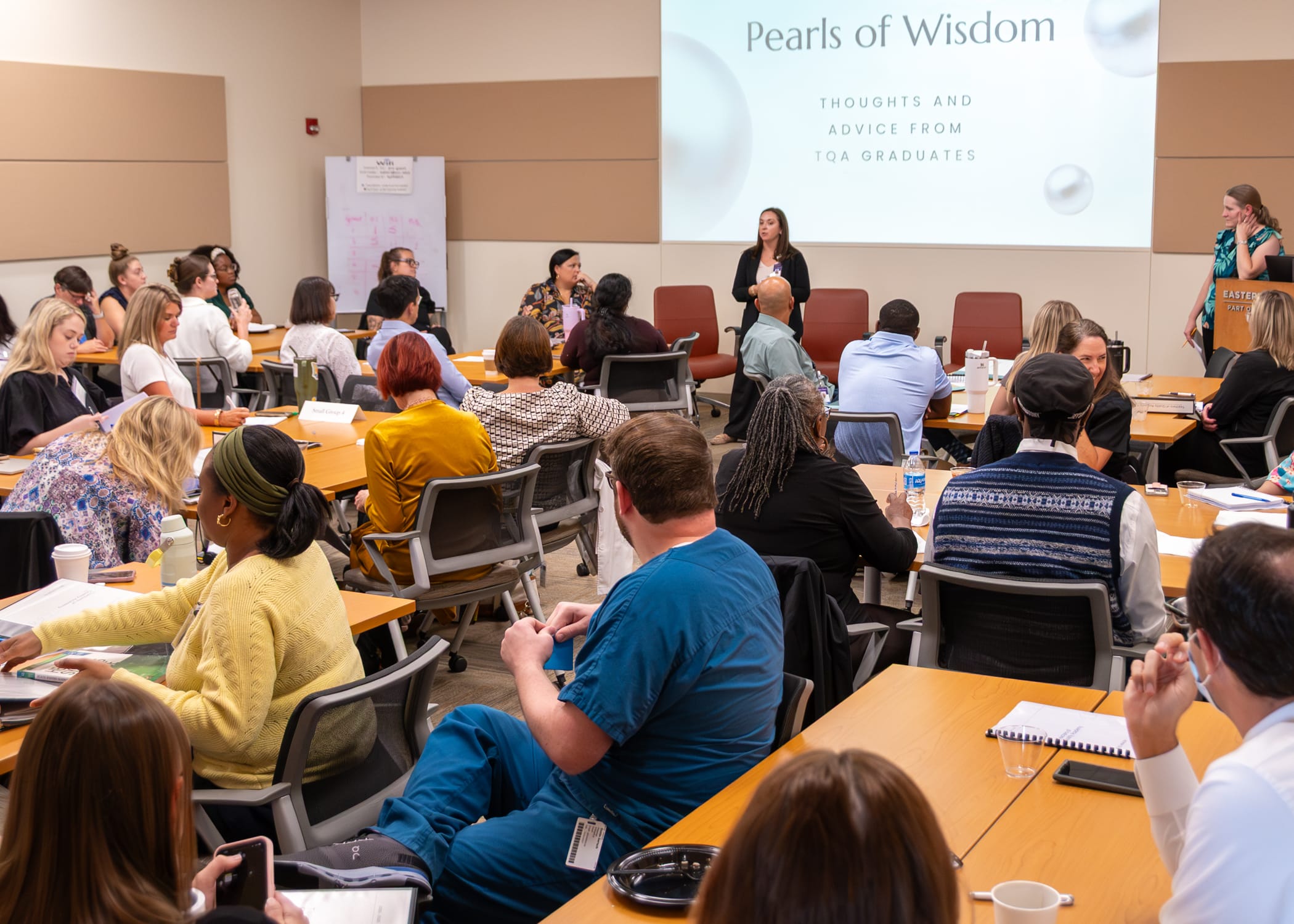
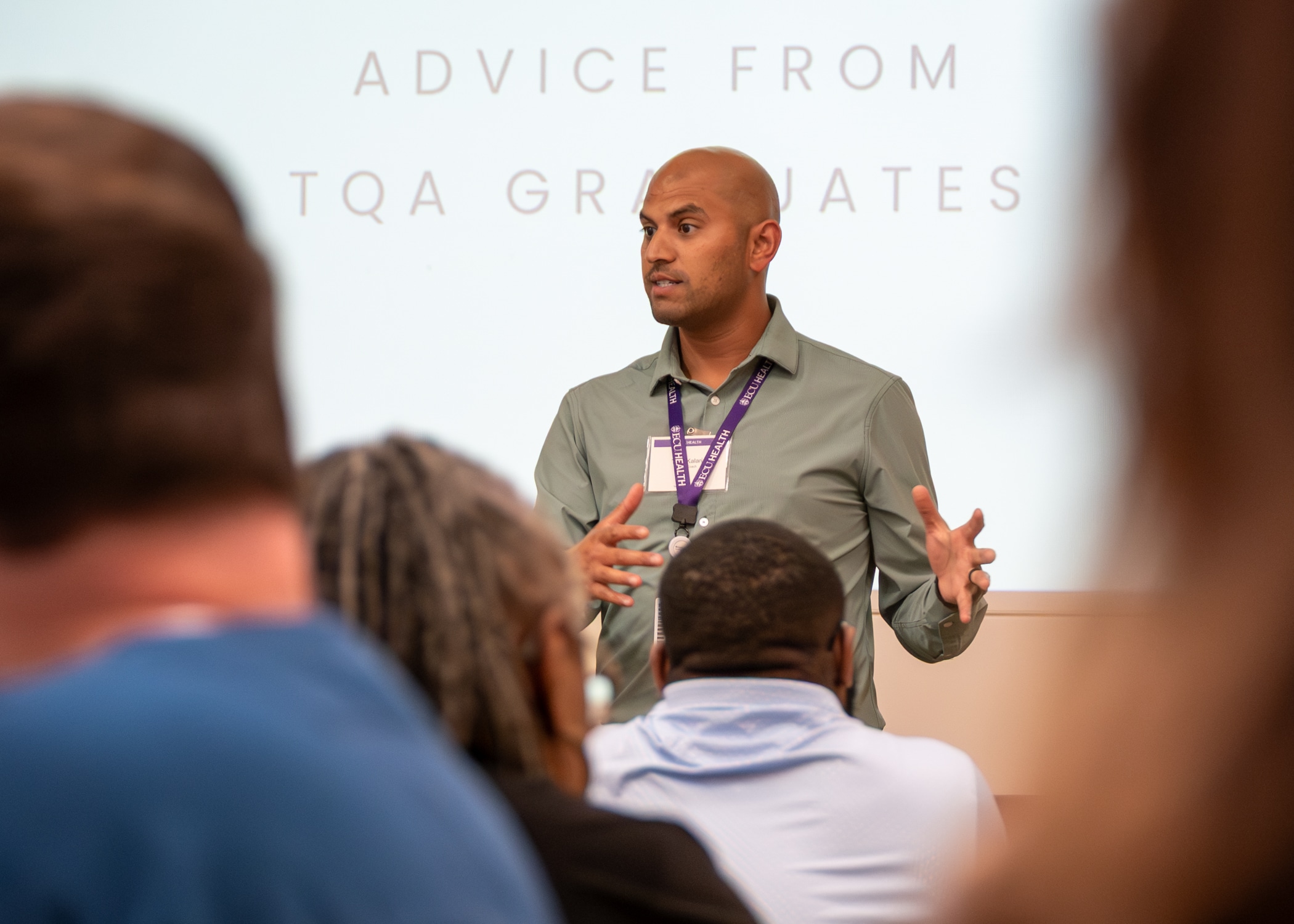
The Teachers of Quality Academy (TQA) at the Brody School of Medicine at East Carolina University and ECU Health officially welcomed its 9.0 cohort at its first learning session on Sept. 18.
For the newest group of multidisciplinary health care professionals in the program, the first lesson is perhaps the most important: system-wide quality improvement starts small before it can grow into something big.
“One of the hallmarks of this learning experience is that you have your small team and then it gets a little bit bigger over time,” said Dr. Jennifer Sutter, TQA physician director. “One of our speakers today talked about how the big system is only as good as the little systems. So, we have to achieve quality first at a microsystem level before it can make a big system much better. That theme is really the ideal way to kick-off what these participants will learn over the next year.”
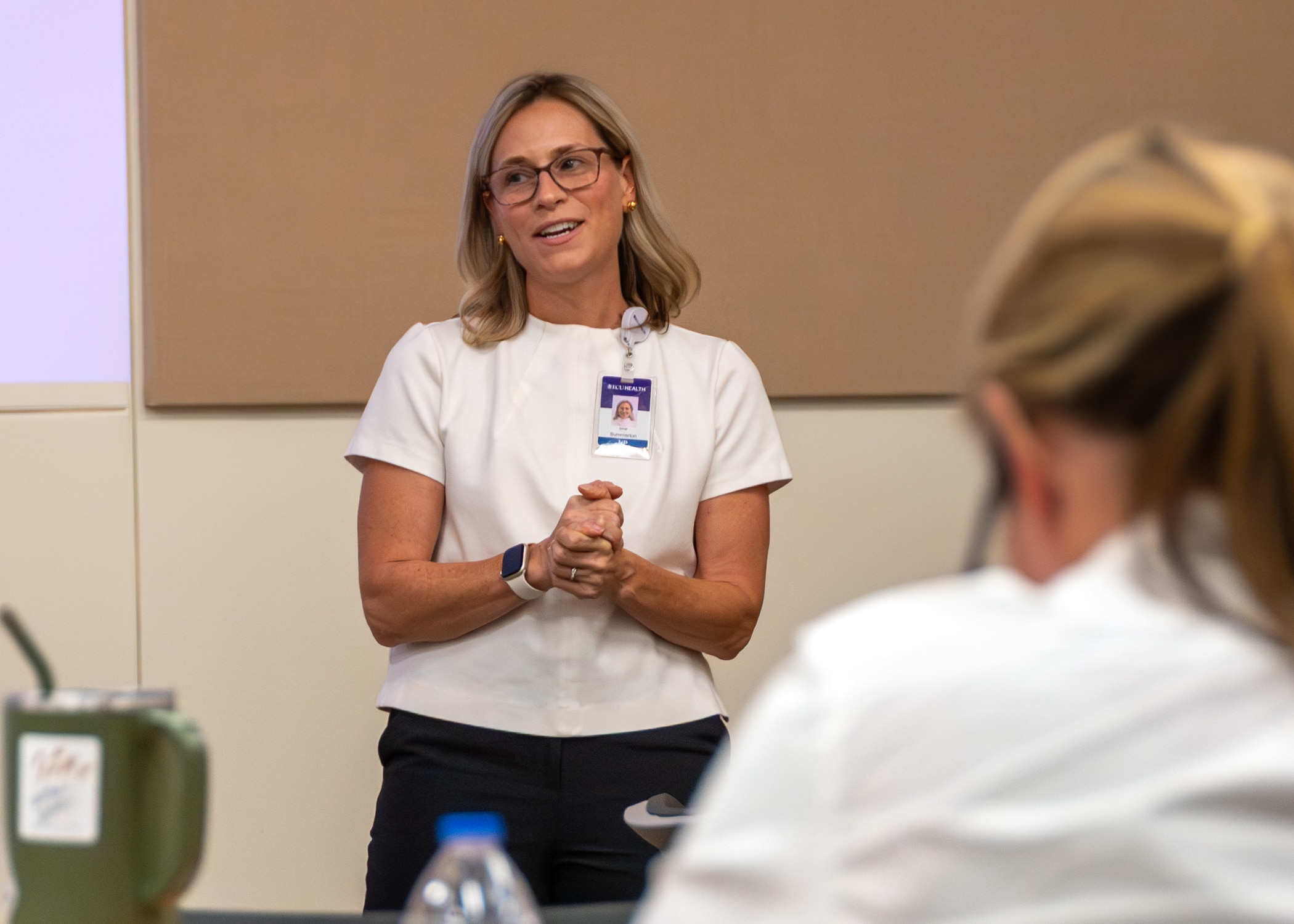
Through the TQA 9.0 program, health care leaders will learn how to fundamentally change care delivery through a curriculum focused on building knowledge and skills in Health Systems Science which comprehensively explores how health care is delivered. Participants engage in advanced learning in quality improvement, patient safety and team leadership, develop improvement projects to apply these skills across the health system, teach others in their environment about these concepts, and evaluate the outcomes of improvement interventions. Leading by example, TQA participants promote a culture of quality and safety across the enterprise.
Dr. Andre Mancheno is a second-year resident in ECU Health’s Rural Family Medicine Residency program. His TQA project group includes two fellow residents in the Rural Family Medicine Residency program, all of whom are currently learning and serving in Duplin County. For Dr. Mancheno and his colleagues, the program provides them an opportunity to explore opportunities to improve on real-world scenarios they experience.
“We’re interested in doing something to improve our clinic,” Dr. Mancheno said. “Since our clinic is rural, there are limited resources, limited staffing. There are a lot of challenges to overcome, and this program can help us find solutions. The skills we apply to improving quality are also applicable to all things in health care.”
With 37 learners in TQA 9.0, participants spent their first learning session gaining invaluable knowledge about quality improvement, the role it plays in high-quality care and the impact it has on ECU Health’s mission to improve the health and well-being of eastern North Carolina. The newest cohort includes health care professionals from clinical, administrative, leadership and educational backgrounds, all of whom were selected from a highly competitive pool of applicants. And, for the first time ever, pastoral care team members are part of the program, underscoring how quality goes far beyond purely clinical experts.
The lessons also have the potential to extend directly into communities across eastern North Carolina. Dr. Kristina Simeonsson, associate professor in Pediatrics and Public Health and Hannah Dail-Barnett, research associate, help lead the Healthier Lives at School and Beyond initiative created by the Brody School of Medicine and ECU Health.
The program originally launched in 2018 to deliver interdisciplinary services virtually to rural school children, staff and faculty during the school day.
In response to COVID-19, the program continued to address health care needs for children and expanded access while students were learning remotely.
Since the fall of 2020, the program has used an ECU Transit bus to visit schools in Duplin, Jones and Sampson counties to provide high-quality health appointments. The retrofitted motorcoach has been used to provide screenings for hundreds of students.
Like Dr. Mancheno and his fellow rural residents, Dr. Simeonsson and Dail-Barnett appreciate the opportunity to apply quality lessons directly to the patients and students they serve.
“As a program evaluator for Healthier Lives at School and Beyond, we’re always considering how to achieve continuous quality improvement in our program,” said Dail-Barnett. “How can we improve our reach in these communities, help improve access to health care services and increase efficiency and timeliness of services to these students? We’re hoping to use TQA as a catalyst for further quality improvement to continue to expand our services and help reach these hard-to-reach populations.”
Dail-Barnett described the entire TQA group as having “lofty goals” and “really big dreams.” According to Dr. Simeonsson, therein lies the challenge of the day’s most important lesson.
“That’s going to be the challenge – keeping it small to begin with,” Dr. Simeonsson said. “We’re all coming in here with ideas and a lot of passion and our instructors are reminding us to tap the brakes. The best thing from today was the reminder that we’re here to learn the process. Let’s learn the process and then continue to build as we go forward. And we know that can have a big impact because there are so many alumni that come back and tell us how their projects are going three years later.”