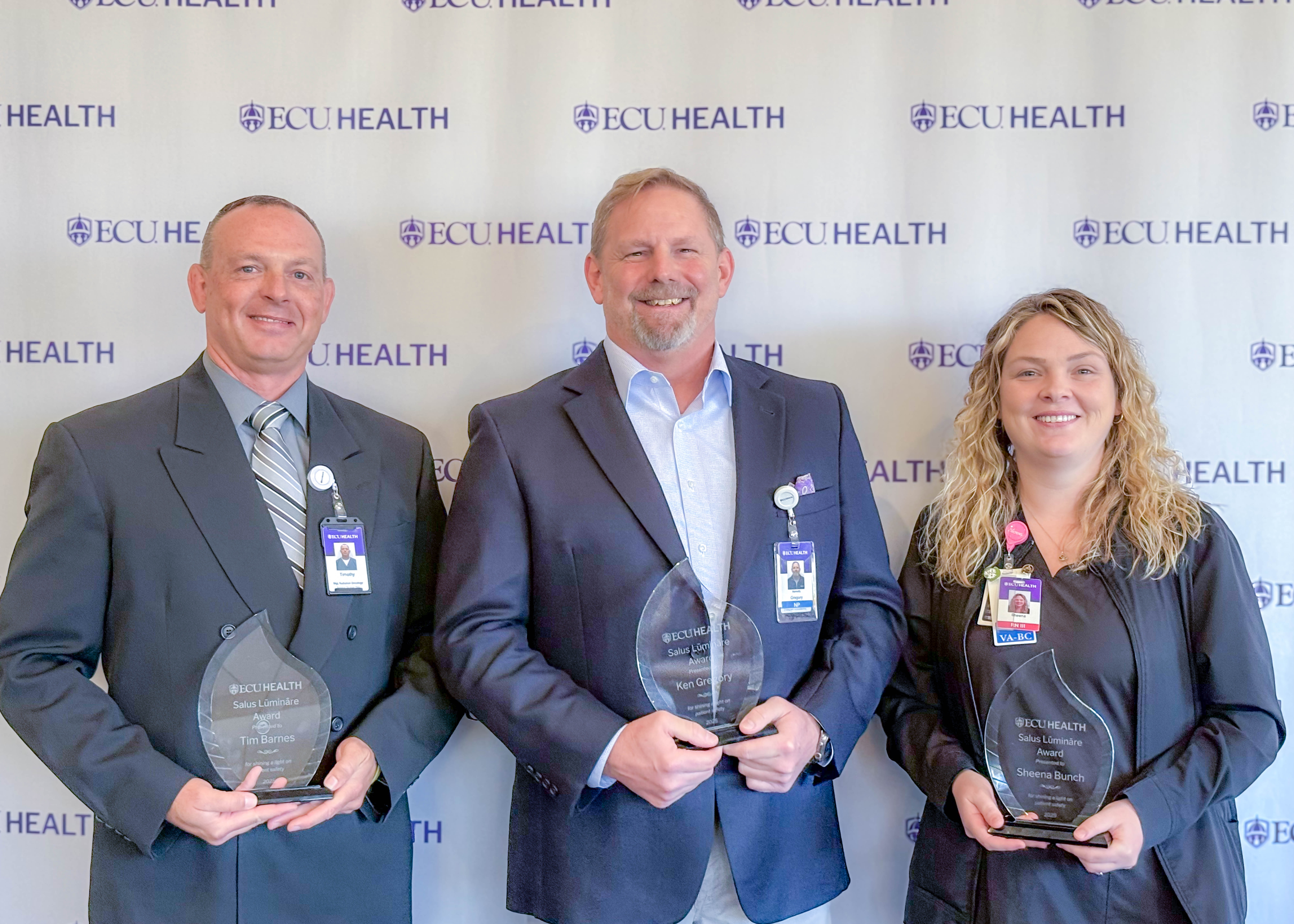
The Salus Luminare award honors team members who “shine the light on safety,” and it is a part of ECU Health’s mission to create safe working environments, both physically and psychologically. This year, Tim Barnes, clinical manager of ECU Health Medical Center’s Radiation Oncology, Kenneth Gregory, nurse practitioner at ECU Health Edgecombe Hospital and Sheena Bunch, staff nurse III with Radiology at ECU Health Beaufort Hospital, were recognized during the Nov. 18 ECU Health and ECU Health Medical Center Quality Improvement Committee of the Board meeting as award recipients.
Sheena Bunch
In her highly specialized role of performing vascular access procedures throughout ECU Health Beaufort Hospital, Sheena Bunch supports multiple departments and providers while keeping safety front of mind.
“I’m one of the few nurses in the system trained to insert internal jugular central venous lines, which has allowed me to play a big part in improving line care and patient safety,” Bunch said.
Central line-associated bloodstream infections (CLABSIs) are serious and can lead to critical complications, including septic shock or death.
 “Early in my career,” Bunch shared, “I saw how easily small oversights could lead to complications for patients and that made an impression on me. I’ve personally experienced loss and hardship that remind me how fragile life can be and how every decision matters.”
To help avoid these complications, Bunch began auditing all charts of patients with central lines to make sure the correct maintenance and care orders were entered. When she noticed some inconsistencies, she took the initiative to create a central line maintenance and care order set for nurses to follow.
“This helped standardize care, improve communication and reduce the risk of central line-associated infections. I’m passionate about creating systems and processes that prevent harm before it happens,” she said. “It’s not just about following policy; it’s about protecting someone’s loved one and giving every patient the safest chance at recovery.”
Bunch said she strives to lead by example to promote safe practices.
“I share the ‘why’ behind everything we do and explain how something like an updated order set or quick double-check can make a real difference in patient outcomes,” she said. “I also make a point to celebrate when someone speaks up or catches something that prevents a potential issue. When people feel empowered instead of criticized, they are more invested in safety.”
Winning the Salus Luminare award was an honor, Bunch said, because it recognizes the heart of nursing.
“So much of the work we do in safety goes unseen. It’s about the details and the quiet improvements that prevent harm. This award tells me that the effort to build safer systems truly matters and ECU Health values nurses to take the initiative to make those changes.”
“It’s been rewarding to see how this change has made things safer for our patients and easier for our team members caring for them,” Bunch went on. “I’m proud to work for an organization that values patient safety and empowers nurses to take initiative. I’ve been fortunate to be a part of a team that supports innovation and trusts nurses to make meaningful changes.”
Kenneth Gregory
While pursuing his doctorate of nursing practice (DNP) at East Carolina University (ECU), Kenneth Gregory used an ongoing problem he observed at work as the foundation of his doctoral project.
“I observed patients presenting to the emergency department (ED) with opioid overdose or withdrawal and realized we didn’t have a mechanism to facilitate a safe transition for continued outpatient treatment,” he shared.
 Gregory’s DNP project required he focus on a gap in health care, based on what literature says providers should do versus what was actually happening.
“I wanted to help an overlooked population and make a positive change. There is a huge opioid problem in this state,” Gregory said. “The hope was we could decompress the ED and save a life or two.”
To solve this problem, Gregory established a process that provided these patients with access to outpatient care.
“We now have a direct path from the ED in Tarboro to Freedom Hill Community Health Center where there’s an outpatient opioid care facility,” Gregory said. “Freedom Hill is close by and uses a sliding scale for costs, making it more accessible.”
To implement this new process, Gregory said it required a lot of communication with the ED team, including staff meetings with education on the new process to ensure everyone was on board. Once they caught on, Gregory said it was gratifying to see the team follow through on the process.
“Nurses would come and say, ‘Hey I have this patient who might benefit from this.’ They were taking notice of how they could help, when previously there was uncertainty on how to help these patients,” Gregory said. “You could feel the groundswell of empowerment when the nurses had a way to do something for this patient population.”
Gregory said that thinking through these kinds of quality and safety concerns is just one part of being a health care provider.
“Safety improves the quality of care we provide. I was in the army for six years, and there was this fundamental thought: always try to improve your situation,” Gregory said. “That’s how I think about my work here, and safety is a part of that.”
While Gregory said it’s a great legacy to have found a way to support an underserved population, he attributes the program’s success to his team.
“We don’t work in silos and as a provider, you have to wrap your arms around everyone who works with you,” Gregory said.
Tim Barnes
Being a registered technologist in Radiation Therapy was not Tim Barnes’ first career.
“I started off in law enforcement in Wilson,” Tim shared. “I was a homicide detective for seven years and a patrol officer three years before that.”
However, Tim said a lot of his work in law enforcement informs the work he does today.
“It’s a big jump, but there is a lot of overlap,” he said. “They both revolve around doing things safely and paying attention to details. Radiation therapy is high risk and requires a great deal of care.”
One of those details was an observation Tim made about weekend emergency radiation treatments.
“We have a rotational on-call schedule for emergency weekend treatments, and there was just one therapist on call for a weekend,” he said. “During weekdays, however, the normal process involves at least two therapists for each treatment because there are a lot of steps.”
With such complexity, Tim wondered – why weren’t they using two therapists on weekends?
“This didn’t make sense to me, and when I became the lead therapist, I made a policy change stipulating that weekend emergency treatments required two on-call therapists, as well as a physicist.”
Tim also implemented the Good Catch program, a near-miss safety reporting system.
“I wrote an article for the American Society of Radiologic Technologists (ASRT) magazine about incident reports,” he said. “I attended a presentation by Larry Marks, the Radiation Oncology chair at The University of North Carolina Chapel Hill. They were developing a proactive reporting system known as the ‘Good Catch’ system, designed to learn from near misses and share how incidents were prevented. I wanted to implement a program like that here at our hospital.”
This innovation in safety reporting encourages team members to talk about what they do to prevent safety incidents from happening on a daily basis. Tim met with his team to explain the new reporting system but he said it took three years to get the team fully entrenched.
“I had to show them it was a way to make the department safer, not a tattletale system,” he said. “It took communication, and not just one day. Every month I met with the team to go through every single Good Catch, so they knew each one was being seen and discussed. Once it caught on and our department and the doctors were engaged, it became the culture of our department.”
Now, the program is system-wide, but Tim doesn’t want to stop there.
“I want to spread this beyond the system, so I’ve shared this at the National Commission on Quality Reporting (NCOG) in Charlotte for quality and safety improvement for radiation oncology clinics. With similar programs at other clinics, we can learn from each other.”
Tim said he’s humbled to win the Salus Luminare award.
“I didn’t go into this for me,” he said. “I did it because I saw a way we could treat patients safer. But I didn’t do it alone. I was at the forefront of the idea and introduced it to the department, but it took the team to get on board to make it happen. I share this award with them.”
A culture of safety and excellence
While three team members were named winners of the Salus Luminare aware, 56 team members were nominated, demonstrating ECU Health’s ongoing prioritization, implementation and recognition of safe patient practices.

Fannie Clemmons, supervisor in Food Service, joined what was then Beaufort County Hospital at the age of 18. This month, she’s celebrate 45 years with the system.
“I had two kids and was trying to raise them on my own,” the Martin County native said. “I came from a working family, and my parents said I had to get out there and hustle.”
Fannie joined the Food Service team, where her mother also worked, and started her career as a dishwasher. She worked with a lot of older team members who showed her the ropes.
“From dishwashing, I moved to patient service line to cafeteria to baking – I’ve been all over the kitchen,” she laughed. “You had to learn how to do anything. If they needed you to help in a certain area, they trained you.”
That training included working in catering, which Fannie said she enjoyed but was a lot of work, and baking.
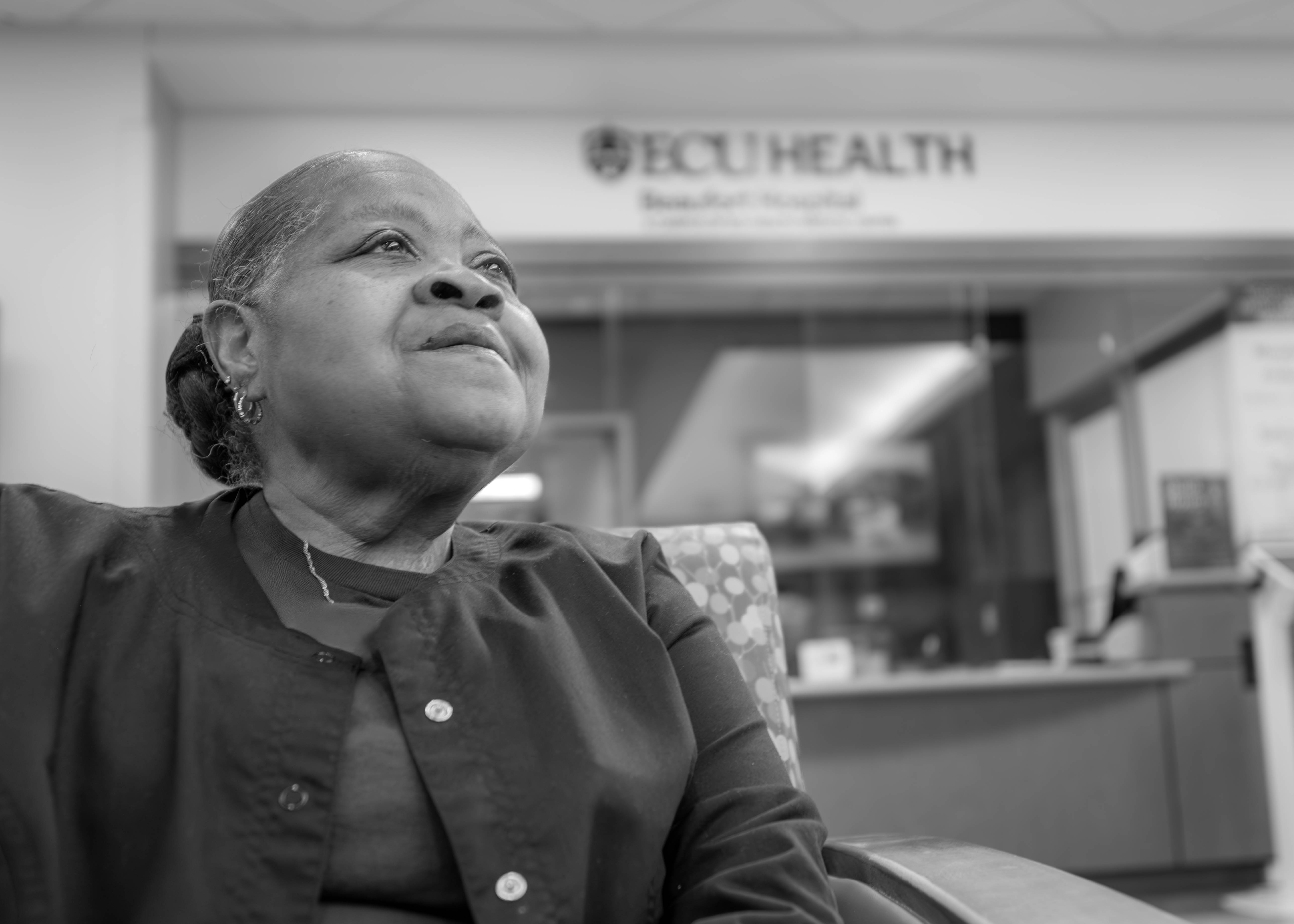
“We did light baking in those days,” she said. “We made biscuits and cakes and pies from scratch. People really loved that.”
While she didn’t plan to stay at ECU Health for 45 years, Fannie said the work has been a blessing to her and her family.
“This has been a home away from home,” she said. “This is my getaway place, where I come to think about other people and not myself. I’ve been able to meet so many people – not just co-workers but patients and others outside the organization. There are patients you meet you get real attached to. They come and go, and you don’t ever forget them.”
A lot has changed in those 45 years, she said.
“Some of the processes have changed, and other things like serving more healthy foods and more options. The hospital has also grown a lot, but the more we grow, the more we learn.”
Although she’s 70 years old, Fannie said she hopes to continue her work with ECU Health – while also spending time with her children and grandson.
She’s also teaching the new team members, just as she was taught when she first started.
“Each age group is different, and you have to adapt to each of them. But I feel valued and appreciated when I can help someone beside myself. That’s the way I was raised, and that’s the impact I want to make – to inspire them.”
When asked if she had any advice for team members joining ECU Health, she offered these words: “Life is what you make it. Be positive, be an inspiration. If it’s helping someone, it’s good enough.”

Celebrating Rural Health Day: The Beating Heart of Rural America’s Well-Being, Workforce and Economy
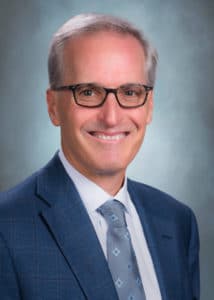
Dr. Michael Waldrum
Each year on National Rural Health Day, we pause to recognize the incredible contributions of those who provide care in rural communities. It is here, in rural America, where resilience, innovation, and compassion intersect to create lasting impacts in the lives of patients and their families.
But this day is more than a celebration of service. It’s a reminder that rural health care organizations are powerful engines of workforce development, economic vitality, and community well-being.
There’s no question that rural health care faces persistent challenges: workforce shortages, funding gaps, and infrastructure limitations. Yet, despite these realities, thousands of people across eastern North Carolina, and millions across the nation, go to work each day to care for others.
At ECU Health and the Brody School of Medicine at East Carolina University, we understand rural health care because it is who we are and what we do. Our rural hospitals and clinics aren’t just a small part of a broader health system, they are the heart of our mission to improve the health and well-being of eastern North Carolina. Within their walls are the people who make our vision of creating the national model for academic rural health care a reality.
We are proud of our rural identity, and it guides us in everything we do. In towns where the nearest hospital may be miles away and the population sparse, rural health care providers are often the largest employers. Clinics, hospitals, and community health centers like ours don’t just deliver care, they create jobs, train future professionals, and anchor local economies. From nurses and lab technicians to IT specialists and administrative staff, rural health care organizations offer career pathways that keep talent rooted in rural America.
Moreover, organizations like ours are uniquely positioned to cultivate the next generation of health professionals. Through partnerships with schools, colleges, and workforce organizations, they provide internships, apprenticeships, and continuing education that open doors and meet community needs. These programs don’t just fill vacancies, they build futures and empower young people to pursue meaningful careers without leaving their hometowns.
The economic ripple effect is profound. A thriving health care sector attracts new businesses, supports housing markets, and enhances quality of life—making rural communities more attractive for families and entrepreneurs alike. When rural health care is strong, the whole community flourishes.
So, on this National Rural Health Day, let’s celebrate the caregivers, support teams, educators, and advocates who make rural health care possible. And let’s also commit to supporting the policies, investments, and partnerships that strengthen their role as workforce developers and economic catalysts.
Because when rural health thrives—America thrives.
Mike Waldrum, MD, MSc, MBA
Chief Executive Officer, ECU Health
Dean, Brody School of Medicine at East Carolina University
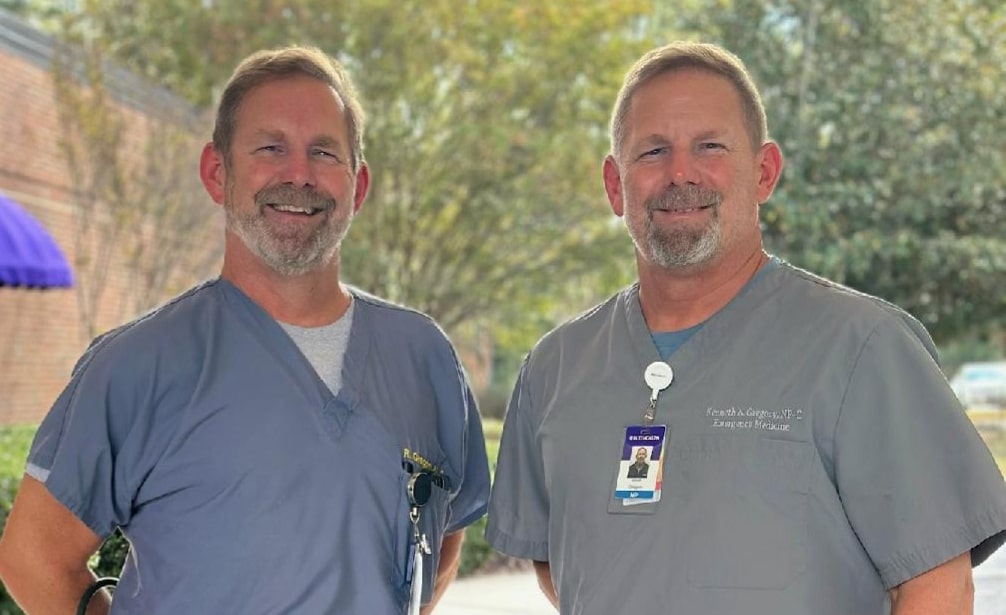
Identical twins Richard Gregory, DMSc, PA-C, and Kenneth Gregory, DNP, FNP-C, have spent more than a decade working side by side in the ECU Health Edgecombe Hospital emergency department, where their collaboration is as intuitive as it is impactful.
Their journey to saving lives and treating patients in need of emergency care began long before they donned scrubs. From high school classrooms to military service in the U.S. Army, Richard and Kenneth have always moved through life together.
That shared experience laid the foundation for their parallel careers in health care—Richard as a physician assistant and Kenneth as a nurse practitioner. Their bond, forged in discipline and purpose, has shaped not only their clinical practice but also their academic pursuits.
In 2025, the Gregory brothers reached a milestone few siblings achieve together: earning their doctoral degrees. Richard graduated from A.T. Still University in Mesa, Arizona, with a Doctor of Medical Science, serving as vice president of his class. Kenneth earned his Doctor of Nursing Practice from East Carolina University in Greenville.
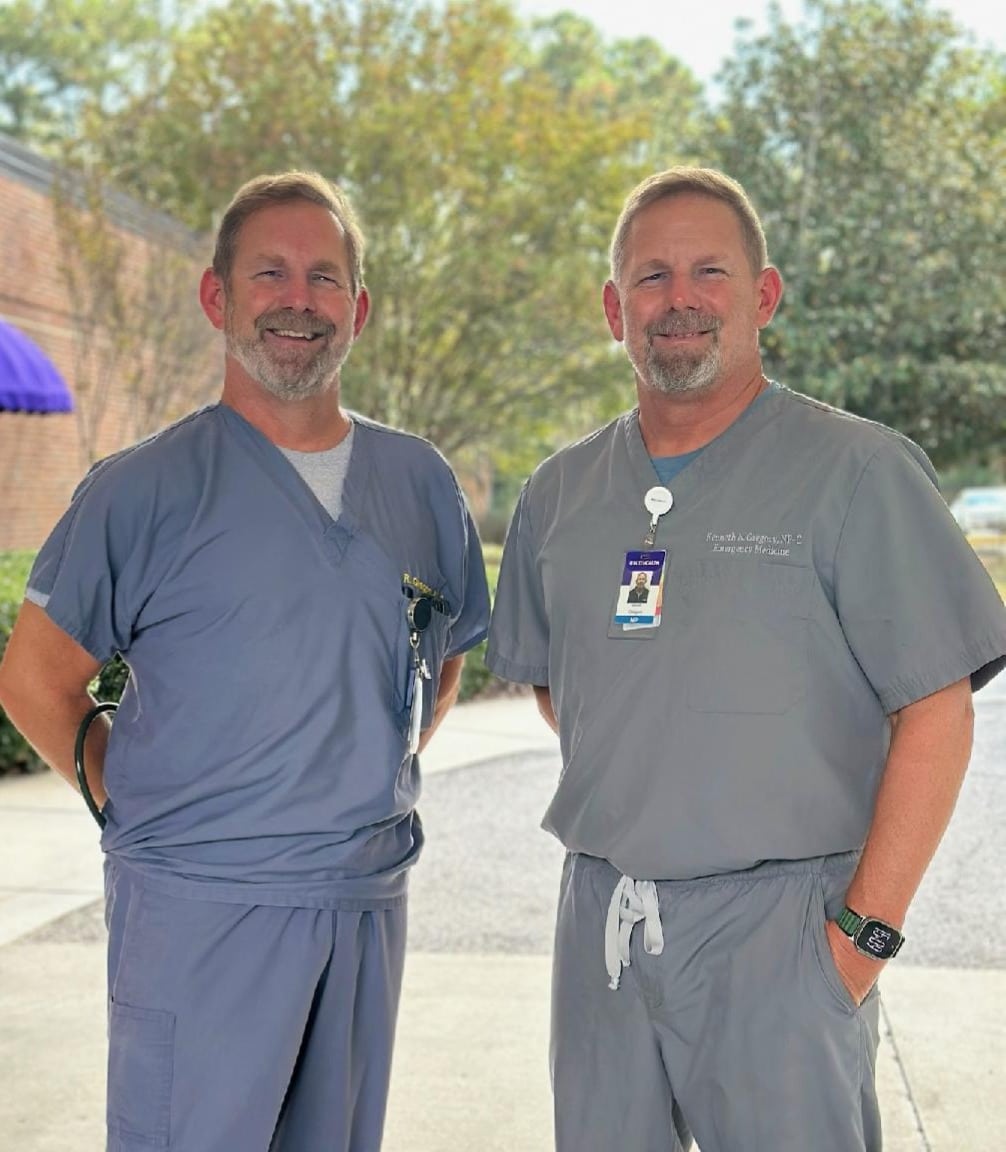
“Although our programs differed, Kenneth and I shared the same motivation to grow,” Richard said. “We held each other accountable, often staying up late to discuss coursework, research and strategies for balancing academics with full-time clinical responsibilities. There was an unspoken understanding: if one of us advanced, the other would not be far behind.”
“We’ve always moved through life together,” Kenneth shared. “So earning these degrees side-by-side just feels right.”
Their academic journey was not without challenges. Balancing full-time clinical responsibilities with demanding coursework required late nights, sacrifice and mutual support.
“We were each other’s personal accountability partners,” Kenneth said. “Our support focused less on reviewing content and more on making sure the other didn’t burn out.”
For Richard, the decision to pursue a DMSc was driven by a desire to expand his impact beyond direct patient care. With more than 25 years of experience, including a decade in family medicine and 15 years in emergency medicine, he saw advanced education as a way to strengthen leadership, education and evidence-based practice.
“Completing the DMSc program enabled me to contribute to meaningful improvements in patient outcomes and team performance,” Richard said.
As part of his doctoral research, Richard explored the use of low-dose ketamine (LDK) for managing acute pain in the adult population within the emergency department. With opioid stewardship in mind, his work aimed to educate providers through a decision tree that highlights an active protocol already in place across the ECU Health system.
“This research is about improving pain management while reducing reliance on opioids,” Richard said. “It’s a practical tool to support evidence-based decisions and enhance patient care.”
This addition reinforces Richard’s commitment to clinical innovation and aligns with the broader theme of systemic improvement. It also complements Kenneth’s work on opioid use disorder, as both brothers are tackling different aspects of the same public health challenge.
Kenneth’s DNP journey was inspired by a desire to implement systemic solutions in rural health care. His doctoral project focused on integrating transitional care for patients with opioid use disorder into the emergency department—a complex initiative requiring research, operational planning and administrative coordination.
“I wanted to go beyond treating immediate symptoms and focus on evidence-based, systemic change,” Kenneth says. “The DNP program trained me to lead, translate research into practice and serve as an innovative change agent.”
Now, with degrees in hand, the Gregory brothers are focused on using their expertise to advocate for rural health care needs at ECU Health Edgecombe Hospital and in eastern North Carolina—as well as champion the meaningful difference continuing education can make.
“Don’t pursue a degree just for the titles,” Kenneth said. “Pursue it to address a clinical or systemic problem that frustrates you. Having a clear purpose will keep you motivated when the coursework feels overwhelming.”
“Do it and don’t let fear hold you back,” Richard shared. “Advanced education challenges you to view health care form new perspectives and helps you to become not only a better clinician but also a stronger communicator, leader and advocate for patients and peers.”

The 29 learners who started their quality improvement journey a year ago as part of the Teachers of Quality Academy (TQA) 8.0 cohort officially wrapped up their participation in the program at a recognition ceremony Oct. 22. While the ceremony marked the end of the cohort’s formal learning sessions in the program, the multidisciplinary group of health care professionals is now poised to take their knowledge back to their workspaces with the goal of driving continuous quality improvement across ECU Health and the Brody School of Medicine at East Carolina University.
TQA is a professional development program for health care leaders designed to fundamentally change care delivery through a curriculum focused on building knowledge and skills in Health Systems Science which comprehensively explores how health care is delivered.
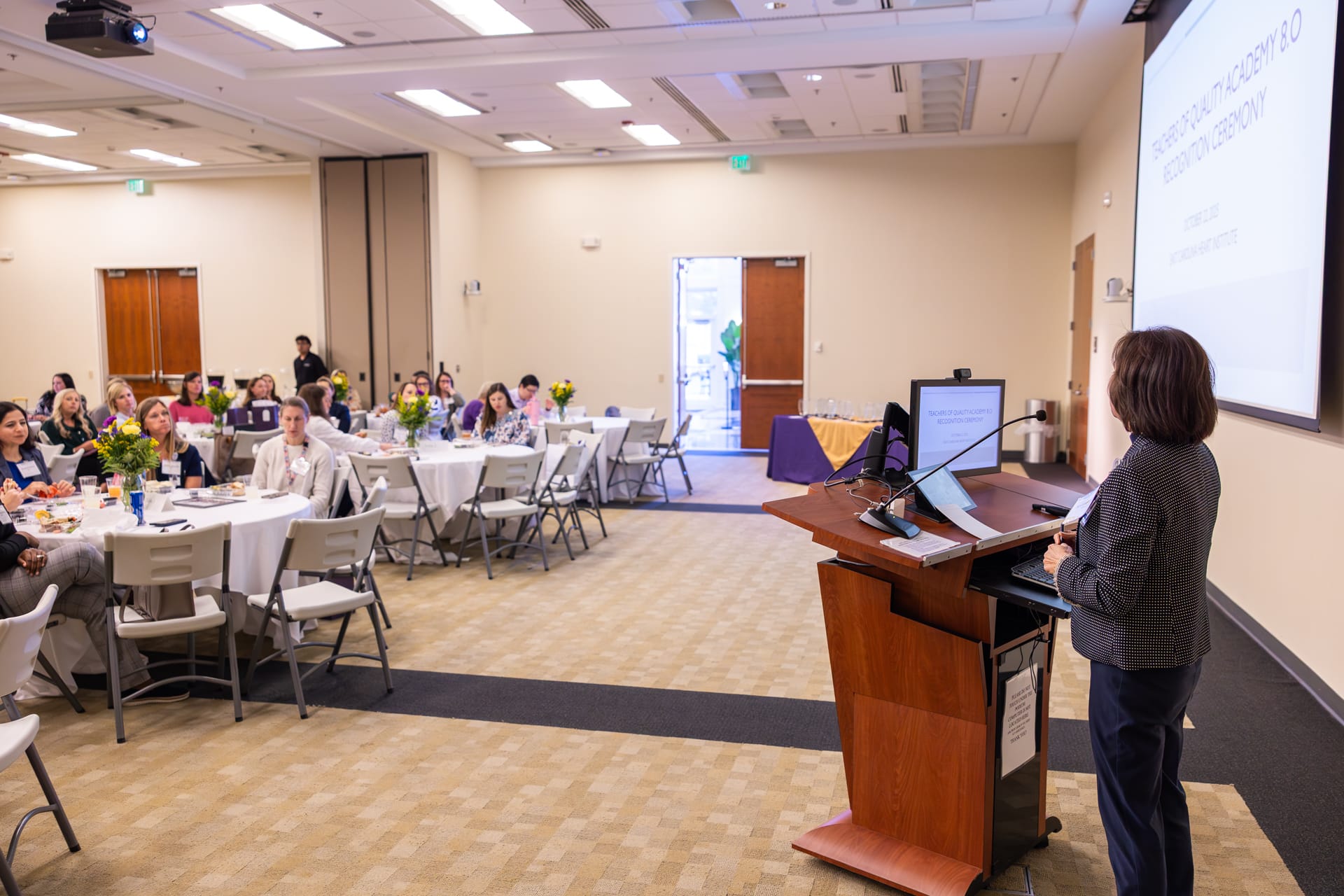
“We hope the biggest take away from this last year of learning is the importance of taking what they’ve learned back to their teams so they can apply their knowledge and skills to be catalysts for positive change in their local communities and local teams,” said Dr. Jennifer Sutter, TQA physician director. “This is a diverse group of professionals who represent many different parts of the health system so we’re confident they can have a broad impact on driving quality improvement for ECU Health and those we serve.”
The 8.0 cohort included health care professionals from clinical, administrative, leadership and educational backgrounds, all of whom were selected from a highly-competitive pool of applicants.
“The work that we do in health care is purposeful work, but nobody would define it as easy,” said Dr. Niti Armistead, chief medical officer and chief quality officer at ECU Health, during remarks at the recognition ceremony. “What I’ve found in my own quality journey is that quality improvement is the antidote to burnout by converting the burrs in the saddle into problems to be solved. Quality improvement is a way to re-establish your agency and feel like there are real things you can do to drive improvement and make a positive difference.”
Throughout the past year, participants engaged in advanced learning in quality improvement, patient safety and team leadership, develop improvement projects to apply these skills across the health system, teach others in their environment about these concepts and evaluate the outcomes of improvement interventions.
Lauren Chambers, pharmacy supervisor at ECU Health Medical Center, and Brynn Schiller, who started the program as an administrative fellow but now serves as a workforce development project manager, partnered together on a project aimed at improving hyperglycemia management for medical intensive care unit patients. Hyperglycemia, otherwise known as high blood sugar, can result in organ damage and other serious complications if not treated and managed quickly and effectively.
Chambers said that when the two were deciding which project to pursue, they wanted to be bold and pursue something meaningful and sustainable. For Chambers and Schiller, their hope is that others will take advantage of the opportunities provided through TQA to explore important topics in areas meaningful to them while making important connections along the way.
“You learn a lot about yourself and you get to connect with people you don’t normally connect with,” said Schiller. “I got to know Lauren who is clinical in pharmacy. My background is not clinical so it was really interesting to work together on a project where I didn’t know a lot but I learned a lot thanks to our work on the project together.”

“The program helped me reach my goal of working at ECU Health,” said Kara Dozier, a hostess with the Food and Nutrition Services team, of the NC Works program.
Dozier enrolled in the NC Works program in October of 2024 and served as its first participant at ECU Health.
NC Works is an initiative throughout North Carolina for young adults ages 18 to 24 who are interested in exploring health care careers. The program brings together various statewide agencies including the Department of Commerce, Public Instruction and the NC community college system to create opportunities for young jobseekers to find employment. ECU Health is one of many work sites across the state for the NC Works program.
Kara said she’d always wanted to work in the hospital setting. “I have family who work in the hospital and had heard great things about ECU Health,” she said.
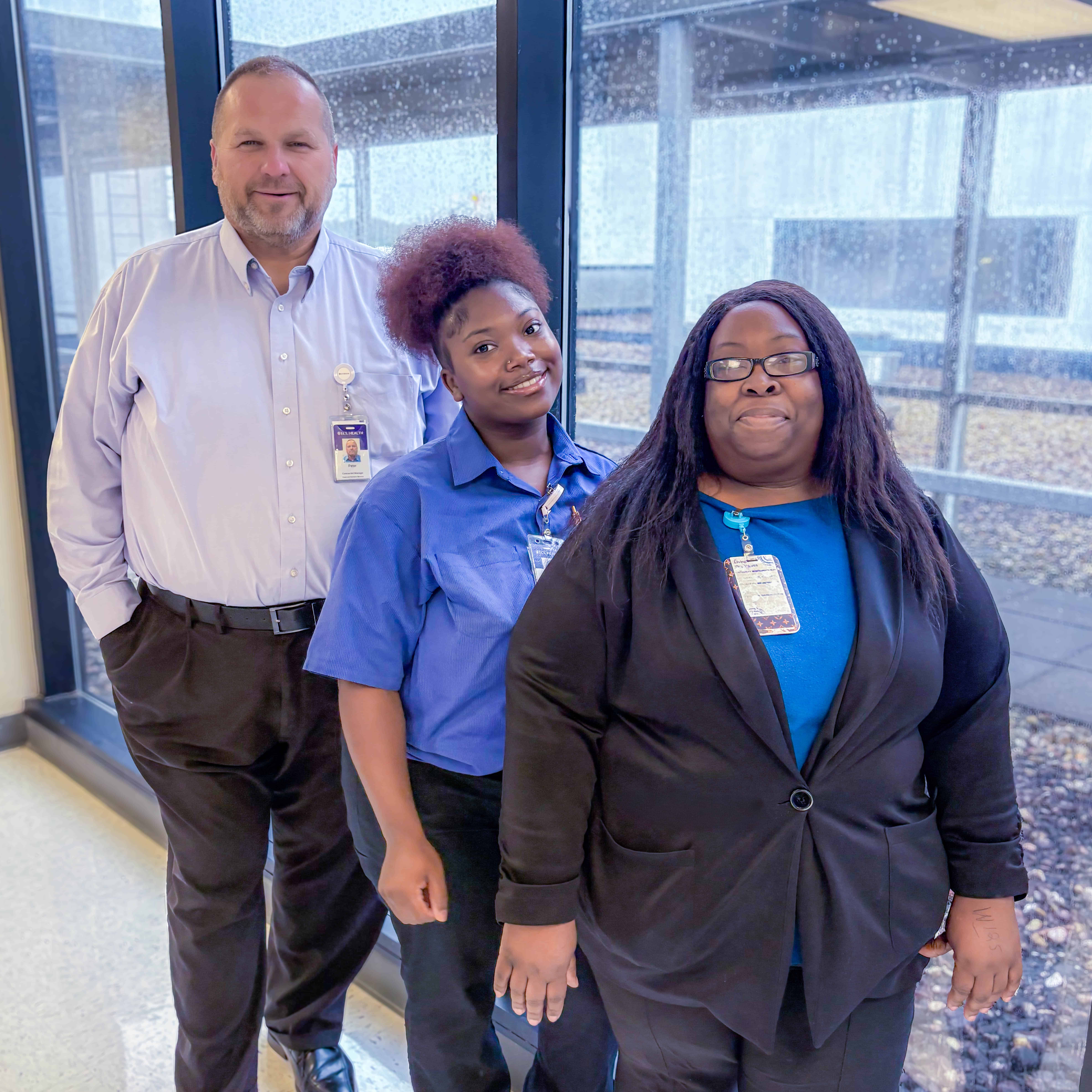
When she was at a job fair at the Greenville Convention Center, she saw an ECU Health table. “I thought, let me go over there and see what this is about, and Ms. Toyta told me about the program. She wanted me to give her my resume.”
Toyta Kee, a talent pipeline consultant at ECU Health, said the program makes a lasting impact on participants.
“It’s like an internship model,” she explained. “This program plants the seeds that will affect generation after generation.”
Kee emphasized that ECU Health’s broad spectrum of career opportunities makes it the perfect environment for introducing young people to the health care field.
“There are so many opportunities for participants to further their education. They didn’t think they could work in health care because they didn’t want to be a doctor or nurse. Here at ECU Health, they can get the exposure and education to many other jobs, and they receive guidance and mentorship as they learn about health care roles,” Kee said. “It warms my heart to serve as the navigator to help them have a successful life, to be a blessing to themselves and their families.”
In addition to helping young adults gain valuable skills, the program also creates a pipeline of talent that potentially leads to participants becoming members of the ECU Health team.
That’s just what happened for Dozier.
During her time in the program, Dozier worked in production, the call center and Food and Nutrition. She felt supported by her team and Kee, and before the program ended, her colleagues and supervisors from each department advised her to apply for a full-time role.
“I decided to stay as a hostess in Food and Nutrition,” she said. “I love the people I work with, and it has a good vibe.”
“We are so appreciative to the Food and Nutrition Service department for their unwavering support of this program,” Kee added.
Dozier is now in school at Pitt Community College, wrapping up a degree in business administration. “This is my last semester,” she said. “I hope to stay with ECU Health and do work that’s aligned with my degree.”
“Eleanor Roosevelt said, ‘The future belongs to those who believe in the beauty of their dreams,’ and I believe in dreams,” Kee said. “This experience opens doors for people who might otherwise have socioeconomic barriers, and that’s what’s rewarding to my heart.”
To learn more about the NC Works program, contact Toyta Kee at [email protected], or visit the NCWorks website.

One of the newest education opportunities is the Learning Lab program, which provides ECU Health Medical Center team members the opportunity to earn their high school equivalency in partnership with Pitt Community College.
Housed on the Medical Center campus, team members who are accepted to and enrolled in the Learning Lab program can use the lab during their workday to complete schoolwork. Additionally, the program offers financial assistance for program-testing fees and compensates a portion of the team members’ school time.
A key feature of the Learning Lab is the one-on-one support from a Pitt Community College instructor, who helps with assignments and certain skill development such as organization and time management.
This spring, ECU Health celebrated its first three graduates from the program. Simone Cummings, a Central Services technician at the Medical Center and one of the graduates, has been with the health system for a little over three and a half years.
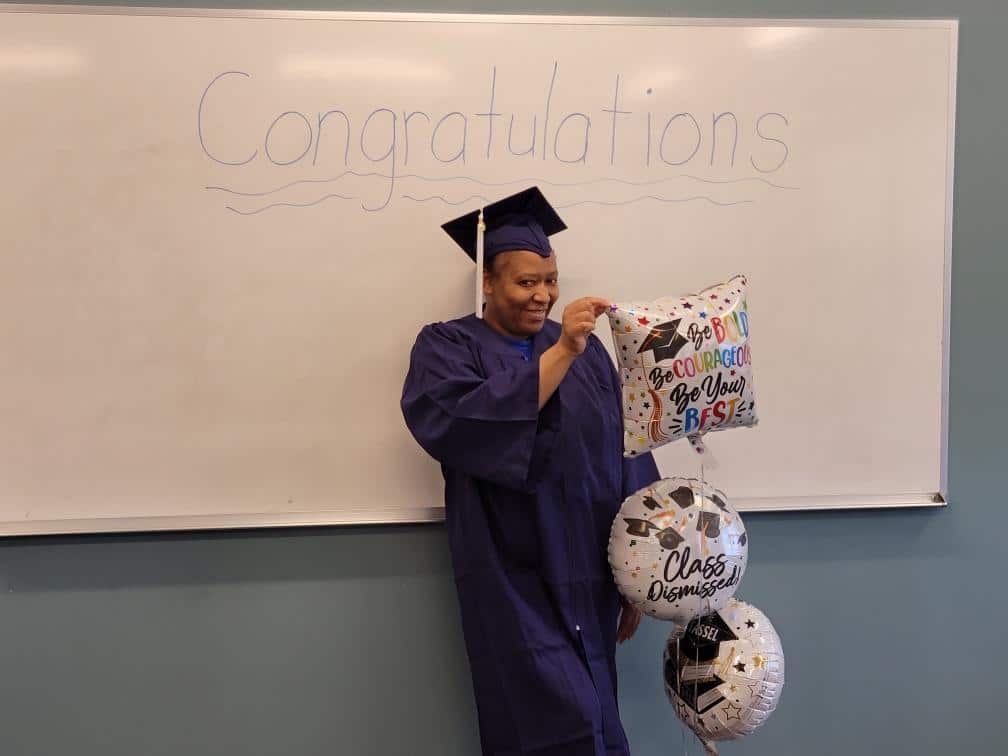
Simone praised the program and encouraged other team members to take advantage of this opportunity. “What I love about the program is that you can work at your own pace, have one-on-ones with the teacher if there is a topic you are having problems with and you’re with a small group which makes learning fun and more interesting,” she says.
Simone advises those interested in the Learning Lab to take action: “I would say to talk to your managers, get signed up. Time doesn’t wait on you; you wait on time. If you are thinking of going back and getting your GED or high school equivalency, I am so proud of you. Just by thinking about it you are already a winner, and your story has just begun. By joining this program, you already have a family to support and love you all the way because no one gets left behind.”Simone1.jpg
Programs like this one open doors for team members, providing the education needed to apply for other programs such as the NA I, NA Advancement, the HomeGrown program or to explore other opportunities in the organization that require a high school diploma or equivalent.
“The Learning Lab program is so beneficial to team members at the Medical Center because it provides a stepping stone to other programs we offer,” says Doris Hill, Workforce Development Consultant, and organizer for this program.
Team members interested in the Learning Lab program must complete the application process to be considered. Applications are accepted on a rolling basis for fall and spring semesters. For more information about the Learning Lab program, click here or contact the ECU Health Workforce Development office at 252-847-3174.

Education is one of ECU Health’s IC-EAST Values, and our team members exemplify and live these values each day. Kimalie Robinson, Central Services Technician, is a great example of how the Value of Education is lived out.
Kimalie has been a team member at ECU Health for more than two years. As a Central Service Technician, he is responsible for collecting, cleaning and delivering equipment throughout ECU Health Medical Center.
Kimalie learned about the Learning Lab through a coworker who was already enrolled in the program. He was inspired to learn more about it as earning his high school diploma was a personal goal.
“I got involved in the program because when I migrated from Jamaica. I didn’t have a high school diploma, and I thought this would be a great opportunity for me,” he said.
Once accepted into the program, Kimalie adapted to balancing work and school. He credits the program coordinators with making his experience positive, saying, “My favorite thing about the Learning Lab is that it is well-organized, and the coordinators are very professional. Information and help were readily available.”
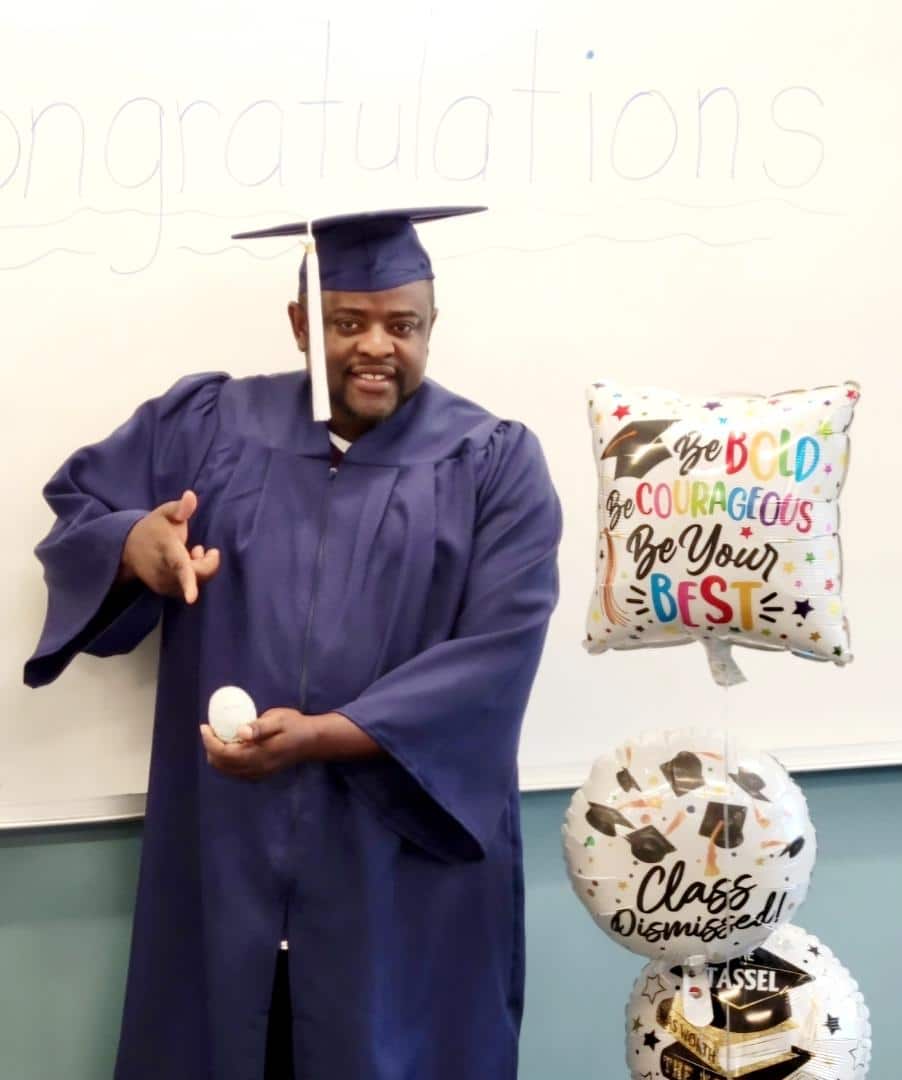
Support from coworkers and classmates was crucial to Kimalie’s success. “My classmates/colleagues were helpful in my journey,” he said, “my advice to others is to go for it, this is a great opportunity.”
Team members interested in the Learning Lab program must complete the application process to be considered. Applications are accepted on a rolling basis for fall and spring semesters. For more information about the Learning Lab program, click here or contact the ECU Health Workforce Development office at 252-847-3174.

Kelly Spivey received a call from an ECU Health recruiter during a difficult time of her life.
“I was in a vulnerable situation at home, and I was looking for a way out,” she said. “I cried out to God about what to do. Then the recruiter called me.”
The recruiter invited Kelly to a job fair, citing an application Kelly had filled out. The only catch was Kelly hadn’t filled out an application.
“Then how did your information come across my desk?” the recruiter asked.
“I felt like God was telling me where to go, so I went to the job fair,” Kelly said. “I received three job offers that day. I packed up me and my two boys and moved with nothing. I’ve been here ever since.”
That was in 2012. Kelly began working in the traumatic brain injury (TBI) unit as a care partner, and she loved it.
“I had always felt a calling to work in health care, and in this job, I got to work with a special population of patients. I also met my now-husband, Lee Spivey, who was a charge nurse there.”
When a physical therapy technician announced his retirement from the rehab team, he suggested Kelly apply for his job.
“I interviewed and started working as a tech in 2014,” she said. “I joined the military in 2016, but I stayed at the hospital PRN. Lee and I got married in 2016, and he transferred to [ECU Health] Edgecombe Hospital, but I stayed in Greenville working in rehab, drilling for the National Guard on weekends and serving as the after-school director at my kids’ school.”
Even when the pandemic shut down schools, Kelly still worked PRN at ECU Health Medical Center and in a remote position at the Down East partnership. Over the next few years, Kelly found out she was pregnant, had a miscarriage, left the military, discovered she was pregnant again and supported her husband when he was diagnosed with stage 4 lymphoma and later had a heart attack.
“During all of this, Edgecombe hospital and the whole community supported our family,” Kelly said. “I was able to stay on at work because my team worked with me. They have a special part of my heart,” Kelly said. “It’s been such a roller coaster, but the two hospitals gave us hope.”
In June 2024, Kelly received a call from a friend at ECU Health Edgecombe Hospital asking if she’d like to apply for a community health position.
“I really loved working in rehab, but the manager reminded me community is what I do,” Kelly said. “I prayed on it and applied, and I got the job. I’m so glad I did. It’s truly been a blessing.”
A legacy of service
Community is what Kelly does. In addition to her professional work, she established a community pantry, which she runs out of her own house, in April 2018.
“I was coming home one day with my children, and there was a homeless man on the street,” Kelly said. “My son wanted to give him an oatmeal cake, but the man didn’t want to take it. It was laid on my heart to give people a place they could get what they needed and not feel like they were taking it from someone.”
Kelly cleaned up some old furniture, collected food and toiletries, and announced the pantry on her Facebook account.
“It became a hit – people were using it,” she said.
Now, Kelly said people frequently donate to and take what they need from the pantry.
“People might clean out their closets, or those of a loved one, and drop off clothes,” she said. “Sometimes people drop off one thing and pick up something else. Grandparents come and get snacks for their grandkids, or people get a boxed cake mix for a birthday celebration.”
Kelly cited her parents as inspiration for her passion for service.
“My dad could fix anything outside the house, and my mom could fix things inside,” she shared. “My dad always had a huge garden, and he’d drop off food to people in the neighborhood. My mom could sew, and she made us clothes and even made a wedding dress and all the bridesmaid dresses for a woman who was getting married. She was always that person in the family. When I received the Governor’s Volunteer Award, I drove all the way home to Whiteville to give it to her.”
The “sandwich lady”
In her current role, Kelly was instrumental in bringing the Summer Meal Program to Tarboro. She and her team landed on using Braswell Community Center and Park in Tarboro as the hub for their program.
The Summer Meal Program is a partnership between ECU Health and Sodexo, the ECU Health Foundation and Food Lion Feeds to provide free meals to kids, teens and those with disabilities throughout the summer. Free meals are also offered in Ahoskie, Bethel and Greenville.
“It gave people a place they could play, eat and have access to air conditioning,” Kelly explained. “Seeing kids run up and get something to eat – it took me back to my own days as a single mom. I had a calendar with local restaurants’ ‘kids eat free’ days, and that’s how we ate for a while. It upset me to think of those kids not having something to eat.”
Kelly said now she’s known throughout the community as the “sandwich lady,” but for her, the service is not just about providing a meal.
“We offer healthier options for free, and this opened opportunities to share mental health resources. I’ve helped people sign up for ECU Health Now, and I’ve given them information about support groups. This bridges trust between the hospital and the community.”
Kelly said her passion for service has been fueled by her own experiences, and these are opportunities to give back.
“Everyone is going through something, and we’re not meant to do life alone,” she said. “We truly need each other, and this is my purpose.”
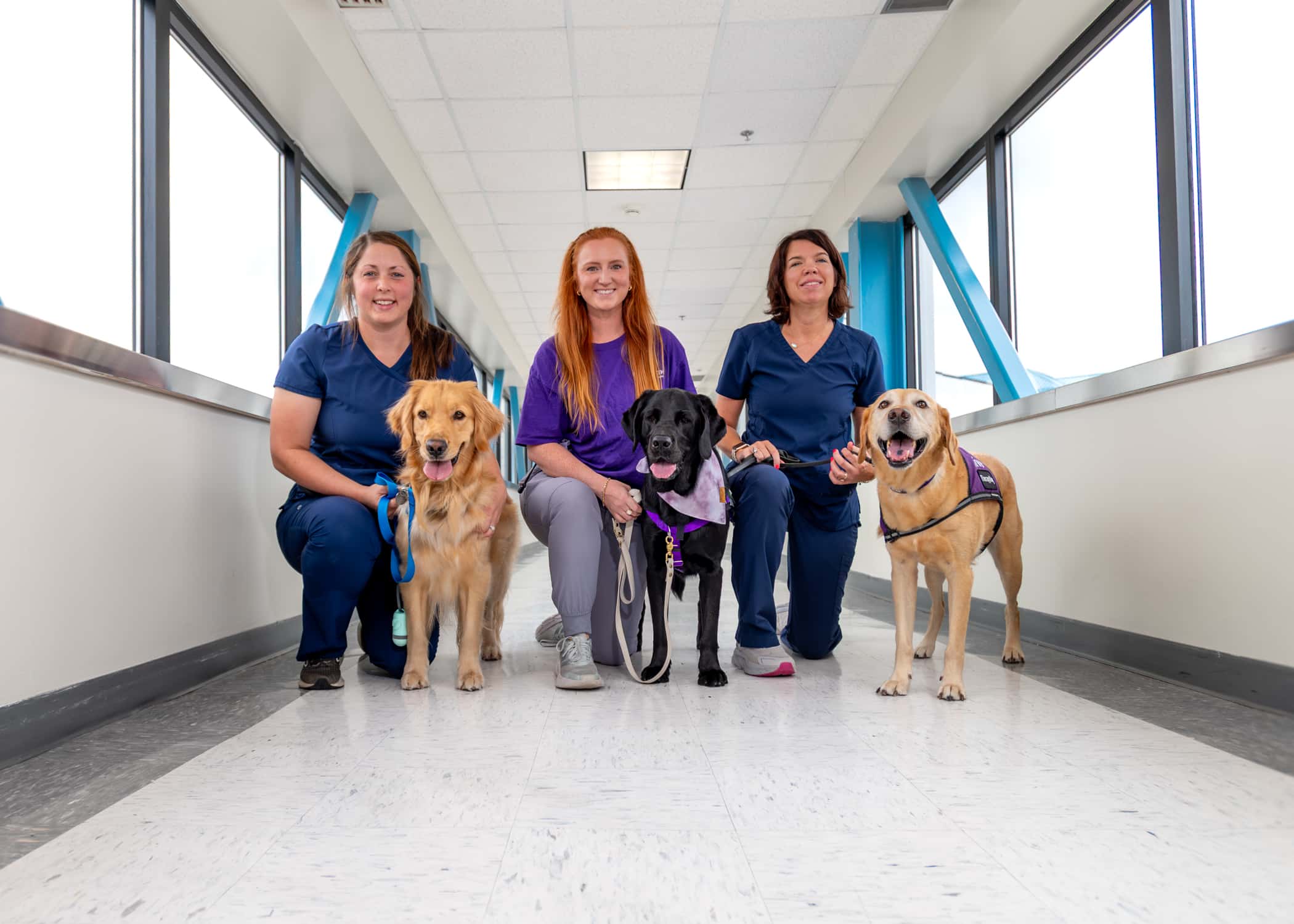
Across ECU Health Medical Center and the James and Connie Maynard Children’s Hospital, three dogs named Clive, Erving and Sam are leaving pawprints in the heart of patients, their families and team members alike. Whether in rehabilitation or pediatrics, these four-legged friends bring joy, motivation and emotional support to patients and their families.
Clive, an eight-year-old golden retriever and lab mix, has been working in the medical center’s rehabilitation department for more than three years. Originally trained through Canine Companions, a non-profit organization that trains and matches service dogs, the program released Clive due to his anxiety riding in cars. but retained all his training and social skills. His puppy raiser, Tanya Bowen, who serves as an outpatient rehab supervisor, connected with recreational therapist Kasey Shue, and found a way to put Clive’s training and social skills to use in therapy work. He typically works two days a week and specializes in emotional support, stress relief and anxiety management. His gentle demeanor makes him ideal for comforting patients and staff.
Shue describes him as a “snuggly bug,” and though he’s older and slower, Clive’s presence continues to make a powerful impact.
Erving, a golden retriever and the newest member of the rehab team, joined in May of 2025. Also raised through Canine Companions in Florida, Erving underwent professional training in Orlando and now works full-time with recreational therapist Kristen Jones. With 40 commands under his belt and certification through Assistance Dog International, Erving supports patients in physical and occupational therapy. His ability to retrieve, tug and interact with patients helps challenge their balance, build strength and boost motivation. Patients often find themselves more willing to participate in exercises when Erving and Clive are involved.
“One patient we had arrived at ECU Health’s rehab unit experiencing pain in his legs and physical therapy was proving difficult,” said Shue. “He didn’t want to walk. The pain was too much, and he was resistant to every attempt to get him moving.”
Then Clive entered the room.
The patient had dogs at home and immediately responded to Clive’s familiar energy.


“With Clive, he agreed to walk around the gym, something he hadn’t been willing to do before,” said Shue. “The pain was still there, but Clive helped him push through it.”
Then there was a patient recovering from a stroke. She couldn’t speak and hadn’t smiled since arriving.
“After a session with Clive, she smiled,” said Shue. “Her face lit up. When the session ended, she pointed to Clive and then to her bed because she wanted him to stay.”
As Clive curled up beside her, the patient’s daughter cried, the doctors cried, and so did the therapist.
“It was a breakthrough moment, thanks to Clive,” said Shue.
For one young girl with Guillain-Barré Syndrome, Clive and Erving demonstrated how service dogs could support independence. She practiced real-life tasks with Erving like opening doors and pushing buttons and left excited to begin the process of getting a dog of her own.
According to Jones and Shue, even the staff feel the impact. On a day when a patient coded and did not survive, Erving was there to comfort the doctors who had administered CPR. His quiet support helped them process the grief.
A few steps away from rehab in Maynard Children’s Hospital resides Sam, a black golden retriever, lab and poodle mix trained through Canine Assistants, another non-profit organization that raises hospital facility dogs and personal services dogs. Her arrival was the result of nearly eight years of advocacy and planning by Child Life specialists Ashton Ayers and Chelse Smith, along with colleagues Jaymi Mendoza and Christy Denius. ECU Health Foundation provided the funding to bring Sam on board. After years of research and collaboration with the ECU Health Foundation, funding was secured and Sam officially joined the team in November 2023. Sam was matched with handlers Ayers and Smith after they were vetted through the organization and the hospital.
Ayers and Smith helped build the facility dog program from the ground up. Ayers was inspired by a facility dog handler who spoke at a child life conference, while Smith had firsthand experience with pet therapy and saw its impact in Intensive Care Unit (ICU) settings.
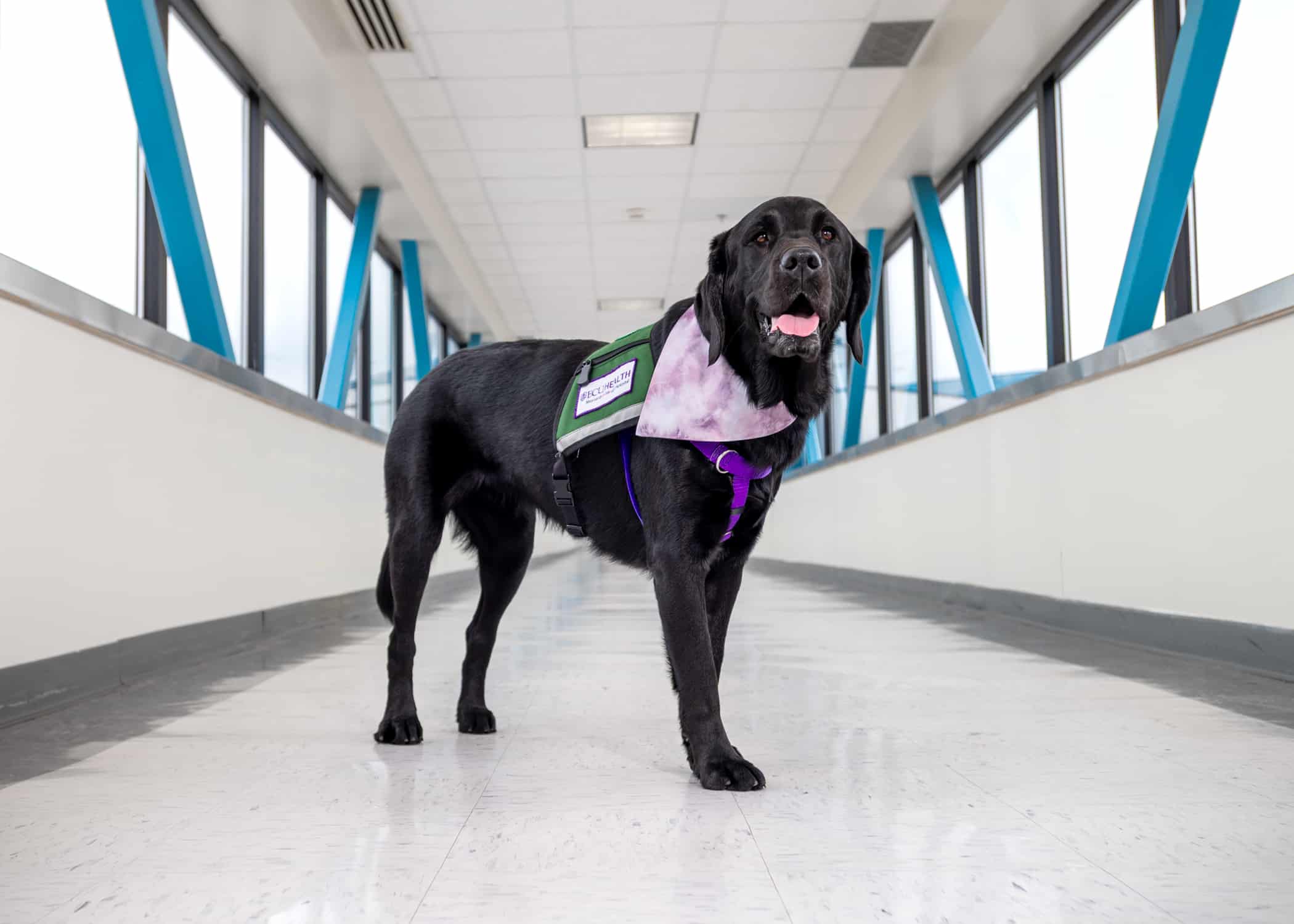
Sam now supports pediatric patients, including those in the ICU, offering comfort during procedures, emotional support during difficult moments and motivation for children facing medical challenges.
“We have a 16-year-old oncology patient,” said Smith. “He was slow to warm up to the hospital environment, but he definitely bonded with Sam. He met Sam when he was newly diagnosed with cancer.”
With his particular diagnosis, it was very important for him to get up and walk for his growth and healing, and to get him out of the room for his emotional state also, according to Smith.
“His care team told us he needed to get out of his room, but he didn’t want to,” said Smith.
Smith and Ayers brought over Sam and offered for him to take Sam outside and throw the ball for her. He surpassed all of his physical therapy goals that day and got to go outside and play with Sam.
“He came back last week and the first thing he said was, ‘I really missed Sam,’” said Ayers. “That’s always the first thing when he’s here, he wants to see Sam immediately.”
Whether it is comforting a child, motivating a patient or supporting a grieving doctor, Clive, Erving and Sam are more than therapy dogs.
“I’ve had people walk by and say, ‘You have the best job in the hospital,’” Shue said. “And now it’s even better – because there are three of them.”