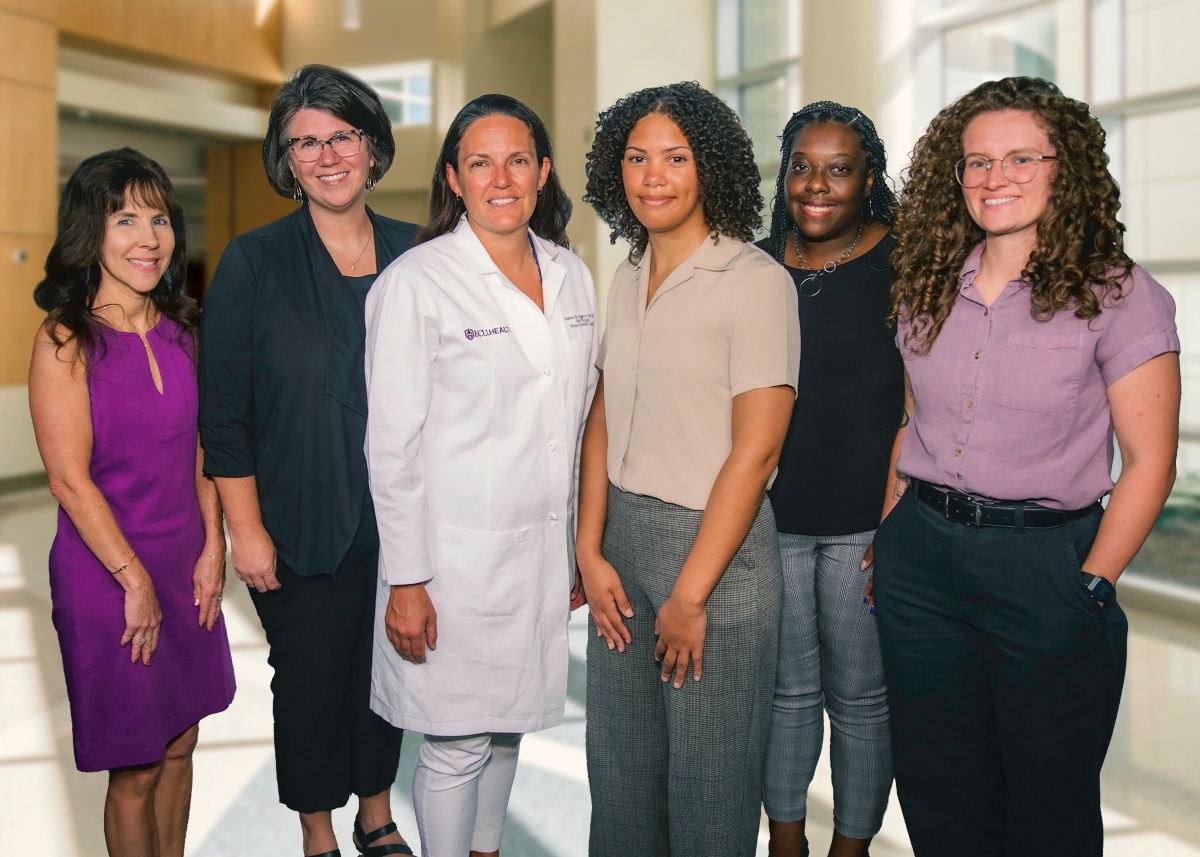
Greenville, N.C. – The Eastern Carolina Injury Prevention Program (ECIPP) at ECU Health Medical Center was awarded the Safe States Injury and Violence Prevention Achievement Award at the Safe States 2024 Injury and Violence Prevention (IVP) Professionals Annual Conference in Portland, Oregon on Aug. 20-22. Safe States recognizes the outstanding achievements of members and partners annually through peer-nominated awards.
“We are incredibly proud of the recognition ECIPP’s initiatives have received,” said Sue Anne Pilgreen, manager, ECIPP, ECU Health. “This award highlights our team’s leadership and expertise in injury prevention and advancing safety practices locally and nationally. While this recognition is encouraging, what truly motivates the ECIPP team is getting to see the impact that this work has on the members of our community as we remain dedicated to promoting safety, encouraging healthy behaviors and reducing injuries.”
Established in 1995, ECIPP is a collaborative prevention focused health program at ECU Health Medical Center. Partnering with the ECU Health Trauma Center, the James and Connie Maynard Children’s Hospital and the Brody School of Medicine‘s Department of Emergency Medicine, ECIPP is dedicated to improving the health of eastern North Carolina by reducing the incidence and impact of injuries. The American College of Surgeons noted the value of ECIPP’s work in the verification of Maynard Children’s Hospital as a Level I Pediatric Trauma Center.
ECIPP has been instrumental in the development, implementation and interdisciplinary adoption of injury prevention practices for children and adults across eastern North Carolina. ECIPP offers a wide range of prevention programs aimed at addressing the most pressing injury concerns in the region. These programs include education on child safety, teen safe driving, hot car safety, firearm safety, suicide prevention, traffic safety and poison prevention. ECIPP also partners with Greenville Police Department on the Greenville Traffic Safety Task Force, which earned a national achievement award in 2023.
By building innovative partnerships, ECIPP has successfully promoted the adoption of injury prevention practices across various industries. For instance, the firearm safety program collaborates with wildlife organizations and pawn shops to provide education and gunlocks, while partnerships with Community Health Workers help deliver bike safety education and helmets. ECIPP also created an LGBTQ+ youth suicide prevention documentary that has been integrated into college curricula and hospital onboarding processes. From 2020 to 2023, ECIPP reached 86,333 individuals, distributing 2,405 gun locks, 256 medication lock boxes, 3,204 bike helmets and 259 child car seats.
“ECIPP’s strategies and partnerships have been crucial in expanding education and resource access in rural eastern North Carolina communities,” said Catherine Nelson, senior administrator of Community Health Programs, ECU Health. “This award is a testament to our commitment to injury prevention and the positive impact we’ve made for children and families across the region. By collaborating with local organizations and leveraging innovative approaches, we’ve been able to address critical issues, ultimately advancing the health and safety of our communities.”
To learn more about ECIPP, visit the webpage.

ECU Health Maynard Children’s Hospital’s Neonatal Intensive Care Unit (NICU) offers the highest level of care for the most fragile of patients; it is staffed with a team of experts who care for critically ill or premature newborns. One of those specially trained nurses is Tara Stroud, who was named in February the vice president for Maynard Children’s Hospital, Women’s Service Lines and Community Health Programs. Recently, Tara received another well-earned recognition—this time as a recipient of the March of Dimes Excellence in NICU Leadership Award.
The national award honors NICU leaders who effectively support their team, advance the care of patients and the operation of their unit, have strategic vision and have excellent communication skills. Only one winner is recognized annually, and this year, Tara Stroud was honored with the award at the Synova 2024 NICU Leadership Forum.
Tara didn’t initially consider nursing as a career when she was younger. “I thought I would be a vet because I love animals,” she said. “But a love for nursing found me.”
After a clinical rotation in a NICU, Tara said she knew that was exactly where she wanted to be. “I wanted to do something that had meaning and value. The babies in the NICU are so critically ill and depend on you for everything, but they’re also so resilient. There’s something about the babies that gives you a different impression on life. That’s what captured and kept me.”
An eastern North Carolina native, Tara joined ECU Health in 2006 after receiving her BSN from East Carolina University. She’s since received an MSN as a neonatal nurse practitioner and her doctorate in nursing executive leadership, and she is excited about the road ahead for ECU Health.
“When you work for ECU Health, the possibilities are endless. When I started in the NICU, I didn’t know where my career would take me. Advancing my education and going into leadership roles was an opportunity ECU Health gave me.” She also loves that her work gives back to her community. “Eastern North Carolina is my home. I want to be where women and children receive exceptional care. If we weren’t here, some of our babies wouldn’t survive a trip. It’s critically important that we are here.”
Tara loves working with the NICU team, a group of leaders and team members who “lead with their hearts,” as she puts it, but she also sees many opportunities in her new role as vice president.
“It’s a chance to solidify the vision for ECU Health for the future of women’s and children’s care across the system,” she said. “We’re focusing on a more holistic view of health across the continuum of care, because both maternal and child health is important to our future. I’m excited to lead ECU Health to continue to impact that health continuum for both mother and child.”
This passion and dedication to her field is why she was recently recognized as the 2024 March of Dimes Excellence in NICU Leadership Award winner. Although “not a crier,” Tara admits she teared up when she learned she won the award. It was even more special that she was able to accept the award at the Synova 2024 NICU Leadership Forum with her husband and daughter in attendance.
“Winning the award surprised me,” she said. “I never thought I would win a national award, but when you’re focused on trying to provide exceptional care, sometimes you don’t realize the impact you’re having on others.”
That impact was clearly noted in Tara’s nomination form, which was submitted by her team and without her knowing. “Tara is an innovative leader who has a vision for the future unlike any I’ve worked with,” said one nominator. Another’s quote read: “She has left a forever impact on the leader I strive to be . . . thank you for leading us to excellence.”
Tara acknowledged that one of her greatest goals and achievements has been to guide her team members into leadership roles.
“My job is to grow the leaders of tomorrow. When my team said I have given each of them a chance to be leaders and make a difference in eastern North Carolina, that sticks with me more than anything,” she said. “To be recognized for this specific award for a population that is so important to me – and to know my team nominated me – it’s an award I cherish.”
The much-deserved award reiterates Tara’s focus on the future of ECU Health’s role in neonatal and maternal care.
“We are laser-focused on providing exceptional care for neonates and mothers in our region,” she said. “Babies in the NICU are getting smaller and surviving at younger ages year over year, and we are continuously adapting our care pathways to meet these needs. We’ve accomplished great work, but there’s more to be done.”
Resources

Just being a kid – that’s the goal Camp Hope and Camp Rainbow staff hope to accomplish every summer. Each year ECU Health and the Department of Pediatrics Hematology/Oncology at the Brody School of Medicine make it possible for children with cancer, hemophilia and sickle cell disease to take part in summer camp.
Camp Rainbow is for children with cancer, hemophilia and children who have lost a sibling to one of these diseases, and Camp Hope is for children with sickle cell disease.
“Once the kids get to camp, start participating activities and get to know each other, they leave everything behind and just get to be kids,” said Jacque Sauls, child life specialist at the Pediatric Hematology/Oncology Clinic at ECU Health and the Brody School of Medicine at East Carolina University and director of Camp Hope and Camp Rainbow. “That is a blissful moment for all of the health care staff to be able to watch a child we see in the hospital all the time being a kid and having a great time.”
ECU Health and Brody team members develop camping programs to provide pediatric patients an opportunity to learn more about themselves and their illness, participate in fun activities like swimming, canoeing, archery, crafts, music and drama, all while making life-long friendships with other children with similar conditions and experiences. Over 60 campers from 25 counties in eastern North Carolina came this year.
“These kids are often protected and sheltered a little bit because they can’t do all the things other kids can do because of their illnesses, or they’re afraid of infections or normal camps don’t have the health care they need,” said Sauls. “Here, they can do every camp activity. There are no limits.”
While at camp, children receive 24-hour medical care and close medical monitoring by their ECU Health care teams including physicians, nurses, child life and social workers.
“All of the children take medicine because of their conditions, so when they take it together, they realize, ‘You have to do this just like I do,’ and know they’re not alone,” said Sauls.
The vast majority of camp volunteers and counselors are former campers themselves, having experienced sickle cell, bleeding disorders or cancer. This shared background allows them to form a special connection with the campers, having faced similar challenges, treatments and experiences. These volunteers return to camp to ensure that today’s kids receive the same transformative experience they once did.
“It’s one of the most important things we do at camp because they get to meet children going through the same thing they’re going through or have gone through,” said Sauls. “The kids get to have mentors that have gone what they’ve gone through and are now in college. They get to see that just because you have a chronic illness or have had cancer you can’t do all the things you want to accomplish in life.”
This is true for camp volunteer Daniel Everett, who attended Camp Hope starting in 2017. When he graduated high school in 2021, he decided to volunteer at the camp.
“I have sickle cell myself, and for me as a kid to come to camp was a dream,” Everett said. “It was magical. It was a place I could go that I knew I was going to have fun, and it was a place I felt right at home.”
Now as a counselor, Everett makes the same impact on the new campers.
“It’s really awesome seeing the kids enjoy themselves, especially when they come from a background of pain, they may be going through treatment,” Everett said. “It’s just nice to see them come here to take a breather like, ‘I can be myself,’ because they’re accepted here.”
Everett is beginning college in the fall, and Sauls noted how important it is for the campers to see someone with the same disease as them accomplishing their goals.
One volunteer, however, is not a former patient. Dr. Ashish Khanchandani recently graduated from the Brody School of Medicine at ECU and is beginning his residency in Pediatrics at ECU Health Medical Center. Dr. Khanchandani volunteered during his gap between medical school graduation and residency to make sure the campers have fun and to assist in any medical needs the campers may have.
“The goal of us as volunteers is to make sure the kids can go about their day without any major medical issues,” Dr. Khanchandani said. “It has been fun being like a camp counselor. I’ve done all the activities with my kids like paddle boarding, all while making sure they’re doing it safely.”
Sauls said she was especially grateful for Dr. Khanchandani’s expertise when it comes to his group of campers. His group has Daniel Perez, a camper who survived brain cancer at two years old, losing his vision. Perez was diagnosed with bone cancer in his leg at age nine and underwent chemotherapy. Thanks to the help from Dr. Khanchandani and another camper named Esra Lupton, Perez has been able to participate in every single activity.
“Daniel and Esra met at this camp for the first time, and they go everywhere together,” said Sauls. “Esra takes him from place to place. It’s a friendship you would never be able to make somewhere else.”
Perez, like the other campers, has loved his time at Camp Rainbow. He said coming to camp helps him de-stress and forget about the medical stress going on his day-to-day life.
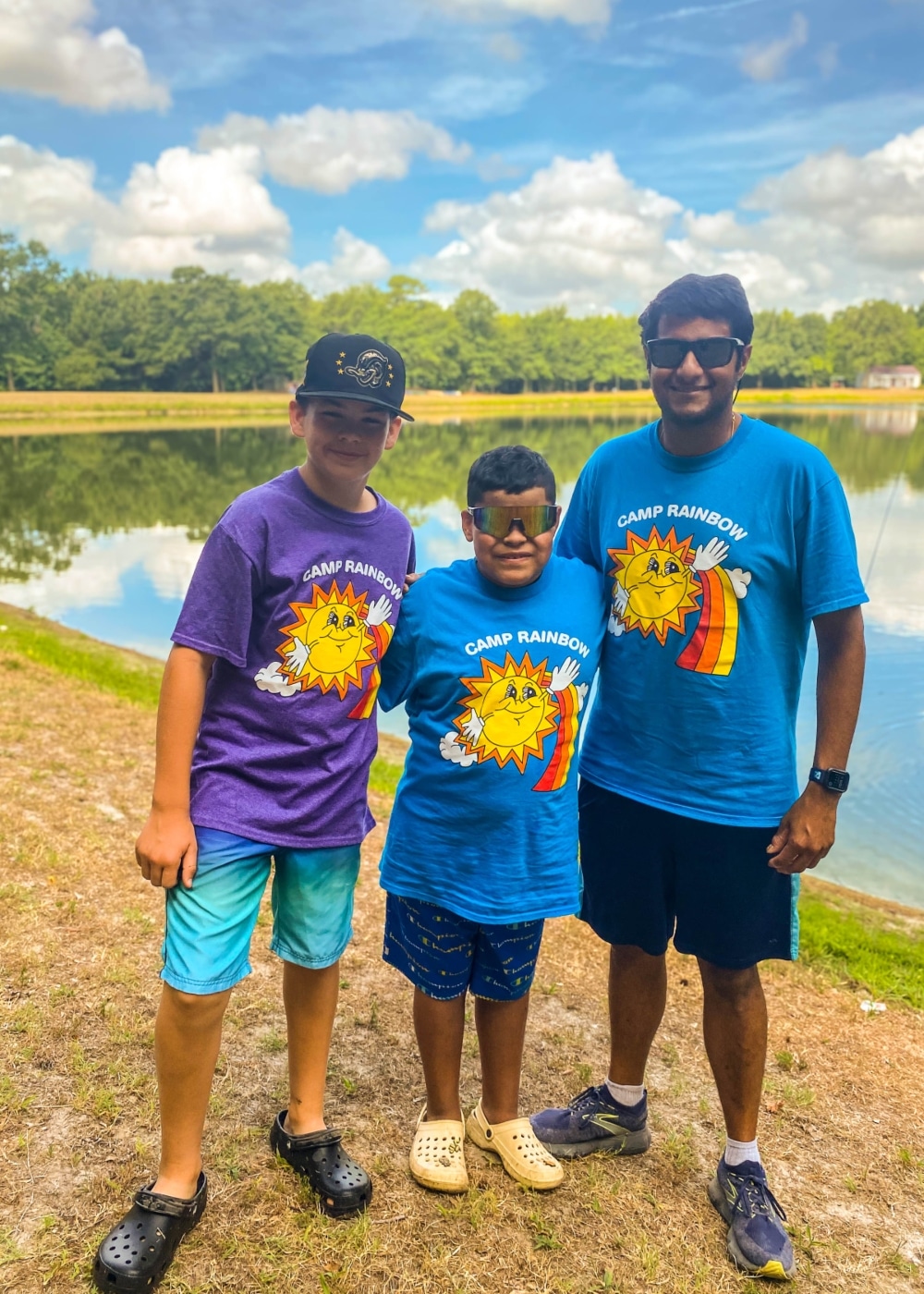
Camp Rainbow and Camp Hope are offered free of charge to children with chronic illnesses and were made possible this year by generous support and donations from the ECU Health Medical & Health Sciences Foundation, Inc., Children’s Miracle Network Hospitals/ECU Health Foundation, the Pamlico Neuse Women’s Coalition, the James and Mamie Richardson Perkins Trust, the Mildred Sheffield Wells Charitable Trust, Riley’s Army, Jaylen’s Nation, Ms. Tammy Thompson, Beau’s Buddies, China Kitchen of Robersonville and other individuals and civic organizations. To learn more, please visit: https://pediatrics.ecu.edu/camp-rainbow/
Greenville, N.C. – Tara Stroud, DNP, APRN, NNP-BC, NEA-BC, vice president of Women’s and Children’s Services, James and Connie Maynard Children’s Hospital at ECU Health Medical Center, was recently awarded the March of Dimes Excellence in Neonatal Intensive Care Unit (NICU) Leadership Award. Stroud accepted the national award at the Synova 2024 NICU Leadership Forum in Charlotte Harbor, Florida.
“I am deeply honored to receive the March of Dimes Excellence in NICU Leadership Award, especially knowing that my team nominated me for an award that recognizes excellence of care in a population that is so important to me,” said Stroud. “Our focus on improving the quality of care for neonates is unwavering, and this national award affirms that ECU Health is a model for exceptional care, particularly in rural communities. I am excited to help lead ECU Health in solidifying our vision for women’s and children’s care across eastern North Carolina.”
The March of Dimes Excellence in NICU Leadership Award honors NICU leaders who effectively support their team, advance the care of patients and the operation of their unit, have strategic vision and have excellent communication skills.
The NICU at Maynard Children’s Hospital offers the highest level of care for the most fragile of patients and is staffed with a team of experts who care for critically ill or premature newborns. Allyson Yelverton, director of Patient Care Services at the Level IV NICU, led the nomination initiative for Stroud’s team.
“Tara is an innovative leader who has a vision for the future, centered around the health and well-being of our patients,” said Kathryn Jarvis, senior director, Patient Care Services, Maynard Children’s Hospital. “She has helped grow high-performing leaders across the organization and serves with a passion for the patients and families we care for every single day. We were excited to nominate her and are so pleased that she was selected for this deserving recognition.”
An eastern North Carolina native, Stroud joined ECU Health in 2006 after receiving her Bachelor’s of Science in Nursing from East Carolina University. Stroud earned a Master of Science in Nursing as a neonatal nurse practitioner and a Doctor of Nursing Practice degree. Stroud worked in the NICU for many years and as senior administrator of Children’s Services at Maynard Children’s Hospital and was named the vice president of Women’s and Children’s Services in February. After becoming vice president, Maynard Children’s Hospital became the only Level I Pediatric Trauma Center serving eastern North Carolina.
“We at ECU Health are proud of Tara for being awarded the March of Dimes Excellence in NICU Leadership Award,” said Trish Baise, chief nursing executive at ECU Health. “Tara’s recognition at the national level is a testament to her unwavering commitment and the exceptional work her team does to advance the quality of care we provide. We are fortunate to have mission-driven individuals like Tara who help us lead the way in becoming the national model for academic rural health care.”

Youth across the state now have better access to mental health services as part of the expansion of the North Carolina Statewide Telepsychiatry Program (NC-STeP), an initiative of East Carolina University’s Center for Telepsychiatry.
Five pediatric primary care sites from the mountains to the coast are providing mental health care for children and adolescents through NC-STeP-Peds. Catawba Pediatric Associates, PA; Clinton Medical Clinic; ECU Pediatrics Clinic; Robeson Pediatrics; and Surf Pediatrics have joined the NC-STeP-Peds network. Once contracts are final, Peachtree Pediatrics in Cherokee will be established as the final of six sites.
NC-STeP-Peds is funded by a $3.2 million investment from the United Health Foundation (UHF). It continues the foundation’s commitment to work with ECU to address mental health challenges in North Carolina and provide mental health care services to children and adolescents in rural and underserved parts of the state.
Dr. Sy Saeed, director of the ECU Center for Telepsychiatry and founding executive director of NC-STeP, said the program offers an innovative approach to providing mental health services through expert consultation support for pediatricians and other clinicians through telemedicine. The model provides integrated care closer to home and deploys several technological innovations.
Each participating practice has a space within the clinic where patients meet virtually with a licensed clinical social worker (LCSW) for therapy sessions. Patients referred for psychiatric care will meet virtually with the psychiatrist in the same space.
“Telepsychiatry is a viable and reasonable option for providing psychiatric care to those who are currently underserved or who lack access to services,” Saeed said. “NC-STeP is also helping address a pressing and difficult challenge in the health care delivery system today with the integration of science-based treatment practices into routine clinical care. We are able to provide telehealth appointments for therapy with a licensed clinical social worker and psychiatric care at their pediatric clinic.”
The initiative’s virtual reality component, “NC Rural Kids Get Well,” has been created by Dr. Yajiong “Lucky” Xue, the Robert D. Teer Distinguished Professor in the Department of Management Information Systems, and students in the ECU College of Business. It provides a 3D community on the Roblox platform to serve three main purposes: education, peer support and surveillance.
Participating pediatricians are beginning to see results from the initiative in their practices.
Dr. Katie Lowry ’00, a pediatrician at Robeson Pediatrics, witnessed her hometown of Lumberton suffer two 100-year floods and the COVID-19 pandemic within a five-year span. She said the emotional impact resulted in increased anxiety and depression among her pediatric patients.
“We still have a long time to kind of get out of those difficulties that they were in,” she said. “Before we were able to get access to NC-STeP and provide that here in our office, we had maybe 150 on our waitlist for counseling.”
Lowry said being part of NC-STeP-Peds brings counseling and psychiatric care into her practice where children and their families are comfortable receiving health care.
“I think the biggest thing is [NC-STeP-Peds] has absolutely just crushed the stigma barrier,” Lowry said. “They’re receiving care in a place that they always receive their care. They don’t have to go to another facility. They don’t have to drive another hour. It’s right here for them, and that has been amazing for our patients.”
Overwhelming need
Dr. Christian Lige, a pediatrician at Surf Pediatrics in Dare County, said NC-STeP-Peds provides more timely care and is an avenue for providing more collaborative care for his patients. Prior to NC-STeP-Peds, the number of patients needing access to mental health services was overwhelming.
His practice sees patients from Dare and four surrounding counties. NC-STeP-Peds allows Lige to connect his patients to care more quickly. Lige said before NC-STeP-Peds, it could have taken nine months to a year to have an appointment with a psychiatrist.
“It’s really difficult to wait to see a psychiatrist for a year when a kid is struggling,” Lige said. “I’m hoping that with us talking with the psychiatrist, with our nursing staff and with the social worker, we’ll have a better picture of what’s going on with the patient.”
Through NC-STeP-Peds, Lige’s patients have their first virtual appointment with a behavioral health manager within weeks. The assessment determines if a psychiatric appointment is needed, and a virtual appointment with the NC-STeP-Peds psychiatrist follows in a few weeks.
“We see quite a few kids who go off and get admitted to a hospital because of an issue. They leave here and they’re on no medicines and they come back on four medicines. For a primary care doc to take care of four psychiatric medications is difficult,” Lige said. “So, we’ve had the ability now to speak to a psychiatrist so we can get input from them on the medicines and interactions, and that’s been very helpful.”
Assessing needs
In the 10 months since the sites launched more than 10,000 children and adolescents have been screened for mental health issues. Saeed said the screenings indicated more than 1,000 had demonstrated an increased likelihood of a behavioral health disorder and 1,800 had demonstrated at least a “mild to moderate” level of anxiety.
“Our ability to screen a large number of children since the program’s inception helps increase awareness of mental health issues in children and emphasizes the importance of addressing these concerns in these communities,” he said. “We currently have more than 200 children and adolescents receiving integrated behavioral and primary care services as part of the program.”
Paula Bowen is one of three LCSWs hired through the UHF grant for NC-STeP-Peds. As a behavioral health manager for the program, Bowen reviews referrals from the pediatric sites and holds virtual intake appointments with the patients and families.
“We’re available to diagnose, make referrals to the psychiatrist and [provide] therapy for the children,” Bowen said. “NC-STeP has increased availability to therapy for kids. We can provide a lot of education [for the families]. Even basic mental health education can go a long way to help parents and their children.”
Saeed said NC-STeP-Peds addresses mental health needs at a critical stage. A recent JAMA Pediatrics study of an estimated 46.6 million U.S. children showed that the national prevalence of children with a treatable mental health disorder who did not receive needed treatment or counseling from a mental health professional was 49.4%. In North Carolina, that number was 72.2%.
Much of that has to do with a shortage of mental health providers — 94 out of 100 counties in North Carolina are designated as mental health professional shortage areas, Saeed said.
“For a young person with symptoms of a mental disorder, early treatment can help prevent persistent and more severe problems later in life,” he said. “Thanks to UHF, ECU is doing everything we can to prevent that through NC-STeP-Peds.”
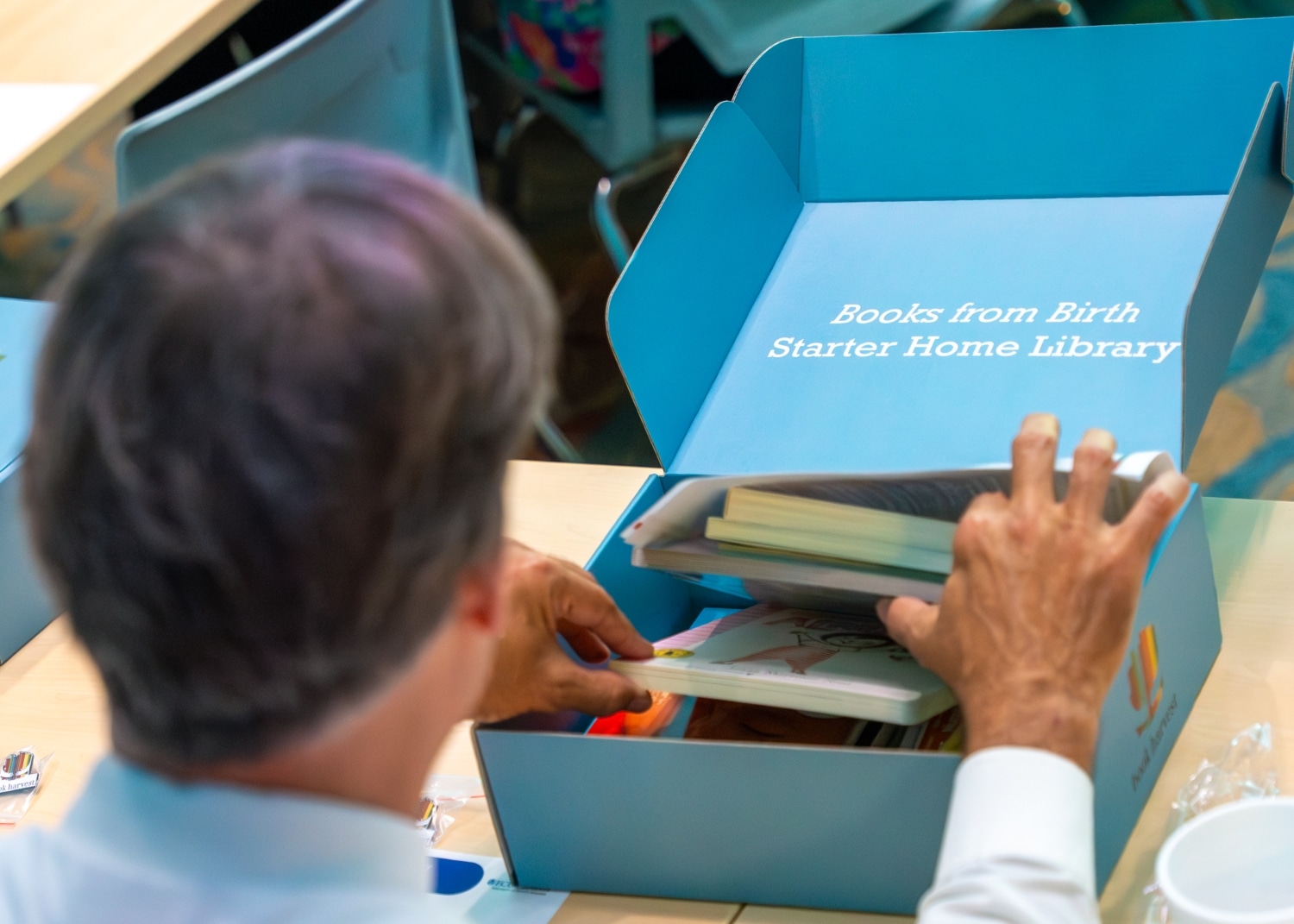
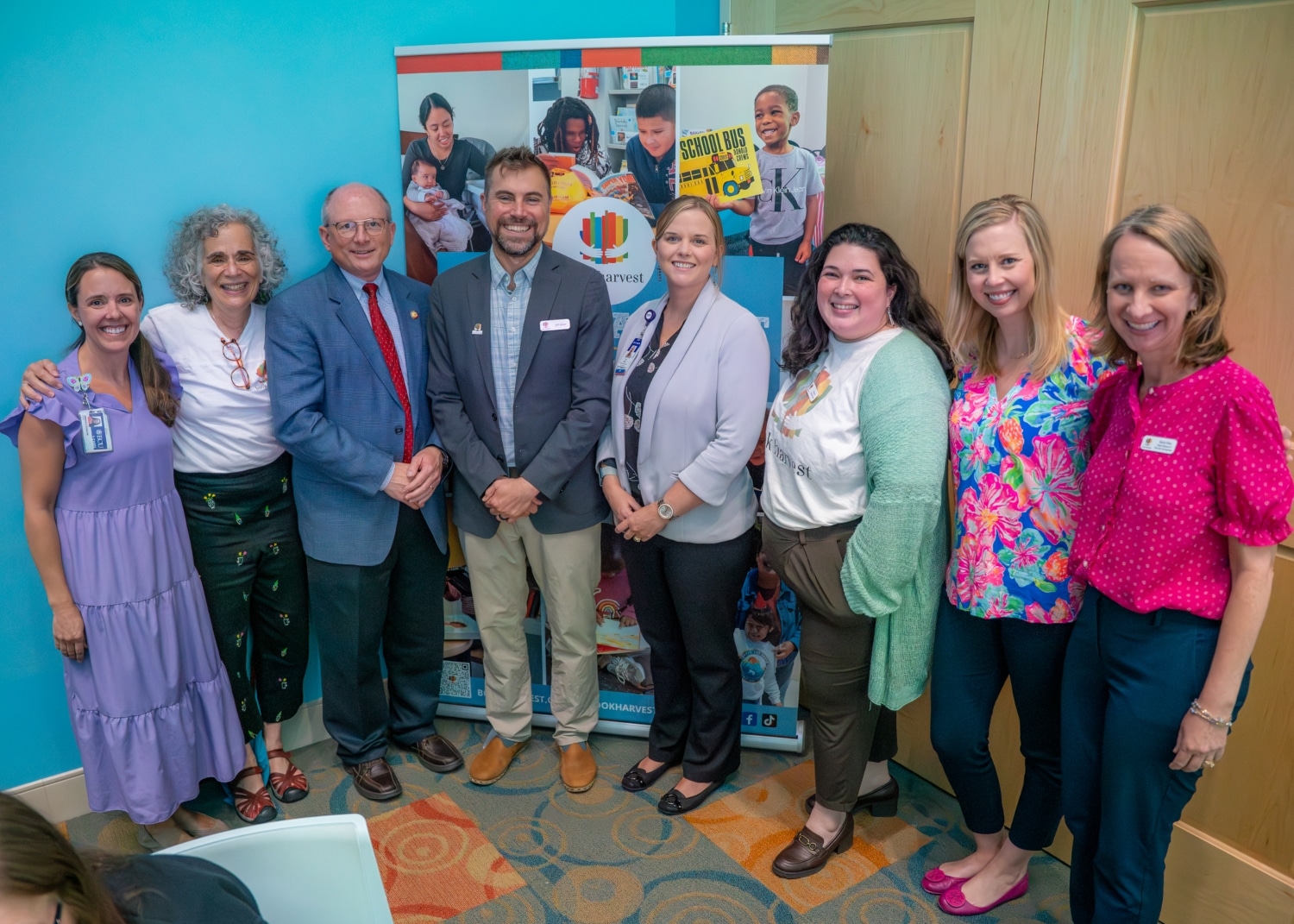
Books from Birth, a Book Harvest program, will begin providing children’s books to families of babies born in Maynard Children’s Hospital at ECU Health Medical Center starting in summer 2024. The books will help families foster early language and reading routines from a baby’s first days.
In preparation for the upcoming go-live, ECU Health hosted an event to educate team members at Maynard Children’s Hospital on Friday, June 14. Team members learned about Books from Birth, how these books can help families bond and improve early childhood education.
Book Harvest is an organization based in Durham that provides ongoing literacy support and an abundance of children’s books to families.
By partnering with Maynard Children’s Hospital, this collaboration will provide families and children in the East with the support and books they need to foster early language and reading routines at home from a baby’s very first days.
“The Books from Birth program is really designed to bridge early education and health,” said Book Harvest Chief Operating Officer Jeff Quinn. “Early literacy lays a foundation for life-long learning and healthy development. This program is meant to give children the opportunity to be what they want to be in life. We could not be more proud to help serve Pitt County and eastern North Carolina through this collaboration.”
N.C. House Rep. Tim Reeder, MD, District 9, secured funding of $500,000 for the project in the North Carolina State Budget. Rep. Reeder thanked Book Harvest and ECU Health for their willingness to partner on this important initiative. With his medical background in-mind, Rep. Reeder detailed the importance that early literacy has on the development of children as they grow, as well as the importance of improving access to education in eastern North Carolina.
“As a practicing physician, I see first-hand the benefits of early childhood literacy in terms of creating success in the classroom and in children’s behavior,” Rep. Reeder said. “Per data released from the state, about 50% of the children in Pitt County are not reading at grade-level. Early intervention and early reading is critically important to setting our children up for success. These books will help set families on a path to literacy that we know is really important to long-term development. I was proud to advocate for this funding and I am excited to see the impact this partnership will have.”
The Books from Birth program will provide a box of 10 board books, helpful reading education materials and a onesie for families who deliver babies in the Maynard Children’s Hospital.
“The benefit of giving these books at birth is that they help form loving and bonding relationships between babies and their caregivers,” said Dr. Matthew Ledoux, pediatrician in chief, ECU Health, chair of pediatrics, Brody School of Medicine at East Carolina University. “As a rural academic medical center serving a third of the state, it is incredibly valuable to get these books in the hands of families throughout eastern North Carolina. For that, we are very grateful.”
According to Tara Stroud, vice president, Women’s and Children’s Services, Maynard Children’s Hospital, the program will provide around 4,300 boxes of books to patients and families.
“This is our chance as a health system to change what it looks like for literacy in eastern North Carolina starting from the beginning,” said Stroud. “Our goal is that we demonstrate for our families the importance of books as a way to connect and bond with their child and improve their development.”
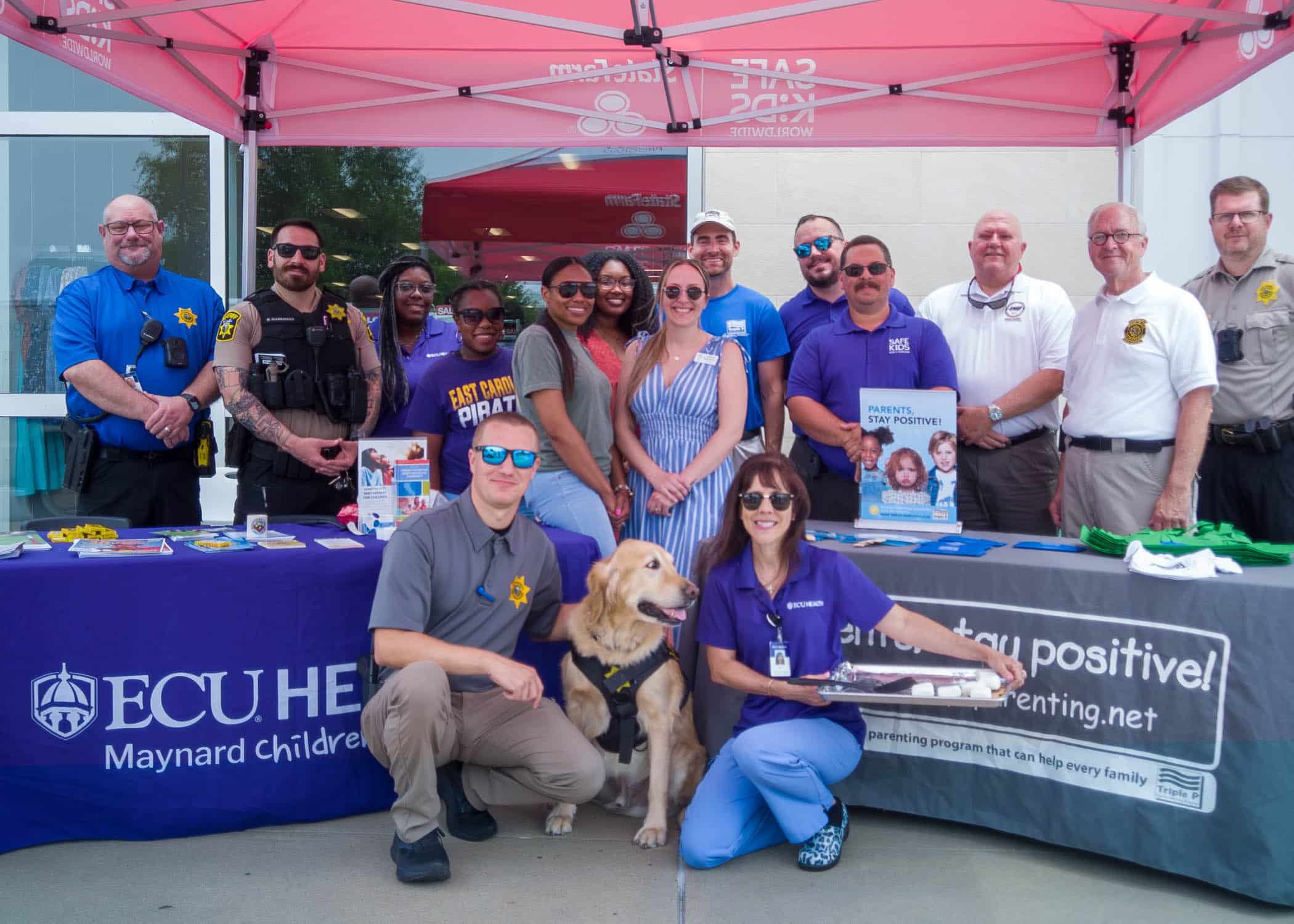
For Ellen Walston, Injury Prevention Program coordinator at ECU Health Medical Center and Safe Kids Pitt County, the message she wants to get out is simple: “Never leave a child, senior or pet alone in a car, even for a minute.”
Walston’s message was amplified at a Hot Car Safety event in June hosted by ECU Health in partnership with the Pitt County Sheriff’s Office, Pitt County Health Department and the Martin-Pitt Partnership for Children, to demonstrate how quickly cars heat up.
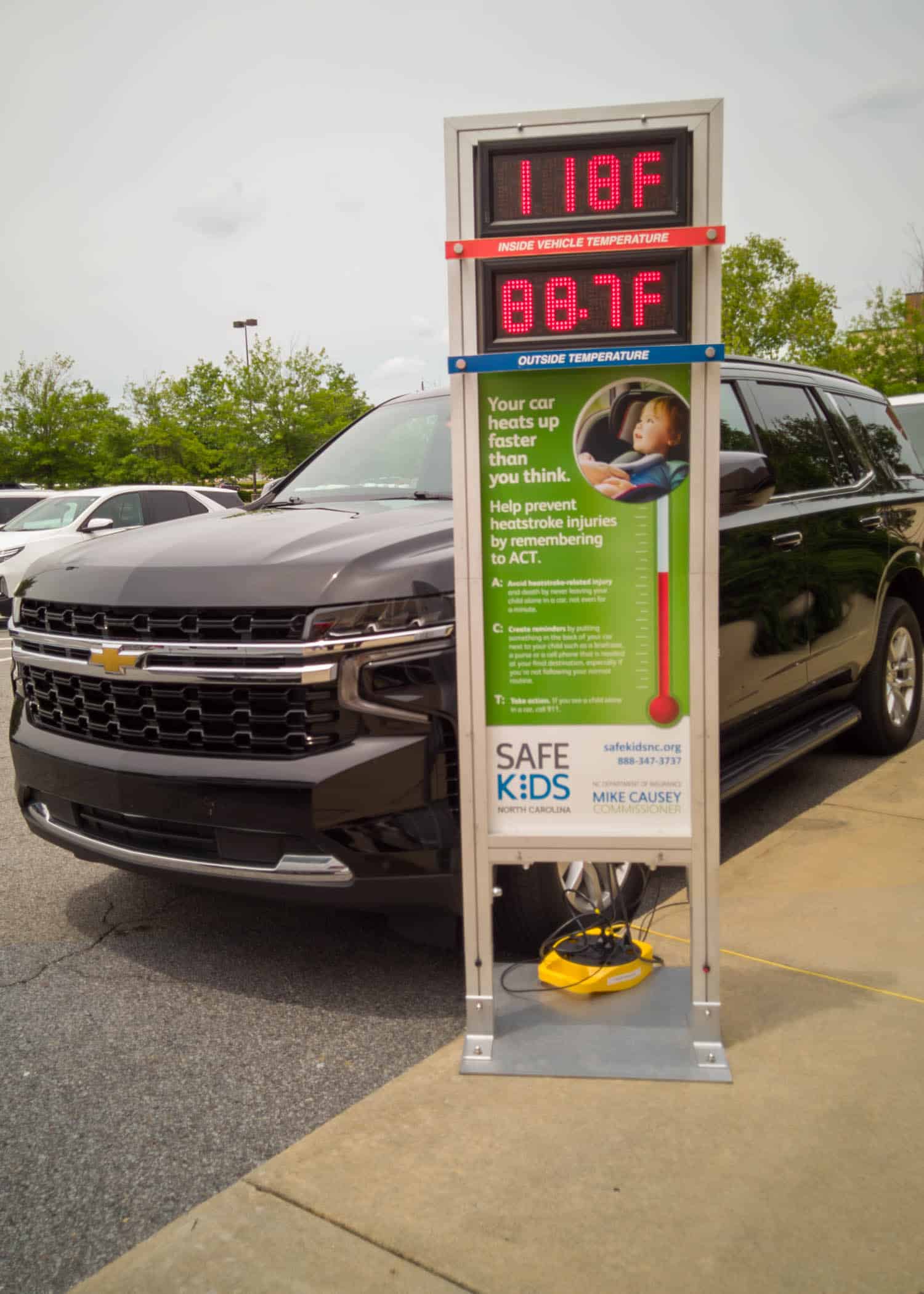
The event included a demonstration with temperature gauges and s’mores roasting in a vehicle on hot, summer day. During an overcast, 88-degree day, the interior of the van rose to 113 degrees within 15 minutes.
The s’mores demonstration showed how quickly things can, quite literally, cook inside of a car when left alone. Volunteers handed out the s’mores to shoppers to explain the demonstration in a fun, interactive away.
“We host these types of events to raise awareness so parents are realizing how hot cars can become,” said Walston. “A car can heat 20 degrees in as quickly in 10 minutes. In our display today, it is already 113 degrees, and it’s only 86 degrees outside.”
According to Walston, about 17 percent of hot car fatalities occur in children intentionally left in the car. During this time, parents or caregivers are often running into the store or running an errand for a few minutes, thinking that will be fine.
“A lot of times, people think ‘I’m just going into the store for a few minutes,’ but anything could happen inside, from losing track of time to becoming distracted and forget the child,” Walston said. “There is a misnomer that if you crack a window and that will offer some less heat, but that really is a myth. It doesn’t affect the temperature of the car or cool the temperature down.”
Walston said it’s dangerous for anyone to be left alone in a vehicle because of how quickly they can heat up, but especially for children.
“Children’s bodies heat three to five times more quickly than adults,” Walston said. “They all have a smaller amount of body surface so they can’t cool themselves very quickly. A small child, like the families we’re serving today, they can’t verbalize when they’re thirsty if they’re under a certain age.”
More than 50 percent of child deaths from hot cars are children forgotten in vehicles, according to Walston. She said children can be forgotten when routines are broken, and leaving something like keys, a cellphone or a briefcase in the backseat next to the child or setting an alarm on your phone are extra safety measures one can take to ensure the child is not left in the car.
Walston encouraged attendees to call 911 if they ever see a child, senior or pet alone in a call.
“This is something parents really need to take seriously,” said North Carolina Insurance Commissioner Mike Causey. “It’s year-round, not necessarily just during the hottest months of the summer. We have had children die in November and other months outside of June, July and August.”

Greenville, N.C. – ECU Health is partnering with Food Lion Feeds, Sodexo and the ECU Health Foundation to provide free meals for kids, teens and people with disabilities as part of the Summer Meal Program. Meals will be available in Greenville, Bethel and Ahoskie. The selected sites this year were chosen based on the need in each county, existing partnerships and the social vulnerability index at each location.
During the school year, many kids and teens receive free or reduced-price meals. When schools close for the summer, those meals disappear, leaving families to choose between putting the next meal on the table or paying for other necessities like utilities or medical care. While over 57% of students in North Carolina receive free or reduced lunch, 66% of Pitt County students and over 90% of Hertford County students receive free or reduced lunch.
Meals will be available until food runs out each day at the following locations:
- Greenville: English Chapel Free Will Baptist Church – 11:30 a.m. to 1 p.m., Monday-Friday from June 10 to Aug. 23. The location will be closed July 22-26.
- Ahoskie: Calvary Missionary Baptist Church – 11:30 a.m. to 1 p.m., Monday-Friday from June 10 to Aug. 23. The location will be closed June 19 and July 4-5.
- Bethel: Bethel Youth Activity Center – 11:30 a.m. to 1 p.m., Monday-Thursday from June 17-July 17. The location will be closed July 3-7.
ECU Health has offered the Summer Meal Program since 2021, providing nearly 12,000 free meals to kids and teens during the summer months. In 2023, 51 ECU Health team members served more than 2,800 meals to kids in need.
No registration is required. For more information about the ECU Health Summer Meal Program, please email [email protected].

GREENVILLE, N.C. – The Children’s Miracle Network (CMN) 39th Annual Celebration Broadcast, which celebrates the thousands of children in eastern North Carolina who have received treatment at James and Connie Maynard Children’s Hospital at ECU Health Medical Center this past year, raised $1,258,511 Children’s Miracle Network Hospitals’ longtime television partner, WITN, which produces the fundraiser, shared the stories of complex illnesses, traumatic injuries and the quality medical care Miracle Children received from Maynard Children’s Hospital.
“Caring individuals, community groups, businesses and others show how much they care about children by providing generous contributions to Children’s Miracle Network Hospitals,” said Elise Ironmonger, director of programs, ECU Health Foundation. “In eastern North Carolina, this generosity enables the Maynard Children’s Hospital to see beyond obvious treatment and save more lives. The care and high-quality treatment received here will continue into the future through this year’s amazing donors.”
This year, an anonymous donor offered to match every donation up to $100,000. The family has a passion for children in eastern North Carolina and wants to ensure every child has the best chance possible to get better. They are grateful for all of the hard work, dedication and compassion that the team provides at Maynard Children’s Hospital and hopes their contribution provided an extra incentive for people to open their hearts and donate.
The theme of this year’s Children’s Miracle Network Hospitals campaign was “Change Kids’ Health, Change the Future,” which shows how important donations are in helping shape a healthier tomorrow for patients served at Maynard Children’s Hospital. Major contributors to the yearly event, held June 1-2 to raise money for Children’s Miracle Network Hospitals, featured contributions from long-time supporters from across eastern North Carolina including Speedway, part of 7-Eleven, Inc., Jersey Mike’s Subs, Log a Load for Kids and Walmart/Sam’s Clubs.
The Celebration Broadcast featured guests and sponsors who have contributed during the past year, as well as callers who pledged their support.
Earlier this year, the Music for Miracles Radiothon on Inner Banks Media Stations raised $109,703 during the 27th year of their special event, bringing their total raised to more than $3.9 million. The Inner Banks Media radio stations include: 107.9 WNCT; Talk 96.3 and 103.7; Oldies 94.1 and 102.7; and 94.3 The Game.
The largest donor to this year’s campaign came from a long-time corporate partner of CMN Hospitals, Speedway, part of 7-Eleven, Inc., which raised $260,310 in their ninth year of partnership with Maynard Children’s Hospital. The largest fundraising event for our local Children’s Miracle Network program was held by Jersey Mike’s Subs during their annual Month and Day of Giving. Collectively, the 17 participating stores in eastern North Carolina raised $148,196.
Long time CMN supporter, Log a Load for Kids, held their 27th annual sporting clays shoot on May 3-4 and raised $80,000. These funds came from sponsorships, including title sponsors, Colony Tire and Pinnacle Trailer Sales, and had over 600 participants.
Other major donors and their gifts included Walmart/Sam’s Clubs with $155,392; Panda Express with $41,567; Ace Hardware with $33,350; Extra Life with $29,334; Dance Arts Theater with $19,965 and Publix with $15,666.
Other campaign contributors were Dairy Queen with $14,273; Barbour Hendrick Honda Greenville and The Electric Cooperatives of Eastern NC both with $10,000; REMAX with $6,375; Ollie’s with $6,283; American Builders; Pepsi/Minges Bottling Group; Eastern Radiologists, Inc.; and Central Heating and Air Conditioning each contributed $5,000.
Additional gifts were from: Phi Mu Chapter of ECU with $4,791; Baynor with $4,000; Miller and Friends Lemonade Stand with $3,157; Grady White Boats with $3,000; Care-O-World Enrichment Learning Center with $2,231; Oasis Shrine Temple and brothers, Arun and Ajay Ajmera each with $1,500; Action Advertising, Equipment Plus, Ricci Law Firm; Builder’s Discount Center, Harris, Creech, Ward and Blackerby, PA, Stallings Plumbing, Heating and AC and Coldwell Banker’s Sea Coast each gave $1,000.
The local CMN Hospitals fundraising program is staffed and supported by the ECU Health Foundation, the non-profit charitable corporation that serves as the custodian for all financial gifts and bequests to ECU Health. The ECU Health Foundation oversees allocation of all donated funds.
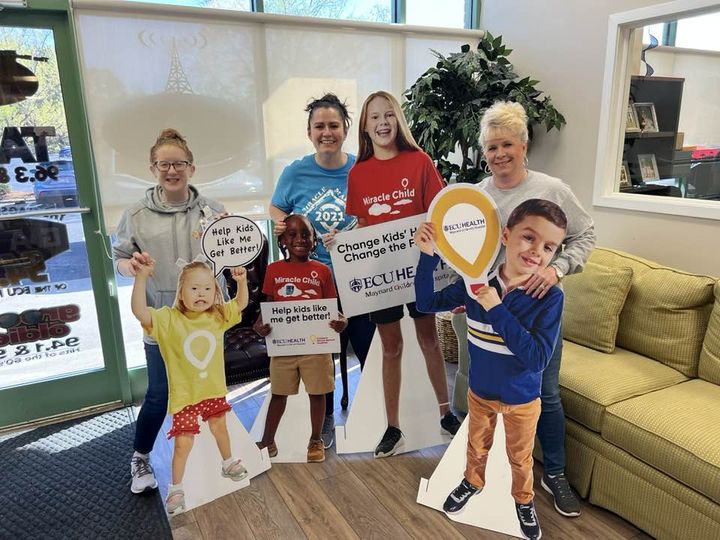
GREENVILLE, N.C. – The Children’s Miracle Network (CMN) Celebration Broadcast honors past telethon traditions by celebrating selected miracle stories of children who represent the thousands of children in eastern North Carolina who have received treatment at James and Connie Maynard Children’s Hospital at ECU Health Medical Center this past year. This year, the CMN Celebration Broadcast will be held on Saturday, June 1, from 7-8 p.m. and Sunday, June 2, from 6-9 a.m. and 7-11 p.m. airing on longtime partner, WITN. Examples of how CMN donations are used will be featured throughout the event as well to show the impact philanthropic gifts truly make.
“We are so grateful to all those who support our Children’s Miracle Network Hospitals program all throughout the year,” said Elise Ironmonger, director of programs, ECU Health Foundation. “The generosity of our donors enables Maynard Children’s Hospital, located in Greenville and serving 29 counties, to provide life-saving care to the thousands of children who are treated each year. We look forward to being able to showcase the amazing care provided every day at Maynard Children’s Hospital during this weekend’s telethon and to have an opportunity to thank our amazing donors.”
This year’s Miracle Children and Teen include:
- Jadon Green, 1 year old, Greene County
- Leonardo Velasquez-Bartolon, 2 years old, Wayne County
- Layah Collins, 6 years old, Jones County
- Wiley Sloan, 14 years old, Wake County
The 2024 broadcast will highlight examples of the amazing care offered every day at Maynard Children’s Hospital while celebrating the miracles made possible by the life-saving care generous donations help provide. Thanks to the generosity of eastern North Carolina, thousands of children receive the specialized medical care they need, bringing them and their families the gift of hope and healing. Because of this support, the team at Maynard Children’s Hospital can ensure patients receive the best care possible.
The local Children’s Miracle Network Hospitals fundraising program is staffed and supported by the ECU Health Foundation, the non-profit charitable corporation that serves as the custodian for all financial gifts and bequests to ECU Health. The ECU Health Foundation oversees allocation of all donated funds. To donate, please call 1-800-673-5437 or visit givetocmn.com.