
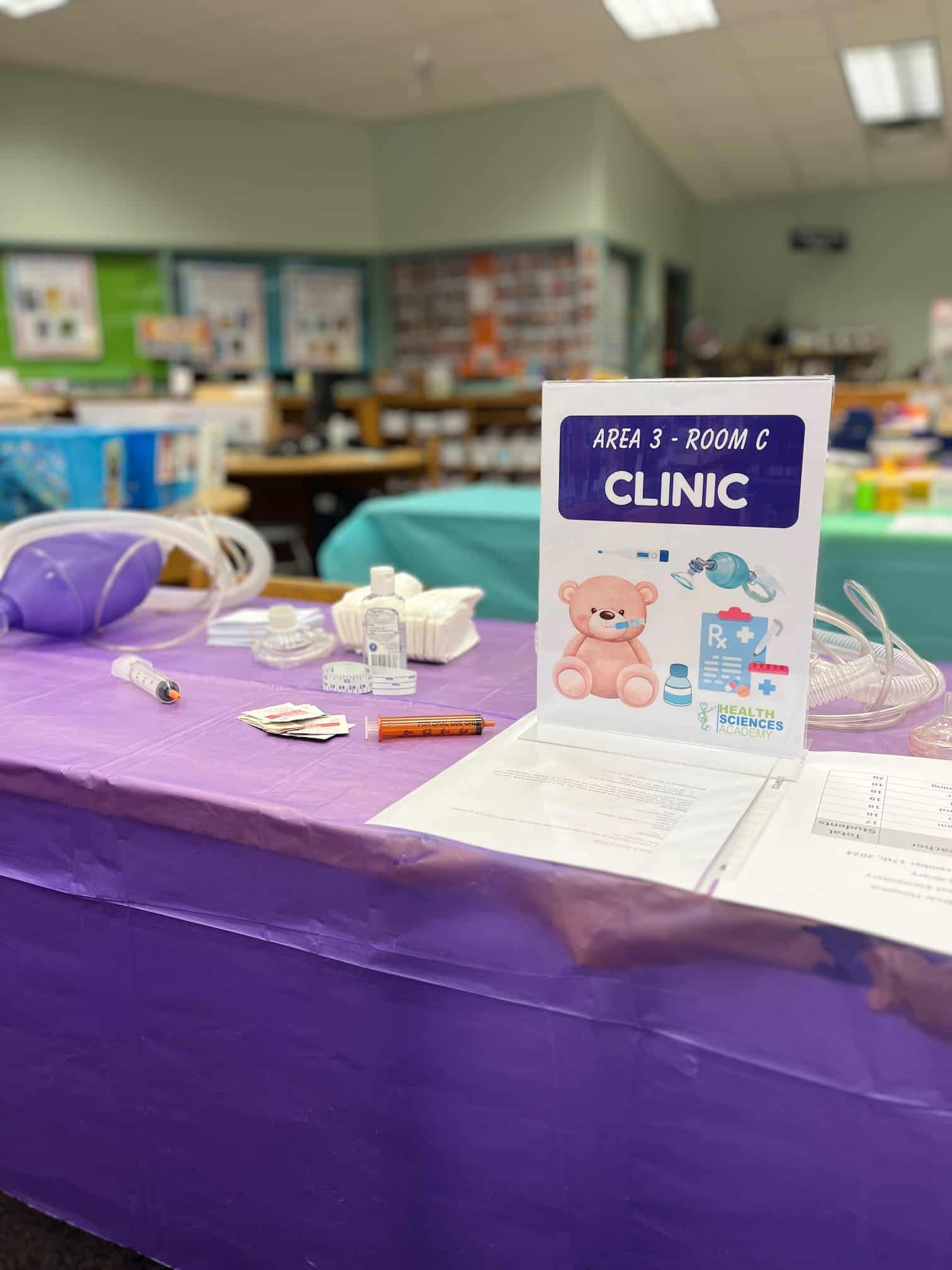
Nurses and Child Life staff from ECU Health brought the Teddy Bear Hospital to Northwest Elementary School in Pitt County on Tuesday, Dec. 17, as part of the Pitt County Health Sciences Academy. Nearly 130 kindergarten and first-grade students participated in the event, designed to introduce young children to health care professionals in a welcoming and interactive setting.
Dressed in scrubs and personal protective equipment (PPE), the students acted as caregivers for their favorite stuffed animals. They guided their “patients” through the health care process, starting with check-in and triage. ECU Health nurses examined the stuffed animals, provided a diagnosis, and directed the children to one of three stations: Sutures & Bandages, Operating Room, or Clinic. Afterward, the students and their stuffed animals visited the recovery area, where each received a certificate of bravery.
“This event offers a unique and playful way to familiarize children with health care professionals,” said Nancy Turner, workforce development consultant at ECU Health. “By engaging with the students in a hands-on setting, we’re helping to make health care less intimidating while sparking curiosity about health-related careers.”
Turner emphasized the impact of early exposure to health care.
“When kids see the process in a fun and supportive environment, it not only eases fears about doctor’s visits but also shows them that health care is approachable and full of possibilities,” said Turner.
For many students, the Teddy Bear Hospital is just the beginning of their exploration of health care. ECU Health team members, in collaboration with the Health Sciences Academy, host a variety of programs for middle and high school students, including job shadowing, career fairs and events like “Chat with a Doc.”
“The goal is to engage students at every stage of their education,” said Turner. “Starting in elementary school, we show them that health care careers are diverse and accessible. Whether their interests lie in nursing, technology, or another area, there’s a role for everyone in health care.”
These programs reflect ECU Health’s commitment to inspiring the next generation of health care professionals while building a strong, local pipeline of talent to serve eastern North Carolina.
The Pitt County Health Sciences Academy is a partnership between ECU Health, Pitt County Schools, Pitt Community College, East Carolina University, the Brody School of Medicine, Colleges of Allied Health Sciences, Engineering and Nursing at East Carolina University, School of Dental Medicine at East Carolina University, the Eastern Area Health Education Center and the Greenville-Pitt County Chamber of Commerce.
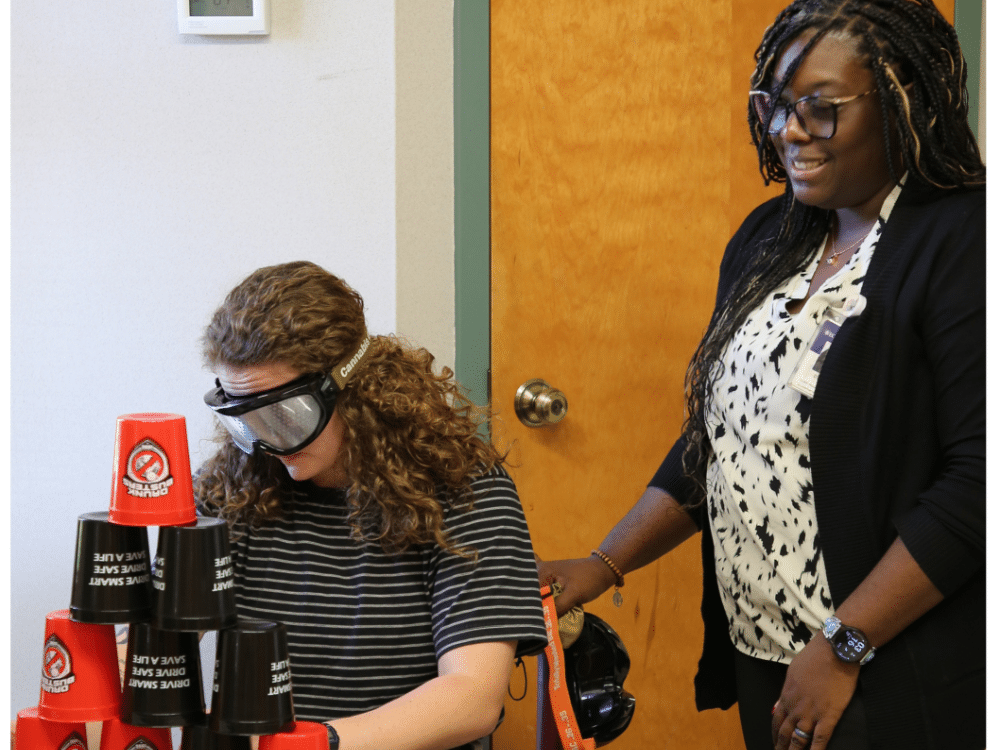
D’Nise Williams is the program coordinator for the Eastern Carolina Injury Prevention Program’s (ECIPP) Teen Safe Driving Program. This year marks the 12th year in a row her team has received grant funding from the Governor’s Highway Safety Program (GHSP). The ECIPP is a community collaboration between ECU Health, Maynard Children’s Hospital, the ECU Health Trauma Center and the Brody School of Medicine at East Carolina University. Its goal is to improve the health of eastern North Carolina residents by reducing the incidence and impact of injuries, and it accomplishes this goal through programs like the Teen Safe Driving Program.
The Governor’s Highway Safety Program is the State Highway Safety Office for North Carolina, and it is dedicated to reducing the number of traffic injuries and fatalities in the state. It promotes highway safety through a number of grants and safe driving initiatives like Click It or Ticket and Speed a Little, Lose a Lot. Many of the grants address behavioral approaches to traffic safety, and the grant the ECIPP received focuses on vulnerable road users—in this case, teenage drivers.
The program’s grant runs for a one-year cycle, and each year, educational efforts focus on two counties, which are selected through examination of county crash rate data. “We look at which counties would benefit from interventions to reduce crash rates, even by a small percentage,” Williams said. With the help of the GHSP grant funding, the Teen Safe Driving Program has been able to expand its services from Pitt County to Beaufort, Lenoir, Martin, Craven, Wayne, Nash, Greene, Duplin and Halifax counties, with hopes to further expand into Onslow County this year. “GHSP has been funding this project for more than a decade,” said Jennifer Delcourt, the vulnerable road users coordinator with the Governor’s Highway Safety Program. “This speaks to the impact of the project and the success of staff in reaching teens and parents with important traffic safety information in eastern North Carolina.”
According to data collected between 2016 and 2021, speeding, lane departure and distracted driving were the top factors in car crashes. To combat this, the program focuses on “5 to Drive rules for new drivers,” as developed by the National Highway Traffic Safety Administration (NHTSA), which include no drinking and driving, buckling up, no use of phones while driving, no speeding and no more than one passenger at a time.
The Teen Safe Driving Program partners with high schools, as well as driver’s education programs, within the identified counties, to promote these safe driving practices for teenagers. “We do lunchtime education tables, partner with health science or P.E. classes, provide parent education curriculum and partner to bring the Cinema Drive interactive 3D movie experience to schools, which is an interactive driving experience that follows someone who has been drinking and driving. We have goggles and an interactive steering wheel, and you can pick out distractions as you drive with and without the goggles,” Williams explained. “The goal is to raise awareness that as a driver, you’re wielding tons of metal on the road, and you need to be your best self mentally.”
The program also provides targeted campaigns for teen drivers, including social media ads, billboards movie theater ads, mall campaigns and gas station TV ads. None of this would be possible without the funding from GHSP.
In 2023, the program achieved just over two million views in their mall campaign, 617 students in driver’s education classes, 7,168 students in lunchtime table education and 6,822 impressions via social media messages. These efforts have yielded positive results for the program. Teens are given pre- and post-intervention surveys to gauge their responses to the education, and there are also pre- and post-driver observations at the conclusion of driver’s education classes. “We usually see a change in behaviors, although it varies by county,” Williams said. “Last year we marked a 6% decrease in distracted driving in Pitt and Duplin counties, but the year before we recorded a 15-20% decrease in our counties of focus.”
Williams said that while it can be challenging to initially establish relationships with schools, once the partnership is established, the Teen Safe Driving Program is invited back year after year. Her goal is to continue to offer school interventions that result in safer driving behaviors, but she also has new ideas. “I want to work on targeted interventions for neurodivergent teens, like teenagers with ADHD or autism. We have so many teens who have trouble focusing already, and a teenager’s frontal lobe, which is responsible for making good decisions, isn’t fully developed,” Williams said. She also wants to establish a partnership with teenagers to create an advisory board for the program. “I’d like to think I’m ‘hip,’” Williams laughed. “But I would love to consult with other teenagers to get their input on what messaging reaches their age group.” Sue Anne Pilgreen, the executive director for the Safe Communities Coalition, the manager of the Pediatric Asthma Program and the manager of the ECIPP, echoed this sentiment. “Teens today aren’t the same as they were 12 years ago, and as they have changed, so has our program. We continue to focus on the historical distractions such as underage drinking and texting while driving, but we now know that mental well-being and substances such as marijuana can also impact teen driving.” Williams said consulting teens about what resonates most with them will help her find innovative and creative ways to reach and engage a teen audience.
Pilgreen championed Williams’s efforts to reach teen audiences across eastern North Carolina. “We are so fortunate to have D’Nise’s mental health background and expertise to better inform the education that we are offering, and to ensure that we are connecting with teens on a ‘real life’ level. My perception of a teens experience isn’t necessarily reality, and D’Nise knows that hers isn’t either. D’Nise is very intentional in bringing youth voices to her work, and structuring her programming and activities in a way that best impacts them.”
Williams emphasized that while the program’s focus on safe teen driving centers on a few counties each year, she is always available to speak to groups and do targeted programming and interventions. “I never turn down the opportunity to encourage kids to be safer,” she said.
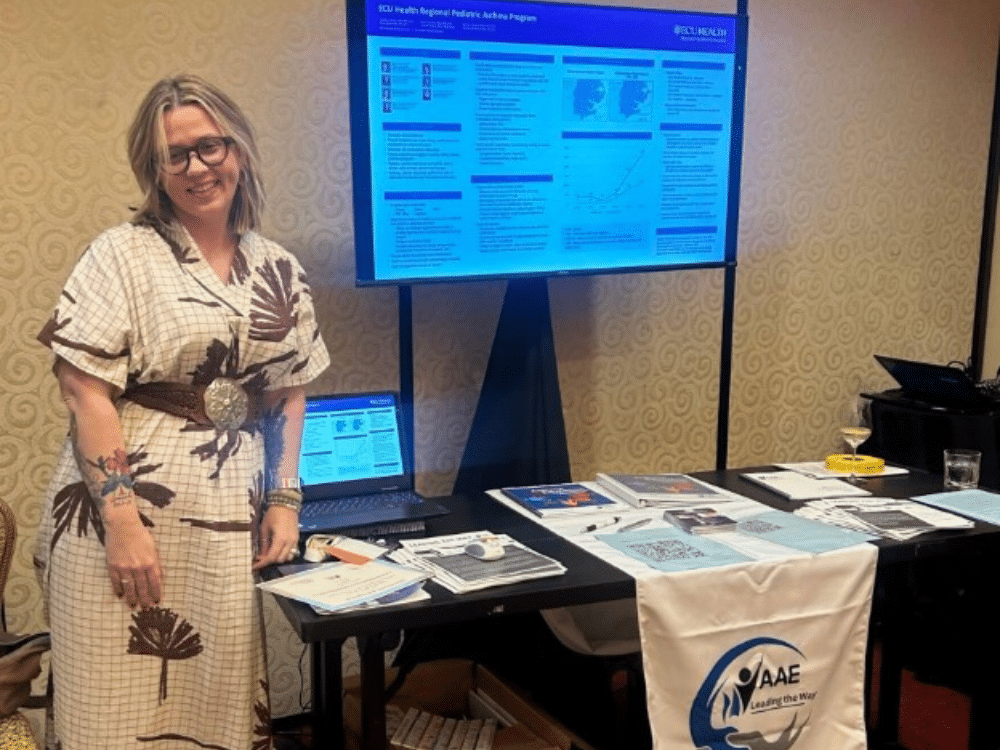
Candace Cahoon, the respiratory care manager for the Pediatric Asthma Program, presented in July at the National Association of Asthma Educators (AAE) annual conference in Charlotte, North Carolina. The AAE is dedicated to providing quality education to a multidisciplinary group of asthma educators, and members include respiratory therapists, nurses, pharmacists, physicians, social workers, nurse practitioners and others. Cahoon’s presentation is one way the Pediatric Asthma Program at Maynard Children’s Hospital strives to share its research, lessons learned and processes for establishing a national model for a pediatric asthma program in the United States.
Cahoon has worked with ECU Health for 10 years, and during that time she has continued her education from a bachelor’s degree in sociology and an associate’s degree in respiratory therapy, to a master’s in health education and several certifications.
The Pediatric Asthma Program, which has grown from serving two counties in 1995 to 29 counties today, aims to reduce emergency department and inpatient admissions for children with asthma, decrease school absenteeism and increase the quality of life for children with asthma in eastern North Carolina. It does this by offering asthma testing, asthma education, tools to manage asthma, access to community resources and medication assistance. Their work with eastern North Carolina public schools has been a particularly effective way to reach children in rural North Carolina communities.
The poster Cahoon presented was the collaborative work of the Pediatric Asthma Program’s entire team, and the goal was to educate others on how to establish and support a pediatric asthma program. “We’re one of the best programs in the nation,” Cahoon said. “We are ahead of the game in terms of what we address for our patients with asthma. I go to conferences and say, ‘we know this; we do this,’ so we are well-known in the state and nationally.” Sue Anne Pilgreen, the manager of the Pediatric Asthma Program, said Cahoon is the “teacher” of their team. “She is a lifelong learner,” she said. “While the content development was a team effort, Candace pulled it all together, submitted the abstract and ultimately showcased our great work.”
Cahoon shared that the Pediatric Asthma Program is now establishing its own professional conference: Pediatric Asthma Management: Providing Holistic Care to Rural Communities. The conference is scheduled for February 28, 2025 and will be held at the Eastern Area Health Education Center, with virtual and in-person capability. Cahoon leads the committee responsible for making the conference a reality. “We want to show how we are touching every single aspect of an asthmatic patient’s life,” Cahoon said. “We have worked to expand and grow our program over the past few years, and we’ve had countless people ask us how we ‘found’ our success, especially in such a rural area,” Pilgreen added. In answer to that, the conference will address key components involved in implementing a comprehensive asthma program, while also discussing the clinical components of how the asthma team treats patients with asthma and helps them transition to home. “We’ll have a case study that goes through the hospital or clinic and has a breakdown of testing, education, home visits and environmental assessments for the patients,” Cahoon shared. The team will also talk about Single Maintenance and Reliever Therapy (SMART) as a new treatment option for patients with asthma that combines in a single inhaler both a corticosteroid and a long-acting beta-agonist so it can be used as a daily maintenance and as-needed relief of asthma symptoms. “The overarching objective for the conference is to help participants to utilize clinical knowledge, skills and expertise to provide holistic pediatric asthma care in the community,” Pilgreen said. “We know this starts in multiple places, including the hospital bedside, schools, and primary care provider offices.”
Ultimately, attending conferences, as well as establishing a conference of their own, highlights and shares the innovative work of the Pediatric Asthma Program at Maynard Children’s Hospital. “It shows that we’re here and we can do this together,” Cahoon said. “We are more than willing to show how over the last 20 years we have put this program in place.” Pilgreen agreed: “The design of our program is unique. Having the opportunity to present our program model and outcomes at a national conference not only elevates our work, but it also gives others the tools to replicate our model in their area. Our goal is to increase the quality of life for children with asthma, regardless of where they live.”


In celebration of the season, Maynard Children’s Hospital patients, families and team members had a chance to recognize Halloween and bring a sense of normalcy around the day.
Team members from across ECU Health and some community groups came together inside the children’s hospital to dress up and let the children see some of their favorite characters, like Mario, Woody and Buzz from Toy Story, and everyone from Inside Out.
Some tables set up inside Maynard Children’s Hospital even offered interactive games for the kids to play while they were picking up goodies from each team. Those involved said this is one of the most special events of the year, where teams can share a bit of normalcy with the youngest patients at ECU Health Medical Center.
Amanda Jones, a child life specialist at Maynard Children’s Hospital, said she’s grateful to work with a team whose role is to put a smile on children’s faces.
“That’s part of our role here, we try to bring some fun to Maynard Children’s Hospital,” Jones said. “Kids and their families have to be here, so we just try to celebrate holidays, celebrate milestones and bring some of their home to them while they’re in the hospital.”
Jones said while the event takes a lot of planning and organizing, the team member engagement makes it easy to pull together and generate excitement. After four years of hosting a parade outside of Maynard Children’s Hospital, the event moved back indoors this year for a more interactive experience for patients and families.

One of those patients was Aleksandra, who was dressed as Belle from Beauty and the Beast during the event. She said it made her day to see the Minecraft booth set up from one of the teams.
“It was fun to go trick-or-treating and see all the booths. There were so many different booths, it was just really fun,” she said. “Being able to do this with other people, who some of them might have the same condition as me, that was a good memory.”
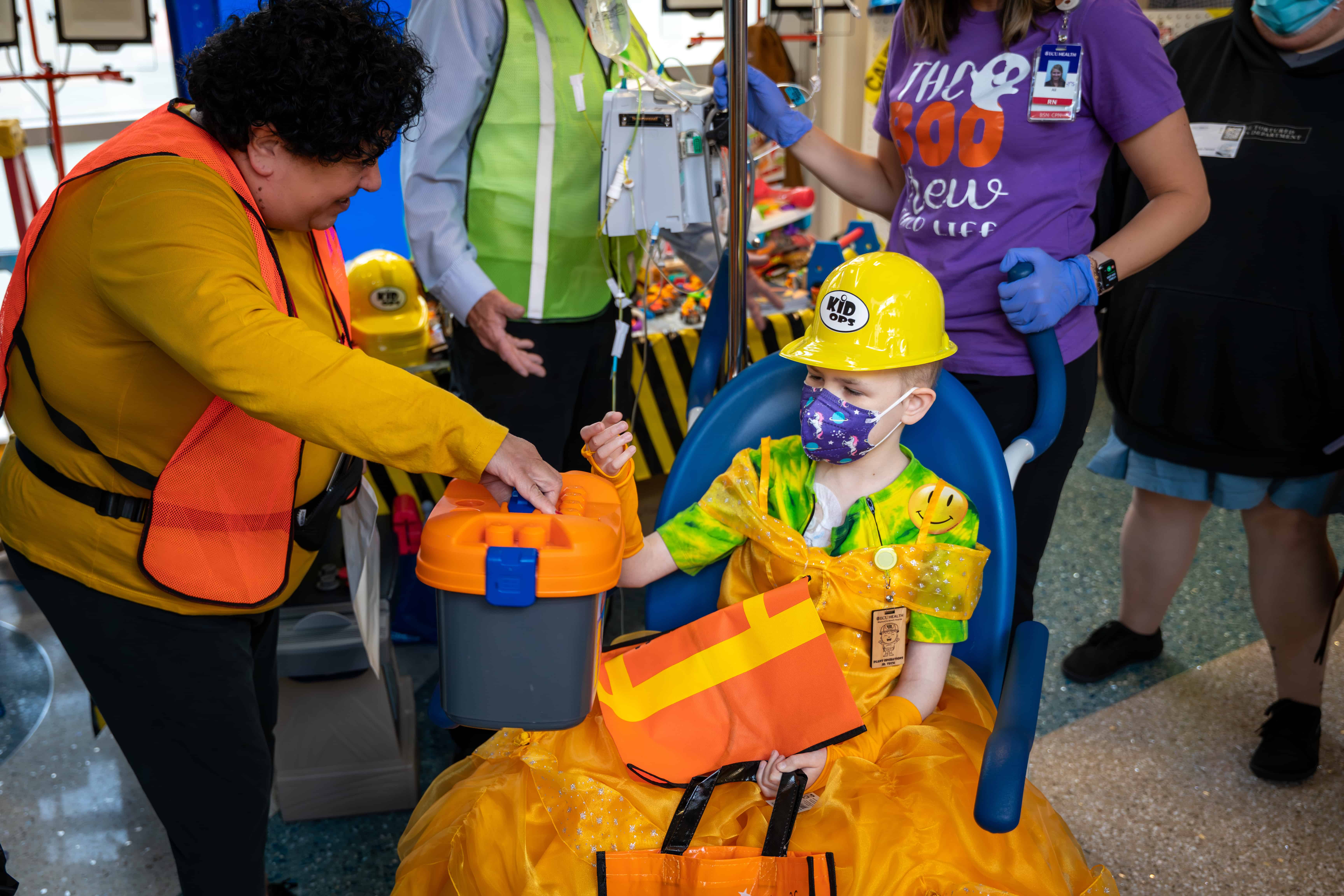
Her mother, Lydia, said she was grateful for her daughter to have something to look forward to for Halloween while she’s in the hospital. For herself, Lydia said it was nice to see Aleksandra and so many other children light up as they went through the different booths.
“It’s wonderful that they put on an event like this so that all of the children who are missing out on Halloween get this experience,” Lydia said. “I love seeing them have the moment of just being a kid, wearing a costume and forgetting for a day that they’re in the hospital.”
Lydia said she had a great time watching her daughter, other patients and even parents interacting with an Inside Out booth, complete with a replica console from the movie.
Tara Stroud, vice president of Women’s and Children Services, said team members step up in many ways to be there for the patients and families served at Maynard Children’s Hospital and this event is a true example of that commitment.
“There’s something about being able to work in a children’s hospital and really give the child the experience of being a child, whether they’re sick or not,” she said. “It gives a heartwarming feeling to the team to know that we’re going to make a difference – whether it’s caring for them medically or it’s just putting a smile on their face.”


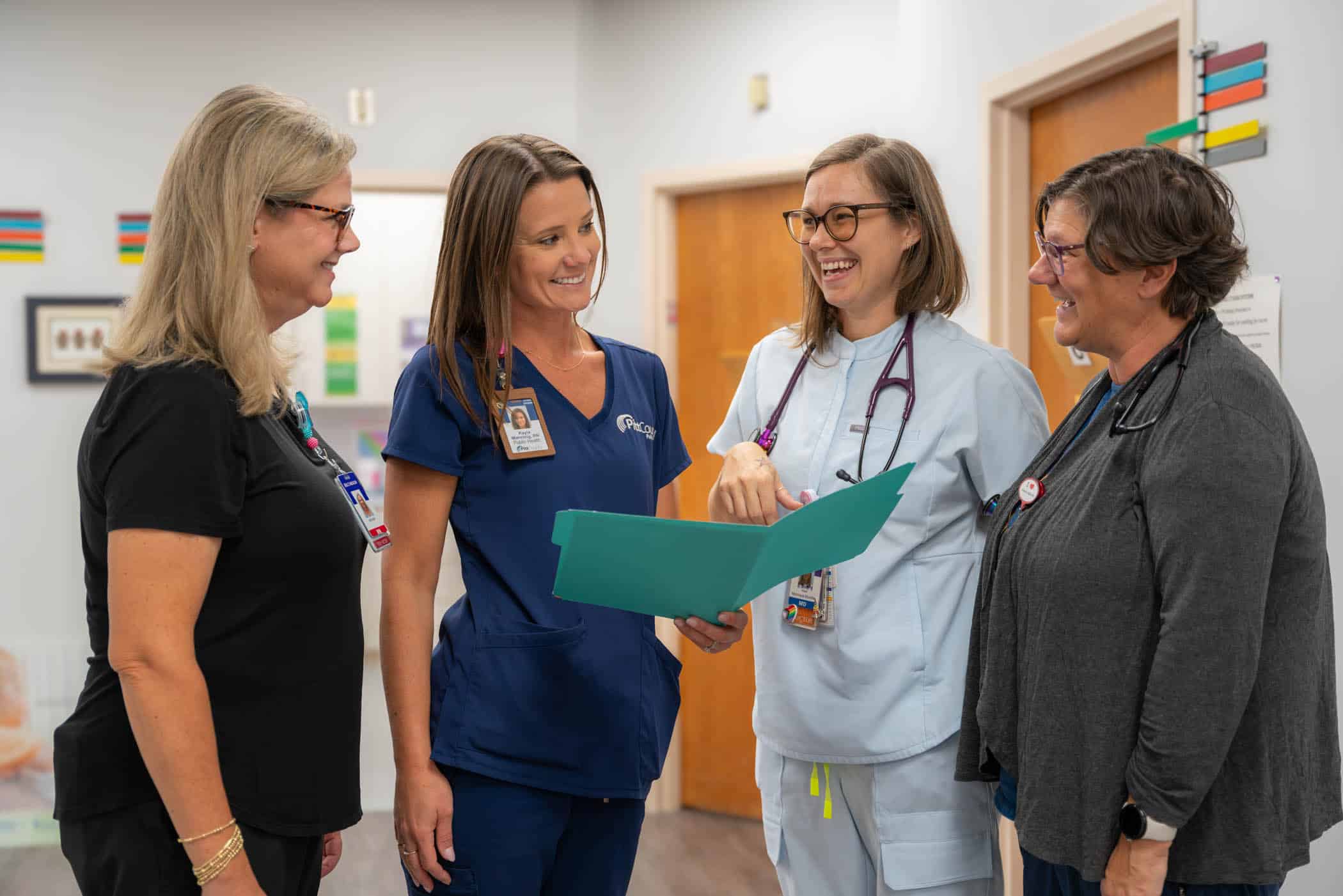
Dr. Kristina Simeonsson, a physician with ECU Health Pediatrics, has long heard stories of children missing school because they couldn’t get health assessments or vaccines before the state-required deadline. But now, after months of planning, a shared vision and the desire to support public school children at risk of exclusion due to missed health requirements, Pitt County’s first-ever health assessment and vaccine clinic is helping flip the script for families in-need of care.
“This clinic changes that challenge,” said Dr. Simeonsson. “Instead of being suspended for weeks or months, these kids can stay in school and keep learning.”
For ECU Health, the James and Connie Maynard Children’s Hospital, and the Pitt County Health Department, this initiative is more than just a service—it’s a lifeline for local students. The clinic marks the culmination of a shared dream to improve access to care for children, and its success was clear as about 140 students received essential health services over two days, ensuring they can remain in school without disruption.

According to North Carolina state law, all children entering public schools for the first time or starting kindergarten are required to complete a health assessment and receive certain vaccines. Failure to meet these requirements within 30 days of the first day of school results in exclusion until proper documentation is provided. For many students, especially those new to the area or without a medical home, accessing these services can be a significant barrier.
“Keeping students in school, safe, healthy and ready to learn is a key priority for all school nurses,” said Laurie Reed, nurse manager for the School Health Program, Maynard Children’s Hospital. “One of the biggest challenges faced by school nurses in Pitt County at the beginning of each school year is identifying available resources for their students and families to obtain state required health assessments and immunizations. Significant efforts are made by Pitt County Schools, the Pitt County Health Department and Maynard Children’s Hospital School Health Program to provide widespread communication of state requirements to parents and caregivers throughout the year however we still find that a large number of students are at risk for exclusion on the 30th calendar day of school.”
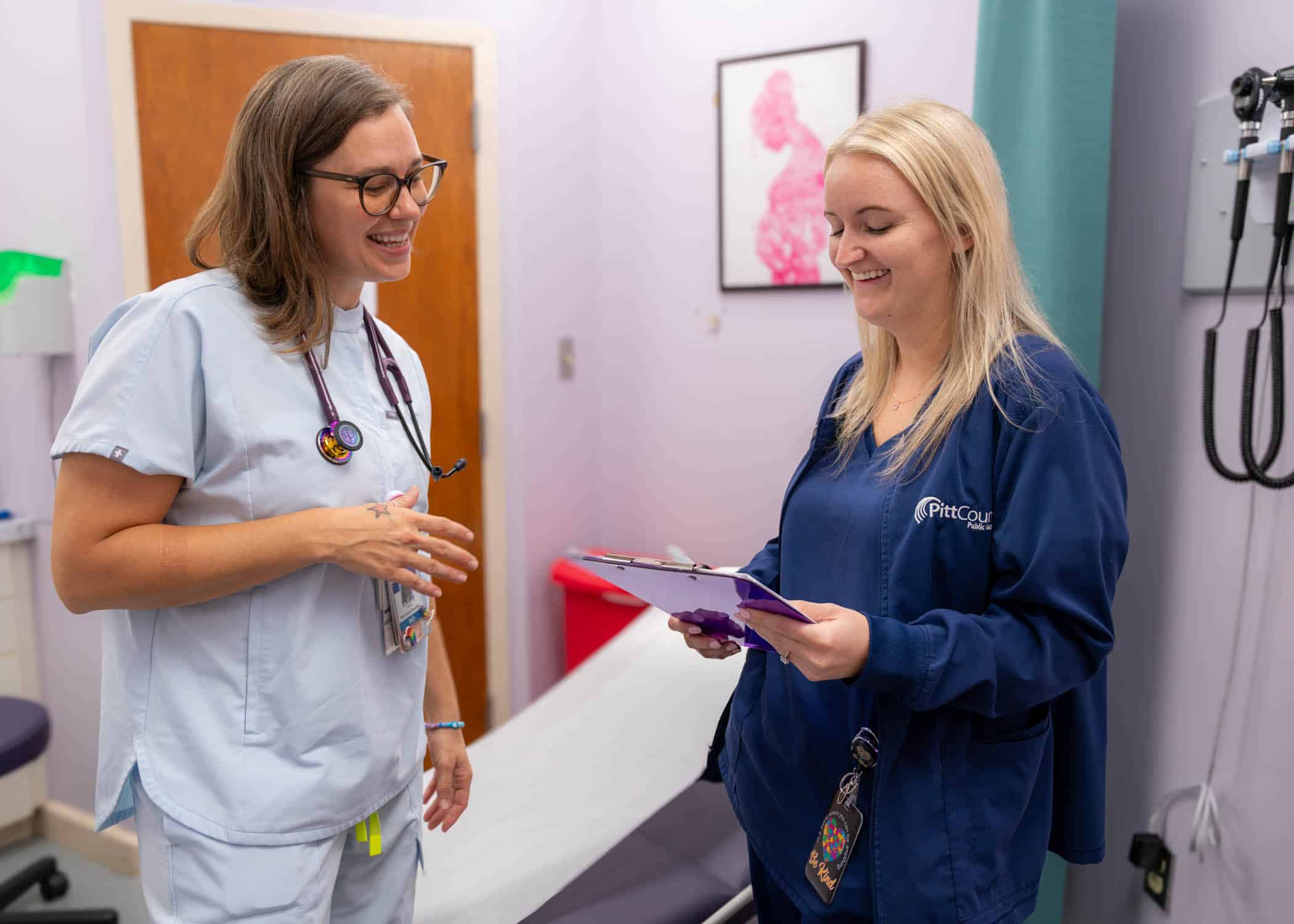
Dr. Simeonsson and Kayla Manning, public health nursing supervisor for Child Health and Immunization Programs at the Pitt County Health Department, led the clinic, which included the help of pediatric residents, nurses from both organizations, ECU Health school nurse care managers, Brody School of Medicine students, ECU Health child life specialists, and the ECU Health Pediatric Asthma Program. Together, they offered health assessments, vaccines, asthma screenings and referrals for follow-up care.
Dr. Simeonsson emphasized the importance of teamwork in making the clinic a reality.
“We couldn’t have offered this clinic without Kayla, her staff and ECU Health school nurses,” Dr. Simeonsson said. “The collaboration between the health department and our providers has been critical. We’re doing the health assessment part, but Kayla’s team handles the essential screenings and vaccinations, making the process seamless.”
Manning echoed the sentiment, adding, “We’ve long hoped to plan a clinic like this, and working together with ECU Health has allowed us to meet the needs of these children. It’s truly a collaborative effort.”
One of the clinic’s primary goals was to ensure that children not only met their health requirements for school but also received follow-up care for other potential needs. Many of the students had no established primary care provider, meaning they lacked consistent access to health care services. The clinic provided referrals for additional care, such as dental or eye exams, and connected families with available resources.
In addition to helping organize the clinic, Dr. Simeonsson has been supervising the ECU Health pediatric residents and Brody students who are completing the children’s health assessments.
Dr. Abigail Maiorana-Boutilier is one third year resident in the ECU Health Internal Medicine – Pediatrics Residency Program that volunteered at the clinic. She noted that the kids they have seen at the clinic are kids that were not going to be able to go to school after the deadline to receive their vaccines and health assessments that are now able to remain in school. Knowing that makes all the difference for Dr. Maiorana-Boutilier.
“I think it’s one of the most important initiatives that we are able to do as residents because this is very tangible in how we’re helping these kids,” said Dr. Maiorana-Boutilier. “And you see the parents, their relief when they leave here because they know that they their kids can go to school the next day. Being able to get these parents and their kids in, get their vaccines and health assessments and everything done in one day and be able to relieve this huge burden from them is the most rewarding, satisfying feeling ever.”
In addition to the standard health assessments, the Maynard Children’s Hospital Pediatric Asthma Program participated in the clinic to address asthma management. According to Candace Cahoon, respiratory care manager with the program, asthma is the leading cause of missed school days in the United States. Her team performed noninvasive tests to check for lung inflammation and provided asthma action plans, medication administration forms and free inhaler spacers for students.
For both ECU Health and the Pitt County Health Department, this clinic represents the culmination of planning and a shared dream of improving access to care for local children. Dr. Simeonsson described the initiative as “a community response” to a widespread issue.
Medical students like Lauren Nuriddin, a fourth-year student at Brody School of Medicine, played an active role in the clinic. For Nuriddin, who plans to specialize in pediatrics, the experience was a powerful reminder of why she chose this career path.
“I have a very close relationship with Dr. Simeonsson, and we share a lot of the same passions,” said Nuriddin. “I started volunteering for events like these last year, and I’ve been to Duplin County with the Healthier Lives initiative, and I’ve been to different areas around the region. This clinic specifically is really important to me because there’s a lot of research on the effects that happens after kids become suspended, how it affects their confidence and their ability to continue forward in school successfully. It’s a whole downhill domino effect, so it’s important that we make sure we can mitigate this however we can.”
This clinic, the first of its kind in Pitt County, could serve as a model for similar initiatives across the state. The success of the event, which saw more than 130 students in a week, highlights the urgent need for accessible health care services for school-age children. Crystal Kiani, nurse and child health coordinator, Pitt County Health Department, said a lot of the patients they have seen have recently moved to Pitt County from out of state, so they need physicals to get into school.
Valerie Tunnell, nurse and immunization coordinator, Pitt County Health Department, said, “Overall, we are seeing a lot of kids, and we’re meeting the need. We maxed out on appointments today, and we were maxed out on our last clinic day. Because of events like today, we’re able to make sure that the kids are seeing a health care provider and not slipping through the cracks.”
With the clinic’s success, ECU Health, Maynard Children’s Hospital and the Pitt County Health Department are already looking at ways to expand these services and continue improving access to health care for children across the region. Pitt County Schools said the clinic and collaboration made a significant impact on their students.
“I am deeply grateful to the Pitt County Public Health Department, ECU Health team and our Pitt County Schools School Health Managers for their unwavering commitment in working together to plan this event over a six-month period,” said Sara English, Pitt County Schools Interim Executive Director of Student Services. “Their collaboration is breaking down barriers and ensuring that every student has access to the essential health care they need to be able to remain in school and meet state-mandated expectations. It’s a powerful reminder of the strength we find when we come together to support our students and families.”
Insley Santifort was born in November of 2020 with no kidney function; from the beginning of her life, she had to be on dialysis. After an unsuccessful initial kidney transplant at another institution, Insley transferred to ECU Health to receive a second kidney transplant in 2024. With the help of her family, her kidney donors, her surgeons and the entire ECU Health transplant team, Insley is now able to do some things she and her family weren’t sure would ever be possible.
In need of a kidney
After Insley’s traumatic birth, wherein she suffered from hypoxic ischemic encephalopathy (HIE) and catastrophic blood loss to her kidneys, she was moved to Maynard Children’s Hospital to receive the best care possible. That’s where she and her family met Dr. Liliana Gomez Mendez, a pediatric nephrologist. “I met Insley shortly after she was born, which was a traumatic birth,” Dr. Gomez Mendez said. “She was transferred to ECU Health, and we knew her kidneys weren’t working, so she started dialysis the first week of her life. When she came to the NICU, no one knew what would happen.” Insley was able to leave the NICU after 55 days, but her status was still tenuous. Dr. Gomez Mendez decided to refer Insley to the organ transplant team.
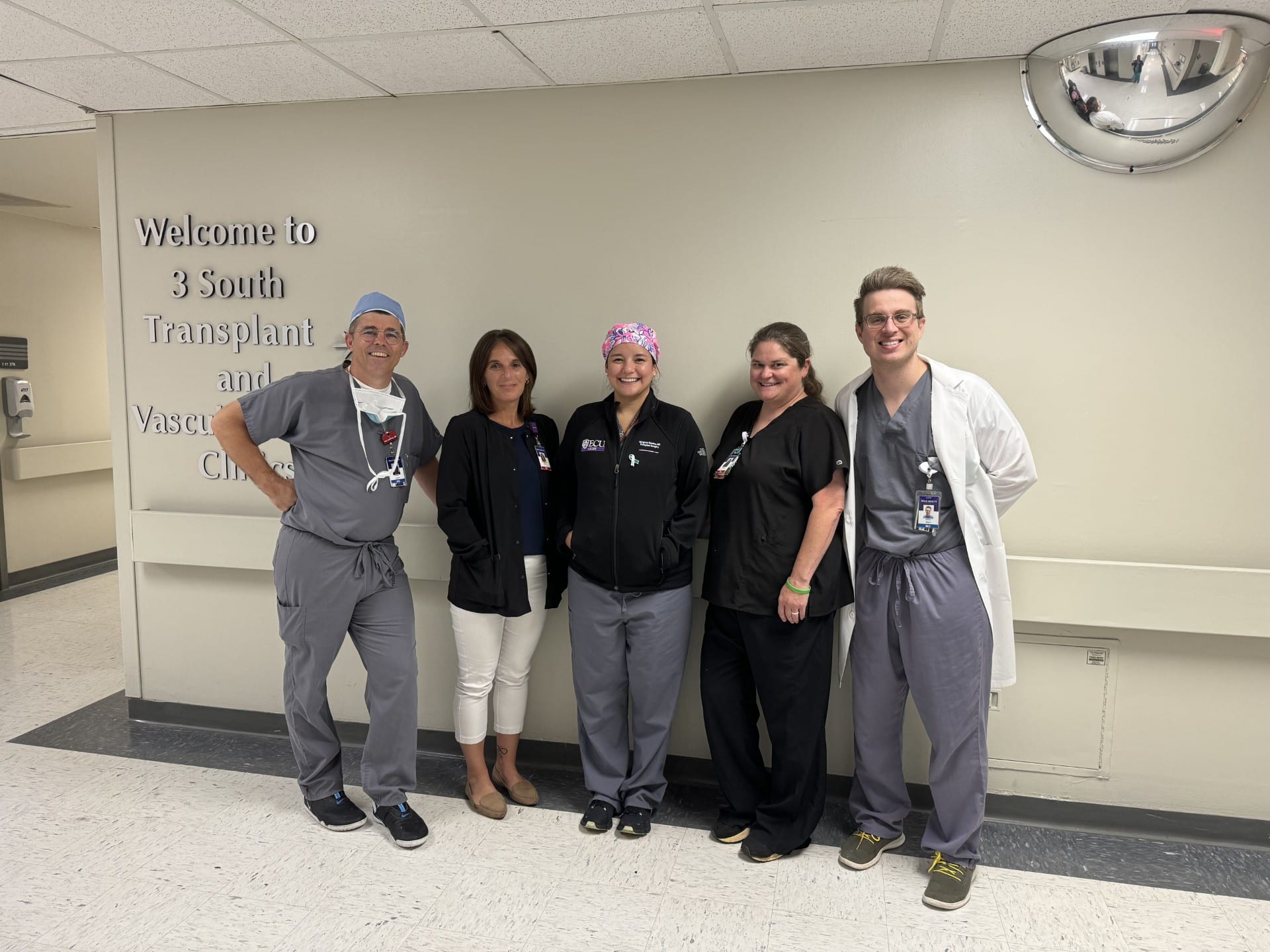
That team included Dr. David Leeser, the chief of Kidney and Pancreas Transplantation, and Dr. Margaret Romine, who specializes in transplant surgery and serves as the director of the Living Donor Program. “We worked her up and planned for a living donor,” Dr. Leeser said, “But because of reasons beyond their control, the family had to go to another North Carolina transplant center.” Insley’s family put out a call to their friends and family to secure a kidney for their daughter when Insley’s immediate family members weren’t a match. “I was of course tested but was denied based on some findings,” Kayla Santifort, Insley’s mom, said. “My husband wasn’t a match because of blood type, so at that point we had to turn to our community for help.”
Incredibly, they were able to find a donor, and Insley had her first kidney transplant in July 2023. The transplant, however, was not successful. “Her transplant thrombosed within the first 48 hours of surgery,” Dr. Leeser explained. “There are of course risks for this type of surgery,” Dr. Gomez Mendez added. “And so Insley ended up in critical condition.” Insley pulled through, and the kidney regained some function, but it became clear that she was going to need another kidney, and soon. “That’s when Insley’s family came back to ECU Health,” Dr. Gomez Mendez said. “Before we were even discharged from the other hospital, I reached out to Dr. Gomez Mendez and told her we wanted to transfer back to ECU Health,” Kayla said. “Because Insley was a fresh transplant and the kidney was technically working enough to keep her off dialysis, Dr. Gomez Mendez had to get the okay from Dr. Leeser and his team to accept us back.” Dr. Leeser said they would take Insley’s case, although it was anything but uncomplicated. “Insley’s case was not standard, and I think that her case is a true testament to the potential of our program,” Dr. Romine said.
Kayla and Insley’s family found themselves in the same predicament as before: they needed a new kidney and a new donor. “How do you ask someone to put their life on hold and take a part of themselves to give to your daughter to save her life?” Kayla said. Yet, Insley’s family and the transplant team were amazed when more than 100 people came forward to be tested as potential donors. “That’s the most the transplant team ever had,” Kayla said. “We had people from Wayne County, Duplin County and even out of state get tested. It shows how close our communities are.” There were so many volunteers, it took some time to parse through the list. “It’s a huge process of evaluating potential donors, and we were fortunate to have a good donor from that list,” said Dr. Romine.
A new donor
That donor was Jenny Godwin, a former ECU Health team member who worked in the transplant operating room (OR). She also happened to know Kayla from when they worked together at UNC Health Wayne in the emergency department (ED). “We’ve known each other for years,” Kayla said. “Did I think 10 years ago Jenny would be the one to donate her kidney to save my daughter’s life? No. Now I couldn’t imagine life without her and her family.”
When Jenny learned Insley needed a second kidney, something told her to get tested. Kayla, too, had a similar premonition. “I knew they were looking for a small female donor, and I just had this feeling about Jenny,” Kayla said. “I remember I was sitting in my truck when Jenny FaceTimed me to tell me she was a match. There are days now that I cry to know someone like Jenny with kids and a husband was willing to save my child’s life.” Jenny said her experience in the transplant OR helped her feel at peace about the decision to donate. “When I was on the transplant team, I assisted with living donors and witnessed transplants in the OR. After I found out I was a match, I met with the transplant team to discuss my surgery and it was amazing. It felt right.”
“You’d be surprised at how many people decide to donate a kidney,” Dr. Leeser said of Jenny’s generosity. “It takes folks who are committed to making an impact on the world and the greater good in a way that is utterly selfless and remarkable.” Dr. Leeser noted that although it’s very safe to be a living donor, more than 100,000 people are on a waitlist for a new kidney. “If only .03% of the U.S. population donated a kidney, we would wipe out that waitlist in a year,” he said.

The team scheduled Insley’s surgery for several months out, in the hopes that she would heal from her first transplant while avoiding putting her back on dialysis. Finally, in February 2024, Jenny donated her kidney and Insley underwent her second kidney transplant in less than a year. Dr. Matthew Black, the newest partner on the transplant team, worked with Dr. Leeser to prepare Insley for the implant. “The surgery was complex enough to require two attending level surgeons,” Dr. Leeser said. Dr. Leeser acknowledged that it was a challenging surgery, and not just because Insley was a small child. “There was scar tissue, and of course we had to remove the first kidney to put in the new one,” he said. “In a child that size, you worry about blood loss. Everything in a child is fragile, but everything went exceedingly well.” Dr. Gomez Mendez was also pleased with the surgery outcomes: “The kidney began working immediately, and she had no complications.”
A team like no other
Kayla attributes her daughter’s successful outcomes to the transplant team, Dr. Gomez Mendez, the pediatric intensive care unit (PICU) and Insley’s entire ECU Health team. “They are all just phenomenal,” she said. “They were very up front and honest that this was going to be a difficult and lengthy surgery, but after hearing their plans, I knew we were in the best hands. If anyone could explant and transplant her, it was this team.” Jenny felt the same way: “Not all teams get along and you can feel that. This one makes you feel like it’s a family and they’re on the same page, and that shows. The morning of my surgery I felt at ease and peace.”
Dr. Leeser also had a lot to say about the knowledge, skill and teamwork of the ECU Health transplant team: “Dr. Romine runs the donor side of things, and she’s helped to grow our program over the last six to seven years, so we’ve gone from doing around 80 surgeries a year to between 130 and 160 a year. And Dr. Gomez Mendez came to us from the University of California San Francisco, one of the best hospital systems in the world for transplants. She’s exceedingly intelligent and understands the psyche of surgeons. She is as big of a reason Insley’s family wanted to be at ECU Health as anyone else.”
Together, Dr. Leeser said this team is always focused on taking care of the patients and will work through any issues. “You want physicians who push and test each other. Our team has great discussions. Sometimes we laugh, sometimes things are tense, but at the end of the day, we’re all in it together.” That involves everyone, he said, including administrators, surgical coordinators, social workers, nutritionists, nurses, pharmacists and countless others. “This work takes a tremendous amount of support. In the intensive care unit (ICU) we meet with nurses and managers on a regular basis, and we’ve developed strong relationships with our PICU colleagues. We have learned how to work together to bring the most of what each of us can to the patients.”
Dr. Romine agreed, citing the unique nature of their team. “We’re doing what bigger systems are doing with less resources. That’s only possible with a team that buys into the goal,” she said. These services are especially important, as they provide vital services to a region in need. “One of the things I’m proud of is that there’s such a need medically and a lot of patients who otherwise would have to go to elsewhere don’t have to. I love that our program is allowing access to care that wouldn’t otherwise be there.”
The result of this teamwork is positive patient outcomes, including those for Insley. “She went home after five days in the hospital and she’s done superbly well,” Dr. Leeser said. “When you have renal failure, you don’t feel well and things don’t taste good, so Insley wasn’t eating much before the surgery. Insley is now able to enjoy some foods.” Kayla also sees the change in Insley’s quality of life. “If you look at Insley and know her story, you know how much she and our family have suffered. She couldn’t go swimming or go to the beach, or even take an actual bath when she was on dialysis. We’re going to the beach this weekend to celebrate Jenny and her family.” It’s those little things Kayla said people take for granted but are so special now.
A gift that saves lives
Those little things wouldn’t be possible without generous donors like Jenny, as well as Insley’s first kidney donor, and the National Kidney Registry. “I want to raise awareness about organ donation, and not just after someone passes away,” Kayla said. “Living donation allows you to give a part of yourself while you’re still alive to save someone else. As a nurse and the mom of a transplant patient, the importance of organ donation has never been more real.” Jenny, too, was eager to speak about her experience so others can consider doing what she did. “If anyone is on the fence, I am happy to talk with them. It’s important we have living donors.” Dr. Leeser emphasized that the National Kidney Registry is a great place for potential donors to explore their options. “Someone might want to donate to their family member, so we put the donor in the registry. Even if they don’t match with their intended person, they can still donate their kidney to someone who needs it, and their intended recipient receives a voucher so they receive a kidney from a well-matched donor on the registry.” Dr. Gomez Mendez also wanted people to know that kidneys donated from living donors perform better than those from deceased donors. “The only way for Insley to have the best outcomes was from a live donor,” she said. “A live kidney will last more than a deceased donation.” The National Kidney Registry’s website reports that the average length of time a kidney from a deceased donor lasts is 10-15 years, while it’s closer to 20-40 years when it’s from a living donor.
Because of Jenny’s gift of a kidney, and because of the hard work of Dr. Leeser, Dr. Romine, Dr. Gomez Mendez and the many others on the transplant team, Insley now has a chance at a normal life. “I’m so happy we are at a point where Insley has a fully functioning kidney. It was a long battle, and I’m happy to see her thriving and being a little kid,” said Dr. Gomez Mendez. Kayla attributes Insley’s success to the care she received from ECU Health. “I’d recommend ECU Health and the children’s hospital to anyone,” she said. “To watch her go from an unhealthy quality of life to growing and thriving – that reward is more than anyone could ask for.” Dr. Leeser is quick to share the credit for Insley’s and other patients’ success with the program and team, which they’ve worked to build over the last seven years. “I’m very proud of the program,” he said. “I would argue we’re the best program for kidney transplant in the state, and we’re on the precipice of doing even more.”
If you are interested in learning more about how to donate a kidney, you may visit https://www.kidneyregistry.org/, or if you’d like to learn more about ECU Health’s transplant services, visit here.
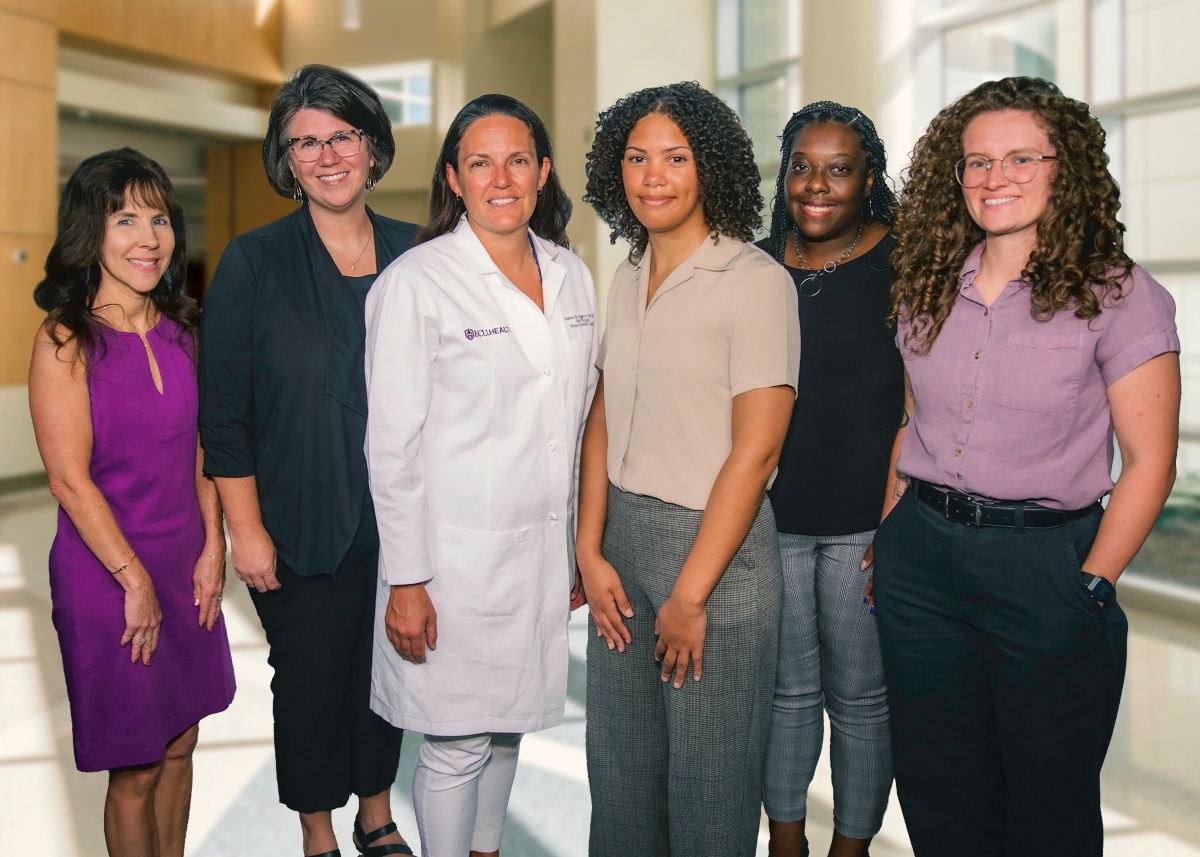
Greenville, N.C. – The Eastern Carolina Injury Prevention Program (ECIPP) at ECU Health Medical Center was awarded the Safe States Injury and Violence Prevention Achievement Award at the Safe States 2024 Injury and Violence Prevention (IVP) Professionals Annual Conference in Portland, Oregon on Aug. 20-22. Safe States recognizes the outstanding achievements of members and partners annually through peer-nominated awards.
“We are incredibly proud of the recognition ECIPP’s initiatives have received,” said Sue Anne Pilgreen, manager, ECIPP, ECU Health. “This award highlights our team’s leadership and expertise in injury prevention and advancing safety practices locally and nationally. While this recognition is encouraging, what truly motivates the ECIPP team is getting to see the impact that this work has on the members of our community as we remain dedicated to promoting safety, encouraging healthy behaviors and reducing injuries.”
Established in 1995, ECIPP is a collaborative prevention focused health program at ECU Health Medical Center. Partnering with the ECU Health Trauma Center, the James and Connie Maynard Children’s Hospital and the Brody School of Medicine‘s Department of Emergency Medicine, ECIPP is dedicated to improving the health of eastern North Carolina by reducing the incidence and impact of injuries. The American College of Surgeons noted the value of ECIPP’s work in the verification of Maynard Children’s Hospital as a Level I Pediatric Trauma Center.
ECIPP has been instrumental in the development, implementation and interdisciplinary adoption of injury prevention practices for children and adults across eastern North Carolina. ECIPP offers a wide range of prevention programs aimed at addressing the most pressing injury concerns in the region. These programs include education on child safety, teen safe driving, hot car safety, firearm safety, suicide prevention, traffic safety and poison prevention. ECIPP also partners with Greenville Police Department on the Greenville Traffic Safety Task Force, which earned a national achievement award in 2023.
By building innovative partnerships, ECIPP has successfully promoted the adoption of injury prevention practices across various industries. For instance, the firearm safety program collaborates with wildlife organizations and pawn shops to provide education and gunlocks, while partnerships with Community Health Workers help deliver bike safety education and helmets. ECIPP also created an LGBTQ+ youth suicide prevention documentary that has been integrated into college curricula and hospital onboarding processes. From 2020 to 2023, ECIPP reached 86,333 individuals, distributing 2,405 gun locks, 256 medication lock boxes, 3,204 bike helmets and 259 child car seats.
“ECIPP’s strategies and partnerships have been crucial in expanding education and resource access in rural eastern North Carolina communities,” said Catherine Nelson, senior administrator of Community Health Programs, ECU Health. “This award is a testament to our commitment to injury prevention and the positive impact we’ve made for children and families across the region. By collaborating with local organizations and leveraging innovative approaches, we’ve been able to address critical issues, ultimately advancing the health and safety of our communities.”
To learn more about ECIPP, visit the webpage.

ECU Health Maynard Children’s Hospital’s Neonatal Intensive Care Unit (NICU) offers the highest level of care for the most fragile of patients; it is staffed with a team of experts who care for critically ill or premature newborns. One of those specially trained nurses is Tara Stroud, who was named in February the vice president for Maynard Children’s Hospital, Women’s Service Lines and Community Health Programs. Recently, Tara received another well-earned recognition—this time as a recipient of the March of Dimes Excellence in NICU Leadership Award.
The national award honors NICU leaders who effectively support their team, advance the care of patients and the operation of their unit, have strategic vision and have excellent communication skills. Only one winner is recognized annually, and this year, Tara Stroud was honored with the award at the Synova 2024 NICU Leadership Forum.
Tara didn’t initially consider nursing as a career when she was younger. “I thought I would be a vet because I love animals,” she said. “But a love for nursing found me.”
After a clinical rotation in a NICU, Tara said she knew that was exactly where she wanted to be. “I wanted to do something that had meaning and value. The babies in the NICU are so critically ill and depend on you for everything, but they’re also so resilient. There’s something about the babies that gives you a different impression on life. That’s what captured and kept me.”
An eastern North Carolina native, Tara joined ECU Health in 2006 after receiving her BSN from East Carolina University. She’s since received an MSN as a neonatal nurse practitioner and her doctorate in nursing executive leadership, and she is excited about the road ahead for ECU Health.
“When you work for ECU Health, the possibilities are endless. When I started in the NICU, I didn’t know where my career would take me. Advancing my education and going into leadership roles was an opportunity ECU Health gave me.” She also loves that her work gives back to her community. “Eastern North Carolina is my home. I want to be where women and children receive exceptional care. If we weren’t here, some of our babies wouldn’t survive a trip. It’s critically important that we are here.”
Tara loves working with the NICU team, a group of leaders and team members who “lead with their hearts,” as she puts it, but she also sees many opportunities in her new role as vice president.
“It’s a chance to solidify the vision for ECU Health for the future of women’s and children’s care across the system,” she said. “We’re focusing on a more holistic view of health across the continuum of care, because both maternal and child health is important to our future. I’m excited to lead ECU Health to continue to impact that health continuum for both mother and child.”
This passion and dedication to her field is why she was recently recognized as the 2024 March of Dimes Excellence in NICU Leadership Award winner. Although “not a crier,” Tara admits she teared up when she learned she won the award. It was even more special that she was able to accept the award at the Synova 2024 NICU Leadership Forum with her husband and daughter in attendance.
“Winning the award surprised me,” she said. “I never thought I would win a national award, but when you’re focused on trying to provide exceptional care, sometimes you don’t realize the impact you’re having on others.”
That impact was clearly noted in Tara’s nomination form, which was submitted by her team and without her knowing. “Tara is an innovative leader who has a vision for the future unlike any I’ve worked with,” said one nominator. Another’s quote read: “She has left a forever impact on the leader I strive to be . . . thank you for leading us to excellence.”
Tara acknowledged that one of her greatest goals and achievements has been to guide her team members into leadership roles.
“My job is to grow the leaders of tomorrow. When my team said I have given each of them a chance to be leaders and make a difference in eastern North Carolina, that sticks with me more than anything,” she said. “To be recognized for this specific award for a population that is so important to me – and to know my team nominated me – it’s an award I cherish.”
The much-deserved award reiterates Tara’s focus on the future of ECU Health’s role in neonatal and maternal care.
“We are laser-focused on providing exceptional care for neonates and mothers in our region,” she said. “Babies in the NICU are getting smaller and surviving at younger ages year over year, and we are continuously adapting our care pathways to meet these needs. We’ve accomplished great work, but there’s more to be done.”
Resources

Just being a kid – that’s the goal Camp Hope and Camp Rainbow staff hope to accomplish every summer. Each year ECU Health and the Department of Pediatrics Hematology/Oncology at the Brody School of Medicine make it possible for children with cancer, hemophilia and sickle cell disease to take part in summer camp.
Camp Rainbow is for children with cancer, hemophilia and children who have lost a sibling to one of these diseases, and Camp Hope is for children with sickle cell disease.
“Once the kids get to camp, start participating activities and get to know each other, they leave everything behind and just get to be kids,” said Jacque Sauls, child life specialist at the Pediatric Hematology/Oncology Clinic at ECU Health and the Brody School of Medicine at East Carolina University and director of Camp Hope and Camp Rainbow. “That is a blissful moment for all of the health care staff to be able to watch a child we see in the hospital all the time being a kid and having a great time.”
ECU Health and Brody team members develop camping programs to provide pediatric patients an opportunity to learn more about themselves and their illness, participate in fun activities like swimming, canoeing, archery, crafts, music and drama, all while making life-long friendships with other children with similar conditions and experiences. Over 60 campers from 25 counties in eastern North Carolina came this year.
“These kids are often protected and sheltered a little bit because they can’t do all the things other kids can do because of their illnesses, or they’re afraid of infections or normal camps don’t have the health care they need,” said Sauls. “Here, they can do every camp activity. There are no limits.”
While at camp, children receive 24-hour medical care and close medical monitoring by their ECU Health care teams including physicians, nurses, child life and social workers.
“All of the children take medicine because of their conditions, so when they take it together, they realize, ‘You have to do this just like I do,’ and know they’re not alone,” said Sauls.
The vast majority of camp volunteers and counselors are former campers themselves, having experienced sickle cell, bleeding disorders or cancer. This shared background allows them to form a special connection with the campers, having faced similar challenges, treatments and experiences. These volunteers return to camp to ensure that today’s kids receive the same transformative experience they once did.
“It’s one of the most important things we do at camp because they get to meet children going through the same thing they’re going through or have gone through,” said Sauls. “The kids get to have mentors that have gone what they’ve gone through and are now in college. They get to see that just because you have a chronic illness or have had cancer you can’t do all the things you want to accomplish in life.”
This is true for camp volunteer Daniel Everett, who attended Camp Hope starting in 2017. When he graduated high school in 2021, he decided to volunteer at the camp.
“I have sickle cell myself, and for me as a kid to come to camp was a dream,” Everett said. “It was magical. It was a place I could go that I knew I was going to have fun, and it was a place I felt right at home.”
Now as a counselor, Everett makes the same impact on the new campers.
“It’s really awesome seeing the kids enjoy themselves, especially when they come from a background of pain, they may be going through treatment,” Everett said. “It’s just nice to see them come here to take a breather like, ‘I can be myself,’ because they’re accepted here.”
Everett is beginning college in the fall, and Sauls noted how important it is for the campers to see someone with the same disease as them accomplishing their goals.
One volunteer, however, is not a former patient. Dr. Ashish Khanchandani recently graduated from the Brody School of Medicine at ECU and is beginning his residency in Pediatrics at ECU Health Medical Center. Dr. Khanchandani volunteered during his gap between medical school graduation and residency to make sure the campers have fun and to assist in any medical needs the campers may have.
“The goal of us as volunteers is to make sure the kids can go about their day without any major medical issues,” Dr. Khanchandani said. “It has been fun being like a camp counselor. I’ve done all the activities with my kids like paddle boarding, all while making sure they’re doing it safely.”
Sauls said she was especially grateful for Dr. Khanchandani’s expertise when it comes to his group of campers. His group has Daniel Perez, a camper who survived brain cancer at two years old, losing his vision. Perez was diagnosed with bone cancer in his leg at age nine and underwent chemotherapy. Thanks to the help from Dr. Khanchandani and another camper named Esra Lupton, Perez has been able to participate in every single activity.
“Daniel and Esra met at this camp for the first time, and they go everywhere together,” said Sauls. “Esra takes him from place to place. It’s a friendship you would never be able to make somewhere else.”
Perez, like the other campers, has loved his time at Camp Rainbow. He said coming to camp helps him de-stress and forget about the medical stress going on his day-to-day life.
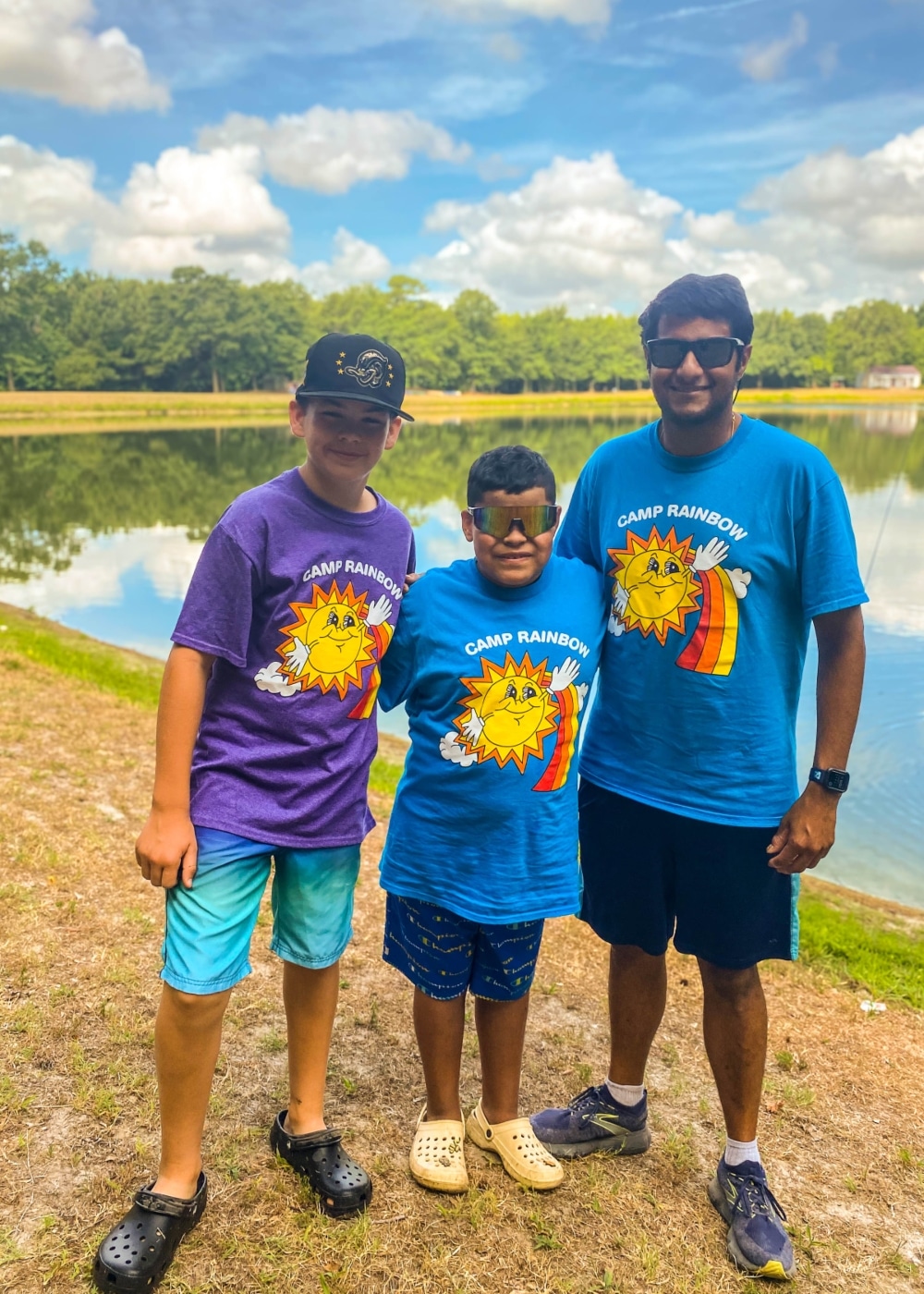
Camp Rainbow and Camp Hope are offered free of charge to children with chronic illnesses and were made possible this year by generous support and donations from the ECU Health Medical & Health Sciences Foundation, Inc., Children’s Miracle Network Hospitals/ECU Health Foundation, the Pamlico Neuse Women’s Coalition, the James and Mamie Richardson Perkins Trust, the Mildred Sheffield Wells Charitable Trust, Riley’s Army, Jaylen’s Nation, Ms. Tammy Thompson, Beau’s Buddies, China Kitchen of Robersonville and other individuals and civic organizations. To learn more, please visit: https://pediatrics.ecu.edu/camp-rainbow/
Greenville, N.C. – Tara Stroud, DNP, APRN, NNP-BC, NEA-BC, vice president of Women’s and Children’s Services, James and Connie Maynard Children’s Hospital at ECU Health Medical Center, was recently awarded the March of Dimes Excellence in Neonatal Intensive Care Unit (NICU) Leadership Award. Stroud accepted the national award at the Synova 2024 NICU Leadership Forum in Charlotte Harbor, Florida.
“I am deeply honored to receive the March of Dimes Excellence in NICU Leadership Award, especially knowing that my team nominated me for an award that recognizes excellence of care in a population that is so important to me,” said Stroud. “Our focus on improving the quality of care for neonates is unwavering, and this national award affirms that ECU Health is a model for exceptional care, particularly in rural communities. I am excited to help lead ECU Health in solidifying our vision for women’s and children’s care across eastern North Carolina.”
The March of Dimes Excellence in NICU Leadership Award honors NICU leaders who effectively support their team, advance the care of patients and the operation of their unit, have strategic vision and have excellent communication skills.
The NICU at Maynard Children’s Hospital offers the highest level of care for the most fragile of patients and is staffed with a team of experts who care for critically ill or premature newborns. Allyson Yelverton, director of Patient Care Services at the Level IV NICU, led the nomination initiative for Stroud’s team.
“Tara is an innovative leader who has a vision for the future, centered around the health and well-being of our patients,” said Kathryn Jarvis, senior director, Patient Care Services, Maynard Children’s Hospital. “She has helped grow high-performing leaders across the organization and serves with a passion for the patients and families we care for every single day. We were excited to nominate her and are so pleased that she was selected for this deserving recognition.”
An eastern North Carolina native, Stroud joined ECU Health in 2006 after receiving her Bachelor’s of Science in Nursing from East Carolina University. Stroud earned a Master of Science in Nursing as a neonatal nurse practitioner and a Doctor of Nursing Practice degree. Stroud worked in the NICU for many years and as senior administrator of Children’s Services at Maynard Children’s Hospital and was named the vice president of Women’s and Children’s Services in February. After becoming vice president, Maynard Children’s Hospital became the only Level I Pediatric Trauma Center serving eastern North Carolina.
“We at ECU Health are proud of Tara for being awarded the March of Dimes Excellence in NICU Leadership Award,” said Trish Baise, chief nursing executive at ECU Health. “Tara’s recognition at the national level is a testament to her unwavering commitment and the exceptional work her team does to advance the quality of care we provide. We are fortunate to have mission-driven individuals like Tara who help us lead the way in becoming the national model for academic rural health care.”