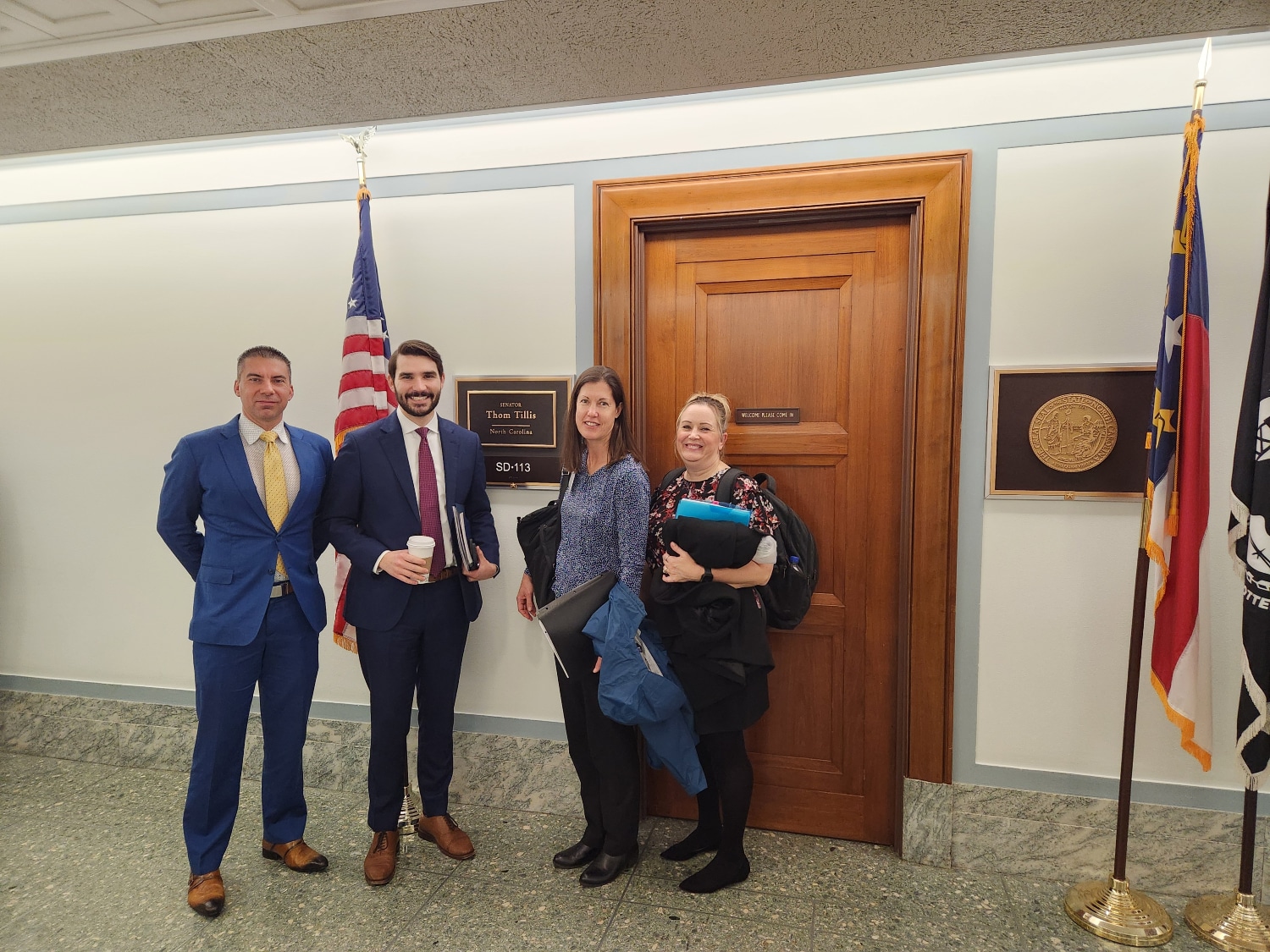
The American Association of Cardiovascular and Pulmonary Rehabilitation’s (AACVPR) Day on the Hill, which was March 4-5 this year, is an opportunity for cardiac and pulmonary rehabilitation professionals to visit Washington, D.C. to advocate for their profession and ask legislators for support for beneficial legislation on Medicare decisions. It was Stacey Greenway’s 10th year participating in this event, a milestone made all the more significant by her recent election as treasurer to the AACVPR board.
Stacey, the director of cardiovascular disease management services at ECU Health Medical Center, wasn’t initially interested in health care policy, but her zeal for her work inspired her to get involved.
“I’m passionate about what I do, and when I realized the impact these legislative decisions make on our patients, I wanted to get involved,” she said. “When the North Carolina Cardiopulmonary Rehabilitation Association (NCCRA), which works on the state level, asked if anyone was interested in participating in Day on the Hill, I thought how cool it would be to help our patients and our programs. After the first time, I was hooked.”
Each year, the AACVPR’s legislative priorities are different, but the goal is the same. “We want to help the legislators see things from the patient perspective and put a face to the people these bills are affecting,” Stacey said. “From that angle, you see the increase in a patient’s quality of life. From a health system perspective, it decreases the rates of hospital readmission. It’s a win-win.”
This year’s priorities centered on two bills: HR-955/S.1849, the Sustaining Outpatient Services Act, and HR-1406/S.3021, the Sustainable Cardiopulmonary Rehabilitation Services in the Home Act. The Sustaining Outpatient Services Act seeks to correct a legislative error from a previous bill that reduces reimbursement for cardiac and pulmonary rehabilitation services when they are provided in off-hospital campus clinics. The reduced reimbursement rate makes cardiac and pulmonary rehabilitation services financially unsustainable and thus eliminates patient access to these resources, especially in rural communities. “Some rural hospitals, which don’t have a lot of real estate on campus, haven’t even tried to open a rehab clinic because of this issue,” Stacey said. This bill would establish an exemption status to certain hospital outpatient services, including cardiac and pulmonary rehabilitation, from that fee reduction.
The Sustainable Cardiopulmonary Rehabilitation Services in the Home Act would allow Medicare beneficiaries to receive cardiac or pulmonary rehabilitation services through real-time telehealth in their homes. This hybrid type of service was very successful during the pandemic, and it allowed more patients to be treated from across eastern North Carolina.
“Think of that 45-year-old patient who had a heart attack and would benefit from rehab services but has also been cleared to work and needs to make an income,” Stacey explained. “This bill would allow that patient to not have to make a choice between income and health; they could do both.”
During her time in Washington, D.C., Stacey and 74 other AACVPR members spoke with their respective House Representatives and Senators to advocate for these bills. Stacey said overall, the discussions were productive.
“I had some good conversations about both bills,” she said. “The telehealth bill was one the legislators could wrap their heads around easier; it was something they were familiar with. That was encouraging.” While more work needs to be done to increase support for the outpatient services bill, Stacey said she felt the needle moved a bit. “This is partly because the government seems to be changing their focus from thinking about the up-front costs of health care to the savings incurred on the back end,” Stacey said. “That means things are changing, and I’m hoping we’ll get a few more co-signatures on that bill.”
As a board member, Stacey said she now has other opportunities to support her profession.
“To represent eastern North Carolina and discuss at the national level some of the things that impact those who practice locally is really important,” she said. Because she was on the board this year, Stacey was also able join the board meeting the day before Day on the Hill and participate in the selection of a new legislative firm. “We met with the firm and prepped for Day on the Hill, but we also strategically planned for the future,” Stacey said. “It was exciting to be involved in that process.”
Stacey’s interest in running for the AACVPR’s treasurer position stemmed from her desire to stay involved in the national organization and escalating care for patients.
“The board is involved in regulatory and government relations, and that’s one of my big interests. Day on the Hill is just one way we stay involved. It’s a way of understanding and supporting initiatives and bringing that back to ECU Health,” she said. “We have six cardiac and pulmonary rehab programs within ECU Health, and I want to make sure those programs are aware of the initiatives the AACVPR promotes to escalate their practice and ensure we’re doing the best we can for our patients.”
Now that the initial conversations with Congress members are over, the next step is to follow up in a few weeks with those representatives still on the fence. “We’ll also bring in a constituent from that person’s district to speak to the impact of these bills,” Stacey said. Some representatives have already signed on to at least one of the bills, including Rep. Don Davis, Rep. Deborah Ross, Rep. Greg Murphy, Rep. Wiley Nickel and Rep. Jeff Jackson.
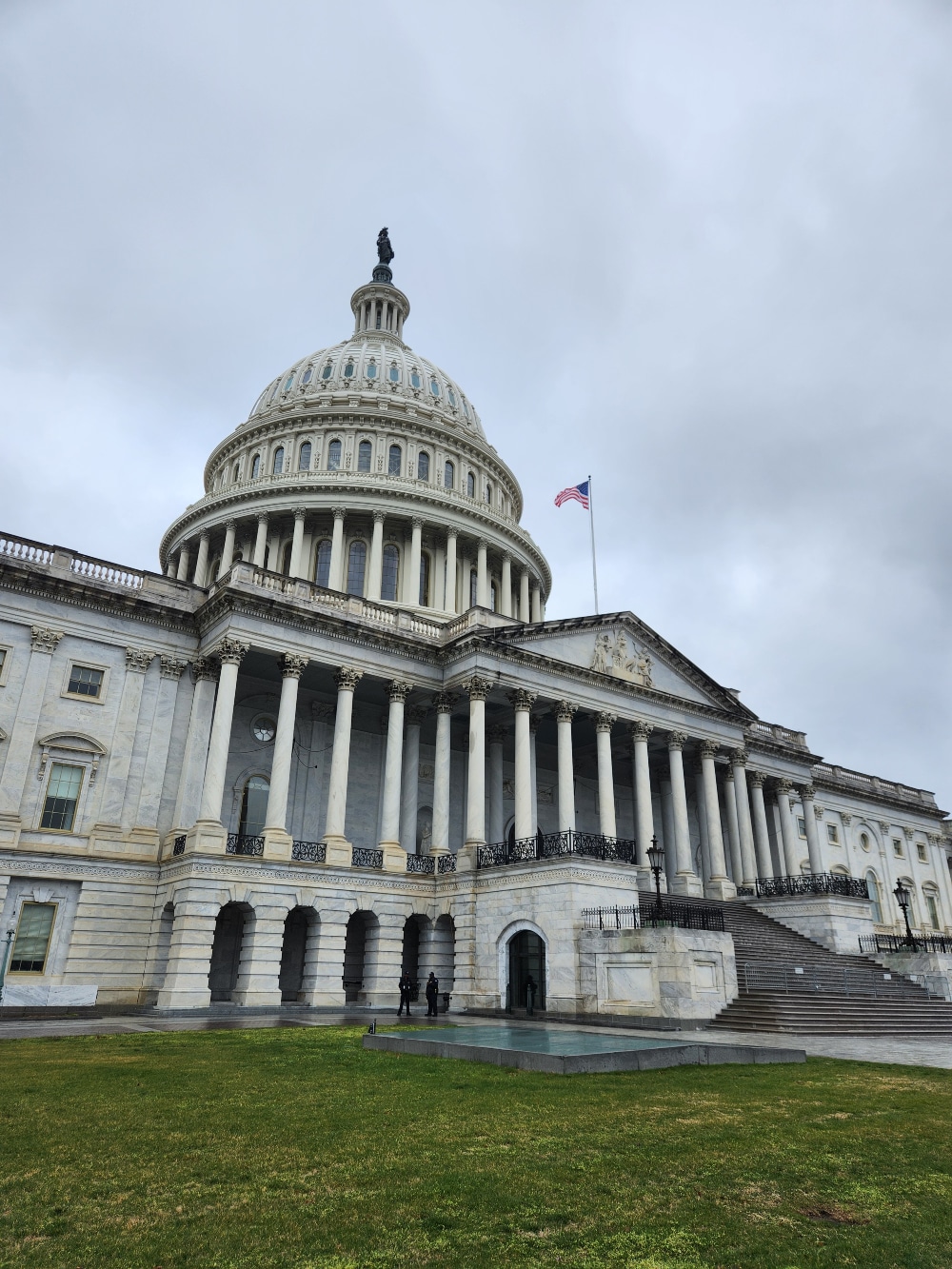
It’s important to be involved in the policy issues surrounding health care, Stacey said. “You don’t go into health care thinking about these operational or political issues, but when you’re faced with the repercussions in the clinic, you see the impact it has.”
She encouraged all health care professionals to get involved: “Let’s do this for the betterment of the patient experience,” she said. “For me, this has been one of the highlights of my professional life.”
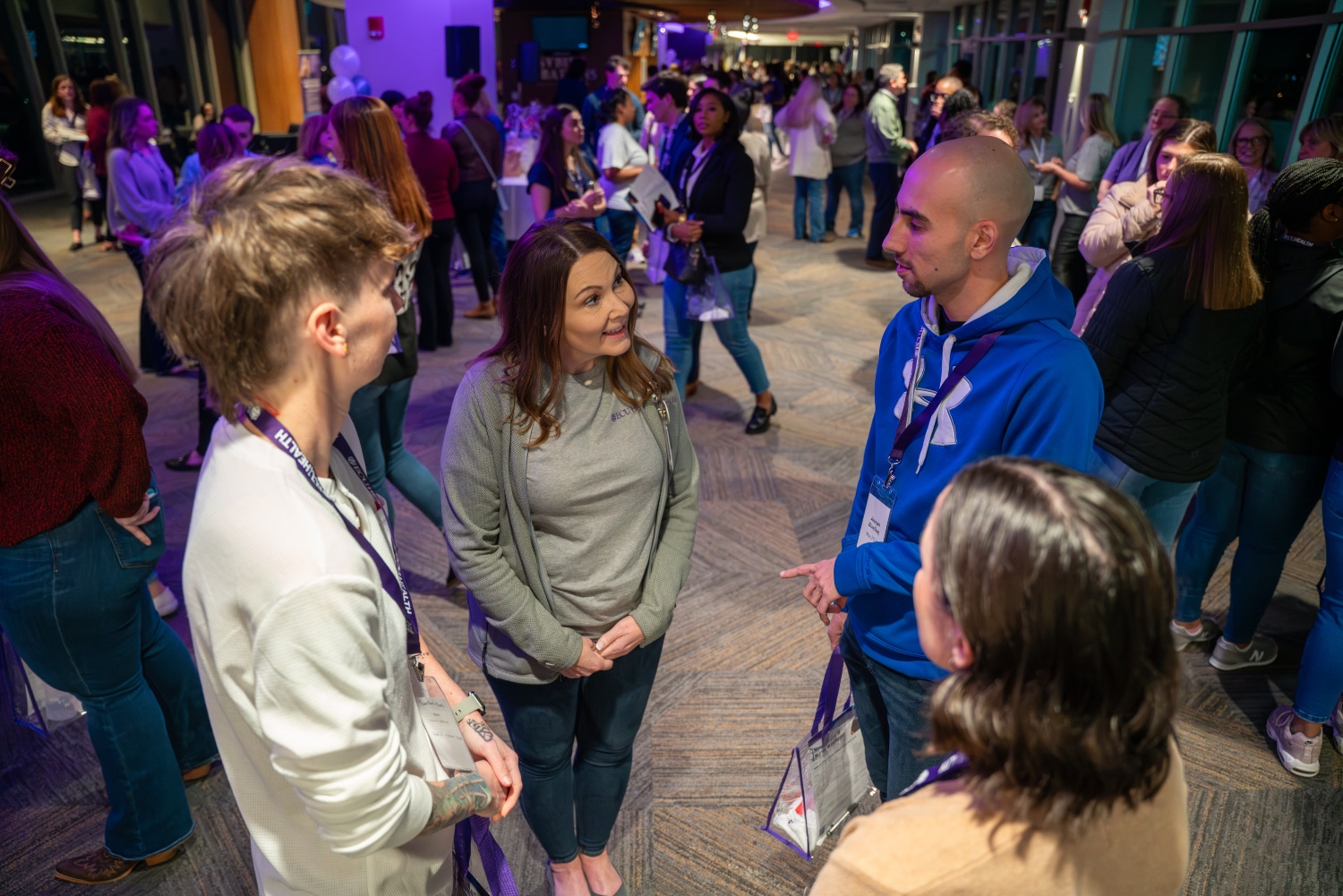
As part of its commitment to growing a high-quality nursing workforce for the region, ECU Health recently held a New Graduate Nurse Hiring event to connect with upcoming nurses, many of whom will begin their career with the organization in a few months.
The two-day event was hosted at the TowneBank Tower and the Williams-Clark Club Level on East Carolina University’s campus.
The February hiring event featured 301 scheduled interviews with prospective nurses, many of whom are from right here in eastern North Carolina, allowing candidates to interview for various units and connect with nursing leaders within the organization. To date, 96 future nurses have accepted positions across the ECU Health system.
This event underscores ECU Health’s commitment to recruiting and retaining exceptional nurses as we continue to shape the future of rural health care.
“The New Graduate Nurse Hiring event was really a great turnout,” said Trish Baise, chief nursing executive, ECU Health. “The opportunity to connect with future nurses was priceless. It was beneficial to engage in a casual environment before interview day and it allowed our team to speak with them informally. Every year it gets better. New graduate nurses are an important part of our workforce pipeline. It’s important for us to make sure that those who have grown up in eastern North Carolina and/or have been educated here, have a wonderful clinical experience with us.”
The hiring event spanned two days, with Friday dedicated to networking and allowing candidates to interact with recruiters and nursing leaders from several ECU Health entities, and Saturday dedicated to interviews.
“The key message that resonated well with the nursing candidates was ECU Health is the land of opportunities,” said Dr. Kamilah Williams, administrator for Professional Practice Development & Clinical Education at ECU Health. “There are so many opportunities for launching nurses’ careers in every specialty of nursing practice across ECU Health.”
If you’re interested in reading about our new graduates and their experience at ECU Health, check out the People of ECU Health articles on Brianna Cavaliere and Samantha Nichols.
“Jim will be very humble and tell you he was in the right place at the right time,” Dr. April Quidley, pharmacy supervisor, critical care/emergency medicine and PGY1 Pharmacy Residency Program director, said about Dr. Jim Worden’s impact on ECU Health and in his community.
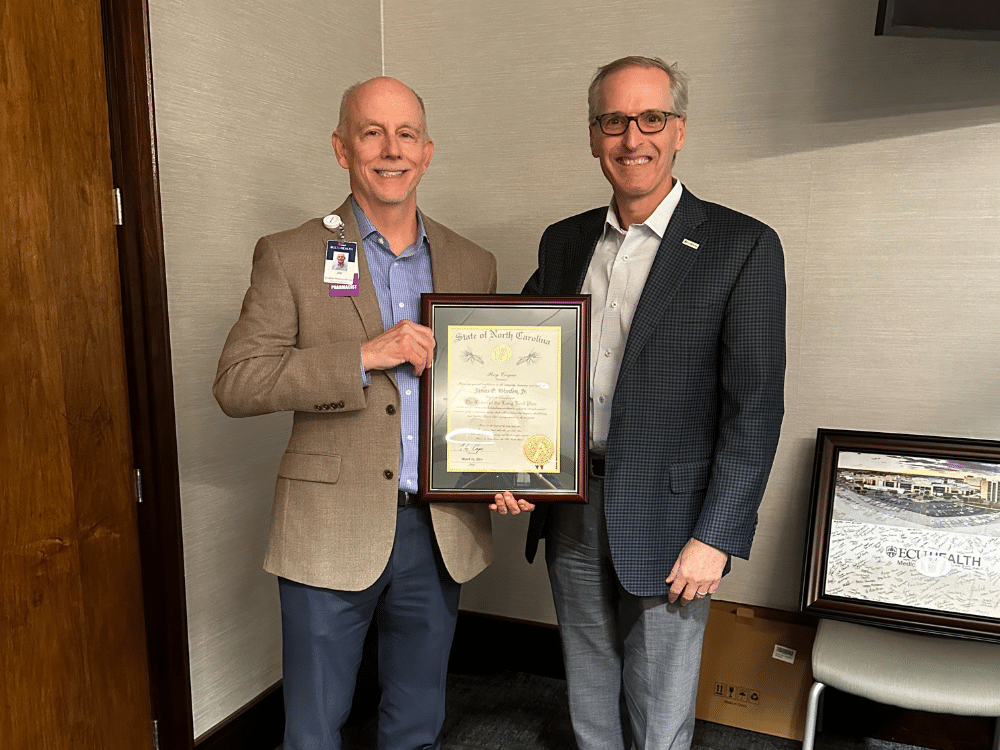
Dr. Worden retired on March 22 after working for ECU Health for 41 years. During his retirement reception, however, he was surprised to learn he’d also won the Order of the Long Leaf Pine award, the highest honor North Carolina’s Governor can bestow on a person for their contributions to the state.
Dr. Worden, a Tennessee native, moved to Greenville, North Carolina for his first job out of his pharmacy residency to work as a clinical coordinator. “I’ve been here [at ECU Health] since August of 1983,” Dr. Worden said. During that time, he held a few different roles, including assistant director of clinical services, the director of pharmacy and most recently, the systems service line administrator for pharmacy.
During that time, Dr. Worden was instrumental in setting up ECU Health’s pharmacy services by “working closely with physicians in a direct, bedside patient care role” and by founding the Drug Information Center, which, according to Dr. Worden’s award nomination documents, “served as a resource for all health disciplines in eastern North Carolina in the time that evidence-based medical practice expanded.”
“When we think about pharmacy services at ECU Health, Jim is the guy who gets all the credit,” Dr. Quidley said. “He worked hard to form those interdisciplinary relationships with physicians and to advocate for patients. He is the founding director of our residency program, the Pharmacy Practice Residency, which is one of the oldest in the country at 30 years old.”
He went on to develop additional pharmacy residency training programs for critical care, emergency medicine and infectious diseases. “He’s been on the cutting edge of everything we do in pharmacy,” Dr. Quidley said. “He’s done exceptional things for the department.”
As a result of his dedication, ECU Health’s services represent a leading practice in pharmacy care, especially for a rural region, and he’s helped expand services to improve the medical and pharmacy care across all of eastern North Carolina.
On March 22, a retirement reception was held to celebrate Dr. Worden’s more than four decades of service. Little did he know, however, that there was an ulterior motive to the event. “We surprised him with the Long Leaf Pine award at the event,” Dr. Quidley said. “Dr. Mike Waldrum, Dr. Herb Garrison – also a recipient of the award – and Brian Floyd were there to present the award to Jim, and it was a great surprise.”
The Order of the Long Leaf Pine award is among the most prestigious awards conferred by the Governor of North Carolina, and it is awarded to persons for exemplary service to the state and their communities, going above and beyond the call of duty and making a significant impact on and strengthened North Carolina. Nominations can be made for retiring individuals who have 30 or more years of service in North Carolina, and nominations must include documents that attest to the person’s work and service, supported further by letters of recommendation.
Dr. Worden said he knew of the award, but he didn’t think he was the sort of person to win it. “It’s an impressive, austere award, but I didn’t think I’d done anything in my life that was at the level to win it. I was humbled to be considered for something that noble.”
Dr. Quidley and those who wrote supporting letters of recommendation think differently. Dr. Worden has made a significant impact not only at ECU Health, but also in his community. He is on the Board of Directors for the Community Crossroads Center, which is the only emergency homeless shelter in Greenville and Pitt County. He joined the board three years ago after a fellow church member let him know a position was opening.
“I felt like my conscience told me I should apply, that God was calling me to help, so I applied, and they voted me in,” Dr. Worden said.
In the past year, he worked with ECU Brody School of Medicine to restore medical services for residents of the shelter. For his dedication to the board and the shelter, the board elected Dr. Worden to be president next year. He is also actively engaged in Greenville’s First Presbyterian Church, where he has in the past served as the Chair of the Missions Ministry, Chair of the Worship Ministry, a member of the Stewardship committee and twice as an elder on the Session, the church’s governing body.
“I’m very committed to my church,” Dr. Worden said. He plans to continue that service now that he’s retired. “I’m going to enjoy time away from work, but I won’t be sitting around. I will of course be the president of the shelter’s board, and we will have activities that will keep me busy. I will continue to work in my church, and I hope to play some tennis and pickleball.”
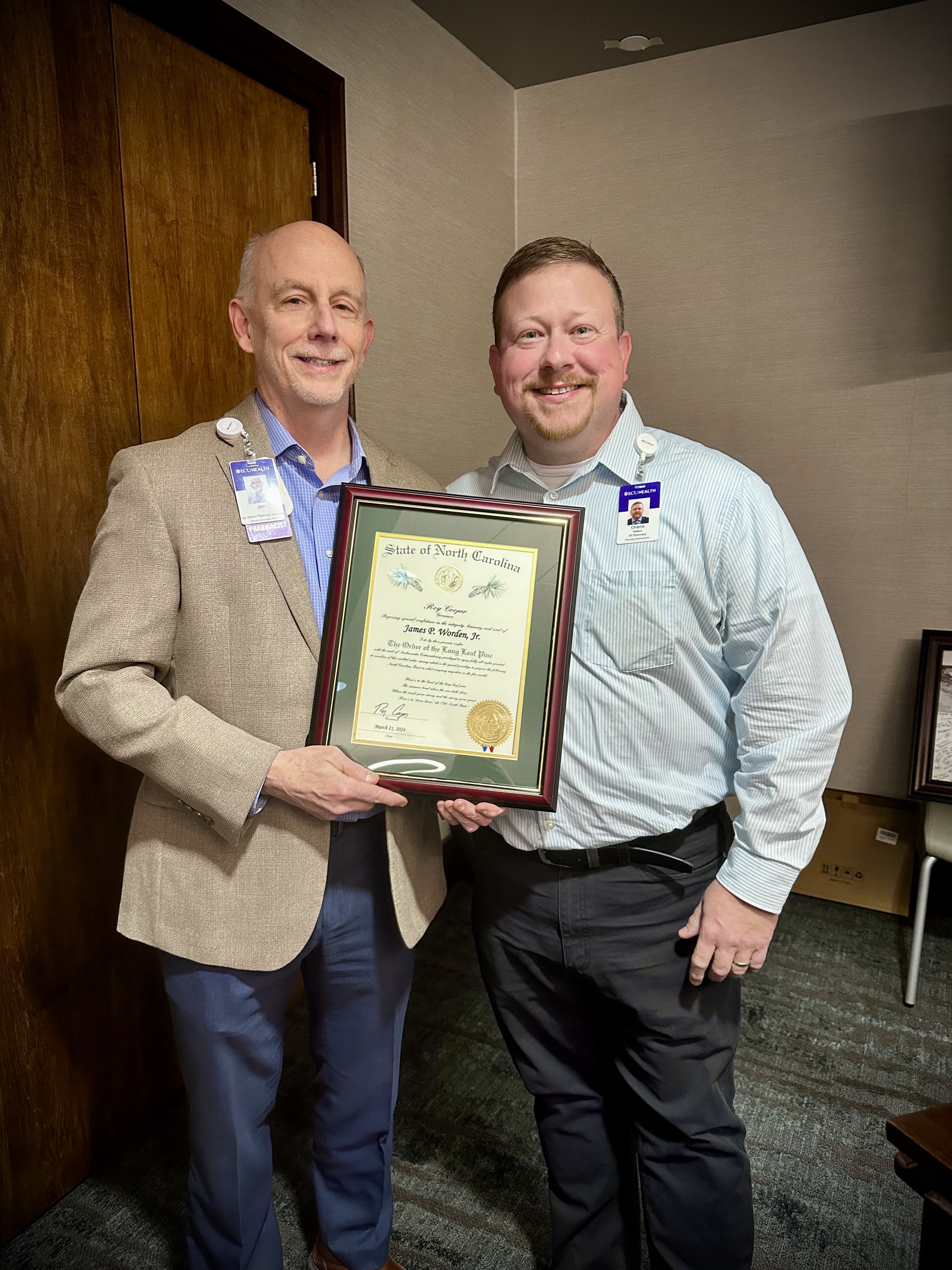
Dr. Worden also plans to travel with his wife of 34 years, Tammy, who is also a pharmacist at ECU Health and who helped Dr. Quidley nominate Dr. Worden for the Long Leaf Pine award. “When you’ve been married to someone that long, it is an accomplishment – you need that person and they need you,” he said.
As Dr. Quidley predicted, Dr. Worden remained humble about his contributions to ECU Health and beyond.
“This is not about me,” Dr. Worden said of winning the award. “I’ve started some good things, and I’ve been fortunate to have the resources, teamwork and leadership to do these things, but it really does take a village. I will take credit for some of it, but a leader can only do so much by themselves.”
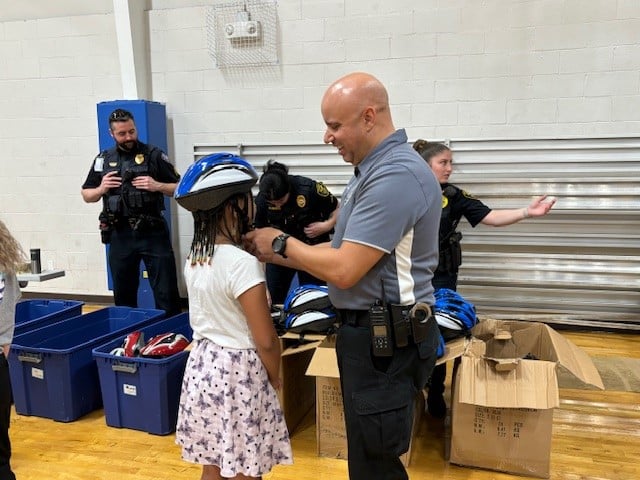
The Eastern Carolina Injury Prevention Program (ECIPP) at ECU Health Medical Center partnered with volunteers from Greenville Police Department, ECU Health Police Department, Pitt County Sheriff’s Office, ECU Police Department, Pitt County Schools and nurses at ECU Health to fit 100 fourth and fifth graders at South Greenville Elementary School with bicycle helmets to encourage safe biking. Funding for the helmets was provided by Children’s Miracle Network and the North Carolina Department of Transportation.
“It is incredibly important for parents to ensure their children know how to safely ride their bikes including wearing a helmet, bright colors and reflectors, riding on the sidewalk or in the same direction as traffic and being aware of their surroundings,” said Ellen Walston, injury prevention coordinator, ECIPP, ECU Health. “Wearing a helmet is the best way to reduce head injuries, and we are incredibly grateful to our community partners including law enforcement officers and physical education teachers that are willing to teach bike safety to their students.”
According to Safe Kids, properly fitted helmets can reduce the risk of head injuries by at least 45 percent, yet less than half of children 14 and under usually wear a bike helmet. In 2020, there were 136,753 emergency department visits from children with bicycle-related injuries across the country. ECIPP aims to reduce the number of children harmed in eastern North Carolina and beyond by encouraging safe bicycling practices and ensuring local children have access to helmets. These partnerships not only facilitate the distribution of helmets but also enable law enforcement officers to engage directly with children, emphasizing the importance of wearing helmets and adhering to traffic regulations while biking.
“While ECIPP may provide the logistical and often the boots-on-the-ground operations, none of our work would be possible without the strong partnerships that we have with our schools, law enforcement and many others throughout the region,” said Sue Anne Pilgreen, manager, ECIPP, ECU Health.
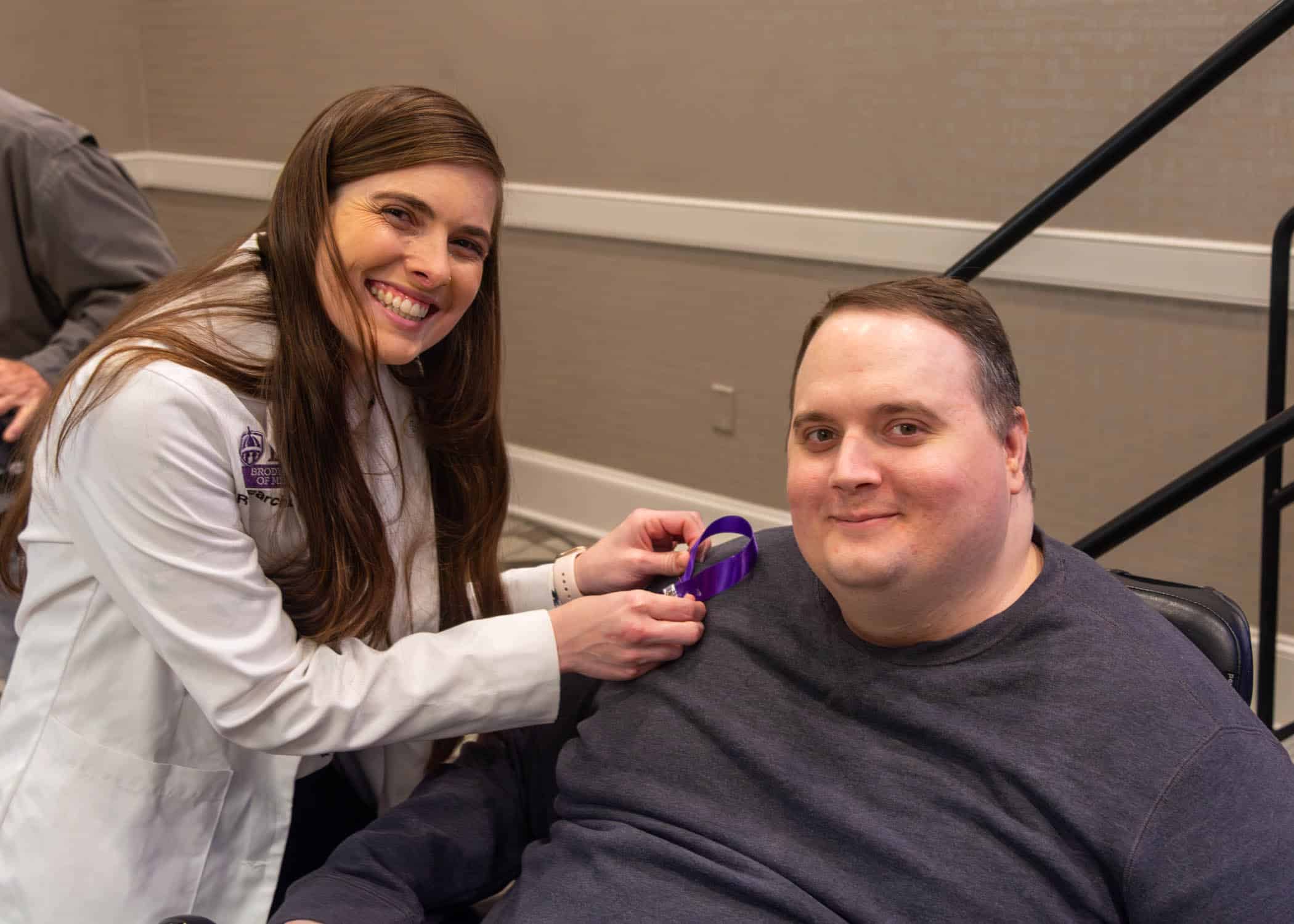
Haley Behm was completing one of her first rotations in the Brody School of Medicine at East Carolina University at an outpatient clinic when Cleve Smith showed up for a routine check-up with his father, Emmett Smith. Cleve, a wheelchair user, has seen his fair share of medical students come through the clinic throughout his visits over the years but this was his first time working with Behm.
As a medical student with limited patient interactions, Behm was nervous about how she would connect with one of her first real patients, let alone her first patient with a disability. But when she met a lighthearted, humorous father-son duo in the patient room, she felt a little more at-ease.
“I was running through a depression and anxiety screening, and I got to a question where it asked ‘Have you ever been so restless you couldn’t sit still?’” Behm recalled. “I felt so bad even having to ask him that question.”
A question that Behm initially dreaded having to ask turned in to the start of a punchline for Cleve and Emmett, and it’s one they’ve practiced more than once.
“Haley has been really sweet, and I haven’t forgotten her since the first time we met,” said Cleve. “I could see that question really bothered her because I laughed and she didn’t immediately. So I wanted to assure her everything was fine.”
Added Emmett, “Through the years we have met many medical students at the clinic, and the one I remember is Haley. She had such a kind, caring demeanor. She really cared about Cleve’s feelings and what she could do to help him.”
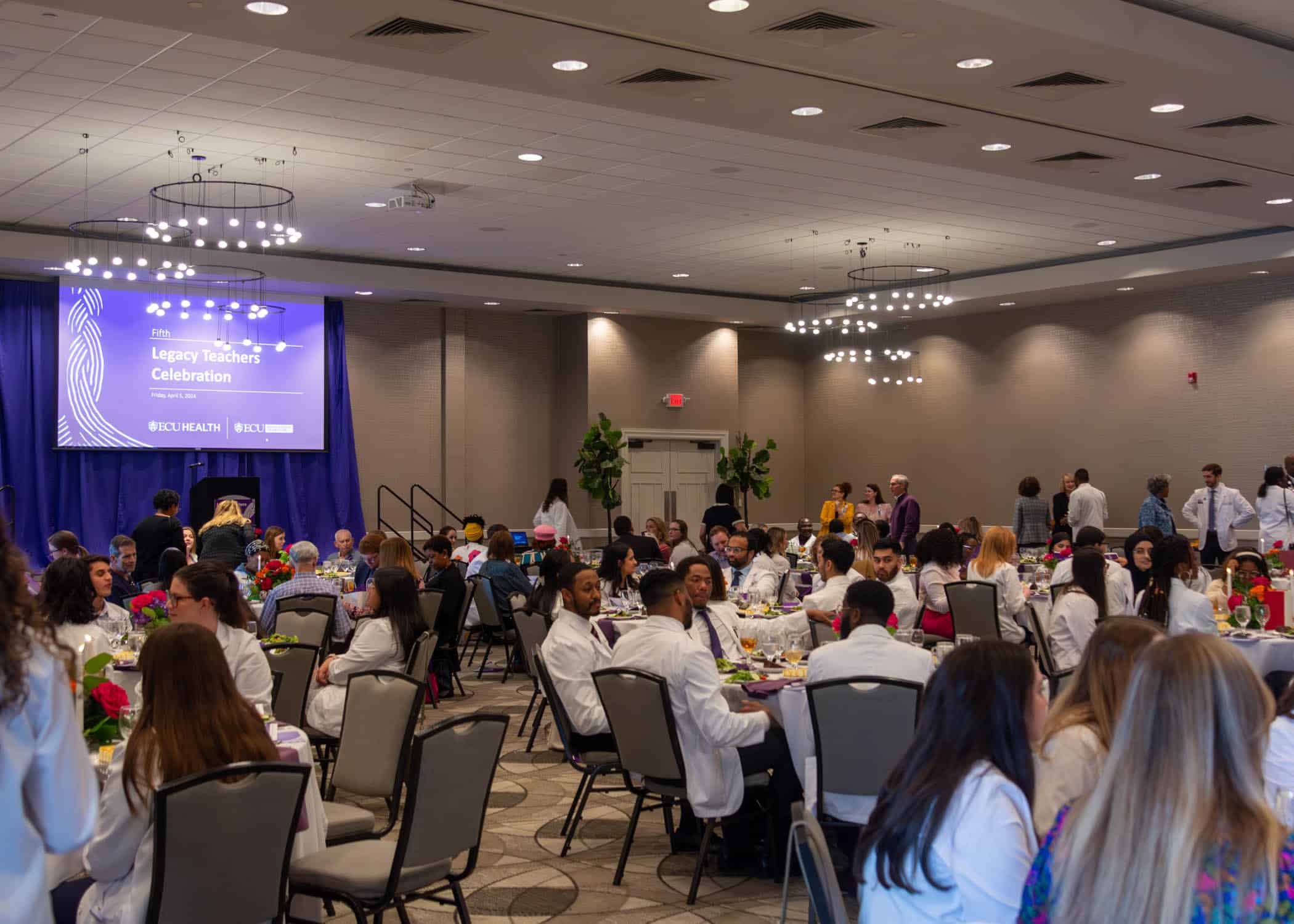
Behm’s connection with the Smiths was just one of the powerful stories shared at ECU Health and Brody’s fifth annual Legacy Teachers Celebration on April 5. At the Legacy Teachers Celebration, third-year medical students share their experiences in the forms of short stories, poems or videos that honors patients who taught them valuable lessons – the type that can’t be learned in the classroom but can last a lifetime. The event also provides an opportunity for students to reunite with their Legacy Teachers and honor the special connection.
“The stories we hear at the Legacy Teachers Celebration are really emblematic of the types of experiences our students have here at the Brody School of Medicine and ECU Health,” said Dr. Jason Higginson, executive dean, Brody. “Medical students learn so much important information in the classroom and on clinical rotations, but sometimes the most impactful lessons they learn come from those they have the honor of caring for. It’s so gratifying to see our students reconnect with the patients who left a lasting impact on their journey toward becoming a physician.”
For Behm, her experience with the Cleve and Emmett gave her a different perspective on her role as a patient advocate, especially for patients with disabilities who may face difficulties accessing the care they need.
“Patients with disabilities have various accessibility needs, which may not be evident before a visit. It is important to be flexible and modify plans, exams and surroundings,” said Behm.
In total, 22 medical students shared their stories at the Legacy Teachers Celebration, which featured gift baskets, a photo station, lapel pins and remarks from ECU Health and Brody leaders – all designed to create a memorable experience for students and their legacy teachers.
Dr. Michael Waldrum, CEO of ECU Health and dean of Brody, provided remarks at the celebration along with Dr. Higginson. Like the students, they shared their deeply personal stories of important lessons they learned as students.
The speakers shared common themes around the importance of positive, trusting relationships between patients and care teams.
“The relationship between a physician and a patient is a sacred one,” said Dr. Waldrum. “Each patient we interact with provides us an opportunity to reflect on who we are and why we do what we do. For these medical students, who are driven by their passion to make a lasting difference in the lives of others, this event provides them with an opportunity to reflect on the legacy teacher that made a difference in their educational experience.”
While Cleve, Behm and Emmett were able to reunite at Legacy Teachers and share their story and learn of other stories, Behm expressed how important the Legacy Teachers Celebration is to reflect on the lessons learned from patients.
“The biggest part of Legacy Teachers is I have something to learn from all of my patients,” Behm said. “And some make the lessons easier than others.”
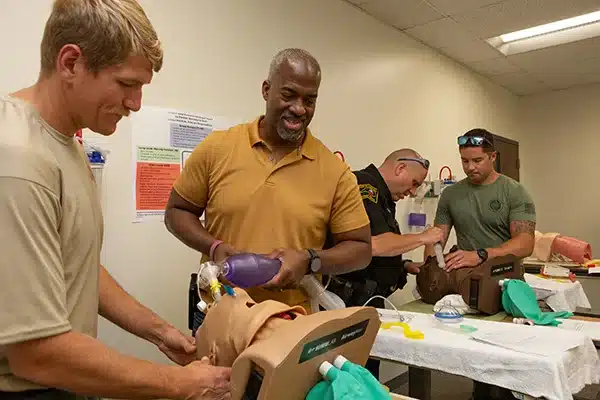
The clinical simulation center at East Carolina University’s Brody School of Medicine is usually peopled with fresh-faced students in scrubs and running shoes with tousled college-kid hair.
During the first week of the fall 2023 semester, however, the trainees in the school’s simulation center wore T-shirts with state trooper logos and utility belts on their hips.
On Aug. 23, the Brody simulation center welcomed more than 40 members of North Carolina’s law enforcement and first responder community to refresh their medical skills ranging from how to treat burns and heart attacks to the basics of assisting in an unplanned birth on the side of the highway.
Sean Johnson is North Carolina’s State Highway Patrol (SHP) director of training and manages more than 1,700 state troopers who need medical refresher training annually to stay qualified for their positions. Johnson, who worked the road for years before assuming his new role, knows from first-hand experience that being proficient in basic emergency medical response as a law enforcement officer is crucial because a car accident or other catastrophe could literally be just around the corner.
The highway patrol’s medical director — a doctor who oversees nine state government agencies including the Office of the State Fire Marshal, State Bureau of Investigation and Wildlife Resources Commission — has statewide jurisdiction to render medical care, making the SHP unique among first responders in North Carolina.
Johnson said that one of his urgent concerns is making sure that troopers are able to provide medical care before EMS workers arrive because of the uptick in the number of assaults on law enforcement officers in recent years, which might result in troopers rendering aid to those who tried to assault them. About a month ago, Johnson said, a law enforcement officer stopped to help a motorist change a tire and was shot by a career criminal.
“His vest saved him; He shot him with a .44 Magnum. But as soon as the trooper shot the suspect, he transitioned into patient care and tried to treat the guy. That’s the way we train them,” Johnson said.
The more common occurrences of vehicle accidents can be no less stressful and could require a Swiss army knife of medical response skills on a daily basis.
“You could go around a curve and there is a car wrapped around a tree and 911 has not even been activated so you’re talking about 10 to 15 minutes of waiting or treating somebody by yourself until higher level care gets there,” Johnson said. “Keeping these folks trained with the ability to deliver patient care is very important and we’re trying to grow our system.”
Johnson said one of the skills that annual training, like his troopers received at Brody, has improved upon is helping law enforcement to distinguish between a person who is experiencing a medical emergency, like a stroke or medicine imbalance, rather than being impaired behind the wheel.
“Troopers may stop somebody they think is drunk when they’re having a diabetic emergency or won’t respond, they may be having a complex partial seizure,” Johnson said. “Training in a controlled environment, where feedback can be given, is a game changer for public safety.
“The community is very appreciative when they get to see a side of a trooper that they’re not expecting. This is definitely beneficial to everybody.”
Value of training
Joe Bright Jr. spent most of his career with the State Highway Patrol protecting the N.C. State football team and its coach, but he bleeds purple and gold. He was an outside linebacker for the ECU football team in the run up to the Peach Bowl win in 1992 and after graduation was hired to provide security at the Brody School of Medicine while he completed law enforcement training. After a year with the ECU Police Department he moved to Raleigh and started working as a state trooper.
Bright said the training he received prepared him for the few instances where he was called upon to provide medical aid in uniform, but as a public servant his responsibility to the public didn’t end when he took his uniform off.
“Ask my wife. When I’m at Walmart or on the side of the road, just knowing what to do when someone has a medical emergency is important,” Bright said. “I use these skills for my safety team at church. Anytime we learn as officers and first responders the best thing for us to do is share that knowledge.”
Rebecca Gilbird, administrative director of Brody’s clinical simulation program, said the school has been working for several years to partner with the highway patrol to get troopers into the school for refresher medical training. The training is a public service that meet’s Brody’s mission of caring for the people of eastern North Carolina.
Brody’s simulation program is usually booked a year in advance because it primarily exists to train ECU medical and allied health students, medical residents and hospital staff, so getting a free day to accommodate law enforcement and first responder training is a rare luxury, Gilbird said.
“We started working with the state highway patrol last November; that’s how long we’ve had this on our calendar. We reserved the date and they’re coming back in November to do another round,” Gilbird said.
Benefit for the state
Lee Kennedy works for the Office of the State Fire Marshal. For his day job he assesses response capabilities of fire departments across a broad swath of southeastern North Carolina. He is often deployed to support state agencies during hurricanes and other natural disasters. In his spare time, Kennedy volunteers as a fire chief in Faison.
“In my six years working for the state I’ve had it a couple of times where we’ve ended up having somebody get too hot or somebody having chest pains,” Kennedy said.
Kennedy said the dynamic mannequins used in medical training scenarios at Brody — the ones that respond to questions and present trainees with true vital signs — makes training more realistic and valuable to law enforcement and other state workers.
“Normally it’s just talking through situations or treating a mannequin that doesn’t respond so that was actually pretty cool,” Kennedy said.
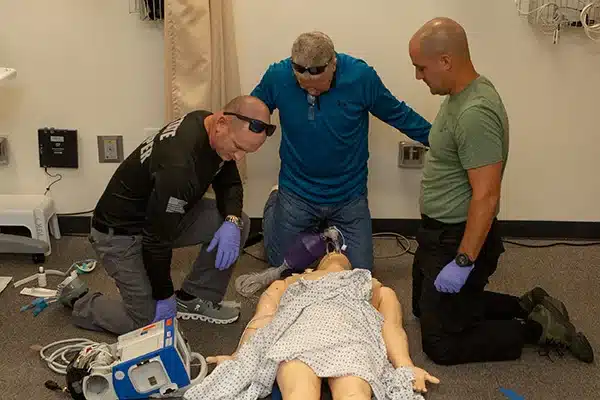
Bright, the state trooper who finished his career as the first sergeant of the SHP Training Academy, said that while it’s not the primary responsibility of law enforcement to provide first aid in the field, the confidence that comes from keeping basic skills refreshed is invaluable, particularly in rural areas of the state.
“Some officers may be the first one on the scene and knowing what to do for someone who needs medical attention makes us feel that much more confident in our work,” Bright said.
Kimberly Farmer is relatively new to the highway patrol, having worked more than three years in Harnett County where she grew up, but has been an EMT for more than seven years. While the county is fairly rural, Farmer said, first responders usually make it to incidents that require medical intervention before she does. However, being trained and having periodic refresher training like the kind she received in Brody’s simulation center, gives her confidence to know how to care for those in dire medical circumstances.
“We’ve gone through a ton of scenarios in the short time that we’ve been here this morning. We really hadn’t been able to do this in the past couple of years which COVID played a large part in,” Farmer said.
Gilbird, the simulation center director, takes pride in helping members of another state agency be ready to care for those in need.
“It makes me feel good that we have trained personnel out there. If I get in a wreck or my parents get in a wreck — we’ve trained them,” Gilbird said.
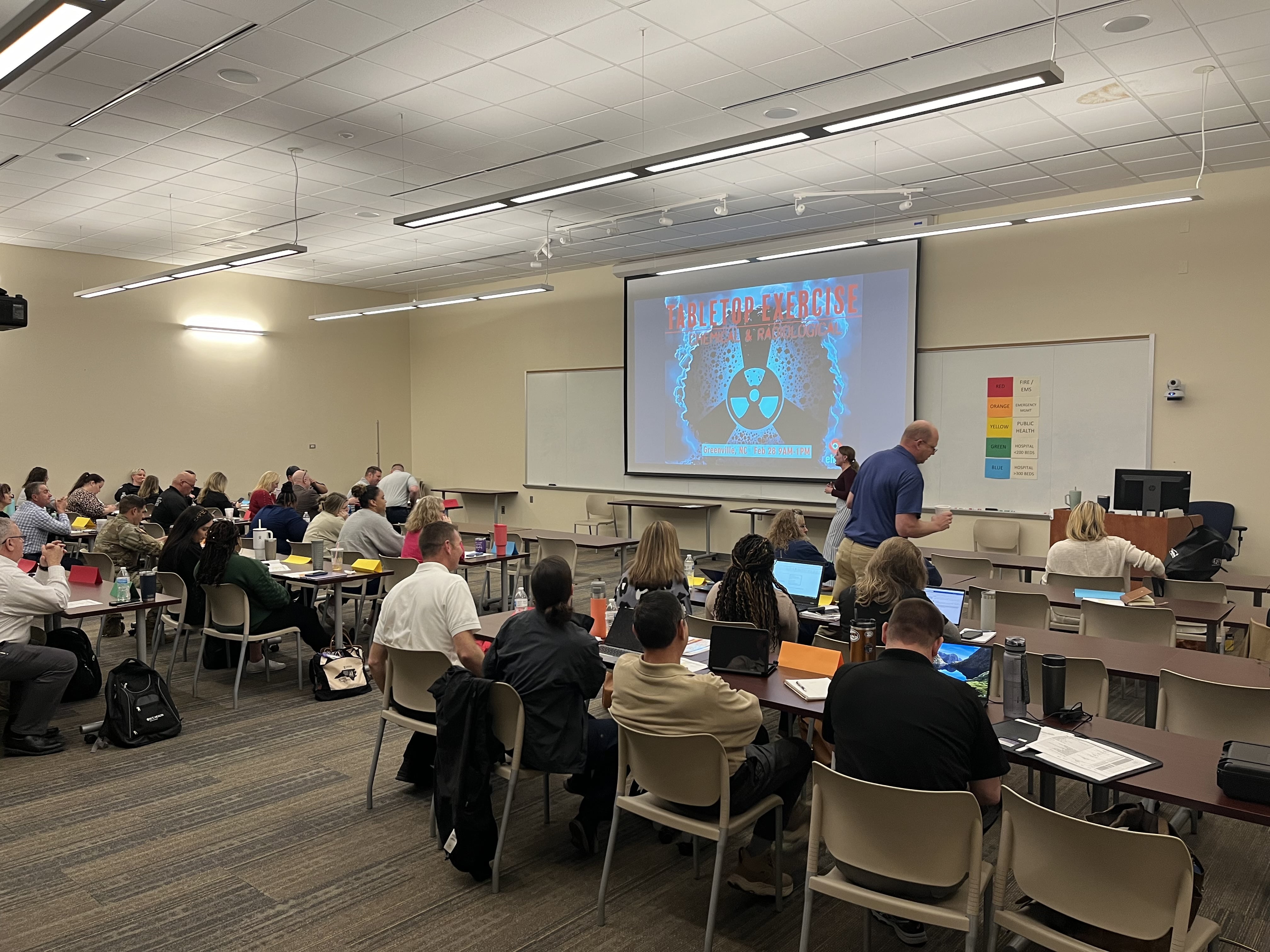
The Eastern Healthcare Preparedness Coalition (EHPC) recently hosted a regional chemical and radiological tabletop exercise at the ECU Health Monroe Center with local and state partners, including those from hospitals, EMS, EastCare, public health, emergency management, hazmat teams from the Williamston Regional Response Team, and specialists from the 42nd Weapons of Mass Destruction Civil Support Team.
The tabletop exercise – intended to help ensure joint response coordination in response to a large-scale chemical or radiological event – included a brief training session followed by a plausible scenario that led to discussion of possible outcomes and discovery of gaps in preparedness planning.
Following the exercise, an after-action plan will be developed, followed by measures to ensure areas of opportunity are addressed.
The goal, according to event organizers, is to ensure all agencies are best prepared to serve the community.
“The tabletop was a fantastic opportunity to collaborate with partners and learn more about regional capabilities available to respond to a radiological incident,” said Christa Radford, Industrial Hygiene Consultant – Eastern Region at the North Carolina Department of Health and Human Services Public Health Preparedness and Response. “EHPC did a great job planning this exercise and bringing the correct response partners together for an extremely successful event.”
EHPC is a multidisciplinary team of medical and nonmedical professionals, established to provide mobile medical support for short and long term disasters or catastrophic events in eastern North Carolina. Roles in which the EHPC can provide support include set up and provision of a mobile field treatment facility, regional and state logistics support, and community alternate care site support.
As the leading health care provider in eastern North Carolina, ECU Health supports EHPC’s mission, in close partnership with other regional and statewide emergency response partners. These partnerships are essential to helping ensure communities across the East have access to high-quality resources and health care, particularly in the event of a disaster situation.
“I feel this exercise was crucial for our disaster preparedness and response,” said Nat Gladding, manager of Hospital Operations at ECU Health Beaufort Hospital. “It helped us assess our readiness, opportunities, and improve coordination between emergency response agencies. The exercise simulated a real-life scenario, allowing agencies the opportunity to practice their regional response to a disaster of this nature. Participation in disaster drills and exercises promote enhancement of our response for the communities of eastern North Carolina.”
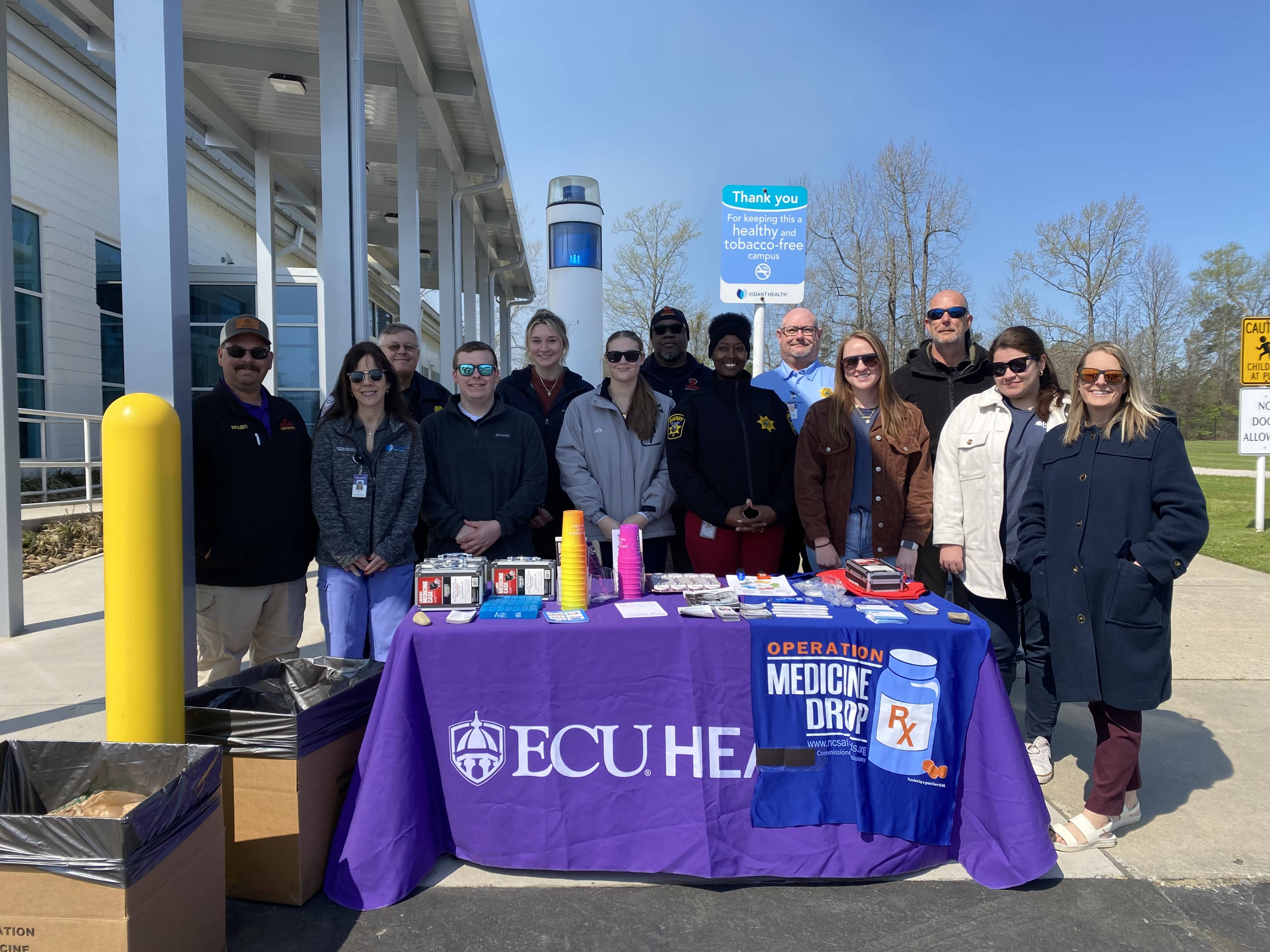
ECU Health, Safe Kids Pitt County, Pitt County Coalition on Substance Use (PCCSU) and Pitt County Sheriff’s Office teamed up to host Operation Medicine Drop, an event where the public can dispose of expired, unused, or unwanted prescription drugs or over-the-counter medications. The event at ECU Health Wellness Center on Tuesday, March 19, collected over 200 pounds of medication to be incinerated.
“Operation Medicine Drop began with Safe Kids and this event a resource for us to protect our waterways because we do not want families to flush medications because it will go into our water systems,” said Ellen Walston, Injury Prevention Program coordinator at ECU Health. “It also was a way to keep children safe. Children are curious. They want to learn the world. They are curious climbers, they will pull a drawer out and step in it to be able to reach whatever they are looking for, so we really want to emphasize safe storage. Up, away and out of sight.”
Operation Medicine Drop serves to protect our children, our community and our waters. More than 67,000 children go to an emergency room for medicine poisoning each year, according to a study by Safe Kids Worldwide.
Operation Medicine Drop offers the public a free and convenient option for disposing of their prescription and over-the-counter medications to protect their families and the environment. Since 2010, Operation Medicine Drop campaigns have successfully incinerated more than 266 million pills collected through permanent drop boxes and more than 4,000 events across North Carolina.
“Medication disposal events are a great way to keep the community safe,” said Lillie Malpass, executive director at PCCSU. “Safe storage and disposal keep these medications out of unintended hands of youth and children. We were really happy to partner with community organizations to provide resources for the community, including lockboxes for medications.”
According to Walston, most local sheriff’s offices and police departments and some fire departments maintain permanent medication drop boxes for those who missed the event.
Operation Medicine Drop is a partnership between Safe Kids North Carolina, the North Carolina Department of Justice, the Drug Enforcement Agency and the State Bureau of Investigation.
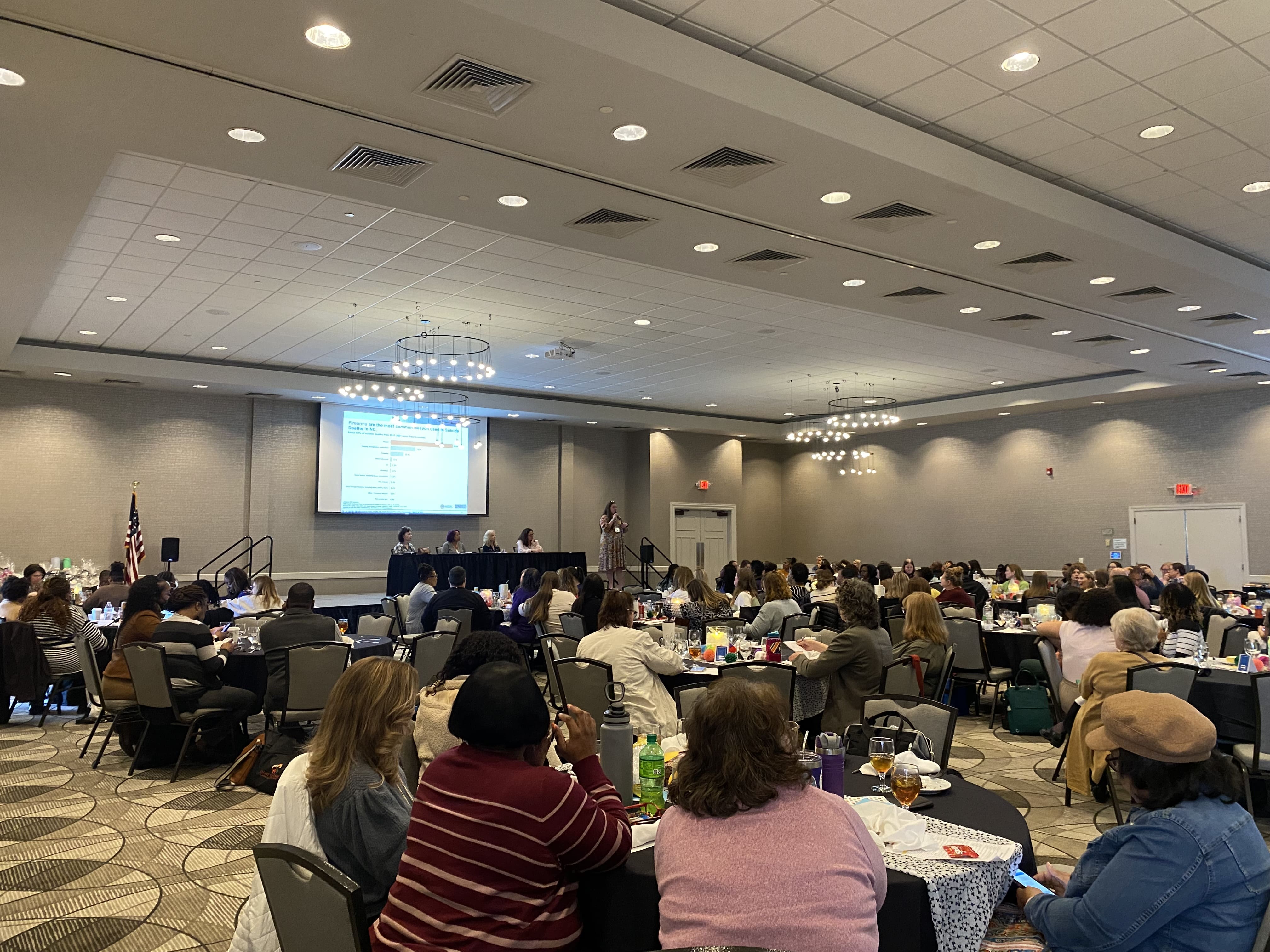
ECU Health’s Eastern Carolina Injury Prevention Program (ECIPP), through funding by the North Carolina Department of Health and Human Services (NCDHHS), hosted a youth mental health conference for professionals across the state. The event, “Light the Flame: Igniting Hope for North Carolina’s Youth” drew over 250 attendees from a variety of professions including teachers, coaches, school counselors and mental health professionals.
Some of the topics covered included supporting the mental health and well-being of yourself and others, clinical assessment and intervention, safe firearm storage to prevent suicide by firearms, substance use, social media in connection to youth mental health.
“In our youth, suicide stands as the second leading cause of death, with a staggering 31% increase in suicide attempts in 2021,” said Dr. Shannon Longshore, medical director, ECIPP, pediatric trauma surgeon, ECU Health. “There’s an urgency in all of us who work with kids to find solutions and take care of them. We have to focus on prevention rather than recovery and treatment, and conferences like these can help us begin to move the needle.”
While the event drew attendees from across the state, most came from right here in eastern North Carolina.
“This is a great opportunity to provide further education and a chance for professionals from across the state to network and share experiences,” said Breanna Culler prevention coordinator, ECIPP. “Having this event in Greenville allows us the opportunity to bring resources home.”
Multiple vendors attended the event to connect attendees with resources, including Youth Mental Health First Aid, Rural Opportunities Institute, 988 Suicide & Crisis Lifeline, NC School Health Training Center, Resources for Resilience and more.
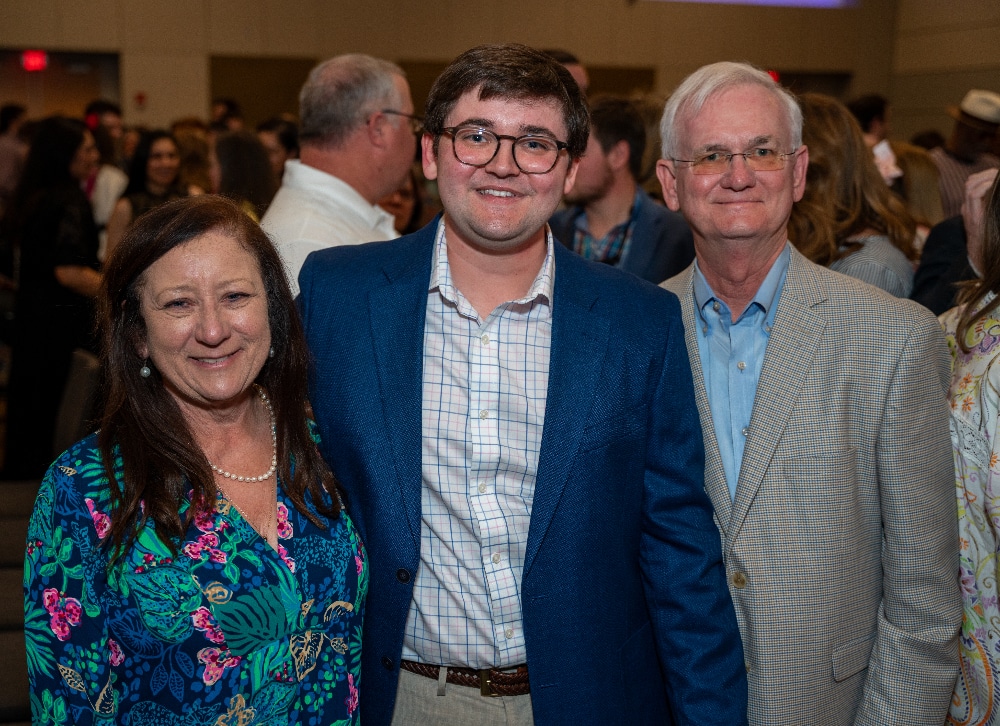
On March 15, medical students across the country celebrated Match Day as they learned where they will spend their residency training as they continue in their physician journey. Locally, all 79 students in the Brody School of Medicine at East Carolina University Class of 2024 matched, including 14 who will stay in eastern North Carolina to continue their training at ECU Health Medical Center.
Dr. Jason Higginson, chief health officer of ECU Health and executive dean at Brody, said the match statistics of this class reflect Brody’s commitment to leading the way in training primary care providers for the state, as more than half of the medical students matched in North Carolina and 43 of the 78 matched into primary care residencies.
“We have a 100% match rate, well above the national rate, which is also a testament to our faculty and staff,” Higginson said. “About 50% of our graduates are staying in North Carolina, which is our primary mission, and about 20% are staying locally. They are great kids. It’s one of our best classes ever.”
William Taylor matched with ECU Health’s Family Medicine Residency. Taylor is also an ECU alumnus in both undergraduate and soon-to-be medical school. He said growing up in a smaller town made him connect with the needs of eastern North Carolina.
“It has grown a lot now, but when I was growing up, Garner didn’t have as many resources as a big city like Raleigh, and I wanted to impact people in small communities like where I grew up,” said Taylor. “Greenville is my second home, and I want to learn to treat people in North Carolina and eastern North Carolina and make an impact on this area.”
Taylor is excited to continue in Greenville and complete his residency in family medicine and continue to build relationships with patients across the region.
“I want to do family medicine because it gets you closest to the patient where you can build those relationships and interactions over long periods of time and make a real impact on patients and their lives and their families,” said Taylor.
Growing up in eastern North Carolina made the Match Day moment of opening their envelopes even more exciting for a couple of ECU Health matches from Brody.
Nolan Davis is from Duplin County and has fond memories growing up in a small town being close to his family. His mother, Bernice, said Davis made a poster in the second grade that showed he wanted to attend Brody and become a doctor in eastern North Carolina. Davis is one step closer to that goal after matching with his number one choice, internal medicine – pediatrics at ECU Health.
“Eastern North Carolina is a wonderful region, and it’s underserved,” said Davis. “My family lives here, good people live here that all deserve high-quality health care, and Brody is good at getting us to do that. I have seen how hard it is to get a doctor in a small town, and I want to be part of the solution. I was born and raised in eastern North Carolina, and I plan to practice here after residency.”
Marsha Hairr is from Sampson County and matched to ECU Health’s Physical Medicine and Rehabilitation Residency program.
She said her personal experience with physical therapy growing up drove her interest in that area of medicine and her upbringing makes it a joy to serve the region.
“I grew up in a very small town and rural area,” Hairr said. “Even though Greenville and ECU Health is a bit bigger than where I grew up, it still has a rural vibe. It feels like home and I feel so honored that I can continue my training here and meet the mission of fellow eastern North Carolinians.”
For Julia Horiates, who matched into ECU Health’s Emergency Medicine Residency program, the opportunity to continue serving eastern North Carolina in the fast-paced world of the Emergency Department was a dream come true.
She spent most of her childhood in eastern North Carolina and has worked and volunteered as an EMS in Pitt and Greene counties for about 10 years. As a 2017 graduate from ECU and an upcoming Brody graduate, Horiates is proud to be a “triple Pirate.”

“I’ve hit the trifecta now, undergrad, medical school and residency,” Horiates said. “Giving back to a rural community and being involved here still is so special to me. That’s one of the main reasons I wanted to stay. I’ve been able to see how much this community has grown and how much of an impact ECU and ECU Health have had on this community. Being able to be a part of this, and a physician in this community is so important to me.”
Keeping bright minds in eastern North Carolina has long been a priority for ECU Health CEO and Brody Dean Dr. Michael Waldrum. He said a Brody education uniquely prepares future physicians to provide high-quality rural health care, and the training they receive can have an immense impact across the rural region ECU Health serves.
Dr. Waldrum said he’s not surprised that so many Brody graduates find their calling in eastern North Carolina.
“I like to think that all physicians share a common passion for wanting to make a positive difference in the lives of the people they serve,” said Dr. Waldrum. “Brody students get to spend four years here in eastern North Carolina learning about medicine, connecting with our community and experiencing first-hand the immense impact they can have on rural populations. We’re proud to know that many of our Brody students go on to make a difference in communities across the country, but we’re especially proud when we get to see it happen right here in eastern North Carolina at ECU Health.”
Learn more about Match Day for the Class of 2024 here.