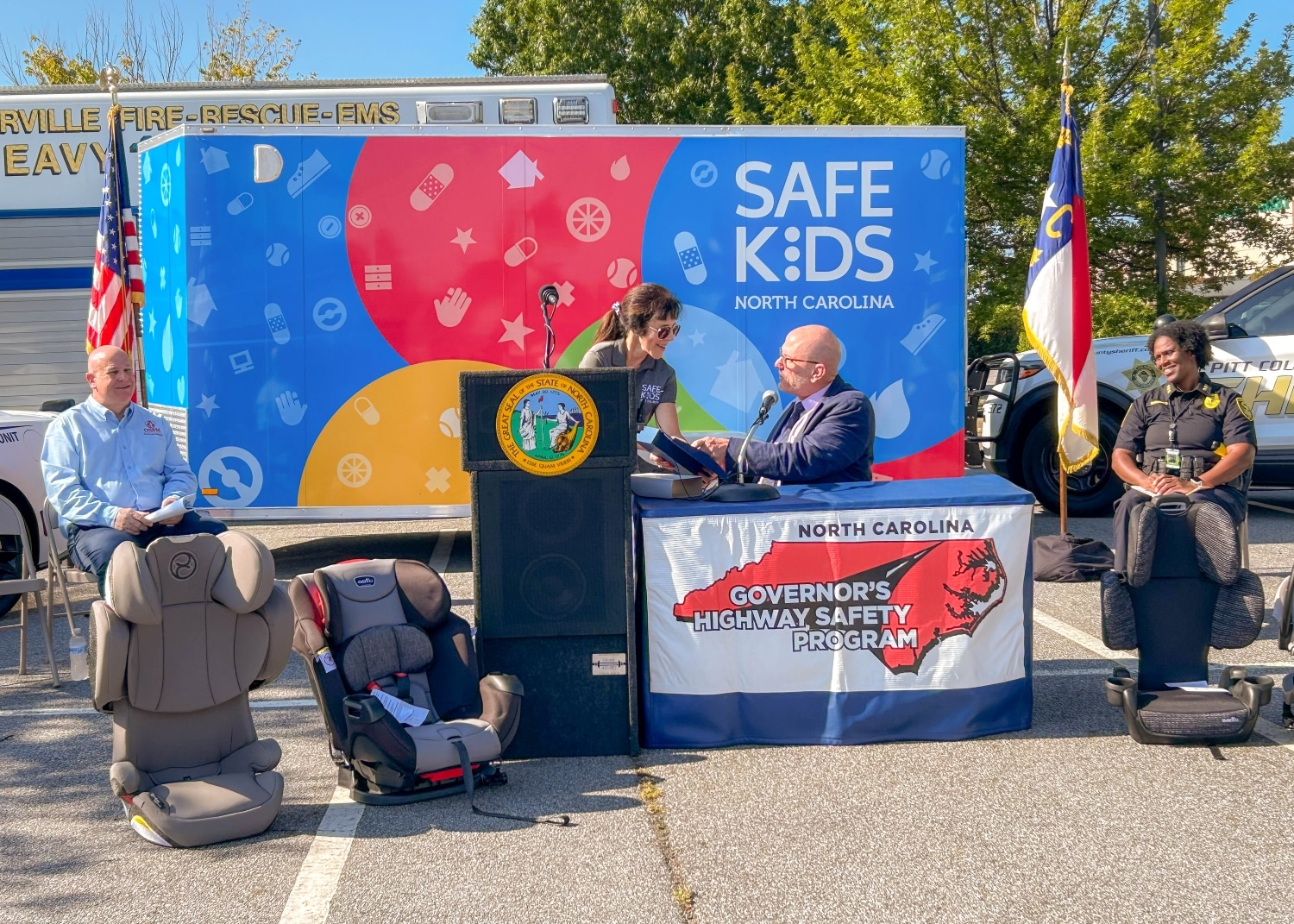
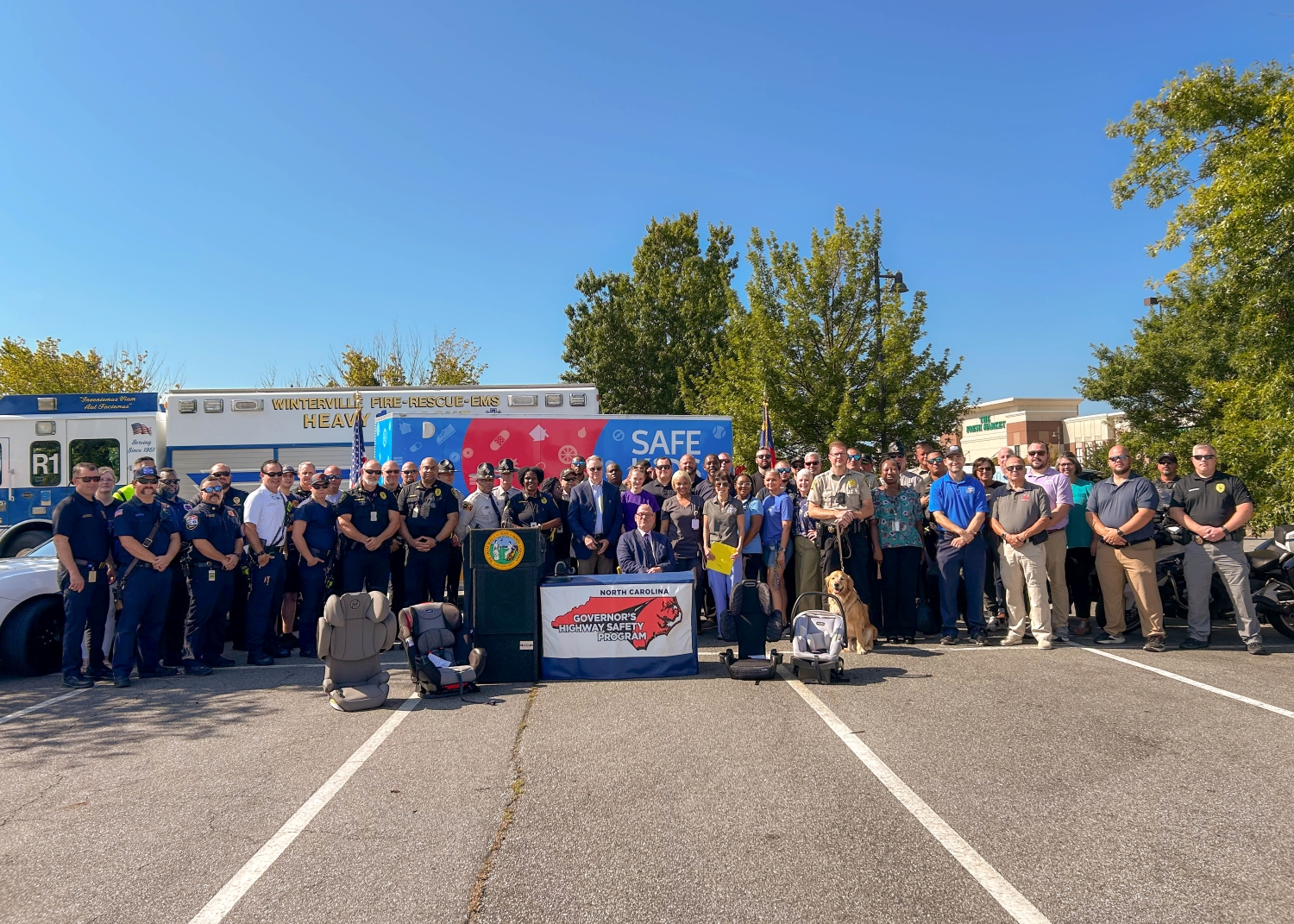
ECU Health joined state and local partners on Monday for a free car seat check event aimed at helping families keep children safe on the road.
The event brought certified Child Passenger Safety Technicians, Safe Kids Pitt County, Safe Kids North Carolina, the Governor’s Highway Safety Program, local law enforcement and fire/rescue agencies together in Greenville to provide free car seat inspections, education and safety resources for parents and caregivers.
Safety experts said properly used child safety seats can reduce the risk of death by as much as 71 percent, but many families are unknowingly placing children at risk because their car seats are not installed or used correctly.
“Unfortunately, we know that a large percentage of child safety seats have some type of installation or usage error,” said Ellen Walston, Safe Kids Pitt County coordinator and an injury prevention coordinator at ECU Health.
“Sometimes it’s a simple adjustment, but other times it can be a major issue that could impact a child’s safety during a crash. Our goal is to make sure every child leaves safer than when they arrived.”
The annual event serves as the official kickoff of National Child Passenger Safety Week, observed Sept. 21-27. Throughout the week, communities across the nation will host car seat inspections and educational outreach efforts designed to increase awareness about child passenger safety and proper vehicle restraint use.
Mark Ezzell, director of the North Carolina Governor’s Highway Safety Program, said child passenger safety remains a critical issue across the state.
“Last year in North Carolina, 231 children under the age of 14 were killed in motor vehicle crashes,” Ezzell said. “A significant portion of those children were either not properly restrained or were not restrained at all. Events like this help educate parents and caregivers and can make a real difference in preventing serious injuries and fatalities.”
Certified technicians at the event checked car seat installations, demonstrated proper restraint techniques and answered questions about selecting the right seat based on a child’s height, weight and age. Families without an appropriate seat also had access to replacement seats.
“Car seats don’t last forever,” Walston said. “Most seats expire after about six years, and factors like heat, storage conditions and everyday wear can affect their performance. We also discourage people from purchasing used seats from online marketplaces or yard sales because you don’t know the seat’s history.”
Allan Buchanan, director of Safe Kids North Carolina, encouraged parents and caregivers to take advantage of free car seat inspection services available year-round throughout the state.
“A lot of parents think they’ve installed their car seat correctly, but there can be small mistakes that make a big difference in a crash,” Buchanan said. “Why risk it? We have permanent checking stations across North Carolina where certified technicians can help ensure children are riding as safely as possible.”
The most common mistakes include loose fitting straps, incorrect seat angles and LATCH (Lower Anchors and Tethers for Children) errors.
Safety experts also emphasized that choosing the right type of restraint is just as important as proper installation. Children should remain rear-facing as long as possible, transition to forward-facing seats with harnesses when appropriate and use booster seats until a vehicle seat belt fits them correctly.
For Walston and her team, the mission goes beyond a single event. The Eastern Carolina Injury Prevention Program at ECU Health has served families for more than 30 years and has checked more than 100,000 child safety seats since its inception. The program has also distributed more than 20,000 car seats to families in need.
“We’re proud of the work we’ve done over the years, but there’s still more to do,” Walston said. “Every ride matters, and every child deserves to be protected. If we can help one family avoid a tragedy, it’s worth it.”
Parents and caregivers interested in finding a permanent child passenger safety checking station can visit buckleupnc.org/locations or contact their local fire department or injury prevention program for more information.
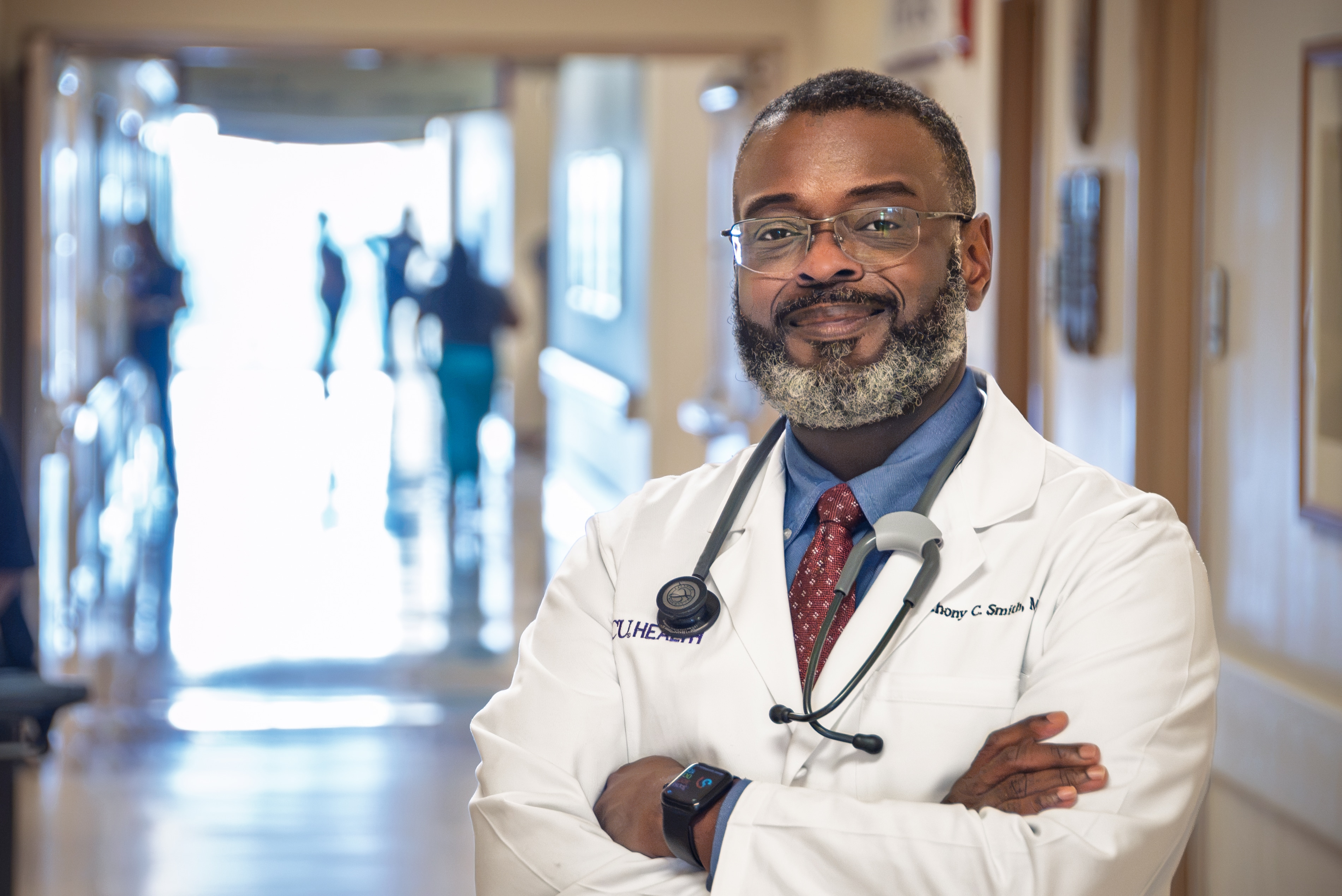
Dr. Anthony Smith has had a front-row seat throughout ECU Health Medical Center’s evolution. When he began his medical career in 1998 through the Graduate Medical Education (GME) program at ECU Health Medical Center, he found a place he would call home for nearly 30 years.
“When I was finishing medical school at the University of Alabama at Birmingham School of Medicine and applying for internal medicine residency programs, I wanted to find an academic program that was on the smaller side, one that felt like family. ECU Health fit that bill,” Dr. Smith said. “You will not find a hospital of this size in a community of this size anywhere else in the country.”
GME at ECU Health Medical Center began in 1976 with one residency program in family medicine. Over the past 50 years, the program has continued to grow and expand to develop the next generation of physicians across eastern North Carolina.
Today, the program features 38 residency and fellowship programs and trains approximately 460 residents per year. In 2025, the program saw 39 graduating resident physicians decide to continue practicing medicine in eastern North Carolina.
“We continue to see GME expand with new programs in electrophysiology, hospice and palliative care, neurology, ophthalmology and addiction medicine, specialties that we identified as needs now and moving forward that will train physicians to meet our community’s needs,” said Dr. Mary Catherine Turner, associate dean for GME at ECU Health Medical Center and the Brody School of Medicine. “Multiple factors are at play to support that kind of growth, but the most important guiding light is alignment with our mission to improve the health and well-being of eastern North Carolina.”
Dr. Smith has witnessed that growth over the years, in residency, as a GME educator and continuing in his career practicing medicine as a hospitalist at ECU Health.
“The growth of GME that I’ve witnessed over the last 28 years has been tremendous,” Dr. Smith said. “The program continues to add residencies and fellowships, which means as a health system we are better able to serve eastern North Carolina by growing the physicians in our footprint and bring more specialized care to the area.”
Dr. Smith grew up in rural Alabama and spent four years in Atlanta before medical school. He appreciated that Greenville was quiet, with less traffic and more opportunities to care for patients on a more personal level. In GME, he found the atmosphere of learning, and the relationships he made along the way instrumental to his decision to continue practicing medicine in eastern North Carolina. Over the years, he has served as the Chief of Staff at ECU Health Medical Center and local director for the hospitals program.
“I remember that our program director, Dr. Peter Lichstein, took care of us,” Dr. Smith said. “Leaders created a schedule and an environment that was conducive to learning, one that let us balance our life. Finding out how to balance working, learning and living is a challenge for GME programs that ECU Health Medical Center addresses by putting people first.”
Dr. Smith sees GME as more than a foundational program to teach physicians — the program also addresses essential health care needs across ECU Health’s 29-county service area by giving resident physicians and fellows hands-on experience treating patients in clinical environments across the ECU Health system.
“It’s rewarding and exciting to see the program continue to develop,” Dr. Smith said. “It really goes back to the sheer impact it has had on eastern North Carolina. We know there are rural areas in this country that don’t have these resources. Eastern North Carolina is fortunate to have an internal medicine program and all the other various programs right here, close to home. Residents and fellows actively training, as well as the physicians who decide to stay after they complete their residency, are extremely beneficial to this region.”
Moving forward, Dr. Smith sees GME’s growth alongside ECU Health Medical Center and the region as a necessary step toward progress. Alongside East Carolina University and the Brody School of Medicine, Dr. Smith said the health system’s growth is a clear indicator of GME’s role in fostering a positive working relationship and environment for physicians across the region.
“Right now, the opportunity is to live our mission and vision as a system and determine ‘How do we better serve the rural places in eastern North Carolina?’” Dr. Smith said. “As we continue to grow, we must continue to be committed to reaching those rural communities.”
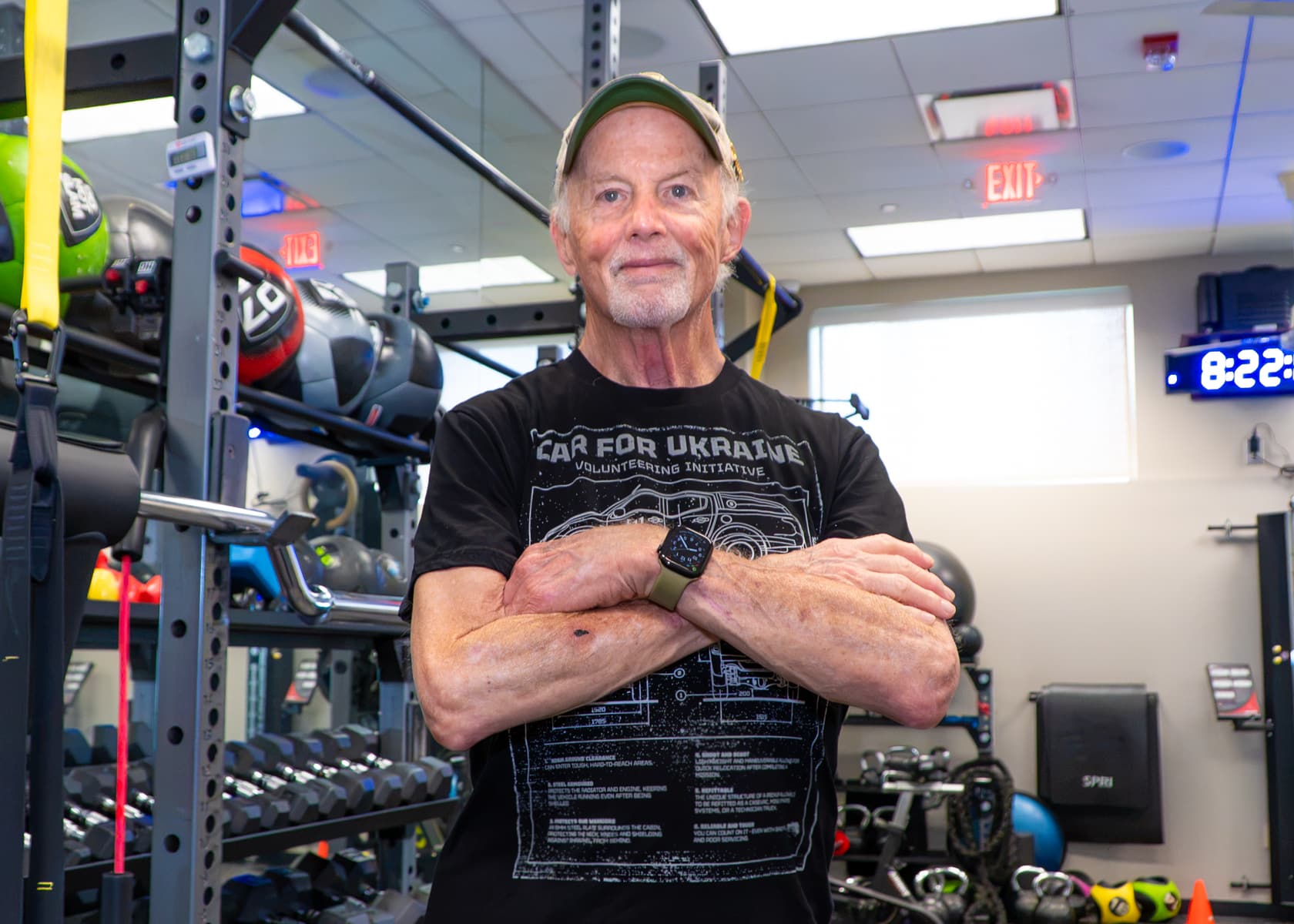
For most of his life, Robby McPhail has faced challenges head-on.
A Vietnam veteran, retired Army National Guard artillery officer, East Carolina University graduate and longtime business professional, McPhail has spent decades overcoming obstacles through discipline, perseverance and faith.
But nothing prepared him for the summer day in 2024 when a fall from a ladder left him paralyzed from the neck down.
“I never lost consciousness, so I knew exactly what was happening,” he said. “I was lying there on the porch, my phone within arm’s reach, and I couldn’t move anything. That’s a pretty sobering experience.”
Today, just over two years later, McPhail walks several miles a day, exercises regularly and is preparing to participate in ECU Health Rehab’s Run, Walk & Roll to Independence Race for the first time.
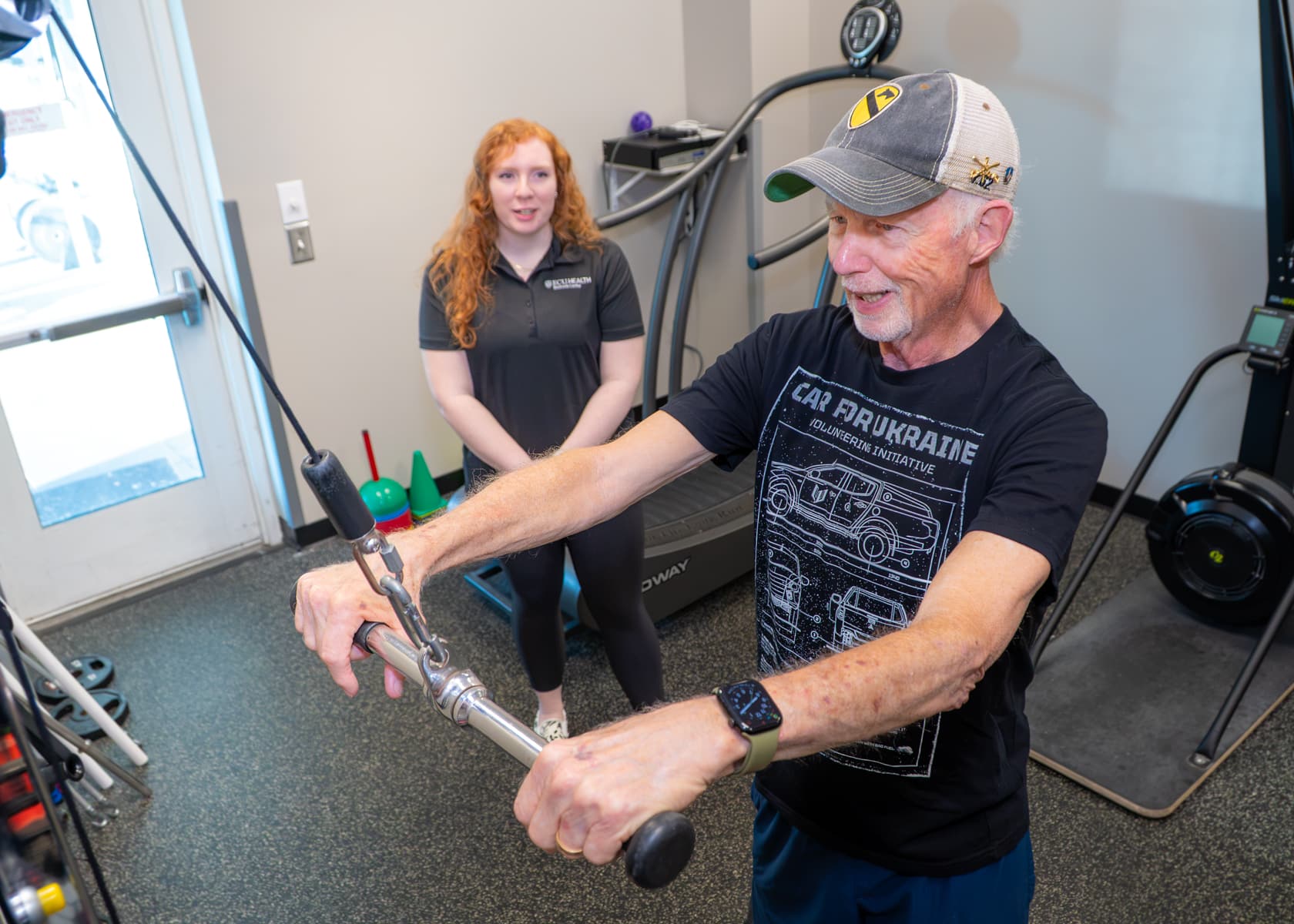
“It’s nothing short of a miracle based on what I came into the hospital with,” McPhail, 75, said. “I went from being totally paralyzed to getting my life back.”
The path to recovery began almost immediately. A retired labor and delivery nurse who lived nearby responded to his calls for help and emergency responders quickly transported him to ECU Health Medical Center.
Following surgery, McPhail began the long and challenging process of rehabilitation.
At first, even the smallest steps felt overwhelming.
During his inpatient rehabilitation stay, McPhail worked closely with physical, occupational and recreational therapists who helped him regain strength, mobility and confidence. Their expertise, encouragement and willingness to push him beyond what he thought was possible made a lasting impact.
“The professionalism of everyone I worked with was tremendous,” McPhail said. “They were knowledgeable, compassionate and always encouraging.”
Some of the most powerful moments of his recovery came from therapists challenging him to believe in a future beyond his injury.
One day, an occupational therapist told him she needed to measure him for a wheelchair.
“In my mind, that got my attention immediately,” McPhail recalled. “It motivated me to do everything I could to get back on my feet.”
Later, after transitioning to outpatient rehabilitation, a physical therapist delivered another challenge.
“She told me, ‘Next time you come back, don’t bring that walker,'” he said. “That walker had become my security blanket, but hearing that pushed me to keep moving forward.”
As he progressed through outpatient therapy, McPhail found himself surrounded by a team that celebrated every milestone while continuing to raise the bar for what he could accomplish. He credits the entire rehabilitation staff with helping him regain independence and restore confidence in everyday activities.
“When you’re going through something like that, you become very dependent on the people helping you,” he said. “They weren’t just providing therapy. They were giving me hope.”
Following outpatient therapy, McPhail was introduced to additional resources within ECU Health that helped him continue his journey to recovery. He began working with a trainer at the ECU Health Wellness Center, where he still exercises regularly, and became a patient of the ECU Health Lifestyle Medicine Clinic.
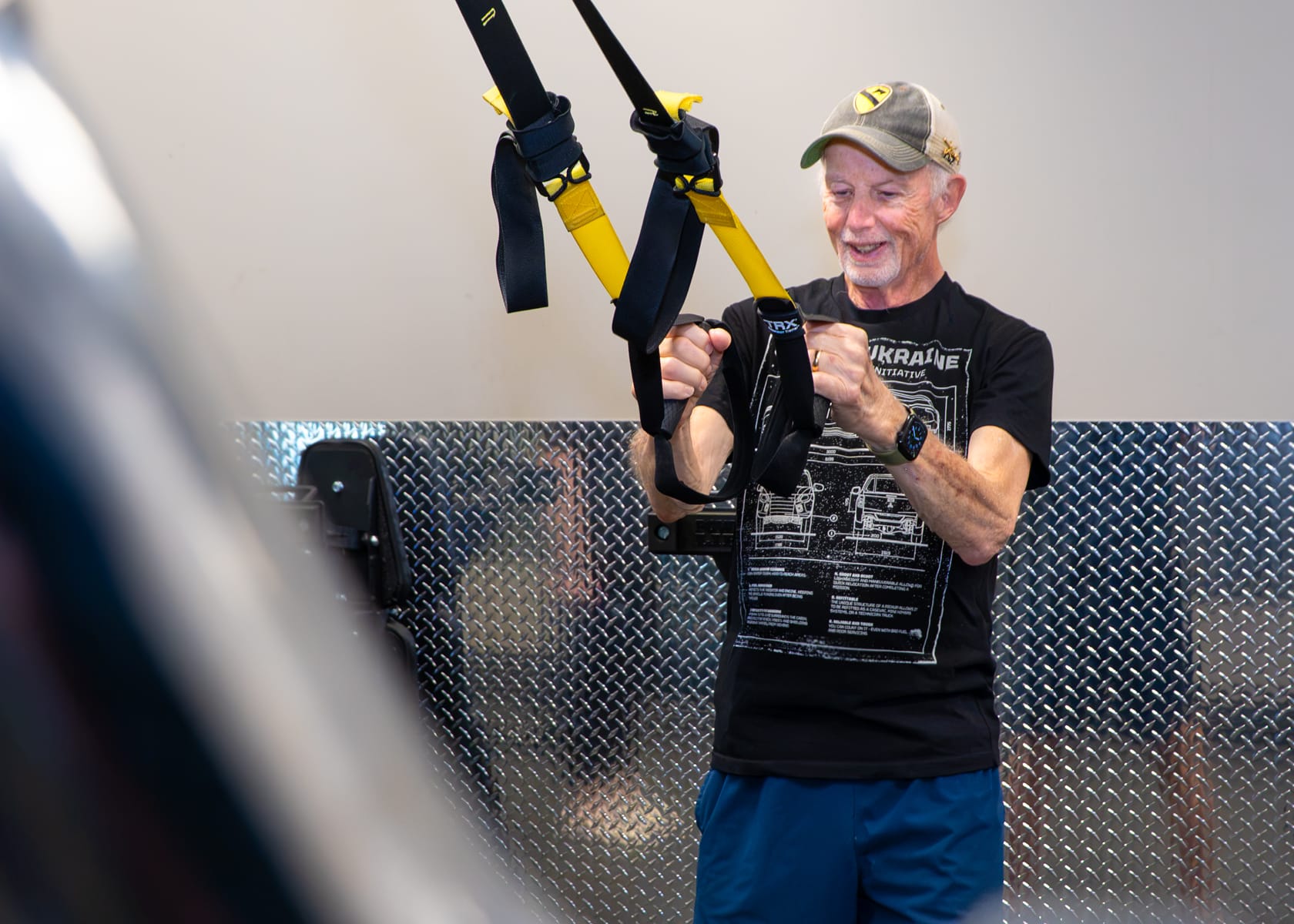
Together, the programs helped McPhail build healthy habits, improve his strength and endurance and manage chronic health conditions while continuing to recover from his initial injury.
“The Rehab team got me started, but the Wellness Center and Lifestyle Medicine Clinic helped me keep moving forward,” McPhail said.
Working with his wellness coach and Lifestyle Medicine providers, McPhail focuses on nutrition, exercise and overall wellness, developing a routine that has become a cornerstone of his recovery.
Today, he walks on the treadmill for an hour five days a week, regularly surpasses 10,000 steps a day and remains committed to maintaining his health and independence.
“I’m in the fourth quarter of life, and I want to play the whole fourth quarter,” McPhail said. “I want to stay active, independent and enjoy every day I’ve been given.”
Along the way, he has also found comfort and strength in his faith, family and community. He credits the prayers and encouragement of loved ones, along with the support of his rehabilitation team, for helping him navigate the physical and emotional challenges of recovery.
The progress has been so significant that rehabilitation staff have invited McPhail to share his story with current patients facing similar obstacles. He happily accepts every opportunity.
Whether speaking with patients or volunteering alongside staff, McPhail hopes his experience can inspire others who are navigating difficult recoveries of their own.
“If my story can encourage somebody else, I’m glad to do it,” he said. “When you’re sitting there facing the unknown, it helps to hear from someone who’s been through it.”
In addition, he volunteers on Thursday afternoons at ECU Health Outpatient Rehabilitation, a role he views as an extension of his recovery journey.
“It’s my way of giving back to the team of professionals who aided me in my recovery,” McPhail said.
That desire to give back is one reason McPhail immediately signed up when he learned about the Run, Walk & Roll to Independence race.
“This is the first year I’ve heard about it, and I signed up right away,” he said. “The Rehab team did so much for me. It’s a chance to support them and celebrate what they’re doing for people every day.”
As he prepares to join fellow patients, team members and community supporters at the starting line, McPhail hopes others will recognize the life-changing impact rehabilitation can have.
“The care I received, the professionalism, the encouragement, everything they did helped put me back together,” said McPhail.
For McPhail, the race represents far more than a community event. It’s a celebration of recovery, resilience and the people who helped him transform one of the worst days of his life into a story of hope.
“I’m thankful every day,” he said. “Thankful to wake up, thankful for the people who helped me and thankful that I can keep moving forward.”
To join McPhail at the Run, Walk & Roll to Independence race, please visit: www.ecuhealthfoundation.org/event/run-walk-roll-to-independence-5k-and-1-mile-fun-run-walk-2/
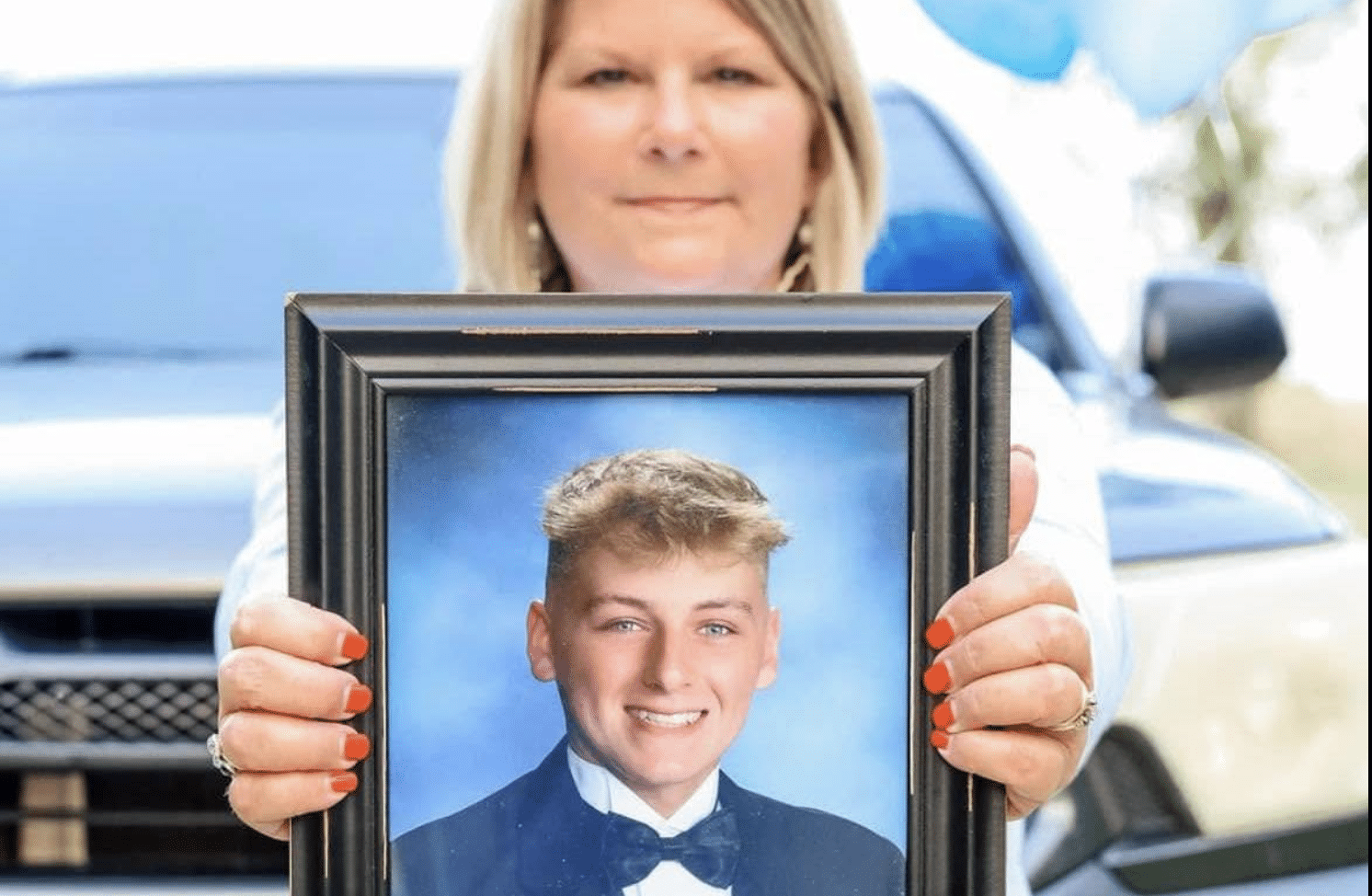
When Natalie Phelps talks about her son, Chase Bateman, she wants people to remember far more than the tragedy that ended his life. She wants them to remember an outdoorsman, a beloved family member and his bright, blue eyes that spoke volumes even in the hardest times.
At age 19, Bateman was the youngest of four siblings.
“He loved dirt bike riding, duck hunting, loved hanging out with his friends, spending time with family and was just a wonderful human being,” said Phelps. “He was kind. He was loving. He was handsome and a great uncle and son and brother, and he was just a good guy all around.”
On Oct. 17, 2021, Bateman was involved in a side-by-side ATV accident in Washington County and was airlifted by EastCare to ECU Health Medical Center. What followed were 23 days that would forever connect Bateman’s family and the caregivers who stood alongside them through every setback, every small victory and ultimately, every difficult decision.
As Bateman underwent multiple surgeries and intensive treatment for his injuries, his family held tightly to hope.
“The first few days, he was alert. He was able to answer questions, nod yes or no,” Phelps recalled.
“He had several surgeries, but it was just a lot of hit and miss. We didn’t know if he was going to make it from one day to the next.”
Despite the uncertainty, Phelps never stopped believing her son would recover.
“I really, truly thought that he was going to go home,” she said. “He was going to have a lot ahead of him with maybe more surgeries. But I really thought that he was going home.”
During those 23 days, Tori Myers, BSN, RN, trauma coordinator at ECU Health Medical Center, and countless others became much more than clinicians caring for a patient — they became a support system for Bateman and his family.
Myers vividly remembers meeting Bateman and his family.
“I walked in to find Natalie bedside,” Myers said. “And I got to hear Miss Natalie say, ‘Look at those bright blue eyes.’ That was one of the few things that when we talked about Chase and we talked to Chase, everybody wanted to see him open his bright blue eyes.”
Because Bateman was unable to speak, his eyes became a way for family and caregivers alike to connect with him.
“Chase was always intubated, always on a breathing machine his whole time in the ICU,” said Myers.
“He couldn’t talk and say words, so the way that we wanted to see Chase was through his eyes. And occasionally we could get him to smile and wake up.”
During Bateman’s time at the Medical Center, Phelps remembers the compassion shown by everyone who crossed their path.
“It was the nurses, the doctors, the respiratory team, the patient care techs, the nice lady that came in and would clean his room. I mean, just everybody was absolutely amazing.”
The care they received extended far beyond medical treatment.
“The very last night, one of the doctors came in and he loved old music, and she sat there and sang a song, one of his favorite songs to him,” Phelps recalled. “She played it on her phone and played the whole song and sang every word of the song to him.”
Myers said caring for critically injured trauma patients means also caring for the people who love them.
“It’s hard as an ICU nurse – especially as a trauma nurse – you want to be honest, you want to be truthful, and you want to make sure that when you advocate for your patient, you advocate for the family, too,” said Myers.
And for 23 days, that’s exactly what Bateman’s care team did.
“Some days it was happy news, and we celebrated that together,” said Myers. “Some days the news was a little harder to take.”
After 23 days in the hospital, Bateman succumbed to his injuries on Nov. 9, 2021.
For Phelps, the loss of her son remains immeasurable. Yet throughout the experience, she never doubted the care he received.
“There was never a question that he wasn’t given the care that he deserved, that he needed. Never questioned it,” she said.
Following Bateman’s death, the connection between the family and caregivers did not end. Phelps and her family continue to visit the team each year on the anniversary of Bateman’s passing, bringing treats and sharing memories. For Myers and the care team, those visits continue to have a profound impact.
“I can try to put it into words, but I don’t think that there’s enough words that really will ever quantify how much it means to know that those 23 days still meant so much to you guys and then instead of seeing us as a negative in his story, you see us as a positive,” Myers said. “It kind of refills your cup as a nurse.”
Today, Phelps hopes others facing difficult situations remember the importance of kindness.
“I know it’s hard when you’re in a situation like this to stay positive,” Phelps said. “There were days that it was just flat out hard. Remember to just be kind.”
Looking back, she remains grateful for the care team that helped her family navigate the most difficult 23 days of their lives.
“Thank goodness we have a good one to tell, even though our story didn’t end the way we wanted to,” Phelps said.
Ultimately, Phelps hopes people remember Bateman for who he was.
“He was just such a good, good human being,” said Phelps. “And I just don’t ever want him to be forgotten.”
If you would like to share a story of gratitude with the ECU Health team, please visit go.ecuhealth.org/grateful.
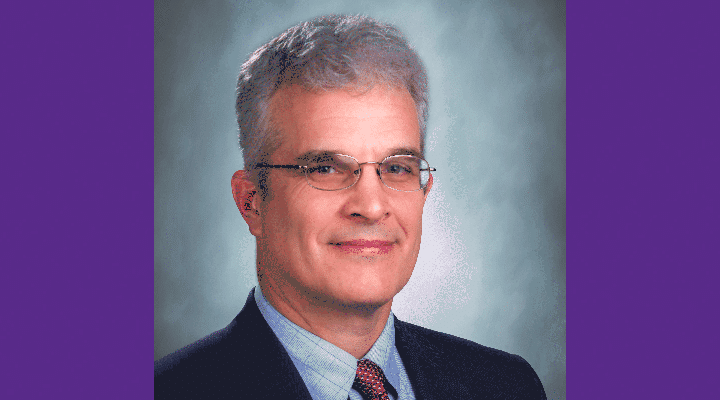
Tarboro, N.C. – After 30 years of service at ECU Health, including his role as president of ECU Health Edgecombe Hospital for the past eight years, Patrick Heins, DNP, MBA, RN, will retire effective Dec. 12, 2026.
“I am deeply grateful to Patrick for his steady leadership and decades of service to ECU Health and the communities we serve,” said Van Smith, president, ECU Health Community Hospitals. “Throughout his career, Patrick has demonstrated a strong commitment to nursing, operational excellence and rural health care, helping strengthen access, quality and patient experience in eastern North Carolina. His impact at ECU Health Edgecombe Hospital and across our system will be felt for years to come, and we wish him the very best in his well-earned retirement.”
Heins joined ECU Health in 1996 as a nursing assistant at ECU Health Medical Center. Over the course of his career, he advanced through a series of leadership roles across the health system, including serving as president of ECU Health Roanoke-Chowan Hospital before becoming president of ECU Health Edgecombe Hospital in 2018.
Heins has helped drive meaningful improvements across the communities he has served. Heins has a track record of leading his organizations to achieve noteworthy team and provider engagement scoring which enabled the development and growth of clinical services, operational performance, and numerous quality and patient experience awards and recognitions.
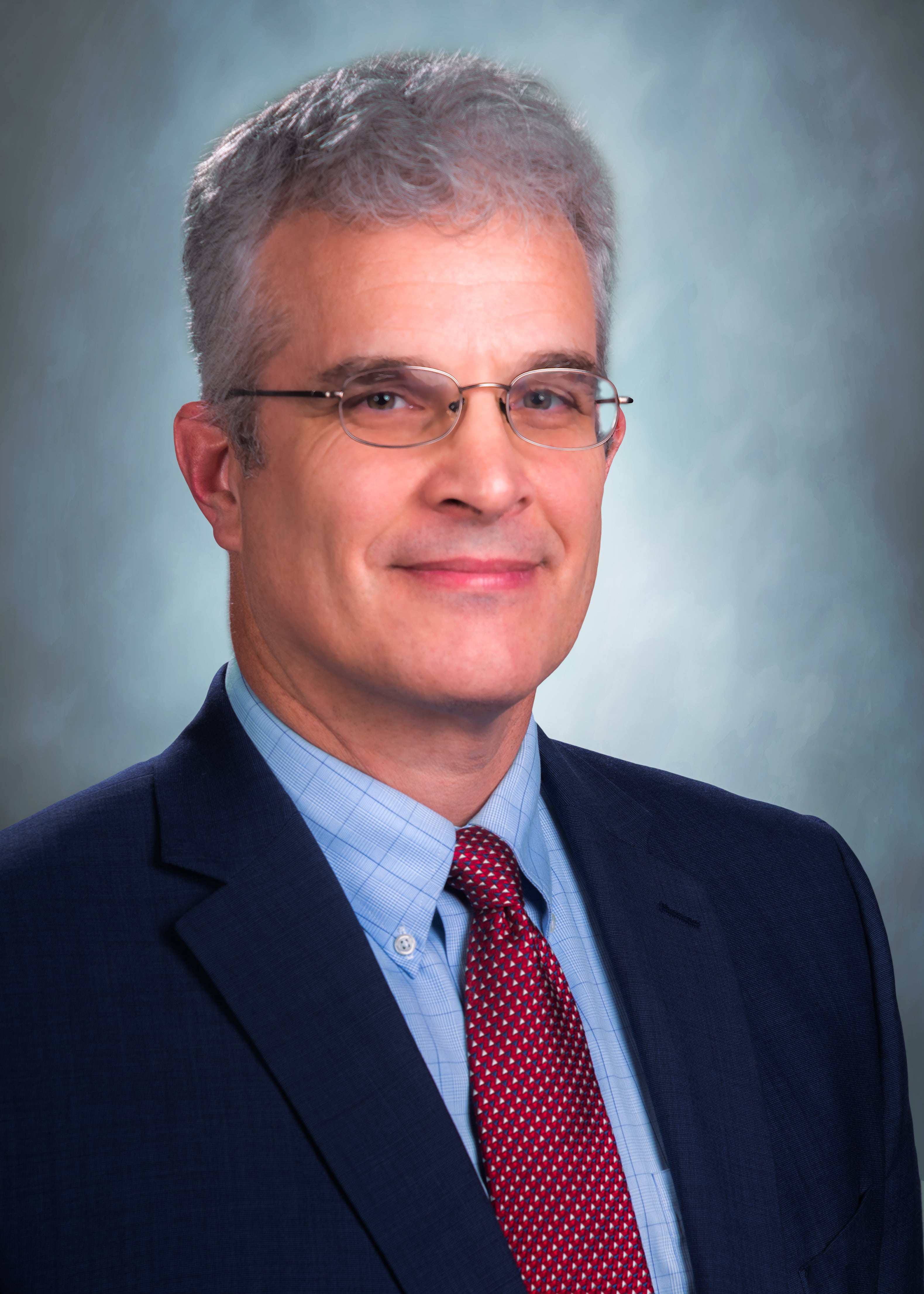
Beyond his contributions within the health system, Heins has been an active Tarboro community leader. He currently serves as vice chair of Edgecombe Community College’s Board of Trustees and is a member of the Tarboro-Edgecombe County Chamber of Commerce.
“It has been the honor of my career to serve alongside so many dedicated team members, physicians, nurses, providers, leaders and community partners across ECU Health,” Heins said. “I am incredibly grateful for the relationships built over the years and for the privilege of caring for patients and families across eastern North Carolina. The people I have worked with and the patients I have had the opportunity to serve have shaped me as a leader and as a person, and I will always be thankful for the role ECU Health has played in my life.”
ECU Health has begun a national search for the next president of ECU Health Edgecombe Hospital and is committed to ensuring a smooth transition.

Greenville, N.C. – ECU Health is expanding prenatal care options for expectant mothers with the launch of CenteringPregnancy®, an evidence-based group prenatal care program designed to provide medical care, education and peer support throughout pregnancy. The program will officially be introduced to the community during Cozy Beginnings: Community Baby Shower and Introduction to CenteringPregnancy® on Sept. 19 at ECU Health Women’s Physicians in Greenville.
CenteringPregnancy® brings together pregnant patients with similar due dates for prenatal care in a group setting led by ECU Health certified nurse midwives. The model combines traditional prenatal checkups with interactive education and opportunities for participants to build relationships with others experiencing similar stages of pregnancy.
“ECU Health is excited to offer CenteringPregnancy® to eastern North Carolina, providing patients with the support, education and connection they need throughout pregnancy,” said Dr. James Whiteside, chief of Service at ECU Health Medical Center and professor and chair for the Department of Obstetrics & Gynecology at Brody School of Medicine at East Carolina University.
“CenteringPregnancy® provides women with the same high-quality prenatal care they expect from ECU Health while creating opportunities to build meaningful connections, gain knowledge and receive support from both their care team and other expectant parents. We are proud to offer an innovative approach that promotes healthier pregnancies, stronger family support systems and improved outcomes for both mothers and babies.”
Unlike traditional prenatal visits, CenteringPregnancy® sessions bring together small groups of eight to 12 patients for 90- to 120-minute appointments beginning in the second trimester and continuing through delivery. Each session includes private health assessments, discussions about pregnancy, labor, delivery and newborn care, and opportunities for participants to ask questions and share experiences in a supportive environment. Research has shown that group prenatal care models can improve patient engagement, increase health education and strengthen social support during pregnancy.
“One of the things that makes CenteringPregnancy® so special is the opportunity for expectant parents to realize they are not alone in their pregnancy journey,” said Jomeka Mowery, CenteringPregnancy® program coordinator and certified nurse midwife at ECU Health. “The program creates a welcoming space where participants can share experiences with others facing similar questions and challenges and build a supportive community that extends beyond prenatal visits.Those connections can make a meaningful difference throughout pregnancy and into early parenthood.”
CenteringPregnancy® sessions will be offered through ECU Health Women’s Physicians in Greenville beginning this fall.
The community is invited to learn more about the program at Cozy Beginnings: Community Baby Shower and Introduction to CenteringPregnancy®, scheduled for Saturday, Sept. 19, from 10 a.m. to 2 p.m. at ECU Health Women’s Physicians, 2160 Herbert Court in Greenville. The free event will feature educational sessions, tours of the new CenteringPregnancy® space, community resources, music, giveaways, refreshments and activities for families. Attendees will also have the opportunity to meet doulas from SEEDS ENC, lactation specialists, childbirth educators and other community partners who support families throughout pregnancy and beyond. Partners of the event include A Line Wearhouse,
Love Joy Music, Frankly Delicious, Floating Hammock Massage, Community Care of North Carolina and Birth and Bloom. To register for the community baby shower, please visit ECUHealth.org/events.
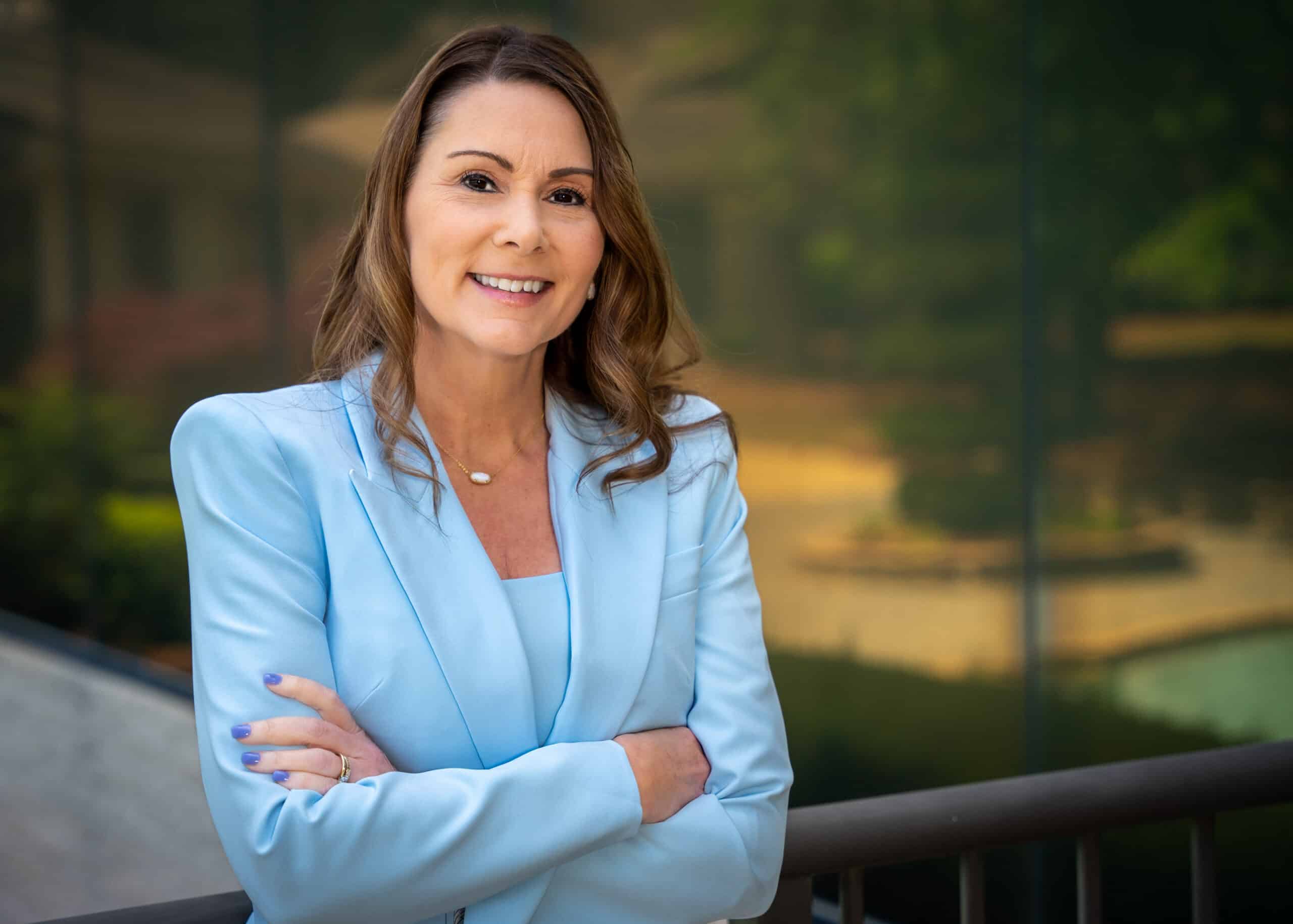
Greenville, N.C. – ECU Health is proud to announce that Trish Baise, DNP, RN, NEA-BC, FACHE, FAONL chief nursing executive, has been elected to the American Organization for Nursing Leadership (AONL) Board of Directors. Baise will serve a three-year term as the AONL Director-at-Large beginning Jan. 1, 2027.
“I am truly honored and grateful to have been elected to serve as AONL Director-at-Large,” Baise said. “This is an exciting opportunity to serve our nurse leader community, strengthen the voice of nursing leadership and help shape the future of our profession. It is also an opportunity to represent ECU Health and share perspective on rural healthcare with nursing leaders across the nation. I am grateful for the trust of my fellow members and look forward to serving alongside my colleagues in this important endeavor.”
AONL represents 12,500 nurse leaders nationwide and serves as the leading voice of nursing leadership. Through innovative, competency-based education and professional development opportunities, AONL equips nurse leaders with the skills needed to advance patient care and strengthen health care organizations. The organization also advocates at the national level to ensure the perspectives and priorities of nurse leaders are reflected in public policy decisions affecting nursing practice and patient outcomes.
Baise joined ECU Health in 2023 and is a respected nursing executive with extensive experience leading nursing and health care operations across complex organizations. As chief nursing executive, she oversees all nursing functions across the health system and has championed initiatives focused on workforce development, leadership advancement, professional practice, employee engagement, and clinical excellence. Under her leadership, ECU Health has strengthened academic-practice partnerships, expanded residency and professional development opportunities and advanced strategies that support recruitment, engagement, and the long-term growth of the nursing workforce.
“Trish is a visionary leader, a passionate advocate for nurses and an exceptional representative for ECU Health,” said Brian Floyd, chief operating officer, ECU Health. “Her appointment to the AONL Board of Directors is a testament to the expertise, dedication and collaborative spirit she brings to our organization every day. We are proud to see her leadership recognized on a national stage and know she will make a meaningful impact on the future of nursing leadership.”
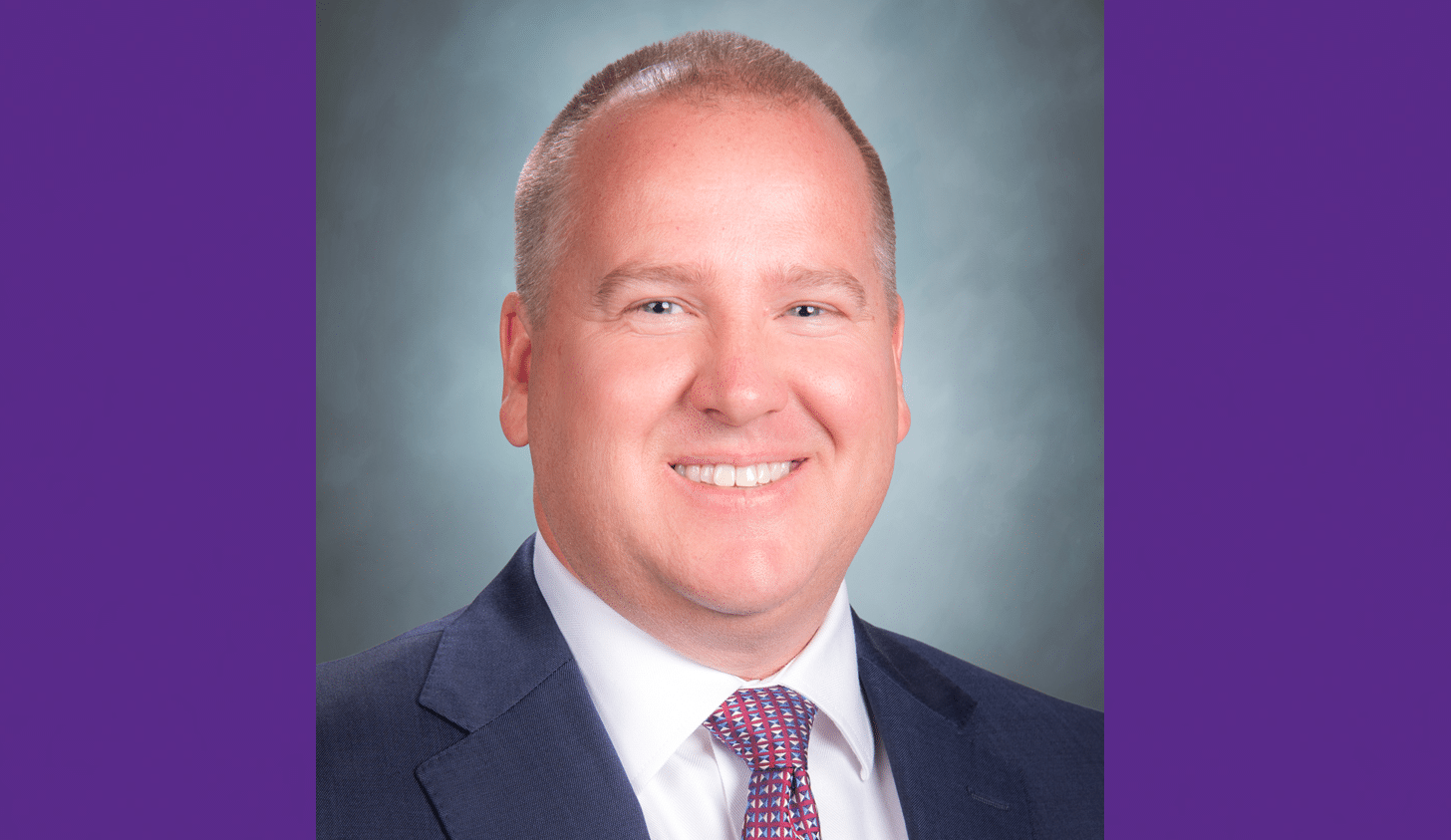
Greenville, N.C. – Brian Dunn, chief financial officer, ECU Health, has been named one of Becker’s Hospital Review’s 41 Rural Hospital and Health System CFOs to Know for 2026 in its newly released list. The recognition comes after Dunn was named CFO in July 2026 to oversee financial operations for both ECU Health and the Brody School of Medicine at East Carolina University.
“This recognition reflects the hard work to help position ECU Health as the national model for sustainable academic rural health care,” Dunn said. “As we continue to work toward meeting our mission to improve the health and well-being of eastern North Carolina, we must continue to be mindful of our fiscal health and resource management. We remain focused on being responsible stewards of our resources so we can continue investing in the people, programs and services our communities depend on.”
Rural hospitals are essential safety nets for their communities, caring for populations with greater need, fewer resources and less margin for error than almost any other type of health care institution. The CFOs who steward rural hospitals’ finances make the decisions that help keep these organizations financially viable. Through disciplined strategy and careful resource allocation, these executives help ensure rural communities can continue to access affordable, high-quality care close to home.
“Brian’s recognition by Becker’s reflects both his exceptional leadership and his deep understanding of the unique challenges and opportunities facing rural health care,” said Dr. Michael Waldrum, CEO of ECU Health and dean of the Brody School of Medicine.
“He brings a strategic approach that helps ensure we can continue expanding access to high-quality care, advancing our academic mission and meeting the evolving needs of the communities we serve. We are fortunate to have his leadership as we continue building the future of health care in eastern North Carolina.”
Becker’s Hospital Review accepted nominations and curated the list to highlight the outstanding accomplishments of rural hospital CFOs across the country. The full list, which includes individual profiles of each honoree, can be viewed on Becker’s website.
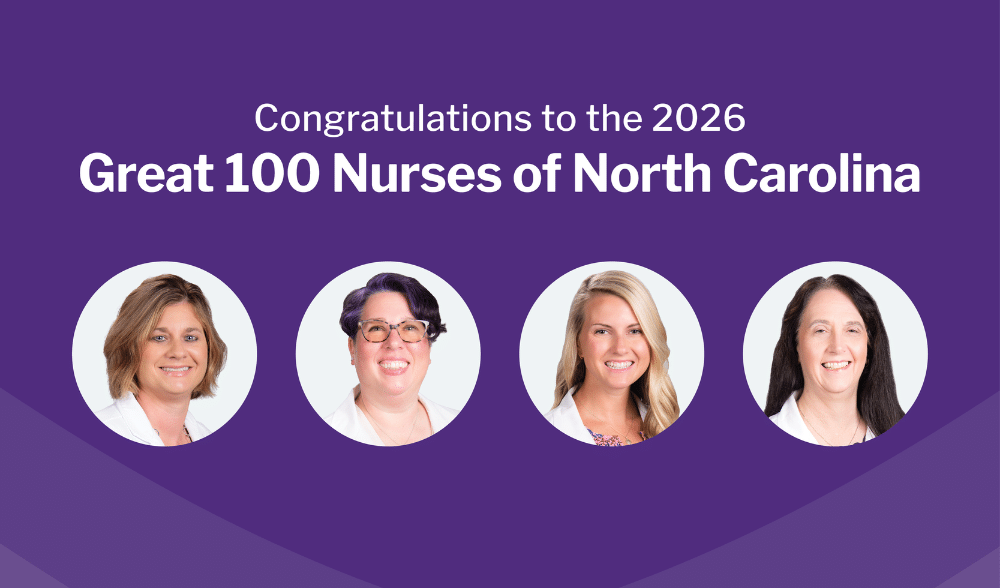
Since 1989, the Great 100 Nurses of North Carolina celebrates registered nurses who demonstrate exceptional practice, leadership and professionalism in a variety of settings.
This year, the program set a record with nearly 500 nominations. Among this year’s honorees were 18 ECU Health nurses, underscoring the system’s commitment to high-quality care and team member recognition.
In this series, we’ll introduce you to each of ECU Health’s honorees. In our first installment, meet: Kelly Garner, BSN, RN, Missy Johnson, RN, Allison Eure, MSN, RN, RNC-OB, and Ali Grimes, BSN, RN, CPN.
Kelly Garner
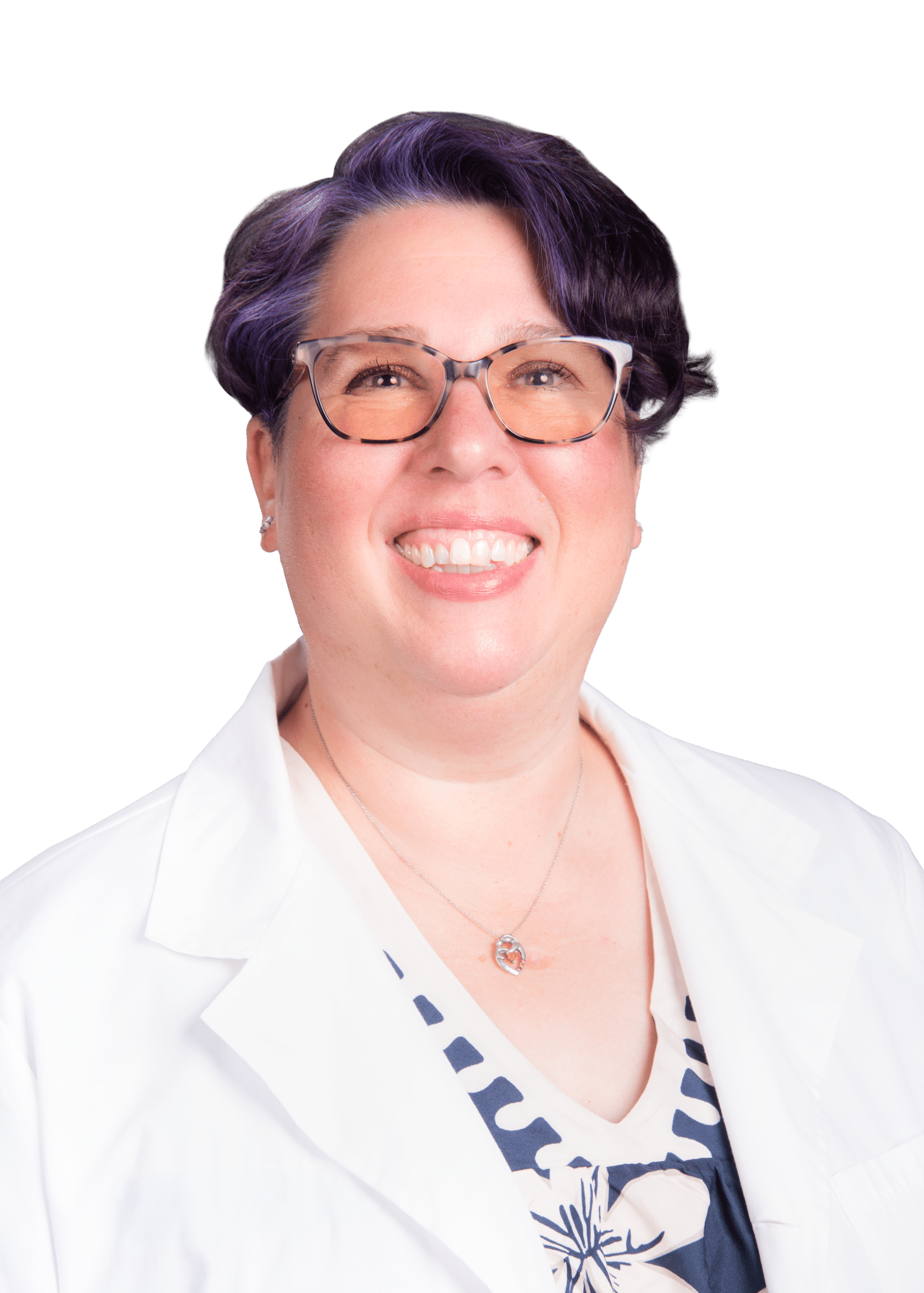 After working in New Hampshire and then Chicago, Garner found herself wanting a new challenge and a warmer climate, which brought her to ECU Health Medical Center. Now after 30 years as a nurse – 20 of which in the NICU – she can’t imagine working or living anywhere else.
“Having worked at different facilities, I can say the NICU is fantastic here,” she said. “We have good teamwork and always try to make things better.”
She knew she was being nominated for the Great 100 Nurses, but she didn’t expect to win. Even so, she credited the work she does with her team as reason for being nominated.
“I’m always stirring up trouble,” she laughed. “I’m looking for ways to improve things and teach families and our team.”
That includes providing education in neonatal resuscitation and serving as a clinical coach. As a member of the ostomy and G-tube committee, she and the team noticed that many babies were going home with ostomies but their families couldn’t get enough supplies once they were home.
“Our team in outpatient and inpatient worked with suppliers to recognize the issue and figure out a solution so the infants get more ostomy supplies. It takes a lot of work to troubleshoot this kind of problem; a bedside nurse is so much more.”
Missy Johnson
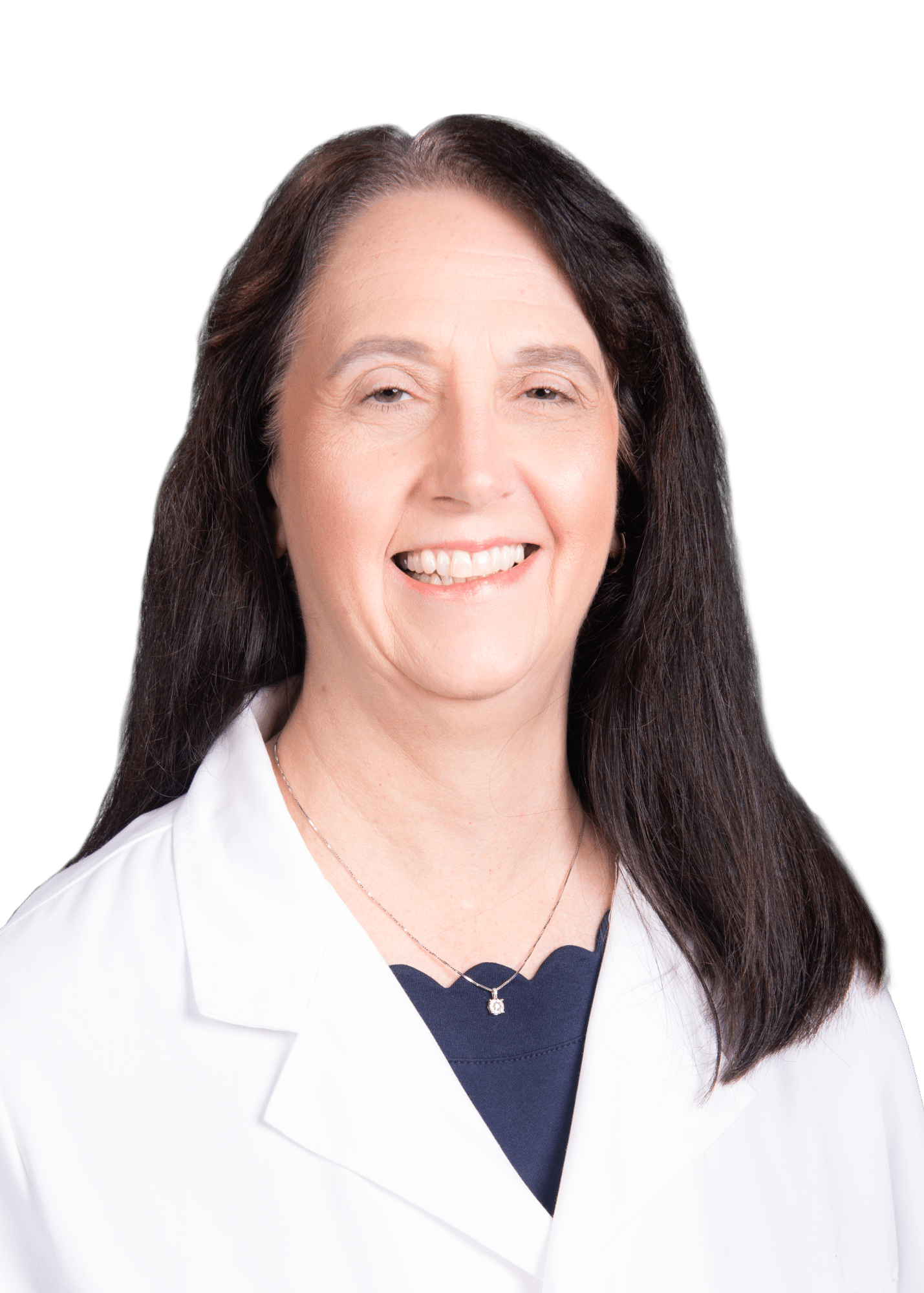 Johnson started her career at ECU Health Medical Center as a pharmacy technician when she was 20, and she recently celebrated more than 41 years with ECU Health.
“I always wanted to go to nursing school, but I started as a pharmacy tech and got my EMT certification while working,” she said. “My manager told me about the HomeGrown Program, so I took my pre-nursing classes at night and then got my ADN from Lenoir Community College.”
Her work in the NICU is a little personal; her twin sons – now 21 years old – were born prematurely at 31 weeks and spent time there.
“If not for our hospital, I don’t know what would have happened,” she said. “I was working in neonatal when they were born and that was the best and the worst time, because it put me at ease to know they were well cared for, but it is hard when you know all the bad things that can happen.”
Twenty-eight years later, she wouldn’t work anywhere else.
“I love what I do; I enjoy taking care of babies,” she said. “I don’t know when I’ll retire but if I’m blessed to work until I’m older, I’m going to keep doing it.”
Johnson said she’d been nominated a few times for the Great 100 Nurses, but she didn’t think she’d win this year.
“My heart stopped when I opened the letter – I’m still in shock,” Johnson said.
Johnson said she is proud to work for ECU Health because of the people and communities we serve.
“People don’t understand the scope of the services we offer. And we have the best nurses – so many are local but we have many from all over the United States and the world who work with us,” she said. “I’m proud of what we do and the great care we provide.”
Allison Eure
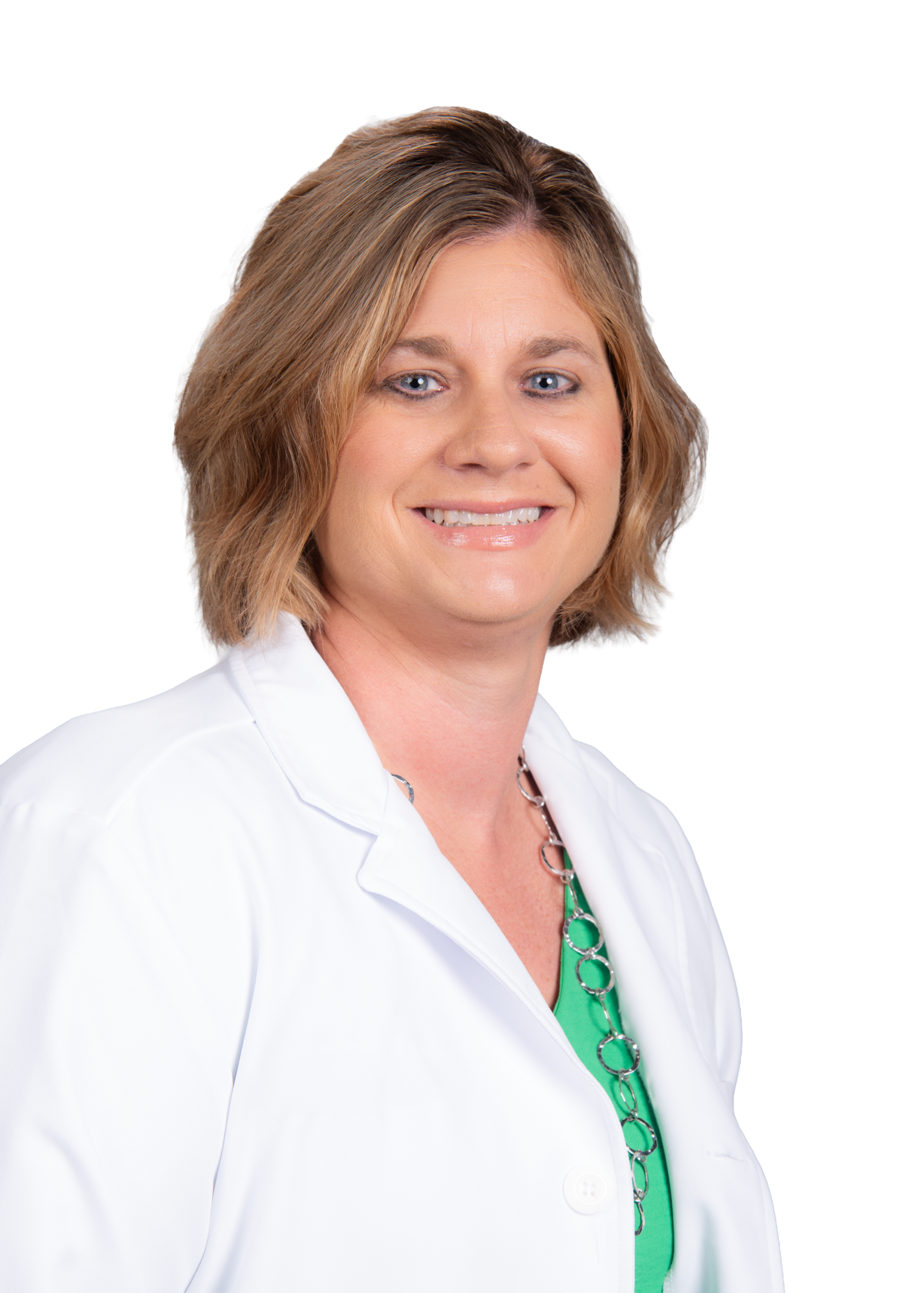 Eure wanted to be a veterinarian and then considered accounting before deciding that nursing was the right career for her, and now she’s the manager of patient care services in labor and delivery at ECU Health Chowan Hospital.
She grew up near the hospital and so it made sense to come back to her community after graduating from East Carolina University in 2008.
“We’re a family here. When you go out in the community, people know what you do and where you work,” she said. “You feel like you’re giving back.”
Eure was honored to learn she was a Great 100 Nurse, but she said she’s here to get things done.
“It’s nice to be recognized, and I try to ensure my staff feel supported – not just in the hospital but at a system level,” she said. “We want our community hospitals to have a voice for change.”
Ali Grimes
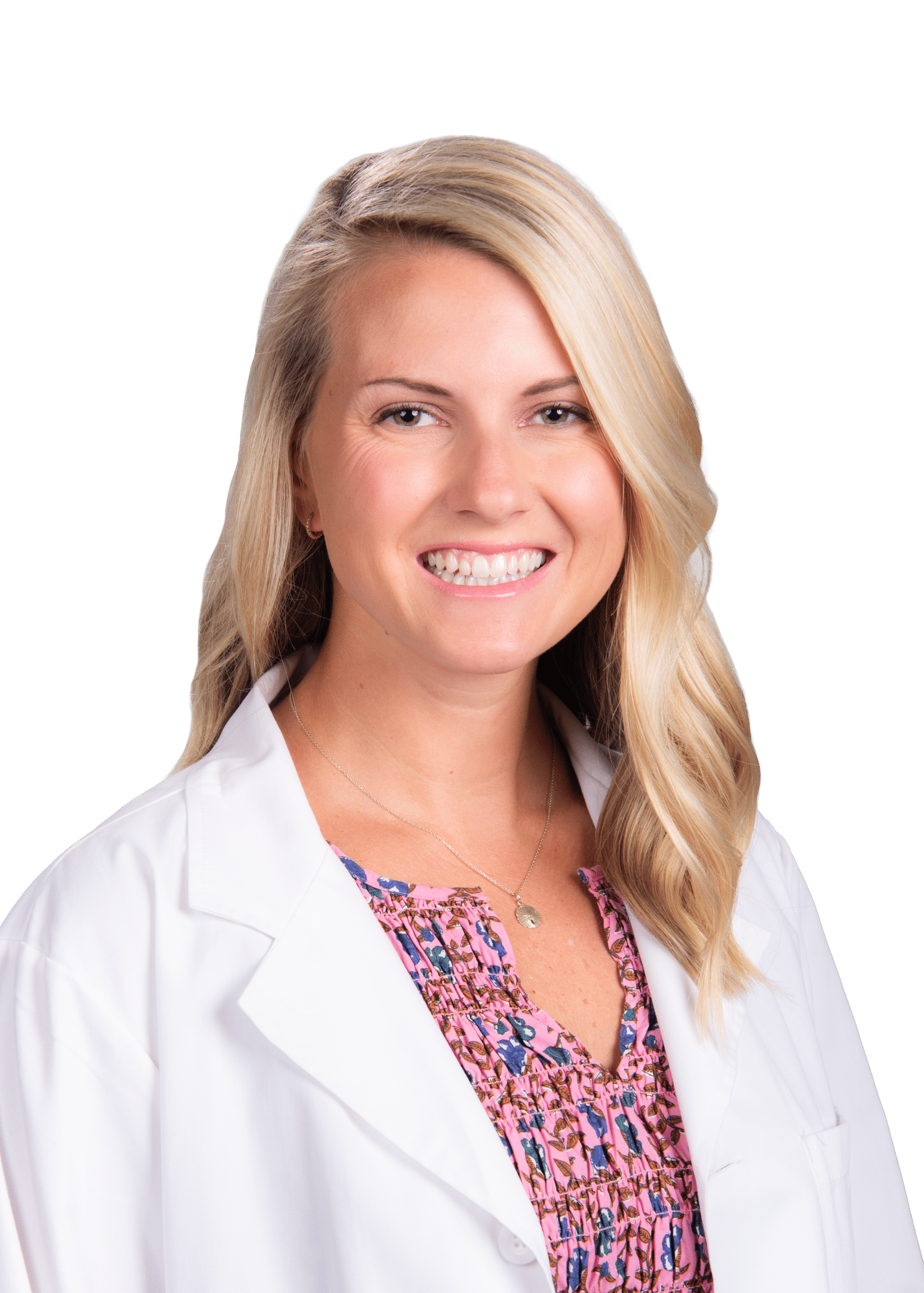 Next year, Grimes will celebrate 10 years with ECU Health. The director of pediatric services and child life services at James and Connie Maynard Children’s Hospital started her education in public health at East Carolina University, but she immediately returned to school for her nursing degree at Pitt Community College.
“I thought about nursing but was interested in the health education part of it,” she explained. “My neighbor was a NICU nurse and I shadowed her, and that’s what sparked my passion.”
She joined ECU Health as a nurse at Maynard Children’s Hospital and enjoys serving her community. Since then, she’s achieved her BSN from the University of North Carolina Wilmington and is currently pursuing her MSN.
“I love this community because we see our patients and their families thrive,” she said. “There’s a wide array of diagnoses we see, and the impact is felt across the state.”
She also highlighted how ECU Health celebrates and supports nurses.
“We put a lot of effort into growing nurses and improving nursing care,” she said. “The health system empowers nurses to make huge impacts in the medical center, the system and beyond.”
Although she was shocked to learn she was a Great 100 Nurse, Grimes said her job is to lend a helping hand to her colleagues.
“Even though I’m not at the bedside anymore, I enjoy going to the units and helping when I can,” Grimes said. “That allows me to see what’s happening on the unit and where there are gaps and barriers so I can better advocate for our patients and our team.”
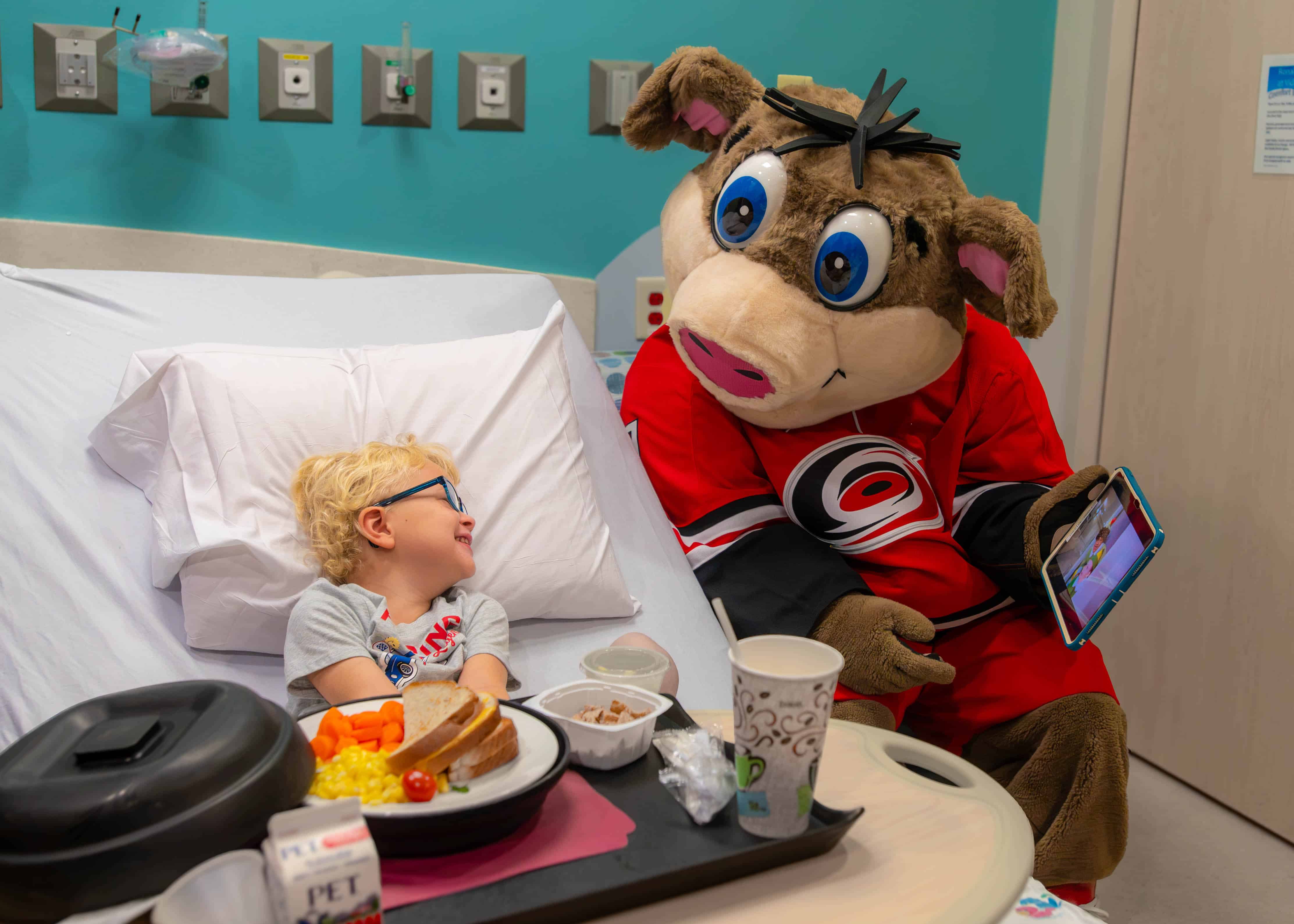
Young patients at James and Connie Maynard Children’s Hospital at ECU Health Medical Center face challenges every day that require courage, fortitude and a community of care. Now, they have a new way to show their courage and team spirit during hospital stays thanks to a unique partnership between ECU Health, Kids Who Give, the Carolina Hurricanes and ECU Athletics, who collaborated to create and donate specialized pediatric hospital gowns featuring designs inspired by Kids Who Give, the Carolina Hurricanes and ECU Pirates.
The project began more than a year ago and brought together community organizations, donors and health care team members with a shared goal: help children feel a little more at home while receiving care.
Kids Who Give, a Raleigh-based nonprofit organization founded and led by young people dedicated to helping others, spearheaded the initiative.
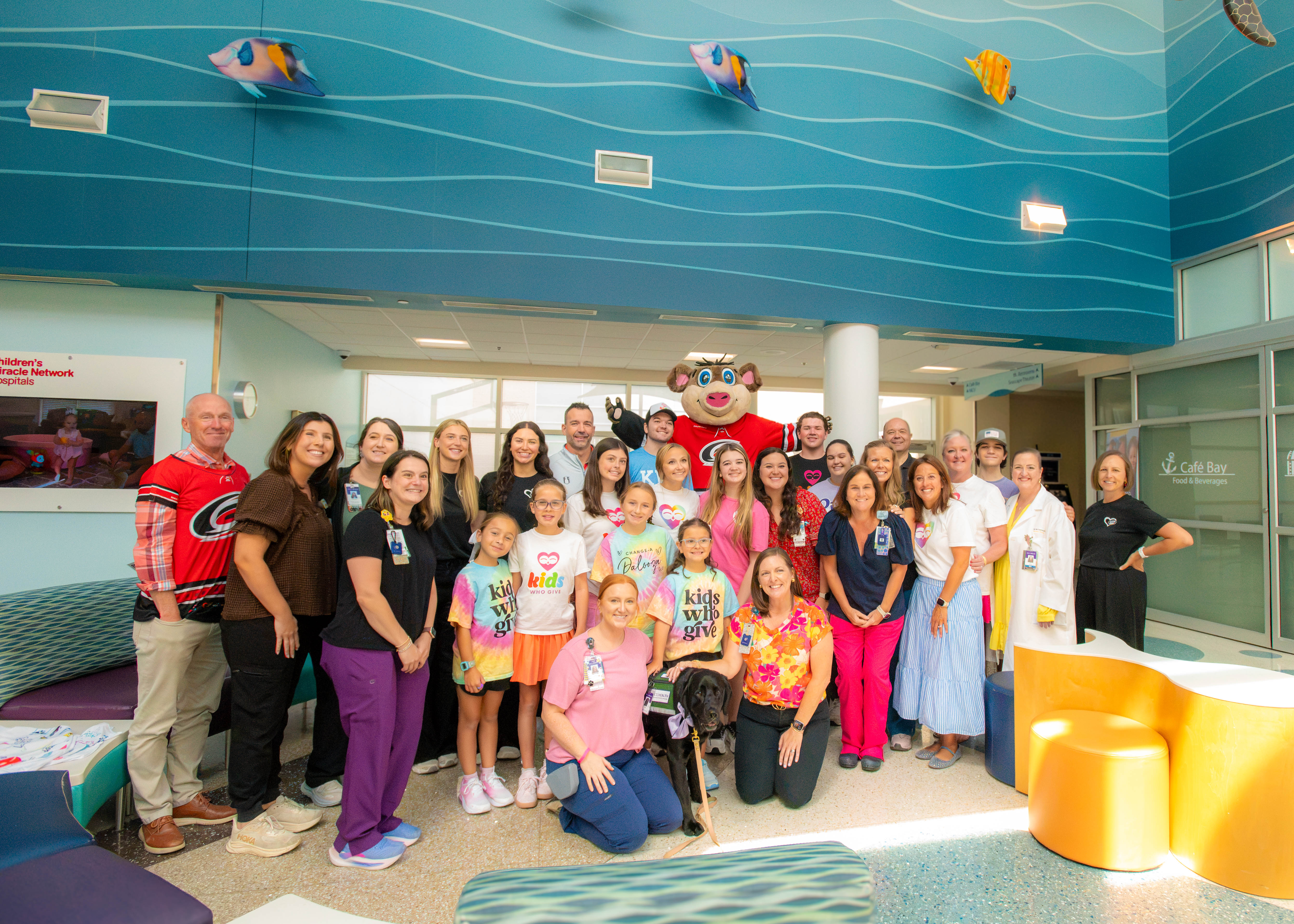
According to Stella Magliulo, 14, president of Kids Who Give, the young philanthropists raised money for the Brave Gowns by hosting lemonade stands, going door to door for donations and finding sponsorships. She said one member even asked for donations instead of gifts for her ninth birthday party.
“We’re kids who help kids,” said Magliulo. “When we learned about Brave Gowns, we thought it was such a cool idea for children who have to stay in hospitals. We wanted to help bring joy, love and encouragement to kids who are going through difficult times.”
One Kids Who Give member reached out to the Carolina Hurricanes to share their goal of donating 1,000 gowns to children’s hospitals across North Carolina. The Canes donated $10,000 for 400 gowns to reach their goal.
The gowns were unveiled during a special event at Maynard Children’s Hospital, where representatives from each organization joined patients, families and health care team members to celebrate the partnership.
Kathryn Jarvis, interim vice president of Women’s and Children’s services at Maynard Children’s Hospital, said the gowns provide far more than a new look.
“When children come into the hospital, so much feels out of their control,” Jarvis said. “Something as simple as choosing a hospital gown can make a meaningful difference. These gowns help normalize the hospital experience and give patients a sense of choice and comfort during what can be a difficult time.”
The pediatric gowns feature colorful, child-friendly designs, including Carolina Hurricanes gowns carrying a message of courage and ECU-themed gowns showcasing Pirate pride.
Amy Daniels, executive director of the Carolina Hurricanes Foundation, said the project aligns closely with the organization’s mission of supporting communities across North Carolina.
“Being here at ECU Health is a nice way to tap into who we know are superfans all across the state,” said Daniels. “Greenville is a special place and supported us on our run to the Stanley Cup, so it’s really cool to be here and spread the love down east in North Carolina.”
On the Canes jersey, the word “Courage” was featured on the back nameplate.
“Canes players are on the ice every day showing their courage in a sport they love, and it’s important to pass that along to these kids,” said Daniels. “We hope that wearing a ‘jersey’ gives them that extra strength to fight.”
Shane Willis, director of community outreach for the Carolina Hurricanes, said the project is about using the power of sports to brighten difficult days.
“These children show incredible courage every day by continuing to fight,” Willis said. “If we can put smiles on these kids’ faces and encourage them to continue to fight to get better and get outside of this hospital, then that’s what it’s all about. We want them to know an entire community is cheering them on.”
During the visit, Canes mascot Stormy made a special appearance to bring joy to pediatric patients racing through the hallways with giggling children, posing for photos and handing out high-fives to fill the hospital with laughter and smiles. His playful energy not only delighted young patients and their families but also brightened the day for health care team members who joined in the fun.
For families like Dawn Romero’s, the impact is immediate.
Romero’s son, Noah, was born at 24 weeks at Maynard Children’s Hospital in 2021 and spent more than six months in the neonatal intensive care unit. Now five years old, Noah continues to receive care through regular appointments and procedures at the hospital.
“I still have lasting relationships with some of the nurses,” said Romero. “To be able to come not too many miles up the road and have these resources is calming, with his condition. I feel like it is not too far, it’s a place he can feel safe, welcome and loved.”
Romero said it was exciting to see both jerseys after the Canes won the 2026 Stanley Cup and as a former ECU student.
“The amazing team here told us about Kids Who Give and the Hurricanes donating jerseys for kids and invited us to come down,” said Romero. “Anytime we come, they are always giving us resources that make it a little easier. This hospital is full of amazing people.”
According to Tara Tadlock, engagement specialist, Maynard Children’s Hospital, approximately 50 gowns were distributed during the kickoff event, with plans to continue using them for hospitalized children and select outpatient visits.
“The smiles we saw today were incredible,” Tadlock said. “From the moment Stormy arrived, there was laughter echoing through the hallways and excitement throughout the hospital. Watching our patients light up as they received their new jersey-style gowns was a powerful reminder that healing is about more than medical care. It’s also about creating moments of joy, comfort and connection for children and families.”
Hospital leaders say that the lasting impact on children and families facing some of life’s most challenging moments would not be possible without great partnerships.
“This has truly been a team effort,” said Elise Ironmonger, director of programs, ECU Health Foundation. “So many individuals and organizations came together to make this possible. From our partners at Kids Who Give, Brave Gowns, ECU Athletics and the Carolina Hurricanes Foundation to our ECU Health team members behind the scenes, it’s exciting to see this vision come to life and know the impact it will have on our patients. We are so grateful for the thoughtful vision and leadership from Kids Who Give for helping make this possible.”