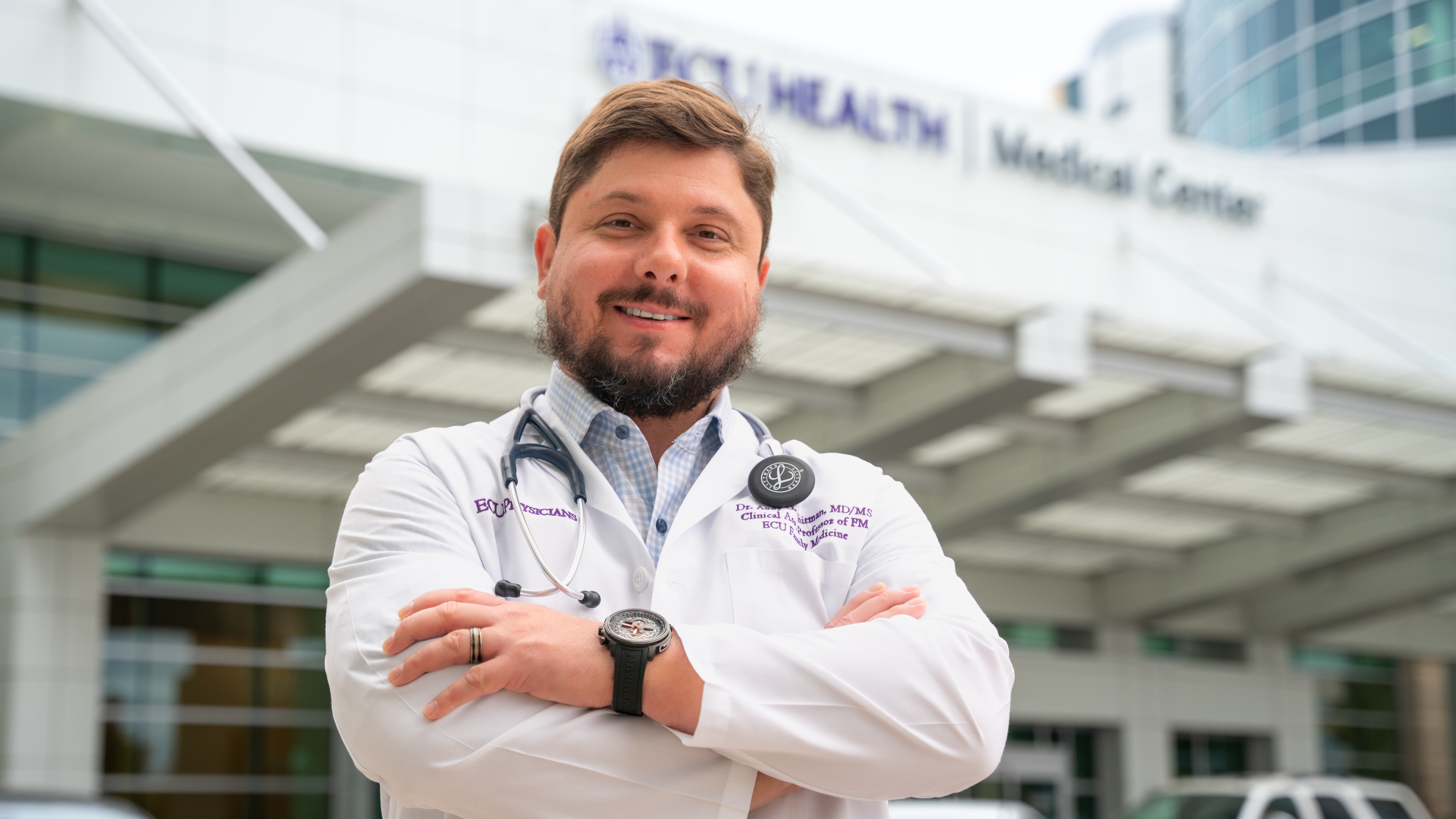
Dr. Audy Whitman is an eastern North Carolinian, through and through. He was born in the farming town of Seven Springs – a town of roughly 80 people – in Wayne County.
Like in many towns in eastern North Carolina, its citizens struggle with poverty and access to health care. It is there, in Seven Springs, where Dr. Whitman’s rural upbringing helped him discover a love for medicine that influences his work today.
Today, Dr. Whitman is a family medicine physician for ECU Health and clinical assistant professor at the Brody School of Medicine at East Carolina University, but back in Seven Springs, he was a helping hand in the tobacco fields, braving the eastern North Carolina heat and humidity.
“There is no more powerful motivator in the universe, in my humble opinion, than standing in the middle of a tobacco field in the late summer with 99 percent humidity, no shade and it’s 100 degrees outside,” Dr. Whitman said. “Your hands are caked with tobacco gum. The nicotine is soaking through your skin, so you feel nauseous all the time. Those long days taught me a great work ethic but they were also powerful motivators.”
Rural health care realities
Americans who live in rural areas make up 20% of the United States population and residents in these areas face a myriad of challenges: shorter life expectancy, higher mortality, higher rates of poverty, fewer local doctors and greater distances to travel to see health care providers. Only 10% of U.S. physicians currently practice in rural areas.
Physician shortages are no secret across the country, with the Association of American Medical Colleges estimating a shortage of up to 124,000 physicians by 2034, and rural areas are at an even greater risk.
The Brody School of Medicine was founded over 40 years ago to train primary care physicians to provide care for rural eastern North Carolina. These challenges inform the medical school’s mission and its proven track record is best represented by the fact that Brody is No. 1 in North Carolina and No. 2 in the United States in the percent of graduates in the last decade who chose careers in family medicine.
Programs like the Rural Family Medicine Residency Program take that work a step further by focusing on initiatives that help place providers in rural areas. Studies show that family medicine residents who spent 50% or more of their training time in rural settings were at least five times more likely than residents with no rural training to practice in a rural setting.
“Rural health care is under duress, and our rural communities need solutions,” said Dr. Michael Waldrum, ECU Health CEO and dean of the Brody School of Medicine. “The Rural Family Medicine Residency Program is another great example of ECU Health and Brody understanding what the community needs are and creating new pathways to educate physicians to meet the community’s needs and improve the health and well-being of those communities.”
Setting a path forward
After Dr. Whitman was approached to create and administer the program, things moved quickly. A “national guru for all things family medicine” made a visit to eastern North Carolina to consider the best locations for residents to begin their rural training. Dr. Whitman and team reached out to other universities and health systems with established programs and traveled to learn about rural organization structure and rural curriculum best practices. Two years later, the Rural Family Medicine Residency Program had its first cohort ready for training.
The first year of the program features training at ECU Health Medical Center, a Level I Trauma Center, and helps set the residents up for success when they get to the rural environments in their second year.
“Anything and everything you can imagine seeing in residency training, you’re going to see at the medical center,” Dr. Whitman said. “We provide this very intense, inpatient-heavy first-year experience for these rural residents where they get to see really sick, really complicated patients with lots of resources at their disposal so they can learn how to take care of these really complicated patients. After their first year of training, when they’ve taken all of these lessons learned, they can go out into these rural communities and apply those lessons learned where they’re the only show in town.”
Dr. Whitman added that while Greenville and eastern North Carolina are rural, the more than 1.4 million patients served through the ECU Health system creates a high volume of patients at ECU Health Medical Center, and the exposure to so many patients during their training is also hugely beneficial for the rural residents.
“An institution like ECU Health boasts a 974 bed, Level I academic medical center where residents train alongside some of the best and brightest health care minds in the state,” said Dr. Jason Higginson, executive dean at Brody. “Medical residents can then serve in our more rural hospitals to apply that knowledge to underserved populations, building a connection to the community in which they serve and making a real difference in the lives of patients.”
Dr. Zeel Shah
Drs. Zeel Shah and Jim Jaralene Porquez were part of the inaugural cohort for rural family medicine residents. Dr. Shah practiced and trained at Roanoke-Chowan Community Health Center in Ahoskie and Dr. Porquez at Goshen Medical Center in Beulaville, both of which are Federally Qualified Health Centers (FQHC) that serve at-risk and underserved rural populations. The mission and vision of these FQHC organizations align with the mission and vision of ECU Health. Together, they seek to augment scarce health care resources in rural communities, improve the health metrics of the communities they serve, and encourage the residents that train in these rural communities to establish roots and continue serving these rural communities after graduation from their residency training program.
Dr. Shah said the year in Greenville was a great experience before continuing her residency training with a focus on serving the rural community of Ahoskie.
“In Greenville you have a lot of resources, but it’s a learning curve to rotate through the different specialties,” Dr. Shah said. “In Ahoskie, the challenges are different. Social determinants of health care, such as finances and distance, play a significant role, and you don’t have the same resources. You learn quite a lot about how to make your limited resources go a long way by relying on creative strategies while using medical expertise you picked up in Greenville.”
Now, as graduates of the program and full-time physicians with ECU Health, Drs. Shah and Porquez feel established in their respective communities and have built trusting relationships with patients, families and fellow team members. Both said the community aspect and truly knowing their patients are among the most rewarding parts of their rural experience. For Dr. Porquez, feeling love, trust and appreciation from her patients has made her time in Duplin County special and a place that she plans to call home after her residency.
“What really drew me into my community clinic in Duplin County specifically, is that my patients are very appreciative of what I do for them,” Dr. Porquez said. “They care so much about my time, my effort and my expertise, and I think in just a couple of years I have built that strong trust and relationship with them. I feel like I don’t just treat them with their disease, but I go further than that. I treat them as a whole, and I get to know their whole well-being. I see them as a whole person and not just the disease that I treat.”
Early milestones
Dr. Jim Jaralene Porquez
For Drs. Shah and Porquez, the personal connections built through the program are so strong that both decided to practice in eastern North Carolina following the completion of the program in 2024. Their graduation, along with the other residents in the first cohort, represent a significant milestone in the program’s short history and help ensure rural communities have access to specially trained, high-quality rural family medicine providers.
Dr. Whitman said he’s proud to see two members of the first cohort choose to stay and make a difference in communities like the one in which he was raised. The successful launch enabled the team to think bigger, and the program now features a new site in Halifax County with an expanded class size of nine residents. The program in general will grow from its original size of 10 residents to a total of 27 residents by 2026.
“Moving forward, I see nothing but growth for us,” Dr. Whitman said. “We are truly doing mission-driven work and trying to bridge the chasm of health care disparities of urban centers and rural areas here in North Carolina.”
Dr. Waldrum agreed and said he sees the program as the beginning of something special for eastern North Carolina and rural medicine.
“My hope is that we can take the knowledge gained through the Rural Family Medicine Residency Program and apply those lessons towards other specialized clinical areas of expertise in the near future,” Dr. Waldrum said. “We are proving that we can be highly successful in creating rural residency tracks and our historic success training rural providers who go on to practice here in North Carolina is a further testament of our ability to create unique solutions that meet the needs of those we serve.”
Resources

Lung cancer is the leading cause of cancer-related death in the United States and is the second most common cancer in both men and women. In eastern North Carolina, where risk factors for the disease are higher than most other areas in the country, screenings are helping save lives.
“We’ve known since the 1990s that using CT scans at a very low dose can actually save lives,” Dr. Mark Bowling, a pulmonologist at ECU Health Medical Center, said. “Now you can do low dose lung cancer screenings once a year if you meet certain criteria.”
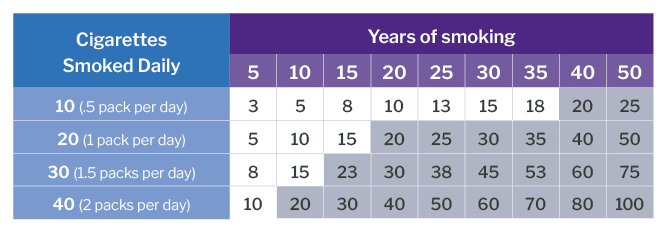
The criteria includes: being between the ages of 50 and 80, having a 20-pack smoking year history – which equals a pack a day for 20 years or two packs a day for 10 years – and having no signs or symptoms of lung cancer. ECU Health offers this lung cancer screening technology at 10 locations across eastern North Carolina.
While low dose CT scans are always available across the system for the insured, a grant program allows ECU Health to offer a once-a-month clinic in Greenville for the uninsured who meet the criteria and have received a referral from their provider.
Jennifer Giordano, Cancer Center outreach coordinator at ECU Health Medical Center, helps run the clinic. She said raising awareness for lung cancer screenings is crucial and can lead to early detection.
“We’re all aware of mammograms for breast cancer screening and colonoscopies for colon cancer, but not a lot of people realize that there’s a screening for lung cancer,” Giordano said. “If we do find something abnormal, we want to find it in its early stages when the outcomes are better, when there are more options for treatment. With lung cancer being a leading cause of cancer-related death, by the time someone starts manifesting lung cancer symptoms, it’s typically very advanced at that time. You have fewer options and your outcomes aren’t positive so our goal is to find cancer before someone begins to have symptoms.”
Lung cancer symptoms are often non-specific, including shortness of breath, coughing up blood, chest pain and inability to move arms among others.
Giordano said she is also passionate about advocating for patients and helping to eliminate stigmas around any cancer, particularly lung cancer.
“We’re here to let people know, if you smoked, if you still smoke, that doesn’t define who you are as a person. We just want to get you screened,” Giordano said. “We’re not here to judge whether or not you smoke. We’re not here to berate you. We will ask if you’ve been educated about smoking cessation, but that’s not why you’re here. We try to make people feel comfortable and feel valued. Your family still loves you and they still want you around so let’s get you screened and make sure you don’t have anything going on that we need to worry about before it becomes a problem.”
Courtney Johnson, Thoracic Oncology Program coordinator at ECU Health Medical Center, has been with the system for 10 years. First, she worked as an inpatient cancer care nurse in the Eddie and Jo Allison Smith Tower at ECU Health Medical Center for about four years and she said it was a rewarding and special time for her.
That led her to her current role in which she helps track and manage at-risk patients through the screening process. She said the best part of her current job is playing a part in early detection.
Recently, she said her team caught cancer in a patient they’d been taking through screenings for about five years. The screenings showed a change in known nodules for the patient and they were sent to surgery to have the cancer removed. Since it was caught in the extremely early stages, the patient did not have any need for chemotherapy and they’ll just have to follow up with future scans for the patient.
“That’s the greatest thing in this position –I can’t prevent everything, I cannot predict outcomes, I can’t prevent what could be the inevitable, but I have a hand in hopefully early intervention,” Johnson said. “I enjoy spending more time with the preventative side of medicine and hopefully allowing our patients to stay out of the hospital. Instead, they come in and we can be proactive with this rather than having to scramble when the patient is in an advanced stage.”
Johnson also shared that radon exposure is a risk factor for lung cancer. She said radon testing kits are available through North Carolina Department of Health and Human Services.
Resources
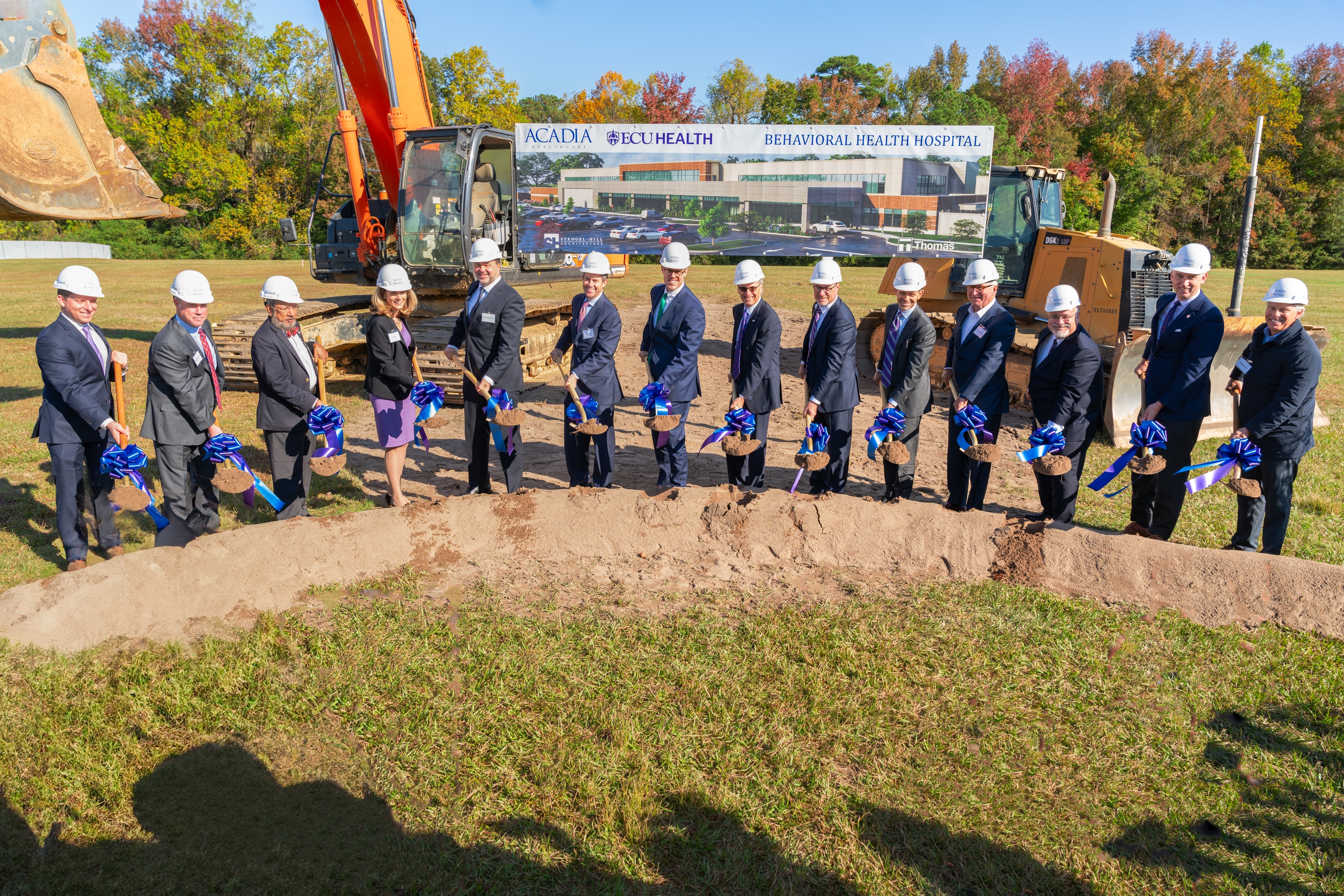
GREENVILLE, N.C. (November 1, 2023) – ECU Health and Acadia Healthcare held a ceremony today to celebrate the start of construction on its previously announced state-of-the-art, 144-bed behavioral health hospital in Greenville, North Carolina. The event occurred on the site of the new hospital – located at 2820 MacGregor Downs Road, Greenville, North Carolina 27834 – and celebrated the joint venture partnership between ECU Health and Acadia Healthcare, which will own and operate the new hospital together.
Slated to open in Spring 2025, the hospital will be a center of excellence situated less than a mile from ECU Health Medical Center. It will offer comprehensive inpatient and intensive outpatient treatment for adults, seniors, children and adolescents who struggle with acute symptoms of mental health such as anxiety, depression, bipolar disorder, post-traumatic stress disorder (PTSD), as well as treatment for co-occurring disorders. Thomas Construction Group is the general contractor, and Stengel Hill Architecture is the architect for the project.
“Too many people, including children, in North Carolina get stuck in emergency departments when they urgently need short-term and high-quality behavioral health care,” said North Carolina Department of Health and Human Services Sec. Kody H. Kinsley. “This new hospital will create lasting change in this region by making behavioral health services easier to access when and where they are needed.”
The new hospital will also serve as a teaching hospital for psychiatry, social work, nursing and other behavioral health professionals. This will address the shortage of clinical behavioral healthcare professionals in the area, training students and residents from the Brody School of Medicine at East Carolina University, many of whom will go on to practice in eastern North Carolina and carry forth ECU Health’s mission to improve the health and well-being of the region.
The hospital will include 24 inpatient beds specifically for children and adolescents with behavioral health needs. These beds will be the first of their kind in ECU Health’s 29-county service area and the only child and adolescent beds within 75 miles of Greenville, North Carolina.
“The shortage of mental health resources is a critical challenge in North Carolina,” said Dr. Michael Waldrum, chief executive officer of ECU Health and dean of the Brody School of Medicine. “We are pleased construction is underway for our new behavioral health hospital, and this moment marks another milestone in our effort to improve access to behavioral health care for the region. It will provide the hope and healing residents of Greenville and the surrounding communities need when dealing with complex behavioral health issues.”
Prior to the pandemic, nearly one in five North Carolinians were experiencing a mental, behavioral or emotional disorder, according to a report from the North Carolina Institute of Medicine’s Task Force on Mental Health and Substance Use. In the past three years, national data indicates a growing trend of depression and anxiety symptoms. This partnership demonstrates a commitment to addressing mental illnesses and substance use disorders, normalizing and treating them with the latest science and medicine in appropriate care settings.
“This new hospital will provide North Carolinians with expanded access to quality behavioral health services and treatment from specialized clinical teams in a carefully designed environment,” said Chris Hunter, chief executive officer of Acadia Healthcare. “We are so proud to be affiliated with ECU Health, working together to address the strong need in this area and building upon their legacy and commitment to behavioral health services. This hospital will be a strong member of the Greenville community, collaborating with all organizations, hospitals and first responders. It will be a beacon of hope for patients and families in eastern North Carolina.”
To learn more about the partnership between ECU Health and Acadia Healthcare, visit ENCBehavioralHealth.org.
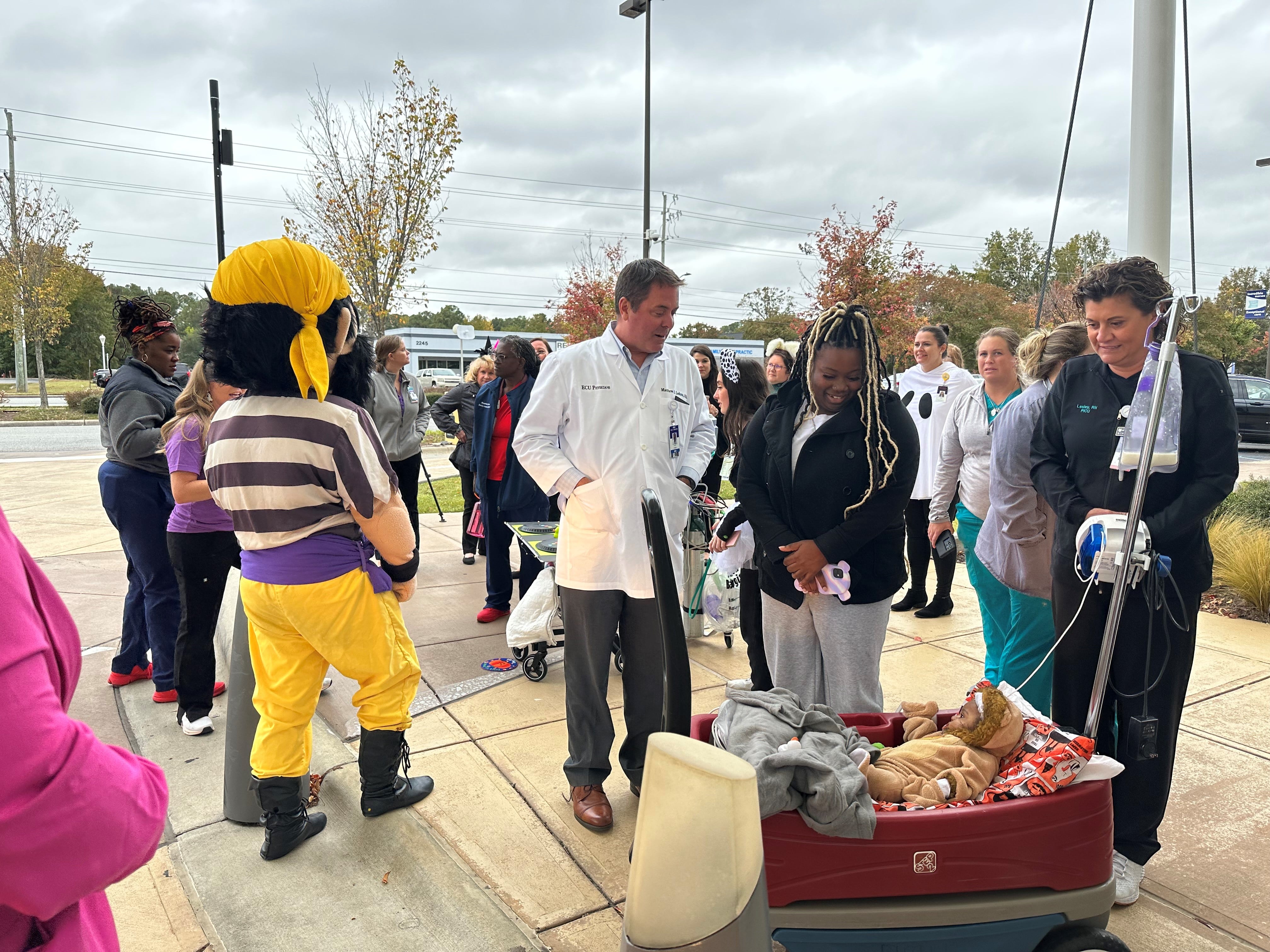
Each Halloween, patients, families and team members at Maynard Children’s Hospital at ECU Health Medical Center get a chance to break away and enjoy the holiday.
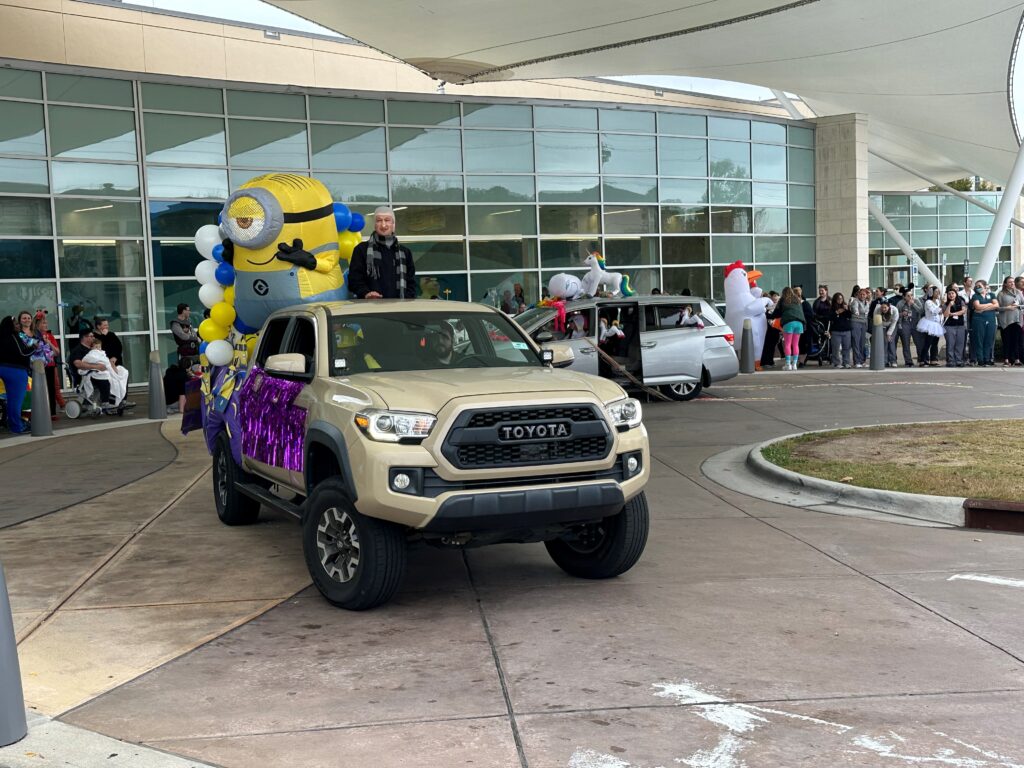
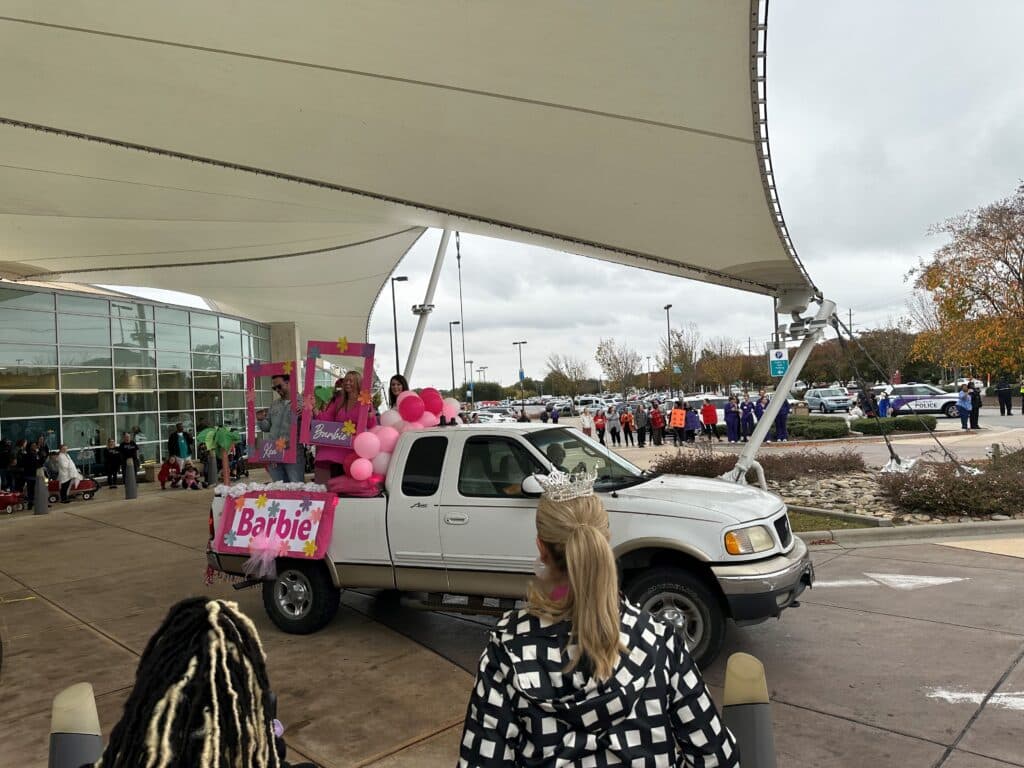
Parade floats from team members and community groups flowed by the Children’s Hospital on Halloween afternoon, giving the children a chance to see some of their favorite characters, like Barbie and Ken, Minions, and floats from Toy Story, Trolls and Encanto. Even the Mystery Machine, a Jeep full of sharks and a pirate ship appeared – all to help make the day a little brighter for the youngest patients at ECU Health Medical Center.
Amanda Jones, a child life specialist at Maynard Children’s Hospital, said there is always a lot of planning that goes into the event, but it’s worth it each year to give the children something to look forward to during the holiday.
“This is a really fun event where they can still celebrate Halloween even while they’re here at the hospital,” Jones said. “It allows kids to be kinds while they’re in the hospital. It’s something that they would normally be doing if they weren’t in the hospital so it kind of brings a little bit of that holiday spirit to the event here.”
For parents, it can also bring a source of comfort. Angela Blanton’s 8-year-old son, Chance, is a patient at the Maynard Children’s Hospital and has a rare condition called Walker-Warburg Syndrome. Blanton said Chance could not be outside for the event, but she still wanted to celebrate Halloween – her son’s favorite holiday – while at the hospital.
She shared photos of past Halloween costume contests he had won and reflected on what this event meant for her. She wore an inflatable chicken costume, worn earlier this month at a Halloween party with her son dressed as Colonel Sanders.
“He would love to be down here, but he can’t be. So I think it’s amazing for the all the children that can be here,” Blanton said. “Seeing them light up, and even me, in this silly costume. Some of the kids wanted to take a picture with me, and I thought that was awesome. To see the smiles from the kids and parents and know how important it is for everyone. Not just the children, but the moms who have been there by the bedside.”
She shared that these events mean a great deal to the patients and families looking for a piece of normalcy in a challenging time.
Patients across the hospital receive goodie bags with art supplies and toys after the event, whether or not they could come. Jones said the event is important for team members
“This is a great event for team members that participate in the parade and for those that come out and watch it,” Jones said. “It’s enjoyable to be able to step away from the bedside and spend time with patients on events like this. I think it’s really uplifting for everyone.”
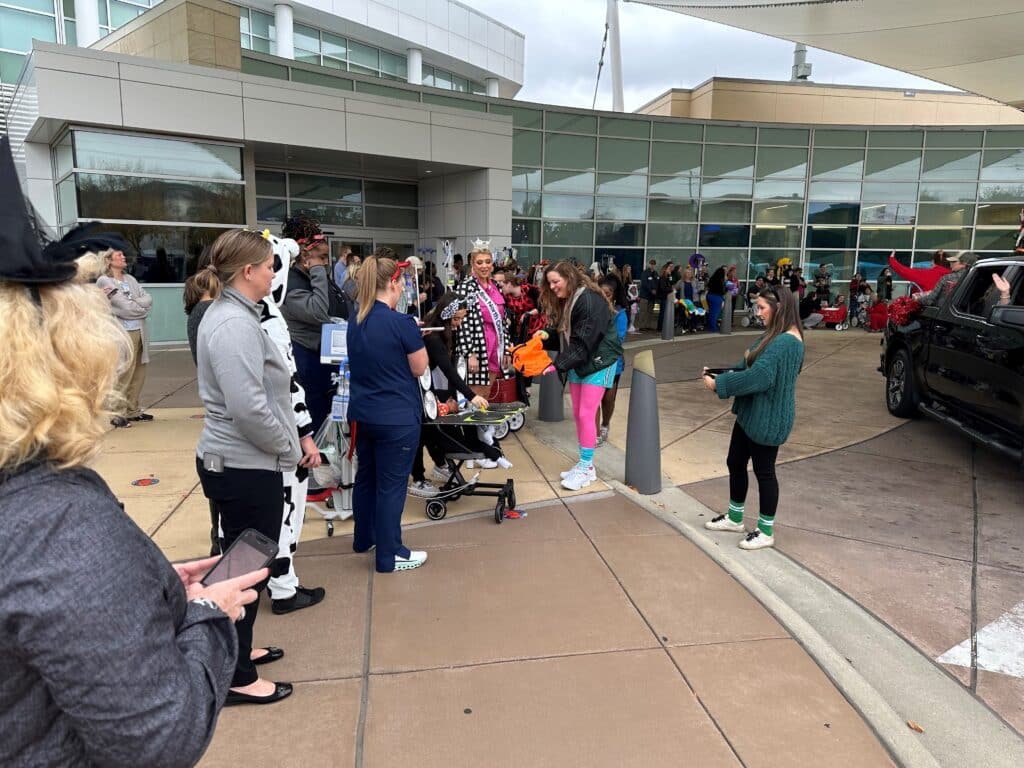
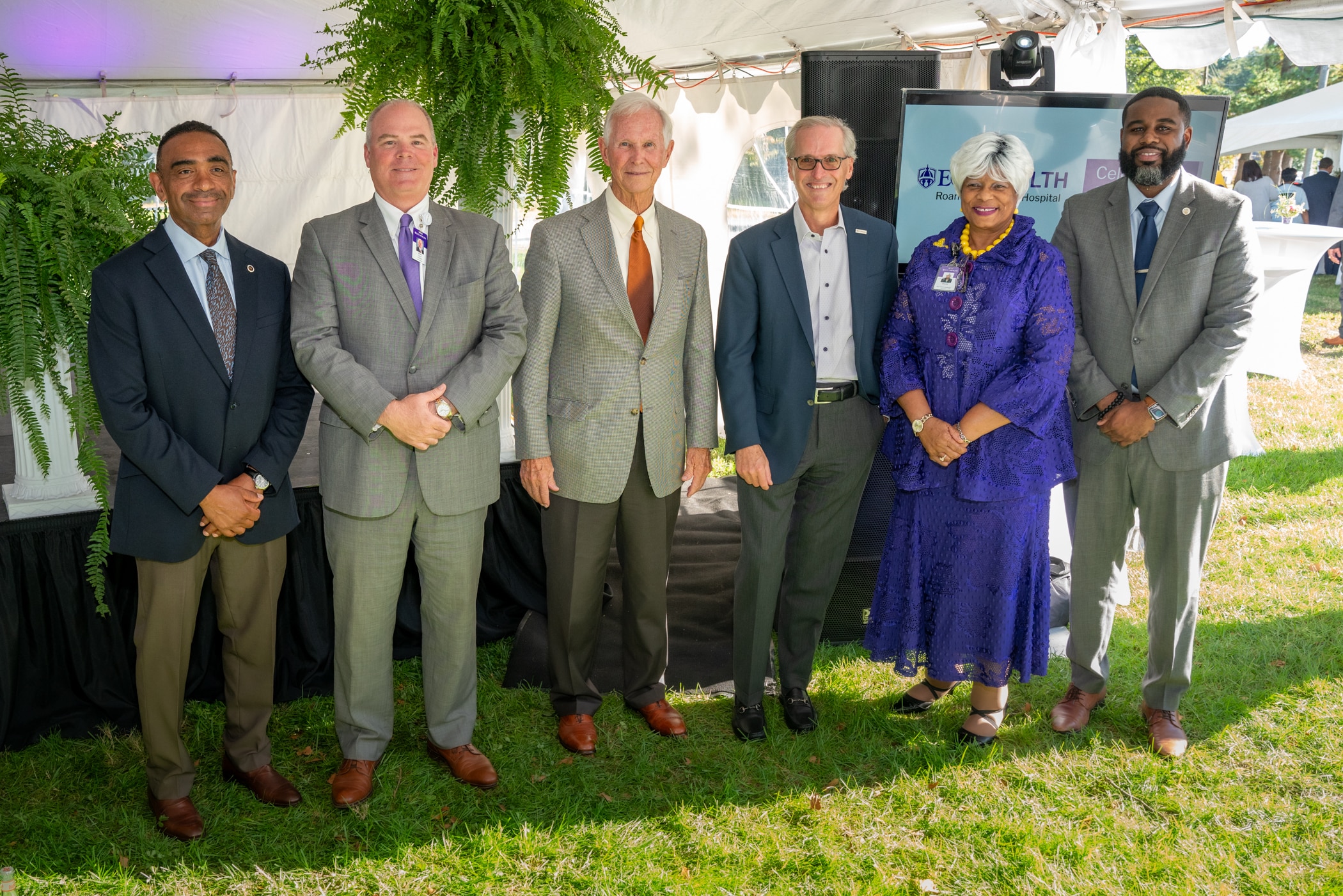
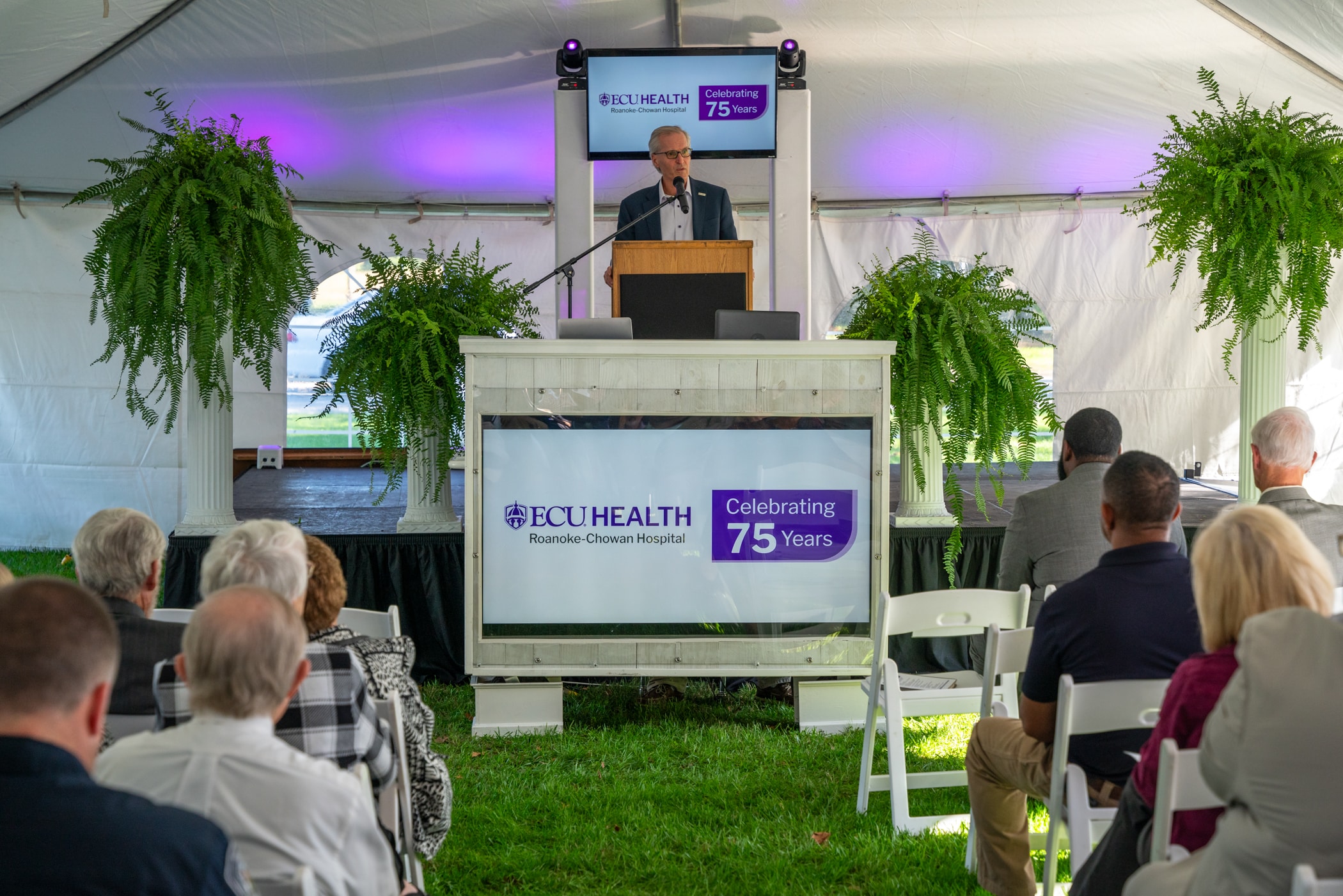
Ahoskie, N.C. – ECU Health Roanoke-Chowan Hospital hosted a community celebration Tuesday to proudly commemorate 75 years of dedicated service to eastern North Carolina.
Established in 1948, the hospital is dedicated to providing exceptional health care services to its community and has expanded and evolved to meet the changing health care needs of the region.
“We are immensely proud to celebrate 75 years of serving our community,” said Brian Harvill, president, ECU Health Roanoke-Chowan. “Throughout the years, we have strived to provide high-quality health care services with a patient-centered approach. Our commitment to excellence and compassionate care for our community has been the driving force behind our success and continues to positively impact those we are proud to serve.”
Situated in Ahoskie, this 114-bed hospital has been a cornerstone of health care, offering comprehensive services to nearly 40,000 residents spanning Hertford, Bertie, Northampton, and Gates counties. ECU Health Roanoke-Chowan Hospital offers a number of specialty services, including behavioral health, cancer care, pain management, wound healing, sleep services, pediatric asthma management and an ECU Health Wellness Center location in Ahoskie. The pediatric asthma program at ECU Health Roanoke-Chowan Hospital helps children in Hertford and Northampton counties miss fewer days of school, participate more fully in physical activities and look forward to a brighter future.
“Over the past 75 years, ECU Health Roanoke-Chowan has been dedicated to providing exceptional health care services, and this milestone marks a testament to its unwavering commitment to the well-being of the community it serves,” said Jay Briley, president of ECU Health Community Hospitals. “These achievements reflect the hospital’s dedication to improving the overall health and well-being of the community. Today is a day to celebrate the contributions of our current team members and those that came before them to help build a legacy of quality, compassionate care.”
Since its founding in 1948, ECU Health Roanoke-Chowan Hospital has continuously evolved to meet the changing health care needs of the community. On Oct. 24, 1948, the original 40-bed hospital celebrated with a community open house, officially welcoming patients on Nov. 1, 1948. ECU Health Roanoke-Chowan Hospital holds the distinction of being the first hospital licensed by the Medical Care Commission, still bearing license number 1, marking it as the first hospital in the nation constructed using federal funds provided by the Hill-Burton Act. In 1952, the facility expanded with the addition of its first wing, accommodating 25 additional beds, followed by another 34-bed expansion. By 1975, an extra 50 beds, 10 intensive care units and a third floor were added. In response to the growing community’s needs, the original structure was replaced, culminating in the dedication of the present-day hospital in 1992.
“As we celebrate 75 years of service, our hospital’s commitment to clinical excellence remains unwavering,” said Dr. David Lingle, chief of staff, surgeon, ECU Health Roanoke-Chowan. “Our legacy is built on a foundation of dedicated health care professionals who continuously strive to reach the highest standards of care, ensuring that every patient receives the best possible treatment, and making each year better than the last. It is an honor to serve alongside such a great team of professionals.”
ECU Health Roanoke-Chowan has achieved numerous milestones throughout its journey, including recertification as a primary stroke center by The Joint Commission and the American Heart Association/American Stroke Association, Get with the Guidelines – Stroke Gold Plus with Target: Type 2 Diabetes Honor Roll and earning accreditation by the American College of Surgeons Commission on Cancer as a Community Cancer Program.
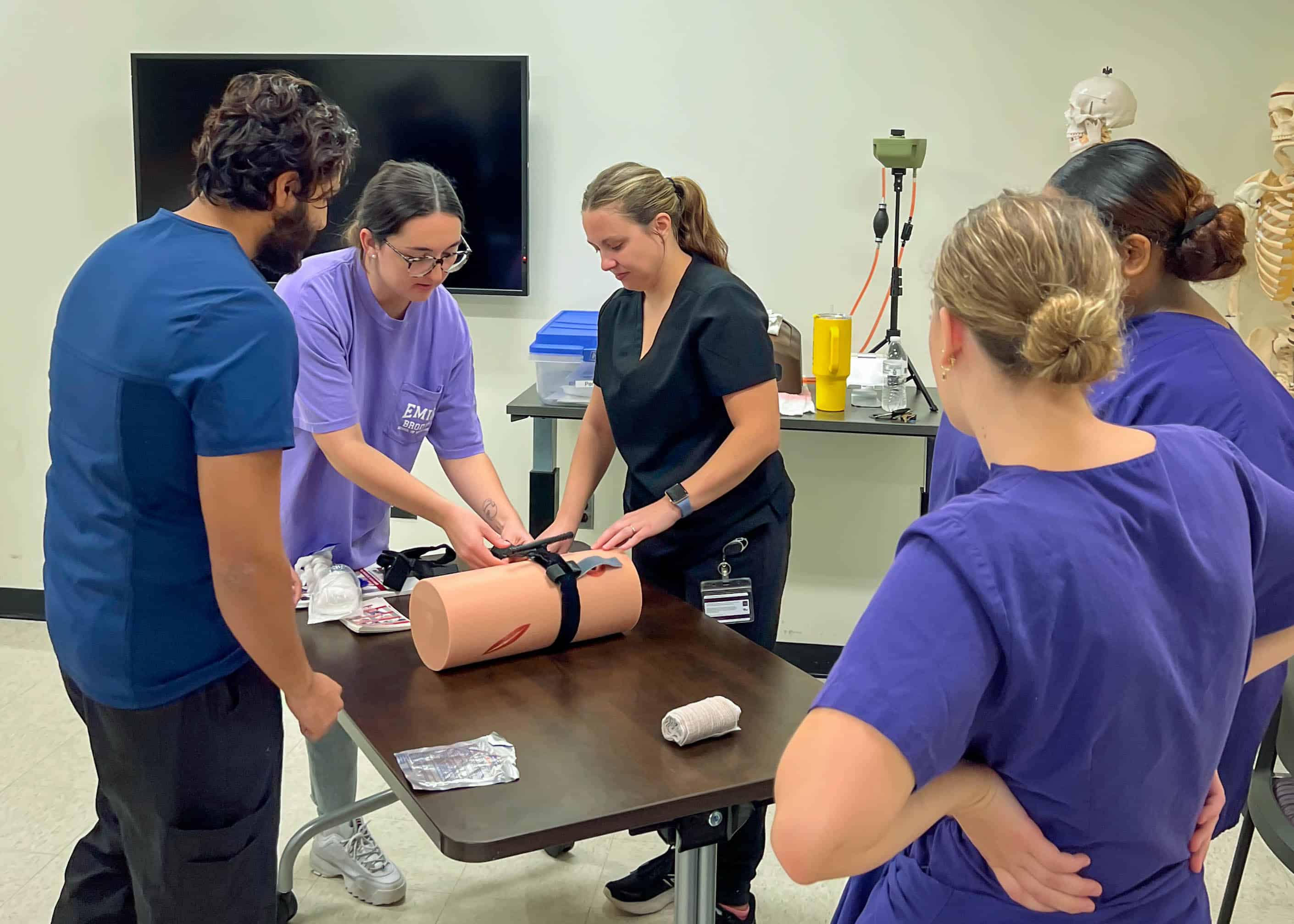
Students from the Brody School of Medicine, ECU College of Nursing, and Department of Physician Assistant Studies participated in the Interprofessional Triage and Emergency Assessment and Management (ITEAM) Day mass casualty training event hosted by the Brody School of Medicine’s Emergency Medicine Interest Group Saturday, Oct. 14. The training provides a unique opportunity for students from different health care disciplines to collaborate and gain hands-on experience in managing emergency events.
Experts from the ECU College of Nursing, Brody School of Medicine, Department of Physician Assistant Studies and ECU Health EastCare gave students interactive instruction in procedural skills, such as basic airway management, hemorrhage control and triage techniques. Students then applied these skills during a mass casualty simulation at the Interprofessional Clinical Simulation Center at the Brody School of Medicine.
“ITEAM Day was beneficial to promote collaboration and interprofessionalism among different health care providers,” said Stephiya Sabu, first year Brody School of Medicine student. “Doing this in the setting of a mass casualty event was important as they can be very stressful, and having this experience beforehand will help in the future if we are ever in that situation.”
This year’s simulation was a mass shooting incident. The Office of Clinical Skills Assessment and Education provided simulated patients, portraying symptoms and behaviors consistent with injuries sustained in a mass shooting, including confusion and panic.
Adding an extra layer of realism to the exercise, the ECU School of Theatre and Dance lent its expertise in moulage and makeup to create lifelike wounds on the simulated patients. The ECU Student Government Association provided funding for food and materials.
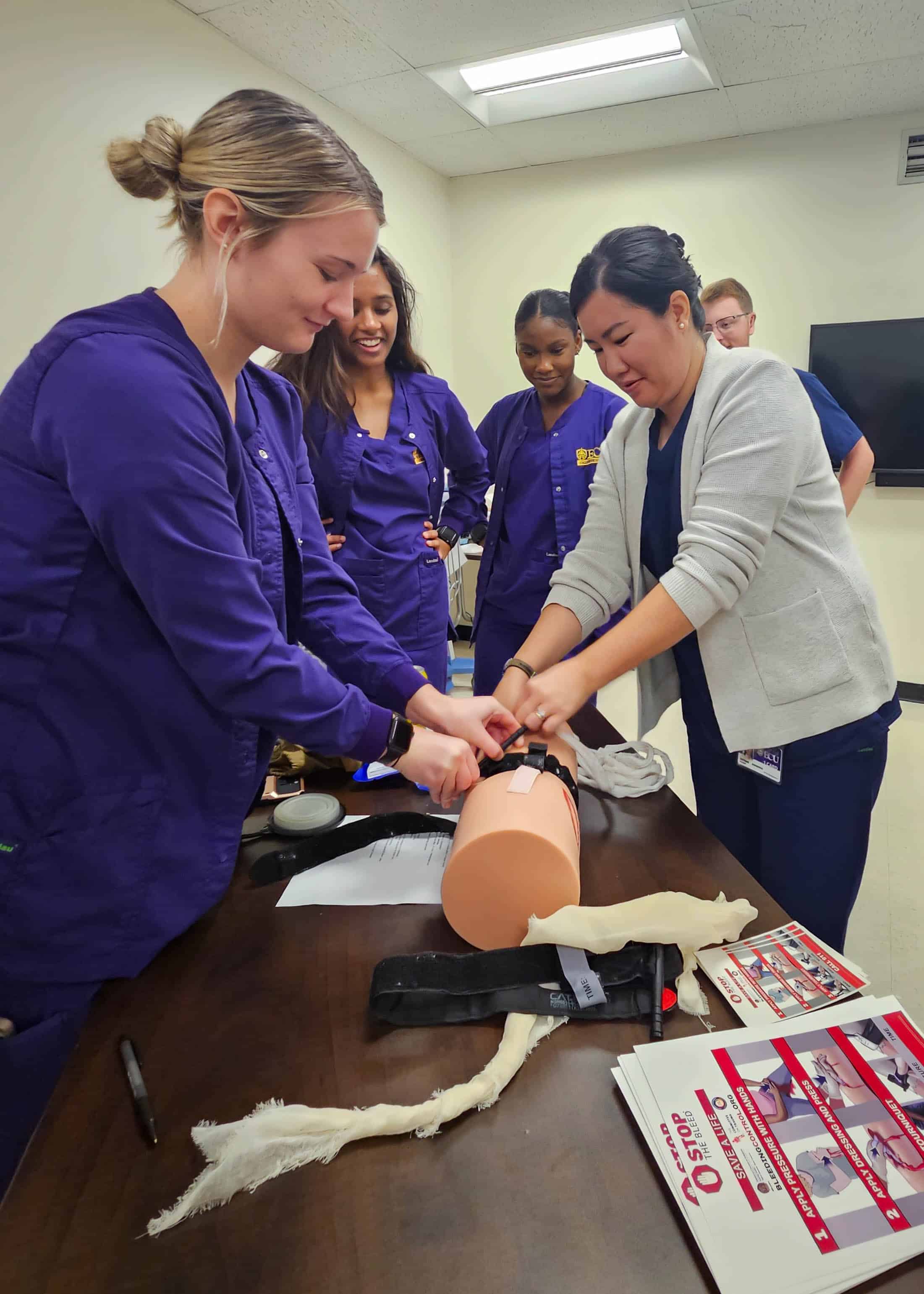
Students participating in the simulation were coached by a multi-disciplinary team of experts who provided feedback throughout the training. Chuck Strickland, outreach coordinator with EastCare, served as an instructor and provided invaluable insights into the role Emergency Medical Services (EMS) plays in a mass casualty incident. Students were educated on EMS’s initial response, patient management and treatment strategies.
“It is important for students to know the role EMS plays in initial patient triage and how we would request resources and determine patient destinations,” said Strickland. “EMS identifies the volume of patients and their acuity levels, then gets nurses, physicians and physician assistants to do on-scene care for high acuity patients. Students also learned the role of critical care transport and how those professionals would be engaged.”
Nursing students, medical students and physician assistant students shared their respective expertise while working together to promptly triage and treat patients. Both students and instructors underscored the significance of applying classroom learning to simulated real-life scenarios, highlighting the practical value of such experiences.
“Recent events in our community emphasize the unpredictability of mass casualties and just how terrifying they are,” said Lachlan Younce, first year Brody School of Medicine student. “As a medical student, I seek to understand my role as a medical professional in those situations. Participating in this mass casualty exercise exposed me to vital skills like patient triage, resource-efficient care and the importance of teamwork when working alongside my health care colleagues, including PAs and nurses. I am thankful for how this ITEAM training experience helped me develop my readiness as a medical professional.”
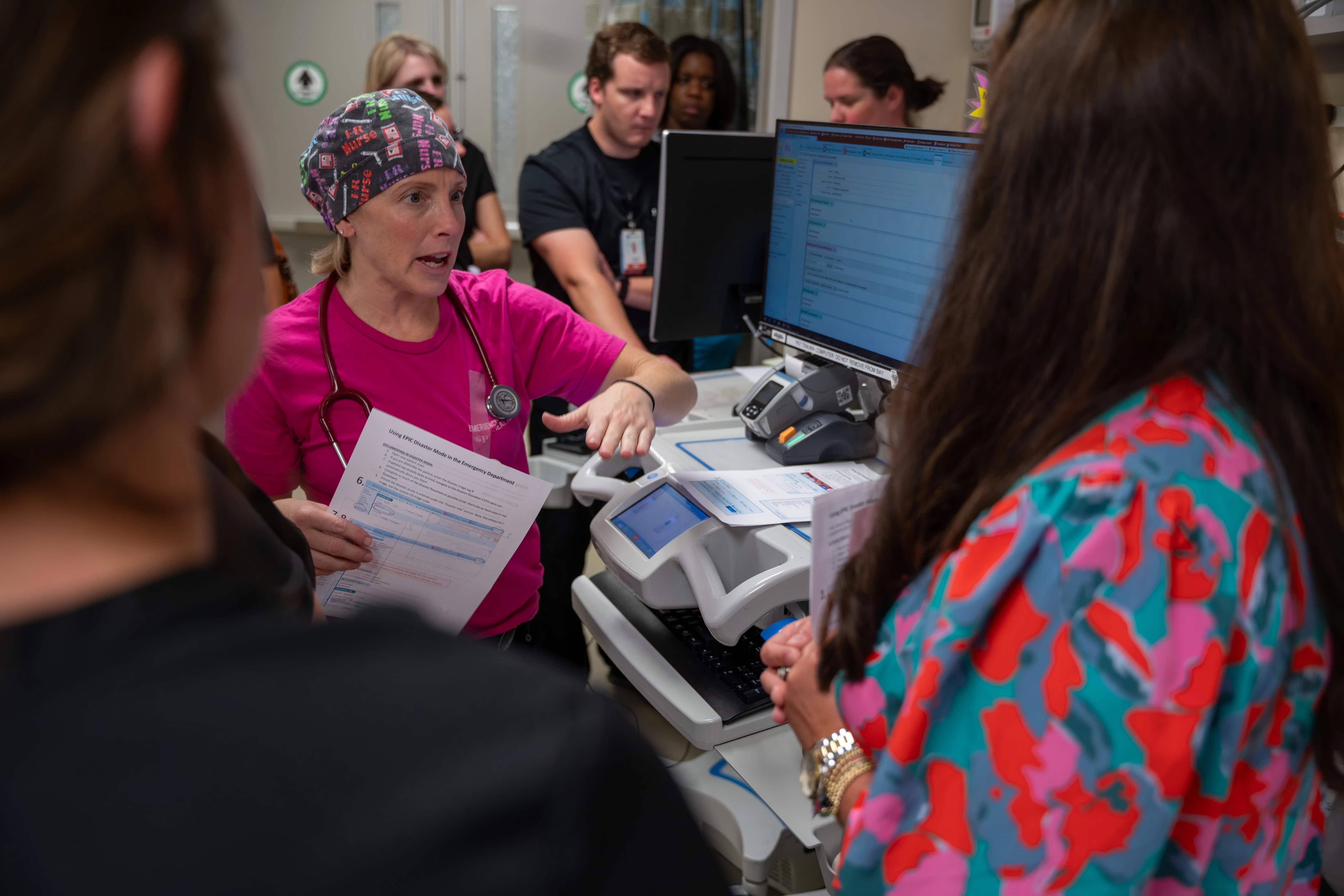
Doctors, nurses and support teams in the ECU Health Medical Center emergency department understand the importance of being prepared for any scenario. That is why the Medical Center ED and Trauma Department teams took part in a mass casualty disaster drill Sept. 7 in an effort to test and improve knowledge of triaging, EPIC documentation, response roles and more as part of the American College of Surgeons accreditation process.
“The more prepared we are now, the more lives we can save,” said exercise director Dr. David Trisler, critical care surgeon at ECU Health Medical Center and clinical assistant professor of trauma and surgical critical care at the Brody School of Medicine at East Carolina University. “Our community depends on us to be there for them during the most difficult circumstances. These types of exercises ensure we will be able to meet that need.”
Mass casualty situations can be difficult to imagine, especially ones that happen here in our local community.
With the use of inflatable mannequins representing the both children and adult patients, the disaster drill consisted of 30-40 casualties brought to the ED following a simulated mass shooting at a local event. Drill participants worked through triaging the patients based on their medical status and moving them through the emergency care and surgical process, using real-time information like numbers of ORs and beds in use during the time of the drill.
For Dr. Eric Toschlog, chief of trauma and acute care surgery for ECU Health Medical Center and Brody and the rest of the emergency department team, preparing for those situations comes with the territory of working at the only Level I Trauma Center in eastern North Carolina.
“The ECU Health Medical Center emergency department serves as a hub for 1.4 million people who live across the region, which highlights the importance of being prepared for any circumstance imaginable,” said Dr. Toschlog. “The more we work to improve our process and understanding, the better prepared we will be to save lives.”
Those involved met immediately following the drill to debrief on the exercise, closely examining strengths and weakness, as well as plans for improvements, all in an effort to ensure the Medical Center emergency department team is well-positioned to provide high-quality care to the community during a time of dire need. The common thread throughout the event and debrief was the direct correlation between preparation and lives that could be saved.
“This was a great opportunity for us to test our knowledge and we certainly learned a lot of valuable lessons that will serve us well,” said Dr. Trisler. “I could not be more proud of the entire ED team for taking the time to participate in this disaster drill.”
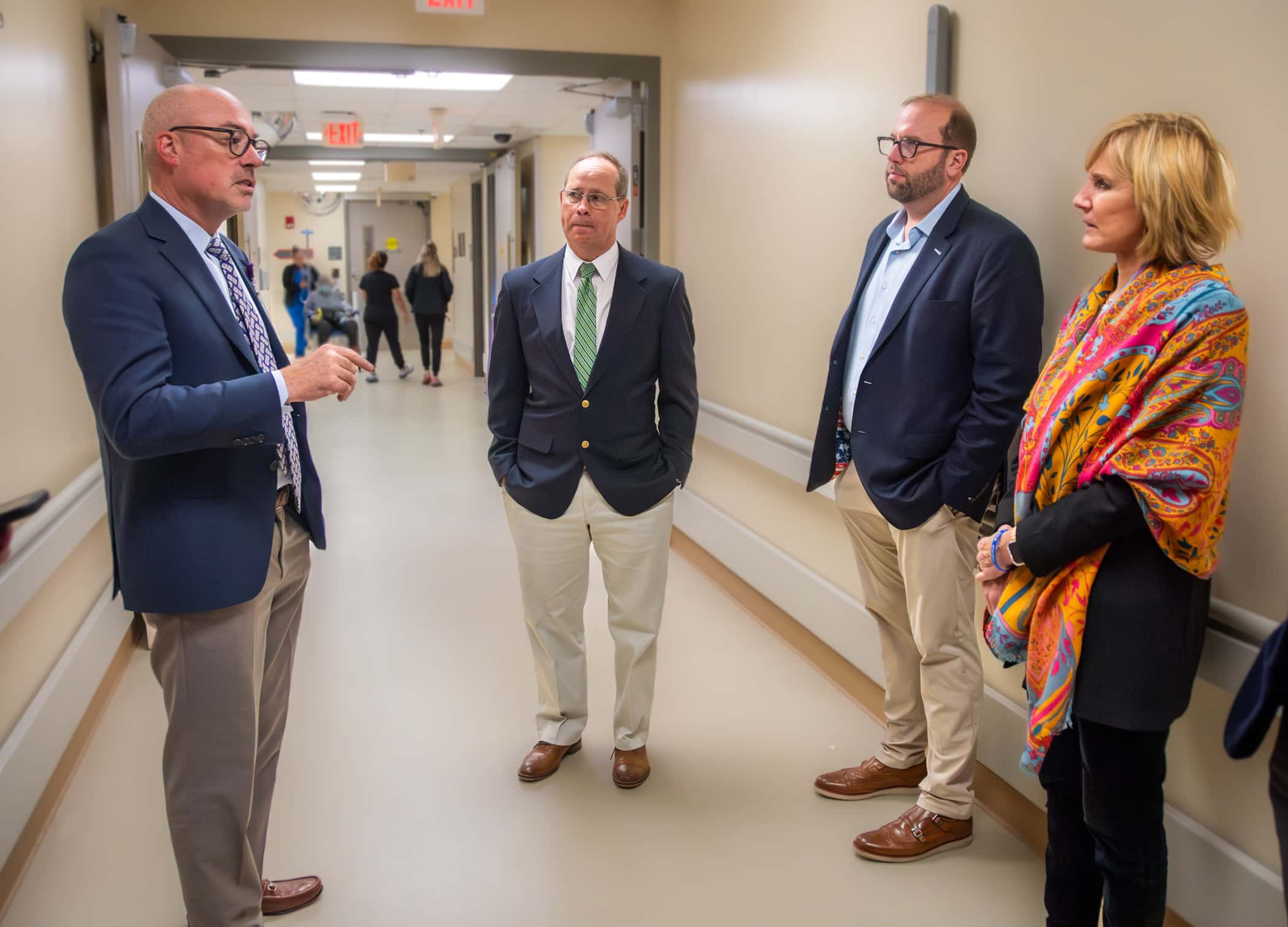
Greenville, N.C. – Members of the U.S. House Committee on Ways and Means visited Beaufort and Pitt counties Monday, Oct. 16, 2023, to engage with the community, tour ECU Health Beaufort Hospital and ECU Health Medical Center, hear from community care leaders and discuss the challenges facing rural health care in America. The committee visit consisted of Rep. Greg Murphy, Chairman Jason Smith, and Reps. Adrian Smith, Kevin Hern, and Claudia Tenney.
“Whether it’s in my home state of Missouri or eastern North Carolina, rural communities are facing a health care crisis,” Chairman Smith said. “Today we heard from health care providers and local leaders about the struggles their communities face ranging from patients traveling long distances to receive emergency care to health facilities finding and keeping a quality health care workforce with the scarce resources available. On our current path, access to health care for a huge portion of America will continue to erode, putting the health of millions more rural Americans at risk. The Ways and Means Committee will take what we learned today from patients and doctors on the frontlines of this crisis and use it to inform the best way to expand access to health care in rural communities.”
Committee members and county leaders started the day by visiting Belhaven before touring ECU Health Beaufort Hospital, built in 1957 under the Hill-Burton Act that provided federal funding to support rural hospitals. There, committee members joined a roundtable conversation with ECU Health leaders and Beaufort County community leaders about the importance of finding collaborative solutions to the complex rural health care challenge.
The day concluded with committee members visiting ECU Health Medical Center in Greenville, a state-of-the-art academic facility that delivers high-level care to residents of eastern North Carolina. ECU Health Medical Center is the only Level I trauma center east of Raleigh, showcasing ECU Health’s unique system of care that serves as a national model for providing high-quality rural health care.
“Chairman Smith has been gracious enough to organize field hearings in the country this year on various issues,” said Rep. Murphy. “I am glad to have him and other members of the Ways and Means Committee spend time in eastern North Carolina to look at rural health care. We had the opportunity to witness firsthand the efforts of clinicians striving for quality in medicine while ensuring access to care for all.”
Throughout the tours, lawmakers walked through the emergency departments, intensive care units and labor and delivery units and engaged in conversations with clinicians regarding the challenges faced by rural health care, the aging infrastructure and the difficulties associated with sustaining essential services. Leaders discussed the importance of preserving services such as labor and delivery units within ECU Health, which are a lifeline for expectant mothers, providing essential access to safe and skilled maternity care, often in regions where other health care options are limited. Maintaining units like these ensures that rural families do not have to endure the significant burden of traveling long distances to access critical services.
“ECU Health has long advocated for solutions at the state and national level to combat the intensifying rural health care crisis facing America,” said Dr. Michael Waldrum, ECU Health CEO and dean of the Brody School of Medicine at East Carolina University. “We are pleased legislators not only recognize the need to explore solutions to maintain rural health care, but also recognize ECU Health as a leading voice on this important topic. The visit to Beaufort County and Greenville gave us an opportunity to show our mission in action, and we are deeply appreciative of the committee for spending time with us discussing rural health care.”
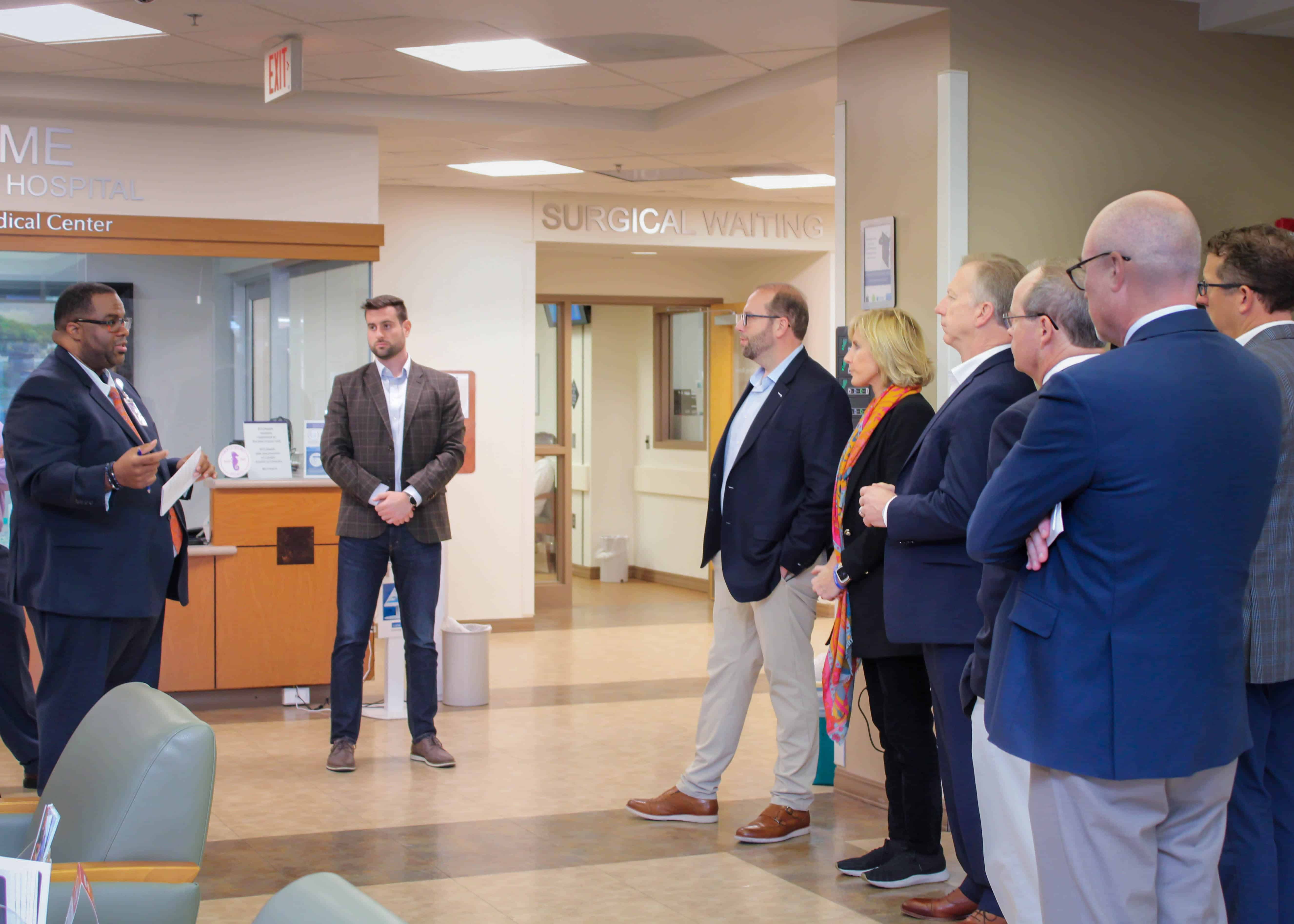

Health and well-being are at the very heart of creating economic vibrancy in a community. That is why Brian Floyd, chief operating officer of ECU Health and president of ECU Health Medical Center, joined a group of statewide health care leaders at the NC Chamber Health Care Conference on a panel titled “Working Together to Create Healthier Communities” on Sept. 14 in Durham.
Speaking to a packed room of health care, business, industry and government leaders from across the state, Floyd spoke about ECU Health’s unique position in eastern North Carolina as both the largest health care system and employer in the 29 county region, and the importance of maintaining high quality and high value care in rural communities.
“Thinking about the NC Chamber and what we’re here to talk about today, it’s important to remember North Carolina is the second largest rural state in the country,” said Floyd. “One-in-three people in North Carolina lives in a rural community so rural health care is a very critical and very personal endeavor. At ECU Health, we take our mission seriously to improve the health and well-being of eastern North Carolina, which is a region with some of the highest levels of poverty in the state.”
ECU Health is a leader in rural health care, Floyd said, and is constantly exploring new ways to improve access to care for rural communities. Speaking to topics such as improving mental health resources, partnering closely with schools, colleges and universities and investing in the health and well-being of team members, Floyd made it clear ECU Health’s role in the East goes far beyond just delivering health care.
“ECU Health is a health care provider, an educator and an economic engine for our 29 county region and we understand that collaboration is key to solving health care challenges,” Floyd said. “When I think about what we do, the reason we have a 974 bed hospital in a town of more than 80,000 people is because of the tremendous burden of disease in the communities we serve. Improving quality and cost is our goal and our clinical care component certainly plays a role in that, but we know that value is created by improving wellness through initiatives that tackle social determinants of health.”
Floyd was joined on the panel by Dr. Art Apolinario, board president of the N.C. Medical Society, Dr. Creagh Milford, senior vice president of retail health for CVS Health and Jennifer Sacks, associate director of the clinical operations program lead for Biogen. The panel was moderated by Gary Salamido, president and CEO of the NC Chamber.
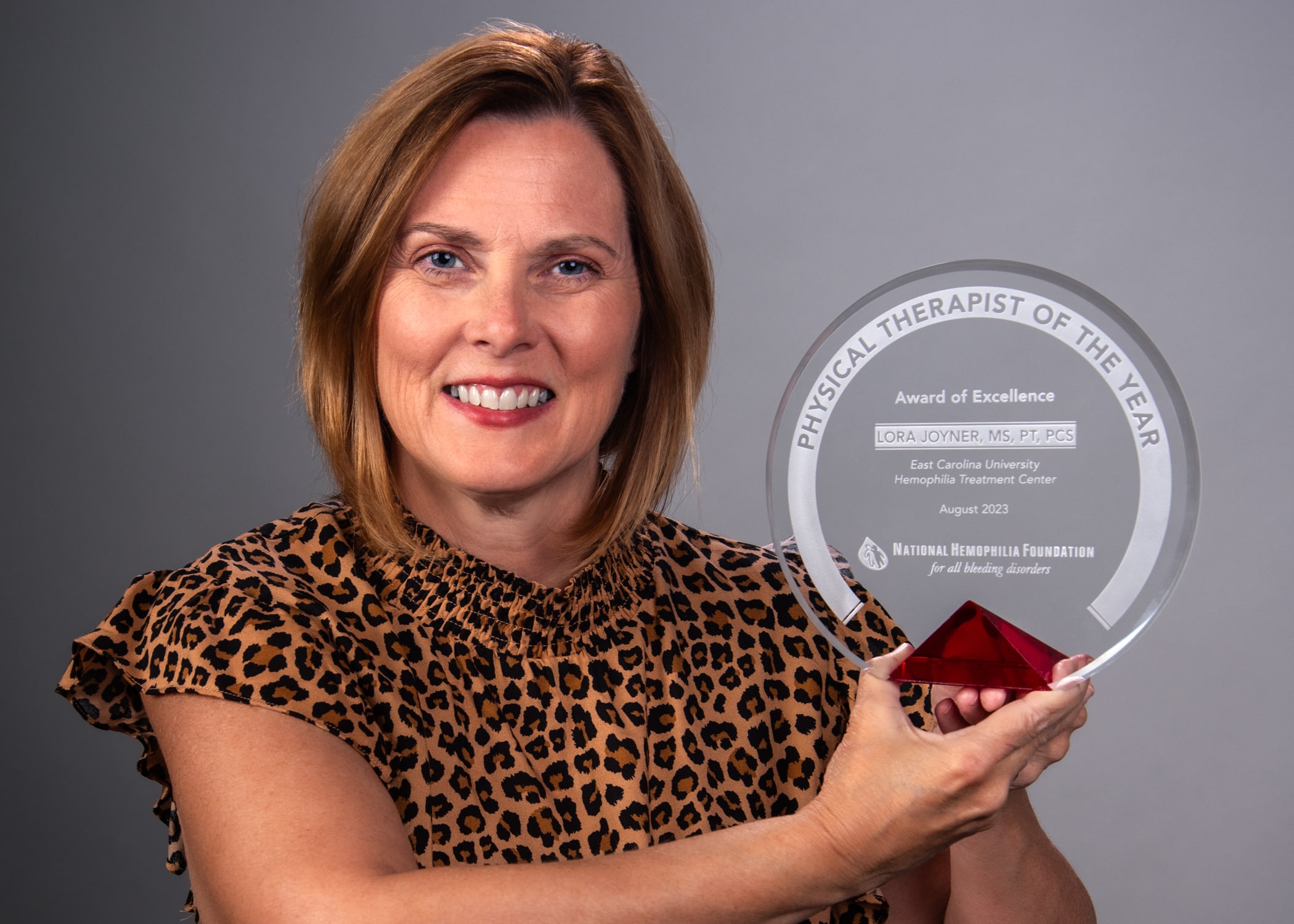
Greenville, N.C. – ECU Health and the Brody School of Medicine at East Carolina University’s Lora Joyner was recently selected as the National Bleeding Disorders Foundation (NBDF) Physical Therapist of the Year. Each year, NBDF honors those who have made significant contributions to the inheritable blood and bleeding disorders community at its annual Awards of Excellence program.
“It is an honor to be recognized for my life’s work as a physical therapist in the bleeding disorder community by fellow therapists, health care professionals, patients, families, and HTC colleagues,” said Lora Joyner, MS, PT, PCS, physical therapist and clinic manager at ECU Health Hemophilia Treatment Center (HTC). “I am grateful that my name will be associated with Donna Boone and previous award winners and recognized as a role model and mentor for current and future health care professionals in the bleeding disorder community.”
Physical Therapist of the Year, given in honor of Donna Boone, PT, honors an individual who has demonstrated service to the inheritable blood and bleeding disorders community above and beyond their daily responsibilities in an HTC PT role. This person serves as a role model for others in the physical therapy field and has a minimum of two years’ experience working with individuals with blood or bleeding disorders at an HTC. Donna Boone was a pioneer in physical therapy and bleeding disorders and served as a mentor for many professionals.
“We are proud of Lora for all of the hard work, dedication, and leadership she has put into this clinic and into our patients,” said Dr. Beng Fuh, director of pediatric hematology and oncology, “Bleeding disorders, sickle cell disease and cancer are life-changing diagnoses for patients and their families. Lora is an invaluable asset and works hard to ensure patients can live their best lives as possible after diagnosis. Lora’s passion for her patients is reflected by this well-earned achievement.”
Joyner has worked at ECU Health HTC for 32 years as a physical therapist and as the clinic manager for seven years. As HTC manager, Joyner is responsible for selecting patients for clinical trials and research, supporting transition needs of the clinic, quality improvement and writing grants and reports. As a physical therapist, Joyner is responsible for treating any muscular skeletal complications, most commonly joint or muscle bleeds. If left untreated long enough, joint/muscle bleeds can cause chronic pain, long-term joint problems and limited mobility. Joyner also facilitates safe participation in sports and physical activity of patients, including medication management, which allows patients to live an active and fulfilling life. Additionally, Lora has held leadership roles in multiple regional and national organizations. She is the currently the national chair of the physical therapy committee of the NBDF.
“When you see the joy on the face of a little one when you say ‘yes you can play baseball’ after their diagnosis, after they’ve thought they wouldn’t be able to do normal activities, that’s one of my favorite parts of my day,” Joyner said. “All parents dream that their children are able to do normal things, and I’m able to help children do that.”
ECU Health HTC is a nationally recognized comprehensive lifespan clinic with both adult and pediatric specialty services that is one of only three in North Carolina and is part of a national network of over 140 Comprehensive Hemophilia Diagnostic and Treatment Centers, which provide comprehensive specialty care to people with rare inherited bleeding disorders and their families.