
David Roberts’ journey to becoming a NICU nurse at ECU Health began when he was just 10 years old. He spent weekends and summers helping his grandmother and cousins care for his grandfather. When his grandfather later transitioned to a nursing home, David witnessed the compassion of nurses — an experience that left a lasting impression and planted the seed for a future in health care.
Early experience through HSA
David joined the Health Sciences Academy (HSA) in middle school, where he explored various medical careers through hands-on experiences. He volunteered at the same nursing home where his grandfather had received care, shadowed in the emergency department and connected with medical students.
“The variety helped me see the full picture of health care and figure out what I wanted to pursue,” he said.
As a high school senior, David was one of only eight students in the county accepted into HSA’s internship program. He was placed in the cardiac catheterization lab — a personally significant assignment, as both his father and grandmother were experiencing heart issues at the time. “While I was interning in the cath lab, my grandmother had a heart attack and was brought in. I was able to help care for her until she was taken into the procedure room. It was a scary moment, but watching the ECU Health team in action was reassuring. One of the doctors said, ‘I treat every patient like they’re my own grandmother,’ and I told him, ‘Well, this actually is my grandmother!’ He took great care of her. I was even able to be there after her procedure and help her get back home.”
That experience solidified David’s desire to pursue nursing. After shadowing a nurse practitioner and performing CPR for the first time at age 17, he was hooked. “Once you get past the nerves of doing something for the first time, it gets easier,” he said.
College, family and a renewed focus
Motivated by those early experiences, David enrolled at East Carolina University (ECU) as a nursing major, but he soon realized he wasn’t fully prepared for the program’s demands. Wanting to stay in health care, he shifted his focus and earned a bachelor’s degree in family and community services. During that time, he interned at the James and Connie Maynard Children’s Hospital with the Family Support Network, which supports families of children with special health care needs.
While attending ECU, David also worked for ECU Transit, a job he continued for three years after graduation. It was during college that he met his wife, and after they married, he began to reflect on his long-term goals. The interest to return to clinical care resurfaced. “I realized it’s not about being the smartest — it’s about discipline and work ethic,” he said.
In 2021, David was accepted into the nursing program at Wilson Community College. Just two weeks into the program, he and his wife learned they were expecting their first child. He completed one semester before stepping back to prioritize his growing family. “It was a hard decision. I was proud to have finally made it into nursing school, but I knew I needed to be there for my family.”
Their daughter was born via cesarean section at ECU Health Medical Center, and David was deeply moved by the care his wife and newborn received. “The nurses were fantastic. They were so supportive of our family, and it made me think about nursing in Labor and Delivery.”
“Without HomeGrown, I couldn’t have done it…”
David began exploring opportunities at ECU Health and discovered the HomeGrown program, which supports team members pursuing their first degree while continuing to work. The program offered the flexibility he needed to return to health care. In 2022, he joined ECU Health’s Behavioral Health unit. Soon after, he reconnected with Workforce Development Director Lisa Lassiter, whom he had met during his time in the Health Sciences Academy. With her encouragement, he applied to Pitt Community College’s nursing program and was accepted in 2023, followed by his acceptance into the HomeGrown program the next semester. “Without HomeGrown, I couldn’t have done it. The support from Lisa Lassiter and Doris Hill (Workforce Development Consultant with ECU Health) helped me get through it.”
After gaining experience in Behavioral Health, David transitioned to the Cardiovascular Intensive Care Unit (CVICU), where he worked for a year and a half. Following a clinical rotation in Labor and Delivery and shadowing NICU nurses, he knew he had found his calling. “It reminded me of when my daughter was born and how supported we felt. I wanted to be that support for other families and help these babies.”
Although his first attempt to join the NICU team at a hiring event didn’t lead to an offer, David remained optimistic. He reached out directly to unit managers to express his interest.
At the time, he was still working in the CVICU and enjoying the role. “I told myself, ‘By the time graduation hits, I’m going to stick with whatever unit I’m in.’” But in early May, he received a call from a recruiter: a NICU position had opened, and the manager – who remembered his outreach – wanted to speak with him. He interviewed with the team and received an offer on May 9, three days before graduation. He officially began his role as a NICU nurse on June 16.
Reflecting on his journey, David credits the Health Sciences Academy, HomeGrown and his family for helping him reach his goal. “It’s been a long road, but every step brought me closer to where I’m meant to be.”
Looking ahead and practical advice for those interested in health care
Looking ahead, David plans to stay in health care and will start his RN to BSN (Registered Nurse to Bachelor of Science in Nursing) this fall at ECU. “I’d like to become a nurse practitioner. I’m hoping to shadow some NPs and see if I can work in a neonatal unit. I also like the idea of earning a master’s in education so I can teach others about health care.”
David offered advice for students considering a career in health care. “If you can shadow someone, do it. You can hear about it, but you don’t really know until you experience it. And to any kids out there – especially boys – nursing is a female-dominated field, but that’s OK. I’ve found a real sense of purpose in what I do. When you work in health care, whether as a nurse or in another role, you’re helping people through some of their hardest times. That’s powerful.”
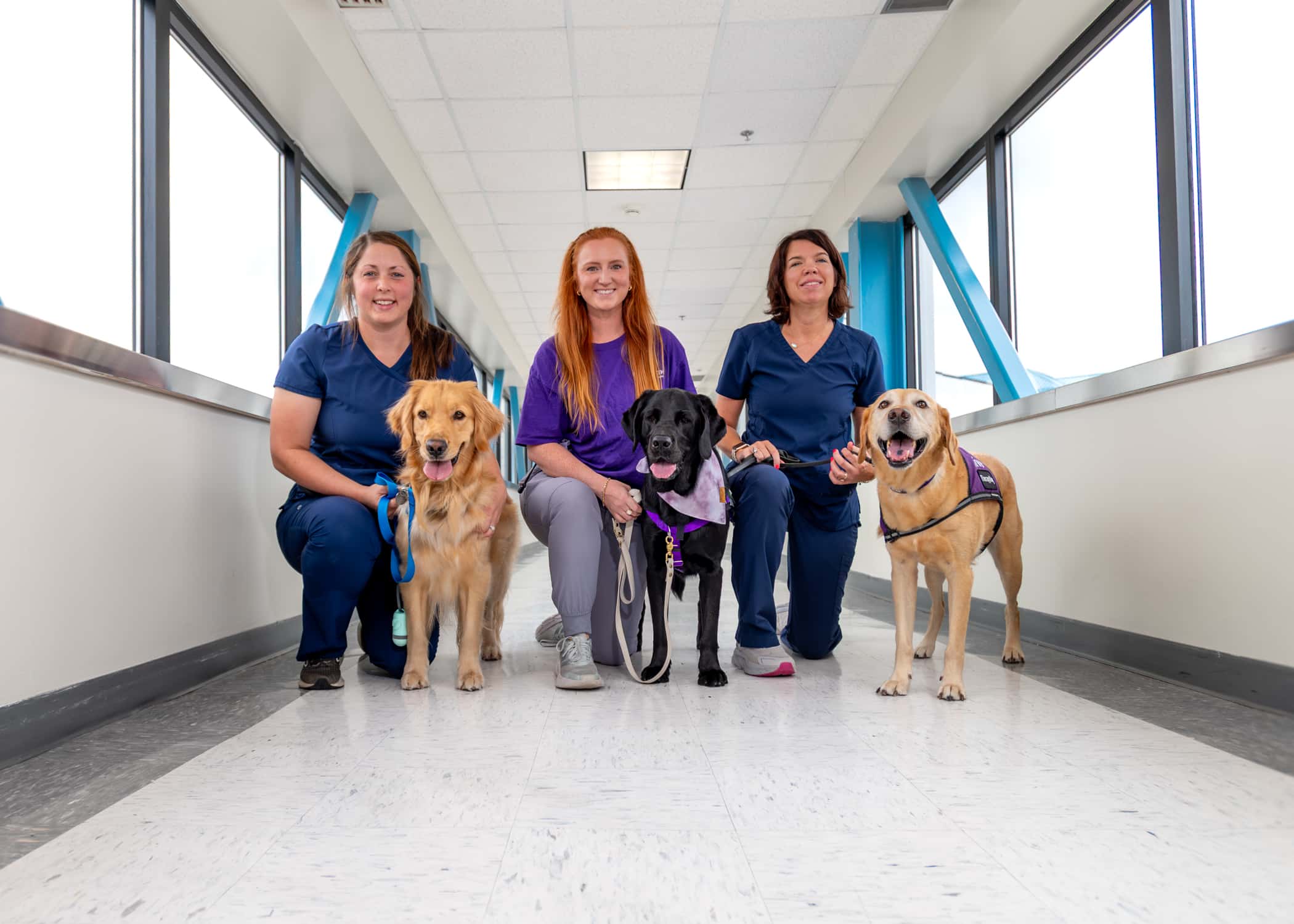
Across ECU Health Medical Center and the James and Connie Maynard Children’s Hospital, three dogs named Clive, Erving and Sam are leaving pawprints in the heart of patients, their families and team members alike. Whether in rehabilitation or pediatrics, these four-legged friends bring joy, motivation and emotional support to patients and their families.
Clive, an eight-year-old golden retriever and lab mix, has been working in the medical center’s rehabilitation department for more than three years. Originally trained through Canine Companions, a non-profit organization that trains and matches service dogs, the program released Clive due to his anxiety riding in cars. but retained all his training and social skills. His puppy raiser, Tanya Bowen, who serves as an outpatient rehab supervisor, connected with recreational therapist Kasey Shue, and found a way to put Clive’s training and social skills to use in therapy work. He typically works two days a week and specializes in emotional support, stress relief and anxiety management. His gentle demeanor makes him ideal for comforting patients and staff.
Shue describes him as a “snuggly bug,” and though he’s older and slower, Clive’s presence continues to make a powerful impact.
Erving, a golden retriever and the newest member of the rehab team, joined in May of 2025. Also raised through Canine Companions in Florida, Erving underwent professional training in Orlando and now works full-time with recreational therapist Kristen Jones. With 40 commands under his belt and certification through Assistance Dog International, Erving supports patients in physical and occupational therapy. His ability to retrieve, tug and interact with patients helps challenge their balance, build strength and boost motivation. Patients often find themselves more willing to participate in exercises when Erving and Clive are involved.
“One patient we had arrived at ECU Health’s rehab unit experiencing pain in his legs and physical therapy was proving difficult,” said Shue. “He didn’t want to walk. The pain was too much, and he was resistant to every attempt to get him moving.”
Then Clive entered the room.
The patient had dogs at home and immediately responded to Clive’s familiar energy.


“With Clive, he agreed to walk around the gym, something he hadn’t been willing to do before,” said Shue. “The pain was still there, but Clive helped him push through it.”
Then there was a patient recovering from a stroke. She couldn’t speak and hadn’t smiled since arriving.
“After a session with Clive, she smiled,” said Shue. “Her face lit up. When the session ended, she pointed to Clive and then to her bed because she wanted him to stay.”
As Clive curled up beside her, the patient’s daughter cried, the doctors cried, and so did the therapist.
“It was a breakthrough moment, thanks to Clive,” said Shue.
For one young girl with Guillain-Barré Syndrome, Clive and Erving demonstrated how service dogs could support independence. She practiced real-life tasks with Erving like opening doors and pushing buttons and left excited to begin the process of getting a dog of her own.
According to Jones and Shue, even the staff feel the impact. On a day when a patient coded and did not survive, Erving was there to comfort the doctors who had administered CPR. His quiet support helped them process the grief.
A few steps away from rehab in Maynard Children’s Hospital resides Sam, a black golden retriever, lab and poodle mix trained through Canine Assistants, another non-profit organization that raises hospital facility dogs and personal services dogs. Her arrival was the result of nearly eight years of advocacy and planning by Child Life specialists Ashton Ayers and Chelse Smith, along with colleagues Jaymi Mendoza and Christy Denius. ECU Health Foundation provided the funding to bring Sam on board. After years of research and collaboration with the ECU Health Foundation, funding was secured and Sam officially joined the team in November 2023. Sam was matched with handlers Ayers and Smith after they were vetted through the organization and the hospital.
Ayers and Smith helped build the facility dog program from the ground up. Ayers was inspired by a facility dog handler who spoke at a child life conference, while Smith had firsthand experience with pet therapy and saw its impact in Intensive Care Unit (ICU) settings.
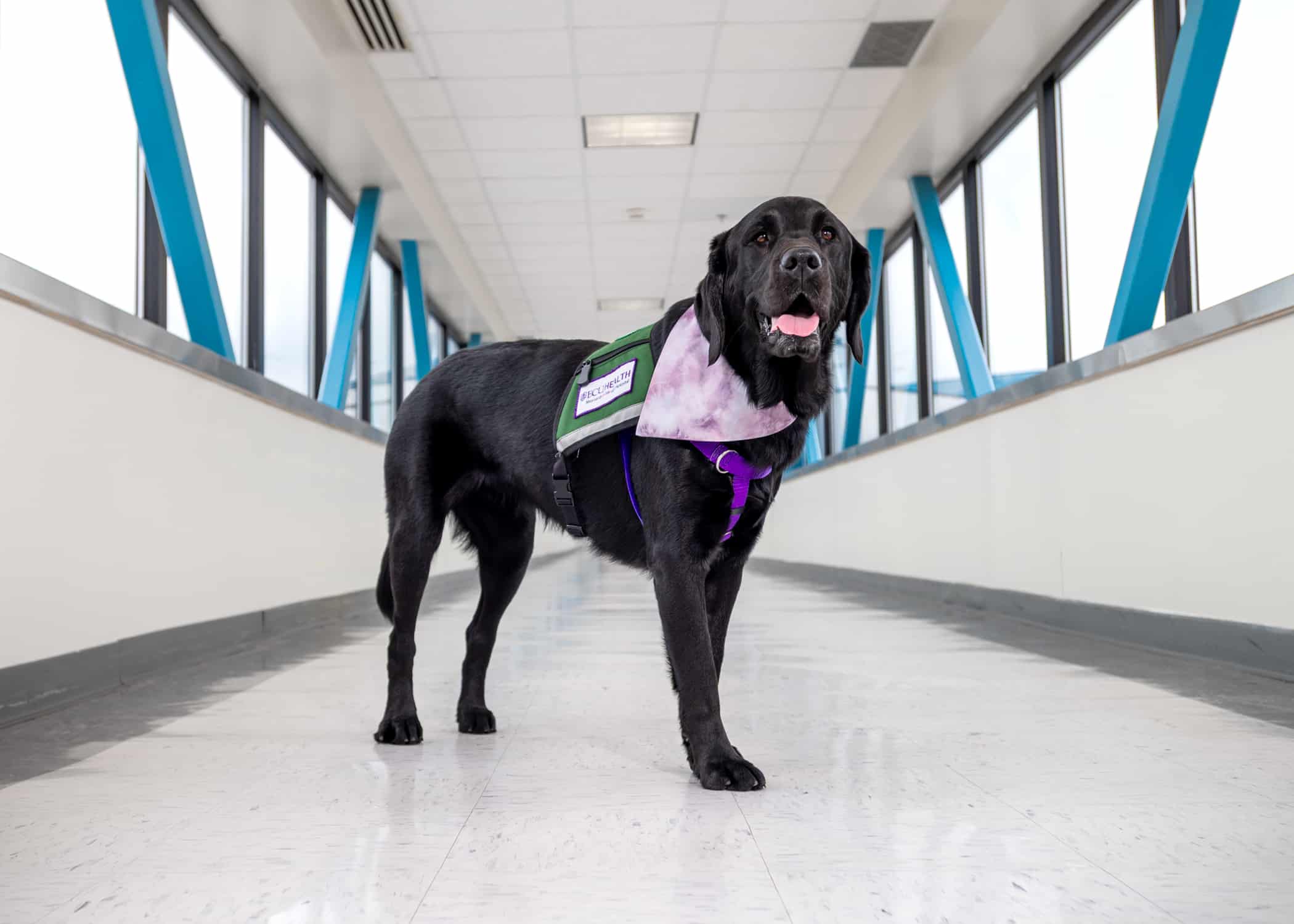
Sam now supports pediatric patients, including those in the ICU, offering comfort during procedures, emotional support during difficult moments and motivation for children facing medical challenges.
“We have a 16-year-old oncology patient,” said Smith. “He was slow to warm up to the hospital environment, but he definitely bonded with Sam. He met Sam when he was newly diagnosed with cancer.”
With his particular diagnosis, it was very important for him to get up and walk for his growth and healing, and to get him out of the room for his emotional state also, according to Smith.
“His care team told us he needed to get out of his room, but he didn’t want to,” said Smith.
Smith and Ayers brought over Sam and offered for him to take Sam outside and throw the ball for her. He surpassed all of his physical therapy goals that day and got to go outside and play with Sam.
“He came back last week and the first thing he said was, ‘I really missed Sam,’” said Ayers. “That’s always the first thing when he’s here, he wants to see Sam immediately.”
Whether it is comforting a child, motivating a patient or supporting a grieving doctor, Clive, Erving and Sam are more than therapy dogs.
“I’ve had people walk by and say, ‘You have the best job in the hospital,’” Shue said. “And now it’s even better – because there are three of them.”
Resources
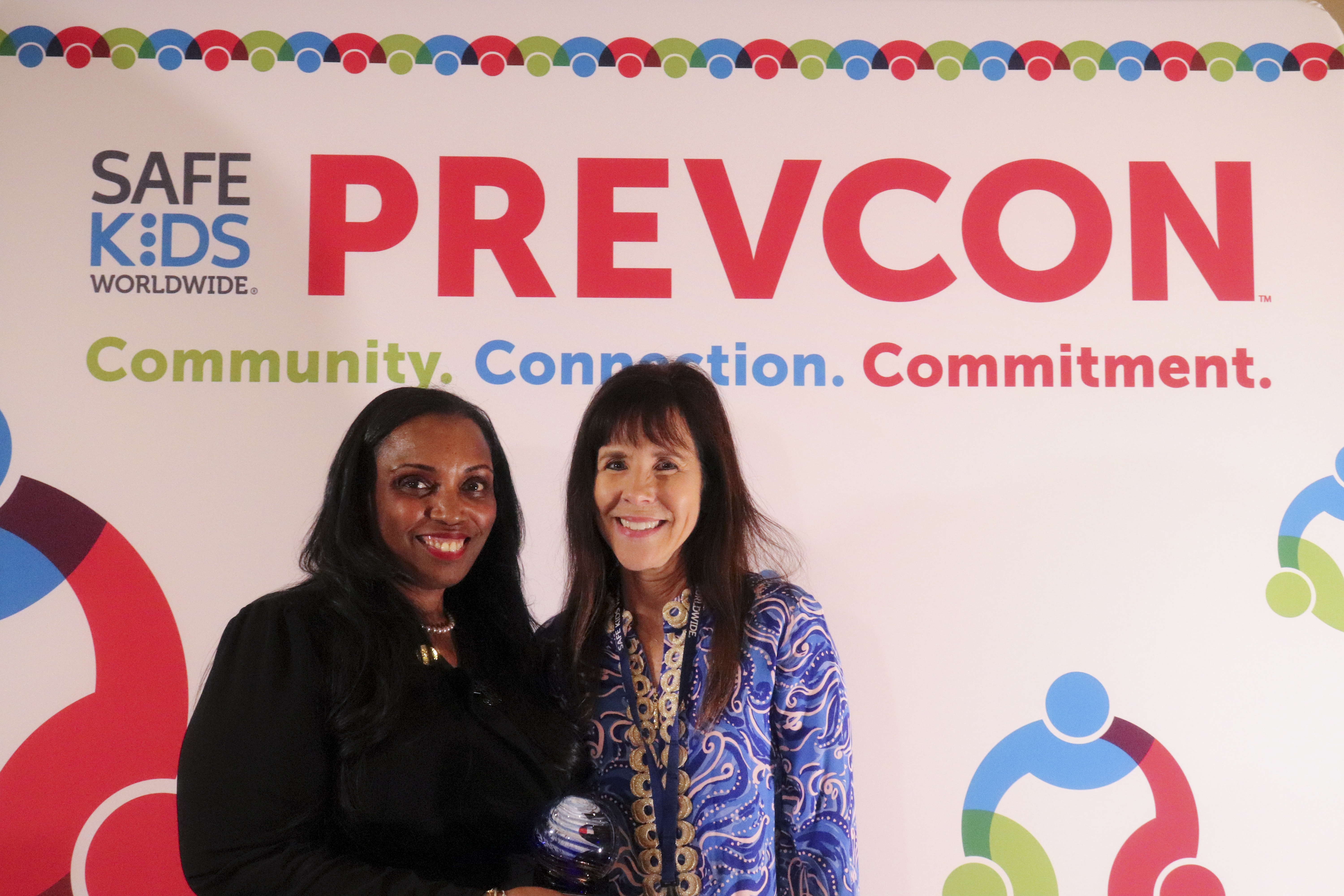
Greenville, NC – ECU Health is proud to announce the Eastern Carolina Injury Prevention Program (ECIPP) at ECU Health Medical Center was honored with the Martha Collar Partnership Award at the Safe Kids Worldwide International Childhood Injury Prevention Convention (PrevCon) for its outstanding contributions toward preventing childhood injuries. Named for Oklahoma Safe Kids State Coordinator Martha Collar, this award recognizes inspirational individuals or organizations that exhibit outstanding leadership and a commitment to collaboration and partnerships.
“ECIPP is honored by this recognition, which reflects the dedication and innovation of the entire team in advancing injury prevention and safety across eastern North Carolina,” said Ellen Walston, Injury Prevention Program Coordinator and Safe Kids Pitt County Coordinator at ECU Health. “Through strong partnerships and community-focused strategies, we have expanded access to education and resources that make a real difference in people’s lives. Our greatest reward is seeing the positive impact of this work on the health and well-being of the children and families we serve.”
ECIPP is dedicated to improving the health and safety of eastern North Carolina by reducing the frequency and severity of preventable injuries, especially to children. Founded in 1995, ECIPP is a collaborative initiative between the ECU Health Trauma Center, Maynard Children’s Hospital at ECU Health Medical Center and the Department of Emergency Medicine at the Brody School of Medicine at East Carolina University. Through hands-on community outreach, ECIPP offers car seat and bike helmet fittings, along with educational programs focused on risk areas such as driver and pedestrian safety, fall prevention, water safety, suicide prevention and safe firearm storage. ECIPP also plays an active role in regional coalitions, including the Greenville Traffic Safety Task Force, formed in partnership with the Greenville Police Department, and the Pitt County Firearm Safety Coalition, working together to build a safer, more informed community.
“The Eastern Carolina Injury Prevention Program exemplifies how community collaboration can transform safety education into measurable action,” said Torine Creppy, president of Safe Kids Worldwide. “Their partnerships and holistic approach embody Martha’s legacy of building bridges that protect families.”
The award was presented at PrevCon on Oct. 15, 2025, that convened more than 600 child health and safety professionals from around the world, including academic researchers, community activists, health care providers, manufacturers, public health and injury prevention practitioners and policy makers. More than 20 individuals and organizations were honored for their leadership in the field. PrevCon is one of the largest gatherings of individuals and organizations dedicated to childhood injury prevention. Preventable injuries are the number one cause of death for children in the United States. Throughout the world, almost one million children die of an injury each year, and almost every one of these tragedies is preventable.

ECU Health celebrated Wear Pink Day on Oct. 17 to honor those impacted by breast cancer and to raise awareness of the importance of annual screenings. In addition to wearing pink, the Cancer Care team and members of the East Carolina University Women’s Basketball team, including head coach Kim McNeill, handed out pink ribbons and information about breast cancer and 3-D mammograms to ECU Health team members and ECU Health Medical Center visitors.
ECU Health Cancer Care and the ECU Women’s Basketball team work together to share the importance of early detection for breast cancer across the community. For several years, the Women’s Basketball team, assistant coaches and staff, as well as McNeill, have visited ECU Health Medical Center to greet and educate team members and patients.
“Even with their busy season starting, the ECU Women’s Basketball team is committed to spreading this awareness message,” said Phyllis DeAntonio, administrator of ECU Health Cancer Care. “We are extremely grateful for the team’s commitment to ECU Health’s mission, to improve the health and well-being of eastern North Carolina.”
Screenings are important for prevention and early detection. ECU Health offers 3D mammography at 11 locations throughout eastern North Carolina. Key advantages of 3D mammography include:
- Greater detail for improved accuracy
- 40 percent increase in cancer detection
- Locates more invasive, life-threatening tumors
- Better at detecting cancer in dense breast tissue
- Digital images allow doctors in other locations to consult if needed
- Fewer call-backs, resulting in less anxiety
- Patient-friendly design that is more comfortable for all breast sizes
As Breast Cancer Awareness Month continues, make sure you are talking with your health care provider about receiving regular mammograms. Women at higher risk may need to start screening earlier. Learn more about breast cancer and finding a screening location near you by visiting ECU Health’s breast cancer page.

The James and Connie Maynard Children’s Hospital at ECU Health Medical Center was filled with smiles and excitement as CAPTRUST employees arrived with bright green boxes packed with fun on Oct. 2. These Cheeriodicals care packages were filled with age-appropriate toys, crafts and comfort items, and were hand-delivered to pediatric patients and their families to brighten their hospital stay.
The donation is the result of a collaboration between CAPTRUST, an independent retirement plan and investment advisory firm, and Cheeriodicals, a team-building company that partners with corporations to create meaningful community impact. Each box is thoughtfully tailored to specific age groups, including infants and their mothers, children ages 3 and up, and tweens and teens.
The partnership was sparked by a shared Pirate connection: both Fielding Miller, CEO of CAPTRUST, and Gary Parisher, President and CEO of Cheeriodicals, are proud East Carolina University alumni.

“It was Gary’s idea to reach out,” Miller said. “He’s an East Carolina grad, and so we knew of each other. Gary shared this idea of how they help children in hospitals, and I said, ‘I want to know more.’ He sent me the box, I opened it, and said, ‘Oh yeah, we’re in. We’re doing this.’”
For Parisher, the mission hits home.
“I’m actually from Pitt County and went to East Carolina,” he said. “We’ve delivered to over 150 children’s hospitals across the country, and I wanted Maynard Children’s Hospital to be one of them.”
Cheeriodicals organizes corporate team-building events where employees pack care boxes for children’s hospitals, veterans’ facilities, and Ronald McDonald Houses.
“It’s really about bringing corporations together where teams can do work that makes a difference,” said Parisher.
Miller emphasized the emotional impact of the initiative.
“I just hope these kids feel that pure joy of being a child again – bright eyes, excitement and a moment away from the hospital routine,” he said. “And for the parents, who are there every day supporting their children, if we can make their day just a little bit better, it’s worth it.”
That joy was evident as Miller and Parisher hand-delivered boxes to patients, including Aleksandra. Her face lit up as she opened her box, revealing coloring books, fidget toys, crafting materials, and most special of all, a stuffed green frog.
Frogs, it turns out, hold a special meaning for Aleksandra and her mom, Lydia.
“She’s always loved frogs,” Lydia shared. “Whenever she’s in the hospital, usually for a long period of time, her frog friends show up.”
Aleksandra explained that her mom often leaves little frog toys for her to discover, on her water bottle, tucked into her bag, or hidden around her room.
“Now they have a big friend,” Aleksandra said with a smile, holding up her new plush frog.

Ali Grimes, manager of Children’s Services at Maynard Children’s Hospital, explained that when the pediatric patients receive donations like this, it brings more joy than most people realize.
“When we’re able to bring in toys and activities for our patients, we’re able to see kids be kids and help normalize the hospital experience,” Grimes said.
The impact of the delivery extended far beyond the contents of each box. For the CAPTRUST and Cheeriodicals teams, it was an affirmation of the difference collaboration and giving back can make.
“The delivery was more than just a gift,” said Scott Senatore, chief philanthropy officer, ECU Health Foundation. “It was a moment of true joy for children and families navigating some of the hardest moments of their lives, and for two ECU alumni, it was a chance to give back to the community that helped shape them. ECU Health is so grateful to CAPTRUST and Cheeriodicals for their compassion and care for the patients and families we serve.”

A terrifying accident
On November 4, 2024, Ed Walsh and his wife received a call that no parent wants to get.
“Bella was in hysterics, saying ‘Dad, I was in a wreck, and I can’t get out of the car.’ It felt like a 5,000-pound weight was on my chest.”
Bella Avila had driven home to Wilmington, NC that afternoon to have dinner with her family, but more than halfway back to her dorm in Greenville, she hit a car in the road.
“The road was dark and very rural. I hit a car that was in the middle of the road after it hit a deer.”
What followed was chaos. It took a moment for Bella to realize what had happened. She was trapped in her car, wedged between the guard rail and the other woman’s vehicle.
“My phone contacted emergency services, and I called my parents. Dad asked what I could and couldn’t feel, and I couldn’t feel my legs. I thought I was paralyzed.”
“I asked her where she was at and she didn’t know,” Ed said. “I told her we were on the way. We looked like rodeo clowns, wearing whatever we found, and we probably set the land speed record driving to Greenville.”
“A breath of fresh air”
By the time Ed and his wife arrived in Greenville, Bella had already been cut out of her car and transported to the ECU Health Maynard Children’s Hospital emergency department (ED).
“There’s your kid with the neck brace on and she’s crying. Her mom is crying. I went into Marine mode and decided I’d cry later. Everyone was nice and did their jobs well,” Ed shared.
“The ECU Health staff were amazing,” Bella confirmed. “They cared for me even though I was terrified. I was in pain, and I didn’t know what was going on. No one knew what was wrong with me. I had bruising from the seat belt, but at first, they thought I was bleeding internally,” Bella said. “They told me I shouldn’t be alive, with how mangled my car was. I was freaking out. Then Reagan came in and she was like a breath of fresh air.”
Reagan Crowe, staff nurse II in the ED, met Bella and her family when she began her day shift.
“This experience was very scary for her. She was 18 but her parents weren’t there yet. I can only imagine how frightening that was to be alone, and I’m sure it was terrifying for her parents,” Reagan said.
Reagan joined ECU Health in 2023, and she realized she wanted to be a nurse after participating in a career exploratory program with NC State University. “Unfortunately, NC State doesn’t have a nursing program, so when I decided to pursue nursing, I transferred to East Carolina University (ECU).”
None of Reagan’s clinicals were in the emergency department, but she wanted to try it out. “I knew I wanted to work with children, and the ED lets you see a lot of different things every day. We have a wide population coming in for many different reasons.”
When Reagan met Bella, she said she felt a connection with her. “We’re close in age, and it was evident she is close with her parents – I’m close with my parents, too,” she said. “Bella stayed in the ED through my entire shift, which is not typical, so I got to know her and her family better. I feel lucky that I did.”
“She saw me as a terrified 18-year-old and she treated me more as a friend than a patient,” Bella shared. “I’ve had my fair share of doctors and nurses care for me, because I was a cheerleader in high school and got injured frequently, but Reagan was the most caring person. I’ve never seen a nurse take care of my parents so well. She talked to them and spent her time with us like she didn’t have any other patients. It changed my entire perspective on nursing.”
A change of plans
Bella said she had considered working in health care before, but she had never been sure of which path to take. “I had already changed my major three times,” Bella shared. “Her career plans ranged from nurse to physical therapist to dentist to doctor,” Ed added. “After working with Reagan, she said, ‘Dad, I know what I want to do with my life – I want to be a nurse.’ Reagan gave Bella clarity, direction and was the example of everything she had been looking for. She changed the trajectory of Bella’s life.”
As soon as Bella was released from the hospital three days later, she changed her major to nursing and began taking steps to apply for the bachelor of science in nursing (BSN) program at ECU.
“It was one of those life-altering experiences that changes your perspective on everything,” Bella said of her accident. “I should have died that night, and I didn’t. Why not shoot for the big things in life and live every moment to the fullest?”
Bella later reached out to Reagan to ask for advice. “Two or three months after my accident, I texted Reagan and asked her out for coffee so we could chat about what I should expect when applying to nursing school. We met and talked for more than two hours, and not just about nursing. We also became friends.”

Meanwhile, Ed and his wife wanted to show their appreciation for the care Bella received. They decided to nominate Reagan for a DAISY Award, an international program that recognizes and celebrates the extraordinary, compassionate care nurses provide.
“I don’t go around writing up people for awards all the time,” Ed laughed. “I couldn’t say all I wanted to in the DAISY Award nomination, but nurses make an impact on people’s lives every day. That’s something that doesn’t come in milligrams, and you can’t put it in an I.V.”
When the family found out Reagan had been selected as a DAISY Award honoree, they wanted to join the celebration. “We had to sneak into the ED so we could be there when she received the award,” Ed said.
“Seeing Reagan’s face light up when she realized what was happening made me so happy – it was one of the most rewarding feelings of my life,” Bella said. “I got to put the DAISY pin on her badge, and to be a part of that moment felt full circle.”
Later that same day, Bella took the entrance exam for nursing school.
“The ED team made me a good luck bag for the exam, and I can’t be more grateful for what they’ve done for me. Eight months ago, I didn’t see myself as being a nurse, but taking the exam the same day we celebrated Reagan felt like fate.”
Reagan is quick to point out that she’s not the only nurse deserving of the DAISY Award, but she’s grateful for the recognition.
“I have imposter syndrome because there are so many other nurses deserving to be recognized,” she said. “ED visits are so chaotic and quick, and our nurses sometimes get forgotten. Our whole team is amazing, and I have learned from the best. I feel lucky to be recognized.”
This summer, Bella continues to take nursing school prerequisites, and in the meantime, she thinks she might want to work in the Children’s ED. “For the longest time I thought I’d want to work in Labor and Delivery, but since my accident, I’ve contemplated the ED for kids. Children are so resilient and have a fight – I love that. Whatever I do, I hope I can work at ECU Health after I graduate.”
Bella and her family said they can never repay Reagan for her calm professionalism and kindness, but celebrating the work she does by nominating her for the DAISY Award was a good start. “She deserves this award hands-down,” Ed said. “Some people go their entire lives wondering if they ever made a difference, but I’m here to tell you Reagan Crowe doesn’t have that problem.”
To learn more about the DAISY Award or to nominate a deserving nurse, visit their website.

East Carolina University (ECU) Baseball player Parker Byrd has stepped up to the plate to lead Homers That Help, a charity initiative supporting families at the James and Connie Maynard Children’s Hospital at ECU Health Medical Center. Taking over from former player Carter Cunningham, Byrd has embraced the opportunity to expand the program’s impact and continue its mission of giving back.
The idea for Homers That Help was born after Cunningham participated in a career shadowing experience at ECU Health Medical Center in November 2023. Walking through Maynard Children’s Hospital, he felt a deep calling to do something meaningful for the young patients and their families.
He started small, asking his ECU Baseball teammates for donations to bring holiday cheer to the hospital. The players raised $500, which they used to buy gifts and spend time playing with the children. The visit left a lasting impression on both the players and the families.
After reflecting over winter break, Cunningham launched Homers That Help, an initiative where sponsors pledged donations for each ECU home baseball game and contributed additional funds for every home run hit. The program exceeded expectations, raising $50,000 in its first season. In addition to the donations, the baseball team would make regular visits to pediatric patients.
“I felt that it was so important to serve others, and even if you can’t give money, time is so important,” Cunningham said. “Whether that’s your time, your talent or your treasure, really being generous goes a long way.”
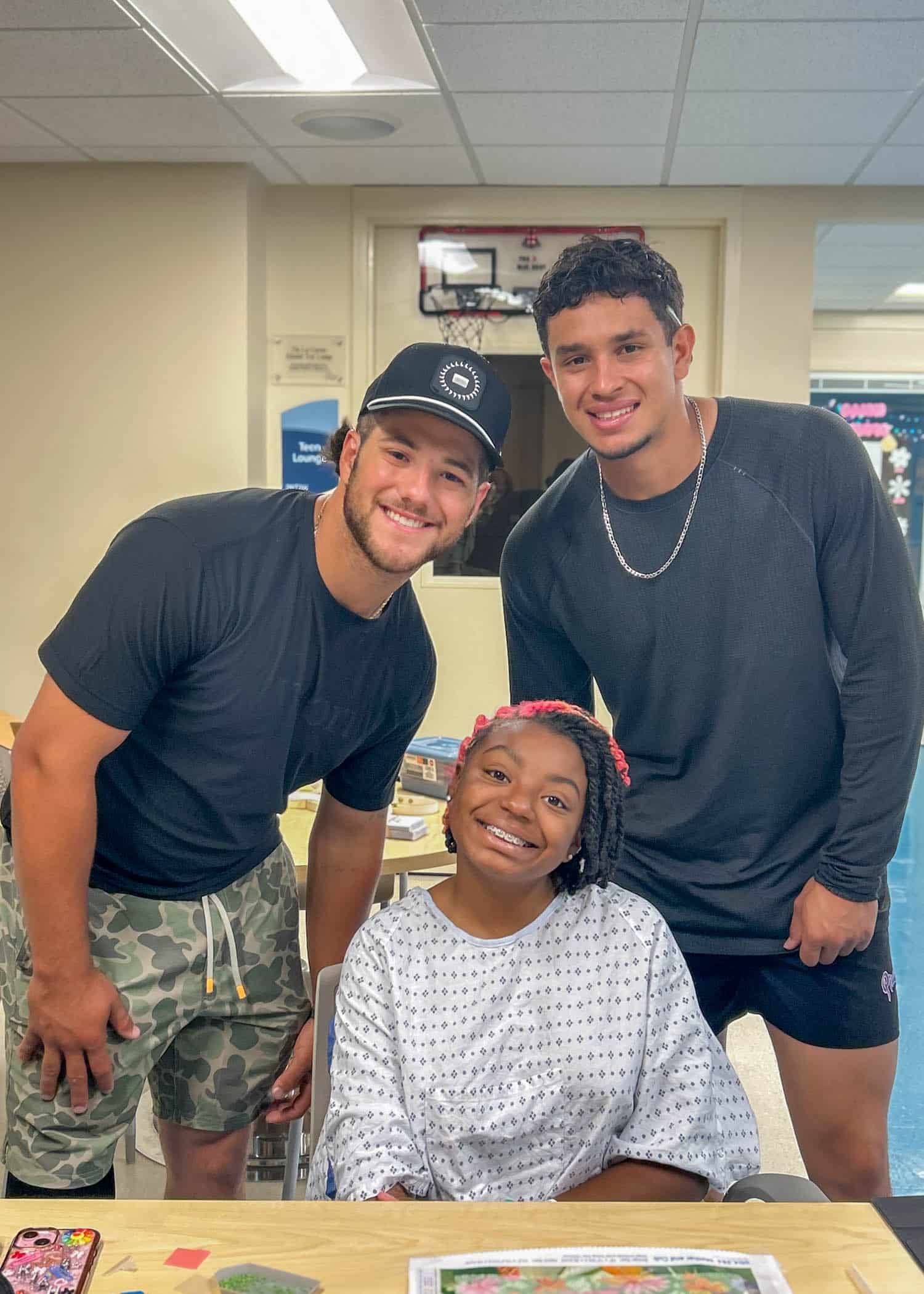
As Cunningham graduated and was drafted by the Toronto Blue Jays, he wanted the initiative to continue. Cunningham felt Byrd was the perfect fit to lead the program forward after seeing Byrd connect with patients during hospital visits.
“It was like a God-given talent and ability when he was in a patient’s room,” Cunningham said. “He just knew how to connect with the kids a lot better than I ever could – and anyone for that matter.”
According to Tara Tadlock, a child life specialist at Maynard Children’s Hospital, these visits bring much-needed joy.
“The kids get so excited to see the players,” Tadlock said. “It lifts their spirits more than people realize. Whether playing games, coloring or simply talking baseball, the experience means the world to them.”
Byrd said having been a patient in the hospital for a long time previously helped him understand how it feels to be one of the kids.
“Carter told me about his plans early on, and I saw firsthand the impact it was having,” Byrd said. “When he asked if I could take over, it was an honor.”
Byrd’s leadership has ensured Homers That Help continues to grow and flourish. Cunningham remains involved, offering guidance and staying connected to the program’s growth, including the sale of shirts where $10 from each purchase is donated directly to the Children’s Hospital.
“He could have just handed it off and moved on,” Byrd said. “But he still contributes, checks in and continues to bring new ideas.”
Building on Cunningham’s foundation, Byrd introduced Ks for Kids, allowing pitchers to participate by raising money with strikeouts.
“It’s awesome to get the pitchers involved,” Byrd said. “Last year, hitters had competition for the most home runs, and now pitchers have their own way to contribute and have some healthy competition.”
ECU pitcher Ethan Norby demonstrated the program’s potential with a standout performance, recording 19 strikeouts in one game, directly benefiting families in need.
“During the game, I was actually thinking it was awesome for the kids because he was racking up a lot of strikeouts and support for the families here at the hospital,” Byrd said.
Managed by ECU Health Foundation, the funds raised through Homers That Help have had a direct impact on families, covering essential costs like gas and food gift cards to ease their hospital stays. Funds also will be going to other needs of Maynard Children’s Hospital to improve care and the hospital experience for pediatric patients and their families.

“Being a college student and student athlete is very time consuming, but then they still make time out of their weeks to come and visit these kids and during every single game, raise money for Maynard Children’s Hospital,” said Elise Ironmonger, Director of Programs at the ECU Health Foundation. “This fundraiser is just amazing and shows what great humans they are and just their love of wanting to give back. ECU Health and our patients and their families are so grateful to them.”
Byrd expressed his gratitude to Cunningham, his teammates and the entire ECU community for their unwavering support. As the 2024-2025 season comes to an end, Byrd is grateful for all of the community support and excited for the future of Homers That Help.
“The community has been tremendous,” Byrd said. “Seeing everyone rally behind this cause makes it all worth it.”
To date, Homers That Help has raised over $75,000. To learn more about Homers That Help or to give, please visit give.ecuhealthfoundation.org

Each summer, Camp Hope and Camp Rainbow offer a sanctuary for children in eastern North Carolina living with cancer, sickle cell disease, hemophilia and other chronic bleeding disorders. More than just a change of scenery, these camps provide a place where kids can just be kids.
“This is a week for them to come to camp and just be a kid and have fun and meet other kids that may have the same type of condition that they have,” says Tamika Mackey, child life specialist at the Pediatric Hematology/Oncology Clinic at ECU Health and the Brody School of Medicine at East Carolina University and director of Camp Hope and Camp Rainbow. “My favorite part is seeing smiles on their faces, getting hugs from the kids and seeing them meet new people.”
Camp Rainbow is for children with cancer, hemophilia and children who have lost a sibling to one of these diseases, and Camp Hope is for children with sickle cell disease.
ECU Health and Brody School of Medicine team members develop camping programs to provide pediatric patients an opportunity to learn more about themselves and their illness, participate in fun activities like swimming, canoeing, archery, crafts, music and drama, all while making life-long friendships with other children with similar conditions and experiences. While at camp, located at The Refuge in Ayden, children receive 24-hour medical care and close medical monitoring by their ECU Health care teams including physicians, nurses, child life and social workers.
“The goal is for kids to meet other children that may share the same medical condition that they have and to build lifelong relationships,” Mackey said.
For kids navigating life with chronic illnesses, especially in rural communities where connection can be even harder, Camp Hope and Camp Rainbow are more than just a week of fun. According to Mackey, they’re a lifeline, a reminder that they are seen, supported and deeply loved.
“They’ve been enjoying camp,” said Mackey. “I can tell by the hugs and smiles I get daily. Just to see them having fun and not in a medical environment, that’s everything.”
The connections the kids make extend beyond the week.
“They don’t all live in the same area, but they stay in touch with group chats and even checking on each other during hospital stay,” said Mackey. “That kind of support is invaluable.”
Lawsen Ziemba, a twelve-year-old camper, was diagnosed with leukemia when he was just two years old. Ziemba spent his first week at camp this year and said he was able to connect with kids and adults who had gone through some of the same medical experiences he had.
“You can get a perspective from other people that have gone through the same thing you had and have a relationship with them about what you have gone through,” said Ziemba.
One of the camp’s examples of the impact camp has is Heaven Glaspie, a former camper turned counselor. Diagnosed with sickle cell disease, Heaven began attending Camp Rainbow at 8 years old. Now 23, he returns to give back the joy he once received.
“Whenever I was growing up, we had mentors and volunteers that were coming to camp and taking time out of their week to make sure that we had a very great time,” said Glaspie. “For me to be able to do that whenever I aged out of camp and come back and be able to help other people have a good time, that’s one of the best feelings in the world to me. The smile on their face that they give you whenever they’re having the best time of their life at camp, it’s very heartwarming.”
His firsthand experience gives him a unique perspective.
“Not a lot of people can relate to what these kids go through, but I’ve walked in their shoes,” said Glaspie. “I can let them know they’re not alone.”
For both campers and counselors, camp is about more than just memories.
“Camp becomes a family,” Heaven said. “Everybody’s so used to seeing each other in the summer, and even when we go home, we keep talking.”
Mackey said seeing campers grow up and come back as volunteers is inspiring.
“It shows younger kids that they, too, can grow up, go to college, give back,” said Mackey. “It’s powerful for them to see someone living with sickle cell disease or a similar condition to them who’s thriving.”
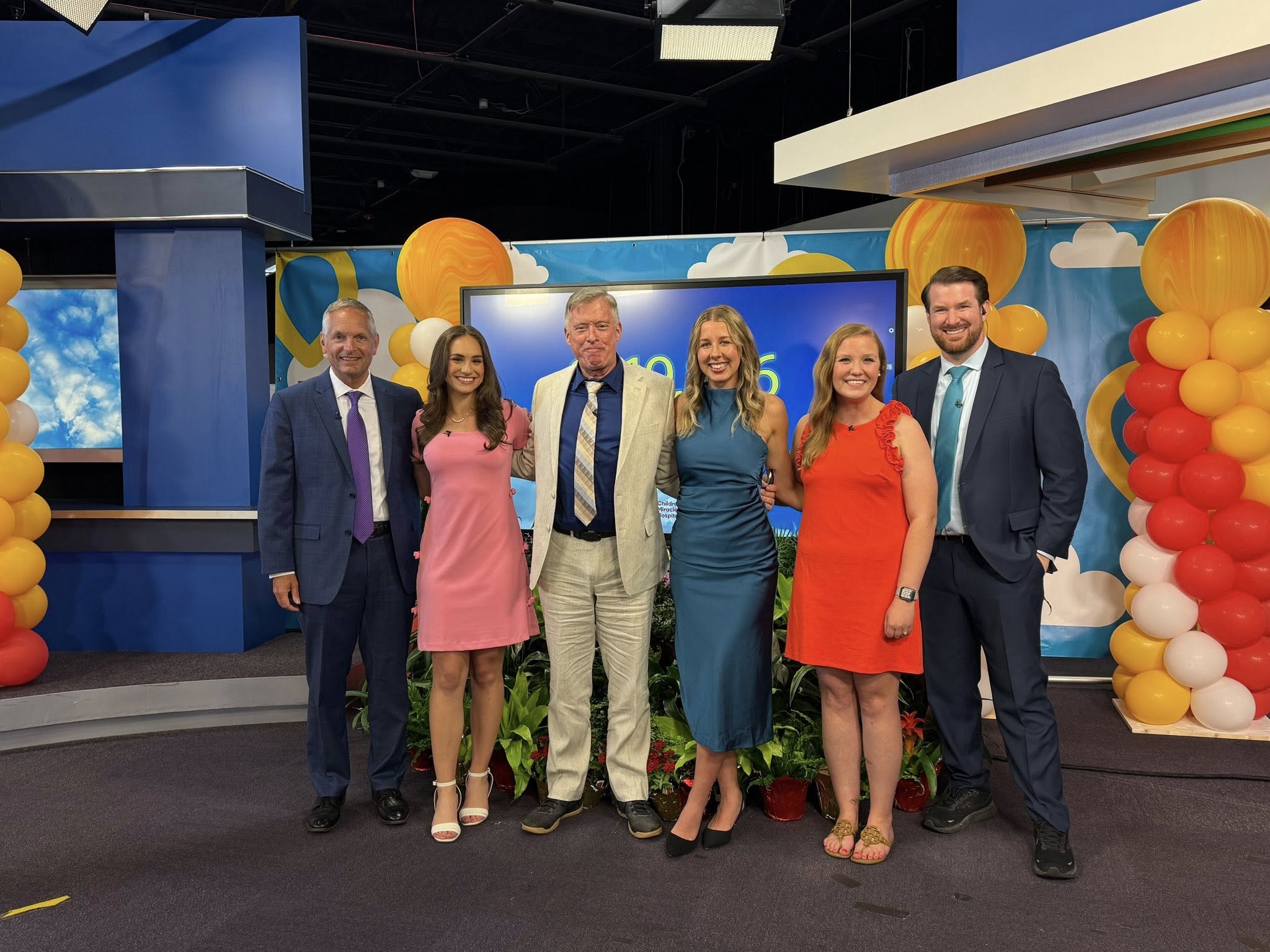
Greenville, NC –The 40th annual Children’s Miracle Network (CMN) Celebration Broadcast, honoring the thousands of children treated at Maynard Children’s Hospital at ECU Health Medical Center this past year, raised an outstanding $1,278,873 to support pediatric care across eastern North Carolina, bringing the cumulative total raised to $35,680,524.
The telethon, which aired from May 31 to June 1, was produced by longtime CMN television partner WITN, highlighted emotional and inspiring stories of children who have overcome complex medical challenges thanks to the exceptional care received at Maynard Children’s Hospital. A special long-time donor and friend of Maynard Children’s Hospital provided a generous $100,000 match during the event, doubling gifts and doubling the impact for sick and injured children in eastern North Carolina.
“This year’s Celebration Broadcast was incredibly special, marking 40 years of support for Children’s Miracle Network and bringing together those who have made a difference,” said Elise Ironmonger, Director of Programs at the ECU Health Foundation.
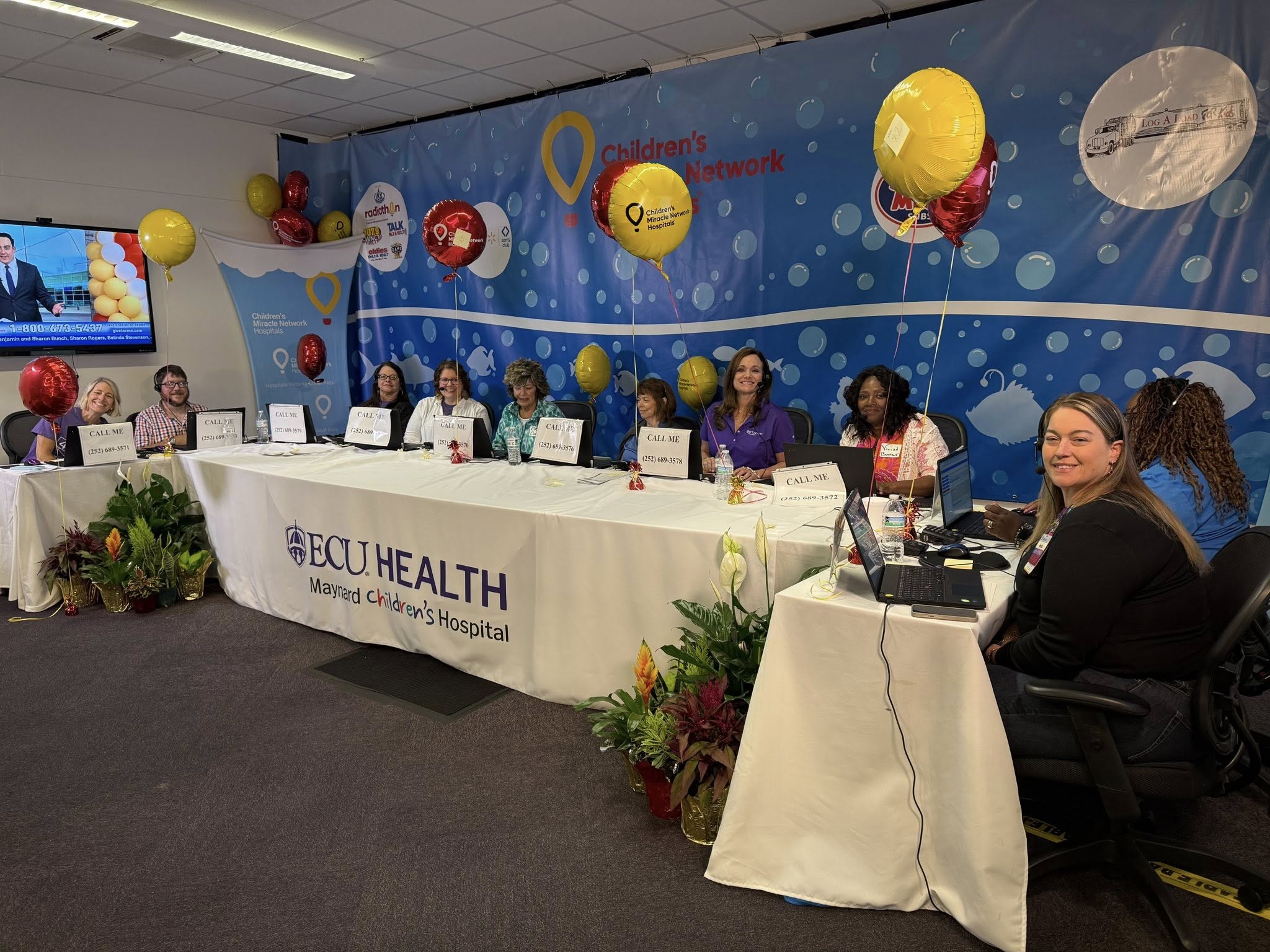
“It was amazing to reflect on this journey and connect with our dedicated supporters. We also honored the generous businesses, community groups and individuals whose commitment will continue to save lives and bring hope to the children at Maynard Children’s Hospital.”
To commemorate 40 years of making miracles happen in eastern North Carolina, the event included many special acknowledgements to celebrate the milestone. Former WITN personalities throughout the years provided messages of encouragement and support while past miracle children provided updates on their journeys and how their lives were directly impacted by the generous donations from the telethon. Four loyal volunteers joined the celebration for their 40th time, attending all 40 telethons throughout the years: Fred Anderson, Debbie Austin, Vivian Bazemore and Diane Oakley. Another very special moment included an interview with Lillian Jones, who honored her late husband, Dick Jones, WITN personality and talent who hosted the very first telethon in 1986.
Funds raised during the Celebration Broadcast ensure that children from across the region have access to the highest quality care, advanced medical equipment and life-saving programs. Each dollar raised stays local to support pediatric services at Maynard Children’s Hospital.
Major sponsors once again demonstrated their generosity, with the following top contributors each giving at least $100,000:
- Speedway, part of 7-11, Inc: $209,647
- Jersey Mike’s Subs: $188,375
- Walmart and Sam’s Club: $153,672
- Music for Miracles Radiothon: $113,734
- Log A Load for Kids: $100,000
The following sponsors each made a significant impact with donations totaling over $25,000: Ace Hardware ($37,383), Panda Express ($32,035), Dance Arts Theatre ($28,876) and Extra Life ($26,345).
Coming through in a big way, the following organizations donated between $5,000-$20,000: Central Heating and Air Conditioning, Barbour Hendrick Honda of Greenville, Electric Cooperative of ENC, Dairy Queen, Ollies, Phi Mu, Pepsi/Minges Bottling Group, American Builders, Publix and Eastern Radiologists.
Finally, a big thanks to these generous donors who contributed between $1,000-$5,000: Miller & Friends Lemonade Stand, Grady White Boats, RE/MAX, Whistle Express Car Wash, Care-O-World, Baynor Inc, Ajay Ajmera, Arun Ajmera, Ricci Law Firm, Builder’s Discount Center, Harris, Creech, Ward & Blackerby PA, MSL Healthcare Partners, Stallings Plumbing Heating and Air Conditioning, POPS Mart Fuels and Aldridge & Southerland.
The local CMN Hospitals fundraising program is staffed and supported by the ECU Health Foundation, the non-profit charitable corporation that serves as the custodian for all financial gifts and bequests to ECU Health. The ECU Health Foundation oversees allocation of all donated funds.
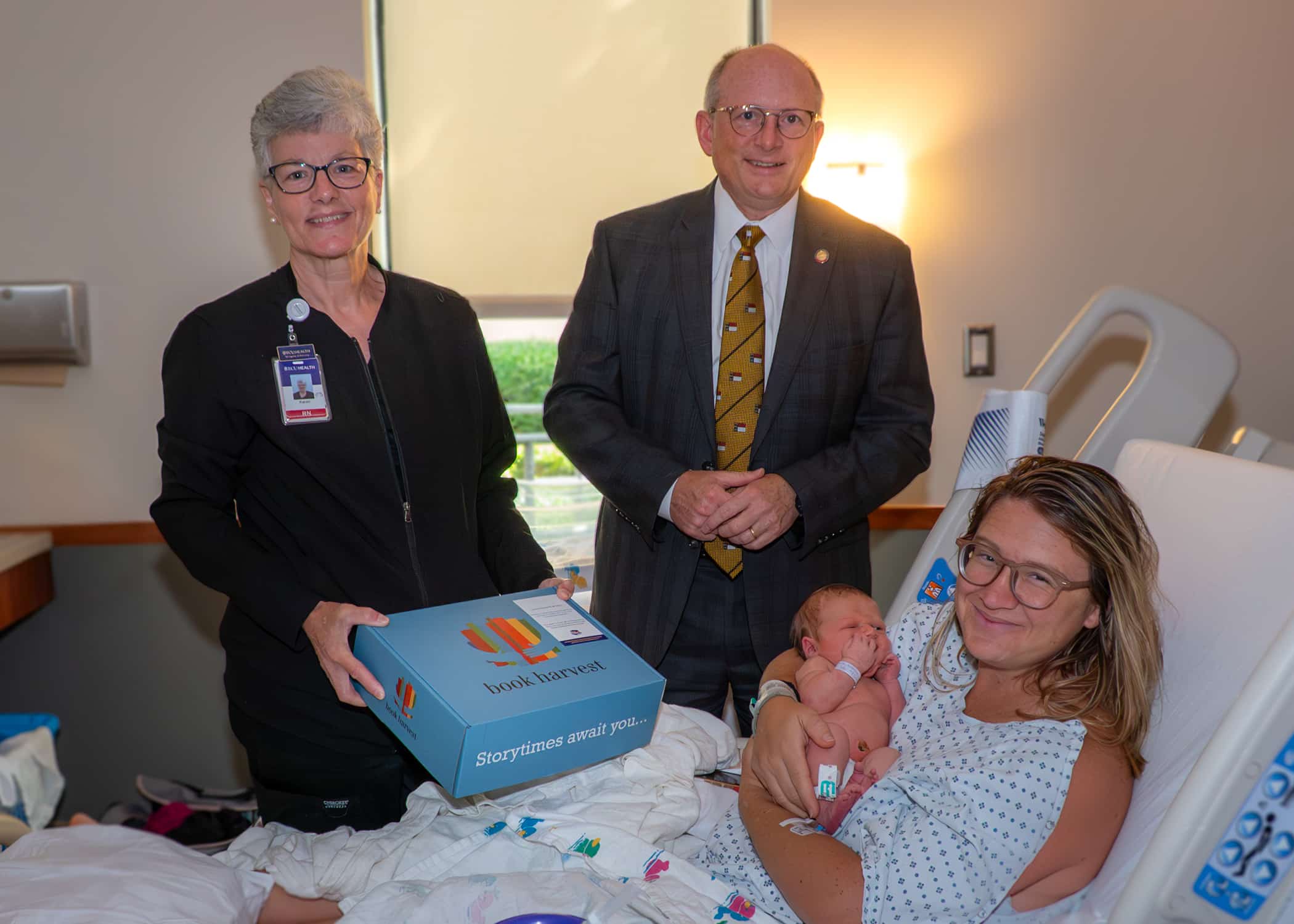
Since October 2024, the Books from Birth program, a partnership between Maynard Children’s Hospital and Book Harvest, has provided boxes of books to infants and their families, ensuring that reading routines become an integral part of a baby’s earliest days.
On Monday, June 2, Book Harvest staff and N.C. House Rep. Tim Reeder, MD, District 9, who secured funding for the project in the North Carolina State Budget last year, joined the Maynard Children’s Hospital team members to speak with recipients of the book boxes and hear feedback from nurses and child life specialists.
The partnership with Book Harvest aims to enrich the lives of families across eastern North Carolina by supplying books that encourage bonding and learning. Each family with a newborn baby discharged is offered a Books from Birth box, containing 10 board books, educational materials and a onesie, reinforcing the importance of literacy right from the start.

“Books are a powerful tool for connection, learning and development, and the Books from Birth program is giving families the resources to start that journey from day one,” said Tara Stroud, vice president of Women’s and Children’s Services at Maynard Children’s Hospital. “Our nurses and child life specialists see firsthand how these books help families bond with their babies, where parents cherish having stories to read during their hospital stay. This program is about setting a foundation for lifelong literacy and ensuring every child has the opportunity to thrive.”
Stroud said the nurses and child life specialists at the Children’s Hospital are the program’s biggest advocate.
“I love how inclusive the books are,” said Don Sauls, a nurse in the Neonatal Intensive Care Unit (NICU). “I’ve seen multilingual books; I’ve seen books that include sign language. It is very conducive to creating a welcoming and nurturing learning environment and facilitating that bond between parents and their baby and even siblings.”
Amanda and Blake – both elementary school teachers – are in the NICU with their baby and expressed how grateful they were to be able to add to their baby’s library.
“We started reading to her from the moment we found out we were expecting, and even Amanda’s mom would come and read books to her while she was still in the womb,” said Blake. “Just knowing those voices and hearing those stories helps build a foundation for learning, and we hope it will make her a strong reader, speller and learner one day. We’re incredibly thankful for the books and support we’ve received.”
With the Books from Birth program, ECU Health and Book Harvest are paving the way for a new generation of readers, ensuring that every baby’s first moments are accompanied by the power of stories.
“We are so uplifted by the partnership with Maynard Children’s Hospital to make sure every single newborn is starting their life with their own library,” said Ginger Young, chief executive officer, Book Harvest. “Literacy starts at birth, and early literacy is the key to building a foundation of literacy that will last a lifetime. To be able to send families home not only with their new bundle of joy, but also the start of their own home library, is the thing we dream about all the time.”
Since its launch at Maynard Children’s Hospital, the Books from Birth program has made significant progress in reaching families and fostering early literacy. From October 2024 to March 2025, more than 1,700 book boxes have been provided to newborn families. Families from 36 counties and three states have benefitted from the program. Additionally, 28 percent of the boxes have been provided to premature or medically complex infants, offering literacy support to some of the most vulnerable newborns.
“I recognized how important the program was to encourage reading, but to see how this hospital has embraced this vision and the impact on patients and families has been monumental,” said Rep. Reeder.