
The 29 learners who started their quality improvement journey a year ago as part of the Teachers of Quality Academy (TQA) 8.0 cohort officially wrapped up their participation in the program at a recognition ceremony Oct. 22. While the ceremony marked the end of the cohort’s formal learning sessions in the program, the multidisciplinary group of health care professionals is now poised to take their knowledge back to their workspaces with the goal of driving continuous quality improvement across ECU Health and the Brody School of Medicine at East Carolina University.
TQA is a professional development program for health care leaders designed to fundamentally change care delivery through a curriculum focused on building knowledge and skills in Health Systems Science which comprehensively explores how health care is delivered.
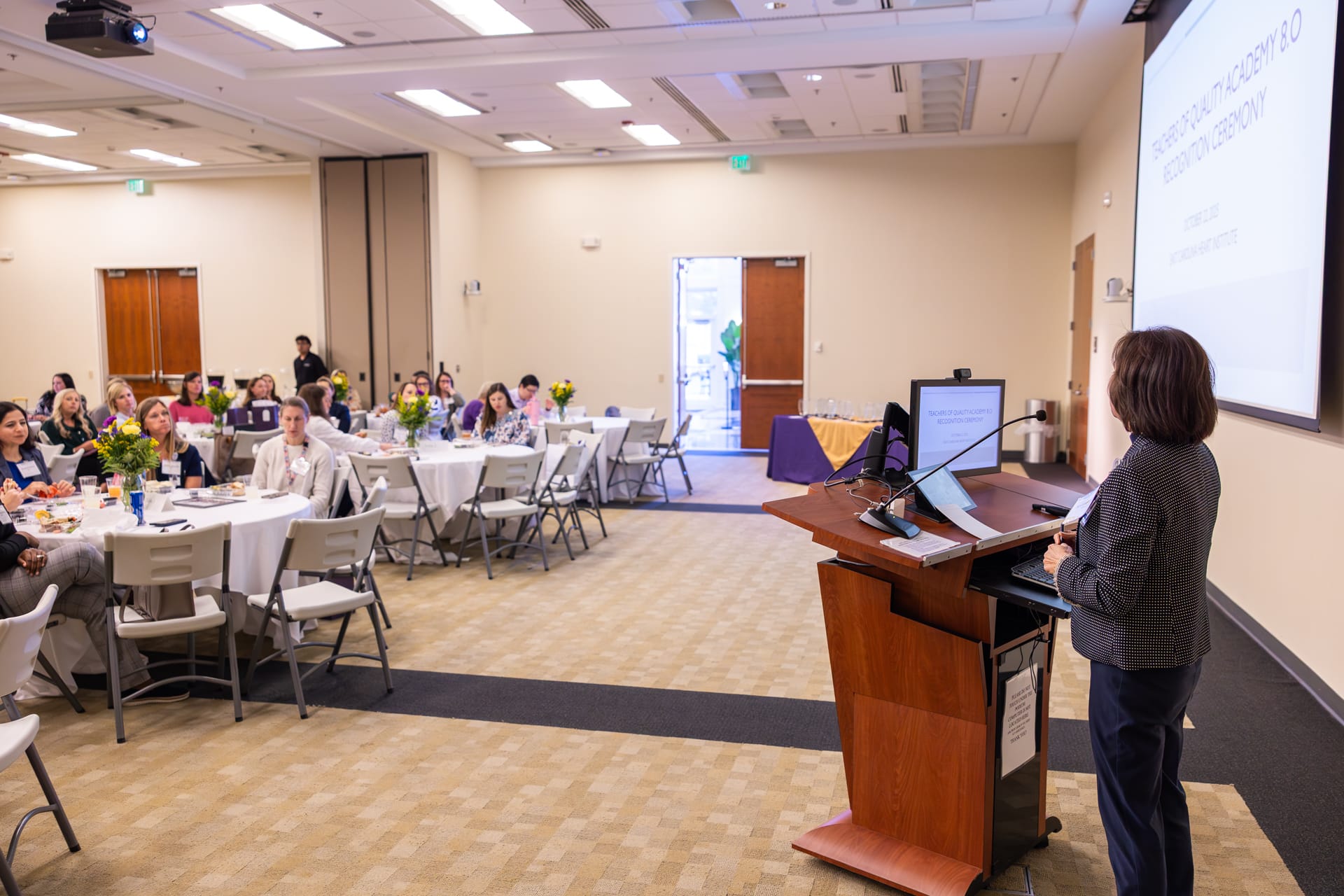
“We hope the biggest take away from this last year of learning is the importance of taking what they’ve learned back to their teams so they can apply their knowledge and skills to be catalysts for positive change in their local communities and local teams,” said Dr. Jennifer Sutter, TQA physician director. “This is a diverse group of professionals who represent many different parts of the health system so we’re confident they can have a broad impact on driving quality improvement for ECU Health and those we serve.”
The 8.0 cohort included health care professionals from clinical, administrative, leadership and educational backgrounds, all of whom were selected from a highly-competitive pool of applicants.
“The work that we do in health care is purposeful work, but nobody would define it as easy,” said Dr. Niti Armistead, chief medical officer and chief quality officer at ECU Health, during remarks at the recognition ceremony. “What I’ve found in my own quality journey is that quality improvement is the antidote to burnout by converting the burrs in the saddle into problems to be solved. Quality improvement is a way to re-establish your agency and feel like there are real things you can do to drive improvement and make a positive difference.”
Throughout the past year, participants engaged in advanced learning in quality improvement, patient safety and team leadership, develop improvement projects to apply these skills across the health system, teach others in their environment about these concepts and evaluate the outcomes of improvement interventions.
Lauren Chambers, pharmacy supervisor at ECU Health Medical Center, and Brynn Schiller, who started the program as an administrative fellow but now serves as a workforce development project manager, partnered together on a project aimed at improving hyperglycemia management for medical intensive care unit patients. Hyperglycemia, otherwise known as high blood sugar, can result in organ damage and other serious complications if not treated and managed quickly and effectively.
Chambers said that when the two were deciding which project to pursue, they wanted to be bold and pursue something meaningful and sustainable. For Chambers and Schiller, their hope is that others will take advantage of the opportunities provided through TQA to explore important topics in areas meaningful to them while making important connections along the way.
“You learn a lot about yourself and you get to connect with people you don’t normally connect with,” said Schiller. “I got to know Lauren who is clinical in pharmacy. My background is not clinical so it was really interesting to work together on a project where I didn’t know a lot but I learned a lot thanks to our work on the project together.”

“The program helped me reach my goal of working at ECU Health,” said Kara Dozier, a hostess with the Food and Nutrition Services team, of the NC Works program.
Dozier enrolled in the NC Works program in October of 2024 and served as its first participant at ECU Health.
NC Works is an initiative throughout North Carolina for young adults ages 18 to 24 who are interested in exploring health care careers. The program brings together various statewide agencies including the Department of Commerce, Public Instruction and the NC community college system to create opportunities for young jobseekers to find employment. ECU Health is one of many work sites across the state for the NC Works program.
Kara said she’d always wanted to work in the hospital setting. “I have family who work in the hospital and had heard great things about ECU Health,” she said.
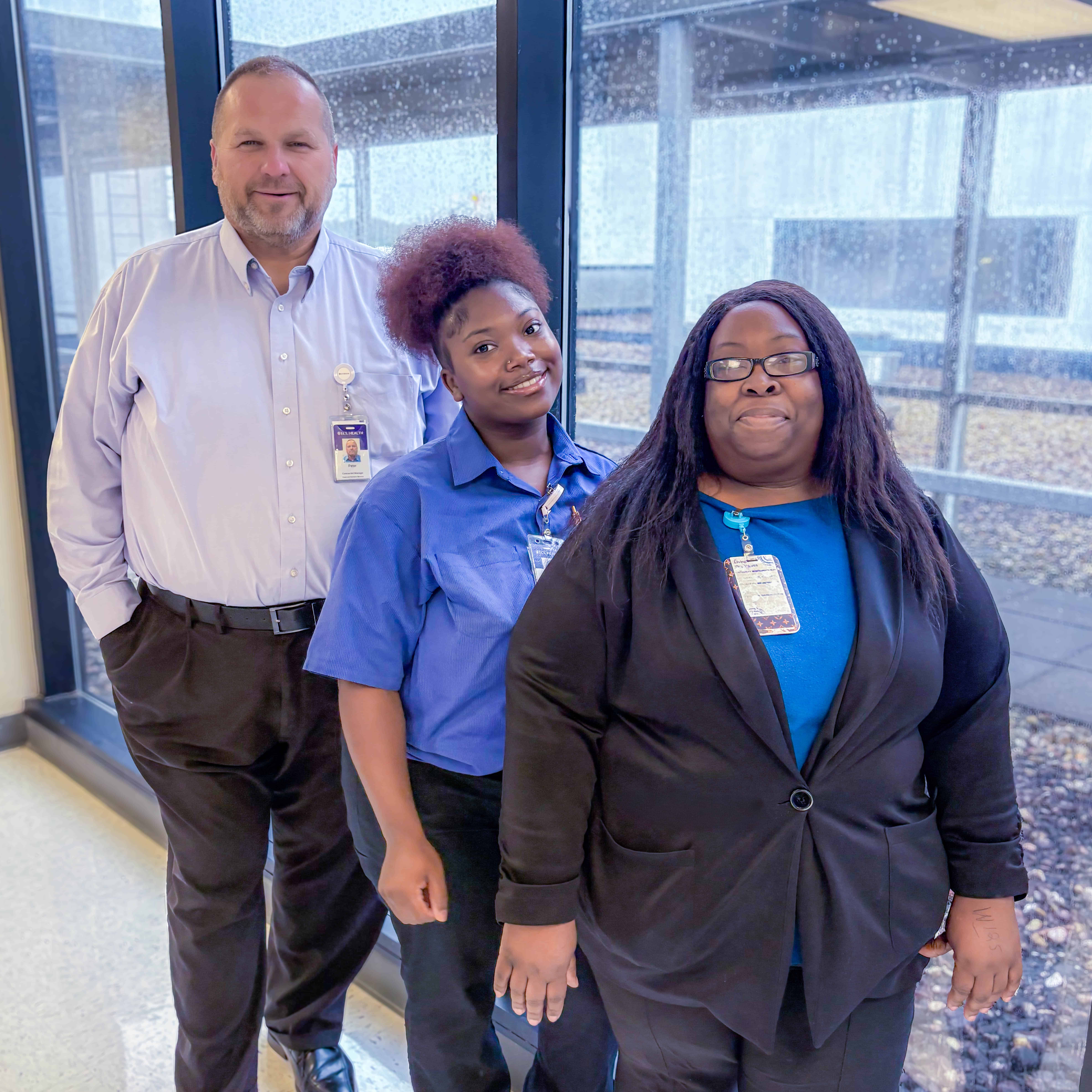
When she was at a job fair at the Greenville Convention Center, she saw an ECU Health table. “I thought, let me go over there and see what this is about, and Ms. Toyta told me about the program. She wanted me to give her my resume.”
Toyta Kee, a talent pipeline consultant at ECU Health, said the program makes a lasting impact on participants.
“It’s like an internship model,” she explained. “This program plants the seeds that will affect generation after generation.”
Kee emphasized that ECU Health’s broad spectrum of career opportunities makes it the perfect environment for introducing young people to the health care field.
“There are so many opportunities for participants to further their education. They didn’t think they could work in health care because they didn’t want to be a doctor or nurse. Here at ECU Health, they can get the exposure and education to many other jobs, and they receive guidance and mentorship as they learn about health care roles,” Kee said. “It warms my heart to serve as the navigator to help them have a successful life, to be a blessing to themselves and their families.”
In addition to helping young adults gain valuable skills, the program also creates a pipeline of talent that potentially leads to participants becoming members of the ECU Health team.
That’s just what happened for Dozier.
During her time in the program, Dozier worked in production, the call center and Food and Nutrition. She felt supported by her team and Kee, and before the program ended, her colleagues and supervisors from each department advised her to apply for a full-time role.
“I decided to stay as a hostess in Food and Nutrition,” she said. “I love the people I work with, and it has a good vibe.”
“We are so appreciative to the Food and Nutrition Service department for their unwavering support of this program,” Kee added.
Dozier is now in school at Pitt Community College, wrapping up a degree in business administration. “This is my last semester,” she said. “I hope to stay with ECU Health and do work that’s aligned with my degree.”
“Eleanor Roosevelt said, ‘The future belongs to those who believe in the beauty of their dreams,’ and I believe in dreams,” Kee said. “This experience opens doors for people who might otherwise have socioeconomic barriers, and that’s what’s rewarding to my heart.”
To learn more about the NC Works program, contact Toyta Kee at [email protected], or visit the NCWorks website.

One of the newest education opportunities is the Learning Lab program, which provides ECU Health Medical Center team members the opportunity to earn their high school equivalency in partnership with Pitt Community College.
Housed on the Medical Center campus, team members who are accepted to and enrolled in the Learning Lab program can use the lab during their workday to complete schoolwork. Additionally, the program offers financial assistance for program-testing fees and compensates a portion of the team members’ school time.
A key feature of the Learning Lab is the one-on-one support from a Pitt Community College instructor, who helps with assignments and certain skill development such as organization and time management.
This spring, ECU Health celebrated its first three graduates from the program. Simone Cummings, a Central Services technician at the Medical Center and one of the graduates, has been with the health system for a little over three and a half years.
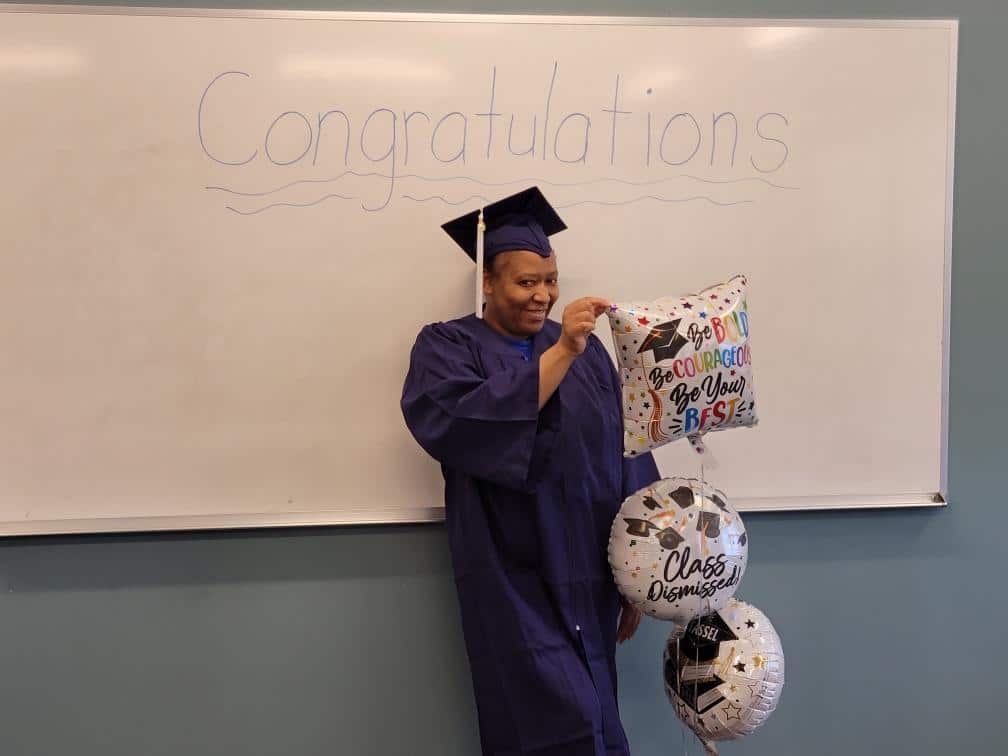
Simone praised the program and encouraged other team members to take advantage of this opportunity. “What I love about the program is that you can work at your own pace, have one-on-ones with the teacher if there is a topic you are having problems with and you’re with a small group which makes learning fun and more interesting,” she says.
Simone advises those interested in the Learning Lab to take action: “I would say to talk to your managers, get signed up. Time doesn’t wait on you; you wait on time. If you are thinking of going back and getting your GED or high school equivalency, I am so proud of you. Just by thinking about it you are already a winner, and your story has just begun. By joining this program, you already have a family to support and love you all the way because no one gets left behind.”Simone1.jpg
Programs like this one open doors for team members, providing the education needed to apply for other programs such as the NA I, NA Advancement, the HomeGrown program or to explore other opportunities in the organization that require a high school diploma or equivalent.
“The Learning Lab program is so beneficial to team members at the Medical Center because it provides a stepping stone to other programs we offer,” says Doris Hill, Workforce Development Consultant, and organizer for this program.
Team members interested in the Learning Lab program must complete the application process to be considered. Applications are accepted on a rolling basis for fall and spring semesters. For more information about the Learning Lab program, click here or contact the ECU Health Workforce Development office at 252-847-3174.

Education is one of ECU Health’s IC-EAST Values, and our team members exemplify and live these values each day. Kimalie Robinson, Central Services Technician, is a great example of how the Value of Education is lived out.
Kimalie has been a team member at ECU Health for more than two years. As a Central Service Technician, he is responsible for collecting, cleaning and delivering equipment throughout ECU Health Medical Center.
Kimalie learned about the Learning Lab through a coworker who was already enrolled in the program. He was inspired to learn more about it as earning his high school diploma was a personal goal.
“I got involved in the program because when I migrated from Jamaica. I didn’t have a high school diploma, and I thought this would be a great opportunity for me,” he said.
Once accepted into the program, Kimalie adapted to balancing work and school. He credits the program coordinators with making his experience positive, saying, “My favorite thing about the Learning Lab is that it is well-organized, and the coordinators are very professional. Information and help were readily available.”

Support from coworkers and classmates was crucial to Kimalie’s success. “My classmates/colleagues were helpful in my journey,” he said, “my advice to others is to go for it, this is a great opportunity.”
Team members interested in the Learning Lab program must complete the application process to be considered. Applications are accepted on a rolling basis for fall and spring semesters. For more information about the Learning Lab program, click here or contact the ECU Health Workforce Development office at 252-847-3174.

David Roberts’ journey to becoming a NICU nurse at ECU Health began when he was just 10 years old. He spent weekends and summers helping his grandmother and cousins care for his grandfather. When his grandfather later transitioned to a nursing home, David witnessed the compassion of nurses — an experience that left a lasting impression and planted the seed for a future in health care.
Early experience through HSA
David joined the Health Sciences Academy (HSA) in middle school, where he explored various medical careers through hands-on experiences. He volunteered at the same nursing home where his grandfather had received care, shadowed in the emergency department and connected with medical students.
“The variety helped me see the full picture of health care and figure out what I wanted to pursue,” he said.
As a high school senior, David was one of only eight students in the county accepted into HSA’s internship program. He was placed in the cardiac catheterization lab — a personally significant assignment, as both his father and grandmother were experiencing heart issues at the time. “While I was interning in the cath lab, my grandmother had a heart attack and was brought in. I was able to help care for her until she was taken into the procedure room. It was a scary moment, but watching the ECU Health team in action was reassuring. One of the doctors said, ‘I treat every patient like they’re my own grandmother,’ and I told him, ‘Well, this actually is my grandmother!’ He took great care of her. I was even able to be there after her procedure and help her get back home.”
That experience solidified David’s desire to pursue nursing. After shadowing a nurse practitioner and performing CPR for the first time at age 17, he was hooked. “Once you get past the nerves of doing something for the first time, it gets easier,” he said.
College, family and a renewed focus
Motivated by those early experiences, David enrolled at East Carolina University (ECU) as a nursing major, but he soon realized he wasn’t fully prepared for the program’s demands. Wanting to stay in health care, he shifted his focus and earned a bachelor’s degree in family and community services. During that time, he interned at the James and Connie Maynard Children’s Hospital with the Family Support Network, which supports families of children with special health care needs.
While attending ECU, David also worked for ECU Transit, a job he continued for three years after graduation. It was during college that he met his wife, and after they married, he began to reflect on his long-term goals. The interest to return to clinical care resurfaced. “I realized it’s not about being the smartest — it’s about discipline and work ethic,” he said.
In 2021, David was accepted into the nursing program at Wilson Community College. Just two weeks into the program, he and his wife learned they were expecting their first child. He completed one semester before stepping back to prioritize his growing family. “It was a hard decision. I was proud to have finally made it into nursing school, but I knew I needed to be there for my family.”
Their daughter was born via cesarean section at ECU Health Medical Center, and David was deeply moved by the care his wife and newborn received. “The nurses were fantastic. They were so supportive of our family, and it made me think about nursing in Labor and Delivery.”
“Without HomeGrown, I couldn’t have done it…”
David began exploring opportunities at ECU Health and discovered the HomeGrown program, which supports team members pursuing their first degree while continuing to work. The program offered the flexibility he needed to return to health care. In 2022, he joined ECU Health’s Behavioral Health unit. Soon after, he reconnected with Workforce Development Director Lisa Lassiter, whom he had met during his time in the Health Sciences Academy. With her encouragement, he applied to Pitt Community College’s nursing program and was accepted in 2023, followed by his acceptance into the HomeGrown program the next semester. “Without HomeGrown, I couldn’t have done it. The support from Lisa Lassiter and Doris Hill (Workforce Development Consultant with ECU Health) helped me get through it.”
After gaining experience in Behavioral Health, David transitioned to the Cardiovascular Intensive Care Unit (CVICU), where he worked for a year and a half. Following a clinical rotation in Labor and Delivery and shadowing NICU nurses, he knew he had found his calling. “It reminded me of when my daughter was born and how supported we felt. I wanted to be that support for other families and help these babies.”
Although his first attempt to join the NICU team at a hiring event didn’t lead to an offer, David remained optimistic. He reached out directly to unit managers to express his interest.
At the time, he was still working in the CVICU and enjoying the role. “I told myself, ‘By the time graduation hits, I’m going to stick with whatever unit I’m in.’” But in early May, he received a call from a recruiter: a NICU position had opened, and the manager – who remembered his outreach – wanted to speak with him. He interviewed with the team and received an offer on May 9, three days before graduation. He officially began his role as a NICU nurse on June 16.
Reflecting on his journey, David credits the Health Sciences Academy, HomeGrown and his family for helping him reach his goal. “It’s been a long road, but every step brought me closer to where I’m meant to be.”
Looking ahead and practical advice for those interested in health care
Looking ahead, David plans to stay in health care and will start his RN to BSN (Registered Nurse to Bachelor of Science in Nursing) this fall at ECU. “I’d like to become a nurse practitioner. I’m hoping to shadow some NPs and see if I can work in a neonatal unit. I also like the idea of earning a master’s in education so I can teach others about health care.”
David offered advice for students considering a career in health care. “If you can shadow someone, do it. You can hear about it, but you don’t really know until you experience it. And to any kids out there – especially boys – nursing is a female-dominated field, but that’s OK. I’ve found a real sense of purpose in what I do. When you work in health care, whether as a nurse or in another role, you’re helping people through some of their hardest times. That’s powerful.”

Kelly Spivey received a call from an ECU Health recruiter during a difficult time of her life.
“I was in a vulnerable situation at home, and I was looking for a way out,” she said. “I cried out to God about what to do. Then the recruiter called me.”
The recruiter invited Kelly to a job fair, citing an application Kelly had filled out. The only catch was Kelly hadn’t filled out an application.
“Then how did your information come across my desk?” the recruiter asked.
“I felt like God was telling me where to go, so I went to the job fair,” Kelly said. “I received three job offers that day. I packed up me and my two boys and moved with nothing. I’ve been here ever since.”
That was in 2012. Kelly began working in the traumatic brain injury (TBI) unit as a care partner, and she loved it.
“I had always felt a calling to work in health care, and in this job, I got to work with a special population of patients. I also met my now-husband, Lee Spivey, who was a charge nurse there.”
When a physical therapy technician announced his retirement from the rehab team, he suggested Kelly apply for his job.
“I interviewed and started working as a tech in 2014,” she said. “I joined the military in 2016, but I stayed at the hospital PRN. Lee and I got married in 2016, and he transferred to [ECU Health] Edgecombe Hospital, but I stayed in Greenville working in rehab, drilling for the National Guard on weekends and serving as the after-school director at my kids’ school.”
Even when the pandemic shut down schools, Kelly still worked PRN at ECU Health Medical Center and in a remote position at the Down East partnership. Over the next few years, Kelly found out she was pregnant, had a miscarriage, left the military, discovered she was pregnant again and supported her husband when he was diagnosed with stage 4 lymphoma and later had a heart attack.
“During all of this, Edgecombe hospital and the whole community supported our family,” Kelly said. “I was able to stay on at work because my team worked with me. They have a special part of my heart,” Kelly said. “It’s been such a roller coaster, but the two hospitals gave us hope.”
In June 2024, Kelly received a call from a friend at ECU Health Edgecombe Hospital asking if she’d like to apply for a community health position.
“I really loved working in rehab, but the manager reminded me community is what I do,” Kelly said. “I prayed on it and applied, and I got the job. I’m so glad I did. It’s truly been a blessing.”
A legacy of service
Community is what Kelly does. In addition to her professional work, she established a community pantry, which she runs out of her own house, in April 2018.
“I was coming home one day with my children, and there was a homeless man on the street,” Kelly said. “My son wanted to give him an oatmeal cake, but the man didn’t want to take it. It was laid on my heart to give people a place they could get what they needed and not feel like they were taking it from someone.”
Kelly cleaned up some old furniture, collected food and toiletries, and announced the pantry on her Facebook account.
“It became a hit – people were using it,” she said.
Now, Kelly said people frequently donate to and take what they need from the pantry.
“People might clean out their closets, or those of a loved one, and drop off clothes,” she said. “Sometimes people drop off one thing and pick up something else. Grandparents come and get snacks for their grandkids, or people get a boxed cake mix for a birthday celebration.”
Kelly cited her parents as inspiration for her passion for service.
“My dad could fix anything outside the house, and my mom could fix things inside,” she shared. “My dad always had a huge garden, and he’d drop off food to people in the neighborhood. My mom could sew, and she made us clothes and even made a wedding dress and all the bridesmaid dresses for a woman who was getting married. She was always that person in the family. When I received the Governor’s Volunteer Award, I drove all the way home to Whiteville to give it to her.”
The “sandwich lady”
In her current role, Kelly was instrumental in bringing the Summer Meal Program to Tarboro. She and her team landed on using Braswell Community Center and Park in Tarboro as the hub for their program.
The Summer Meal Program is a partnership between ECU Health and Sodexo, the ECU Health Foundation and Food Lion Feeds to provide free meals to kids, teens and those with disabilities throughout the summer. Free meals are also offered in Ahoskie, Bethel and Greenville.
“It gave people a place they could play, eat and have access to air conditioning,” Kelly explained. “Seeing kids run up and get something to eat – it took me back to my own days as a single mom. I had a calendar with local restaurants’ ‘kids eat free’ days, and that’s how we ate for a while. It upset me to think of those kids not having something to eat.”
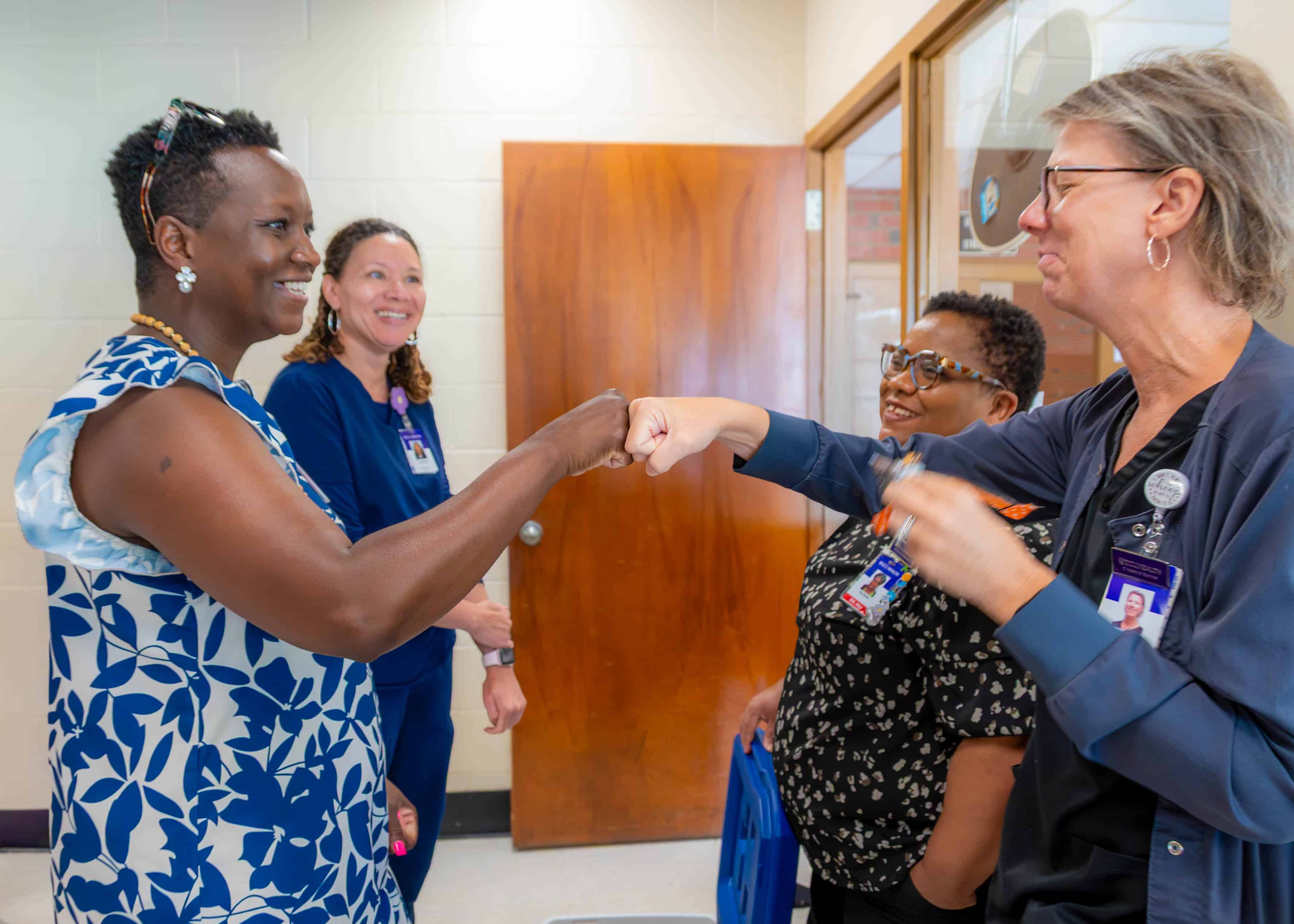
Kelly said now she’s known throughout the community as the “sandwich lady,” but for her, the service is not just about providing a meal.
“We offer healthier options for free, and this opened opportunities to share mental health resources. I’ve helped people sign up for ECU Health Now, and I’ve given them information about support groups. This bridges trust between the hospital and the community.”
Kelly said her passion for service has been fueled by her own experiences, and these are opportunities to give back.
“Everyone is going through something, and we’re not meant to do life alone,” she said. “We truly need each other, and this is my purpose.”
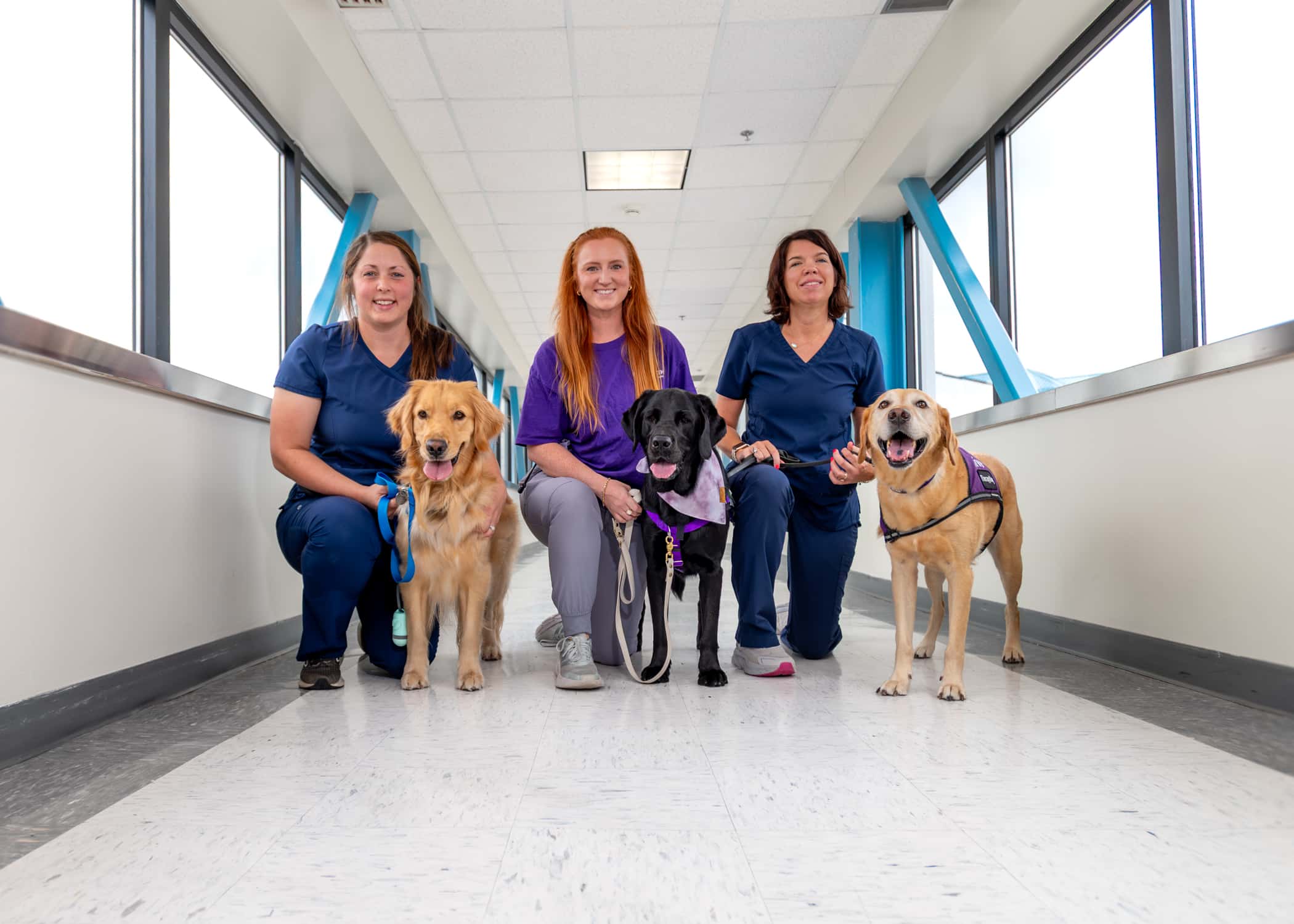
Across ECU Health Medical Center and the James and Connie Maynard Children’s Hospital, three dogs named Clive, Erving and Sam are leaving pawprints in the heart of patients, their families and team members alike. Whether in rehabilitation or pediatrics, these four-legged friends bring joy, motivation and emotional support to patients and their families.
Clive, an eight-year-old golden retriever and lab mix, has been working in the medical center’s rehabilitation department for more than three years. Originally trained through Canine Companions, a non-profit organization that trains and matches service dogs, the program released Clive due to his anxiety riding in cars. but retained all his training and social skills. His puppy raiser, Tanya Bowen, who serves as an outpatient rehab supervisor, connected with recreational therapist Kasey Shue, and found a way to put Clive’s training and social skills to use in therapy work. He typically works two days a week and specializes in emotional support, stress relief and anxiety management. His gentle demeanor makes him ideal for comforting patients and staff.
Shue describes him as a “snuggly bug,” and though he’s older and slower, Clive’s presence continues to make a powerful impact.
Erving, a golden retriever and the newest member of the rehab team, joined in May of 2025. Also raised through Canine Companions in Florida, Erving underwent professional training in Orlando and now works full-time with recreational therapist Kristen Jones. With 40 commands under his belt and certification through Assistance Dog International, Erving supports patients in physical and occupational therapy. His ability to retrieve, tug and interact with patients helps challenge their balance, build strength and boost motivation. Patients often find themselves more willing to participate in exercises when Erving and Clive are involved.
“One patient we had arrived at ECU Health’s rehab unit experiencing pain in his legs and physical therapy was proving difficult,” said Shue. “He didn’t want to walk. The pain was too much, and he was resistant to every attempt to get him moving.”
Then Clive entered the room.
The patient had dogs at home and immediately responded to Clive’s familiar energy.


“With Clive, he agreed to walk around the gym, something he hadn’t been willing to do before,” said Shue. “The pain was still there, but Clive helped him push through it.”
Then there was a patient recovering from a stroke. She couldn’t speak and hadn’t smiled since arriving.
“After a session with Clive, she smiled,” said Shue. “Her face lit up. When the session ended, she pointed to Clive and then to her bed because she wanted him to stay.”
As Clive curled up beside her, the patient’s daughter cried, the doctors cried, and so did the therapist.
“It was a breakthrough moment, thanks to Clive,” said Shue.
For one young girl with Guillain-Barré Syndrome, Clive and Erving demonstrated how service dogs could support independence. She practiced real-life tasks with Erving like opening doors and pushing buttons and left excited to begin the process of getting a dog of her own.
According to Jones and Shue, even the staff feel the impact. On a day when a patient coded and did not survive, Erving was there to comfort the doctors who had administered CPR. His quiet support helped them process the grief.
A few steps away from rehab in Maynard Children’s Hospital resides Sam, a black golden retriever, lab and poodle mix trained through Canine Assistants, another non-profit organization that raises hospital facility dogs and personal services dogs. Her arrival was the result of nearly eight years of advocacy and planning by Child Life specialists Ashton Ayers and Chelse Smith, along with colleagues Jaymi Mendoza and Christy Denius. ECU Health Foundation provided the funding to bring Sam on board. After years of research and collaboration with the ECU Health Foundation, funding was secured and Sam officially joined the team in November 2023. Sam was matched with handlers Ayers and Smith after they were vetted through the organization and the hospital.
Ayers and Smith helped build the facility dog program from the ground up. Ayers was inspired by a facility dog handler who spoke at a child life conference, while Smith had firsthand experience with pet therapy and saw its impact in Intensive Care Unit (ICU) settings.
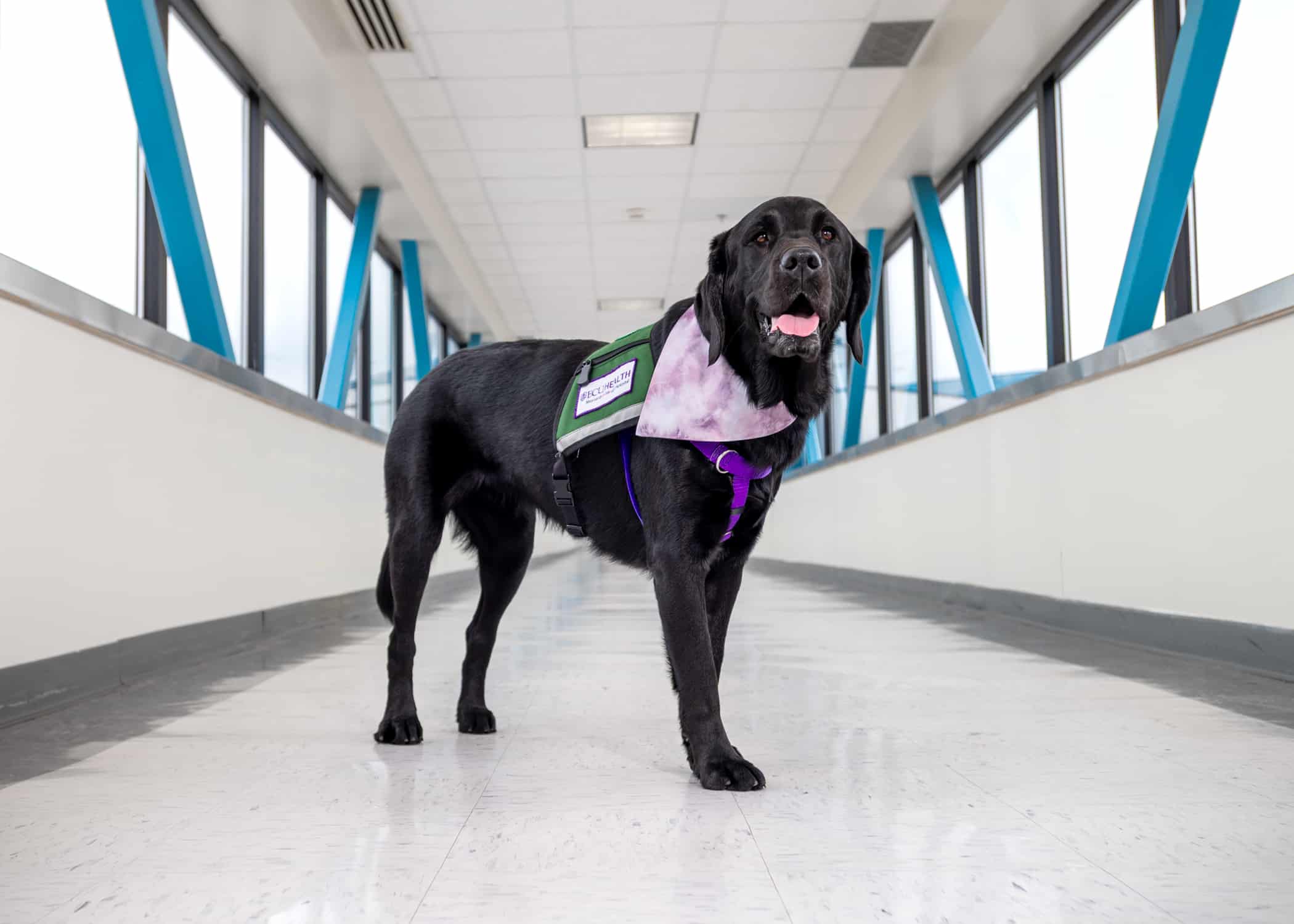
Sam now supports pediatric patients, including those in the ICU, offering comfort during procedures, emotional support during difficult moments and motivation for children facing medical challenges.
“We have a 16-year-old oncology patient,” said Smith. “He was slow to warm up to the hospital environment, but he definitely bonded with Sam. He met Sam when he was newly diagnosed with cancer.”
With his particular diagnosis, it was very important for him to get up and walk for his growth and healing, and to get him out of the room for his emotional state also, according to Smith.
“His care team told us he needed to get out of his room, but he didn’t want to,” said Smith.
Smith and Ayers brought over Sam and offered for him to take Sam outside and throw the ball for her. He surpassed all of his physical therapy goals that day and got to go outside and play with Sam.
“He came back last week and the first thing he said was, ‘I really missed Sam,’” said Ayers. “That’s always the first thing when he’s here, he wants to see Sam immediately.”
Whether it is comforting a child, motivating a patient or supporting a grieving doctor, Clive, Erving and Sam are more than therapy dogs.
“I’ve had people walk by and say, ‘You have the best job in the hospital,’” Shue said. “And now it’s even better – because there are three of them.”
Resources
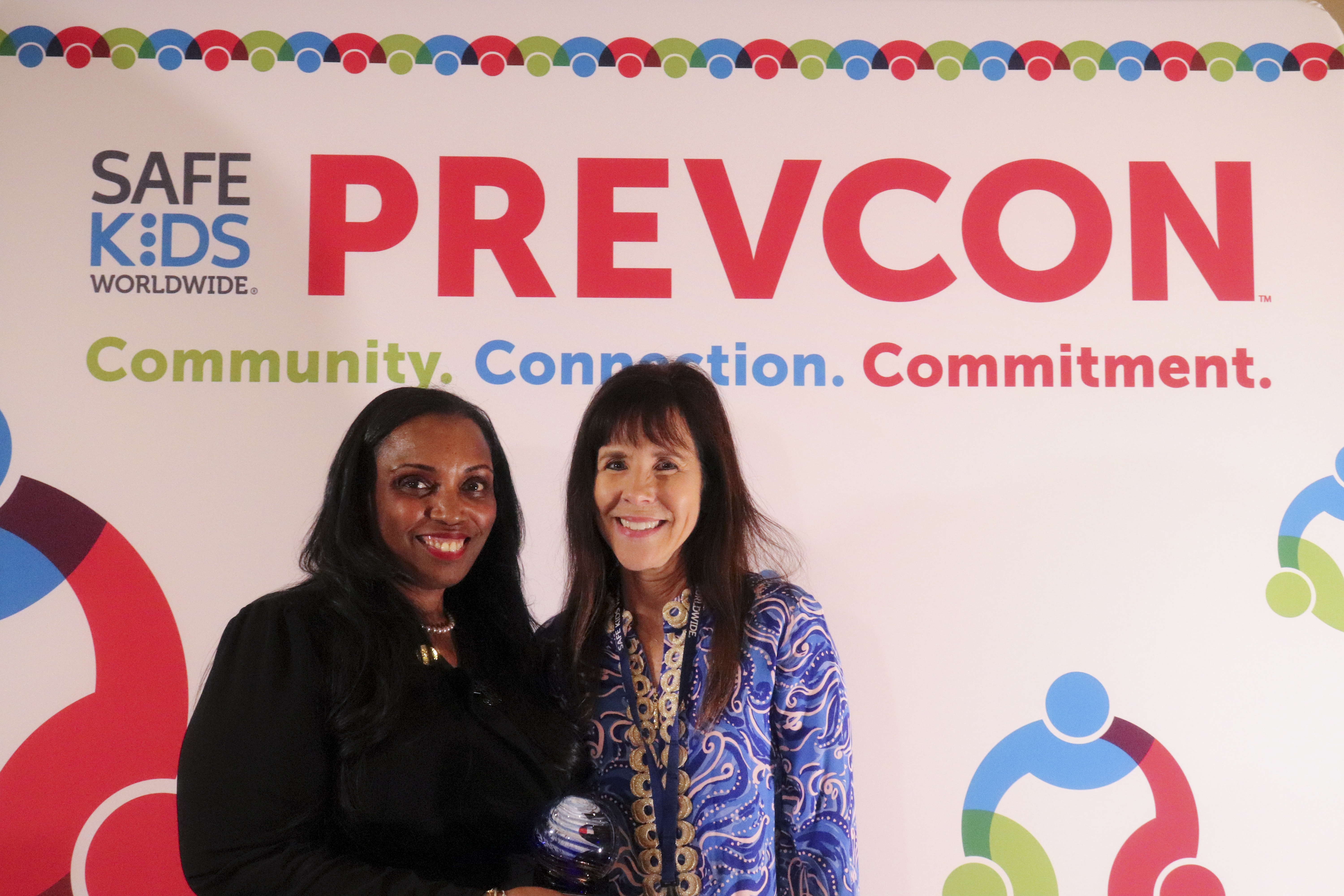
Greenville, NC – ECU Health is proud to announce the Eastern Carolina Injury Prevention Program (ECIPP) at ECU Health Medical Center was honored with the Martha Collar Partnership Award at the Safe Kids Worldwide International Childhood Injury Prevention Convention (PrevCon) for its outstanding contributions toward preventing childhood injuries. Named for Oklahoma Safe Kids State Coordinator Martha Collar, this award recognizes inspirational individuals or organizations that exhibit outstanding leadership and a commitment to collaboration and partnerships.
“ECIPP is honored by this recognition, which reflects the dedication and innovation of the entire team in advancing injury prevention and safety across eastern North Carolina,” said Ellen Walston, Injury Prevention Program Coordinator and Safe Kids Pitt County Coordinator at ECU Health. “Through strong partnerships and community-focused strategies, we have expanded access to education and resources that make a real difference in people’s lives. Our greatest reward is seeing the positive impact of this work on the health and well-being of the children and families we serve.”
ECIPP is dedicated to improving the health and safety of eastern North Carolina by reducing the frequency and severity of preventable injuries, especially to children. Founded in 1995, ECIPP is a collaborative initiative between the ECU Health Trauma Center, Maynard Children’s Hospital at ECU Health Medical Center and the Department of Emergency Medicine at the Brody School of Medicine at East Carolina University. Through hands-on community outreach, ECIPP offers car seat and bike helmet fittings, along with educational programs focused on risk areas such as driver and pedestrian safety, fall prevention, water safety, suicide prevention and safe firearm storage. ECIPP also plays an active role in regional coalitions, including the Greenville Traffic Safety Task Force, formed in partnership with the Greenville Police Department, and the Pitt County Firearm Safety Coalition, working together to build a safer, more informed community.
“The Eastern Carolina Injury Prevention Program exemplifies how community collaboration can transform safety education into measurable action,” said Torine Creppy, president of Safe Kids Worldwide. “Their partnerships and holistic approach embody Martha’s legacy of building bridges that protect families.”
The award was presented at PrevCon on Oct. 15, 2025, that convened more than 600 child health and safety professionals from around the world, including academic researchers, community activists, health care providers, manufacturers, public health and injury prevention practitioners and policy makers. More than 20 individuals and organizations were honored for their leadership in the field. PrevCon is one of the largest gatherings of individuals and organizations dedicated to childhood injury prevention. Preventable injuries are the number one cause of death for children in the United States. Throughout the world, almost one million children die of an injury each year, and almost every one of these tragedies is preventable.
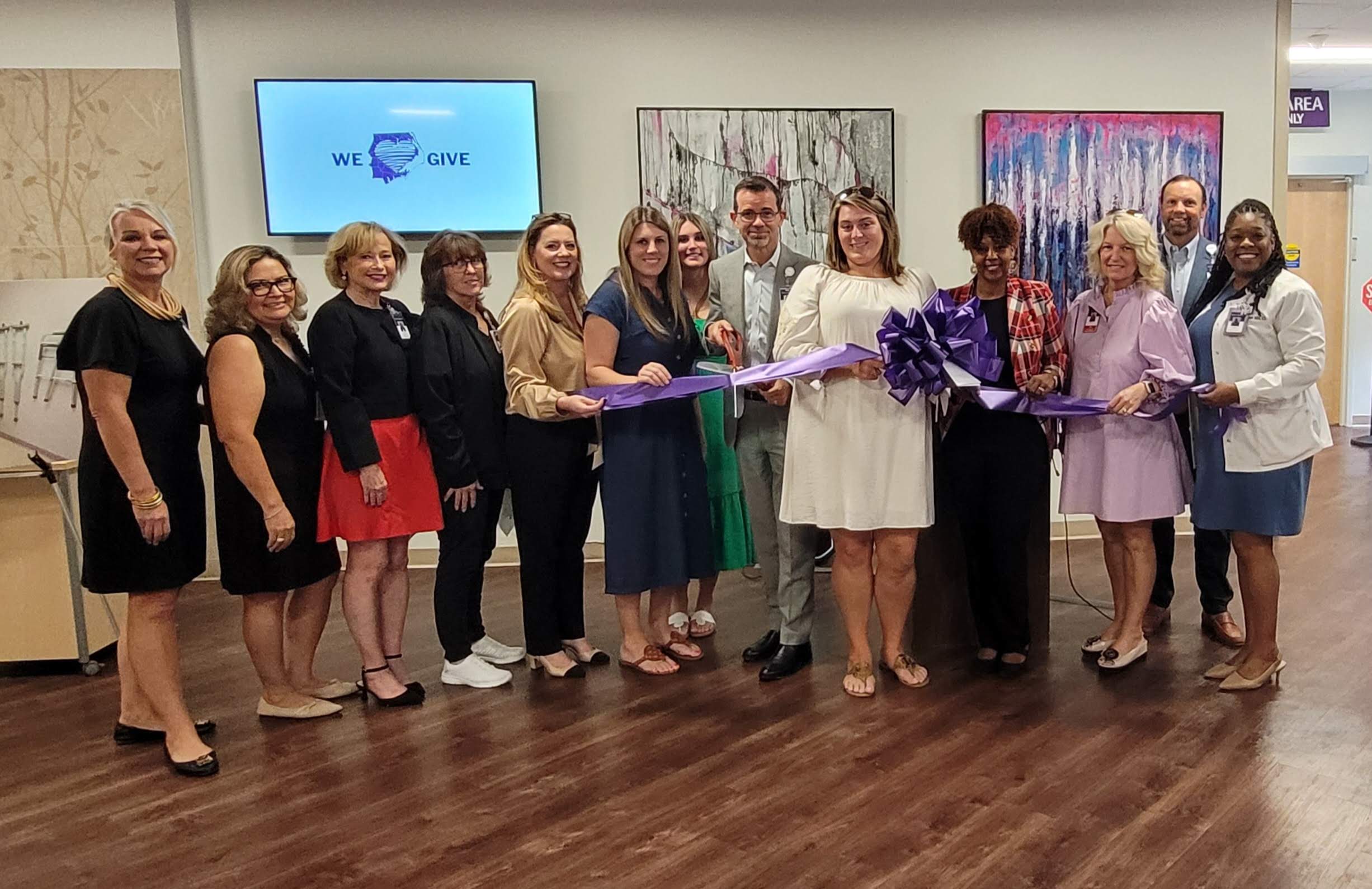
Roanoke Rapids, NC — ECU Health North Hospital has launched a new hospital-based Certified Nursing Assistant (CNA) I Program designed to help team members at ECU Health North, ECU Health Edgecombe and ECU Health Roanoke-Chowan hospitals gain hands-on training, real-world experience and the foundation needed to become a certified nursing assistant.
“At ECU Health, we are committed to strengthening the rural health care workforce by expanding access to careers in nursing and allied health,” said Pam Rudisill, vice president of Nursing Excellence, ECU Health. “This initiative not only invests in the growth and development of our current team members but also opens new doors for those entering the field. By aligning with existing workforce pipelines and community college partnerships, we are building a more resilient and skilled care team that is designed to meet the needs of those we serve.”
Team members who are selected for the program will learn essential patient care skills from experienced medical professionals, receive classroom instruction and clinical training on-site and build a pathway toward long-term career growth in health care. The program was created to enable current team members to pursue a nursing assistant certification by offering life-work balance and the support needed to achieve their goals. Upon completion of the program and with certification, team members will then transition from their current roles to a nursing assistant position. The first cohort will graduate in January 2026 and join the nursing team at ECU Health, and enrollment for the second cohort beginning in February 2026 is open now.
“By equipping our team members with the skills and support they need to grow into vital roles, we are helping create a pipeline of compassionate, community-based caregivers who will serve eastern North Carolina for years to come,” said Todd Hickey, president of ECU Health North Hospital. “Investing in our local talent, especially in rural communities like the Roanoke Valley, strengthens our workforce and keeps care close to home. Initiatives like these help us fulfill our mission of improving the health and well-being of eastern North Carolina.”
The CNA I program was inspired by the vision of Sheryl Watson, BSN, RN, a former registered nurse at ECU Health, whose dedication to student education and commitment to guiding aspiring nursing assistants have been integral to the program’s formation. Watson laid the groundwork for the academy but passed away before seeing it come to fruition. As a former instructor in a community college CNA program, Watson saw the value in building a CNA program at ECU Health North.

ECU Health celebrated Wear Pink Day on Oct. 17 to honor those impacted by breast cancer and to raise awareness of the importance of annual screenings. In addition to wearing pink, the Cancer Care team and members of the East Carolina University Women’s Basketball team, including head coach Kim McNeill, handed out pink ribbons and information about breast cancer and 3-D mammograms to ECU Health team members and ECU Health Medical Center visitors.
ECU Health Cancer Care and the ECU Women’s Basketball team work together to share the importance of early detection for breast cancer across the community. For several years, the Women’s Basketball team, assistant coaches and staff, as well as McNeill, have visited ECU Health Medical Center to greet and educate team members and patients.
“Even with their busy season starting, the ECU Women’s Basketball team is committed to spreading this awareness message,” said Phyllis DeAntonio, administrator of ECU Health Cancer Care. “We are extremely grateful for the team’s commitment to ECU Health’s mission, to improve the health and well-being of eastern North Carolina.”
Screenings are important for prevention and early detection. ECU Health offers 3D mammography at 11 locations throughout eastern North Carolina. Key advantages of 3D mammography include:
- Greater detail for improved accuracy
- 40 percent increase in cancer detection
- Locates more invasive, life-threatening tumors
- Better at detecting cancer in dense breast tissue
- Digital images allow doctors in other locations to consult if needed
- Fewer call-backs, resulting in less anxiety
- Patient-friendly design that is more comfortable for all breast sizes
As Breast Cancer Awareness Month continues, make sure you are talking with your health care provider about receiving regular mammograms. Women at higher risk may need to start screening earlier. Learn more about breast cancer and finding a screening location near you by visiting ECU Health’s breast cancer page.